
Synergistic Effect of Combined Leaf Extract of Vernonia amygdalina, Ocimum gratissimum, and Zingiber officinale Tuber on Phytochemical Profile, Antioxidant Activity, Serum Insulin, and Biochemical Parameters in Streptozotocin-Induced Diabetic Rats
The use of poly-herbal therapy, which involves achieving maximum therapeutic efficacy against several diseases by combining various substances from different plant sources, has received substantial attention for several decades. This research aimed at investigating the synergistic effect of combined leaf extract of Vernonia amygdalina, Ocimum gratissimum, and Zingiber officinale tuber on phytochemical profile, antioxidant activity, Serum Insulin, and Biochemical Parameters in Streptozotocin- Induced Diabetic Rats There were four equal groups of sixteen albino rats. Plaque therapy was administered to Group 2 (diabetic control) and Group 1 (normal control), respectively. For 28 days, groups 3 and 4 of the diabetes tests were given metformin and a combination of Vernonia amygdalina, Ocimum gratissimum, and Zingiber Officinael extracts at a dosage of 400mg/kg b. w., respectively. Blood and pancreas were taken when the animals were sacrificed for hematological and histological evaluations, as well as for serum glucose, insulin, liver function, renal function, electrolytes, and histopathology studies. A considerable rise in the animals' body weight (p
Abbrevations
WBC: White Blood Cell; RBC: Red Blood Cell; HB: Hemoglobin; HCT: Hematocrit; MCV: Mean Corpuscular Volume; MCH: Mean Corpuscular Hemoglobin; MCHC: Mean Corpuscular Hemoglobin Concentration; PLT: Platelets.
Introduction
The metabolic illness known as diabetes causes elevated blood sugar levels, irregular metabolism of lipids and proteins, and many long-term consequences that might impact the kidneys, neurological system, and retina [1]. An abnormal increase in blood glucose after food, beta-cell malfunction, and relative insulin insufficiency all contribute to hyperglycemia. Pancreatic α-amylase and α-glucosidases both play a role in the breakdown of starch and other big polysaccharides into smaller, more easily absorbed sugars [2, 3]. Given the multi-lesion nature of diabetes’ pathophysiology, it would need more than one pharmacological therapy to undo the disease’s effects in their entirety. Because of the abundance of active components in just one plant, traditional medicinal herbs have gained favor as part of a multimodal approach to treatment [4, 5, 6]. Phytochemicals are a class of bioactive, non- nutritive plant compounds with a wide range of protective and disease-preventive effects, including hormone action, antioxidant, enzyme stimulant, antibacterial, and anti-cancer effects. Medicinal plants are often plants that contain a high concentration of these compounds. Some organic chemicals found in medicinal plants are recognized to have specific physiological effects on humans [5].
The use of poly-herbal therapy, which involves combining agents from different plants for therapeutic purposes, has garnered significant attention for several decades. This approach has the potential to be very effective in treating a wide range of diseases, and it is also safer than conventional medicine, with few or no side effects [7, 8]. Given the multi-factorial pathogenicity of diabetes mellitus, polyherbal therapy is favored as a therapeutic approach to its control [7]. Because they provide promising prospects for the creation of novel treatments for the control of diabetes mellitus, traditional medicinal herbs are believed to be the source of this increased effectiveness. For example, saponins slow the transfer of glucose from the stomach to the small intestine [9] and polyphenols in tea reduce postprandial hyperglycemia and glucose transport throughout the small intestine [10].
According to Bounouham M, et al. [8], pancreatic β-cells are protected from alloxan damage by epicatechin, and plant flavonoids have anti-diabetic effects due to their antioxidant capabilities. Ayo VI, et al. [11] and Umaru IJ, et al. [12] found that medicinal plants with high concentrations of phytochemicals that could help fight diabetes and its problems have sped up attempts to collect and process them.
Vernonia amygdalina is an Asteraceae family shrub or small tree that can grow to be 2-5 meters tall. Its petiolate, elliptically-shaped leaves are approximately 6 mm in diameter. The leaves have a bitter flavor and a distinct smell; they are green in color [13]. Ezeonu CS, et al. [14] noted that the plant has been domesticated in numerous regions of Nigeria. In Yoruba, it is called “Ewuro,” in Ibibio, “Onugbu,” and among the Hausa people of Nigeria, it is called “Chusa- diki” [15].
Villagers often use Vernonia amygdalina as a fence post or pot herb since it thrives in a variety of African biological zones, produces a lot of forage, and can withstand drought [16]. Vernonia amygdalina is known to have a diverse range of phytochemicals. Some studies have found tannins, oxalates, and phytates in it [13, 17]. The ethnomedical and pharmacological effects of extracts from Vernonia amygdalina are extensive, and include antibacterial, anti-diabetic, anti- malarial, and anti-helminthic capabilities [18]. Another plant with therapeutic importance is Ocimum gratissimum, also known as smell leaf.
There is a whole system of roots, stems, and leaves in this fully grown flowering plant [19]. The Lamiaceae family includes the aromatic medicinal herb Ocimum gratissimum. Scent leaf is the common name for it. Because of its fragrant minty flavor, it finds application in cookery. Effraim K, et al. [20] listed many Nigerian names for the plant: “Effinrin-na” for the Yoruba, “Alumokho” for the Esan, “Nchanwu” for the Igbo, “Aramogbo” for Edo, and “Daidoya” for the Hausas of northern Nigeria. The medicinal ginger plant, scientifically known as Zingiber officinale, features slender, verdant, grass- like leaves and fragrant, yellowish-green blossoms spotted with purple. The rhizome of ginger, which is harvested in tropical regions when it is around 10 months old, is edible and has several uses, both in the kitchen and in medicine [21]. Egedigwe C [15] states that ginger’s fragrant, carminative, and absorbent qualities are responsible for its effectiveness. Both as a spice and a functional food, ginger has several uses.
The medicinal properties of ginger have been extensively studied and documented. Some of these properties include anti-arthritic, anti-thrombotic, anti-inflammatory, hypolipidaemic, hypocholesterolaemic, and anti-nausea effects. The anti-diabetic effects of Vernonia amygdalina, Ocimum gratissimum, and Zingiber officinale tuber extracts have been proven individually, but new research suggests that their combined effects are much more effective [7]. Thus, it became critical to study the biochemical and histological impacts of a mixture of plant extracts. This study aims to examine the effects of a combination of extracts from Verninia amygdalina, Ociumum gratissimum, and Zingiber officinale tuber on the histology (morphology) of the pancreas, as well as on blood glucose, insulin, lipid profile, and streptozotocin- induced diabetes in wistar rats.
Materials and Methods
Experimental Design
Animal grouping and treatment designed are shown in Table 1 below. The weights of the rats in the test group were measured and used to calculate the dosage of extract and metformin, (200mg/ml/kg/day, 400mg/ml/kg/day) to be administered to each rat throughout the 28 days of treatment. Administration of Plant extract and metformin were done once daily via the oral route with the aid of oral cannula and syringe for 28 days.
Food was then withdrawn from the rats and they were fasted overnight but with free access to water on the night prior to the day they were sacrificed. After three weeks of administration, blood was collected from the rats into labelled; lithium-heparin, fluoride and ethylene-diamine- tetraacetic acid (EDTA) bottles via retro-orbital sinus technique.
The blood samples were then centrifuged at 3000rpm for 10mins and serum separated from clotted blood used for chemistry, electrolyte and insulin assay. The rats were then sacrificed using cervical dislocation and their pancreases were collected into plain bottles containing formalin and placed in ice. The pancreas were then prepared for histopathological analysis.
| Number of Rats | Treatment | Dosage | |
|---|---|---|---|
| 1. Normal control | 4 | Feed and water | |
| 2. Diabetic negative control | 4 | Feed and water | |
| 3. Diabetic standard control | 4 | Metforming | 400mg/kg |
| 4. Diabetic extract treated group | 4 | Verninia amygdalina, Ociumum gratissimum and Zingiber officinale | 400mg/kg |
Table 1: Experimental design.
Collection of Plant Samples
Sufficient quantities of Verninia amygdalina and Ociumum gratissimum were harvested at Aparadija, Ado Odo Ota Local Government area of Ogun State, Nigeria, while sufficient quantities of Zingiber officinale tubers weres bought at Ojuwoye Market, Mushin, Lagos, Nigeria.
Preparation of Plant Extracts
The leaves of the collected plant samples were air dried for 2-3 weeks and grinded into powdered form. Zingiber officinale tubers were washed, grated and oven dried for 1hour in order to reduce the water content. They were then air dried for one week and grinded into powdered form. 131g of each sample was weighed into a glass bottle and homogenized in 80% ethanol for 72 hours. The homogenate was filtered using a cheese material. The filtrate was concentrated at 37-400C under reduced pressure, using a rotary evaporator to one-tenth of the original volumes. These were then allowed in water bath for evaporation to dryness.
Experimental Animals
Thirty-two (32) male albino rats weighing between 106- 188g were purchased at the Animal House, College of Medicine, University of Lagos, Idi Araba, Lagos, Nigeria and were used for the research. The rats were allowed to acclimatize for fourteen days during which they were fed with standard rodents’ feed (rat chow) and tap water. They were kept in properly ventilated cages, where beddings were replaced every two days, at room temperature of about 270C and 12 hour light/dark cycle. The animals were fed with growers’ marsh and water.
Induction of Diabetes
Diabetes was induced by intra-peritoneal injection of streptozotocin (STZ) at a dose of 50mg/kg b.w., reconstituted in normal saline. Prior to diabetes induction, the animals fasted for 12 hours. Confirmation of diabetes was done 72 hours after STZ treatment, (Fasting Blood Sugar) using Aku- check glucometer. Blood samples for the FBS determination were obtained from tail puncture of the rats, and animals with FBS ≥ 185mg/dl were considered diabetic and included in the study as diabetic animals.
Phytochemical and Antioxidant Screening
Qualitative Phytochemical Screening Qualitative test for the investigation of phytochemical components like alkaloids: flavonoids, glycosides: saponins and tannins in the crude extract and fractions was carried out using the method described by Ayo VI, et al. [11].
Tests for Antioxidant Activity
Reducing Power Assay The method described by Yakubu OE, et al. [5] was used for this assay. The dried extract in 1ml of the corresponding solvent was mixed with 2.5ml of phosphate buffer (0.2M, pH 6.6) and 2.5ml of potassium ferrocyanide and then the mixture was centrifuged at 1650rpm for 10minutes. 2.5ml of the supernatant solution were mixed with 2.5ml of distilled water and the absorbance was measured at 700nm.
DPPH free Radical Scavenging Activity
The method described by Umaru IJ, et al. [1] was used for this assay. An aliquot of 0.5ml of extract in ethanol was mixed with 2.0ml of reagent solution (0.004g of 1,1 diphenyl-2- picrylhydrazyl {DPPH} in 100ml methanol). The mixture was vigorously shaken and left to stand at room temperature. After 30minutes the absorbance was read at 517nm. Control was DPPH in place of the sample.
Total Antioxidant Capacity Determination
The method described by Yakubu OE, et al. [5] was used for this assay. A sample of the extract was mixed with 3ml of reagent solution (0.6M sulphuric acid, 28Mm sodium phosphate and 4mM ammonium molybdate). The tubes were capped and incubated in a boiling water bath at 95 degrees Celsius for 90minutes. After the samples had cooled to room temperature, the absorbance of the aqueous solution of each was measured at 695nm. The total antioxidant capacity was expressed as equivalent of ascorbic acid (standard).
Biochemical Assay
Serum obtained from the blood samples collected was analyzed using Mindray BS-200 Auto-analyzer to assess the liver function, kidney function, lipid profile, electrolyte and glucose level of the rats according to standard protocols as described by Burtis CA, et al. [22].
Insulin Assay
Serum Insulin was analyzed using Molecular Devices Spectramax 340 Microplate Reader according to the standard procedure described by ELISA.
Hematological Assay
A complete blood count was carried out on the blood of the experimental rats using SYSMEX KX21N Auto-Analyzer to measure the levels of white blood cell (WBC), red blood cell (RBC), hemoglobin (HB), hematocrit (HCT), mean corpuscular volume (MCV), mean corpuscular hemoglobin (MCH), mean corpuscular hemoglobin concentration (MCHC), platelets (PLT), neutrophils and lymphocytes, according to standard protocols by Burtis CA, et al. [22].
Histopathological Studies
The method described by Burtis CA, et al. [22] was used for this investigation. The fixed pancreatic tissues were sectioned and the sections firstly stained with basic dyes, of Heamatoxylin and Eosin (H&E) according to Burtis CA, et al. [22] procedure and later pancreatic sections were specifically stained for better cells by the aldehyde fuschin procedure (Gomori aldehyde method) and photomicrographs (x 400) developed.
Statistical Analysis
All the data were expressed as mean ± S.E.M. Statistical analysis was carried out using one-way ANOVA by Tukey post hoc test. The criterion for statistical significance was p ˂ 0:05.
Phytochemical Content and Antioxidant Properties of Ethanolic Extracts of Verninia amygdalina Leaves, Ociumum gratissimum Leaves and Zingiber officinale Tubers
Phytochemical Content The result of the phytochemical analysis carried out on ethanolic extracts of Verninia amygdalina leaves, Ociumum gratissimum leaves and Zingiber officinale tubers revealed the presence of the following phytochemicals; flavonoids, alkaloids, steroids, phenols, saponins, tannins, terpenoids, reducing sugar and cardiac glycoside. Quantitative phytochemical analysis of the ethanolic combined extracts of Verninia amygdalina leaves, Ociumum gratissimum leaves and Zingiber officinale tubers revealed that alkaloid present was 85.97mg/100g: tannins present was 57.33mg/100g; saponins present was 124.18mg/100g; flavonoid present was 79.02mg/100g; and phenol present was 110.38mg/100g.
Antioxidant Properties
Ethanoic extract of combined Verninia amygdalina leaves, Ociumum gratissimum leaves and Zingiber officinale tubers revealed an antioxidant capacity of 38.40mg/100g. The DDPH scavenging activity of the combined extract of Verninia amygdalina leaves, Ociumum gratissimum leaves and Zingiber officinale tubers was revealed to be 70.98%.
Effect of Combined Ethanolic Extract of Verninia amygdalina Leaves, Ociumum gratissimum Leaves and Zingiber officinale Tubers on the Weight, Serum Glucose Concentration and Insulin Level of Streptozotocin-Induced Diabetic Rats
The results for the effect of combined ethanolic extract of Verninia amygdalina leaves, Ociumum gratissimum leaves, and Zingiber officinale tubers on the weight, serum glucose concentration and insulin level of streptozotocin-induced diabetic rats are presented in Table 2 below. It was observed that there was a variation and statistically significant difference (p<0.05) in the weight and serum glucose concentration of the rats among the treated groups. The body weight of diabetic control rats revealed a statistically significant decrease (p<0.05) when compared to the initial body weight of the rats, whereas the normal control and the treated groups revealed a statistically significant increase (p<0.05) in the final body weight of the rats. There was significant increase (p<0.05) in the serum glucose level of the untreated diabetic animals relative to the normal control. Decrease in serum glucose of the rats treated with the combined plant extracts was significant (p<0.05) and it was observably similar to that of the standard control of the rats. Also there was an increase in serum insulin level in treated diabetic rats as compared to the control diabetic rats. Therefore the Combined extracts of Verninia amygdalina, Ociumum gratissimum and Zingiber officinale mimicked the effect of metformin on serum glucose concentration and body weight of the rts.
| Parameters | Group 1 | Group 2 | Group 3 | Group 4 |
|---|---|---|---|---|
| Glucose (mg/dL) | 118.6±2.21 | 317.3±31.27* | 241.1±18.37** | 224.7±18.84** |
| Weight (g) | 151.7±5.94 | 107.3±8.43* | 135.1±5.32** | 128.7±3.15** |
| Insulin (µIU/mL) | 0.0403±0.003 | 0.05067±0.004 | 0.04267±0.011 | 0.07025±0.290 |
Table 2: Effect of combined ethanolic extract of _Verninia amygdalina_ leaves, _Ociumum gratissimum_ leaves and _Zingiber offi
*Data are expressed as mean ± SEM for four rats in each group. Values not sharing a common superscript (* and ) differ significantly at P< 0.05 (Tukey’s pairwise test) * statistically significant when compared to group 1 statistically significant when compared with group 2. Table 2: Effect of combined ethanolic extract of Verninia amygdalina leaves, Ociumum gratissimum leaves and Zingiber officinale tubers on the weight, serum glucose concentration and Insulin level of streptozotocin-induced diabetic rats.
Effect of Combined Ethanolic Extract of Verninia amygdalina Leaves, Ociumum gratissimum Leaves and Zingiber officinale Tubers on Serum Biochemical Parameters of Streptozotocin- Induced Diabetic Rats
The results for the effect of combined ethanolic extract of Verninia amygdalina leaves, Ociumum gratissimum leaves, and Zingiber officinale tubers on serum biochemical parameters of streptozotocin-induced diabetic rats are presented in Table 3 below. It was observed that the combined ethanolic extracts of the plants significantly decreased serum, TG, TC, Urea, AST and ALT. Also the result showed that STZ causes alteration in lipid profile of diabetic rats (Group 1) as shown by a significant (P<0.05) increase in total cholesterol, triglyceride and LDL- cholesterol levels when compared with the control (Group 1). However, combined ethanolic extracts of the plants caused a significant (p<0.05) decrease in total cholesterol, triglyceride and LDL-cholesterol levels of (Group 4) animals.
From the electrolyte result obtained, a significant reduction in serum Na, Cl and K levels and an elevation in serum Ca in rats with diabetes mellitus (Group 2) were observed, while there was no significant difference between the animals (Group 4) treated with the combined plants extract and the normal control animals (Group 1).
| Group 1 | Group 2 | Group 3 | Group 4 | |
|---|---|---|---|---|
| Liver Function | ||||
| ALT (U/L) | 88.77±6.23 | 63.50±9.58* | 97.13±17.36 | 119.5±10.22** |
| AST (U/L) | 214.6±31.17 | 145.±8.427* | 161.7±7.955 | 191.5±20.53** |
| ALP (U/L) | 601.5±16.44 | 351.6±48.6* | 619.5±79.43 | 827.6±157.9 |
| T-BIL (mg/dL) | 0.00±0.00 | 0.04±0.01* | 0.00±0.00 | 0.005±0.003 |
| D-BIL (mg/dL) | 0.04±0.01 | 0.08±0.01* | 0.05±0.01 | 0.06±0.004 |
| ALB (g/L) | 30.21±2.02 | 35.90±0.29* | 31.10±1.54 | 30.58±1.50** |
| Kidney Function | ||||
| CREA (mg/dL) | 0.40±0.05 | 0.60±0.00* | 0.47±0.33 | 0.40±0.04** |
| TP (g/L) | 72.87±3.32 | 77.07±1.16* | 78.07±1.22 | 77.33±3.06** |
| UREA (md/dL) | 40.54±1.19 | 65.98±9.95* | 62.92±9.96 | 58.78±9.15** |
| Lipid Profile | ||||
| HDL-C (mg/dL) | 43.18±4.14 | 70.64±3.36* | 52.43±10.3** | 56.48±1.48** |
| LDL-C (mg/dL) | 25.62±2.57 | 16.20±0.53* | 21.32±6.01 | 22.96±4.102** |
| TC (mg/dL) | 77.75±1.38 | 88.79±4.23* | 77.37±14.31 | 84.66±4.56** |
| TG (mg/dL) | 77.75±1.37 | 88.79±4.23* | 77.37±14.31 | 84.66±4.56** |
| Electrolyte | ||||
| K (mmol/L) | 7.80±0.65 | 5.65±0.13* | 7.52±0.62** | 7.20±0.42** |
| Na (mmol/L) | 141.8±0.80 | 135.6±0.56* | 144.8±0.92** | 141.7±2.73** |
| Cl (mmol/L) | 98.57±0.68 | 95.43±0.81* | 97.50±2.33** | 98.55±0.47** |
| Ica (mmol/L) | 1.25±0.06 | 2.19±0.03* | 1.30±0.02 | 1.24±0.05** |
| TCa (mmol/L) | 2.43±0.11 | 3.32±0.05 | 2.530±0.04 | 2.413±0.09 |
Table 3: Effect of combined ethanolic extract of _Verninia amygdalina_ leaves, _Ociumum gratissimum_ leaves, and _Zingiber off
*Data are expressed as mean ± SEM for four rats in each group. Values not sharing a common superscript * differ significantly at P < 0.05 ANOVA Test * statistically significant when compared with group 1 statistically significant when compared to group 2. *ALT = Alanine transaminase AST = Aspartate transaminase ALP = Alkaline phosphatase TP = Total protein ALB = Albumin T-BIL-D = Total bilirubin D-BIL-D = Direct bilirubin CREA = Creatinine TC = Total Cholesterol TG= Triglycerides HDL-C = High density lipoprotein cholesterol LDL-C = Low density lipoprotein K = Pottassium Na = Sodium Cl =Chlorine ICa = Ionized TCa = Total Calcium Table 3:** Effect of combined ethanolic extract of Verninia amygdalina leaves, Ociumum gratissimum leaves, and Zingiber officinale tubers on serum biochemical parameters of streptozotocin-induced diabetic rats.
Effect of Combined Ethanolic Extract of Verninia amygdalina Leaves, Ociumum gratissimum Leaves and Zingiber officinale Tubers on Haematological Parameters of Streptozotocin- Induced Diabetic Rats
The results for the effect of combined ethanolic extract of Verninia amygdalina leaves, Ociumum gratissimum leaves, and Zingiber officinale tubers on haematological parameters of streptozotocin-induced diabetic rats are presented in Table 4 below. The result of comparative hematological values revealed a statistically significant difference in the hematological parameters, WBC, RBC, PCV and MVC across the groups.
| Group 1 | Group 2 | Group 3 | Group 4 | |
|---|---|---|---|---|
| WBC x 10³ (µL) | 20.70±4.48 | 14.40±1.50* | 17.77±4.15** | 19.30±2.78** |
| RBC x 10⁶ (µL) | 7.663±0.14 | 6.053±0.21* | 8.443±0.48 | 7.793±0.24** |
| HGB (g/dl) | 13.23±0.63 | 11.73±0.45 | 14.77±0.77** | 13.03±0.53 |
| PCV (%) | 45.73±1.92 | 40.03±1.93* | 48.60±2.26** | 44.75±1.78** |
| MCV (fL) | 59.80±3.40 | 62.43±0.92* | 57.60±0.77 | 58.28±0.48** |
| MCH (Pg) | 17.30±1.14 | 18.37±0.09* | 17.50±0.10 | 17.35±0.18 |
| MCHC (g/dl) | 28.97±0.43 | 31.00±0.58 | 30.37±0.20 | 29.78±0.20 |
| PLT x 10³ (µL) | 1074±305.4 | 714.0±147.7* | 960.3±243.3** | 736.8±80.75 |
Table 4: Effect of combined ethanolic extract of _Verninia amygdalina_ leaves, _Ociumum gratissimum_ leaves, and _Zingiber off
*Data are expressed as mean ± SEM for four rats in each group. Values not sharing a common superscript (* and ) differ significantly at P< 0.05 (Tukey’s pairwise test) *statistically significant when compared to Group 1 statistically significant when compared with Group 2. *PCV = packed cell volume; Hb = hemoglobin; RBC = red blood cell count; WBC = white blood cell count; MCV = mean corpuscular volume, MCH = mean corpuscular hemoglobin, MCHC = mean corpuscular hemoglobin concentration. PLT = Platelet count. Table 4: Effect of combined ethanolic extract of Verninia amygdalina leaves, Ociumum gratissimum leaves, and Zingiber officinale tubers on haematological parameters of streptozotocin-induced diabetic rats.
Effect of Combined Ethanolic Extract of Verninia amygdalina Leaves, Ociumum gratissimum Leaves and Zingiber officinale Tubers on the Cyto-architecture of the Pancreas of Streptozotocin-Induced Diabetic Rats
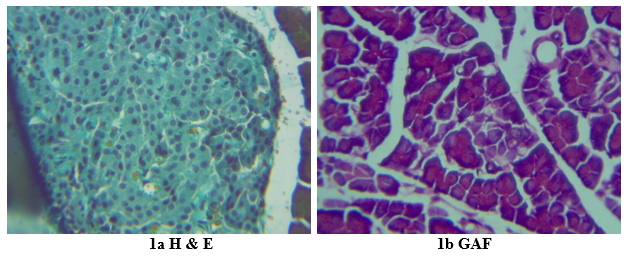
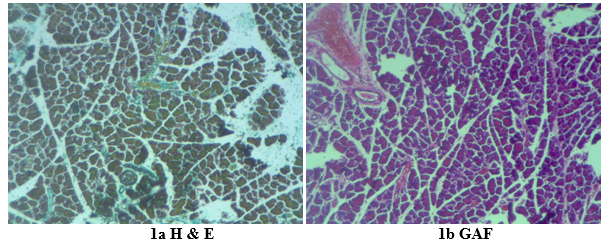
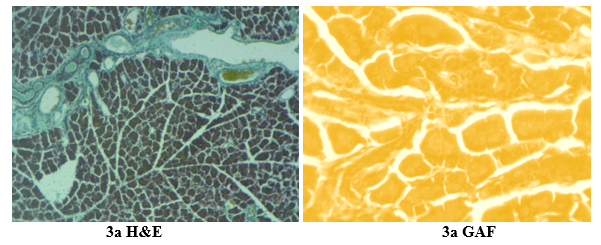
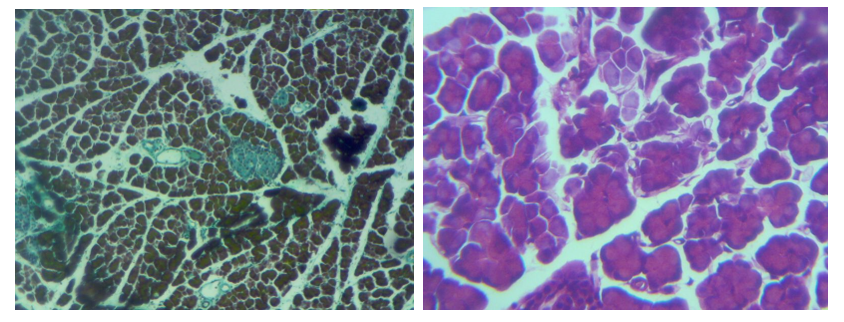
The effect of combined ethanolic extract of Verninia amygdalina leaves, Ociumum gratissimum leaves, and Zingiber officinale tubers on the cyto-architecture of the pancreas of streptozotocin-induced diabetic rats was studied using H/E staining technique and the Gomori Aldehyde Fuschin (GAF) staining method.
Haematoxylin Eosin (H & E) Stain
Normal Control (Figure 1a): The pancreatic ducts were observed to be properly outlined. The islet cells were prominent and well circumscribed. Diabetic control (Figure 2a): The secretory acini and centroacinar cells were found present, the lobules were distorted and the Islet cells were necrotic showing reactive changes and appeared degenerated. Metformin (Figure 3a): Sections showed pancreatic tissue which consisted of closely packed serous acini and zymogenic cells arranged in lobules. They were also observed to be surrounded by thin intralobular fibrous connective tissue that contains blood vessels. These interlobular connective tissue septa held several blood vessels with thicken wall and its lumen were filled with blood cells and sprinkles of inflammatory cell infiltrates. Features were suggestive of acute vascular reactive change, with necrotic acinar cells and Islet cells.
Verninia amygdalina, Ociumum gratissimum and Zingiber officinale treated (Figure 4a): The pancreatic islet cells were seen to be clearly defined and prominent, within the tissue body were seen several closely packed, the excretory duct was found to be present, loblues were well defined and the acinar cells were also present. Interlobular connective tissue ducts and blood vessels were seen. The observed pancreatic islet cells reactive change was similar to the one observed in Figure 1.
Gomori Aldehyde Fuschin Stain
Normal control (Figure 1b): Gomori aldehyde fuchin stains pancreatic beta-cells in the islets and elastic fibers deep purple, which were clearly defined, prominent and well circumscribed.
Diabetic control (Figure 2b): Gomori aldehyde fuchin stains pancreatic beta-cells in the islets and elastic fibers to faintly purple which appeared with distortion of the pancreatic cyto-architecture indicating cytotoxic action of streptozotocin.
Metformin (Figure 3b): Gomori aldehyde fuchin stains pancreatic beta-cells cytoplasm which stains faint purple indicating a very low regeneration beta-cells and hence metformin may not have any effect on the pancreas.
Verninia amygdalina, Ociumum gratissimum and Zingiber officinale treated (Figure 4a): The islet cells were found to be present, indicating regeneration of hitherto destroyed β-cells.
Discussion
Since poly-herbal therapies are safer and have few or no side effects, they have received a lot of attention for a number of years. This is because they maximize therapeutic efficacy against a wide range of diseases [5, 7]. The purpose of this study was to examine the effects of a combination of extracts from Verninia amygdalina, Ociumum gratissimum, and Zingiber officinale tuber on hyperglycemia, insulin resistance, lipid profiles, and pancreatic histology in rats with streptozotocin diabetes.
The study’s findings showed that diabetic rats (Group 2), which were not treated, lost significantly more weight than non-diabetic rats (Group 1) and rats treated with a combination of plant extracts (Group 4). This could be because of the excessive breakdown of tissue protein and fatty acids, which leads to the loss of muscle and adipose tissue [7]. For every gram of glucose excreted, there is a considerable loss of calories, leading to severe weight loss despite increasing hunger. This is particularly true when combined with the breakdown of protein, which causes muscle and adipose tissue to lose weight as well. One symptom of diabetes mellitus is weight loss, particularly in cases of poor glycaemic control. Untreated diabetic rats also showed a considerable decrease in body weight, according to the studies [1]. Group 3, which received metformin, gained more weight than Group 4, which received extract, according to the weight results.
This is in line with the findings of Mäkimattila S, et al. [23], who found that metformin’s enhanced glycaemic control leads to weight gain through a decrease in metabolic rate and glycosuria. Probably as a result of interactions between several bioactives, the extract-treated group was able to avoid such drastic weight loss. Nonetheless, when contrasted with the diabetic control animals (Group 2), the mice treated with extracts (Group 4) exhibited a notable rise in weight. This gain in mass is evidence that the treatment enabled the tissues to use glucose for energy and even set aside some to construct growth-related tissue components.
Research conducted by Ebong PE, et al. [7] demonstrated that mice treated with Verninia amygdalina extracts experienced a weight gain after 14 days. When taken together, the leaf extracts of Vernonia amygdalina, Ocimum gratissimum, and Zingiber officinale tuber reduced blood sugar levels to a level comparable to those of metformin. According to Joseph I, et al. [24], plant extracts are believed to have a blood sugar reducing impact due to the phytochemicals they contain, such as alkaloids, polyphenols, tannins, saponins, and dietary fiber. One possible explanation for the hypoglycemic effect of plant extracts is the presence of micronutrients like vanadium, which have actions similar to insulin. The majority of plant extracts reportedly work by way of insulin-like elements that are already present in the extracts, according to Yeh GY, et al. [25]. This study’s findings of pancreatic islet cell proliferation and regeneration, in addition to the presence of phytochemicals and micronutrients in plant extracts that have a direct impact on blood sugar, may explain why the treated animals’ blood glucose levels dropped.
Liver function test results showed that treated diabetic rats had higher serum insulin levels compared to control diabetic rats, and that combined plant extracts considerably reduced serum AST and ALT. In Group 4, diabetic rats, the results demonstrated that the combination plant extract reduced serum urea and creatinine levels. Ife AV, et al. [26] found that renal impairment is associated with elevated serum creatinine and urea levels in diabetic hyperglycemia. When diagnosing liver diseases, blood enzymes like AST and ALT are employed. Elevated levels of these enzyme activity indicate that the liver is actively damaged. Levels of transaminase are dramatically increased in inflammatory hepatocellular diseases [21]. Based on the significant rise (P<0.05) in total cholesterol, triglyceride, and LDL-cholesterol levels compared to the control group, this research shows that Streptozotocin alters the lipid profile of diabetic rats (Group 1). The levels of total cholesterol, triglycerides, and LDL-cholesterol in the animals treated with the mixed plant extract in Group 4 were significantly lower (p<0.05). The mixed plant extract may have a hypocholesterolemic impact because of the high polyphenol content. Cholesterol production, cholesterol clearance from the bloodstream, dietary cholesterol absorption, and cholesterol excretion through bile and feces are all known to impact plasma cholesterol content [27].
Hyperglycemia, insulin insufficiency, and hyperketonemia are the three main causes of electrolyte and water imbalances in people with diabetes mellitus [27]. The electrolyte result reveals a significant decrease in serum Na, Cl, and K levels as well as an increase in serum Ca in the diabetic subjects (Group 2), but no difference between the normal control animals (Group 1) and the animals treated with the combined plant extract (Group 4). This suggests that the electrolyte imbalance seen in diabetic animals can be alleviated by combining plant extracts. Consistent with other investigations, this outcome was reported by Atangwho IJ, et al. [28]. The proximal tubule of the kidney is responsible for reabsorption of the majority of Na under normal conditions [27]. Dehydration, diabetic nephropathy, or renal failure could cause this electrolyte loss in animals with diabetes mellitus (Group 2). Inhibition of the rennin-angiotensin- aldosterone pathway, which is essential for maintaining proper fluid and electrolyte balance, is another possible cause of this electrolytes imbalance. Numerous endocrine and cardiovascular disorders have been found to impact this enzyme system. Some disturbed hematological parameters of diabetic rats may be improved by treating diabetes with Verninia amygdalina, Ociumum gratissimum, and Zingiber officinale. Anemia is thought to occur in diabetes mellitus as a result of increased non-enzymatic glycosylation of red blood cell (RBC) membrane proteins, which is associated with hyperglycemia [29].
A rise in lipid peroxide generation, leading to RBC hemolysis, occurred as a result of oxidation of these glycosylated membrane proteins and hyperglycemia in diabetes mellitus. When it comes to the quality of the feed that animals consume and the nutrients that are accessible to them to fulfill their physiological needs, hemostatic indices are indications and reflections of the impacts of dietary therapies. Hemoglobin (Hb) values, which are defined as an iron-containing conjugated protein that carries oxygen and carbon dioxide throughout the body, showed no significant changes in the diabetic or diabetic treated groups compared to the normal control group. This suggests that the animals in both groups did not experience a decrease in respiratory capability, suggesting that the oxygen-carrying capacity of their blood was unaffected. The reduced lipid peroxide level in RBC membrane, which in turn decreased the susceptibility of RBC to hemolysis, may explain why animals treated with the mixed plant extract (Group 4) had an enhanced RBC count. One possible explanation for the action of the combined plant extracts in treating diabetic rats is a reduction in the increased glucose concentration, since hyperglycemia is associated with non-enzymatic glycosylation of membrane proteins [30]. Group 4 diabetic rats were found to have normal red blood cell (RBC) counts after receiving the mixed plant extract, which suggests that it stimulates erythropoiesis. They may have a function in erythropoiesis, since their PCV (Packed cell volume) decreased significantly in diabetic mice and then normalized after treatment with a combination of plant extracts. Based on the findings of RBC, Hb, and PCV tests, it appears that Verninia amygdalina, Ociumum gratissimum, and Zingiber officinale tuber have antioxidant properties.
These plants also aid in stabilizing the RBC membrane by binding to proteins and carbohydrates that make up the RBC membrane. As a result, they may prevent the RBC membrane from breaking down and counteract Streptozotocin’s anemic effects. According to Ganong WF [31], neutrophils are the initial line of defense against bacterial infections because they consume and destroy microorganisms. One theory is that the immune system’s inability to properly operate as a result of diabetes-related neutrophil dysfunction undermines the body’s ability to fight off infections [28]. This study showed that diabetic rats were able to restore their normal white blood cell (WBC) neutrophil percentage after being treated with a mixture of Verninia amygdalina, Ociumum gratissimum, and Zingiber officinale tuber extracts. This finding provided compelling evidence that diabetic rats treated with a mixture of plant extracts may have an enhanced immune response to infections. A normalization of RBC count in diabetes treated rats may explain the recovery of blood indices (MCV, MCH, MCHC), as previously noted, RBC count increased to control level in group 4.
Pancreatic histopathology in non-diabetic animals reveals intact endocrine and exocrine pancreatic tissues (Figure 1). The islet cells in the endocrine section were normal. In contrast, the pancreatic cyto-architecture was significantly distorted with necrotic and degraded islet cells in the diabetic control mice (Figure 2). Streptozocin causes damage to the pancreatic tissues, particularly the islet cells, leading to a type 1 diabetes prototype, as reported by Bolkent S, et al. [32]. Full-blown diabetes was caused by STZ-induced pancreatic lesions [33]. Figure 4 shows that mice given a mixture of plant extracts had islet cell growth, a nearly normal pancreatic cyto-architecture, and other pancreatic cell proliferation. This is in line with the previous study that focused on the effects of giving people Vernonia amygdalin extracts [28]. The prior report did show some improvement, but it was only a partial recovery. The current study suggests a synergistic interaction of the numerous phytochemicals and antioxidants from Vernonia amygdalina, Ocimum gratissimum, and Zingiber Officinale, tuber, as the extract is co-administered with these three plants. The results are full and holistic. This potential synergistic activity utilizing the extracts of Azadirachta indica and Vernonia amygdalina was previously described by Ebong PE, et al. [7]. Because the regenerated islet cells may improve insulin synthesis and secretion, the antihyperglycemic/ hypoglycemic actions of the extracts may be explained by their effects on pancreatic lesions.
The capacity of extracts from Vernonia amygdalina and Ocimum gratissimum to reverse streptozotocin- induced pancreatic damage in mice may be due to active components such as vernoniosides, glucosides, flavonoids, and antioxidants [34]. Antioxidant characteristics and components of Vernonia amygdalina, Ocimum gratissimum, and Zingiber officinale tuber have been shown in multiple research. Ezeonu CS, et al. [14] found that Vernonia amygdalina has a high concentration of antioxidants, while Kesavulu M, et al. [35] found that Zingiber officinale has antioxidant characteristics. Reactive Oxygen Species (ROS) are produced in diabetes mellitus, which damages tissues because they interfere with the antioxidant reaction that enzymes used to scavenge ROS do their work. Kesavulu M, et al. [35] found that diabetes mellitus is associated with enzyme deficiencies that scavenge ROS. Through one way or another, a plant extract that may alleviate or repair hypoglycemia-causing pancreatic lesions would also address the process of ROS formation. So, these plants need to be antioxidants that can either mop up ROS in the blood or turn back the cytotoxic cycle of STZ in the pancreas. Vacuolations in the exocrine parts of the pancreatic islet cells gave the impression of distortion and degeneration in the metformin-treated mice (Figure 3). Therefore, it’s possible that metformin has no direct impact on the pancreas. Pancreatic islet cyto-architecture did alter slightly from the diabetic control group, but only little. This is in line with previous findings from Pirola L, et al. [36, 37, 38] that metforming lowers blood sugar levels by acting on peripheral tissues rather than the pancreas. Metforming helps with glucose uptake into cells and inhibits hepatic glucose output. The destruction of insulin-producing cells in the pancreatic islets may explain the hyperglycemia seen in the Diabetic Control animals (Figure 2). This is in line with the findings of Kesavulu M, et al. [35, 39], who found that streptozotocin causes diabetes by targeting and killing the pancreatic cells that produce insulin.
Conclusion
The presence of phytochemicals and micronutrients in plant extracts exert direct effect on blood sugar, the proliferation/regeneration of the pancreatic islet cells which was evident in this study could account for the reduction in blood glucose of animals treated with the extract which leads to the regeneration of the beta-cells of the pancreas. The results obtained from the electrolyte analysis it could be concluded that the diabetic patients have electrolyte imbalance characterized by depletion in the levels of sodium, potassium and chlorine and increased in the levels of the calcium ions. The result obtained from the Liver function, Kidney function biomarkers there was a significant improvement in the liver and kidney function of the diabetic rats treated with the combined extract of Verninia amygdalina, Ociumum gratissimum and Zingiber officinale tuber. It also exhibit antihyperglycemic and antihyperlipidemic properties. From the hematological results, it is apparent that oral administration of the combined extracts might decrease the diabetes-induced disturbances of hematological parameters in streptozotocin-induced diabetic rats. Therefore this combined plant extracts must be considered as excellent candidate for future studies on diabetes mellitus. In addition, further comprehensive pharmacological investigations, including experimental chronic studies, should be carried out, and further comprehensive studies should be carried out to confirm how they exact their mechanism of action.
Acknowledgments
We acknowledge all the authors of this work for their contributions.
Conflicts of Interest
All authors declare that they have no conflict of interest associated with this research work.
Funding
No special funding was received for this research work.
References
-
Umaru IJ, Ejeh YO, Ahmed MU, Ezekiel l, Umaru KI, et al. (2022) GC-MS, Radicals Scavenging Capacity and Antidiabetic Effect of Senna alata Seed Extract in Type II-Induced Diabetes Mellitus in Rats. Research Journal of Medicinal Plants 16(2): 49-58.
-
Abah MA, Adebisi AK, Moses IO, Dooshima AM, Umaru IJ, et al. (2024) Comparative Study on the Phytochemical and Micronutrients Levels in Selected Edible Mushroom Samples. African Journal of Biochemistry and Molecular Biology Research 1(1): 726-742.
-
Oladosu MA, Adondua MA, Salau BA, Abiodun WO, Aja Nwachuku AG, et al. (2024) Effect of Dietary Sucrose on Body Weight and Antioxidant Status (Vitamin C and Uric Acid) of Wister Strain of Albino Rats. Food Sci & Nutri Tech 9(3): 000353.
-
Osagie AS, Morayo AE, Isaac UJ, Abah MA, Eromosele OM, et al. (2024) Effect of Aqueous Extract of Allium sativum on Biochemical Status in Gentamicin-Induced Hepatotoxicity in Wistar Rats. International Journal of Botany 20: 10-19.
-
Yakubu OE, Boyi RN, Shaibu C, Abah MA, Akighir J (2019) Antioxidant Parameters and GC-MS Phytochemical Analysis of Hymenocardia acida Stem Bark Ethanolic Extract. Trends in Applied Sciences Research 14: 263- 270.
-
Abu MS, Tatah SV, Okpe O, Abah M, Abe RH (2023) Identification of Bioactive Compounds in Methanolic Extracts of Some Selected Plants by Infrared Spectroscopy. Research Journal of Phytochemistry 17(1): 1-10.
-
Ebong PE, Atangwho IJ, Eyong EU, Egbung GE (2008) The Antidiabetic Efficacy of Combined Extracts from Two Continental Plants: Azadirachta indica (A. Juss)(Neem) and Vernonia amygdalina (Del.)(African bitter leaf). American Journal of Biochemistry and Biotechnology 4(3): 239-244.
-
Bounouham M, Ziyyat A, Mekhfi H, Tahri A, Legssyer A (2006) Medicinal plants with potential antidiabetic activity-A review of ten years of herbal medicine research (1990-2000). International Journal of Diabetes and Metabolism 14(1): 1.
-
Yuan Z, He P, Cui J, Takeuchi H (1998) Hypoglycemic effect of water-soluble polysaccharide from Auricularia auricula-judae Quel. on genetically diabetic KK-Ay Mice. Bioscience Biotechnology and Biochemistry 62(10): 1898-1903.
-
Arowora KA, Ugwuoke KC, Abah MA, Dauda A, Ruyati S (2024) Evaluation of Serum Biochemical Parameters in Male Wistar Rats Administered with Azadirachta Indica Silver Nanoparticles. Asian Journal of Science, Technology, Engineering, and Art 2(3): 462-475.
-
Ayo VI, Adondua MA, Morayo AE, Ekele JU, Amilo D, et al. (2023) Effect of Lactuca sativa supplemented diet on Poloxamer 407 induced hyperlipidemic albino rats (Rattus norvegicus). Asian J Nat Prod Biochem 21: 67- 78.
-
Umaru IJ, Abah MA, Ugwah EJ, Ahmed MU, Olalekan TI, et al. (2024) Phytochemical profile and the effect of Paulownia elongate root and bark on gram positive and gram negative bacterial species. Int J Complement Alt Med 17(3): 147-154.
-
Eleyinmi AF, Sporns P, Bressler DC (2008) Nutritional composition of Gongronema latifolium and Vernonia amygdalina. Nutrition and Food Science 38(2): 99-109.
-
Ezeonu CS, Tatah SV, Imo C, Yakubu OE, Garba QH, et al. (2022) Antioxidant potential of ginger extract on metals (lead, cadmium, and boron) induced oxidative stress in maize plant. Asian JTrop Biotechnol 19: 45-51.
-
Egedigwe C (2010) Effect of dietary incorporation of Vernonia amygdalina and Vernonia colorata on blood lipid profile and relative organ weights in albino rats. Department of Biochemistry. MOUAU. Nigeria.
-
Bhandari U, Pillai K (2005) Effect of ethanolic extract of Zingiber officinale on dyslipidaemia in diabetic rats. Journal of Ethnopharmacology 97(2): 227-230.
-
Tona L, Cimanga R, Mesia K, Musuamba C, De Bruyne T, et al. (2004) In vitro antiplasmodial activity of extracts and fractions from seven medicinal plants used in the Democratic Republic of Congo. Journal of Ethnopharmacology 93(1): 27-32.
-
Farombi EO (2003) African indigenous plants with chemotherapeutic potentials and biotechnological approach to the production of bioactive prophylactic agents. African Journal of Biotechnology 2(12): 662-671.
-
Bhandari U, Pillai K (2005) Effect of ethanolic extract of Zingiber officinale on dyslipidaemia in diabetic rats. Journal of Ethnopharmacology 97(2): 227-230.
-
Effraim K, Jacks T, Sadipo O (2003) Histopathological Studies on the Toxicity of Ocimum gratissimum Leave Extract on Some Organs of Rabbit. African Journal of Biomedical Research 6(1).
-
Arowora KA, Ugwuoke KC, Abah MA, Ugwoke BC (2023) Effects of green-synthesized silver nanoparticles from Azadirachta indica on growth performance and liver function parameters in male albino rats. Cell Biol Dev 7(1): 28-34.
-
Burtis CA, Ashwood ER, Bruns DE (2012) Tietz Textbook of Clinical Chemistry and Molecular Diagnostics-e-book: Elsevier Health Sciences.
-
Mäkimattila S, Nikkilä K, Järvinen HY (1999) Causes of weight gain during insulin therapy with and without metformin in patients with type II diabetes mellitus. Diabetologia 42(4): 406-412.
-
Joseph I, Abah MA (2023) Haematological Changes in Male Albino Rats Administered Silver Nanoparticles. Asian Journal of Research in Biosciences 2023(5): 13-20.
-
Yeh GY, Eisenberg DM, Kaptchuk TJ, Phillips RS (2003) Systematic review of herbs and dietary supplements for glycemic control in diabetes. Diabetes Care 26(4): 1277- 1294.
-
Ife AV, Abah MA, Moranyo AE, Oyibo ON, Okpanachi V, et al. (2024) Effect of cucumis callosus fruit extract on the liver function of DMBA-induced mammary cancer in female albino wistar rats. Int J Complement Alt Med 17(6): 255-261.
-
Kim EC, Min JK, Kim TY, Lee SJ, Yang HO, et al. (2005) [6]-Gingerol, a pungent ingredient of ginger, inhibits angiogenesis in vitro and in vivo. Biochemical and Biophysical Research Communications 335(2): 300-308.
-
Atangwho IJ, Ebong PE, Eyong EU, Asmawi MZ, Ahmad M (2012) Synergistic antidiabetic activity of Vernonia amygdalina and Azadirachta indica: Biochemical effects and possible mechanism. Journal of Ethnopharmacology 141(3): 878-887.
-
Jones RL, Peterson CM (1981) Hematologic alterations in diabetes mellitus. The American Journal of Medicine 70(2): 339-352.
-
Kennedy L, Baynes J (1984) Non-enzymatic glycosylation and the chronic complications of diabetes: an overview. Diabetologia 26(2): 93-98.
-
Ganong WF (1995) Review of Medical Physiology: Mcgraw-hill.
-
Bolkent Ş, Yanardağ R, Oğuz AT, Saçan ÖO (2000) Effects of chard (Beta vulgaris L. var. cicla) extract on pancreatic B cells in streptozotocin-diabetic rats: a morphological and biochemical study. Journal of Ethnopharmacology 73(1-2): 251-259.
-
Szkudelski T (2001) The mechanism of alloxan and streptozotocin action in B cells of the rat pancreas. Physiological Research 50(6): 537-546.
-
Akinmoladun AC, Ibukun E, Afor E, Obuotor E, Farombi E (2007) Phytochemical constituent and antioxidant activity of extract from the leaves of Ocimum gratissimum. Sci Res Essay 2(5): 163-166.
-
Kesavulu M, Giri R, Kameswara Rao B, Apparao C (2000) Lipid peroxidation and antioxidant enzyme levels in type 2 diabetics with microvascular complications. Diabetes and Metabolism 26(5): 387-392.
-
Pirola L, Johnston A, Van Obberghen E (2004) Modulation of insulin action. Diabetologia 47(2): 170-184.
-
Ojochenemi EY, Okwesili FCN, Silas VT, Moses A, Sunday G (2019) In vitro Determination of Antioxidant Activities of the Fractions Obtained from Adansonia Digitata l. (baobab) Stem Bark Ethanolic Extract using Different Parameters. Curr Trends Biomedical Eng Biosci 17(5): 555973.
-
Bliddal H, Rosetzsky A, Schlichting P, Weidner M, Andersen L, et al. (2000) A randomized, placebo- controlled, cross-over study of ginger extracts and ibuprofen in osteoarthritis. Osteoarthritis and Cartilage 8(1): 9-12.
-
Thomson M, Al Qattan K, Al Sawan S, Alnaqeeb M, Khan I, et al. (2002) The use of ginger (_Zingiber officinale Rosc_.) as a potential anti-inflammatory and antithrombotic agent. Prostaglandins. Leukotrienes and Essential Fatty Acids 67(6): 475-478.
- Investigation of Polymorphisms in PPAR-Ɣ and TRHR Genes and their Impact on Turkish Diabetic and Obese Individuals
- The Impact of Aircraft Noise Exposure on the Efficacy of Empagliflozin Therapy in an Animal Model of Obesity
- Rooibos Mitigates Metabolic and Inflammatory Dysfunctions in Mice Fed a High-Carbohydrate Diet
- Investigation of Cardiovascular Responses to Aerobic Exercise in Obese University Students
- A Look at the Phase Angle Obtained by Electrical Bioimpedance
- Metabolic Syndrome and Pre-Metabolic Syndrome among Health Care Workers in Yemen: Prevalence and Associated Risk Factors