
Knowledge, Attitudes and Practices Regarding Viral Hepatitis B Among Attendees at the National Institute of Public Hygiene (INHP) Vaccination Service in Abidjan, Côte d'Ivoire
Objectives: To evaluate the knowledge, attitudes and practices regarding viral hepatitis B in attendees at the INHP vaccination service in Abidjan. Methodology: A cross-sectional study for the purposes of description and analysis was carried out over a one-month period between September and October 2018, through individual face-to-face interviews with attendees at the INHP vaccination service in Abidjan. Participants had to be 18 years of age or older and to voluntarily and informally agree to participate in the survey. People who did not speak or understand French were not included. The number of subjects needed was estimated at 258, and 361 subjects were recruited. Data on the socio-demographic characteristics of the participants and their knowledge, attitudes and practices regarding viral hepatitis B were collected. A score was recorded on the basis of correct or incorrect answers and practices, judged to be good or bad (1 = good answer, 0 = bad answer). A statistical analysis, first descriptive and then analytical, was carried out using logistic regression to determine the factors associated with poor knowledge, attitudes and practices. Results: Nearly half of the participants were aged between 18 and 30 (46%) and 64% had a higher education. The percentage with a good general knowledge of hepatitis B was low (10%), although the majority of participants knew of the disease (80%). The latter demonstrated poor general attitudes and practices relating to viral hepatitis B, which was the case for the majority (78%). Poor knowledge of hepatitis B and a poor general attitude and practices in respect of it were associated significantly with young age, low education level, Mande ethnic group and non-health-worker status. Conclusion: Certain factors, notably socio-demographic should be kept in mind when introducing measures to increase the knowledge and promote better attitude and practices around hepatitis B in the general population. The implementation of appropriate measures to increase the level of knowledge is fundamental in the fight against hepatitis B.
Introduction
Viral hepatitis B is a global public health problem, comparable to that posed by other major communicable diseases such as HIV, tuberculosis and malaria [1]. New estimates for 2019 reveal that 296 million people worldwide are living with a chronic hepatitis B virus (HBV) infection, despite the availability of effective vaccination. The virus, which attacks the liver and can cause both acute and chronic forms of the disease, is most often transmitted from mother to child during birth and delivery, or through contact with blood or other body fluids, including sex with an infected partner, unsafe injections and exposure to sharps in healthcare settings and communities and among drug users. In 2019 it was responsible for 820,000 deaths, primarily from cirrhosis or hepatocellular carcinoma [2]. HBV is 100 times more infectious than HIV and 10 times more infectious than HCV [3].
In Côte d’Ivoire (a country located in a high endemicity area), the prevalence of hepatitis B has been estimated at 13.6% since 2015, according to the National Program for the Fight against Viral Hepatitis (PNLHV). The aim of this program is to combat the condition by developing strategic plans (prevention, screening, and drug strategies) [4]. In spite of its high prevalence, the people seem unaware of the disease and it is also marked by bad attitudes and practices, in spite of the sensitization campaigns which have been carried out among the population, as previous studies have shown [5]. Awareness sessions on viral hepatitis B have been organized by the PNLHV to inform people and ensure primary prevention against the disease (by raising awareness to the various means of prevention), mainly focused on encouraging vaccination. These campaigns enable screening of the population in order to:
- Provide timely medical care to HBV-infected individuals
- Offer vaccinations to those not infected with HBV.
Questions remain about the effectiveness of these campaigns, especially their impact on the community. A safe and effective vaccine does exist. For this reason we decided to evaluate the knowledge, attitudes and practices relating to viral hepatitis B among attendees at the National Institute of Public Hygiene (INHP) vaccination center in Treichville (the economic capital of Côte d’Ivoire, south of Abidjan; a reference center for vaccination, particularly against viral hepatitis B), and to identify the possible reasons for the people’s poor knowledge, attitudes and practices in relation to the risks associated with the disease.
Methodology
Study site: The National Institute of Public Hygiene (INHP) in Abidjan, a national reference center for vaccination, particularly against viral hepatitis B. Type of study: Cross-sectional, descriptive and analytical
Inclusion and non-inclusion criteria
Inclusion criteria Attendees at the INHP vaccination service in Treichville. 18 years of age or older and willing to participate in the study Non-inclusion criteria Anyone who did not speak or understand French.
Study period, sampling method, number of subjects needed and recruited: One-month survey from September 20 to October 24, 2018. 258 subjects needed; 361 recruited. Survey was administered verbally and recorded by one research staff surveyor.
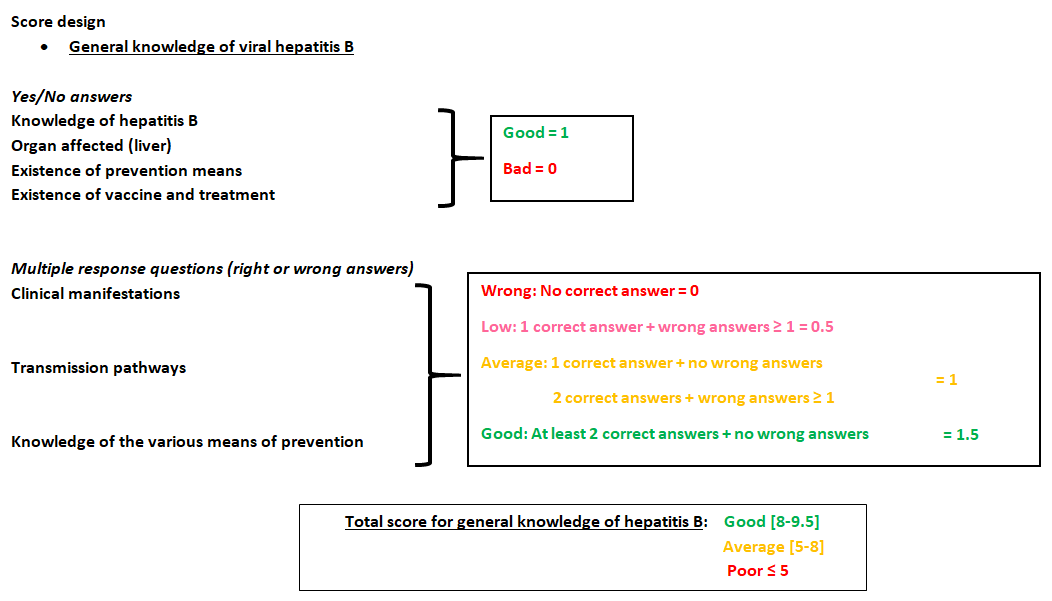
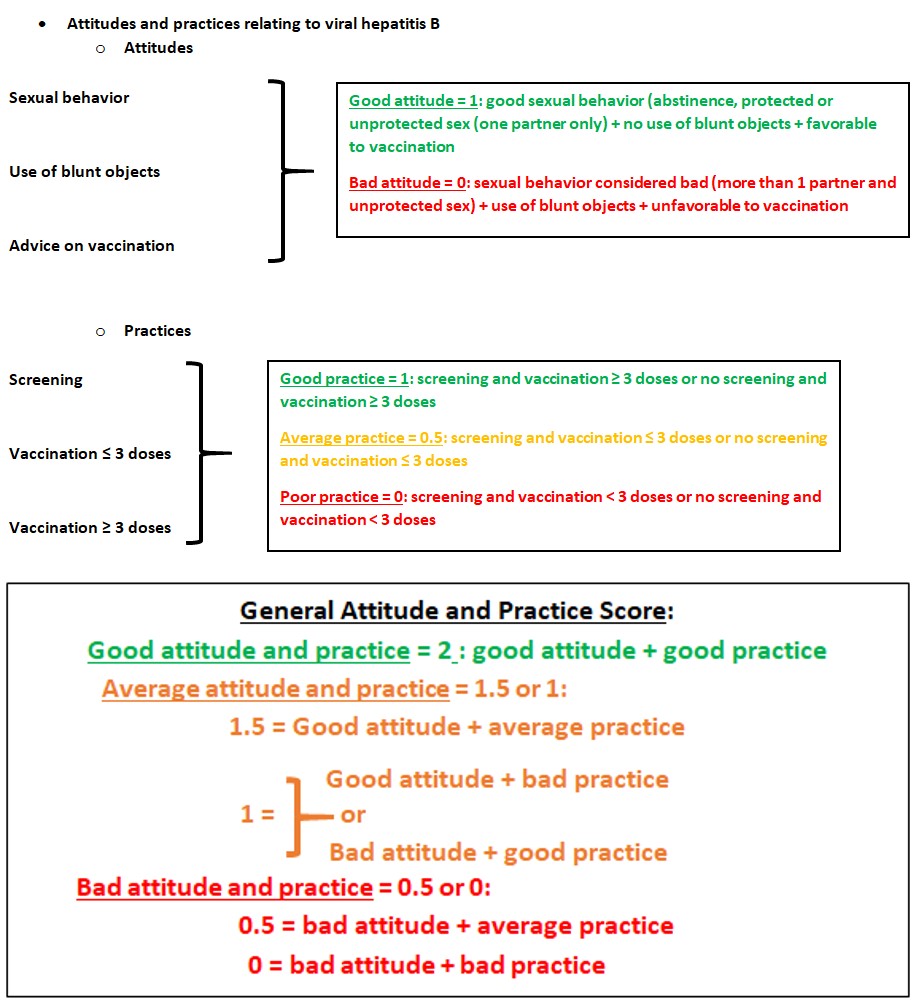
Statistical Analysis
The survey data were uploaded and analyzed using EpiData 3.1, SPSS 18.0 and Excel 2007 software. Quantitative variables were described by median and interquartile range. Qualitative variables were described by numbers and proportions expressed as percentages. To identify possible factors associated with poor knowledge, attitudes and practices, we carried out a logistic regression with poor knowledge of viral hepatitis B on the one hand and poor attitudes and practices relating to viral hepatitis B on the other.
In univariate analysis, only variables with a significance level of 25% were introduced into the multivariate model. The top-down stepwise method was used to obtain the final model, at a significance level of 5%.
Results
Socio-Demographic Characteristics of Participants
361 participants took part in the survey. The majority were women (53%). The median age was 31 years. More than two-thirds had a higher level of education. The same proportion of participants was employed in the civil service or in the informal sector. The vast majority of participants were Ivorian (90%), and nearly half (44%) belonged to the Akan ethnic group (originally from southern and central Côte d’Ivoire). More than half (54%) were single and the vast majority (94%) lived in Abidjan (Table 1).
| 190 | (53) | |
|---|---|---|
| Age, median (interquartile range) | 31 | (25-40) |
| Education level, higher, n (%) | 231 | (64) |
| Profession, employee (civil servant, informal), n (%) | 230 | (64) |
| Ivorian nationality, n (%) | 324 | (90) |
| Ethnic group, n (%) | ||
| Akan | 143 | (44) |
| Mandé | 91 | (28) |
| Gour | 40 | (12) |
| Krou | 50 | (15) |
| Marital status, single, n (%) | 195 | (54) |
| Residence, Abidjan, n (%) | 339 | (94) |
Table 1: Main socio-demographic characteristics of participants in the KAP survey on viral hepatitis B at the INHP vaccination se
Synthesis of General Knowledge, Attitude and Practice Scores Relating to Viral Hepatitis B
General knowledge: 54% of the participants had a general knowledge of hepatitis B rated as average (Table 2); this was based on the answers to questions on general knowledge of the pandemic (Appendix 1). 80% were aware of hepatitis B as a disease. Those who knew that the liver was the organ affected by this disease but did not know any signs of it or its transmission routes were respectively 24%, 93% and 86%. However, 60% knew of the existence of prevention methods, 64% knew that a vaccine existed and 85% knew there was a treatment.
| Knowledge | n (%) | |
|---|---|---|
| Good | 35 | (10) |
| Average | 196 | (54) |
| Bad | 130 | (36) |
| Attitudes and practices | n (%) | |
| Good | 36 | (10) |
| Average | 43 | (12) |
| Bad | 282 | (78) |
Table 2: Summary of general knowledge, attitude and practice scores relating to viral hepatitis B among participants in the KAP s
Attitudes and Practices: 78% of survey participants had attitudes and practices rated as poor (Table 2), 58% used blunt objects and 68% reported having unprotected sex. Only 9% had ever been tested for hepatitis B and just over half had a good attitude towards hepatitis B vaccination. 31% were vaccinated against hepatitis B and 43% had received all three doses. Of the participants who visited the INHP on the day of the survey, 11% were considering getting vaccinated against hepatitis B (Appendix 2).
Factors Associated
With poor knowledge of hepatitis B: Being over 30 years of age significantly reduced the risk of poor knowledge of hepatitis B. The same was true for having a higher-level education and belonging to the Mande ethnic group (Tables 3 & 4).
- Socio-demographic characteristics
- Odds-ratio p-value
- IC
- Age
- Between 18 and 30 years old
- Reference
- Between 30 and 40 years old
- 0,34
- 0,007
- [0,15-0,75]
- Between 40 and 77 years old
- 0,10
- < 0,001
- [0,04-0,27]
- Gender
- Male
- Reference
- Female
- 0,76
- 0,375
- [0,42-1,38]
- Level of Education
- Out of school & Primary
- Reference
- Secondary
- 0,39
- 0,12
- [0,12-1,28]
- Superior
- 0,06
- < 0,001
- [0,02-0,21]
- Health Officer
- Yes
- Reference
- No
- 0,17
- 0,123
- [0,02-1,61]
- Ethnic group
- Kwa
- Reference
- Krou
- 1,07
- 0,876
- [0,48-2,37]
- Gur
- 0,29
- 0,035
- [0,09-0,91]
- Mandé
- 3,13
- 0,001
- [1,62-6,05]
- Place of Residence
- Abidjan
- Reference
- Outside Abidjan
- 0,25
- 0,072
- [0,06-1,13]
Table 3: Factors associated with poor knowledge about viral hepatitis B among participants in the CAP survey on viral hepatitis
Socio-demographic characteristics Odds-ratio p-value IC
Age
Under 30 years old Reference
Gender
Between 30 and 40 years old 0,41 0,03 [0, 92]
Over 40 years old 0,14 0,001 [0, 37]
Male Reference
Level of Education
Out of school & Primary Reference
Health Officer
Yes Reference
| Ethnic group | |||
|---|---|---|---|
| Kwa | Reference | ||
| Krou | 0,84 | 0,667 | [0,37-1,89] |
| Gur | 1,20 | 0,707 | [0,46-3,18] |
| Mandé | 1,60 | 0,324 | [0,63-4,05] |
| Place of residence | |||
| Abidjan | Reference | ||
| Outside Abidjan | 0,59 | 0,418 | [0,16-2,13] |
Table 4: Factors associated with poor attitudes and practices on viral hepatitis B of participants in the KAP survey on viral hep
With bad attitudes and practices: Young age, low education level and non-health-worker status were the independent variables significantly associated with poor hepatitis B attitudes and practices.
Discussion
The results reveal rare, relevant and useful data. There have been several KAP (knowledge, attitude, practice) surveys on viral hepatitis B in different environments, different contexts and different socio-professional categories [5, 6, 7, 8, 9, 10, 11, 12, 13, 14], but the present one is unique in that it was carried out in an environment where people go to be vaccinated. In terms of the main socio-demographic characteristics of the study population, females were found to be predominant by Brouard C, et al. [6] but not by other studies in West Africa [7, 8]. The population attending the vaccination center was relatively young (46% aged between 18 and 30 years); this characteristic was also found in previous studies [6, 8, 9]. The majority of the study sample was highly educated (64%). These data are comparable to those of Brouard C, et al. [6], who found a similar predominance of 38%, unlike other surveys [8, 9], the results of which showed a predominance of secondary education with respective proportions of 40% and 62%.
What can be learned about attitudes, knowledge, and practices regarding viral hepatitis B in this particular population? People’s general knowledge levels, attitudes and practices relating to the disease remain worrying: 90% of the participants had average or poor knowledge of hepatitis B and 78% engaged in practices considered risky. In terms of knowledge of viral hepatitis B, the results revealed the following: at 80%, the proportion of participants who knew of the existence of hepatitis B was much higher than that found in another study in the same area of Abidjan (21%) [5], but was consistent with data reported by other studies [6, 7, 8]. This difference within the same geographic area could be explained by the choice of venue for the present study - a vaccination center where people are likely to hear about hepatitis B or obtain information before attending, since it offers vaccination against the disease; the main sources of information reported were the hospital and the media.
Only a quarter of the participants knew that the liver was the organ affected by the hepatitis B virus. This figure is much lower than that found in Lomé, Togo (72%) [8]. The number of correct answers to questions about the signs of the disease and its transmission routes was also low, and lower than the numbers reported by other authors [8, 9]. Is it possible that awareness campaigns are less effective or that our populations are not interested in this pandemic? Answers concerning the prevention of hepatitis B tend to disprove this hypothesis as the existence of a hepatitis B vaccine was known to 64% of the participants; the venue for the study probably facilitated the acquisition of this knowledge since it the vaccine is administered there.
The fact that only 15% of the participants were aware of the existence of a treatment can be mitigated as this is specialist ‘medical’ information. Only 10% of the participants had a good general knowledge of viral hepatitis B. Although 80% knew of the existence of the disease, as mentioned above, this contrasts with a lower actual knowledge of the different aspects of viral hepatitis B, indicating an overall superficial and insufficient knowledge of the disease. Results from several previous studies point in the same direction, as they also reveal low levels of knowledge about viral hepatitis B [6, 7, 8, 9].
In terms of attitudes and practices relating to viral hepatitis B, more than three-quarters of the participants demonstrated behavior considered as bad. To quote a few obvious examples: a large majority inappropriately used sharp, blunt or pointed objects that had been used on others. The explanation could be that of those who knew about prevention, only a minority knew that not sharing sharp objects was a way to prevent hepatitis B. Only 9% of the sample had been screened and 80% of those who had not been screened felt that this was due to a lack of information on the subject. This leads to a lack of motivation among people towards screening, which may explain the low numbers who were screened. Concerning vaccination status, the majority (more than three-quarters) justified this by a lack of information on the subject. It could be that people are not sufficiently well-informed of this means of prevention; half of those vaccinated had been given the vaccination in preparation for a trip and had probably benefited from the increased level of information available to travelers. 43% of those vaccinated (one third of the participants) had received at least three doses of the hepatitis B vaccine, and the majority of those not vaccinated (70%) were in the process of being vaccinated. The reason for this could be that when a person is vaccinated at the INHP vaccination center, they are given a booklet in which the date for the booster is scrupulously entered; they are also informed verbally by the health worker to avoid any oversight by the patient. A vaccine reminder service via SMS or the WhatsApp messaging service is also available, for a fee. It is therefore hard to miss the appointment for the booster. Note in particular that during the study period, only 11% of the participants had considered vaccination against hepatitis B. As mentioned above, this could be due to a lack of information on the subject or even a lack of motivation among people, despite the information available.
An analysis of the factors associated with poor knowledge of hepatitis B and poor attitudes and practices revealed that age, education level and ethnic group were risk factors. Insufficient education could lead to a lack of information and subsequently poor attitudes and practices regarding the disease. In addition, bad practices and poor attitudes towards hepatitis B decrease with age, suggesting the hypothesis of increasing maturity with age. Younger people are therefore more at risk from the pandemic, as are people with a low level of education, since subjects with a low level of education are also more associated with bad attitudes and practices.
We also found that ethnic group had a particular association with poor knowledge; people from the Mande group were more likely to have poor knowledge of hepatitis B. This could be explained by this ethnic group being more attached to their culture, in particular use of their mother tongue. Members of the group would therefore be more attentive to information given in their mother tongue than in another language, even the official language (French, in Côte d’Ivoire).
The fact of not being a health worker was also significantly associated with poor attitudes and practices regarding hepatitis B; non-health workers certainly had poor knowledge, but were also more predisposed to have poor attitudes and practices. Due to their training, health workers were more aware not only of the existence of the disease but also of its seriousness, and took more steps to avoid it.
Conclusion
Half of the participants in the study who came to the INHP vaccination center had an average general knowledge of hepatitis B, with attitudes to the disease and practices being predominantly poor, this despite the venue for the study, which could have led to better results. The study also highlighted certain factors, notably socio-demographic, associated with poor knowledge, attitudes and practices around hepatitis B. With this in mind, appropriate measures should be introduced to increase the level of knowledge and promote better attitudes and practices around hepatitis B in the general population; this is fundamental in the fight against this pandemic and the hope of elimination.
Ethical Considerations
Authorization was obtained from the Director of the INHP, head of the INHP vaccination department, before the survey started. Data was only collected from respondents after they had given their informed and signed consent. The data was collected in total confidentiality and anonymity; it was only used for research purposes and given a code number through which the participant could not be identified when the results of the study were published.
References
-
World Health Organization (2016) Global health sector strategy against viral hepatitis, 2016-2021. Towards ending viral hepatitis, pp: 1-55.
-
World Health Organization (2020) Hepatitis B. pp: 1-20.
-
Nicolas K (2015) Viral hepatitis. Cotonou, pp: 1-12.
-
National Viral Hepatitis Control Program (2015) Viral hepatitis. pp: 1-3.
-
Pourette D, Enel C (2014) Representations and experiences of hepatitis B of sub-Saharan patients in Côte d’Ivoire and France. Public Health 26(6): 869-878.
-
Brouard C, Gautier A, Saboni L, Jestin C, Semaille C, et al. (2012) Knowledge, perceptions and practices towards hepatitis B in the general population in metropolitan France in 2010. Weekly Epidemiological Bulletin 29(30): 333-338.
-
Lohouès Kouacou MJ, Assi C, Ouattara A, Bonao S, Koné S, et al. (2013) Knowledge of viral hepatitis B by secondary school students in Côte d’Ivoire. Public Health 25(2): 227-232.
-
Lawson Ananissoh LM, Bouglouga O, Bagny A, Kaaga L, Hadj Yakoubou RE, et al. (2015) Knowledge on viral hepatitis B in hepato-gastroenterology consultation at the hospital and university center (CHU) Campus of Lomé. Med Sante Trop 25(3): 319-322.
-
Njoya O, Essi MJ, Ongolo B, Obama MT (2013) Knowledge, perceptions and practices of pregnant women regarding viral hepatitis B in urban Cameroon. Health Sci Dis 14(2): 1-4.
-
Dwiartama A, Nirbayati WF, Giri Rachman EA, Niloperbowo W, Tan MI, et al. (2022) Knowledge, Attitude, and Practice toward Hepatitis B Infection Prevention and Screening among Indonesians. Int J Environ Res Public Health 19(8): 4644.
-
Ngum AM, Laure SJ, Tchetnya X, Tambe TA, Ngwayu CN, et al. (2021) Vaccination against Hepatitis B among health care workers in the Bamenda Health District: influence of knowledge and attitudes, Cameroon. Pan Afr Med J 40: 216.
-
Kochlamazashvili M, Butsashvili M, Kajaia M, Gulbiani L, Maglakelidze T, et al. (2022) Knowledge, attitude and practice survey among Georgian health care workers towards blood borne infections. Georgian Med News 322: 21-25.
-
Balegha AN, Yidana A, Abiiro GA (2021) Knowledge, attitude and practice of hepatitis B infection prevention among nursing students in the Upper West Region of Ghana: A cross-sectional study. PLoS One 16(10): e0258757.
-
Nguyen TTL, Pham TTH, So S, Hoang THV, Nguyen TTU, et al. (2021) Knowledge, Attitudes and Practices toward Hepatitis B Virus Infection among Students of Medicine in Vietnam. Int J Environ Res Public Health 18(13): 7081.
- Epidemiological Surveillance and Rumors on Social Media
- Awareness and Treatment of Uncontrolled Hypertension in US Overweight/Obese Youths Aged 16–24 Years, NHANES 2021–2023
- Strengthening EPI Through Parental Engagement: Lessons from Dhaka Slums for IA-2030
- Mothers Knowledge of the Prevalence, Causes, Effects, Prevention and Control of Diarrhoea among Children in Ife East Local Government Area, Ile Ife, Osun State, Nigeria
- Covid-19 Reinfections Case Series from October 2023 to October 2024 in A General Medicine Office in Toledo (Spain)
- Water Contact! One Risk Too Many: Risk Factors Associated with Schistosoma haematobium infection in Osun State, Nigeria