
The Relationship between Postural Risk Factors and Musculoskeletal Disorders in Occupational Therapists in Tehran
Purpose: Work Related Musculoskeletal Disorders (WRMDs) are considered one of the most common occupational problems. Occupational therapists are one group of health-care professionals who need to provide therapeutic techniques during work in different working postures. Observational postural analysis methods are a powerful and effective method for detecting awkward working postures which may result in injury. This study’s aim was to assess the relationship between postural risk factors and the existence of musculoskeletal disorders in occupational therapists. Methods: In this cross sectional study, 30 occupational therapists in Tehran were recruited. Musculoskeletal disorders were assessed using the General Nordic Musculoskeletal Questionnaire (GNQ), and the ergonomic risk factors during the specific working posture were evaluated by the Rapid Upper Limb Assessment (RULA) and the Quick Exposure Check (QEC) methods. . Data analysis was performed using SPSS-21 software. Results: Analysis of the results indicate the annual prevalence of musculoskeletal disorder was 76.6% with the highest prevalence of discomfort in the regions of the lower back (43.3%), neck (30%) and right wrist (26.7%). Results of the RULA score indicated 30% of subjects scored between 5-7 which ranged in the ‘action level’ of 3-4 for severity indicating activity change should investigated or initiated. The QEC results showed 60% of subjects scored 51-70, indicating the need to do corrective strategy. Conclusion: A relative high percentage of occupational therapists work with non-ergonomic postures, which should be investigated and a view to modifications initiated precipitously.
Introduction
Musculoskeletal disorders (MSDs) include various inflammatory and degenerative conditions that affect the muscles, tendons, ligaments, joints, peripheral nerves, and supporting blood vessels which may result in localized and regional structural pain and discomfort [1, 2, 3]. Work related Musculoskeletal Disorder (WMSDs) are a type of MSDs that result from work related risk factors [4].
Health care professionals are at risk of WMSDs, with different prevalence rates and different risk exposures [5]. High rates of MSDs within the health care profession are well documented with the nursing population have particularly high prevalence rates and accounting for 60% of reported occupational injuries [6]. In other professions, such as occupational therapy and physiotherapy, the demanding nature of the tasks exposes them to an elevated risk of injury [1]. The occupational therapists use the practices involving manual techniques for treating patients exert pressure on certain joints, that are paralleled from adopting awkward and sustained postures during applied maneuvers [7]. Risk factors in the area of occupational therapy practice can be categorized as: specific activities, postural factors, workload issues (repetitive motions, work/rest ratio) and personal factors [4]. Occupational therapists routinely perform activities that require lifting, lowering and handling patients, working in awkward postures, and transferring patients. These work tasks and postural conditions put occupational therapist at a high risk for acute and cumulative WMSDs.
An evaluation of the exposure to the risk factors of MSD is the primary strategy of MSD prevention. It appears that there are minimal published investigations of occupational therapist’s workplace risks regarding MSDs related factors that have used ergonomic evaluation tools.
The aim of this research was to evaluate the relationship between postural risk factors and the existence of MSDs in occupational therapist during a specific task.
Material and Methods
Participants
This cross sectional study was conducted on 30 occupational therapists from December 2018 until February 2019 in Tehran, Iran and recruited from different clinical settings. Occupational therapists aged above 18 years with more than one year of post- graduation work history, six hours per day of work time, no spinal deformity, and no history of trauma during the previous six month ago were recruited into the study. The study’s objectives and procedures were explained to the participants, and their consent obtained. All participants agreed to participate and ethical approval was granted by the University of Social Welfare and Rehabilitation Sciences (USWR) Ethics Committee (Number 1396-52).
Instruments
Quick Exposure Check (QEC): the QEC is a risk exposure measurement tool for considering physical risks which was developed by Li and Buckle [8] and modified by David, et al. [9]. An observer assesses the postures and movements of four main body areas; the back, wrist/arms, shoulder/hand and the neck. The observed worker provides input regarding the amount of weight handled, time to complete the task, level of hand force exertion, visual demands, vibration, driving a vehicle, work pace and the level of stress [9]. The total score is calculated from the observer and worker scores with a range from 46-269 points with the risk profile categorized as low (46-84 points), moderate (106-138 points), high (168-198 points) and very high (187-242 points) [9]. Rapid Upper Limb Assessment (RULA): The RULA is a single page worksheet developed by McAtamney and Corlett of the University of Nottingham’s Institute of Occupational Ergonomics in 1993 [10]. The tool has a summated total ranging between 1-7 that is assumed from four sub-scores of A through D: A groups the upper arm, lower arm and wrist postures; B groups the neck, trunk and legs postures; C=Score A + muscle use and force scores; D=Score B + muscle use and force scores [10, 11].
| Acceptable posture | Further investigation, possibly change | Further investigation, change soon | Investigation and implement change | |
|---|---|---|---|---|
| Total score | 1-2 | 3-4 | 5-6 | Above 7 |
| Action level | 1 | 2 | 3 | 4 |
Table 1: Rapid Upper Limb Assessment scoring.
Research Design
A cross-sectional study design was conducted on the existence of MSDs and their relation to work risk factors of MSDs among occupational therapists in Tehran, Iran.
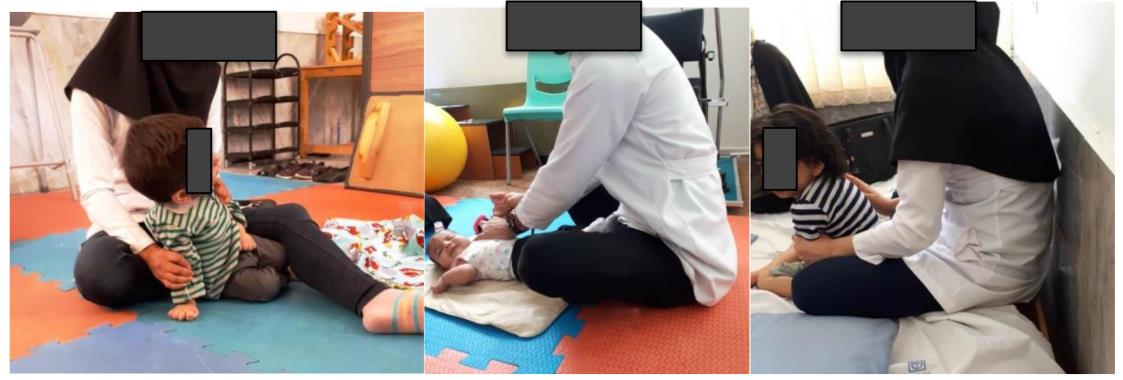
Statistical Analysis
Descriptive analysis was used for qualitative variables and an independent T-test was performed for comparing the risk factors between subjects ‘with MSDs’ and those ‘with no MSDs’. A P value<0.05 was considered statistically significant.
Results
The mean age, height, weight and body mass index (BMI) of the respondents were 31.17 ± 7.85 years,
168.8±14.61cm, 67.5±11.9kg and 26.2±4.63 Kg/m2, respectively. Women and men respectively accounted for 56.7% and 43.3% of the sample. Mean job history and mean work hours per week were respectively 8.47±3.62 years and 57.9±15.78 hours. The descriptive information of all respondents is presented in Table 2.
The subjects reported a 12-month prevalence of WMSDs at anybody region to be 76.6%. Table 2 shows the 12-months prevalence rates of WMSDs for different body regions, which s highest in the low back (43.3%), followed by the neck (30%) and wrist (26.7%) but lowest in the elbow and ankles (3.3%).
| MSDs Prevalence | ||
|---|---|---|
| Body region | Annual prevalence N(%) | Weekly prevalence N(%) |
| Neck | 9(30%) | 5(16.7%) |
| Rt Shoulder | 2(6.7%) | 0 |
| Lt Shoulder | 2(6.7%) | 1(3.3%) |
| Both Shoulders | 7(23.3%) | 4(13.3%) |
| Rt elbow | 1(3.3%) | 0 |
| Lt elbow | 0 | 0 |
| Both elbows | 0 | 0 |
| Rt wrist | 8(26.7%) | 3(10%) |
| Lt wrist | 4(13.3%) | 2(6.7%) |
| Both wrist | 3(10%) | 3(10%) |
| Upper back | 10(33.3%) | 10(33.3%) |
| Lower back | 13(43.3%) | 5(16.7%) |
| Hip joint | 2(6.7%) | 1(3.3%) |
| Rt knee | 4(13.3%) | 2(6.7%) |
| Lt knee | 4(13.3%) | 3(10%) |
| Both knee | 2(6.7%) | 0 |
| Rt ankle | 0(0) | 0 |
| Lt ankle | 0(0) | 0 |
| Both ankle | 1(3.3%) | 0 |
Table 2: Demographic characteristics of occupational therapists (n=30).
In the analysis of the posture adopted during the OT treatment using the QEC: neck, shoulder/arm, and wrist/hand showed a “high” risk, while the back showed moderate and the vibration and pace of work and stress showed “low” risk (Table 3).
| task | ||||||
|---|---|---|---|---|---|---|
| low | Moderate | High | Very high | Mean (SD) | Risk level | |
| Back | Aug-15 | 16-22 | 23-29 | 29-40 | 27.4 (6.6) | High |
| Shoulder/arm | Oct-20 | 21-30 | 31-40 | 41-56 | 33.6 (6.8) | High |
| Wrist/hand | Oct-20 | 21-30 | 31-40 | 41-56 | 31.2 (5.5) | High |
| Neck | 04-Jun | 08-Oct | Dec-14 | 16-18 | 12.8 (3.1) | High |
| Vibration | 1 | 4 | 9 | - | - | - |
| Work pace | 1 | 4 | 9 | - | 1.56 (0.56) | low |
| Stress | 1 | 4 | 9 | 16 | 2.46 (0.86) | low |
Table 3: QEC analytical results for adopted postures by occupational therapists.
| Action level | Frequency | Percent | Valid percent | Cumulative Percent | |
| A group | 1 | 15 | 50 | 50 | 50 |
| A group | 2 | 13 | 43.3 | 43.3 | 93.3 |
| A group | 3 | 2 | 6.7 | 6.7 | 100 |
| A group | 4 | 0 | 0 | 0 | 0 |
| B group | 1 | 13 | 43.3 | 43.3 | 43.3 |
| B group | 2 | 10 | 33.3 | 33.3 | 76.7 |
| B group | 3 | 5 | 16.7 | 16.7 | 93.3 |
| B group | 4 | 2 | 6.7 | 6.7 | 100 |
| C group | 1 | 1 | 3.3 | 3.3 | 3.3 |
| C group | 2 | 17 | 56.7 | 56.7 | 60 |
| C group | 3 | 12 | 40 | 40 | 100 |
| C group | 4 | 0 | 0 | 0 | 0 |
| D group | 1 | 14 | 46.7 | 46.7 | 46.7 |
| D group | 2 | 10 | 33.3 | 33.3 | 80 |
| D group | 3 | 5 | 16.7 | 16.7 | 96.7 |
| D group | 4 | 1 | 3.3 | 3.3 | 100 |
| Total | 1 | 1 | 3.3 | 3.3 | 3.3 |
| Total | 2 | 20 | 66.7 | 66.7 | 70 |
| Total | 3 | 7 | 23.3 | 23.3 | 93.3 |
| Total | 4 | 2 | 6.7 | 6.7 | 100 |
Table 4: RULA descriptive results.
Further analysis using an independent T-Test was performed on the final scores of the QEC and RULA from participants classed as ‘healthy’ and those ‘with a history of MSDs’. The test showed no significant differences between groups with the RULA (P=0.41) and QEC (0.31) final scores in those participants involved in the treatment working posture.
Discussion
This study was conducted to analyze the working postures of occupational therapists during a session of treatment of children with cerebral palsy. The results can be utilized for planning the strategies to prevent the subsequent occupational musculoskeletal disorders.
There are various instruments for assessing MSDs in different groups with emphasis on the different regions and risk profiles. These instruments include the Persian versions of the Orebro musculoskeletal pain screening questionnaire (OMPSQ) to screen for musculoskeletal injuries or the spine functional index for determining functional status [14, 15]. These questionnaires are mostly region specific so the GNMQ was we used to assess the existence of MSDs in the occupational therapists as it is a generic tool which applies to all patients regardless of diagnosis [15]. Results showed a high percentage (76.6%) of occupational therapists experienced WMSDs in at least one anatomical region. The relatively high annual prevalence of work-related musculoskeletal symptoms reported in the low back (43.3%) neck (30%) and wrist (26%) is consistent with the results of several studies on the prevalence of back pain in other health care professionals. Molumphy, et al. [16] "found a prevalence rate of 29% of job-related low back pain in physical therapists”. Cromie, et al. [4] in a study which was conducted on 824 Physical therapists reported a 12- Month Prevalence (%) for low back, neck, upper back, shoulder and wrists respectively at: 62.5%, 47.6%, 41.0%, 22.9% and 21.8%, respectively. Although the sample size in this study is smaller than in other studies which may limit the generalizability of findings, it appears that the trend of involved regions is the same. The most common adopted postures by OTs during this study were: sitting while the patient was between the therapist’s legs with the trunk bent. In this situation the therapist applies force and should control the patient, which subsequently results in neck flexion. This physical demand can one of the most common causes of reported LBP and neck pain [17].
Work-related shoulder and wrist symptoms also were relatively highly reported problems for the therapists in our study. Therapists who used manual therapy, massage techniques, joint mobilization and stretching maneuvers are at risk of pain and discomfort in the upper limb.
Another mechanism of creating MSDs in OT is performing the same task repeatedly for prolonged durations. Usually the OT remains in a static posture (long sitting) for about 30-minutes while performing the treatment technique repetitively; this imposes a relatively high physical load on the neck, wrist and upper quarter. Thus, OTs should ensure that they vary their techniques and give a break between these techniques in order to place varying stresses on different anatomical areas.
The QEC and RULA methods are used commonly in identifying risky jobs and determining the potential risk for incidence of WMSDs [18, 19]. According to the analytical RULA results, the work posture of an OT was poor, with the result showing “Further investigation, possibly change”. Also according to the analytical QEC results, the risk level for different regions of the body was moderate to high. In summary, with regard to our results, OTs’ work postures adopted for treating patients especially C.P subjects putting the body at the risk of injury. A static working posture with patients induces a high load on the shoulder-neck region. Occupational therapy techniques are performed in differ postures of sitting, standing and kneeling while their arm are unsupported and their hand are used for grip and manipulating the patients [8]. The RULA results confirmed the load was posed on the upper extremity and trunk as the mean score of A, B, and D sections are above 3.
To our knowledge, there are no other research findings about working posture analysis of occupational therapists with observational methods such as the RULA or QEC. Consequently we were limited in our ability to compare our results with other researchers.
Limitations
We cannot draw a causal inference from the results of this cross-sectional design. A second limitation is the low sample size - which reduces the power of generalizability of our results. Our data about existence of MSDs were self- reported and therefore considered less accurate than objective measurements because of possible false positive reporting.
Conclusion
A relatively high percentage of occupational therapists work with non-ergonomic postures, which should be investigated and a view to modifications initiated precipitously.
References
-
Bork BE, Cook TM, Rosecrance JC, Engelhardt KA, Thomason ME, et al. (1996) Work-related musculoskeletal disorders among physical therapists. Physical therapy 76(8): 827-835.
-
King P, Huddleston W, Darragh AR (2009) Work- related musculoskeletal disorders and injuries: differences among older and younger occupational and physical therapists. Journal of occupational rehabilitation 19(3): 274-283.
-
Tinubu BM, Mbada CE, Oyeyemi AL, Fabunmi AA (2010) Work-related musculoskeletal disorders among nurses in Ibadan, South-west Nigeria: a cross- sectional survey. BMC Musculoskelet Disord 11: 12.
-
Cromie JE, Robertson VJ, Best (2000) MO Work- related musculoskeletal disorders in physical therapists: prevalence, severity, risks, and responses. Physical therapy 80(4): 336-351.
-
Jang Y, Chi CF, Tsauo JY, Wang JD (2006) Prevalence and risk factors of work-related musculoskeletal disorders in massage practitioners. Journal of Occupational Rehabilitation 16(3): 416-429.
-
Stubbs DA, Buckle PW, Hudson MP, Rivers PM, Worringham CJ (1983) Back pain in the nursing profession I. Epidemiology and pilot methodology. Ergonomics 26(8): 755-765.
-
Milhem M, Kalichman L, Ezra D, Alperovitch ND (2016) Work-related musculoskeletal disorders among physical therapists: A comprehensive narrative review. International journal of occupational medicine and environmental health 29(5): 735-747.
-
Hinchcliffe A (2007) Children with cerebral palsy: A manual for therapists, parents and community workers. SAGE Publications, India.
-
David G, Woods V, Li G, Buckle P (2008) The development of the Quick Exposure Check (QEC) for assessing exposure to risk factors for work-related musculoskeletal disorders. Applied ergonomics 39(1): 57-69.
-
McAtamney L, Corlett EN (1993) RULA: a survey method for the investigation of work-related upper limb disorders. Applied ergonomics 24(2): 91-99.
-
Dockrell S, O’Grady E, Bennett K, Mullarkey C, Mc Connell R, et al. (2012) An investigation of the reliability of Rapid Upper Limb Assessment (RULA) as a method of assessment of children's computing posture. Applied Ergonomics 43(3): 632-636.
-
Kuorinka I, Jonsson B, Kilbom A, Vinterberg H, Biering-Sørensen F, et al. (1987) Standardised Nordic questionnaires for the analysis of musculoskeletal symptoms. Applied ergonomics 18(3): 233-237.
-
Namnik N, Negahban H, Salehi R, Shafizadeh R, Tabib MS (2016) Validity and reliability of Persian version of the Specific Nordic questionnaire in Iranian industrial workers. Work 54(1): 35-41.
-
Shafeei A, Mokhtarinia HR, Maleki-Ghahfarokhi A, Piri L, et al. (2017) Cross-cultural adaptation, validity, and reliability of the persian version of the Orebro Musculoskeletal Pain Screening Questionnaire. Asian Spine Journal 11(4): 520-530.
-
Mokhtarinia HR, Azadeh Hosseini, Azam Maleki- Ghahfarokhi, Charles Philip Gabel, Majid Zohrabi (2018) Cross-cultural adaptation, validity, and reliability of the Persian version of the spine functional index. Health and Quality of Life Outcomes 16(1): 95.
-
Molumphy M, Unger B, Jensen GM, Lopopolo RB (1985) Incidence of work-related low back pain in physical therapists. Physical therapy 65(4): 482-486.
-
Chang SR, Park HG (2009) A Study of the Effects of the Trunk Angles and the Upper Ann Angles on Workloads in the Lifting Work. Journal of the Korean Society of Safety 24(2): 69-75.
-
Batham C, Yasobant S (2016) A risk assessment study on work-related musculoskeletal disorders among dentists in Bhopal, India. Indian J Dent Res 27(3): 236-241.
-
Kaufman-Cohen Y, Ratzon NZ (2011) Correlation between risk factors and musculoskeletal disorders among classical musicians. Occupational Medicine 61(2): 90-95.
- The Expanding Landscape of Road Rage: A Systematic Review of Conflicts Involving Drivers, Pedestrians, and Micromobility
- Validating Cognitive Models of Royal Navy Performance on Control Systems
- Comparing Standard and State-of-the-art Firefighter Coats on Postural Balance and Gait in a Live Burn Environment
- Investigating the Integration of Telemedicine into Clinicians Workflow: A Review of Methods
- Risk Assessment of Ergonomic Factors in a Textile Firm by RULA, REBA and Fine Kinney Methods
- Impact of Self-Esteem Training on Individuals with Disabilities Aged 17-30