
Talenticity (Talent, Creativity) in the Era of Metaintelligence
Today the consensus is almost general and indisputable: talent is a determining factor in the success of individuals and organizations around the world. More or less everyone is looking for talent in others and wants to demonstrate their own. We all want to work with talented people. It's a great way to develop our talent too. Discovering and enhancing a latent talent and making it grow ultimately represents one of the most rewarding and significant challenges of the educational mission as well as the mission that any society should have. For years we have been trying to answer the question of whether “talent is innate or developed through experience and the environment". The question we ask ourselves today is: Can learning in "personalized” environments, through artificial intelligence algorithms, foster creative thinking and the development of talents?
Introduction
Talent, Creativity and Artificial Intelligence
The question of whether we are born talented or become talented people has been the subject of philosophical and scientific debate for a long time. Philosophers such as John Locke supported environmentalism, stating that the human mind is a “blank slate” at birth and that experience shapes talent as can be read from his Essay on the Intellect: «Whence [the intellect] has do I deal with all these materials of reason and knowledge? I answer with one word: from experience. This is the foundation of all our knowledge; from here they derive their first origin.”(Essay on the Human Intellect, Book II, Chapter I). According to the Treccani vocabulary, talento sm [from talento1 means the ingenuity, the predisposition, the capacity and the relevant intellectual qualities, as Opinion they are natural and intended for particular activities [1]. Sometimes talent is confused with genius. But in fact they are two different races or rather, genius can be defined as the innate ability to “create” from nothing, while having a talent is more than anything else the predisposition to “transform” in the best way what exists in the present. There are many different definitions of talent. Suffice it to say that according to a study conducted by Gallup, Inc., a well-known American analysis and consultancy company based in Washington, 34 “thematic temperaments” or “talents” have been identified. Identifying a talented person can be a complex and subjective process, as talents can vary greatly between individuals and are often influenced by context and specific needs. However, there are some parameters that can help identify talent: Fantasy; Inventiveness; Creativity; Curiosity (Figure 1).
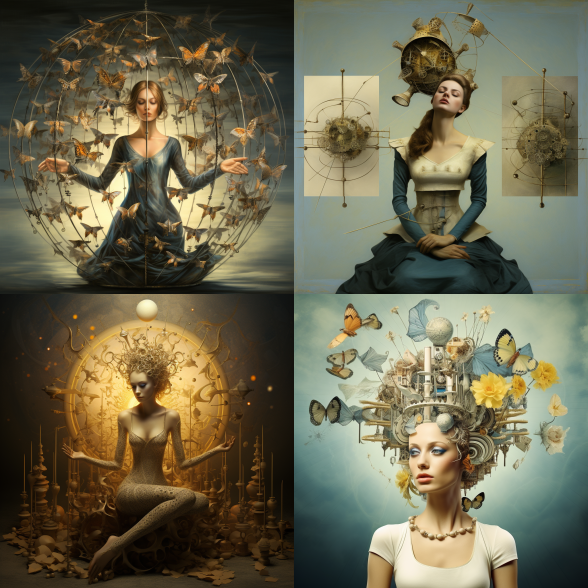
We want to focus on a specific type of talent, creative talent or that type of talent that manifests itself through creativity, imagination and the ability to think outside the box to create something new, unique or significant. A talent that, thanks to the ability to imagine a different future, generates new ideas, the ability to make things “happen” [2].
One thing is for sure, finding talent requires a discovery process that can vary depending on the field of interest and skills in question. Many are looking for talents that they often cannot find. Many think they have found “potential” talent that often does not create value within an organization. According to The Conference Board, a think tank founded in New York in 1916 as the National Industrial Conference Board (NICB) by a group of CEOs concerned about the impact of workplace issues on businesses, the topic of talent search is in top of mind for CEOs and corporate officials [3]. Today the company represents one of the “most reliable sources of unbiased statistics and trends, second only perhaps to the United States Bureau of Labour Statistics”.
Of course, the search for talent is not just a problem of jobs. If on the one hand the use of generative artificial intelligence platforms seems to be a potential tool in talent acquisition, on the other hand we want to address the problem from a different perspective, that is, “it is possible to develop talent through artificial intelligence and new technologies? Is it possible to develop that creative spark that makes people unique in the work sphere but also in the personal sphere?
The practical usefulness of all this is that discovering a talent that has been undervalued until now provides significant advantages, both as a person and as an organization. Being able to grasp the true value of each of us is the prerequisite for creating not only a unique and motivated team but also an individual integrated into an increasingly complex, psychologically advanced world [4].
Ultimately, the development of talent is essential in our society, starting from the awareness that the scarcity of talent is also reflected at a macroeconomic level, in a globalized way. Never before have there been talents waiting to be discovered. In our globalized society, technology has now become an integral part of every aspect of our lives. It is difficult to think that this process of change is not also influencing the way of learning and cannot be “exploited” to promote meaningful learning to develop new talents. In this sense, artificial intelligence is revolutionizing the educational experience in many ways by personalizing learning, adapting it to the individual needs of students, thus making education more effective and inclusive. In other words, virtual and augmented reality, supported by AI, can allow students to immerse themselves in interactive and engaging learning experiences [5].
Multiplicative Model of Success: Bias, Heuristics and Talent
Bias, heuristics and talent are interconnected concepts that can influence the perception and evaluation of individuals’ skills and abilities. Too many times we are influenced by an initial idea that polarizes our attention and prevents analysis of the problem. Few of us can free ourselves from this domination. Sometimes we are faced with problems that are apparently unsolvable or that seem to offer insufficient data to draw conclusions. Other times, at the mercy of tiredness and stress, we tend to analyse problems in the simplest way possible, relying on thinking shortcuts called “Heuristics”. However, problem analysis is the real problem. Wrong data in input gives wrong data out (cognitive bias). Cognitive biases influence our perception, decision making and judgment (Table 1). These biases can lead to distorted or irrational conclusions. Examples of cognitive biases include the confirmation bias (tendency to seek information that confirms our beliefs), the Dunning- Kruger effect (overestimating one’s abilities), and the anchoring effect (being influenced by initial reference values) [6].
| Type of Bias | Effect | Systematic Errors |
|---|---|---|
| Confirmation bias | The tendency to search for, interpret, and remember information in a way that confirms our pre-existing beliefs | Ignoring or discounting information that does not support our opinions or beliefs. |
| Availability bias | Give greater weight to information that is more easily accessible or memorable | Creating false memories based on misleading or distorted information |
| Anchoring and adjustment bias | Be influenced by an initial reference number or value in evaluating subsequent information | Not sufficiently updating initial estimates or ratings when new information becomes available |
| Attribution bias | Tend to explain the behavior of others in terms of personality traits rather than context | Judging an individual based on the stereotypes of his/her group |
| Self-awareness overestimation bias | Overestimating one’s abilities or knowledge in a given field, often inversely proportional to one’s actual abilities | Overestimating how often others share our opinions or beliefs |
| Perspective bias | Overestimate the probability of future positive outcomes and underestimate the risks | Placing excessive value on personal property items or situations |
| Status quo bias | Tend to maintain current preferences or choices instead of considering alternatives | Prefer the default or current option without considering alternatives |
| Social confirmation bias | Adopt the opinions or behaviors of the majority to avoid social isolation | Following a popular trend without critically examining your own beliefs |
| Cause attribution bias | Misperceiving a cause-effect relationship between random events | Mistakenly believing that two events are related when in reality they are not |
| Emotional bias | Avoid risk for fear of missing out, even if the odds are favorable | Making decisions based on fear rather than objective data. |
Table 1: Classification of the different types of Cognitive Bias.
It is important to point out that the development of talent requires a rather close combination of different characteristics generating a powerful overall effect, the so- called multiplicative model of success applies. In other words, being a talented person seems to presuppose a complex interaction between biases, heuristics for overcoming prejudices or cognitive distortions and evaluation errors that can be made in any decision-making context [7].
Teaching Experiences between AI and Metaverso: Birth Talent, Professional Talent
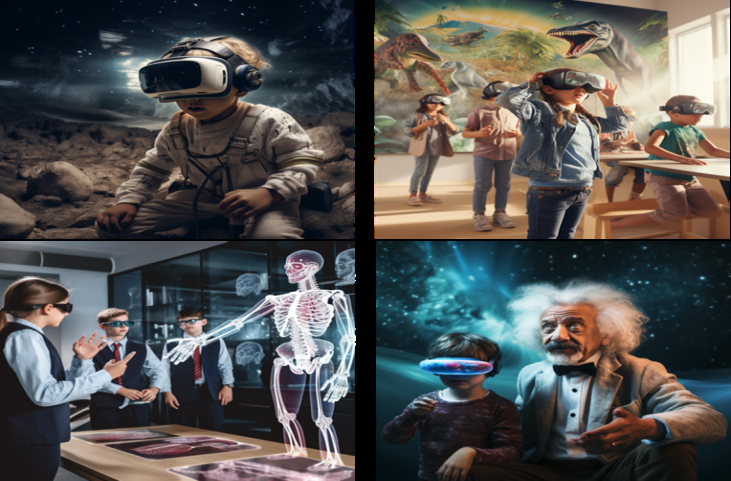
The experience provides a foundation of knowledge and skills that can be applied creatively to address challenges and solve problems in a variety of contexts. Thanks to experience, it is in fact more likely to recognize recurring patterns in problems or to better understand the consequences of different actions and decisions. But if the experience is not well guided and directed, rather than favouring us, it in turn represents an obstacle to the solution of problems, rigidifying thinking within certain functional patterns. Lateral thinking , as defined by Edward de Bono , can be used to challenge and overcome cognitive biases that can hinder the “intuition “of experience by helping to develop new ideas by bypassing barriers due to the polarizing influence of old ideas. New digital technologies offer, in this sense, a vast range of opportunities in approaching problems and challenges in unconventional ways and therefore in developing talent and creativity by enabling learning accessible to anyone in ways never seen before [8]. The potential seems enormous. Virtual learning environments can be created that allow you to acquire new skills in an interactive way. You can interact with people from different parts of the world, with different cultures, backgrounds and points of view. You can immerse yourself in history to “dialogue” with illustrious characters (Figure 2).
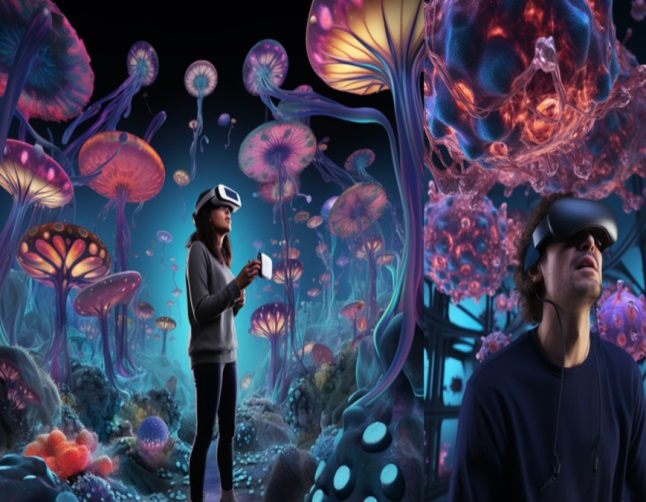
Recent news concerns the possibility of visualizing a cell in 3D using virtual reality. Result of a study jointly conducted by the National Research Council - the Institute of Applied Sciences and Intelligent Systems ‘E. Caianiello’ (Isasi) and the Institute of intelligent industrial systems and technologies for advanced manufacturing (Stiima) - in collaboration with the Department of Molecular Medicine and Medical Biotechnology of the University of Naples Federico II [9].
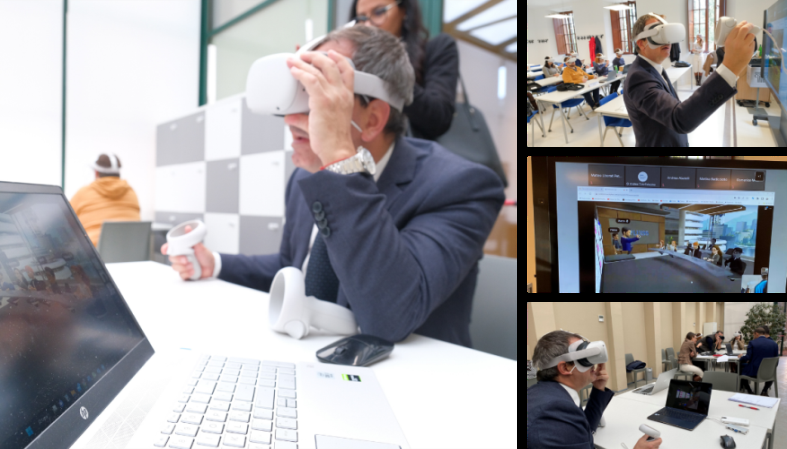
The academic studies and research on this topic that we are conducting within the LAPIS laboratory (Lean Advanced Production and Industrial Sustainable systems lab – Department of Engineering of the University of Naples Parthenope – Figure 4 demonstrate that teaching experiences in the metaverse Table 2 can play an important and significant role in helping to overcome cognitive biases and supporting talent development. In fact, we can think of the Metaverse as an immersive internet that allows us to be “inside” the contents rather than simply viewing those [10].
| Didactic Experiences in the Metaverse | Activity Description |
|---|---|
| Exposure to Different Perspectives | Interaction in an immersive environment with people from different cultures and points of view. |
| Simulations and Scenario-Based Learning | Creating realistic simulations and scenarios where students can apply their skills and make decisions. |
| Real-Time Feedback | Immediate feedback to students to correct errors and improve skills. |
| Collaborative Learning | Creating immersive environments to facilitate collaborative learning by allowing students to work together in virtual environments. |
| Personalization of learning | Creating immersive environments to provide personalized learning opportunities, tailoring content and challenges to each student’s needs and pace. |
Table 2: Teaching experiences in the metaverse.
Experience can play a crucial role in developing talent, especially when taking a “what you see is what you get” (WYSIWYG) approach. Creating more engaging, effective and efficient learning environments by including new methods, tools, technologies and strategies can foster learning and talent development where one can learn from successes and failures in an immersive world. Totally immersive environments were therefore developed for the virtual design and management of orders and stocks within an industrial process accessible via virtual reality viewers (Figure 5). The user, be it a student, a researcher, a supply chain manager can immerse themselves in a virtual world to collaborate with suppliers in designing the supply chain [11].
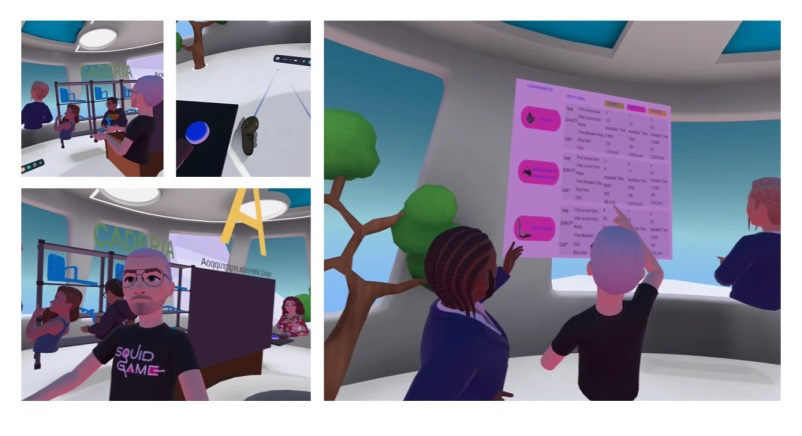
Virtual training environments have been created where students can collaborate globally in real time with multiple study teams geographically distributed in different parts of the world (Figure 6).
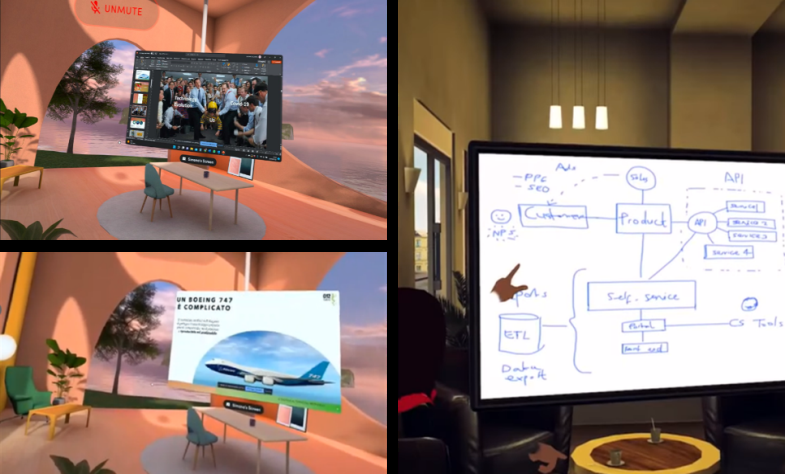
Virtual training environments have been created where students can be trained to operate in virtual environments for the Digital Twin to run real-time simulations within an industrial plant (Figure 7).
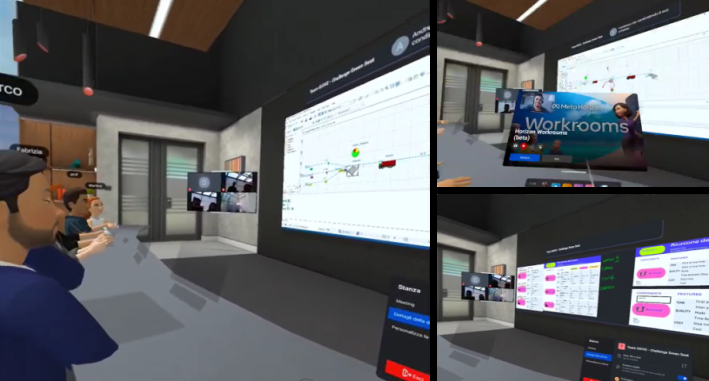
It is important to point out that experiences in the “metaverse” are constantly evolving. The ultimate goal should be to have a single virtual world where different platforms and virtual worlds can interact and communicate fluidly with each other making the Metaverse more interoperable. However, the synergy between Metaverse and Artificial Intelligence today represents a powerful and promising technological challenge to which we cannot remain indifferent as it certainly offers significant opportunities for the development of talent (global collaboration, development of creative skills, simulation and training, open-mindedness, adaptation to different scenarios, etc.) [12].
Future Implications of Talenticity in Education and Professional Development
As Metaintelligence advances and artificial intelligence continues to evolve, new horizons are emerging in education and professional development. In the future, the ability to integrate creative talent with advanced technologies will become a crucial factor for professional success. This will require a paradigm shift in the educational approach, where the focus will be on innovation and personalized learning. Tools such as augmented reality, virtual simulation, and AI-based learning will be key in developing specific skills and honing creative talent. Furthermore, the importance of continuous education and lifelong learning will become increasingly evident as technologies and labor market demands rapidly evolve. Consequently, educational institutions, businesses, and professionals will need to work closely together to develop programs that meet emerging needs and prepare individuals to successfully navigate the complex landscape of the future workforce.
Conclusion
The question remains of vital importance: “Is talent innate or developed through experience and environment?” In our opinion, new technologies can help develop talent understood as creativity and critical thinking. Essential elements to make a difference (regardless of the sector in which you operate). One of the most interesting aspects concerns the “overcoming” of some limits thanks to the use of artificial intelligence and new technologies. The key concepts can be summarized as personalization of learning, diversity of learning experiences, active learning and a problem- solving approach. The use of innovative technologies such as virtual reality, augmented reality, mobile devices and online platforms can, therefore, enrich the learning experience, making it more engaging and stimulating. It all also depends on what type of approach we have towards this “novelty”. We understand that new technologies can amplify our abilities to solve complex problems, promote understanding and can ultimately “enhance” talent in innovative ways. In our opinion, we have an “extra” tool for training talent. To enhance our senses. It is very likely that in the near future we will see an increasing collaboration between artificial intelligence and human intelligence to address future challenges and to “harness” the potential of AI to improve our understanding of the world and solve complex problems. However, it is important to note that the effectiveness of these practices depends on their adequate implementation and the context in which they are used while respecting ethical values. It is essential to also consider challenges related to data privacy, security and equity in access to digital resources.
References
-
Aljumaie, M, Nguyen HC, Chu NH, Nguyen CT, Nguyen DN, et al. (2023) Potential applications and benefits of metaverse. In: Dinh Thai Hoang, et al. (Eds.), Metaverse Communication and Computing Networks: Applications, Technologies and Approaches. IEEE Publishers, New York City, United States, pp: 17-34.
-
Kesselman MA, Esquivel W (2022) Technology on the move, consumer electronics show 2022: The evolving metaverse and much more. Library Hi Tech News 39(5): 1-4.
-
Zhang, C, Lu Y (2021) Study on artificial intelligence: The state of the art and future prospects. Journal of Industrial Information Integration 23: 100224.
-
Hudson J (2022) Virtual immersive shopping experiences in metaverse environments: Predictive customer analytics, data visualization algorithms, and smart retailing technologies. Linguistic and Philosophical Investigations 21: 236-251.
-
Zhao L (2023) Study on the Recent Development of Metaverse Application in College Teaching. ICDEL ’23: Proceedings of the 2023 8th International Conference on Distance Education and Learning, Beijing, China, pp: 30- 35.
-
Felice FD, Travaglioni M, Petrillo A (2021) Innovation trajectories for a society 5.0. Data 6(11): 115.
-
Hwang GJ, Chien SY (2022) Definition, roles, and potential research issues of the metaverse in education: An artificial intelligence perspective. Computers and Education: Artificial Intelligence 3: 100082.
-
Damar M (2021) Metaverse Shape of Your Life for Future: A bibliometric snapshot. Journal of Metaverse 1(1): 1-8.
-
Dionisio JDN, Burns III WG, Gilbert R (2013) 3D virtual worlds and the metaverse: Current status and future possibilities. ACM Computing Surveys 45(3): 1-38.
-
Felice FD , Rehman M, Petrillo A, Baffo I (2023) A metaworld: Implications, opportunities and risks of the metaverse. IET Collaborative Intelligent Manufacturing 5(3): e12079.
-
Felice FD, Petrillo A, Iovine G, Salzano C, Baffo I (2023) How Does the Metaverse Shape Education? A Systematic Literature Review. Applied Sciences 13(9): 5682.
-
Slater M (2018) Immersion and the illusion of presence in virtual reality. British Journal of Psychology 109 (3): 431-433.
- The Expanding Landscape of Road Rage: A Systematic Review of Conflicts Involving Drivers, Pedestrians, and Micromobility
- Validating Cognitive Models of Royal Navy Performance on Control Systems
- Comparing Standard and State-of-the-art Firefighter Coats on Postural Balance and Gait in a Live Burn Environment
- Investigating the Integration of Telemedicine into Clinicians Workflow: A Review of Methods
- Risk Assessment of Ergonomic Factors in a Textile Firm by RULA, REBA and Fine Kinney Methods
- Impact of Self-Esteem Training on Individuals with Disabilities Aged 17-30