
Design for the Body: How Ergonomics Transforms Modern Clothing into Comfortable, Functional, and Stylish Garments
Clothing ergonomics, an interdisciplinary field blending ergonomics, anthropometry, and fashion design, revolutionizes the relationship between clothing, the human body, and the environment. By emphasizing human-centered design, it ensures garments are not only visually appealing but also functional, comfortable, and tailored to users’ needs. This study explores the application of ergonomic principles in fashion design, focusing on usability, functionality, and aesthetic harmony. It highlights the significance of anthropometric data in designing clothing that aligns with the body’s natural movements, improving safety, health, and comfort. The research examines the evolution of ergonomic design in fashion, from historical shifts in women’s clothing to modern advancements in material science and user-centric methodologies. Special attention is given to critical design zones, including necklines, shoulders, and sleeves, ensuring seamless interaction between garments and wearers. Fashion design is pivotal in blending aesthetics with functionality, particularly in addressing the physical relationship between clothing and the human body. The six foundational pillar safety, health, comfort, functionality, aesthetics, and individuality— are emphasized as essential principles for innovative and impactful design. This integration of science and creativity fosters garments that resonate with diverse user expectations, aligning functionality with symbolic and emotional dimensions. The findings underscore the transformative potential of clothing ergonomics in creating wearable solutions that merge aesthetic allure with practical usability, elevating modern fashion to new standards of excellence.
Introduction
Clothing has always been an essential aspect of human life, serving both functional and aesthetic purposes. However, traditional approaches to clothing design often prioritized style over wearability and user comfort. With advancements in science and technology, a new discipline—clothing ergonomics—has appeared, offering a comprehensive framework for designing apparel that aligns with human needs and environmental contexts. This paper explores clothing ergonomics as a “human-centered” discipline, examining its components, method, and application areas, along with its potential to redefine garment design for modern users.
Study Background: Ergonomics in Clothing Design
The increasing demand for differentiated and user- specific clothing products is significantly influencing both design and manufacturing processes. With more consumers seeking garments tailored to their unique needs and preferences, understanding specific consumer segments has become a critical competitive strategy. This approach enables the development of clothing that meets diverse usability, comfort, and satisfaction expectations. Given the direct interaction between clothing and the skin, as well as the body’s unique contours, garments play a vital role in shaping perceptions of usability, aesthetics, and overall enjoyment [1]. Ergonomic design, when integrated into clothing creation, provides valuable tools to optimize safety, efficiency, and comfort. These principles can guide the design process, ensuring that garments align with users’ functional and aesthetic needs.
To address the intricate relationship between clothing and the human body, a thorough understanding of anatomy and body movement is essential. Factors such as the body’s balance, flexion, and extension dynamics must be considered during the design process. These insights ensure that garments accommodate movement and maintain comfort across various activities. The interdisciplinary collaboration between clothing design and ergonomic principles fosters progress in creating tailored solutions. By incorporating concepts of usability, comfort, and ergonomics specific to distinct consumer groups or niches, designers can achieve fashion patterns that resonate with users’ expectations and requirements. This multi-faceted approach not only enhances product satisfaction but also reinforces the alignment of form and function in clothing design [2, 3] Figure 1.
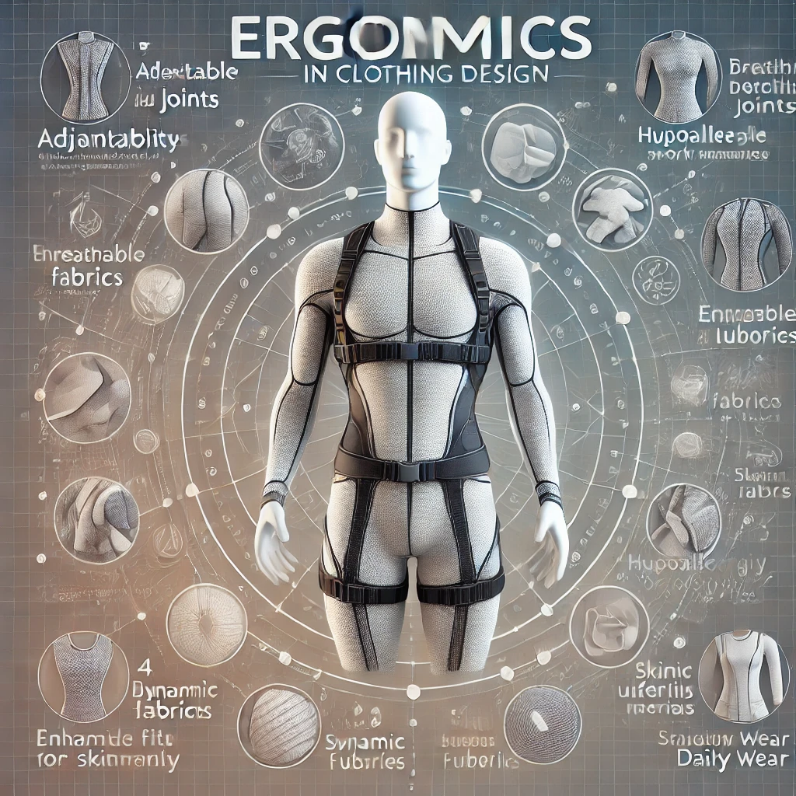
Clothing ergonomics can be defined as an applied science focused on enhancing the overall functionality of garments.
By centering on the human body’s form and motor functions, it emphasizes the harmony and comfort between clothing and its wearer. This interdisciplinary field integrates knowledge from materials science, textiles, human psychology, anatomy, environmental hygiene, anthropometry, fashion design, and even medical science to create innovative and user-centric solutions. The discipline merges the specialized aspects of garment design with the principles of ergonomics, forming a comprehensive and independent system. Its core objective is to shift the paradigm from the traditional concept of “people adapting to clothes” to a more progressive approach where “clothing adapts to people.” By prioritizing harmony between the wearer, the clothing, and the environment, ergonomic design ensures a balance between aesthetics (“beauty in form”) and functionality (“efficiency”) throughout the design process. The approach tailors clothing to meet the diverse requirements of the human body, from comfort and safety to health and appearance. Clothing ergonomics aims to optimize the interaction between garments and their users. It seeks to achieve the ideal alignment of comfort, health, and function while ensuring that the artistic and practical aspects of clothing design are seamlessly integrated. This comprehensive framework underscores the importance of designing garments that not only fulfil functional needs but also enhance the overall wearing experience.
The Transformation of Fashion: Ergonomics and Design
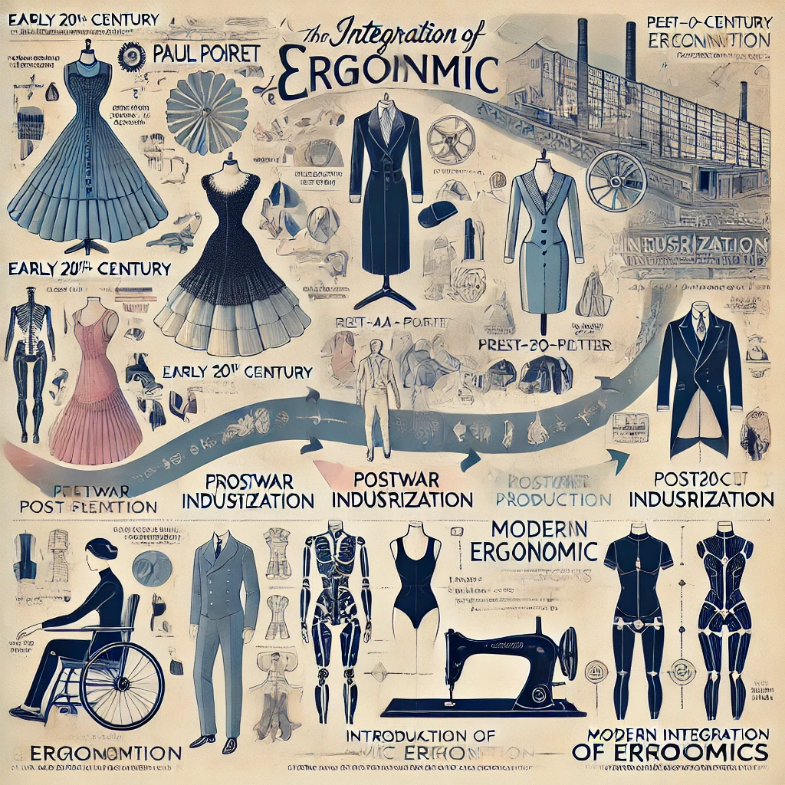
Fashion has always mirrored societal evolution, serving as a tool for expressing identity and social roles through the hierarchical use of clothing and accessories. Its symbolic nature reflects the cultural and subjective aspirations of specific eras, influencing the design, physical attributes, and construction of fashion products, particularly clothing. The interplay of symbolic, physical, and material aspects of garments reveals an ongoing transformation driven by the social, cultural, and technological contexts of each period. A significant shift began in the 19th century, marked by the simplification of clothing designs. This evolution was catalyzed by advancements in industrial technologies, increased consumer demand, and the adoption of new manufacturing processes [4].
A notable example is the revolution in women’s fashion initiated by French designer Paul Poiret in the early 20th century. Poiret’s designs broke away from the restrictive corsets that once defined women’s silhouettes [3, 4]. These corsets, designed to create a slim waist and emphasize a straight posture, were replaced with lighter garments that enhanced mobility. Poiret introduced innovative features such as deeper V-shaped necklines, visible shoulders, and flowing silhouettes, setting a new standard for ergonomic clothing design that prioritized the wearer’s comfort and freedom of movement. Historically, fashion has been influenced by various social, cultural, and professional practices, driving a more pragmatic understanding of individual needs and daily tasks. This shift, along with the industrial focus on large-scale production in the 1950s and 1960s, democratized fashion. The introduction of prêt-à-porter in France and ready-to- wear in the United States marked a departure from the exclusivity and ostentation of haute couture [5]. The changing economic, cultural, and demographic realities of the postwar period necessitated faster production processes and greater quantities of garments to meet consumer demands. This industrial revolution in fashion significantly transformed the design and development processes. Mechanization and mass production brought about new consumption patterns, fuelled by the growing purchasing power of emerging social groups [6]. The rapid dissemination of this system across the globe strengthened the textile and apparel industries, facilitating the integration of ergonomic principles into clothing design. This integration allowed garments to align more closely with user needs, emphasizing comfort, functionality, and accessibility while meeting the demands of modern life. By combining ergonomics with fashion design, the industry has continually adapted to evolving societal expectations, ensuring clothing remains both practical and reflective of cultural aspirations Figure 2.
Ergonomics and Anthropometry in Fashion Design
Fashion design plays a crucial role in harmonizing aesthetics with functionality, especially when addressing the physical interaction between clothing and the human body.
By integrating ergonomic principles, designers can ensure garments not only look appealing but also accommodate the body’s natural movements and daily activities effectively. From an ergonomic perspective, every articulation of the body that comes into direct contact with clothing must be analyzed to create products that balance aesthetic value with functional quality. Anthropometry, the scientific study of human body measurements, provides invaluable tools for this process, offering two key systems of measurement: • Static or Structural Anthropometry: This focuses on the physical dimensions of the human body, such as variations in size, shape, and proportions. • Dynamic or Functional Anthropometry: This examines biomechanical aspects, addressing how the body moves and interacts with clothing during various activities and tasks. • Conventional clothing modelling often relies on statistical data, including measurements like waist, hip, and neck circumferences, body length, arm length, and others. These dimensions inform the sizing and fitting of garments. Additionally, understanding the specific needs of diverse user segments—such as women, men, elderly individuals, or people with obesity—helps guide the design of clothing tailored to unique expectations and requirements. Each region of the body requires careful consideration to ensure that garments function comfortably and effectively during movement. For example: • Arms: Tight armholes or restrictive sleeves can hinder mobility. • Legs and Hips: Loose-fitting pants or improperly designed seams may cause discomfort or impede natural movement. • Neck and Shoulders: Collars and shoulder designs must support ease of motion without constriction. • Head: Headwear or garments with hoods must balance fit with the ability to turn and tilt the head freely.
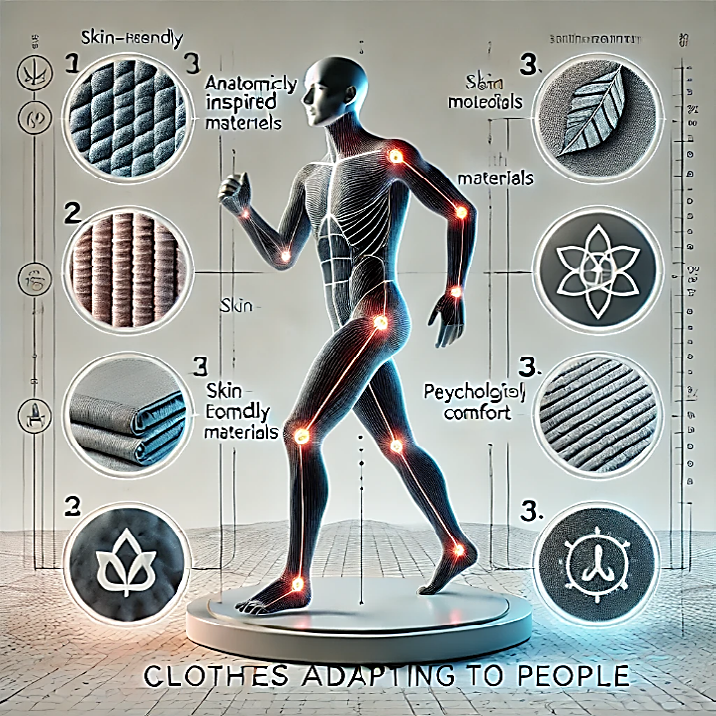
By analysing these physical interactions and biomechanical requirements, designers can create clothing that meets ergonomic standards while addressing the diverse needs of users. This approach ensures that garments achieve a harmonious blend of functionality, comfort, and aesthetic appeal, contributing to user satisfaction across various contexts Figure 3.
The Role of Clothing Ergonomics in Fashion Design
The principles of human-centered design, integral to mechanical engineering, are equally vital in clothing design through the concept of clothing ergonomics. Traditional fashion design often prioritized “beauty in form,” focusing on artistic style and trends with a strong emphasis on subjective expression. This approach often neglected the practical needs of the wearer, resulting in garments that were visually appealing but impractical or uncomfortable for daily use. By the late 1990s, design industries, particularly fashion, shifted their focus towards “people-oriented” and “humanized design.” This transformation emphasized that while aesthetics remains essential, clothing must also accommodate the functional, physiological, and psychological needs of the wearer [7, 8]. Fashion designers began to integrate ergonomic principles, ensuring garments:
- Feature scientifically designed structures that support the body’s natural movements.
- Use skin-friendly materials that meet health standards.
- Align with human physiological and psychological requirements.
- Prioritize practicality in maintenance and usability, embodying the philosophy of “clothes adapting to people.” Such as. Swimwear Design: In designing swimwear, ergonomic principles are applied to ensure athletes can perform unrestricted movements. A poorly designed swimsuit that hinders flexibility or mobility can significantly affect athletic performance. By incorporating ergonomics, swimwear becomes a supportive extension of the athlete’s body, enhancing both comfort and efficiency.
Summer Dresses: Designers often use belts to highlight the female form by cinching the waist. However, this approach can compromise comfort in summer, where proper ventilation and heat dissipation are critical. By replacing the belt with pleating techniques, designers achieve the same waist-defining effect while improving air circulation and wearer comfort. This modification aligns with health, hygiene, and ergonomic principles, showing how aesthetics and functionality can coexist harmoniously. These examples highlight the significant role clothing ergonomics plays in fashion design. By balancing aesthetic appeal with practical usability, ergonomic design ensures that garments not only look beautiful but also cater to the physical and psychological well-being of the wearer. This integration fosters a more comprehensive approach to fashion, where design is truly “for the people.”
The Application of Clothing Ergonomics in Fashion Design
The study of clothing ergonomics aims to harmonize the interaction between clothing design, the human body, and the environment. This discipline pursues best performance by integrating knowledge from various fields, including fashion design, hygiene, anthropometry, physiology, psychology, anatomy, and medical science. By synthesizing these domains, clothing ergonomics ensures that garments are scientifically designed, practical, and efficient, achieving the ideal balance in the “human-clothing-environment” system.
Human Body and Clothing Adaptation in Fashion Design
Clothing ergonomics emphasizes the seamless interaction between garments and the human body. It looks to create a harmonious interface that synchronizes internal and external elements, showcasing both the aesthetic appeal and functional efficiency of the human-clothing relationship. Unlike other design disciplines—such as tool design, which focuses on hand and joint mechanics, or furniture design, which prioritizes spinal posture and physiological functions—clothing design uses the human torso and limbs as its central focus. This approach highlights the elegance and efficiency of the body while ensuring freedom of movement. Streamline the design process, clothing designers divide the human body into four zones: • Fitting Zone: Forms the foundation for clothing support and structure. • Free Zone: Eases unrestricted movement for comfort and flexibility. • Functional Zone: Addresses areas critical to human motion and activity. • Design Zone: Provides space for creative expression and stylistic innovation. • Modern fashion design prioritizes clothing that supports function, fit, and freedom of movement. This shift transforms the design philosophy from “people adapting to clothes” to “clothing serving people.”
Ergonomic Design of Key Body Areas
To achieve both functionality and aesthetic appeal, clothing must adapt to various parts of the human body. Below are key considerations for specific body areas: • Neck and Collar: Collar design must account for the structure and shape of the neck. Failure to consider the anatomical characteristics of the neck can result in awkward or uncomfortable designs. • Shoulders: The shoulders play a vital role in garment shaping, significantly influencing the perception of gender, body type, and overall style. A well-fitted shoulder design ensures the garment’s appearance, wearer comfort, and upper limb mobility. Adhering to ergonomic principles for these areas is essential. • Chest: The chest is particularly important in women’s clothing design, as it affects the overall aesthetics and comfort of a garment. Proper chest design must consider both form and function, ensuring adequate space for heart and lung activity while maintaining visual harmony. • Waist and Hips: The waistline serves as a critical reference point in designing skirts and trousers. Designers must ensure that garments accommodate the natural folds and movements of the gluteal region. Ill-fitting trousers—whether too tight or too loose—can result in discomfort and detract from both aesthetics and functionality. • Arms and Sleeves: The arms, being highly flexible, require sleeve designs that align with their natural movements. Particular attention should be given to the armpit area, ensuring the design is neither too tight nor too bulky. Poorly constructed sleeves can cause discomfort, restrict movement, and lead to fatigue, violating ergonomic and hygiene principles.
Clothing Ergonomics: The Foundation for Elevating Modern Fashion Design
Every designer aspires to create garments that embody the aesthetics of the era while meeting the diverse needs of people. However, achieving this ideal is not always straightforward. Often, the focus on “beauty in form” overshadows the importance of “people-oriented” and “humanized” design principles, leading to outcomes that fall short of their full potential. With the advent of clothing ergonomics, designers are increasingly prioritizing the harmonious interaction between the individual, their clothing, and the environment.
This change in basic assumptions emphasizes the need for rational and scientific design approaches, moving away from purely subjective aesthetic expressions.
The functional requirements of the human body have become central to this process, fostering a positive constructive interaction within the “human-clothing- environment” system. Here, the environment serves as a context, clothing as a tool, and the individual as the focal point.
The Six Pillars of Modern Clothing Design Figure 4
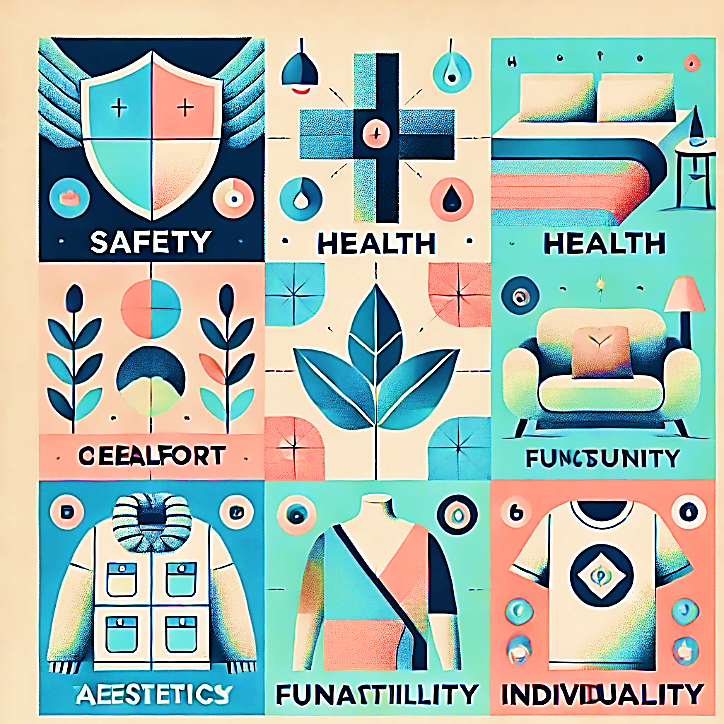
The next generation of fashion designers is encouraged to embrace six core principles for modern clothing design: safety, health, comfort, functionality, aesthetics, and individuality. These principles reflect an integrated vision that aligns the relationships between individuals, garments, and their environments, creating a foundation for innovative design thinking. Safety: Designers must prioritize safety, ensuring that clothing protects wearers from harm and enhances their well-being. Health: Garments should follow hygiene standards, promoting physical and mental health by offering comfort and ease of use. Comfort: Clothing must ease a sense of calm and relaxation, avoiding designs that feel restrictive or cumbersome. Functionality: Practicality is key garments should support daily activities, enhance usability, and maximize the functional potential of clothing. Aesthetics: Design should reflect the beauty of form while incorporating rationality, ensuring that visual appeal does not compromise functionality. Individuality: Clothing should express personality and creativity, resonating with the wearer’s unique identity and enriching their experience.
The Vision for Future Designers
Experts emphasize that these six concepts form the cornerstone of scientific, human-centric, and humane fashion design. When these principles are seamlessly integrated, designers can produce works that marry aesthetic appeal with practical functionality, embodying both artistic vision and ergonomic sensibility. By adhering to these principles, aspiring designers can create garments that are not only visually captivating but also meaningful, wearable, and impactful. As experts suggest, those who align their creative inspiration with the requirements of clothing ergonomics will craft designs that transcend mere trends, establishing themselves as exceptional and visionary contributors to the fashion industry.
Considerations
- Enhancing Fashion Design Through Consumer-Centric Innovation and Ergonomics: Modern consumers increasingly seek fashion products that combine distinctive physical attributes with practical usability. In this landscape, innovation and differentiation are crucial strategies for fostering a strong connection between the product and its users while ensuring competitive brand positioning. To achieve this, understanding the specific needs and preferences of targeted consumer segments becomes a vital competitive advantage in designing garments that meet unique demands effectively.
- Understanding Consumer Needs in Fashion Design: The ability to identify and analyse the factors influencing consumers’ choices and use of garments is essential for guiding the fashion design process. By integrating biophysical, anthropometric, and social characteristics unique to specific consumer groups into the creative process, designers can enhance product relevance and satisfaction. These variables, when thoughtfully applied, create value by fostering constructive interaction in the relationship between the user, the task or activity, and the garment itself.
- Moreover, clothing’s intimate relationship with the human body lends inherent value to fashion products through user perceptions of key aspects such as usability, comfort, tactile appeal, and emotional satisfaction. These subjective factors strongly influence consumer decisions and contribute to the overall product experience.
- The Role of Physical Qualities and Ergonomics: Structural and physical properties, such as tactile and thermal comfort, are critical in shaping positive evaluations of fashion products. Anthropometric and ergonomic principles, with their interdisciplinary scope, provide valuable insights into optimizing the interaction between the body and clothing. These principles equip designers with tools to ensure that garments promote safety, health, and comfort for the wearer, meeting both functional and emotional needs.
- Aesthetics and Emotional Engagement: In addition to physical attributes, the aesthetic and symbolic elements of a garment play a significant role in its appeal. Through thoughtful design, the visual and emotional aspects of fashion products can evoke aesthetic pleasure, stimulating positive emotional responses and enhancing the product’s perceived value. A harmonious balance between practical functionality and aesthetic allure creates a product that resonates deeply with consumers, fulfilling both utilitarian and emotional desires.
- By leveraging the integration of ergonomic science, consumer insights, and aesthetic innovation, fashion designers can create products that are not only functional and comfortable but also emotionally engaging and uniquely satisfying for the modern consumer.
References
-
Bergman RA, Afifi AK, Miyauchi R (2007) Illustrated Encyclopedia of Human anatomic variation: Opus V: skeletal system: vertebral column – cervical vertebrae. Anatomy Atlases.
-
Das S, Suri R, Kapur V (2005) A Duplicated Spinous process of the C7 vertebra. Folia Morphologica 64(2): 115-117.
-
Delbarre F, Ramadier JO, Laprusle J, Coste F, Paolaggi JB (1963) Apophysomegaly of the 7th cervical vertebra with acroparesthalgia and amyotrophy of the hand. Rev Rhum Mal Osteoartic 30: 125-127.
-
Mann CV, Russell RCG (1992) The Spine, Vertebral calumn and spinal cord. In: Bailey, et al. 21st (Edn.), ELBS with Chapman and Hall, London, pp: 493-500.
-
Maresova J (1950) X-ray Radiation of the 7th Cervical Vertebra in the Treatment of Psoriasis. Cesk Dermatol 25(7-8): 297-299.
-
Taitz C, Nathan H, Arensburg B (1978) Anatomical observations of the foramina transversarium. J Neurol Neurosurg Psychiatry 41(2): 170-176.
-
Nathan H (1962) Osteophytes of the vertebral column- An anatomical study of their development according to age, race and sex with considerations as to their etiology and significance. J Bone and Joint Surg 44(2): 243-268.
-
Gupta M, Bharihoke V, Bhargava SK, Agarwal N (1998) Size of the vertebral canal -A correlative study of measurements in radiographs and dried bones. J Anat Soc India 47: 1-6.
-
Schellinger PD, Schwab S, KriegerD, Fiebach JB, Steiner T, et al. (2001) Masking of vertebral artery dissection by severe trauma to the cervical spine. Spine 26(3): 314-
-
William M, Newell RLM, Collin P (2016) The back: cervical vertebrae. In: Standring S, et al. (Eds.), Gray’s Anatomy. 41st (Edn.), Elsevier Churchill Livingstone, Edinburg, London, pp: 724-727.
-
Smith JL, Herring SW (2010) Evolution of vertebral structures and function. J Vertebr Morphol 45(3): 301- 318.
-
Bryce TH (1915) Osteology the Skeleton-Vertebral Calumn. In: Schaffer EA, et al. (Eds.), Quains elements of anatomy. 11th (Edn.), Longmans Green and Co, London, pp: 5-34.
-
Spalteholz W (2019) Bones of the spine. In: Hand atlas of human anatomy. 7th(Edn.), Lippincott Company, Philadelphia, London, pp: 72-85.
-
Chaurasia BD (1990) Head & neck and brain-cervical vertebrae. In: Human anatomy regional and applied. CBS Publishers and Distributors 204.
-
Pan N (2001) Fusion of cervical vertebrae-Anatomical notes. 66: 426-429.
-
Cooper DF (1980) Bone erosion of the cervical vertebrae secondary to tortuousity of the vertebral artery-case report. J Neurosurg 53(1): 106-108.
-
Anderson RE, Shealy CN (1970) Cervical pedicle erosion and rootlet compression caused by tortous vertebral artery. Radiology 96(3): 537-538.
-
Inderbir Singh (2002) Cervical vertebrae. In: Textbook of human Osteology. 2nd(Edn.), Medical Publishers LTD, New Delhi, pp: 98-103.
-
Francis CC (1955) Variations in the articular facets of the cervical vertebrae. Anat Rec 122(4): 589-602.
-
Palma A, Carini F (1990) Variation of the transverse apophysis of the 7th cervical vertebra: anatomo- radiological study of an isolated population. Arch Ital Anat Embriol 95(1): 11-16.
-
Borejko J (1954) Fracture in the spinous process of the 7th cervical vertebra. Pol Przegl Radiol 18(1): 1-6.
-
Nikitin MN (1975) Dislocation of the 7th Cervical vertebra. Ortop Travmatol Protez 4: 44-46.
-
Anderson RJ (1883) Observations on the diameter of human vertebrae in different regions. J Anat and Physiol 17(3): 341-344.
-
Cyriax EF (1920) On current absolute and relative measurements of human vertebrae. J Anat 54: 305-308.
-
Willis TA (1929) An analysis of vertebral anomalies. Am J Surgery 6(2): 163-168.
-
Cave AJE (1930) Bilateral cervical rib - The earliest English example of bilateral cervical rib. British J Surg 29(113): 47-51.
-
Wood JF (1938) The cervical vertebrae of the Australian native. J Anat 72: 411-415.
-
Hinck VC, Hopkins CE, Savara BS (1962) Sagittal diameter of the cervical spinal canal in children. Radiology 97-108.
-
Gilad I, Nissan M (1985) Sagittal evaluation of elemental geometrical dimensions of human vertebrae. J Anat 143: 115-120.
-
Fujiwara K, Yonenobu K, Ebara S, Yamashita K, Ono K (1989) The prognosis of surgery for cervical compression myelopathy. J Bone and Joint Surg 71(3): 393-398.
-
Hyppa SE, Laasonen EM, Halonen V (1974) Erosion of cervical vertebrae caused by elongated and tortuous vertebral arteries. Neuroradiology 7(1): 49-51.
-
Francis CC (1955) Dimensions of cervical vertebrae. Anat Rec122: 603-609.
-
Scoles PV, Linton AE, Latimer B, Levy ME, Digiovanni BF (1988) Vertebral body and posterior element morphology: The normal spine in middle life. Spine 13(1): 1082-1086.
-
Madawi AA, Solanki G, Casey ATH, Crockard HA (1997) Variations of the groove in the axis vertebra for the vertebral artery - Implications for instrumentation. J Bone and Joint Surgery 79(5): 820-823.
-
Xu R, Nadaud MC, Ebraheim NA, Yeasting RA (1995) Morphology of the second cervical vertebra and the posterior projection of the C2 pedicle axis. Spine 20(3): 259-263.
-
Lalit M, Piplani S, Kullar JS, Mahajan A (2019) A Morphometric study of body, lamina, spinous process and vertebral foramen of vertebra prominence (C7) in north indian population: A clinico-Anatomical approach. Int J Anat Res 7(4.2): 7105-7112.
-
Cunningham DJ (1886) The neural spines of the cervical vertebrae as a race character. J Anat and Physiol 20(4):637-640.
-
Pal GP, Routal RV, Saggu SK (2001) The orientation of the articular facets of the zygapophyseal joints at the cervical and upper thoracic region. J Anat 198(4): 431-441.
-
Sahoo PK, Singh P, Bhatoe HS (2004) Stabilization for sub axial cervical spine injury. IJNT 1(1): 43-47.
-
Collins CU (1930) Cervical ribs. Am J Surg 14(2):449- 451.
-
Pal GP, Routal RV (1986) A study of weight transmision through the cervical and upper thoracic regions of the vertebral columna in man. J Anat 148: 245-261.
-
Bazaldúa CJJ, Gonzalez LA, Gomez SA, Villarreal SEE, Velazquez GSE, et al. (2011) Morphometric study of cervical vertebrae C3-C7 in a population from northeastern Mexico. Int J Morphol 29(2): 325-330.
-
Hosono N, Sakaura H, Mukai Y, Fuji R, Yoshikawa H (2006) C3-6 laminoplasty takes over C3-7 laminoplasty with significantly lower incidence of axial neck pain. Eur Spine J 15: 1375-1379.
-
Wang JM, Roh KJ, Kim DJ, Kim DW (1998) A new method of stabilising the elevated laminae in open-door laminoplasty using an achor system. J Bone Joint Surg 80: 1005-1008.
-
Batzdorff U, Batzdorff A (1988) Analysis of cervical spine curvature in patients with cervical spondylosis. Neurosurgery 22(5): 827-836.
-
Bertram C, Madert J, Eggers C (2002) Eosinophilic granuloma of the cervical spine. Spine 27(13): 1408- 1413.
-
Sherekar SK, Yadav YR, Basoor AS, Baghel A, Adam N (2006) Clinical implications of alignment of upper and lower cervical spine. Neurol India 54(3): 246-247.
-
Buchholtz EA, Stepien CC (2009) Anatomical transformation in the vertebral column: Evolutionary perspectives on vertebral regionalization and specialization. Integr Comp Biol 49(2): 590-600.
-
Bogduk N (2014) Clinical anatomy of the cervical spine. Pain Physician 17(5): 529-535.
-
Flannigan BD (1987) Cervical Epidural Venous Plexus and Acute Herniated Disks. American Journal of Neuroradiology 8(1): 29-34.
-
Patel V, Bartels RHMA (2022) Imaging of the Cervical Spine: CT and MRI in Evaluating Structural and Neurological Pathologies. J Radiological Sciences 15(4): 273-285.
-
Katzberg RW, Linsenmeyer TA, Benedetti PF, Drake CM, Ivanovic M, et al. (1999) Acute cervical spine injuries: Prospective MR imaging assessment at a level 1 trauma center. Radiology 213(1): 203-212.
-
Hoffman M (2021) CT Scan Applications in Assessing Cervical Spine Trauma: A Focus on C7 Vertebra. Radiology and Imaging Sci 12(3): 112-119.
-
Smith J, Brown K (2020) Advanced Imaging in Spinal Pathologies: The Role of MRI and CT. Inter J Clinical Imaging 9(1): 34-42.
- The Expanding Landscape of Road Rage: A Systematic Review of Conflicts Involving Drivers, Pedestrians, and Micromobility
- Validating Cognitive Models of Royal Navy Performance on Control Systems
- Comparing Standard and State-of-the-art Firefighter Coats on Postural Balance and Gait in a Live Burn Environment
- Investigating the Integration of Telemedicine into Clinicians Workflow: A Review of Methods
- Risk Assessment of Ergonomic Factors in a Textile Firm by RULA, REBA and Fine Kinney Methods
- Impact of Self-Esteem Training on Individuals with Disabilities Aged 17-30