
Evaluation of HemoQR (Haemoglobin Detection Test with Mobile Based Reading Application) in a Hospital Setting Using 200 Patient Samples in Comparison to the Gold Standard Method
Anaemia is a condition of the biological system which plays out differently depending on the group that is struggling with the condition. Women of reproductive age (WRA) are one of the most vulnerable groups to this condition and maternal anaemia is associated with increased mortality. Here in this work, we have compared two devices Device A (HemoQR) and Device B (automated haematology analyser [Cellenium Junior]) in a hospital setup using 200 samples from patients of different age groups. The sensitivity, specificity and accuracy obtained from our study were 99.08 %, 98.92 % and 99.08% respectively. The results of this study were on point for the criteria of Anemia Mukt Bharat” (AMB) program initiated by the government of India’s Ministry of Health & Family Welfare. From the results of the data obtained from the study it can be concluded that HemoQR can be an efficient point of care (POC) haemoglobin detection test system using a mobile based application.
Abbreviations
RBCs: Red Blood Cells; WHO: World Health Organization; AHAs: Automated Hematology Analysers; SDH: Sub District Hospital; TP: True Positives; TN: True Negative; FP: False Positive; FN: False Negatives; AMB: Anemia Mukt Bharat; HCS: Hemoglobin Colour Scale.
Introduction
Anaemia is a condition when the biological system is lacking red blood cells (RBCs) or haemoglobin (Hb), which reduces the oxygen (O2) level of the system due to the lack of iron (Fe) in blood (World Health Organization (WHO), 2023). It is world’s most prevalent nutritional disorder which affects nearly 1/3rd of the global population. The most common reason for this biological disorder are caused due to poor diet, infections, long-term illnesses, heavy periods in female, pregnancy complications, and family history. In children, the effect of this disorder can slow down their neurological activities and can generate other comorbidities. Pregnant women have complicated situation which can be fatal for both the mother and the child. Anaemia is a major global health issue in developing countries like West Africa, South Asia, and Central Africa [1]. Recent data shows that child bearing women are more prone to anaemia and has become a big problem in more than 82 low and middle- income countries [2]. In another study it was concluded that in developed countries, 9% of people have Anaemia and the percentage is much higher about 43% (women and children are the worst affected) in case of developing countries [3]. The rates of Anemia among pregnant women are 20% in Australia [4] and 18% in the United States of America (USA) [5]. The rates of Anaemia are recorded much higher in developing countries, like 50.1% in Ethiopia [6], 76.7% in Pakistan [7], and 35.5% in Indonesia [8]. WHO’s study reported about 39.8% of children aged 6–59 months and 29.9% of women aged 15–49 years have anaemia. It is often caused by Fe deficiency and can increase the risk of health problems and lead to morbidity in case of pregnant women. If the situation is not severe then it leads to poor growth in babies. Fe deficiency is the most common nutritional disorder in developing countries. In India, the dominance of anemia has been recorded in 57% of women and 25% of men aged 15–49 years. Latest reports state that anemia among women in India has increased from 23% in 2015–2016 to 25% in 2019–2021. In another study, anemia rates are even higher among certain groups like it has been recorded to be 61.5% and 59.2% in case of adolescent women and women with lack of education respectively. About 61.9% was noted in case of women from the poorest households, followed by 59.3% in women from scheduled tribes. Women from the eastern region of India have been recorded with as high as 62.1% [9].
Hb monitoring is the most common biomarker for detecting anaemia. About 50% population in India gets affected by anaemia and have low Hb level. The impact of this can be fatal and increase mortality in children in the age bracket of 6- 59 months and also responsible for 20% maternal deaths. These data have been obtained from National Family Health Survey-5(NFHS-5) (2019-2021). Apart from anaemia, Hb levels can help in diagnosing other critical health problems like liver, kidney diseases, blood and other type of cancers, heart, and lungs conditions. Hb level can be determined by both invasive and non-invasive methods. Invasive method involves taking a blood sample, range from simple paper scale readings to more advanced photometer techniques like HemoCue and Sahli’s method. Non-invasive methods include pulse oximetry, photoplethysmography, optoacoustic methods, diffuse reflectance spectroscopy, and imaging-based techniques, each with its own pros and cons. While accurate point-of-care tests can confirm anaemia, they are often unsuitable for low-resource primary health- care settings because they require trained staff, use toxic or expensive reagents, or rely on electricity [10]. There is a need for a simple, affordable, and reliable method to screen for anaemia that can be used by public health workers in the field. This method should be easy to operate, durable, not reliant on electricity or batteries, and provide immediate results with minimal use of replaceable materials. While Automated Hematology Analyzers (AHAs) are accurate and reliable for measuring Hb concentration, they are expensive, and transporting samples to a laboratory can delay treatment [11, 12].
Material and Methods
A comparative study was conducted at Sub District Hospital (SDH)- Pandharkawda under Yavatmal Civil Surgeon (under Government of Maharashtra). The study was conducted using total of 200 patients (having equal male to female ratio) samples. These samples were run simultaneously on the automated haematology analyser (Cellenium Junior) and the HemoQR test. The study was conducted under the supervision of Dr. V Saturwar who is the Medical Superintendent of SDH-Pandharkawda. She was assisted by Sachin Gawande who is the Laboratory Technician of SDH- Pandharkawda and members of SmartQR technologies Pvt. Ltd., during the study for sample handling and analysis of the results.
Test Method
Two test methods using two different devices were used. One was the HemoQR device and the other was an automated haematology analyser (Cellenium Junior). The HemoQR is a portable Hb detection kit used to measure Hb as the standard procedure, it has been shown that HemoQR can provide accurate Hb concentration from our inhouse analysis. The technology of determining the Hb level by HemoQR initiates by placing a blood (capillary/venous) drop on test strip’s reaction pad and then capturing the image of the test strip. This image will be taken using the camera of the smartphone (IOS /Android based). The camera will be integrated with the analysis properties of our SmartQR technology with a post processing algorithm in our application. SmartQR application will play a crucial role in ensuring that the captured image is stabilized across various devices. This stabilization is achieved through a sophisticated algorithm that compensates for any inconsistencies in lighting, angle, and other environmental factors, ensuring that the image quality remains high and consistent. On the automated haematology analyser (Cellenium Junior) is an automated blood cell counter intended for in vitro diagnostic use in clinical laboratories. It measures the Hb concentration using a non-cyanide Hb method. The instrument has been proven to provide accurate and reliable results including Hb concentrations. The test is performed by collecting 2 ml of blood in an EDTA vial using disposable syringe under all aseptic precautions. Simultaneously, 10 µl capillary bloods was collected and applied on the test strip and an image was uploaded of the blood-stained strip on the mobile application, to get the Hb value. The test is performed as stated in the manufacturer’s manual using the reagents/kits provided with the instrument as recommended by manufacturers. In separate data collecting forms, the technician and supervisor each recorded the outcomes. An impartial observer made sure that the supervisor and technician did not discuss their findings with one another. All pointed objects were gathered and discarded in accordance with approved practices.
Results
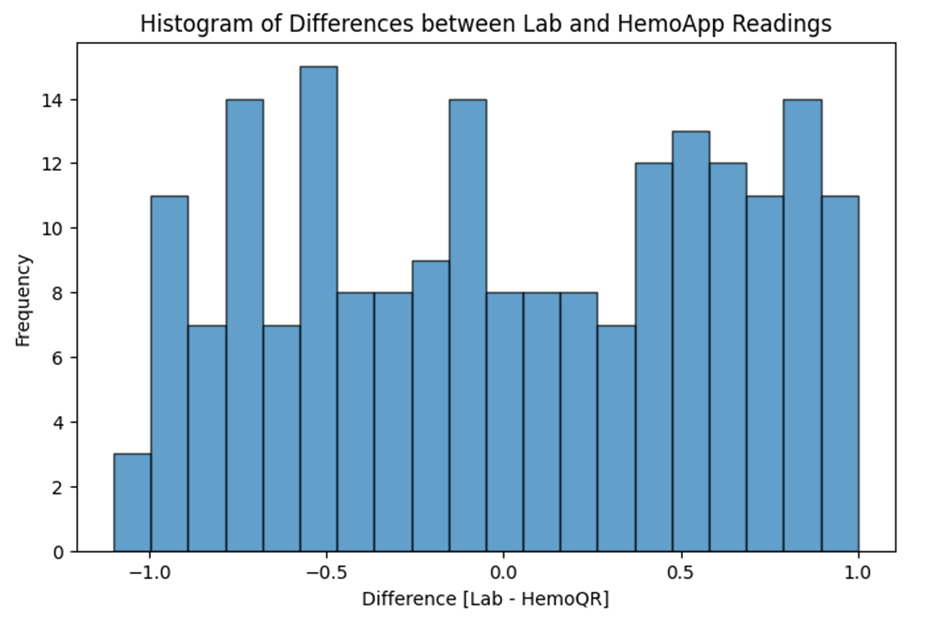
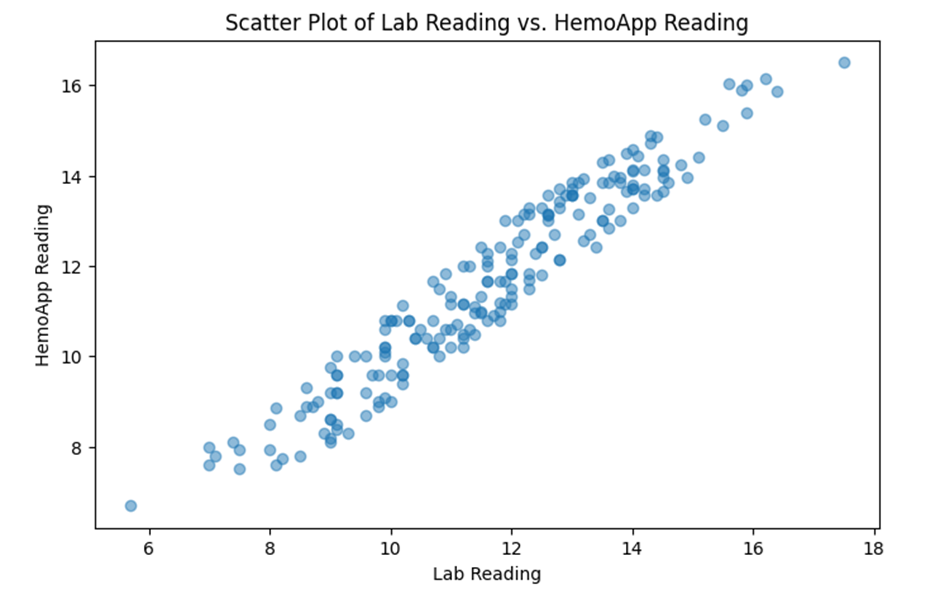
From the 200 samples tested simultaneously on Device A (HemoQR) and Device B (Pinak Lab) it was confirmed that anaemia was detected in 109 patients with Device A and 108 patients with Device B which was 54.5% and 54% respectively. The absence of anaemia was calculated to be 91 and 92 respectively for Device A and B. The percentage was 45.5% and 46% for Device A and B respectively. The data is given in (Table 1). A detailed report of the 200 samples is shared in the Supplementary document-1. The sensitivity specificity and accuracy were calculated by determining the true positives (TP), true negative (TN), false positive (FP) and false negatives (FN). The sensitivity was calculated to be 99.08% followed by the specificity was calculated to be 98.92% and an accuracy of 99.08%. These results are much higher in terms of 80% sensitivity and 80% specificity expected from an invasive digital hemoglobinometer proposed for approval by the Government of India’s Ministry of Health & Family Welfare for the “Anemia Mukt Bharat” (AMB) program. In the (Figure 1) we have taken number of the test on the ‘Y’ axis and the difference between the Device A and B is taken on ‘X’ axis. From the graph we can see that there are only 3 tests out of 200 that is showing a difference of -1 and only 11 tests showing difference of +1. Thus, it can be concluded that chances of false negative results are less. In (Figure 2) the scattered plot graph showed a similar result where the readings of Device A were plotted on to ‘Y’ axis and the Device B reading was plotted on ‘X’ axis. The results showed that the Device A and B showed similar readings.
| Device A (HemoQR) | Device B (Pinak Lab) | |
|---|---|---|
| Prevalence of Anaemia in Patients | 109 | 108 |
| Absence of Anaemia in Patients | 91 | 92 |
| Total Number of Patients | 200 | 200 |
Table 1: Absence and Presence of Anaemia from the samples tested in Device A and Device B.
Discussion
The most common method of diagnosing anaemia at the community level is by means of clinical examination. Research contradicts this point by suggesting that clinical exams on the physical level are not acceptable in terms of diagnostic accuracy and they fail to rule out cases of anaemia or modestly rule in cases of severe anaemia [13]. Application of a combined methods in physical examinations have recorded higher rate in the accuracy and diagnosis of the disease. This advantage needs to be balanced with the constraints of time for performing thorough examinations [14]. Analysing the levels of biomarker (Hb), is the most prevalent method for the diagnosis of anaemia in modern healthcare settings [15]. WHO introduced the Hemoglobin Color Scale (HCS) for estimating Hb levels in non-laboratory or community settings. HCS is portable system which does not require batteries, electricity, or any maintenance, and provides immediate results (Stott and Lewis, 1995). According to a global study, HCS demonstrated a sensitivity pool of 80% (95% CI 68-88) for diagnosing anaemia, compared to 52% for clinical assessment (95% CI 36-67; p=0.008). Demonstration of HCS in laboratory context was accurate, but the number is small when used in community setting without access to laboratory facilities. Another very popular Hb analysis method is the Sahli’s method of estimation of Hb concentration and according to the study performed by Patil PJ, et al. [16] Sahli’s method had lower levels of accuracy and the levels of Hb values were limited because it was detecting healthy individuals as anaemic. Both these methods were based in colorimetric detection of Hb in blood. Our HemoQR is also based on colorimetric analysis of Hb. We got immense positive results from our previous study where we have taken 24 EDTA blood samples and simultaneously read on our device and on 6 parts full automated Hematology Analyzer. HemoQR sensitivity was 0.97, whereas specificity was 0.90. PPV is 0.91 and NPV was 0.96 [17]. This study is the second step of confirmation and aims to further confirm the accuracy, sensitivity and specificity. The study further implies that HemoQR would screen and detect anaemia accurately on field/community basis from venous blood and also from prick at the fingertip which will enable treatment of many anaemic individuals. Overall, there is no statistically significant change in mean Hb readings, however the correlation between HemoQR and the automated haematology analyser (Cellenium Junior) was decent. The majority of HemoQR measurements (96%) were within 1 gm/dL of the corresponding Laboratory reading. The results of this study was above our expectation where we saw a sensitivity and specificity of 99.08% and 98.92% which is way higher than the requirement for AMB programme [18, 19].
Conclusion
Hb is a very important biomarker and its concentration in the blood helps in the determination of anaemia as it is a very common element in assessing the extent of anaemia and making a decision regarding the course of the treatment. The course of the treatment should be made based on the reliable and rapidly assessed laboratory tests. The HemoQR kit is a portable POC device for measuring the concentration of Hb concentration using colorimetry and modern machine learning algorithm. The kit requires minimum trained staff which makes it a very useful tool in areas where the resources are limited like field conditions since it is portable and cost- effective. The previous study of HemoQR using 24 EDTA samples showed 95% repeatability and 96% reproducibility against 6 parts full automated Haematology Analyzer. In this study, we further compared our HemoQR against the automated haematology analyser (Cellenium Junior) in the hospital setup using venous blood and fingertip pricked blood samples from patients visiting the setup. We found no significant differences in the Hb concentrations determined by the two methods. The accuracy of HemoQR when compared with automated haematology analyser (Cellenium Junior) was 99.08%. The sensitivity and specificity were 99.08% and 98.92% respectively. These results were better than our previous study and also on point for the AMB program criteria.
HemoQR is a Hb detection test kit that consists of a detection strip and a mobile-based software application that enables immediate reporting of Hb levels and allows healthcare professionals to make decisions driven by the collected data. It gives us accurate and instant results with a turnaround time (TAT) of 20 sec along with data collection and analytical report. It utilizes the HCS for POC measurement of Hb levels using the smartphone-based application, and it serves as a user-friendly and accurate method for the detection of anaemia. HemoQR is best suited for analysing Hb levels on spot under field conditions, which can help in the screening of anaemia in pregnant women, adolescent children, below poverty line population and adults with parasitic conditions. There is no requirement of external hardware, chemicals, modern equipped laboratory setting or skilled technicians skilled staff is required to perform the test. Also, the data would be captured online for better understanding of conditions at institutional level. These kits are very user friendly and can be used by any professional. With this study we can further confirm that though HemoQR is based on colorimetric principle it does outperform the HCS and the Sahli’s method of Hb estimation, making it an efficient cost-effective smart solution in the diagnostic world.
Acknowledgement
The work is completely funded by Smart QR technologies Pvt. Ltd. India.
References
-
Nicholas J, Kassebaum R, Naghavi M, Wulf SK, Johns N, et al. (2014) A systematic analysis of global anemia burden from 1990 to 2010. Blood 123(5): 615-624.
-
Kinyoki D, Zimmerman AE (2021) Anemia prevalence in women of reproductive age in low- and middle-income countries between 2000 and 2018. Nat Med 27(10): 1761-1782.
-
Safiri S, Kolahi AA, Noori M, Nejadghaderi SA, Karamzad N (2021) Burden of anemia and its underlying causes in 204 countries and territories, 1990–2019: results from the Global Burden of Disease Study 2019. Journal of Hematology & Oncology 14: 185.
-
Majoni SW, Lawton PD, Rathnayake G, Barzi F, Hughes JT (2020) Narrative Review of Hyperferritinemia, Iron Deficiency, and the Challenges of Managing Anemia in Aboriginal and Torres Strait Islander Australians with CKD. Kidney International reports 6(2): 501-512.
-
Florence A, Hamner HC, Scanlon KS, Sharma AJ (2022) Anemia Among Pregnant Women Participating in the Special Supplemental Nutrition Program for Women, Infants, and Children-United States, 2008-2018. MMWR Morb Mortal Wkly Rep 71(25): 813-819.
-
Haidar JA, Pobocik RS (2009) Iron deficiency anemia is not a rare problem among women of reproductive ages in Ethiopia: a community based cross sectional study. BMC Hematology 9(7).
-
Fakharunissa, Shahid A, Muhabat Q, Afzal M (2022) Effectiveness of pregnancy awareness and its outcomes in women of rural areas of Pakistan, a clinical based study. Pakistan Journal of Medical & Health Sciences 16(3): 465.
-
Masfiah S, Maqfiroch AFA, Rubai WS, WIjayanti SPM, Anandari D, et al. (2021) Prevalence and Determinants of Anemia among Adolescent Girls: A School-Based Survey in Central Java, Indonesia. Global Journal of Health Science 13(3): 37.
-
Kuppusamy P, Prusty RK, Khan SA (2024) Assessing the prevalence and predictors of anemia among pregnant women in India: findings from the India National Family Health Survey 2019-2021. Current medical Research and opinion 40(1): 51-58.
-
Briggs C, Kimber S, Green L (2012) Where are we at with point- of- care testing in haematology? Br J Haematol 158(6): 679-690.
-
Kumar AA, Liyoka CC, Hennek JW, Mantina H, Lee SYR, et al. (2014) Evaluation of a Density-Based Rapid Diagnostic Test for Sickle Cell Disease in a Clinical Setting in Zambia. PLoS One 9(12): e1145440.
-
Nkrumah B, Nguah SB, Sarpong N, Dekker D, Idriss A, et al. (2011) Hemoglobin estimation by the HemoCue® portable hemoglobin photometer in a resource poor setting. BMC Clin Pathol 11: 5.
-
Kalantri A, Karambelkar M, Joshi R, Kalantri S, Jajoo U (2010) Accuracy and reliability of pallor for detecting anaemia: a hospital-based diagnostic accuracy study. PLOS one 5(1): e8545.
-
Vyas N, Hendren S, Sehgal DMT, Monga C, Ranjan R, et al. (2023) The Accuracy of Physical Examination to Diagnose Anemia Among Patients Five Years or Older: A Systematic Review. Indian J Hematol Blood Transfus 39(1): 90-101.
-
Karakochuk CD, Hess SY, Moorthy D, Namaste S, Parker ME, et al. (2019) Measurement and interpretation of hemoglobin concentration in clinical and field settings: a narrative review. Ann N Y Acad Sci 1450(1): 126-146.
-
Patil PJ, Thakare GV, Patil SP (2013) Variability and accuracy of sahli’s method in estimation of haemoglobin concentration. NJIRM 4(1): 38-44.
-
Chandak D, Ghosh S, Dashora M, Gupta H, Rana S, et al. (2024) A Comparative Study for the evaluation of HemoQR strip and application in comparison to Hematology Analyzer fully automated-6 parts at Patkar Laboratory for Hemoglobin Measurement. Medicon Medical Sciences 6(6): 42-46.
-
Bain BJ, Bates I, Laffan MA (2016) Dacie and Lewis Practical Haematology. In: 12th (Edn.), Elsevier Health Sciences.
-
Stott GJ, Lewis SM (1995) A simple and reliable method for estimating haemoglobin. Bulletin of the World Health Organization 73(3): 369-373.
- How to Identify and Overcome Barriers in Developing Blood Systems?
- Why Was Transfusion Medicine Not Recognized as a Clinical Discipline?
- Outcomes of Lenalidomide Relapsed/Refractory Patients
- Is Transfusion Always Necessary?
- The Logistics of Production and Use of Blood and Blood Components
- The Challenge for Component Therapies