
Scrutiny and Comparison of Handwriting Characteristics in Questioned Guided Signatures with Standard Signature Samples
Signatures are the identity of individuals. Eventually, signatures can be used to prove authenticity of a person. Guided signatures are hereby the signatures that are executed by the individual, by the help of a guided or assisted hand. Guided or assisted signatures are more often confused with the forgery. Though, it is incorrect to say that the guided or assisted signatures are always guided or assisted by the permission of the individual whose signatures are to be executed. So, guided or assisted signatures to require strenuous efforts by the examiner to determine the genuineness of the signatures. In the presented study aim was to determine the characteristics in case of guided signatures and to find the impact of the handwriting of guider handwriting over the handwriting of the genuine signature holder. In this study, 135 signature samples were collected from 90 individuals. The age group ranges from 25 to 60 years. The guided signature samples were collected in a pair, in which one was the individual whose signatures have to be executed and the other individual will be the guider. The features observed were alignment, hesitation, initial and terminal strokes, I dot and t crossbar, pen pause, pen pressure, size of letters, slant, spacing, style of writing, retouching, embellishment, and underscore. This study will assist in determining the peculiar class characteristics of handwriting to be found in guided signatures, also the difference between forgery and guided signatures can be made.
Introduction
It takes several years for an individual to learn how to write. Handwriting is a word derived from a combination of two words, hand meaning the "multi-fingered appendage" and writing meaning "communication with sign and symbols" [1]. Handwriting is a neuro-muscular task which depends upon the cognitive skill and a coordinated hand-eye movement of the writer. The development and progress of one's handwriting pass through four stages in the course of a lifetime [2].
Handwriting being a neuromuscular task is affected by many factors that can be internal or external factors. The internal factors are the factors that are within the individual, including disease, illness, psychological issues, tremors, old age, illiteracy, etc. The external factors are the environmental factors affecting the handwriting, including, cold weather, writing instrument, writing surfaces, etc. [3].
According to Hilton, guided and assisted signatures can legally validate a document, and consequently, because of the nature of the document and their abnormal appearances, serious disputes can arise concerning them [4]. When the handwriting is affected by these factors, there is a need for the individual to be assisted or guided in order to write or do his or her signatures properly. Especially in cases, when the individual is on the deathbed, there are chances that person could not execute his signatures properly due to health issues resulting in weak neuron-muscle coordination [5]. In such cases, the other individual provides assistant to the hand executing signatures and termed as assistant signatures, which later termed as guided signatures. It is quite difficult to differentiate and draw a line between assisted and guided signatures.
It is not right to say that the executed guided signatures are always genuine. There are cases in which the guided signatures are forged or the cases in which the guided signatures are forcefully executed. In that scenario, it becomes important for a handwriting expert to study and determine the fact that the signatures might be a forceful guided signature. The guided signatures can be compared with the specimen standard of the individual's signature to the specimen standard of the suspect [5].
The presence of the handwriting characteristics of the individual guiding the signatures will be present along with the handwriting characteristics of the individual whose signatures are to execute. The presence of the characteristics of two different writers will question the genuineness of the signatures. For forensic examination, it is the foremost responsibility of the expert to prove or disapprove the genuineness of the signature and the writing. But for the analysis, it requires an ample amount of standards to be compared with the Questioned Signatures.
Method and Methodology
The present study was aimed to determine the extent of introduction of handwriting characteristics of an individual in the signatures which tends to be guided signature, for this experiment following methodology was adapted
Collection of Samples
In this study, 135 signature samples were collected from 90 individuals. The age group ranges from 25 to 60 years. The guided signature samples were collected in a pair, in which one would be the individual whose signatures have to be executed and the other person will act like a guide, who will be guiding the hand during execution of signature. The guider has been shown the genuine signatures of the individual and was told to execute that signature by holding hand of that individual for multiple times. The individual whose signatures are to be executed has been told to have a control over the writing instrument to the best of his ability. 45 samples of guided signatures and 90 standard signatures sample were collected from each age group. The individuals were asked to give their samples on plain A4 size sheet using ball pen as writing instrument. The description of the study has been explained in proper manner to each and every individual.
All the specimens were taken under proper observation, with proper positioning of the writer in a particular manner, so that the writer can sit comfortably on a chair with a table in front under the presence of proper lighting conditions. After the collection following observations have been made.
Instruments
The signature samples were analysed with the hand lens, stereomicroscope, and visible light source.
Observation
A signature or handwriting is executed and the individuality is achieved by the combination of several class and individual handwriting characteristics. For this study the characteristics that are analysed are as follow:
| S | . No | . | Characteristics Observed | Sub Classification of Characteristics | |||||||
|---|---|---|---|---|---|---|---|---|---|---|---|
| 1 | Alignment | Uphill | Downhill | Vertical | Wavy | ||||||
| 2 | Hesitation | Lack of firmness | At the initial stroke | At the terminal stroke | - | ||||||
| 3 | Initial and terminal strokes | Blunt | Tampered | - | - | ||||||
| 4 | I dot and t crossbar | Present | Absent | - | - | ||||||
| 5 | Pen Pause | Observed | Not-Observed | - | - | ||||||
| 6 | Pen Lift | Observed | Not-Observed | - | - | ||||||
| 7 | Pen Pressure | Uniform | Impulsive | Graduated | |||||||
| 8 | Size of letters | 1-3mm | 3-6mm | 6-9mm | 9-12mm | ||||||
| 9 | Slant | Upward | Downward | Vertical | Mixed | ||||||
| 10 | Spacing (Between the words and letters ) | Normal | Narrow | Wider | - | ||||||
| 11 | Style of writing | Cursive | Hand- Printed | Mixed | - | ||||||
| 12 | Speed | Fast | Slow | Moderate | - | ||||||
| 13 | Retouching | Present | Absent | - | - | ||||||
| 14 | Embellishment | Present | Absent | - | - | ||||||
| 15 | Underscore | Present | Absent | - | - |
Table 1: Showing the handwriting characteristics to be observed in the samples.
Results and Discussions
All the 135 samples of Signatures were collected from 45 individuals of age groups from 25 to 60 years. One Guided hand signature and one standard signatures sample were collected from each individual. They were analyzed based on the characteristics of handwriting which can help in understanding the impact of guided hand over the individual's hand signatures. First of all, standard signature samples were compared critically and scrutinized with a magnifying glass, with an objective to pinpoint some peculiar features in the writings. The features observed were alignment, hesitation, initial and
| S. No. | Characteristics Observed | Total No. of Samples | Percentage of Features Used By Writer | |||||||||
|---|---|---|---|---|---|---|---|---|---|---|---|---|
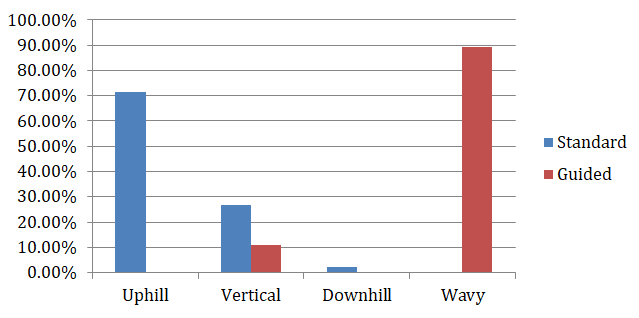
| 1 | Alignment | Vertical | 5 | 10.86% | ||||||||
| Wavy | 41 | 89.13% | ||||||||||
| Upward | 0 | 0 | ||||||||||
| Downward | 0 | 0 | ||||||||||
| 2 | Hesitation | Lack of firmness | 17 | 36.95% | ||||||||
| At the initial stroke | 10 | 21.73% | ||||||||||
| At the terminal stroke | 9 | 19.56% | ||||||||||
| Both (At initial and terminal ) | 7 | 15.21% | ||||||||||
| Absent | 3 | 6.52% | ||||||||||
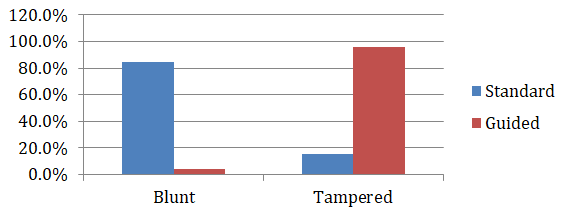
| 3 | Initial and terminal strokes | Blunt | 2 | 4.34% | ||||||||
| Tampered | 44 | 95.65% | ||||||||||
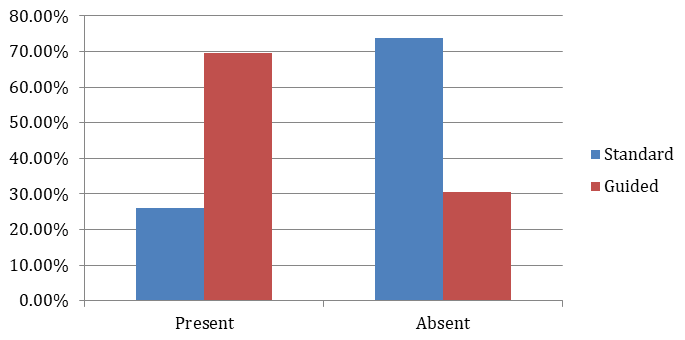
| 4 | I dot and t crossbar | Present | 32 | 69.56% | ||||||||
| Absent | 14 | 30.43% | ||||||||||
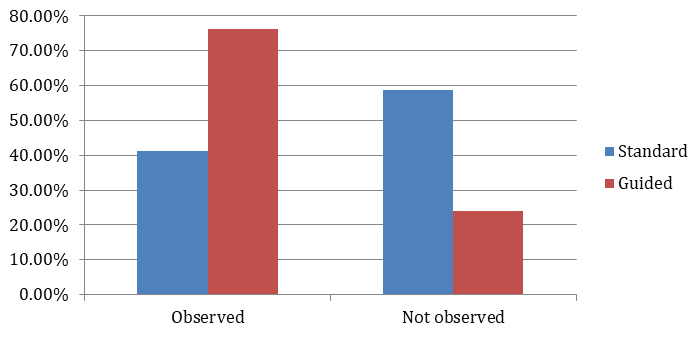
| 5 | Pen Pause | Observed | 35 | 76.08% | ||||||||
| Not-Observed | 11 | 23.91% | ||||||||||
| 6 | Pen Lift | Observed | 25 | 76.08% | ||||||||
| Not-Observed | 21 | 23.91% | ||||||||||
| 7 | Pen Pressure | Uniform | 2 | 4% |
Table 2: Showing the results for characteristics percentage in the questioned guided hand signatures.
| Impulsive | 23 | 50% | ||
|---|---|---|---|---|
| Graduated | 21 | 45% | ||
| 8 | Size of letters | 1-3mm | 36 | 78.26% |
| 3-6mm | 9 | 19.57% | ||
| 6-9mm | 1 | 2.17% | ||
| 9-12mm | 0 | |||
| 9 | Slant | Upward | 13 | 28.26% |
| Downward | 0 | 0% | ||
| Vertical | 5 | 10.86% | ||
| Irregular | 28 | 60.86% | ||
| 10 | Spacing (Between the words and letters ) | Normal | 9 | 19.56% |
| Narrow | 2 | 4.34% | ||
| Wider | 34 | 73.96% | ||
| 11 | Style of writing | Cursive | 17 | 36.95% |
| Hand- Printed | 15 | 32.60% | ||
| Mixed | 14 | 30.43% | ||
| 12 | Speed | Fast | 9 | 19.56% |
| Slow | 22 | 47.82% | ||
| Moderate | 15 | 32.60% | ||
| 13 | Retouching | Present | 29 | 63.04% |
| Absent | 17 | 36.96% | ||
| 14 | Embellishment | Present | 21 | 45.65% |
| Absent | 25 | 54.34% | ||
| 15 | Underscore | Present | 20 | 43.47% |
| Absent | 26 | 56.52% |
Table 3: Showing the results for characteristics percentage in the questioned guided hand signatures.
| S. No. | Characteristics Observed | Total No. of Samples | Percentage of Features Used By Writer | |||||||||
|---|---|---|---|---|---|---|---|---|---|---|---|---|
| 1 | Alignment | Uphill | 33 | 71.74% | ||||||||
| Downhill | 1 | 2.17% | ||||||||||
| Vertical | 12 | 26.09% | ||||||||||
| Wavy | 0 | 0% | ||||||||||
| 2 | Hesitation | Lack of firmness | 4 | 8.69% | ||||||||
| At the initial stroke | 1 | 2.17% | ||||||||||
| At the terminal stroke | 1 | 2.17% | ||||||||||
| Both | 0 | 0% | ||||||||||
| Absent | 4 | 86.95% | ||||||||||
| 3 | Initial and terminal strokes | Blunt | 39 | 84.78% | ||||||||
| Tampered | 7 | 15.21% | ||||||||||
| 4 | I dot and t crossbar | Present | 12 | 26.08% | ||||||||
| Absent | 34 | 73.91% | ||||||||||
| 5 | Pen Pause | Observed | 19 | 41.3 | ||||||||
| Not-Observed | 27 | 58.69 | ||||||||||
| 6 | Pen Lift | Observed | 20 | 43.47% | ||||||||
| Not-Observed | 26 | 56.52% | ||||||||||
| 7 | Pen Pressure | Uniform | 34 | 73.91% | ||||||||
| Impulsive | 11 | 23.91% | ||||||||||
| Graduated | 1 | 2.17% | ||||||||||
| 8 | Size of letters | 1-3mm | 43 | 93.47% | ||||||||
| 3-6mm | 2 | 4.34% | ||||||||||
| 6-9mm | 1 | 2.17% |
Table 4: Showing the results for characteristics present in the collected standard signatures.
| 9-12mm | 0 | 0% | ||
|---|---|---|---|---|
| 9 | Slant | Upward | 5 | 10.87% |
| Downward | 32 | 69.57% | ||
| Vertical | 9 | 19.57% | ||
| Irregular | 0 | 0% | ||
| 10 | Spacing (Between the words and letters ) | Normal | 18 | 39.13% |
| Narrow | 17 | 36.96% | ||
| Wider | 11 | 23.91% | ||
| 11 | Style of writing | Cursive | 13 | 28.26% |
| Hand- Printed | 10 | 21.74% | ||
| Mixed | 23 | 50% | ||
| 12 | Speed | Fast | 24 | 52.17% |
| Slow | 4 | 8.70% | ||
| Moderate | 18 | 39.13% | ||
| 13 | Retouching | Present | 14 | 30.43% |
| Absent | 32 | 69.09% | ||
| 14 | Embellishment | Present | 34 | 73.91% |
| Absent | 12 | 26.09% | ||
| 15 | Underscore | Present | 28 | 60.87% |
| Absent | 18 | 26.09% |
Table 5: Showing the results for characteristics present in the collected standard signatures.
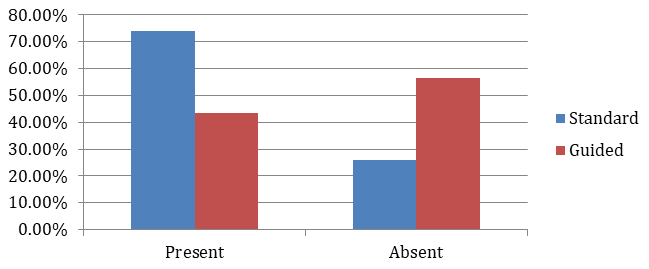
The initial and terminal strokes have shown a great variation between the questioned guided hand signatures and standard signatures. 95.65%of signatures were tampered and 4.34%. Blunt in the questioned guided signatures. Most of the standards signatures were blunt 84.78% and 15.21% are tampered in nature. I dot and t crossbar are present in 69.56% questioned guided hand signatures and are absent in 30.43% samples. Whereas they are present in 26.08%standard samples and are absent in 73.91%.
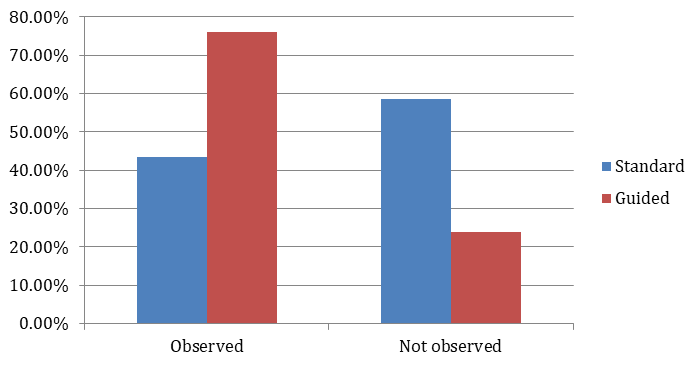
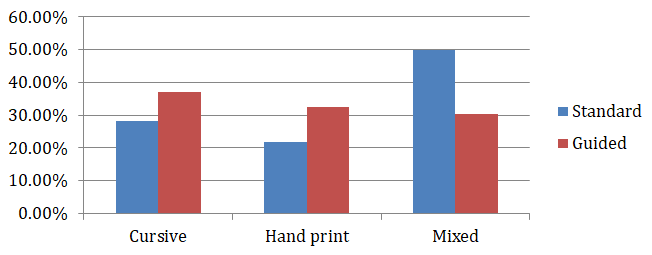
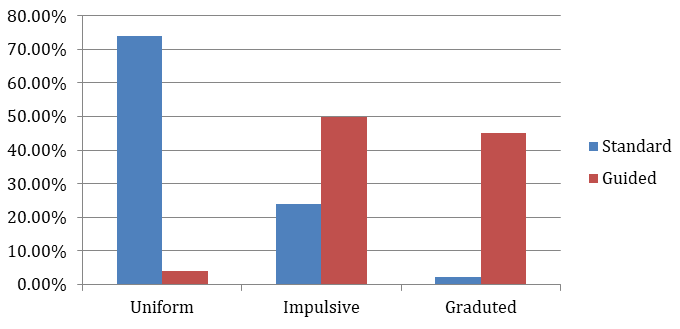
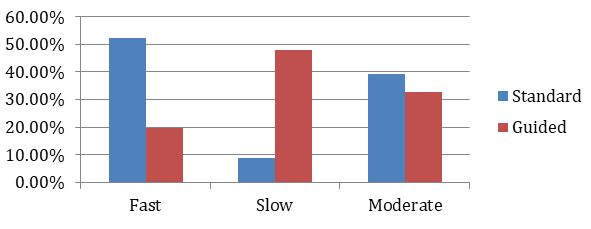
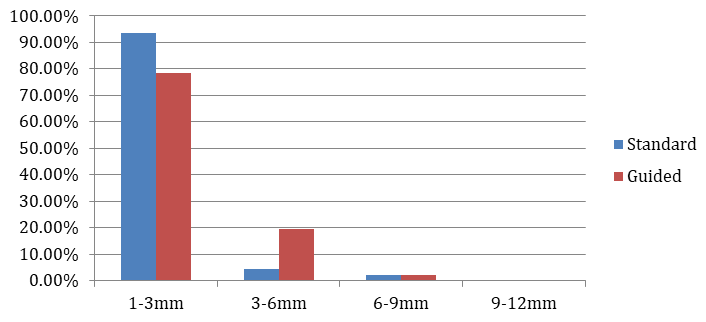
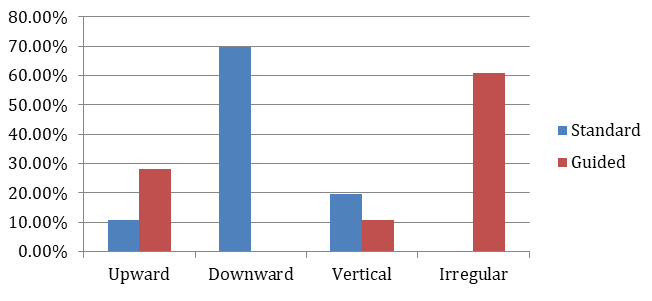
The percentage variation in the pen pause was observed to be 76.08% in questioned guided hand signatures and 48.30% in genuine standard samples. Whereas the pen lifts were observed in 76.08% of guided Pen pressure was observed to be uniform (4%), impulsive (50%) and graduated (45%) in questioned guided hand signatures... The reverse order of pressure was observed uniform 73.91%, impulsive 23.91%, graduated 2.17% in standards. Much variation was not observed in the size of letters. In questioned guided hand signatures ranges from 1-3mm (78.260%), 3-6mm (19.565%), 6-9mm (2.173%). Whereas in standards, the size ranges from, 1-3 mm (93.47%), 3-6mm (4.34mm), 6- 9mm (2.173mm).The slant were directional in the standard samples, upwards 10.869%, downwards 69.565%, vertical 19.565% but irregularities 60.86% were observed in the questioned guided hand signatures and the regular slants were upwards and vertical28.26% and 10.86% respectively. The spacing (between and the words and letters) in questioned guided hand signatures was wider in 73.96%, but these were uniformly distributed normal 39.130%, narrow 36.959% and wider 23.913% in standard samples. The style of writing in questioned guided hand signatures is cursive 36.95%, hand-printed 32.60%, mixed 30.43%. In the standard the style of writing is cursive 28.260%, hand-printed 21.739%, and mixed 50%. The speed of writing in questioned guided hand signatures is fast 19.56%, slow 47.83%, moderate 32.60%. In standards the speed is fast 52.173%, slow 8.695%, moderate 39.130%.
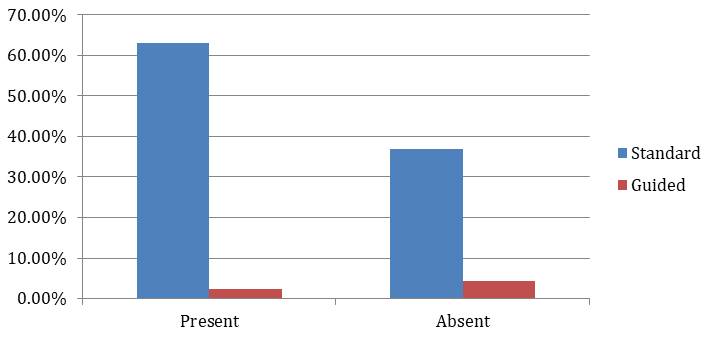
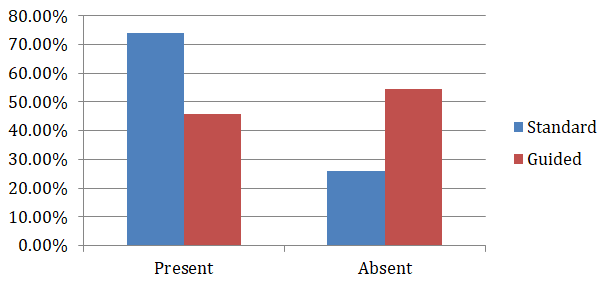
Another important aspect was the retouching of the text. In 63.04% questioned guided hand signatures retouching was observed which was significantly less in standard samples i.e. 30.434%. Embellishment was frequently observed in standard samples i.e. in 73.913% but it was a less observed phenomenon in questioned guided hand signatures (45.65%). Underscore was observed in 43.47% of questioned guided hand signatures and in 60.869% of the standard samples.
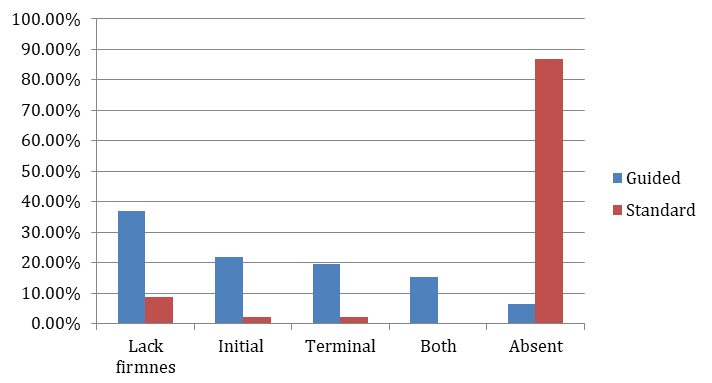
On the basis of the various features that have been taken in account for the study, it can be concluded that the characteristics such as uphill alignment, blunt strokes, fast speed, regular upward and downward slant, embellishment, underscore in the standard signatures due to the neuromuscular acceptance of that signature trend, whereas more pen pause, pen lifts, irregularities in slant, high pressure, lack of firmness, retouching etc. were observed in guided signature due to the extra consciousness and lack of neuromuscular coordination [6, 7]. These features can be utilized for the forensic analysis and differentiation of guided signatures and the natural variants of genuine signatures.
Chart number 1 to 15 showing the characteristics results in the guided hand signatures and the standard signatures:

Conclusion
The aim of the present study was, to determine the characteristics in case of guided hand signatures and to find the impact of the handwriting of guider handwriting over the main writer. The standard samples collected from the guider and the main writer has all the characteristics belonging to genuine handwriting having individual characteristics or combination of different individual characteristics.
It is important to differentiate between the guided hand signatures and the forged signatures. In guided hand signatures it could be said that there will be the presence of certain individual characteristics under the natural variation of both the writers. While in the forged signatures the characteristics present in the signature will be beyond the natural variation of the genuine signature holder, but in both the cases there will be the presence of fundamental differences that will help an expert to understand that the signatures might not be genuine and are under question.
In this study, 135 signature samples were collected from 90 individuals. The age group of individuals ranges from 25 to 60 years. The guided signature samples were collected in a pair, in which one would be the individual whose signatures have to be executed and the other person will act like a guide, who will be guiding the hand during the execution of signature. The guider has been shown the genuine signatures of the individual and was told to execute that signature by holding the hand of that individual for multiple times. The individual whose signatures are to be executed has been told to have control over the writing instrument to the best of his ability.
The features examined were alignment, hesitation, initial and terminal strokes, I dot and t crossbar, pen pause, pen pressure, pen emphasis, size of letters, slant, spacing, style of writing, retouching, embellishment, and underscore. The characteristics such as wavy alignment, hesitation at initial and terminal strokes, the tampering of initial and terminal strokes, pen pause, pen lifts, impulsive pen pressure, irregular slant, slow speed, wider spacing, and retouching are very prominent in case of questioned guided signatures.
The other characteristics are such as the size, style of writing, embellishments, underscore, I dot and t crossbar, are not observed showing a large variation. They might change depending on the guider and the ability of the writer whose signatures have to be done.
Also, some physical factors such as writing instruments, writing surface, angle of writing, manner of writing, environmental conditions might play an important role. Some of the internal factors such as the age factor, illness, diseases, also come in the role.
References
-
Sellers C (1962) Assisted and Guided Signatures. Journal of Criminal Law and Criminology and Police Science 53(2): 245-248.
-
James D Skelly (1987) Guided Deathbed Signatures. Canadian Society of Forensic Science Journal 20(4): 147-149.
-
Harrison WR (1978) Suspect Documents, Their Scientific Examination Second EdtSweet and Maxvell Limited, London.
-
Hilton O (1984) Scientific Examination of Questioned Documents. Elsevier Science Publishing Co. New York.
-
Osborn AS (1929) Questioned Documents. 2nd (Edn.), Albany, Boyd Printing Co. New York.
-
Jennifer Hillman (2010) A GUIDING HAND: Assisting An Ailing Testator With Signing Their Will. LexisNexis.
-
Steve G, Virginia BW, Robert AD, Sylvia AP, Dianne W (1997) Role of mechanics in composing of elementary school students: A new methodological approach. Journal of Educational Psychology 89(1): 170-182.
- Narcotics and Digital Forensics: Bridging Crimes in the Digital Age
- Ethics in Forensic Psychiatry: Principles, Dilemmas, and Human Rights
- Impact of Acute Stress on Attentional Orienting to Social Cues
- Head Injury and Intracranial Hemorrhage in Western Region of Libya
- A Forensic Study on Handedness: Examination of Handwriting Features in Right and Left Handed Writers
- Techniques for Latent Fingerprint Development Using Natural and Synthetic Powders: A Review