
Forensic Aspects and Investigation of Death Due to Fall from Height- A Case Study
The investigation of death due to fall from height either suicide or homicidal throwing from height requires special expertise and eagle eye for solving such type of incidences. In such type of cases microscopic inspection of crime scene spot, circumstantial evidences, postmortem report and forensic physics aspects plays important role and crime scene itself provides several vital information’s. In the present study an important case of fall from height and some forensic physics aspects are discussed in which the deceased was found just below the suicide point of famous ancient Gwalior forte at the crime scene spot.
Introduction
Falls are the leading cause of non-fatal injuries and the second leading cause of brain injuries. Furthermore, there is very little information available in the forensic literature regarding fatal falls [1, 2, 3, 4, 5, 6]. If a person dies as a result of a fall from a height or a tall building, then it is often very difficult to determine whether the fall resulted from an accident or it was a suicide or homicide, especially if there were no witnesses and no suicide note or any other indications of a potential suicide. Psychologists assert that there are many indicators of suicide such as previous suicide attempts, depression, a history of mental disorder, a patient in a psychiatric hospital, the leaving of possessions at a cliff top, etc. None of these factors can be taken as proof of suicide, but together might lead an expert to conclude that suicide was the most likely explanation.
Some Forensic Physics Aspects in Fall From Height at Crime Scene
Following points must be taken in to the consideration at scene of crime a) The fall height and the horizontal distance traveled during the fall.
b) The vertical slope of the cliff or building. The deceased person may have bounced or slide to the point where they were found and the first and subsequent points of impact which can identify the initial impact point from damage caused by the impact.
c) Identification of potential launch points and available run up distance to each launch point.
d) Slope, slipperiness and nature of run up path and flight distance and launch angle. The horizontal flight distance through the air is given by D = VT where V is the horizontal launch speed and T is the flight time in the air.
e) Take off distance and orientation of body on impact. At high launch speeds, a head first landing implies a dive, and a feet first landing implies a feet first jump. At low launch speeds, a head first landing might result from a feet first jump followed by a somersault. In a high speed jump, a jump speed is less than the run up speed and a head first dive speed is less than a feet first jump speed.
f) Nature of injuries and cause of death are generally helpful in prediction of fall.
g) Physical evidence, if any, left at the launch point, strength and athletic ability of the deceased.
h) Prevailing wind and effect of air resistance. Air resistance will make only a small difference to most human body trajectory calculations, unless a strong wind was blowing at the time or the fall is from a very large height.
Apart from these points some more issue must be enquired like presence or absence of drugs, alcohol or sedatives which might help explain why the deceased fell. Statements made by others before or after the event about the suspect seen near the scene of the crime or not?
Brief History of the Case and Crime Scene Inspection
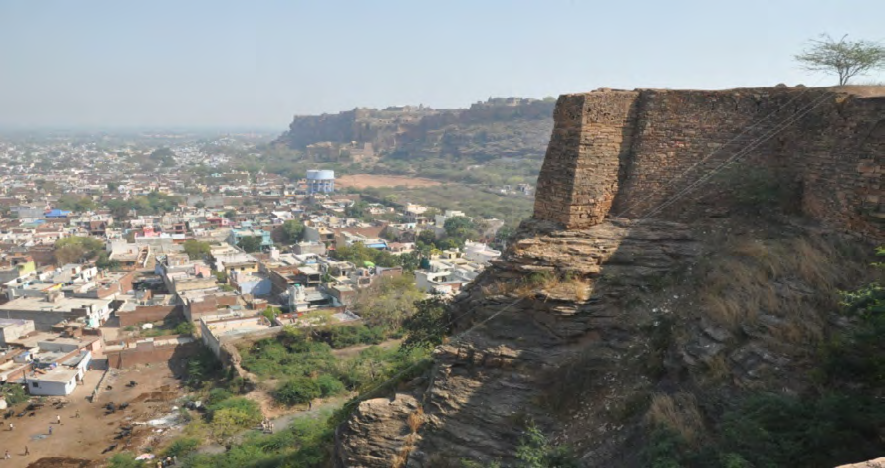
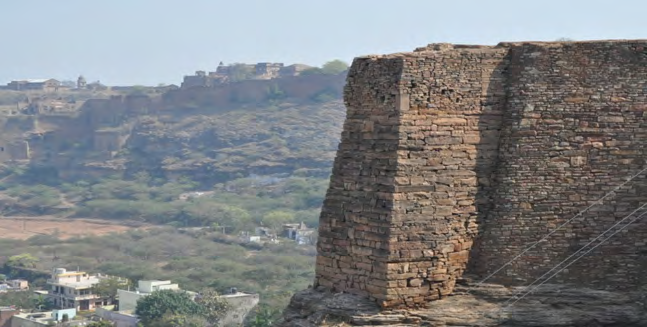
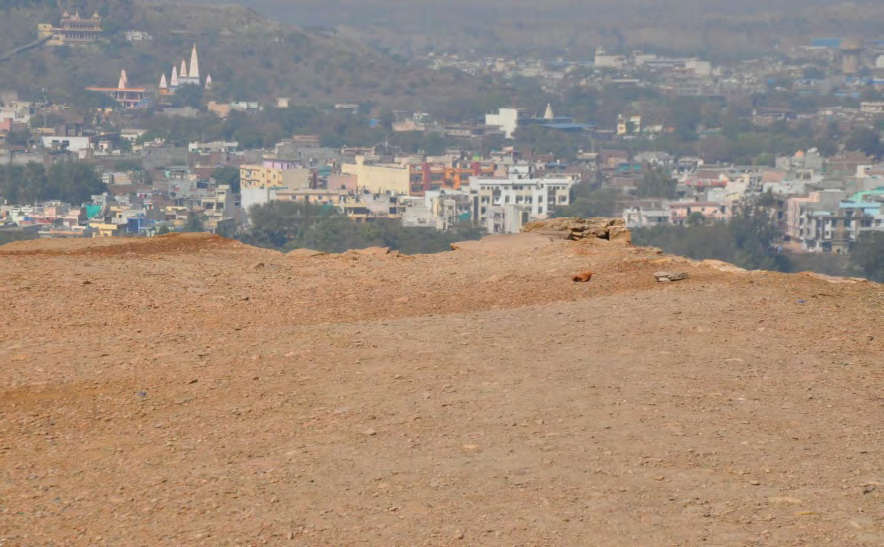
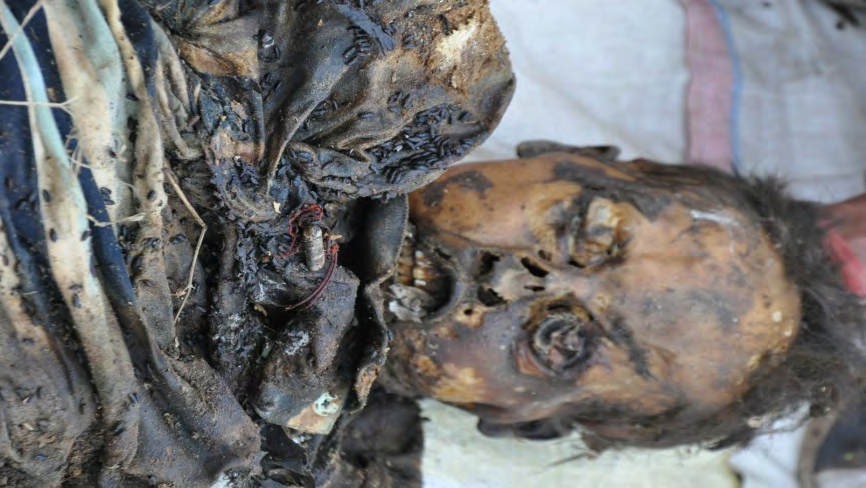
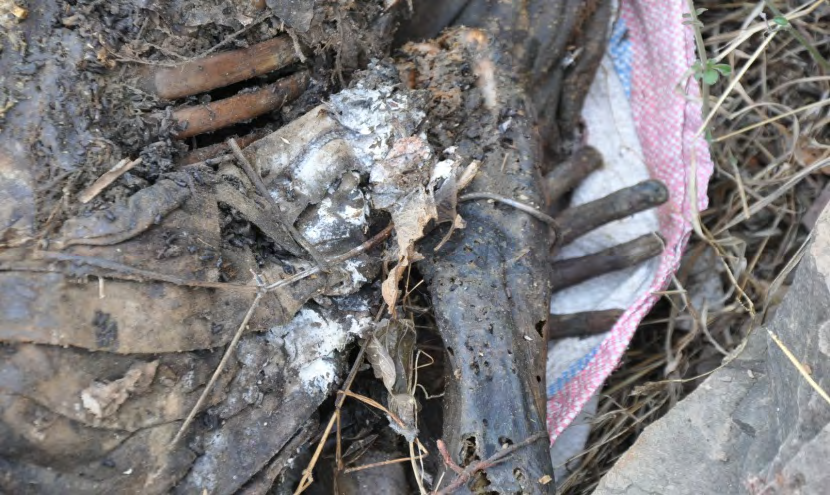
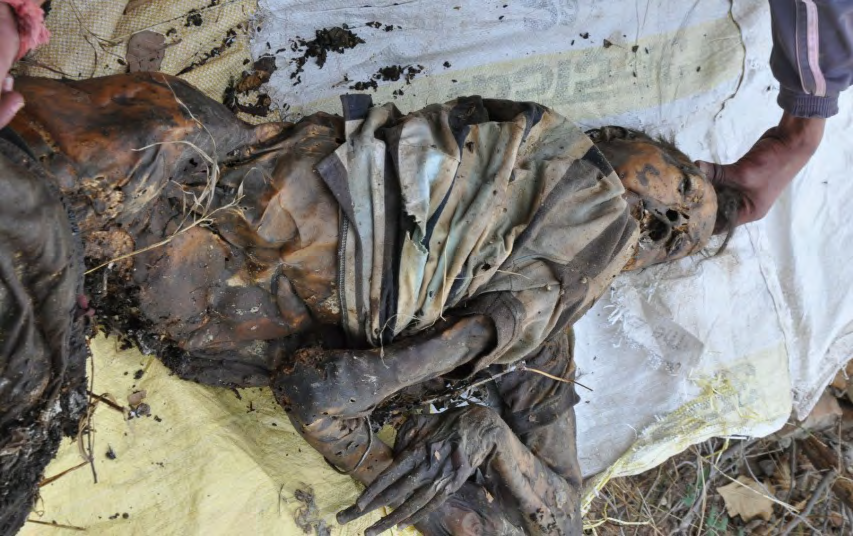
A case was registered in police station Bahodapur Gwalior M.P. of missing of school boy age about 17 years in November 2016. As per parents this case was of the kidnapping and police working accordingly by searching the deceased as per routine policing procedures since this case was related to threat given to the deceased by school girl classmate’s brother on misbehaving issues. Police was desperately searching absconding boy until March 2017 when a person (charwaha) informed that a skeleton body lying just below 100 feet of notorious suicide point of famous Gwalior forte. At the crime scene spot police force along with huge crowd and media persons were waiting the body of deceased were lying in between the rocky mountain bushy area where nobody able to reach without safety measures. We tried to find out location of the body from top of Gwalior Forte at suicide point from different locations, angles and directions but we couldn’t visualize the body. Finally fire brigade persons with safety devices and ropes bring down partial mummified skeleton body from the spot in a gunny bag. On opening the gunny bag we found a partial mummified skeleton body of aged about 17-20 years boy with some facial features wearing white metal kada (bangle) in their right hand wrist, thread (kalaba) and grey metal ring in the middle finger on the body wearing half sleeve striped t shirt, grey lower with red strip having stitched mono (CFO) and Axis brand underwear. The injuries were not identifiable due to decomposition of the body and partial mummified stage. In the skeleton head of the left femur was detached from socket, right femur bone was broken, teeth’s was visible, facial features was restored some postmortem dislocations were apparent. A blade was recovered of super max brand with wrapper from the lower of the deceased (Figures 1-6).
Postmortem Examination and Findings
Post mortem conducted in JAH & GRMC Gwalior mortuary. The white gunny bag which contained a skeletal remains of human origin belonging to a male with evidence of partial mummification of a dead body. Head separated with relatively preserved facial features, easily pluckable hairs and evidence of postmortem separation of the head. Both eyes sockets shriveled and loosely over hanging with dry and shrunken eye lids and eye balls Teeth are visible with mandible intact. Clothing’s a half sleeved stripped designed T shirt, a brown coloured lower with red strip having a mono of CPO FC having stain less steel super max brand blade wrapped in cover found in the pocket of lower, a blue underwear of axis brand. All the clothing’s stained with secondary oozing mixed with mud like particles irregularly spread yellowish whitish particles densely present on the anterior aspect. All the clothing’s heavily infested with uniformly distributed pupa cells.
A red thread with tabeez found around cervical region of head, a white metal bangle kada in right forearm, a kalaba in right wrist, a grayish metal ring in middle finger of right hand. All the visceral material and soft tissues were missing and decomposed scalp tissue thick, dry and shriveled and difficult to cut. Scalp having greenish bluish areas that appears to be the areas of ecchymosis at internal surface and over cranial vault at whole of frontal left parital and parieto temporal area. Fracture evident over skull extending from lower aspect of left parito temporal region having downwards just behind greater wing of sphenoid and reaching anterior cranial fossa involving the anterior most aspect of pituitary fossa. Another fracture line radiates from this main fracture line track posteriorly involving bassioccipital part of occipital bone on left side with fracture lines having greenish bluish areas at margins that shows ante mortem fracture.
Postmortem artifacts present along the entire length of upper rib at places with preserved and identifiable features of ringers of right hand. Left upper limb properly present insitu with features of mummification of overlying and postmortem artifacts akin to right side. Soft tissues around pelvic girdle exposed with left femur bone exposed and separation of femoral head evident. Right lower limb attached to the torso by tag of skin with fracture end of femur bone protruding out at upper 1/3rd segment with completed fracture of sub trochantic area with continued fractured bone pieces loosely adhered with each other. Fractured part of shaft femur and sub trochantic area having greenish bluish and very dark browned area at margins with greenish bluish isolated area showing places of ecchymosis. Soft tissue around fractured part found exposed, on dissecting thighs deeply, deeper area of tissues around fractured part having greenish bluish areas of echymosial with black brown coloured areas showing echymosis of antemortem nature in surroundings areas.
Right hip bone found fractured antemortly along body of pubic bone and adjoining proximal segment ischiopubic remus with margins at fractured bones parts having place of greenish blue areas that represent antemortem areas of ecchymosis. All the internal organs mostly reduced in size and present as brownish blackish ruptured mass and most identifiable separately. During PM clothings, tabeez, kada, ring, kalaba, blade, available viscera in common salt and sample of common salt were sealed. On the basis of above findings autopsy report of opined dead body of a young male aged about 17 years and 6 months in advanced stage of decomposition and partial mummification. Antemortem injuries evident that is sufficient to cause death in ordinary course of nature. Duration of death is within 3-5 months since PM examination. Nature of death should be decided on the basis of circumstantial evidences
Forensic Examination of Physical Evidences from FSL
The available viscera from the body were tested in forensic toxicology division of Regional Forensic Science Laboratory Gwalior for poison examination but no poison could be detected. Similarly femur bone and blood of mother and father were sent for DNA profile generation in Forensic Science Laboratory Sagar M. P. for the identification of the deceased with biological mother and father.
Results, Discussions and Conclusions
As per postmortem findings and forensic inspection it appears the deceased might have slipped from the suicide point approximate 300 feet above from the ground level the suicide point were devoid of safety measures like iron railing or grill and the floor was slippery an full of round stone pebbles like structure from this point deceased might be slipped and their body might somersaulted over stony area and rested somewhere in between the dense green bushy area approximate 100feet from the ground surface. This area couldn’t be visualized from top as well as bottom. During winter seasons November to February the facial features as well as body features were preserved as partial mummified stage. In the prima facie the injuries and body location were in favor of slip fall from height in somewhat rolling action in the close vicinity police recovered specks, slippers and mobile of deceased which were also in favor of fall.
The cause of unwitnessed fall from a height, resulting in serious injury or death, is often difficult to determine. The physics of the fall can sometimes lead to a solution or at least help to eliminate some of the possible causes.
Acknowledgements
Authors are thankful to DIG Dr Ashis for providing necessary facilities and constant encouragements, Mr R. S. Tomar T. I. Bahodapur and Dr Nikhil Agarwal Forensic Medicine Department GRMC Gwalior for help rendered and cooperation.
References
-
Goonetilleke UK (1980) Injuries caused by fall from height, J Med Sci Law 20(4): 262-264.
-
Gupta SM, Chandra J, Dogra TD (1982) Blunt force lesions related to the height of fall. Am J Forensic Med Pathol 3(1): 35-43.
-
Rufus C (1985) Closed head injury, its pathology and legal medicine. 1st (Edn.), Edwrd Arnold London, p: 21- 26.
-
Watson J (1982) Fracture and joint injuries. 7th (Edn.), Churchil Livingstone New York, pp: 749.
-
Vinod D, Sarthak J (2017) Importance of Medico Legal Expert at Scene of Crime Related to Death. J Forensic Sci & Criminal Inves 6(1): 555682.
-
Vinod D (2018) The Importance of Forensic Toxicologist in Drug related crime scene Investigation. BAOJ Toxicology 1(1): 2.
- Narcotics and Digital Forensics: Bridging Crimes in the Digital Age
- Ethics in Forensic Psychiatry: Principles, Dilemmas, and Human Rights
- Impact of Acute Stress on Attentional Orienting to Social Cues
- Head Injury and Intracranial Hemorrhage in Western Region of Libya
- A Forensic Study on Handedness: Examination of Handwriting Features in Right and Left Handed Writers
- Techniques for Latent Fingerprint Development Using Natural and Synthetic Powders: A Review