
Epidemiology of Road Traffic Accidents and Strategies to Reduce their Impact on Lives and Limbs
Back ground: Accidents can be studied in terms of agent, host and environmental factors and epidemiologically classified into time, place and person distribution. Methods: A prospective study was conducted from 1st January 2017 to 31st December 2017, Emergency medicine Department of Sher-i-Kashmir Institute of Medical Sciences, Srinagar, a tertiary care teaching hospital. Results: A total of 1000 cases were studied during the research period. Males were predominantly affected. Most of the cases were from urban areas. Occupants were most common victims. Two wheelers (Scooters, Motor Cycles, scooties etc.) were most common vehicles involved in accidents. Majority of the accident patients had head injury. Less than 10 percent of the patients presented to the hospital within 1 hour of the accident (golden hour for management of trauma).
Introduction
Road traffic injuries are a major cause of death and disability globally, with a disproportionate number occurring in developing countries. Road traffic injuries are currently ranked ninth globally among the leading causes of disability adjusted life years lost and the ranking is projected to rise to third [1]. In 1998, developing countries accounted for more than 85% of all deaths due to road traffic crashes globally and for 96% of all children killed [1, 2]. Moreover about 90% of the disability adjusted life years lost worldwide due to road traffic injuries occur in developing countries [3]. The problem is increasing at a fast rate in developing world [4]. Policy makers recognize this growing problem as a public health crisis and design appropriate policy responses [5]. The trend of increasing numbers of injuries is likely to continue as the number of motor vehicles rises, especially in countries with low numbers at present [6].
The current study was done to understand the epidemiological characteristics of road traffic accident victims. Study will serve as a useful tool for policy makers to reduce the road traffic accidents associated mortality and morbidity.
Material and Methods
A prospective study was conducted at Sher-i- Kashmir Institute Medical Sciences, SKIMS, Srinagar from 1st January 2017 to 31st December, 2017. The study group-consisted of all the Road Traffic Accident victims reporting to Emergency Medicine of SKIMS in the above one year period. Data gathered included demographic details, type of the vehicle and the region of body injured. The medico-legal register and case sheets were referred for collecting the data. Interviews of the victims/attendants and accompanying police personnel were also conducted to supplement the information collected.
Statistical Analysis
Data was collected according to a predesigned and pretested proforma. All the data were analyzed using SPSS version 20 software and frequencies and tabulations were determined.
Results and Observations
A total of 1000 road traffic accidents were registered in the Emergency Department of SKIMS over a period of one year from January 1st 2017 to December 31st, 2017.
Gender-wise Distribution
| Gender | Frequency | Percentage |
|---|---|---|
| Male | 820 | 82.0% |
| Female | 180 | 18.0% |
| Total | 1000 | 100.00% |
Table 1: Showing Gender wise distribution of cases.
Geographical Distribution
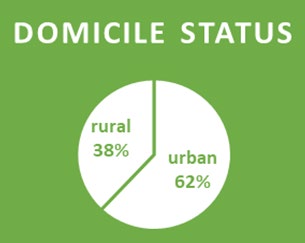
Age Wise Distribution
Figure 2 shows that most of the victims were young belonging to the age group of 16-30 years followed by age group of 31-45.

Site of Injury
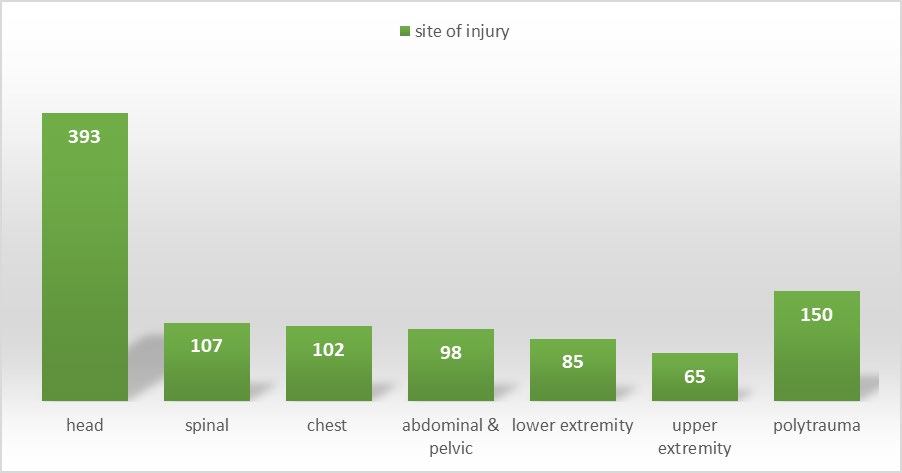
Figure 3 shows that head injury was the commonest type of injury sustained followed by spinal injury.
Distribution of Injured Persons
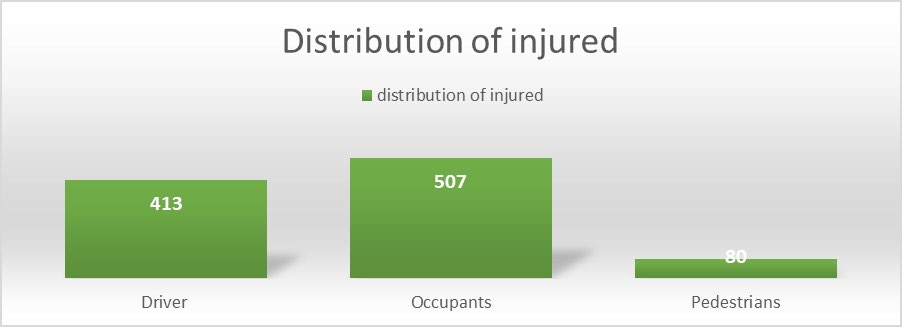
Figure 4 shows the majority of the RTA victims were occupants (51.8%).
Vehicle Involved
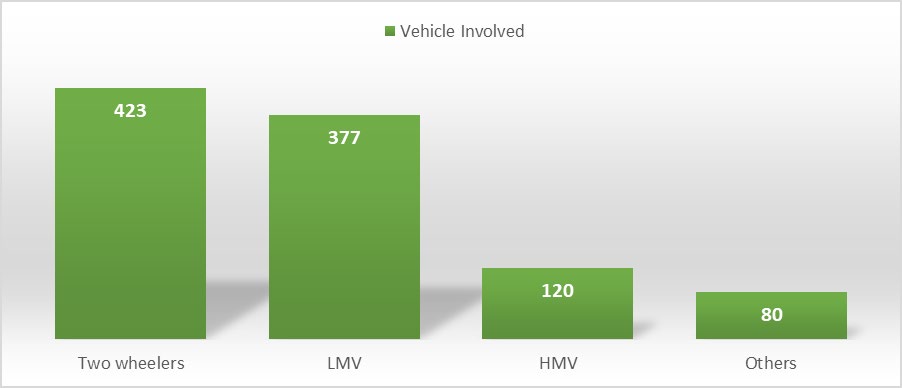
Figure 5 shows that two wheelers were most commonly involved followed by light motor vehicles.
Time between the Accident and Reporting to the Hospital
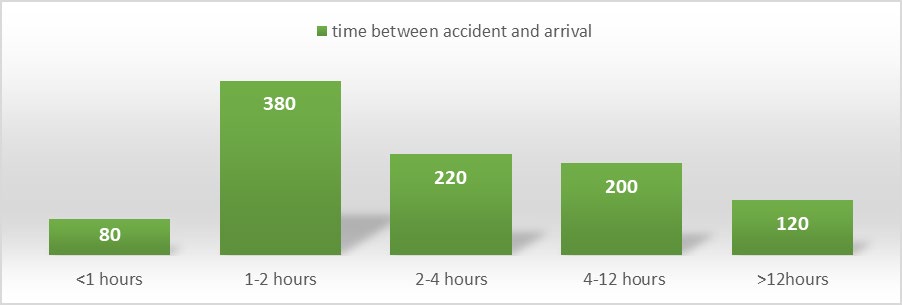
Figure 6, Most of the RTA victims reported to the hospital between 2-4 hours. Less than of the RTA victims reported within in one (golden) hour of the accident.
Discussion
The impact of road traffic accidents is the cumulative toll of suffering, truly unimaginable since millions more are added to the millions of people who are adequately affected and whose suffering is aggravated by inadequate response to their losses. As well the emotional and psychological pain endured, losing a family member can put significant financial strain on a family. Families are driven into poverty by the cost of prolonged medical care, the loss of a family breadwinner or extra funds needed to care for people with disabilities.
In the present study, the highest number of RTA victims were young males, similar to the findings other studies [7, 8]. The people of this category are most active and productive age group are involved in RTAs, which adds a serious economic loss to the community. A high occurrence of road traffic accidents among young adults has been thought to be due to wider range of activities engaged in by this class of people. They are more likely to have reasons to move from one place to another.
In present study less than ten percent of the road traffic accident victims reported to hospital within one hour of the accident. Majority of the patients (71.44%) reported between 2-12 hours after the incident. The initial one hour is regarded as the “Golden Period” in the management of trauma victims. In majority of the cases the patients reached the tertiary care trauma centre i.e. SKIMS after 2 hours of the accidents. Precious time is being lost in transporting the patient which has an adverse effect on the outcome.
Head injury was the commonest injury sustained by RTA victims in our study followed by the spinal injuries. The findings are consistent with the studies of other researchers [9, 10]. This study suggests that majority of the RTA victims had no protective measures like helmets for two wheeler vehicles and seat belts were not used in light motor vehicles which have resulted in increased incidences of neurotrauma.
Occupants constituted largest group of injured victims. The results are consistent with the findings of Morid M Hanna, et al. [11]. The findings suggest that majority of the occupants of the vehicles do not take any personal protective measures as they are usually not available in vehicles while travelling.
Two wheelers were the most common vehicles involved in road traffic accidents followed by light motor vehicles in this study. The findings are similar to the study of S.V Kuchewar, et al. [12]. The findings can be explained by the fact that there has been a rapid unregulated increase in number of motorbikes ,scooters and cars and drivers on the roads of Kashmir valley.
Conclusion
This study concluded that the road traffic accidents were highest among the age group of 16-30 years. Males were affected more than females. Less than of victims reached specialized hospital within 1 hour of the accident. Head and spinal injuries were the most common injuries sustained. More occupants were involved in the accidents than drivers and pedestrians. Two wheelers were commonest vehicles involved in road traffic accidents.
Recommendations
This study would like to suggest some recommendations which are listed below: 1. Basic life support techniques can improve survival.
People especially public transport drivers, policemen, journalists and teachers should be trained in these courses. 2. Licensing authorities should adopt stricter, more comprehensive and scientifically based tests laying a more stress on road rules, regulations and traffic control devices. 3. Strict implementation of traffic rules and regulations with monitoring of road users to ensure and enforce safe driving. 4. Education programmes in the community to change attitudes positively, stop reck less driving, obey traffic rules and use of protecttve devices like helmets and seat belts.
References
-
Mohammed Sarwar Mir (2016) Descriptive Study of Road Traffic Accidents in Kashmir. IJETST 3(9): 4662- 4667.
-
Murray C, Lopez A (1996) The global burden of disease: a comprehensive assessment of mortality and disability from diseases, injuries, and risk factors in 1990 and projected to 2020. Harvard University, Cambridge Press, USA.
-
Krug E (1999) Injury: A leading cause of global burden of disease. World Health Organization, Geneva.
-
Jacobs G, Aaron Thomas A, Astrop A (2000) Estimating global fatalities. Transport Research Lab.
-
Nantulya VM, Reich MR (2002) The Neglected Epidemic: Road Traffic Injuries in Developing countries. BMJ 324(7346): 1139-1141.
-
(1994) UNDP: Human development Report. Oxford University press, USA.
-
Mehta SP (1968) An epidemiological study of road traffic accident cases admitted in Safdarjang Hospital, New Delhi. Journal of Medical Research 56(4): 456-466.
-
Jha N (1997) Road traffic accident cases at BPKIHS, Dharan, Nepal. One year in retrospect. Journal of Nepal Medical Association 35(122): 241-244.
-
Montazeri A (2004) Road traffic accident related mortality in Iran: A descriptive study. Public health 118(2): 110-113.
-
Kumar Arvind, Lalwani Sanjeev, Aggarwal Deepak, Rautji Ravi, Dogra TD (2008) Fatal road traffic accidents and their relation with head injuries: An epidemiological study of five years. Indian Journal of Neurotrauma 5(2): 63-67.
-
Morrid M Hanna, ETemad A A El Shareef (2011) Descriptive study of road traffic accidents in Sirt, Libya. Med j Cairo Univ 79(1): 29-38.
-
Kuchewar SV, Meshram RD, Gadge SJ (2012) Demographic Study and medicolegal Aspect of Fatal Road Traffic Accident in Aurangabad. J life Sci 4(1): 7-10.
- Narcotics and Digital Forensics: Bridging Crimes in the Digital Age
- Ethics in Forensic Psychiatry: Principles, Dilemmas, and Human Rights
- Impact of Acute Stress on Attentional Orienting to Social Cues
- Head Injury and Intracranial Hemorrhage in Western Region of Libya
- A Forensic Study on Handedness: Examination of Handwriting Features in Right and Left Handed Writers
- Techniques for Latent Fingerprint Development Using Natural and Synthetic Powders: A Review