
Extraction and Analysis of Organophosphorus Pesticides in Fruits and Vegetables: Review
Pesticides are used as an important factor to kill pests for agricultural purpose. These pesticides have contaminated all the things that are required for our daily life. There are different classes of pesticides; mostly used pesticide group for agricultural purpose is organophosphorus pesticides (OPPs). Most of the farmers use it regularly on vegetables and fruits. On the regular use of pesticides it causes harmful effects to the body. There are numerous methods have been developed for the extraction and quantification of multipesticide residues in vegetables and fruits. This review paper pertains to various extraction and quantification procedures used to analyse organophosphorus residues and among them the best extraction and analysis method is also given.
Introduction
Fruits and vegetable are daily used by the human in their diet. Although fruits and vegetables are healthy but they are attacked by pest and disease so to overcome this issues framers use a large quantity of pesticides which enter through our body orally. Even though large percentages of pesticide are removed out through urine and fecal matter from the body, some pesticides are persistent, that they remain in body for a long time [1]. The food and agriculture organization (FAO) defines the pesticides as: “substances designed for interdicting, spoiling, enticing, repulsing or controlling any pest, including undesirable species of plants or animals, during the generation, storage, transport, distribution and processing of food, agricultural productions or animal feeds, for use as a plant growth corrector, defoliant, drying agent, fruit thinning agent or growing suppressor and substances applied to crops either before or after transport [2]. (i) Pesticides are classified in the following parts on the basis of its uses:
- Insecticide- for insects
- Herbicides- for plants
- Rodenticides- for rodent (rats and mice)
- Bactericides- for fungi
- Larvicides- for larvae (ii) Pesticides are classified into the two parts on the basis of its biodegradability:
- Biodegradable: This can be broken down by microbes and other living beings into harmless compounds.
- Persistent: which take months or years to break down. They can be classified by considering their chemical forms or are derived from a common source or production method [3, 4]. (iii) Pesticides are classified into the various parts on the basis of its chemical structure:
- Organophosphate: Organophosphate pesticides (OPPs) a remainly synthetic amides, ester or thiol derivatives of phosphonic or phosphinic acids, phosphoric acids. Most organophosphates are insecticides; they affect the nervous system by disrupting the enzyme that regulates a neurotransmitter [5].
- Carbamate: Same like organophosphorus pesticides, the carbamate pesticides affect the nervous system by disrupting an enzyme that regulates the neurotransmitters. Carbamates are esters derived from carbamic acid, which comprise one of the major classes of pesticides [6].
- Organochlorine pesticides (OCPs): It is a group of chlorinated organic substances representing one of the first synthetic insecticides used by humans [7].
- Pyrethroid: It is a naturally occurring pesticide, which is found in chrysanthemums (Flower). They have formed in such a way that they can increase their stability in environment, also a synthetic version of pyrethrin [8].
Toxicity of Each Pesticide
Toxicity means the capacity to cause injury or illness. There are two kinds of toxicity. First, Acute toxicity: Acute toxicity of a pesticide means the ability of the chemical to cause injury to a person within a short period of time. Second, Chronic toxicity: The chronic toxicity of a pesticide is determined by introducing it to the test animals and when a small doses repeated over a period of time it cause harmful effect are termed chronic effects [9].
| Types of pesticides | Toxicity | Ref. |
|---|---|---|
| Organochlorine: Dieldrin – Endosulfan, DDT and lindane - | LD50: 1 to 50 mg/kg LD50: 51 to 500 mg/kg | [1] |
| Organophosphorous: Chlorpyriphos Phenthoate, Diazinon, Chlorfenvinphos, Dichlorvos, Dimethoate, Monocrotophos, Disulfoton, Demeton, TEPP Ediphenphos, Quinalphos, Ethion, Fenitrothion, Thiometon., Fenthion, Phorate,Phosphamidon,fonophos, Fensulfothion Formothion, Methyl Parathion, Mevinphos and Oxydemeton-Methyl Abate, Acephate, Ronnel, Coumaphos, Crufomate, Primiphos Famphur, Glyphosate, Malathion, Phenthoate, Triazophos, Methyl, Temephos, and Trichlorphon. | Extremely toxic (LD50: 1-50 mg/kg) to highly toxic (LD50: 51 to 500 mg/kg) Moderately toxic (LD50:501 to 5000 mg/kg) to Slightly toxic (LD50:>5000mg/kg) | [9] |
| Carbamates: Aminocarb, Dimetan Bendiocarb, Carbaryl, Carbofuran, Benfuracarb, Dioxacarb, Dimetilan, Formetanate, Methiocarb, Methomyl, Oxamyl, Propoxur. MPMC, MTMC, Aldicarb, Bufencarb, Isoprocarb, Pirimicarb. | Extremely toxic (LD50: 1 to 50 mg/kg) to highly toxic (LD50: 51 to 500 mg/kg) Moderately toxic (LD50: 501 to 5000 mg/kg) to slightly toxic (LD50: >5000 mg/kg) | [10] |
| Pyrethroids: Pyrethrum - | LD50 of over 1 gm/kg 10 to 100 grams. | [11] |
Table 1: Depicts the pesticides and its toxicity.
Uses of Pesticides
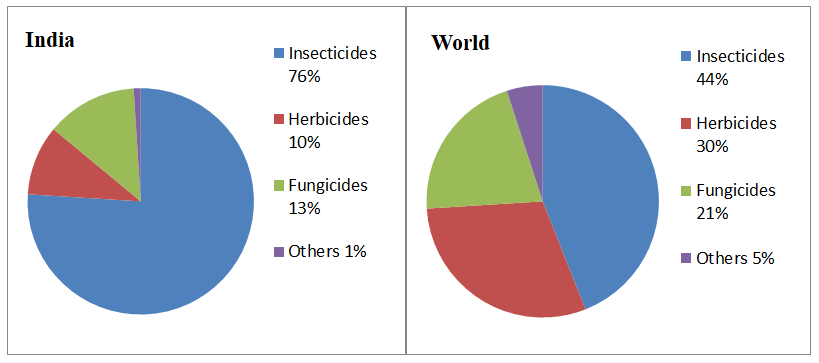
The main use of pesticide is to increase profits of farmers by preventing the crops from disease and increase the food production. We are able to kill pest by pesticides. By producing more crops, produce more to sell, save money on labour costs, it also reduce the time for removing weeds manually. In addition to these, it has improved human’s health. It was estimated that from 1947, by killing pests that carry or transmit diseases the pesticides have decreased the death rate due to diseases such as Malaria, bubonic plague, and typhus. It has been observed that a diet containing fresh fruit and vegetables and make sure that these are having only low pesticide residues. By eating fruits and vegetables, it helps us to reduce the risk of many cancers, high blood pressure, heart disease, and other chronic disease [12].
Pesticides of Forensic Interest
| Pesticide | Purpose | Ref. |
|---|---|---|
| Organochlorine: DDT, Benzene Hexachloride (BHC), Aldrin, Adieldrin, Endosulfan (thiodan), Endrin, Chlordane, Chlordecone (kepone), Heptachlor, Toxaphene etc. | It is used as insecticide and used for public and veterinary healthy signifance. | [13] |
| Organophosphorus: Chlorpyriphos, Diazinon, Dichlorvos, TEPP, Disulfoton, Ediphenphos, Ethion, Fenitrothion, Fenthion Dimethoate, Fonophos, Formothion, Methyl Parathion, Monocrotophos, Phenthoate, Quinalphos, and Thiometon etc. | It is most widely used insecticides. They are used in agriculture, the household, gardens, and veterinary areas. | [14] |
| Carbamates: Aminocarb, Carbaryl, Bendiocarb, Benfuracarb, Carbofuran, Dimetan, Dimetilan, Methiocarb, Methomyl, Dioxacarb, Formetanate, Oxamyl, Propoxur etc. | It is also mostly used in households, gardening and agriculture. | [2] |
| Pyrethroids: Allethrin, Permethrin, Cyfluthrin. Resmethrin etc. | They are sold in form of liquids, sprays, dusts, powders, mats, and coils. It used as household insect repellents and insecticides. It is used to prevent pest insects in granaries and in agriculture as pesticides. | [7] |
Table 2: Depicts the list of pesticides of forensic interest.
| Sl. No | Name of pesticide | Source | Extraction method | Instrumentation | Ref. |
|---|---|---|---|---|---|
| 1 | Diazinon, Parathion-Methy, Fenitrothion, Malathion, Chlorpyrifos, Phenthoate, Methidathion Profenofos, Ethion. | Apple, Peach, Orange, Pineapple and Grape. | solid-phase micro extraction (SPME) and supercritical fluid extraction (SFE), Matrix solid-phase dispersion (MSPD). | GC-NPD Analysis GC-MS Confirmation. | [15] |
| 2 | Simazine, Aldicarb, Alachlor, Malathion, Chlorpyrifos, Chlorfenvinphos, Phaslone, Diazinon, Acephate, Fenitrothion, Monocrotophos, Imidacloprid, triazophos, ethion, atrazine, propanil, quinalphos, and metribuzin. | Eggplant, Ladyfinger, Cabbage, Tomato,Chilli And Cauliflower | QuEChERS method. | An ultra-fast liquid chromatograph equipped with a triple–quadrupole ion trap hybrid mass detector operating in the MRM positive electrospray ion (ESI) mode was used for this study. | [16] |
| 3 | Phosalone and Chlorpyrifos | Red Grapes and Cherry | solvent-based ultrasound assisted liquid-liquid micro extraction. | analysis using HPLC-UV | [17] |
| 4 | Demeton-S-Methyl, Phorate, Diazinon, Tolclofos-Methyl, Malathion, Fenthion, Quinalphos, and Fenamiphos | Cabbage, Cauliflower Red Cabbage, Cucumber | dynamic microwave- assisted extraction (DMAE) combined with continuous flow microextraction (CFME) | GC–MS system | [18] |
| 5 | Dichlorvos, Phorate, Diazinon, Methyl Parathion, Fenitrothion, Malathion, Parathion, Ethion. | Apples, Tomatoes, Apple Juice | Solid-phase micro- extraction | GC-FPD | [19] |
| 6 | Methyl Parathion, Chlorpyriphos And Malathion | Spinach, Cucumber, Brinjal, Bottle Gourd, Ridge Gourd, Cauliflower And Cabbage. | Extraction n-hexane and dichloromethane | GC-ECD | [20] |
| 7 | Diazinon, parathion, methyl- parathion, malathion fenithrothion | Apple, pear peach and grapes | Headspace solid phase microextraction (HS- SPME) | Gas chromatography– nitrogen phosphorous detection (GC-NPD) | [21] |
| 8 | Acephate, Methamidophos, Monocrotophos, Omethoate, Oxydemeton- Methyl Vamidothion | Cabbage And Grapes. | ethyl acetate was the most favourable solvent for extraction, | liquid chromatography (LC)–mass spectrometry (MS)/MS | [22] |
| 9 | Ethoprophos, Sulfotep, Diazinon, Tolclofosmethyl, Fenitrothion, Chlorpyrifos Isofenphos, Methidathion, Ethion, Triazophos, Leptophos | Cabbage, Kale And Mustard | solid-phase microextraction (SPME) | Gas chromatography– flame photometric detection (GC–FPD) | [23] |
| 10 | Acepahte, Malathion, Quinalphos, Profenofos, Chlorpyrifos Triphenyl- Phosphate | Six Fruits And Twelve Vegetables | QuEChERS (quick, easy, cheap, effective, rugged and safe) extraction method | liquid chromatography coupled with tandem mass spectrometry | [24] |
| 11 | Dimethoate, Diazinon, Chloropyrifosmethyl, Parathion-Methyl, Malathion, Chloropyrifos Chlorfenvinphos | Strawberry | Magnetic dispersive micro solid-phase extraction | GC-FPD and GC-MS | [25] |
| 12 | Methidathion Malathion Azinphos-Methy Pirimiphos-Methyl Pyraclofos Phosalone | Tomato, Apple, Carrot, And Cabbage | dispersive solid-phase extraction (dispersive- SPE) with primary secondary amine (PSA) as the sorbent | A liquid chromatography–mass spectrometry (LC–MS) | [12] |
| 13 | Parathion, Diazinon, Chlorpyrifos, Ethion, Carbophenthion | Hot Pepper Lettuce Tomato | Modified QuEChERS- acetonitrile final step involved a dispersive solid phase extraction. | GC-ECD | [26] |
| 14 | Cypermethrin, Chlorpyrifos, Methyl Parathion, Ethion, Captan, Malathion, And Triazophos. Cypermethrin, Chlorpyrifos, Methyl Parathion, Ethion, Captan, Malathion, And Triazophos. | Apple, Grapes, Cauliflower, Cabbage, Peas, Potato | modified QuEChERS method | gas chromatograph quadrupole mass spectrometer (GC-MS/ MS) | [27] |
| 15 | Ethoprophos, Parathion Methyl, Fenitrothion, Malathion, Chlorpyrifos, Profenofos. | Cucumber And Watermelon | dispersive liquid– liquid microextraction (DLLME) | gas chromatography– flame photometric detection (GC-FPD) | [28] |
Table 3: Depicts the analytical techniques.
Conclusion
For the past 40 years, there is various sample preparation methodologies have been developed to extract these components from fruits and vegetables, although they generally consume a lot of time and laborious. In 2003, Anastassiades, Lehotay, Štajnbaher and Schenck introduced a methodology for pesticide extraction that is applicable to fruits and vegetables. This method, which has been described as quick, easy, cheap, effective, rugged and safe (QuEChERS) and is very easy to handle and less cost, it includes only few steps and it improves the qualitative without any loss to the analyte [29, 30]. They help to concentrate and isolate the analyte of interest about appropriate levels and all the possible interferences are removed from the sample matrix, also helps to achieve a selective and sensitive chromatographic method of analysis [31]. For a qualitative/quantitative approach to analyse different pesticide groups different detectors can be coupled to chromatographic systems [32]. Some common detectors, such as electron capture detectors (ECD) and array diode (DAD), they are still used for the identification of pesticide due to their high sensitivity to certain group of compounds. However, for multiresidue analyses of foods the MS system has traditionally been applied more widely in due to it good resolution, sensitivity and the possibility of confirmation of the investigated component.
Chromatographic techniques such as gas chromatography – GC and liquid chromatography – LC coupled with modern systems, such as triple quadrupole mass spectrometry, have shown that tandem mass spectrometry (MS/MS) is one of the most efficient techniques for the analysis multiresidue pesticide of different polarities in a different variety of foods materials [33]. A good analytical performance is presented by this technique (e.g., high selectivity, good resolution and efficiency) in control and determination of organic compounds in complex matrices, such as fruits. For the determination of several pesticides the main detection system MS/MS is currently used for organophosphate in fruit extracts. Gas chromatography tandem mass spectrometry (GC–MS/MS) with electronic impact (EI) ionization and Liquid chromatography tandem mass spectrometry (LC– MS/MS) with electrospray ionization (ESI) are considered the major modern techniques employed in multiresidue analysis [32].
Future Prospective in Forensic Science
Due to the increase in the importance of food safety, there has been a tremendous improvement in the pesticide residue analysis in fruits and vegetables. Various detection techniques and pre-treatment are being developed which has reduced the interference, time and sample size during analysis. Though, the choice of detection system and extraction remains the same which consists of the traditional detection system and extraction coupled with mass for quantification. However, these methods are expensive and time-consuming. Recently, the use of improved methods such as molecular imprinted polymer, biosensor and nanotechnology based method are used as better alternative for the detection of pesticides. However, in future, all these limitation will be resolved, to develop a eco-friendly and cost-effective method which can be used to detect a number of pesticide residues in a single run at lower limits below the maximum residual levels [34, 35, 36].
Acknowledgement
Authors are highly thankful to Amity school of applied sciences, Amity University Gurgaon (Manesar), Haryana-122413, India for encouragement and supporting.
References
-
Namba T, Nolte CT, Jackrel J, Grob D (1971) Poisoning due to organophosphate insecticides: acute and chronic manifestations. The American journal of medicine 50(4): 475-492.
-
Smith GJ (1987) Pesticide use and toxicology in relation to wildlife: organophosphorus and carbamate, compounds. US Government Documents (Utah Regional Depository), pp: 510.
-
Aktar W, Sengupta D, Chowdhury A (2009) Impact of pesticides use in agriculture: their benefits and hazards. Interdisciplinary toxicology 2(1): 1-12
-
Chauhan V, Tomar S, Saini Y, Tripathi RM (2017) Method development for determination of residual Chlorpyrifos in the grapes by Tlc-fid. Egyptian Journal of Forensic Sciences 7(1): 1-7.
-
Schenk G, Mateen I, Ng TK, Pedroso MM, Mitić N, et al. (2016) Organophosphate-degrading metallohydrolases: Structure and function of potent catalysts for applications in bioremediation. Coordination Chemistry Reviews 317: 122-131.
-
Ma C, Bian T, Yang S, Liu C, Zhang T, et al. (2014) Fabrication of versatile cyclodextrin-functionalized upconversion luminescence nanoplatform for biomedical imaging. Analytical chemistry 86(13): 6508-6515.
-
Fenik J, Tankiewicz M, Biziuk M (2011) Properties and determination of pesticides in fruits and vegetables. TrAC Trends in Analytical Chemistry 30(6): 814-826.
-
Amweg EL, Weston DP, Ureda NM (2005) Use and toxicity of pyrethroid pesticides in the Central Valley, California, USA. Environ Toxicol Chem 24(4): 966-972.
-
Jayaraj R, Megha P, Sreedev P (2016) Organochlorine pesticides, their toxic effects on living organisms and their fate in the environment. Interdisciplinary toxicology 9(3-4): 90-100.
-
Tsatsakis AM, Tsakalof AK, Siatitsas Y, Michalodimitrakis EN (1996) Acute poisoning with carbamate pesticides: the Cretan experience. Science & Justice 36(1): 35-39.
-
Vijverberg HP, Vanden Bercken J (1990) Neurotoxicological effects and the mode of action of pyrethroid insecticides. Critical reviews in toxicology 21(2): 105-126.
-
Liu M, Hashi Y, Song Y, Lin JM (2005) Simultaneous determination of carbamate and organophosphorus pesticides in fruits and vegetables by liquid chromatography–mass spectrometry. J Chromatogr A 1097(1-2): 183-187.
-
Roberts DM, Aaron CK (2007) Management of acute organophosphorus pesticide poisoning. Bmj 334(7594): 629-634.
-
Darko G, Akoto O, Oppong C (2008) Persistent organochlorine pesticide residues in fish, sediments and water from Lake Bosomtwi, Ghana. Chemosphere 72(1): 21-24.
-
Albero B, Sánchez Brunete C, Tadeo JL (2003) Determination of organophosphorus pesticides in fruit juices by matrix solid-phase dispersion and gas chromatography. Journal of Agricultural and Food Chemistry 51(24): 6915-6921
-
Sinha SN, Rao MVV, Vasudev K (2012) Distribution of pesticides in different commonly used vegetables from Hyderabad, India. Food Research International 45(1): 161-169.
-
Heidari H, Ghanbari Rad S, Habibi E (2020) Optimization deep eutectic solvent-based ultrasound-assisted liquid- liquid microextraction by using the desirability function approach for extraction and preconcentration of organophosphorus pesticides from fruit juice samples. Journal of Food Composition and Analysis 87: 103389.
-
Wu L, Hu M, Li Z, Song Y, Yu C, et al. (2016) Dynamic microwave-assisted extraction combined with continuous-flow microextraction for determination of pesticides in vegetables. Food chemistry 192: 596-602.
-
Cai L, Gong S, Chen M, Wu C (2006) Vinyl crown ether as a novel radical crosslinked sol–gel SPME fiber for determination of organophosphorus pesticides in food samples. Analytica chimica acta 559(1): 89-96.
-
Bhanti M, Taneja A (2007) Contamination of vegetables of different seasons with organophosphorous pesticides and related health risk assessment in northern India. Chemosphere 69(1): 63-68
-
Fytianos K, Raikos N, Theodoridis G, Velinova Z, Tsoukali H (2006) Solid phase microextraction applied to the analysis of organophosphorus insecticides in fruits. Chemosphere 65(11): 2090-2095.
-
Mol HG, Van Dam RCJ, Steijger OM (2003) Determination of polar organophosphorus pesticides in vegetables and fruits using liquid chromatography with tandem mass spectrometry: selection of extraction solvent. J Chromatogr A 1015(1-2): 119-127.
-
Sapahin HA, Makahleh A, Saad B (2014) Determination of organophosphorus pesticide residues in vegetables using solid phase micro-extraction coupled with gas chromatography–flame photometric detector. Arabian Journal of Chemistry 12(8): 1934-1944.
-
Narenderan ST, Meyyanathan SN, Karri VVSR, Babu B, Chintamaneni P (2019) Multivariate response surface methodology assisted modified QuEChERS extraction method for the evaluation of organophosphate pesticides in fruits and vegetables cultivated in Nilgiris, South India. Food chemistry 300: 125188.
-
Fernandes VC, Freitas M, Pacheco JP, Oliveira JM, Domingues VF, et al. (2018) Magnetic dispersive micro solid-phase extraction and gas chromatography determination of organophosphorus pesticides in strawberries. Journal of Chromatography A 1566: 1-12.
-
Collimore WA, Bent GA (2020) A newly modified QuEChERS method for the analysis of organochlorine and organophosphate pesticide residues in fruits and vegetables. Environmental Monitoring and Assessment 192(2): 128.
-
Kumari D, John S (2019) Health risk assessment of pesticide residues in fruits and vegetables from farms and markets of Western Indian Himalayan region. Chemosphere 224: 162-167.
-
Zhao E, Zhao W, Han L, Jiang S, Zhou Z (2007) Application of dispersive liquid–liquid microextraction for the analysis of organophosphorus pesticides in watermelon and cucumber. Journal of Chromatography A 1175(1): 137-140.
-
Barbosa PGA, Martins FICC, Lima LK, Milhome MAL, Cavalcante RM, et al. (2018) Statistical analysis for quality adjustment of the analytical curve for determination of pesticide multiresidue in pineapple samples. Food Analytical Methods 11(2): 466-478.
-
Ferronato G, Viera MS, Prestes OD, Adaime MB, Zanella R (2018) Determination of organochlorine pesticides (OCPs) in breast milk from Rio Grande do Sul, Brazil, using a modified QuEChERS method and gas chromatography–negative chemical ionisation-mass spectrometry. International Journal of Environmental Analytical Chemistry 98(11): 1005-1016.
-
Zhang L, Liu S, Cui X, Pan C, Zhang A, et al. (2012) A review of sample preparation methods for the pesticide residue analysis in foods. Central European Journal of Chemistry 10(3): 900-925.
-
Nascimento RF, Martins FICC, Guedes JAC, Silva VPA, Barbosa PGA (2016) Pesticides. In: Nascimento RF (Ed.), Relevant aspects in the determination of pesticides in foodsAvid Science.
-
Guedes JAC, Silva RO, Lima CG, Milhome MAL, Nascimento RF (2016) Matrix effect in guava multiresidue analysis by QuEChERS method and gas chromatography coupled to quadrupole mass spectrometry. Food Chem 199: 380- 386.
-
Narenderan ST, Meyyanathan SN, Babu B (2020) Review of pesticides residue analysis in fruits and vegetables. Pre-treatment, extraction and detection techniques. Food Research International 133: 109141.
-
Palmquist K, Salatas J, Fairbrother A (2012) Pyrethroid insecticides: use, environmental fate, and ecotoxicology. Insecticides-advances in integrated pest management, pp: 251-278.
-
Marins AT, Rodrigues CCR, de Menezes CC, Gomes JDLC, Costa MD, et al. (2018) Integrated biomarkers response confirm the antioxidant role of diphenyl diselenide against atrazine. Ecotoxicology and environmental safety 151: 191-198.
- Narcotics and Digital Forensics: Bridging Crimes in the Digital Age
- Ethics in Forensic Psychiatry: Principles, Dilemmas, and Human Rights
- Impact of Acute Stress on Attentional Orienting to Social Cues
- Head Injury and Intracranial Hemorrhage in Western Region of Libya
- A Forensic Study on Handedness: Examination of Handwriting Features in Right and Left Handed Writers
- Techniques for Latent Fingerprint Development Using Natural and Synthetic Powders: A Review