
Crime Scene Examination of Murder and Suicide Case
Information was received in the control room of Forensic Science Laboratory, Delhi, for crime scene examinations of two dead bodies found in the room. A team of Forensic Experts visited the scene of crime and found various clue materials to establish the nature of the case. The crime was took place in the room of ahouse situated at the ground floor of the building. There was one female dead body found lying on the floor in front of the entry door and one male body was found hanging on the ceiling fan. There are many methods for committing suicide like poisoning, hanging, drowning etc. Hanging is a frequent suicide method because it anticipated a certain, rapid and painless death. Cut throats can be homicidal, suicidal or accidental. Homicidal cut-throats are a well-recognized method of killing while suicidal cut throats are less commonly reported and accidental cut throats are rare. The present study was carried out to ascertain whether it was a case of suicide or a murder by examining the scene of crime. Various evidences of forensic interested were collected and were thoroughly examined information from the investigation officer was also gathered. From the study it was concluded that female was murdered by a sharp edge weapon by her husband and then he has attempted suicide by hanging himself.
Introduction
Hanging is a form of ligature strangulation in which the force applied to the neck is derived from the gravitational forces of the body or a part of the body. Hanging is often suicidal.
Suicide is defined as intentional taking of one’s own life. Until the end of the twentieth century, approximately, suicide was considered a criminal act; legal terminology is used, in the Latin phrase felo-de-se, which means a crime against the self [1]. Suicide is the commonest manner of unnatural death that has been increasing every day in India.
their study they haveexplored the historical, epidemiological and demographic factors of suicide in India and examines the strategies aimed at the prevention of suicide [2].
As per the World Health Organization (WHO), data on suicide cases in 2004 was the 8th leading cause for life lost worldwide among persons aged 15-44 years [3]. Age group 15-44 suicide is the third leading cause of death among those, and the second leading cause of death in the age group 10-24 years inthe some countries.
Pradhan A, et al. [4] conducted a study on 100 fatal suicidal cases concluded that poor socio-economic condition causes suicidal tendencies. In the majority victims used hanging followed by consumption of poison as methods of choice for committing suicide [4].
Abd Alkareem Q, et al. [5] conducted a retrospective study on hanging is a method of suicide. A total of 184 forensic autopsies were conducted on cases of death due to hanging during the period of the study. The highest proportion (86%) of hanging cases was suicidal in nature [5].
Homicidal or Suicidal Hanging
In case of hanging the process of respiration i.e. the exchange of air between the atmosphere and the alveoli of lungs is prevented by ligature in neck, leading to asphyxia and death. It may be complete/incomplete (partial) where the constricting forces are the body weight or even only the weight of the head.
Complete Hanging
In a complete hanging whole body is suspended, no part of the body touches the ground. Complete hanging is suicidal in nature unless otherwise proved.
Incomplete or Partial Hanging
In an Incomplete or partial hanging any part of the body touches the ground. Partial hanging is suicidal (100%) in nature & there is no 2nd thought. Generally Medical and non-medical personals think that complete hanging may be suicidal, but partial hanging is definitely homicidal in nature which is not the actual fact. Hanging with signs of torture in various parts of body goes in favour of (provoked) suicidal nature.
Because hanging,post-mortem suspension of the body may be resorted to mask the crime. So, a careful forensic examination is of great importance, with the aim of ascertaining the ante-mortem character of the lesion and also to exclude the possibility of murder dissimulation (Tables 1 & 2).
There is no specific gold standard to distinguish between Ante-mortem hanging and Post-mortem hanging. However presence of:
- Vertical salivary dribble mark from the dependant angle of mouth.
- The phenomenon of “La facies sympathique”
- Presence of Petechial haemorrhages.
- Hyperaemia and ecchymosis of margins of ligature mark are considered as features of Ante-mortem hanging.
| Ante-mortem Hanging | Post-mortem hanging | |
|---|---|---|
| 1 | V shaped ligature mark and incomplete ligature in the neck. | Circular and complete usually in the middle of the neck |
| 2 | Echymosis near or below the ligature mark present. | No such marks present. |
| 3 | Dried skin below ligature mark in the neck. | No such sign of dried skin in the neck. |
| 4 | Usually knot present in the neck is one and slippery in nature. | Multiple knots, front side and non slippery in nature is a sign of homicidal hanging. |
| 5 | Semen, blood, urine, faecal matter passed. | No such sign found usually. |
| 6 | Saliva present normally | Usually absence of saliva in such cases. |
Table 1: Difference between Ante-mortem hanging and Post-mortem hanging.
| Suicidal Hanging | Homicidal hanging | |
|---|---|---|
| 1 | Tendency of suicidal hanging usually found in teen age. | No age limit |
| 2 | Ligature mark V shaped or oblique found in the neck. | Circular and in the middle of the neck and any be encircling the neck also. |
| 3 | Single knot found in the ligature material. | Multiple knot found in the ligature material. |
| 4 | No injury or minor injury found in the body. | Torn clothes with major injuries over the body. |
| 5 | Point of anchor within the reach of victim. | Point of anchor beyond the reach of victim usually. |
| 6 | No struggle sign at the spot. | Struggle sign present at the scene of crime. |
| 7 | Sliding knot in the ligature material | Usually non sliding knot present in the ligature material. |
| 8 | Indoor crime scene locked from the inside usually. | Room or the crime scene locked from the outside or open. |
Table 2: Difference between Suicidal hanging and Homicidal hanging.
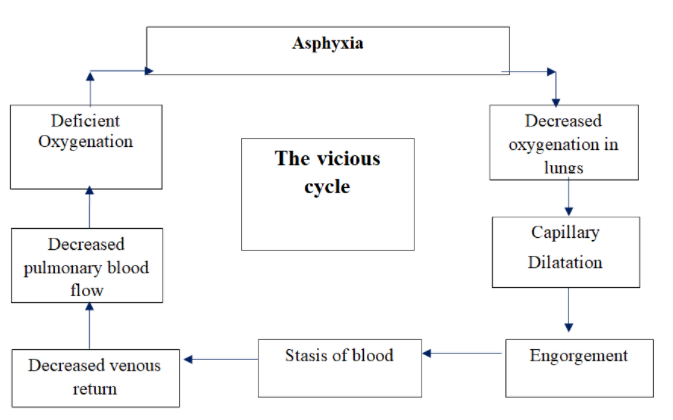
Asphyxia
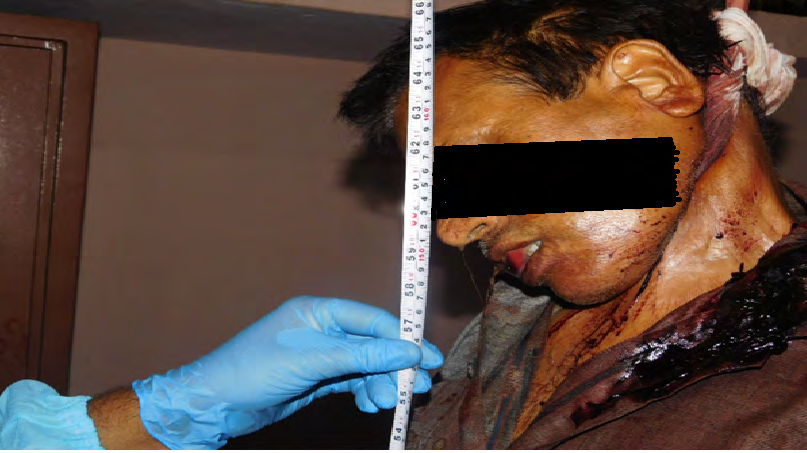
“Asphyxia is defined as lack of oxygen in blood and tissues due to impaired or absence of exchange of oxygen and carbon dioxide on a ventilatory basis, leading to death”.The term ‘asphyxia’ has originated from a Greek word ‘asphuxia’ meaning loss of heart beat [6]. ‘Asphyxia’ literally means ‘defective aeration of blood’ and etymologically, it implies ‘pulselessness’ [7]. Adelson defined asphyxia or anoxia as ‘the physiologic and chemical state in a living organism in which acute lack of oxygen available for the cell metabolism is associated with inability to eliminate excess of carbon dioxide’. Anoxic anoxia can occur due to interference with respiration by any mechanical obstruction in the air passages by constriction of air passages [8]. Asphyxia, death by constricting force on neck structures, include any form of pressure as in hanging and strangulation (Figures 1-16).
Cyanosis
Cyanosis is a feature of anoxia, this word derived from the Greek, means ‘dark blue.’ Cyanosis indicates blue colour of skin, mucous membrane and internal organs. When the airway is blocked, the oxygenation in the lungs is reduced which in turn leads to diminution in the oxygen content of the arterial blood. This will lead to darkening of all organs and tissues [9]. It become more pronounced in skin of lips, finger tips, ear lobules and also in organs.
Post Mortem Appearance
Externally the appearance of the ligature mark is the most important finding and specific sign of death by hanging. The ligature mark on the neck depends on:
- Composition of the ligature.
- Width and multiplicity of the ligature.
- The weight of the body and the degree of suspension.
- Length of time the body has been suspended.
- Position of the knot.
- Slipping of the ligature mark.
- Knot mark.
- Removal of the ligature material.
Types of Hanging
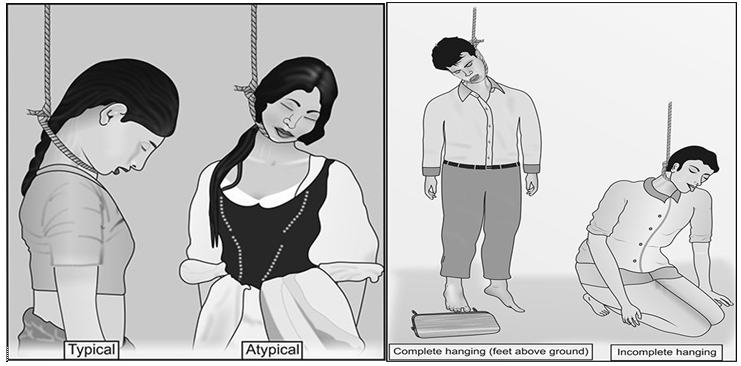
- Typical hanging - knot of ligature is on the backside of the Neck.
- Atypical hanging - knot of the ligature is anywhere other than on the backside of the neck. Usually location for the knot is near the mastoid process or angle of mandible. Occasionally, it may be under the chin.
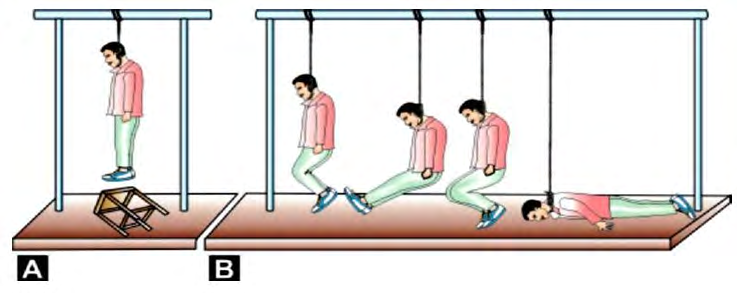
- Complete hanging - both feet are not touching the ground.
- Partial hanging - both feet or any other parts of the body are touching the ground. Thus, it may be also induced in sitting, stooping, kneeling, lying prone or supine positions.
Mechanism of Hanging
The pressure on the neck can result in occlusion ofneck structures for respiratory functioning, developing asphyxia. It has found that pressure/force of 2 kg and 4-5 kg on the neck can occlude jugular vein and carotid arteries respectively,15kg can occlude trachea and 30kg can occlude vertebral arteries [10, 11].
Manner of hanging
- Suicidal hanging.
- Homicidal hanging.
- Accidental hanging for e.g. autoerotic asphyxia.
- Judicial hanging. The execution of the death penalty in India, under the Code of Criminal Procedure, is carried out with hanging by neck till death for more than hundred years.
Fatal Period
- If death occurs due to asphyxia, then the fatal period is within 5 to 10 minutes. In case of death due to occlusion of blood vessels, it takes a bit longer time 12 to 20 minutes.
- In judicial hanging, death is instantaneous.
- Delayed deaths: Delayed death by several days is rare and occurs due to- i) aspiration pneumonia, ii) infections, iii) odema of larynx or lungs, iv) infarction of brain, v) hypoxic encephalopathy, vi) brain abscess.
Suicide Note
Suicide note is the last and final words of the person who is bidding good bye to life though it is estimated that only 25- 30% sof suicidal deaths are accompanied by a note [12]. One in six suicide attempters leave a suicide note [13].
Case Study
A case was registered in the police station located at North East District of Delhi, regarding the death of a male age approx.55 years and a female of age approx. 52 years in a house. The concerned Police Station has sent request in the control room of Forensic Science Laboratory, Delhi, for a team of Forensic Experts to find out the clue material andmotive behind the double death case. A team of Forensic Experts visited the scene of crime and thoroughly examined thespot and gathered various crucial evidences related to double death and established the case was murder and suicide.
Examination of Spot
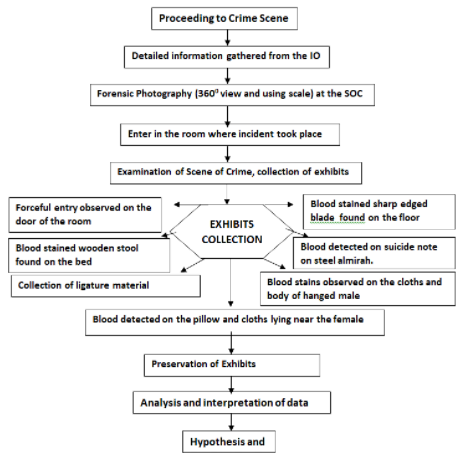
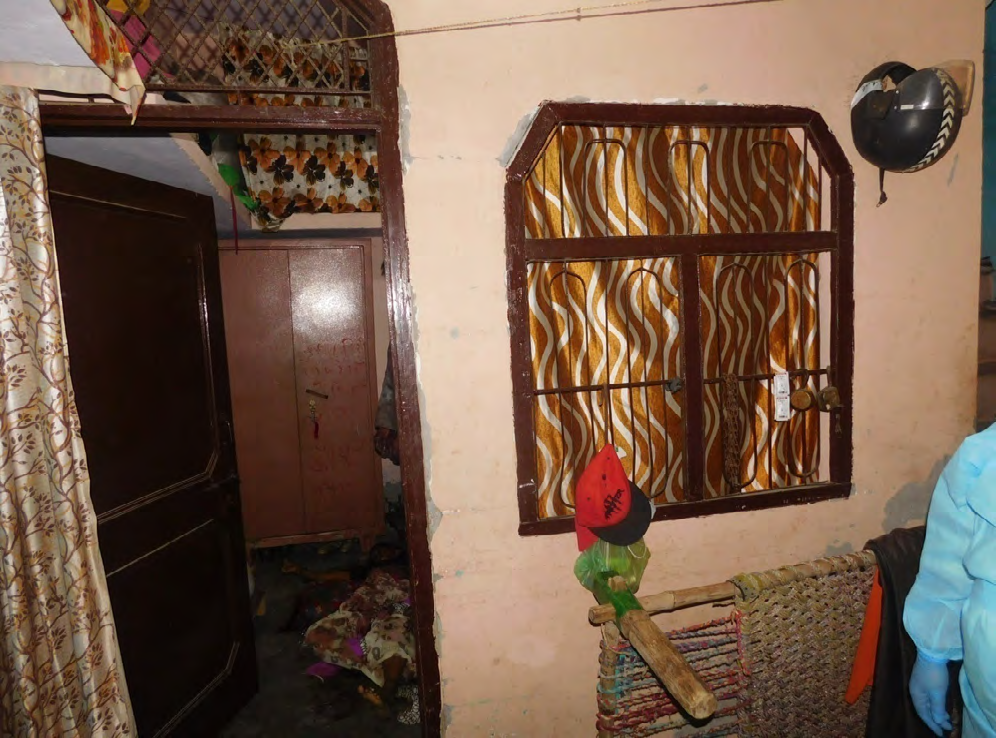
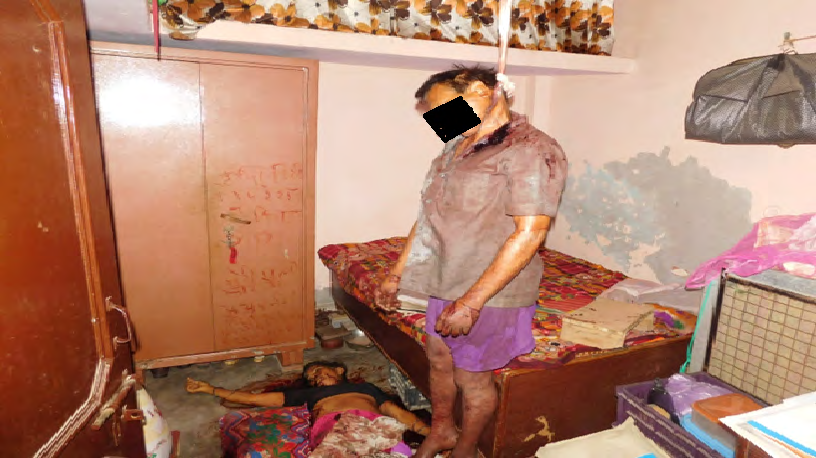
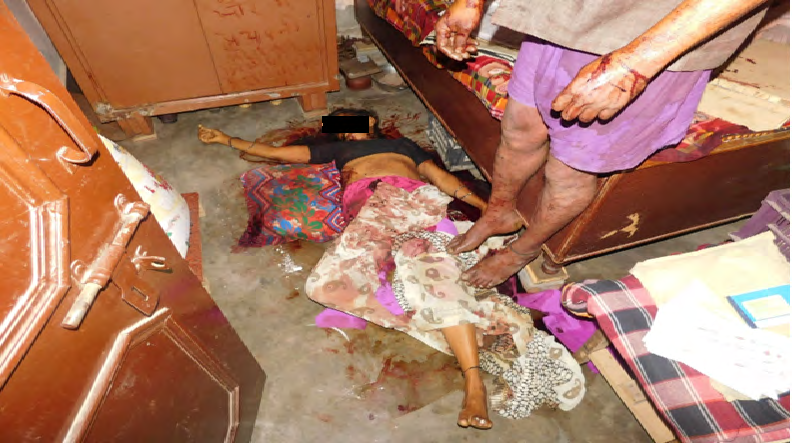
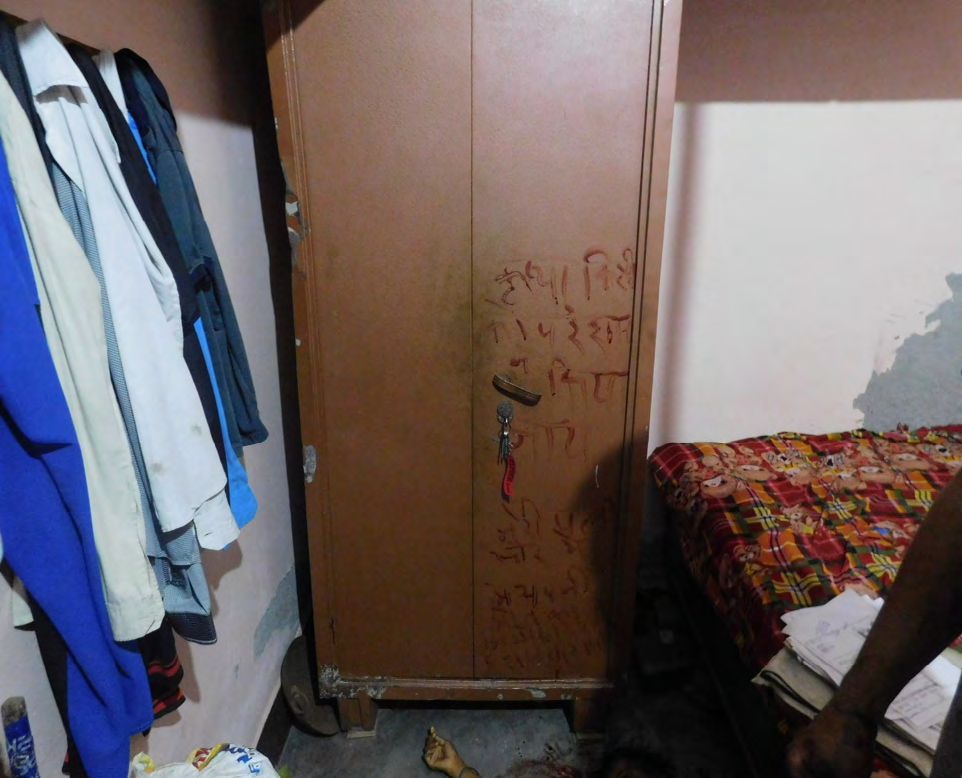
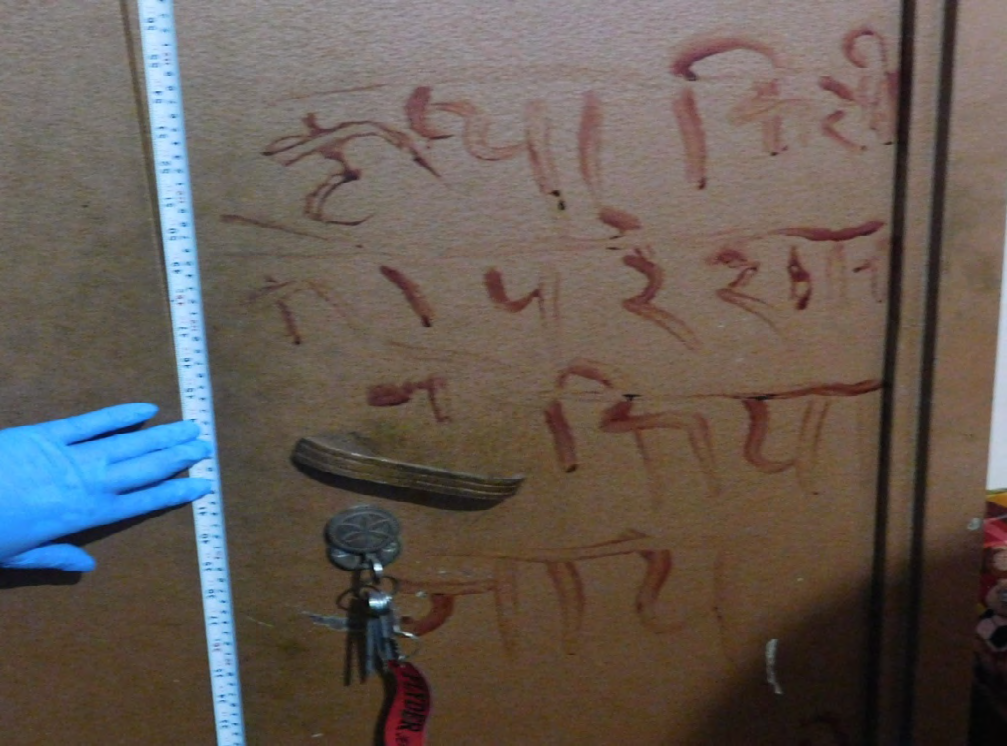
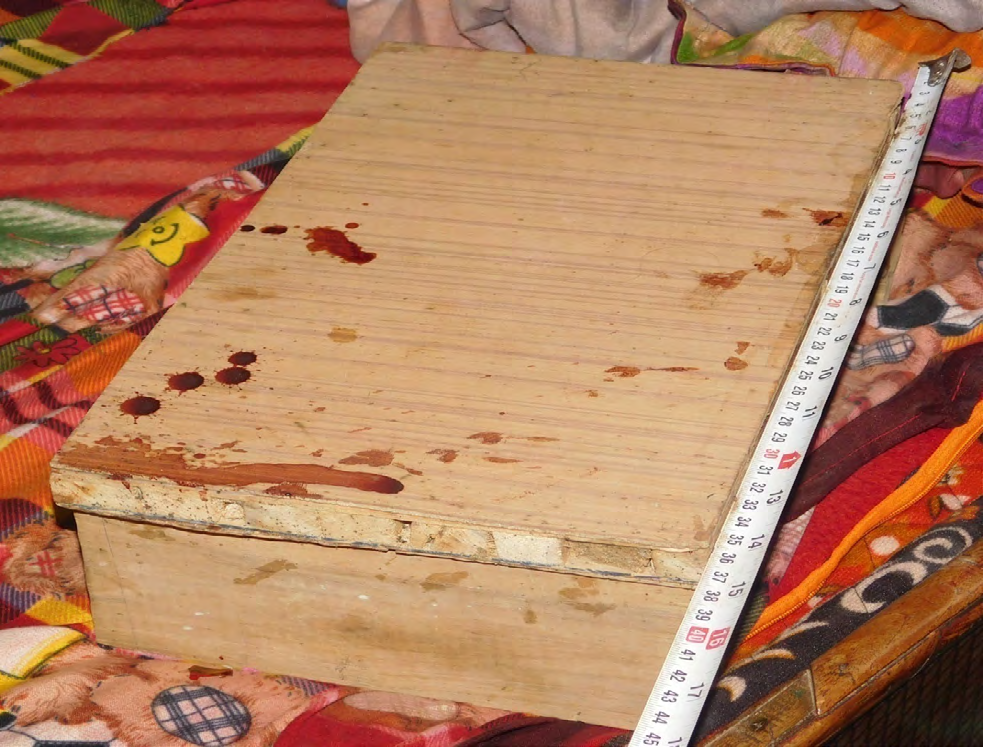
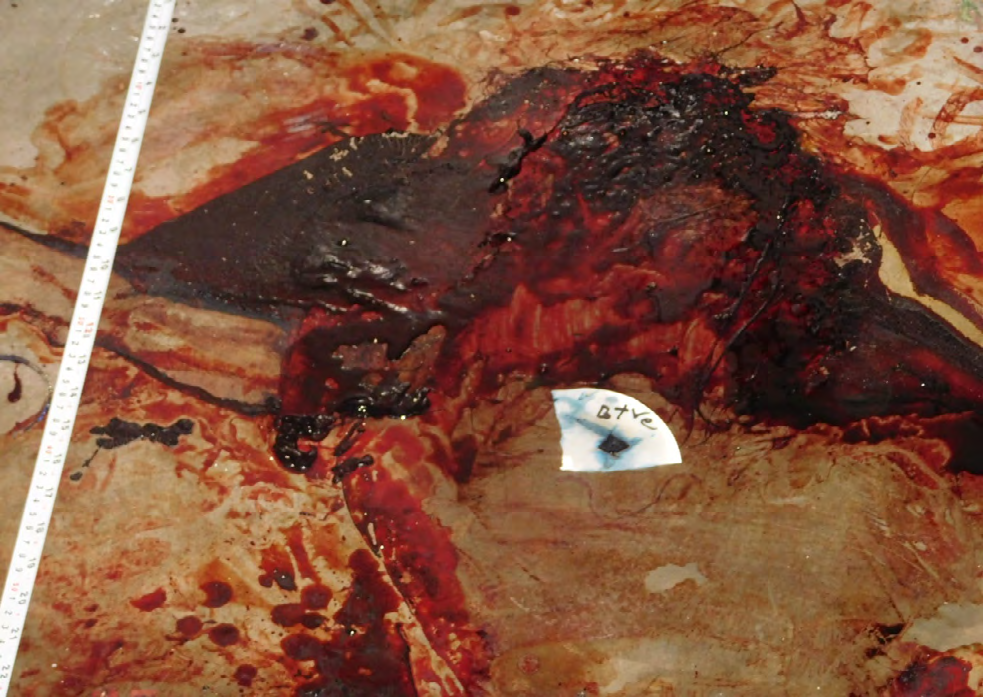
The Scene of Crime was A house,which has one room on the ground floor where incident took place. A female body (wife)was found lying on the floor of the room. Acut- throat injurywas present on female body. Pool of blood and blood stainedcloths were found near the body. A wrapper and monocarton box of ‘Gillete’ make blade i.e. weaponwas found near the body. Some writings were written on the door of metallic amirah with blood (suicide note) kept in the room near head side of the female body.
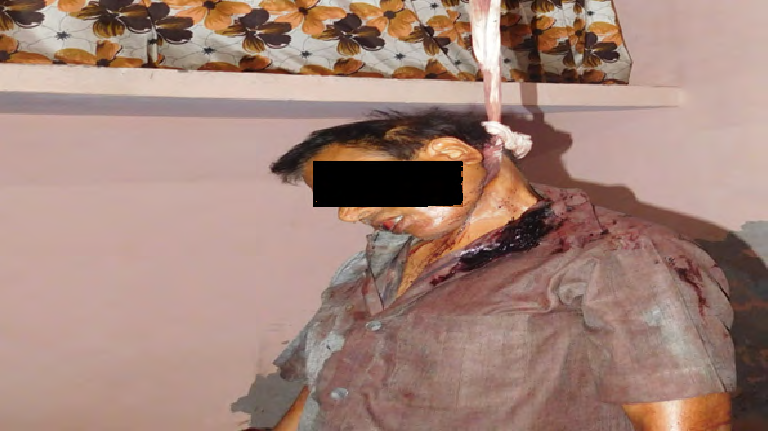
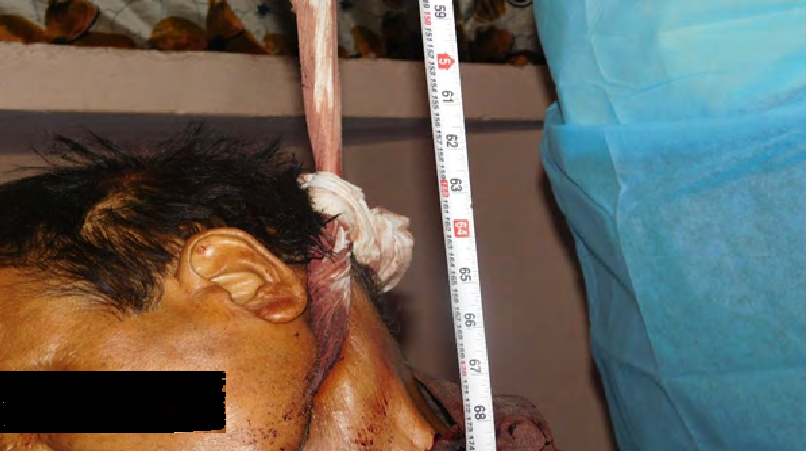
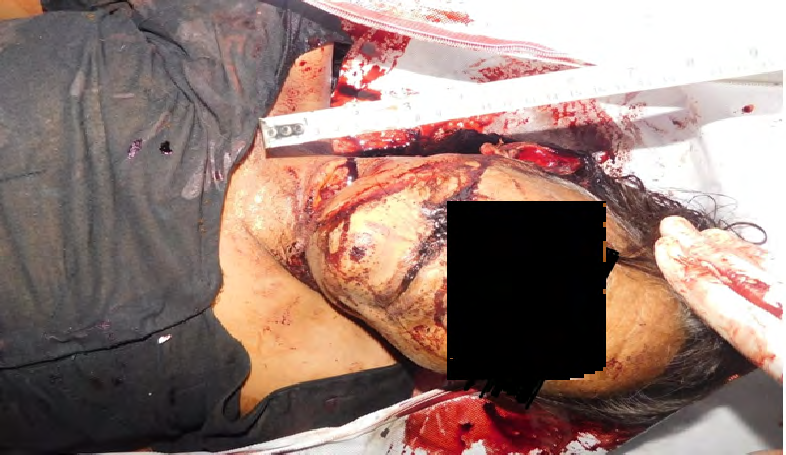
A male dead body was found hanging through a fan with ligature material. One end of the ligature material was tied through the ceiling fan and other end with neck of the male body through slide/ flexible knots. V- shape was formed by the ligature material in the neck of the body. Soft and broad material was used as ligature.
A wooden stool was placed on the bed near the hanging body and foot was found at height approx.1foot above from the floor of the room. The body of the deceased was in a position of complete hanging.Vertical salivary dribble marks were observed. Tongue was observed in protruded condition and stuck in between the upper and lower jaw of mouth. Blood-stained ligature material and cloths were observed on the body.
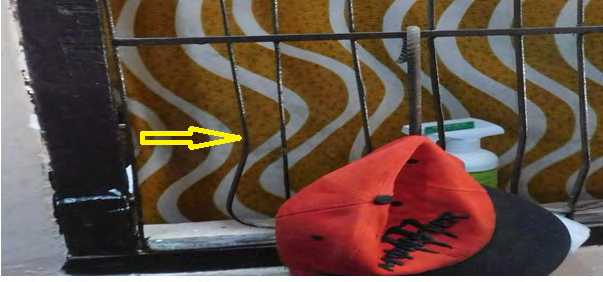
Latches of the entry door were found intact but a metallic strip in the window near the door found in bent condition. The door of the room was opened through the window. It was informed by the IO that the deceased was desperate have altercation with his family members before committing the crime. The deceased cut the throat of his wife with blade and write suicide note on the almirah with blood of his wife and hanged himself on a ceiling fan.
Clue Material Found on the Spot
The scene of crime was thoroughly examined and various clue materials like blood, wooden stool, sharp edged weapon i.e. metallic blade, blood smeared cloth of found on the bed and floor, suicide note on door of almirah, ligature material etc. Hand written papers by the male deceased found in the room collected for comparison. The window of the room was found opened forcefully. Through which the door of the room has been opened which, indicates that that it opened by the relative/IO after the incidence.
Conclusion
There are many issues related to suicide such as family problems, illness, unemployment, love affairs, failure in examination, poverty etc. In the present study scene of crime was thoroughly examined the by the team of forensic expert. Various evidences of forensic interest were collected, photographed and examined, such as Pool of blood was found near the female and cloth wearing by the female body smeared with blood. The female body has visible sharp injury on the neck. One blood stained razor blade was found and one empty Gillette blade box was also found on the floor. A suicide note written on the door of metal almirah kept near the head side of the female body. A wooden stool was found kept on the bed. Blood stains were observed on the hand, legs, cloths and ligature material of male body hanging on ceiling fan. Forceful opening of room door was observed through the side window of the said room.
Form all the observation it was concluded that, female was murdered by a sharp edge weapon i.e. Metallic Blade by her husband and then he has attempted suicide by hanging himself, after writing suicide note with the blood on the door of the metallic Amirah. This was a clear instance of murder and suicide case in which a woman was killed by her husband and hanged himself due family distress.
Author’s Contribution
Pradeep Kumar - Crime Scene Investigation and Spot Analysis, Dr Subhash Chandra-Crime Scene Investigation,Casestudy conceptual and design, Presentation of data, Shri S.K. Gupta- Interpretation of presented data. Shri Sri Narain-Critical review of presented data, Ms Deepa Verma - Overall guidance and supervision while presentation and Interpretation of data.
Adherence to National and International Regulations: Not applicable.
Consent for Publication: Not applicable.
Availability of Data and Material: Crime Scene Management Division, Forensic Science Laboratory, Delhi, India.
Funding: None.
Conflict of Interests: The authors declare that they have No Conflict of Interests.
Acknowledgment
The authors thankful to Shri K.C. Varshney,Deputy Director,Forensic Science Laboratory, Delhi, for his continuous motivation, support and encouragement for undertaking in this research activities, Dr Ajay Kumar Gautam, Senior Scientific Officer (Crime Scene) for extending support for conceptual design, presentation and interpretation of data, Dr Parveen Kumar Sodhi, Senior Scientific Assistant (Chemistry), Shri Jitendra Prasad Kait Senior Scientific Assistant (Crime Scene) for extending support for conceptual design, presentation and interpretation of data.
References
-
(2008) Encyclopedia of mental disorders.
-
Radhakrishnan R, Andrade C (2012) Suicide: An Indian perspective. Indian J Psychiatry 54(4): 304-319.
-
World Health Organization (2004) Global Burden of Disease.
-
Pradhan A, Tripathi CB, Mandal BK, Karn A, Subedi ND, et al. (2012) Suicide: Attempts Methods and Causes in Cases Brought for Autopsy in Bpkihs, Dharan. J Forensic Res 3: 1-3.
-
Mohammed AAQ (2017) Hanging as a method of suicide: a retrospective study. The medical journal of Basrah University 35(2): 97-104.
-
Umadathan B (2008) Principles and Practice of Forensic Medicine 1st (Edn.), Swamy Law House, Kochi, India, pp: 265-276.
-
Krishan VIJ (2008) Asphyxial deaths, Textbook of Forensic Medicine and Toxicology- Pricnciples and practice 3rd (Edn.), Elsevier, India, pp: 179-202.
-
Mukherjee JB (1981) Violent Asphyxial Deaths, Forensic Medicine and Toxicology, Academic Publishers Culcutta, India, 1: 453-491.
-
Keith LM, Arthur FD (2006) Clinically Oriented Anatomy. In: 5th (Edn.), Lippincott Williams & Wilkins, Philadelphia, pp: 1046-1120.
-
Rebecca KY, Paschall MJ (2018) Epidemiology of asphyxiation suicides in the United States, 2005-2014. Injury Epidemiology 5(1): 17-131.
-
Clement R, Jean-Pierre G, Sauvageau A (2011) Fracture of the neck structures in suicidal hangings : A Retrospective study on contributing variables. Forensic Sci Int 207(1- 3): 122-126.
-
Hyrtl, Joseph (2012) The Corrosion Anatomy and its Results: with 18 Chromolithographed Plates. South Carolina: Nabu Press, USA.
-
Schummer A (1935) Ein Neues Mittel (“Plastoid”) und Verfahren Zur Herstellung Korrosionsanatomischer Präparate. AnatAnz. 81 (1935): 177-201.
- Forensic Implications of Adverse Drug Reactions in Schizophrenia A Case Series
- Narcotics and Digital Forensics: Bridging Crimes in the Digital Age
- Ethics in Forensic Psychiatry: Principles, Dilemmas, and Human Rights
- Impact of Acute Stress on Attentional Orienting to Social Cues
- Head Injury and Intracranial Hemorrhage in Western Region of Libya
- A Forensic Study on Handedness: Examination of Handwriting Features in Right and Left Handed Writers