
Diatomological Profile at Discrete Depths of Powai Lake, Mumbai for Medico-Legal Purposes
Diatoms are photosynthetic microorganisms that play important role in forensic diatomology in the diagnosis of drowning deaths. In the present study, the Diatomological profile of Powai lake was prepared for medico-legal purposes using the Shannon-Wiener index. Powai lake (19.1266° N, 72.9062° E) is a large artificial lake situated in a northern suburb of Mumbai. Diatoms sampling was conducted in February 2017 from this lake. This study aimed to identify the various genera of diatoms and to determine the relative abundance, generic counting, and diversity index of diatoms for the medico-legal purposes. Littoral benthic diatoms of five locations were sampled from this lake. Diatoms slides were prepared by scraping the rock surface with an area of 3x3 cm, diluting in 50 ml distilled water, and identification under the microscope with 1000 magnification. Identification of 17 genera of diatoms was done using the web-based visual guide ‘Diatoms of the United States’. Diatoms belong to both the orders Centrales and Pennales. The pH of the lake water was found to be 7.64 i.e. slightly alkaline and the temperature was 27°C. Water quality parameters showed a fairly good value for the growth of diatoms. Samples were dominated by class Bacillariophyceae, which included 9 genera followed by Coscinodiscophyceae, with 6 genera, and Fragilariophyceae, with 2 genera. Generic counts of diatoms were obtained by using the ‘Neubauer’ Counting chamber. The Shannon-Wiener diversity index (H') ranges from 1.042 in Epipelic to 0.454 in Emerged Epiphytic diatoms. The purpose of this study was to prepare a diatomological profile of diatoms at discrete depths for medico-legal purposes.
Introduction
Diatoms are photosynthetic single eukaryotic cells found in all aquatic habitats around the world [1]. Its body length ranges from 1mm to 500 mm. and has a role in the food chain as a producer [2]. Diatoms have around 200,000 species with distinguished characteristics, which are found throughout the marine, brackish, and freshwater [3]. Spaulding, et al. [4] estimated that the photosynthetic activity of diatoms produces between 20 and 40% of the earth’s oxygen (O2). The peculiar features of diatoms are the silica cell wall called frustules, unique photosynthetic pigments, and specific storage products such as oil and chrysolaminarin [5]. The silica cell wall helps them to prevent decay so as to maintain their shape [6]. It contains a large amount of brittle but hard silica which is hydrated (SiO2.H2O) and noncrystalline [7].
Diatoms are divided into two groups, namely centric and pennate, which are further divided into three classes namely: Coscinodiscophyceae (centric diatoms), Fragillariophyceae (araphid diatoms) and Bacillariophyceae (raphid diatoms) [8]. Freshwater bodies typically consist of lentic (particularly lakes and wetlands) and lotic waters (including streams and rivers), which are often dominated respectively by planktonic algae and benthic species [9]. Diatoms in India have been studied since the nineteenth century. Many researchers from India and other countries have studied marine, freshwater and fossil diatoms of the Indian subcontinent. The Indian subcontinent accounts for approximately 7000 diatom taxa from freshwater, brackish, marine environment, and fossils [10]. Epilithic diatoms are usually the most prevalent and diverse algal group in running waters. They could be used as indicators for heavily polluted sites where fish and macro-invertebrates are entirely absent or less diverse [11]. Therefore, epilithic diatoms are the most potent bioindicators for the assessment of human impact and examination of pollution gradient [12, 13, 14, 15]. Diatom-based indices are essential tools for the assessment of environmental conditions in aquatic systems, particularly in temperate and sub-tropical climates [16, 17, 18]. Several diatom-based indices have been developed and successfully applied worldwide, especially indicative of eutrophication and organic pollution in the temperate region [15, 19, 20]. Eutrophication is a major water quality challenge that diminishes the ability of urban ponds to provide these services [21, 22, 23]. Regular water quality monitoring is an essential step toward formulating conservation strategies for urban lakes [24, 25]. Biomonitoring is reliable and economical means of water quality monitoring [26, 27]. Phytoplankton due to their small size and ability to provide a strong response to environmental changes are being routinely used for biomonitoring, especially for the trophic state of the water [28, 29].
Diatoms also play an important role in the diagnosis of death due to drowning [30, 31]. Tracing the exact place of drowning in a medico-legal investigation can be possible if the diatomological profile of that water body is available [32]. The database obtained from diatomological maps can be helpful in the diagnosis of suspected drowning cases of a particular water body [33] and this database is a reliable indicator if seasonal and site-specific diatom database is available for a particular water body [34]. Characterization of the temporal and spatial distribution of diatoms from the main site of drowning provides important evidence of the location of a particular site of drowning [35]. Thus, empirical data is generated to develop evidence-based forensic ecology, demonstrating some of the spatial and temporal factors which can contribute to or limit the transfer of evidence [36]. Dividing water bodies based on classifying diatom species and establishing the diatom species distribution in different water bodies have certain research value and application prospects in diatom testing for drowning [37].
Data from Powai Lake of different microhabitats have been utilized to create diatomological distribution maps, which can be utilized for the characterization of different microhabitats based on the Shannon-Weiner index.
Materials and Methods
Diatoms sampling was conducted on February 2017 during daytime from Powai Lake, Mumbai, India (19.1266° N, 72.9062° E). The pH of the lake water was found to be 7.64 i.e. slightly alkaline and the temperature was 270C.
Sample collections were made from different habitats namely: Planktonic, Epipelic, Epilithic, and Epiphytic (Figure 1). The planktonic diatoms were collected in a labeled air- tight bottle, from the undisturbed photic layer of water. For a sampling of Epipelic diatoms, water along with sediments showing visible diatom growth was carefully pipetted in order to reduce contamination with soil particles. A thick layer of Epilithic diatoms (mucoid appearance) present on cobbles was carefully brushed in a tray and the water was transferred to a labeled air-tight bottle. Epiphytic diatoms were collected from the plant Sagittaria graminae (Grassy arrowhead). The submerged and emerged parts of this plant showing slimy growth on its surface were separately collected and then cut into smaller pieces of approximately 15cm. Plant pieces along with the lake water were transferred in a labeled sampling bag. The bag was shaken vigorously for a few minutes to dislodge the diatoms from the plant into the water. The plant parts were discarded from the bag and the water was transferred to a labeled air-tight bottle.
Digestion and Cleaning of Diatoms
The water sample (approximately 1 ml) from the bottom of the bottle was collected using a dropper and was transferred in vials of 1.5 ml. The sample was then digested by adding 4 drops of concentrated nitric acid and incubated overnight at room temperature. The samples were then vortexed (Cyclo Mixer CM 101) and centrifuged (Multi-Spin MSC-6000- Biosan) at 3000 rpm for 5 minutes. The supernatant was discarded and the pellets were washed with distilled water to remove excess acid from it. The washing step was followed several times till the pellet appeared greyish-white in color. The supernatant was decanted and the pellet was used for further examination.
Preservation and Identification of Diatoms
The cleaned diatoms were preserved in 4% formalin added with glycerin. The sediments were taken on slides and examined under a compound microscope (Olympus CX41; Model: CX41RF) (magnification up to 100X). Slides were fully scanned with help of a Light microscope (Olympus CX41) using a 100X oil immersion lens and representative photomicrographs of the diatom were captured using a digital camera (Olympus E-330). The Genera of observed diatoms were identified using the web-based visual guide ‘Diatoms of the United States’ [38].
Results and Discussion
In the current investigation, more than 17 genera were identified belonging to orders Centrales and Pennales. Samples were collected from five different habitats, namely: Planktonic, Epilithic, Submerged Epiphytic, Emerged Epiphytic, and Epipelic, and observed under a light microscope at 100X. Identification was done using the web- based visual guide ‘Diatoms of the United States’ [38].
Out of 17 Diatom genera identified, 9 genera belong to the class Bacillariophyceae, 6 genera to the class Coscinodiscophyceae and 2 genera belong to the class Fragilariophyceae. Three different sampling stations of Powai Lake revealed the occurrence of four groups of Phytoplankton (Cyanophyceae (69.6%), Euglenophyceae (18.08%), Chlorophyceae (8.95%) and Bacillariophyceae (3.2%) [39]. The diatom genera across various microhabitats in order of their abundance were: Diatoma (293), Cocconeis (275), Aulacoseira (227), Stenopterobia (89), Discostella (88), Hippodonta (84), Navicula (72), Cyclotella (61), Surirella (46), Nitzschia (21), Stephanocyclus (15), Frustulia (12), Pleurosira (10), Pinnularia (10), Melosira (7), Tabularia (4) and Gomphoneis (4). In the planktonic sample, Stenopterobia (34) was found to be dominant followed by Aulacoseira (29) and Diatoma (23). In the Epilithic sample, Diatoma (164) was found to be abundant followed by Aulacoseira (78), Discostella (66), and Navicular (38). Cocconeis (126, 128) and Aulacoseira (58, 32) were abundant in Submerged Epiphytic and Emerged Epiphytic Sample respectively. Diatoma (70), Surirella (41), and Aulacoseira (30) were abundant in the Epipelic sample. Other genera were either moderately present or rare or absent. The dominance of Cyanophyceae groups followed by Euglenophyceae and low desmid population clearly states the eutrophic condition of the lake [39] (Figures 2-17).
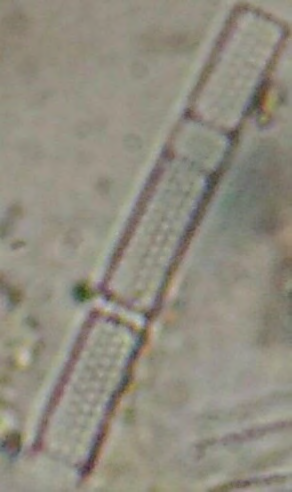
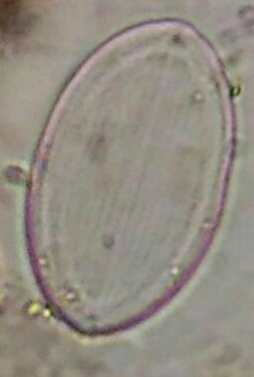

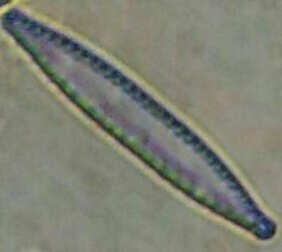
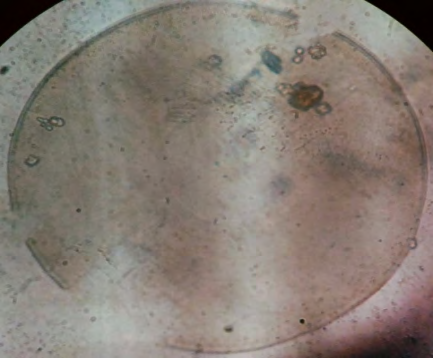
Shannon-Wiener indices are a widely used tool to measure biodiversity and ecological health of the habitat. Eutrophication reduces diversity [40]. According to the Shanon Wiener Index, the Epipelic sample was the most diverse in diatom Genera among the five samples. This was followed by Epilithic, Planktonic, and Submerged Epiphytic samples. The Emerged Epiphytic sample showed the least diversity. The diversity index for the planktonic sample was 0.79, the Epilithic sample was 0.802, the Submerged Epiphytic sample was 0.753, Emerged Epiphytic sample was
0.454, and for the Epipelic sample was 1.042. When the value of Shannon-Wiener indices is greater than 3 it indicates clean water, 1 to 3 is an indicator of a moderate level of pollution whereas less than 1 is considered a heavily polluted water body [41, 42]. Powai Lake is considered to be one of the most eutrophicated lakes. The degree of eutrophication was slightly higher in summer as compared to other seasons in most of the lakes. The degree of eutrophication was lower in the monsoon season. Yin, et al. [43, 44] have reported similar seasonal fluctuations in eutrophication levels due to the dilution and flushing of nutrients due to monsoon rains. As reported by Vishal, et al. [45] Shannon diversity indices of all the lakes ranged between 0.98 (Powai lake) to 2.51 (MNP pond) indicating low to mid-level of pollution. They also found lowest Shannon values were from Powai Lake in all the seasons (0.9 in monsoon, 1.13 in winter and 1.11 in summer). This indicates the strong negative correlation (r = -0.721) between Shannon diversity indices and TSI (Charts 1-6).
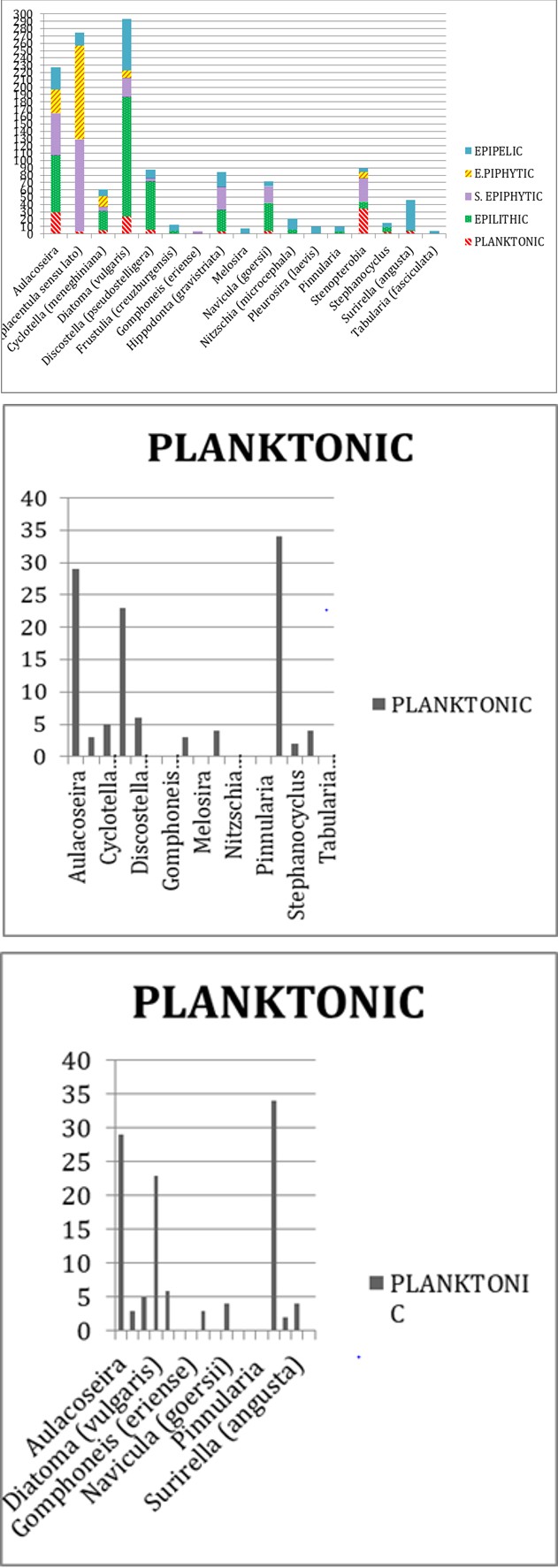
Column Chart 1: Ecological Profile of Diatoms of Powai Lake (X-Axis: Diatoms Genera and Y- Axis: Count of Diatoms Across the Five Microhabitat.
Column Chart 2: Planktonic Sample (X-axis: Diatoms Genera and Y- axis: Count of diatoms).
Column Chart 3: Epilithic Sample (X-axis: Diatoms Genera and Y- axis: Count of Diatoms).
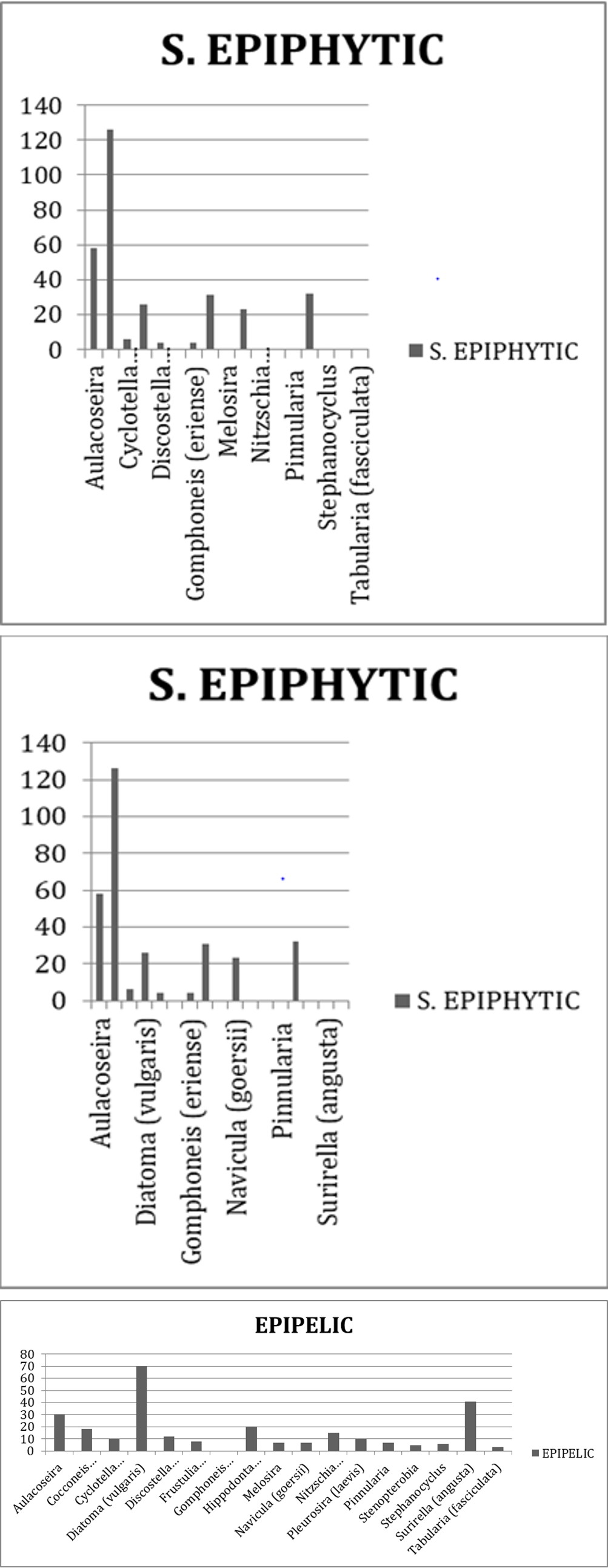
Column Chart 4: Submerged Epiphytic Sample (X-Axis: Diatoms Genera and Y- Axis: Count of Diatoms).
Column Chart 5: Emerged Epiphytic Sample (X-Axis: Diatoms Genera and Y- Axis: Count of Diatoms).
Column Chart 6: Diatom Genera Observed in Epipelic Sample (X-Axis: Diatoms Genera and Y- Axis: Count of Diatoms).
| CLASS | GENERA | SHAPE | PLANKTONIUC | EPILITHIC | S. EPIPHYTIC | E. PIPHYTIC | EPIPELIC |
|---|---|---|---|---|---|---|---|
| C. | Aulacoseira | Circular | 29 | 78 | 58 | 32 | 30 |
| B. | Cocconeis | Elliptical | 3 | 126 | 128 | 18 | |
| C. | Cyclotella | Circular | 5 | 26 | 6 | 14 | 10 |
| F. | Diatoma | Elliptical | 23 | 164 | 26 | 10 | 70 |
| C. | Discostella | Circular | 6 | 66 | 4 | 12 | |
| B.. | Frustulia | Lanceolate | 4 | 8 | |||
| B. | Gomphoneis | Clavate | 4 | ||||
| B. | Hippodonta | Rhombic- Lanceolate | 3 | 30 | 31 | 20 |
Table 1: Diatom (Class, Genera And Shape) Observed in Different Ecological Samples.
- c.
- Melosira
- Circular
- 7
- B.
- Navicula
- Lanceolate
- 4
- 38
- 23
- 7
- B.
- Nitzschia
- Lanceolate
- 6
- 15
- C.
- Pleurosira
- Circular
- 10
- B.
- Pinnularia
- Rectangular
- 3
- 7
- B.
- Stenopterobia
- Lanceolate
- 34
- 10
- 32
- 8
- 5
- C.
- Stephanocyclus
- Circular
- 2
- 7
- 6
- B.
- Surirella
- Heteropolar
- 4
- 1
- 41
- F.
- Tabularia
- Lanceolate
- 1
- 3
- Total
- 113
- 434
- 310
- 192
- 269
- C= Coscinodiscophyceae
- B=BACILLARIOPHYCEAE
- ABUNDANT
- MODERATE
- ABSENT
- F= FRAGILARIOPHYCEAE
Table 2: Diatom (Class, Genera And Shape) Observed in Different Ecological Samples.
The creation of a database of diatom in the present study can show the potential site of microhabitat based on Shannon diversity indices (Table 1). It also showed that diatoms showed variability in different microhabitats, which can be used as markers in the diagnosis of drowning deaths. This database can be used for the rigorous comparison of diatom species with the tissue samples of the drowned victims. Daman, 2011 in his study advocated that changes in algal/ diatom diversity could be used in similar microhabitats to approximate the amount of time a recovered body was in the water. A study conducted by Kulas, et al. advocated that in a multi-microhabitat diatom diversity and community, the structure can be used as a reliable tool for bio-monitoring assessment. The benthic ecology of various microhabitats can be applied to forensic investigations, provide suggestions for future benthic research, and help bridge the gap between benthic science and the applied aspects of forensic sciences [46].
Diagnosis of drowning is one of the challenging areas in the field of forensics. Diatom test does play a significant role in the diagnosis of death due to drowning. The study provides a database about the diatom diversity of Powai lake that may be of value in forensic investigations [47, 48, 49, 50, 51, 52].
Conclusion
In the present study, diatomological database has been generated from the Powai Lake, Mumbai from the different microhabitats. Water samples were collected from Planktonic, Epipelic, Epilithic, and Epiphytic microhabitats. Diatoms were isolated from the samples using Nitric Acid Digestion method. Ecological profiling of diatoms from Powai Lake, Mumbai was carried out. 17 diatoms Genera were identified. The diatoms identified belonged to the following Class:
Bacillariophyceae (613), Coscinodiscophyceae (408), and Fragilariophyceae (297). The diatom genera identified from Powai lake in order of their abundance was: Diatoma (293), Cocconeis (275), Aulacoseira (227), Stenopterobia (89), Discostella (88), Hippodonta (84), Navicula (72), Cyclotella (61), Surirella (46), Nitzschia (21), Stephanocyclus (15), Frustulia (12), Pleurosira (10), Pinnularia (10), Melosira (7), Tabularia (4) and Gomphoneis (4). The database in our study is useful to forensic professionals in solving drowning cases and locating the putative site of drowning. This database may also possibly be used to find the correlation of diatoms with the tissue samples with the help of the Shannon-Wiener index. However, this facet needs to be explored further and more studies need to be carried out in this direction.
References
-
Malviya S, Scalco E, Audic S, Vincent F, Veluchamy A, et al. (2016) Insights into global diatom distribution and diversity in the world’s ocean. Proc Natl Acad Sci 113(11): 1516-1525.
-
Scala S, Bowler C (2001) Molecular insights into the novel aspects of diatom biology. Cellular and Molecular Life Sciences 58(11): 1666-1673.
-
Mann DG, Droop SJM (1996) 3. Biodiversity, biogeography and conservation of diatoms. Hydrobiologia 336: 19-32.
-
Spaulding S, Edlund M (2008) Aulacoseira. In Diatoms of the United States.
-
Taylor JC, Harding WR, Archibald CGM (2007) A methods manual for the collection, preparation and analysis of diatom samples. Water Research Commission.
-
Mc Laughlin RB (2012) An Introduction to the Microscopical Study of Diatoms. Modern Microscopy.
-
Dwivedi RK, Misra PK (2015) Freshwater Diatoms from Himalayan State Himachal Pradesh, India. Environmental Science 45(1): 30-39.
-
Mishra M, Arukha AP, Bashir T, Yadav D, Prasad GBKS (2017) All New Faces of Diatoms: Potential Source of Nanomaterials and Beyond. Frontiers in Microbiology 8: 1239.
-
Orlando Necchi JR (2016) River Algae. Springer International Publishing.
-
Kale A, Karthick B (2015) The Diatoms: Big significance of tiny glass house. Resonance 20(10): 919-930.
-
Mangadze T, Bere T, Mwedzi T (2016) Choice of biota in stream assessment and monitoring programs in tropical streams: A comparison of diatoms, macroinvertebrates and fish. Ecol Indic 63: 128-143.
-
Winter JG, Duthie HC (2000) Stream epilithic, epipelic and epiphytic diatoms: habitat fidelity and use in biomonitoring. Aquat. Ecol 34: 345-353.
-
Beyene A, Addis T, Kifle D, Legesse W, Kloos H, et al. (2009) Comparative study of diatoms and macroinvertebrates as indicators of severe water pollution: Case study of the Kebena and Akaki rivers in Addis Ababa, Ethiopia. Ecol Indic 9(2): 381-392.
-
Gallo L, Battegazzore M, Corapi A, De Filippis A, Mezzotero A, et al. (2013) Environmental analysis of a regulated Mediterranean stream based on epilithic diatom communities the Crati River case (southern Italy). Diatom Res 28 (2): 143-156.
-
Pham TL (2017) Comparison between Water Quality Index (WQI) and biological indices, based on planktonic diatom for water quality assessment in the Dong Nai River, Vietnam. Pollution 3(2): 311-323.
-
Almeida SFP, Elias C, Ferreira J, Tornés E, Puccinelli C, et al. (2014) Water quality assessment of rivers using diatom metrics across Mediterranean Europe: A methods intercalibration exercise. Sci Total Environ 476- 477: 768-776.
-
Lavoie I, Campeau S, Drakulic NZ, Winter JG, Fortin C (2014) Using diatoms to monitor stream biological integrity in Eastern Canada: An overview of 10 years of index development and ongoing challenges. Sci Total Environ 475: 187-200.
-
Chen X, Zhou W, Pickett STA, Li W, Han L, et al. (2016) Diatoms are better indicators of urban stream conditions: A case study in Beijing, China. Ecological Indicators 60(2016): 265-274.
-
Potapova M, Charles DF (2007) Diatom metrics for monitoring eutrophication in rivers of the United States. Ecological Indicators 7(1): 48-70.
-
Kireta AR, Reavie ED, Sgro GV, Angradi TR, Bolgrien DW, et al. (2012) Planktonic and periphytic diatoms as indicators of stress on great rivers of the United States: Testing water quality and disturbance models. Ecological Indicators 13(1): 222-231.
-
Ferreira JG, Andersen JH, Borja A, Bricker SB, Camp J, et al. (2011) Overview of eutrophication indicators to assess Environmental status within the European Marine Strategy Framework Directive. Estuar Coast Shelf Sci 93: 117-131.
-
Srinivasan V, Seto KC, Emerson R, Gorelick SM (2013) The impact of urbanization on water vulnerability: a coupled human– environment system approach for Chennai, India. Glob, Environ Change 23(1): 229-239.
-
Usharani K, Keerthi KV (2020) Nitrate Bioremoval by Phytotechnology using Utricularia aurea Collected from Eutrophic Lake of Theerthamkara, Kerala, India. Poll 6(1): 149-157.
-
Singh AN, Shrivastava R, Mohan D, Kumar P (2018) Assessment of spatial and temporal variations in water quality dynamics of river Ganga in Varanasi. Poll 4(2): 239-250.
-
Murphy A, Enqvist JP, Tengö M (2019) Place-making to transform urban social–ecological systems: insights from the stewardship of urban lakes in Bangalore, India. Sustain. Sci 14(3): 607-623.
-
Kohlmann B, Arroyo A, Macchi PA, Palma R (2018) Biodiversity and biomonitoring indiceses. integrated analytical Approaches for pesticide management., Academic Press pp: 83-106.
-
Pham T (2020) Using Benthic Diatoms as a Bioindicator to Assess Rural-urban River Conditions in Tropical Area: A Case Study in the Sai Gon River, Vietnam. Poll 6(2): 387-398.
-
Wu N, Dong X, Liu Y, Wang C, Baattrup Pedersen A, et al. (2017) Using river microalgae as indicators for freshwater biomonitoring: Review of published research and future directions. Ecol Indic 81: 124-131.
-
Allende L, Fontanarrosa MS, Murno A, Sinistro R (2019) Phytoplankton functional group classifications as a tool for biomonitoring shallow lakes: a case study. Knowl Manag Aquat Ecol 420: 5-18.
-
Rana AS, Verma P (2019) A Systematic Review on Various Diatoms Species Associated with Drowning. International Journal of Forensic Sciences 4(2): 000160.
-
Rana A, Manhas S (2018) Significance of diatoms in diagnosis of drowning deaths: a review Peer Reviewed Journal of Forensic & Genetic Sciences 1(5): 77-81.
-
Saini E, Khanagwal VP, Singh R (2017) A systematic databasing of diatoms from different geographical localities and sites of Haryana for advancing validation of forensic diatomology. Data in brief 10: 63-68.
-
Thakar MK, Singh R (2010) Diatomological mapping of water bodies for the diagnosis of drowning cases. Journal of forensic and legal medicine 17(1): 18-25.
-
Zhang L, Nie Q, Dai Y, Zhu S, Wang J, et al. (2020). Diatomological mapping of water bodies in Chongqing section of the Yangtze River and Jialing River. International Journal of Legal Medicine 134(4): 1375- 1385.
-
Lee KL, Choi JS, Kang HM, Kim YJ, Lee JH, et al. (2011) Establishment of Diatom Profile for Improving Reliability of Diagnosis of Drowning-Centered on the Main Drowning Sites of Han River. Korean Journal of Legal Medicine 35(2): 120-129.
-
Scott KR, Morgan RM, Cameron NG, Jones VJ (2019) Freshwater diatom transfer to clothing: Spatial and temporal influences on trace evidence in forensic reconstructions. Science & Justice 59(3): 292-305.
-
Zhou Y, Cao Y, Huang J, Deng K, Ma K, et al. (2020) Research advances in forensic diatom testing. Forensic sciences research 5(2): 98-105.
-
Spaulding S, Edlund M (2008) Cocconeis. In Diatoms of the United States.
-
Surya S, Landge AT, Deshmukhe G, Gop AP, Ramteke KK, et al. (2018) Fish Community Structure and Trophic Status - A Measure of Ecological Degradation: A Case Study from Powai Lake Mumbai. International Journal of Ecology and Environmental Sciences 44 (4): 373-382.
-
Glibert PM, Heil CA, Wilkerson FP, Dugdale RC (2018) Nutrients and harmful algal blooms: dynamic kinetics and flexible nutrition. In Global ecology and oceanography of harmful algal blooms pp: 93-112.
-
Spellerberg IF, Fedor PJ (2003) A tribute to Claude Shannon (1916–2001) and a plea for more rigorous use of species richness, species diversity and the Shannon Wiener’ Index. Global Ecology and Biogeography 12(3): 177-179.
-
Ranjit D (2015) An assessment of the downstream river ecosystem prior to the construction of lower subansiri hydroelectric power project of northeast India. PhD Thesis submitted to Gauhati University, pp: 79-80.
-
Yin K (2002) Monsoonal influence on seasonal variations in nutrients and phytoplankton biomass in coastal waters of Hong Kong in the vicinity of the Pearl River estuary. Marine Ecology Progress Series 245: 111-122.
-
Ray JG, Santhakumaran P, Kookal S (2020) Phytoplankton communities of eutrophic freshwater bodies (Kerala, India) in relation to the physicochemical water quality parameters. Environment development and sustainability 1(162): 259-290.
-
Vishal R, Meeta B (2020) Algal Indices as a Biomonitoring Tool to Assess Eutrophication in the Urban Ponds: A Case Study. Pollution 6(4): 751-757.
-
Keiper JB, Casamatta DA (2001) Benthic organisms as forensic indicators. Journal of the North American Benthological Society 20(2): 311-324.
-
Daman KN (2011) Using sessile invertebrate settlement and growth to determine the length of time criminal evidence was disposed of in Bodega Bay. University of California, Davis.
-
Krstic S, Duma A, Janevska B, Levkov Z, Nikolova K, et al. (2002) Diatoms in forensic expertise of drowning-a Macedonian experience. Forensic science international 127(3): 198-203.
-
Kulaš A, Udovič MG, Tapolczai K, Žutinić P, Orlić S, et al. (2022) Diatom eDNA metabarcoding and morphological methods for bioassessment of karstic river. Science of the Total Environment 829: 154536.
-
Paerl HW (1990) Physiological ecology and regulation of N2 fixation in natural waters. In Advances in microbial ecology pp: 305-344.
-
Spaulding S, Edlund M (2010) Stenopterobia. In Diatoms of the United States.
-
Verma K (2013) Role of Diatoms in the World of Forensic Science. Journal of Forensic Research 4(2): 1-4.
- Forensic Implications of Adverse Drug Reactions in Schizophrenia A Case Series
- Narcotics and Digital Forensics: Bridging Crimes in the Digital Age
- Ethics in Forensic Psychiatry: Principles, Dilemmas, and Human Rights
- Impact of Acute Stress on Attentional Orienting to Social Cues
- Head Injury and Intracranial Hemorrhage in Western Region of Libya
- A Forensic Study on Handedness: Examination of Handwriting Features in Right and Left Handed Writers