
Body Stuffer and Death by Cocaine Overdose: Case Report
The practice of ingesting illicit substances to avoid detection by the police, known as Body Stuffing (BS), is a reality that poses significant risks to the health and safety of those involved. This article objective is to promote discussion about the challenges in identifying signs and symptoms in cases of BS, in addition to the importance of training the attending professional to identify the scenario, given its complex manifestation and the high mortality associated with this practice. This is a descriptive study reporting the case of a death from cocaine overdose following the practice of SB. The victim was a 24-year-old man, arrested by the police, who suffered a cardiorespiratory arrest when he was taken into custody by the Civil Police. The witnesses reported that he had ingested a package containing a white powder. The case analysis reports the sequence of conditions involved in this type of situation, ranging from diagnosis, treatment and identification of the cause of death. The autopsy examination confirmed the absence of fatal lesions and findings compatible with an overdose, obtained from the results of toxicological tests that confirmed high levels of cocaine in the body. The case analysis reinforces the need for a multidisciplinary approach to address the medical, legal and social complexities of this problem.
Abbreviations
BS: Body Stuffing; BP: Body Packing.
Introduction
The practice of ingesting illicit substances to avoid detection by the police, known as body stuffing (BS), is a reality that poses significant risks to the health and safety of those involved [1]. This article sets out to investigate the consequences of an overdose death related to this practice, in order to understand the complex factors involved.
Through a detailed analysis of a real case, the medical, legal and social aspects associated with the death of a young man involved in an attempt to hide drugs in his body were examined. The autopsy, as an essential procedure in the investigation of suspicious deaths, provides crucial information about the causes and circumstances that led to the death [2].
The study highlights the distinction between two related but distinct practices: body packing (BP) and body stuffing. While BP involves the use of airtight packaging for the organized and planned transportation of illicit substances, BS refers to the rapid and desperate insertion of these substances without any kind of containment, usually as an attempt to avoid immediate detection by the authorities [1].
It is important to note that in cases of body stuffing, the consequences can be particularly serious, with high risks of internal injuries resulting from the abrupt and uncontrolled insertion of objects into the body. Such injuries can include perforations of the gastrointestinal tract, lacerations to internal organs and obstructions that can lead to fatal complications. In addition to the internal injuries caused by the practice of body stuffing, it is important to consider the additional risks associated with loss of consciousness due to an overdose of illicit substances [1].
Loss of consciousness after ingesting a large quantity of cocaine is caused by alterations in the central nervous and cardiovascular systems. Clinical manifestations can include delirium, convulsions, changes in heart rate and rhythm. These alterations can lead to loss of consciousness and even death, the latter occurring due to cardiorespiratory arrest [3].
Injuries resulting from falls are also relevant and can vary in severity, from abrasions and contusions to bone fractures and traumatic head injuries. Therefore, when investigating overdose-related deaths, it is crucial to carefully examine the body for evidence of external trauma that may indicate a fall subsequent to loss of consciousness, in order to provide a more complete picture of the circumstances surrounding the victim’s death [4].
By exploring this case study, we not only aim to understand the imminent dangers faced by BP and BS, but also to highlight the importance of prevention, intervention and awareness of the risks associated with the use and trafficking of illicit substances. Through the analysis of this study, it is hoped to contribute to the more assertive identification of similar situations by coroners, emergency physicians and professionals directly linked to the forensic system, in order to improve the process as a whole [2].
Methodology
This is a descriptive case study using information obtained from autopsy reports at a forensic medical center in a large city in Minas Gerais. Based on the data collected, the aim was to identify the findings present in the autopsy with those of overdose victims after the practice of body stuffing.
Case Description
A 24-year-old male victim, apprehended after a police raid for drug trafficking, was taken to the Emergency Care Unit (UPA) of a large city due to reports of bruising in the abdominal region, for medical attention. During the screening procedure, a change in heart rate was noted, and the victim reported that he had consumed cocaine. The physical examination revealed no macroscopic injuries. The detainee was released and taken to the police station.
During the preparation of the Register of Social Defense Events (REDS), the prisoners informed the military that the victim was feeling ill. The military police officer noticed that the prisoner was pale and had difficulty communicating, so he was immediately removed from his cell, at which point he went into convulsive seizures. The incident was witnessed by the prisoner’s lawyer, the police officers and his mother, who said that the victim had a history of epileptic seizures and had stopped treatment on his own.
While help was being given, the victim abruptly stiffened, struggling heavily, and had to be placed on the ground. A call was made to SAMU (192) and assistance was requested. At this point, the police were instructed to place the victim in a recovery position, i.e. lying on his side, holding his head for protection.
At a certain point, the victim stopped her tonic-clonic movements and showed hypotonia, when it was discovered that she had a reduced pulse and respiratory rate. Due to the delay in the arrival of the SAMU, the soldiers positioned the victim lying down in the back seat of the vehicle and drove to the UPA, where the victim was received by the medical team. After assessment, the doctor in charge informed the soldiers that the victim had died of cardiopulmonary arrest. The diagnostic hypothesis put forward was the ingestion of narcotics, since the inmate had reportedly swallowed a packet containing a white substance after leaving the UPA, in an attempt to hide it. The young man was then taken to the city’s Forensic Medical Center (PML) for an autopsy.
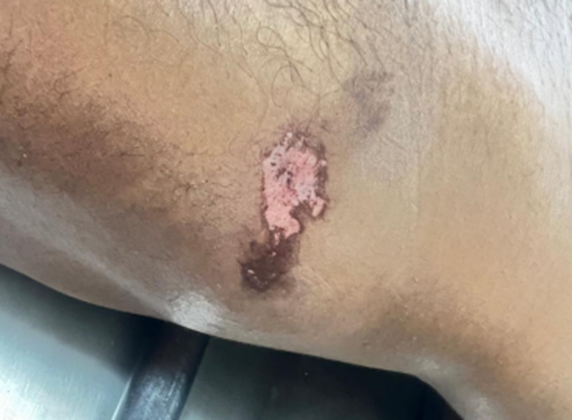
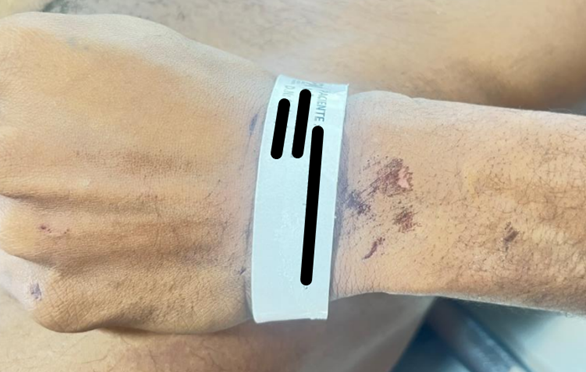
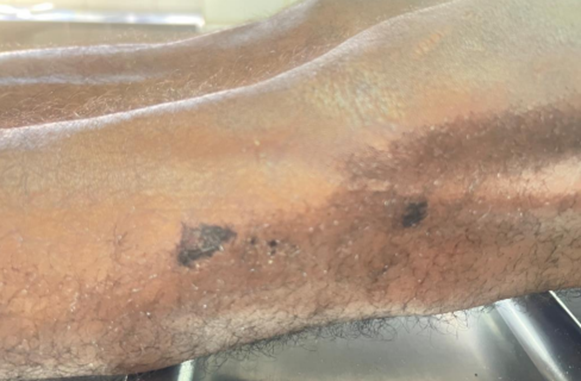
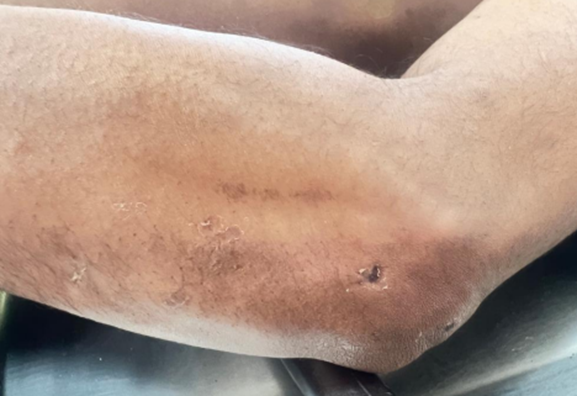
During the autopsy, it was found that the body showed signs of death, such as rigidity, fixed pupils and hypostasis, compatible with more than 6 hours of death. Three external puncture wounds were found on the right cubital fossa, compatible with venipuncture; superficial plaque abrasions on the right lumbar region measuring 6x3 cm in length (Figure 1); on the back of the left wrist measuring approximately 3x3 cm in length (Figure 2); plaque abrasions on the limbs, on the side of the left knee measuring approximately 2x2 cm in diameter and on the side of the left elbow measuring 1x1 cm in length (Figures 3 & 4, respectively). None of the macroscopic lesions found were considered lethal.
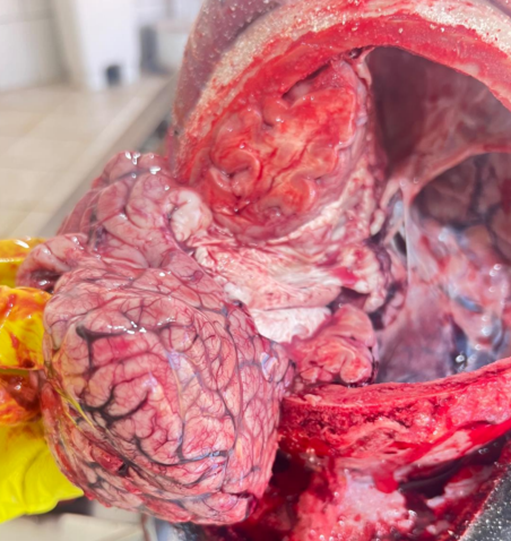
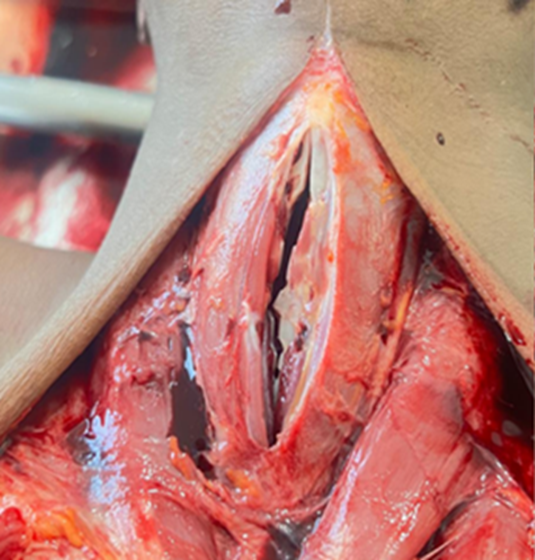
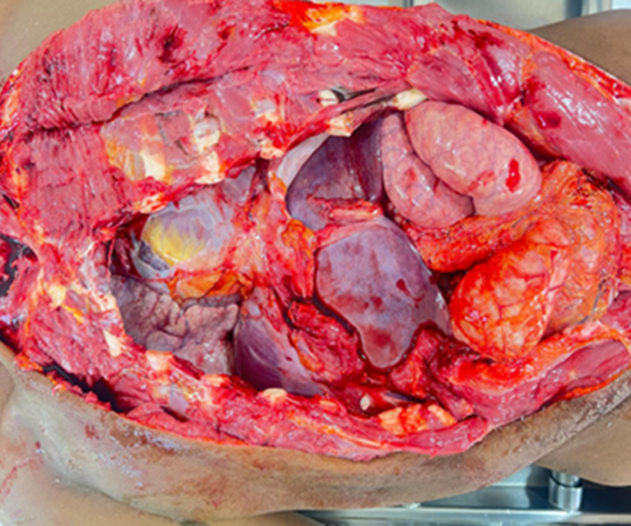
In the internal assessment of the body, no fractures or bruises were observed in the cephalic region, and the brain parenchyma was free of hemorrhages or bruises (Figure 5). There were no bruises, ecchymoses or fractures in the cervical region and no contents in the trachea (Figure 6). The thoracic and abdominal cavities showed normal viscera, with no ruptures and no hemothorax or hemoperitoneum (Figure 7).
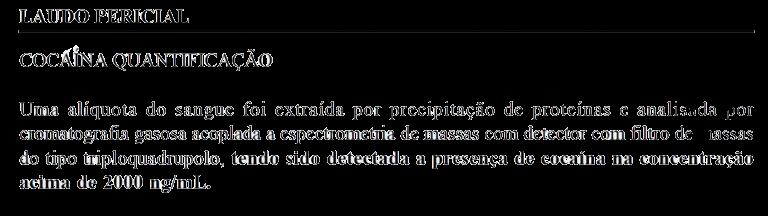
The stomach and its contents, blood and a fragment of liver were sent for toxicology tests, which came back positive for cocaine and its metabolites (Figure 8).

Case Discussion
Identifying people who practice body stuffing can be easy and straightforward if police officers witness the individuals ingesting the drug during the arrest. However, the most common scenario is that body-stuffers do it out of sight of the police. These individuals often deny consumption for fear of prosecution, even if they begin to develop symptoms, which makes identification in police custody difficult [5]. In this sense, a careful search, at the time of arrest, for objects or drugs that could be used to practice body-stuffing, becomes important for the safety of the detainee.
The profile of the body-stuffer is usually a man between 20 and 40 years old, asymptomatic and who goes to the emergency room after being stopped by the police. This description matches the individual in the case reported, a young adult male aged 24 [6].
In the case in question, the individual had undergone a previous assessment at the UPA in which he told the health professionals about his excessive consumption of narcotics and an increase in heart rate was identified. However, there was no other suggestive evidence at the time to suspect a possible case of body stuffing. Identifying symptoms of cocaine intoxication due to leakage from an ingested package can be complicated by coexisting intoxication with other drugs [5]. In addition, not all cocaine BS show symptoms, and there doesn’t seem to be a clear correlation between the amount of cocaine ingested and the development of clinical symptoms [7]. In view of this, the attending physician is not advised to admit a patient at the slightest suspicion of illicit drug ingestion.
There is no consensus in the literature on the period between the ingestion of the narcotic and the onset of symptoms. There are studies that suggest that a period of less than 6 hours is insufficient to safely release the patient to police custody, with up to 48-72 hours being recommended [8, 9]. With regard to cocaine ingestion, another factor that influences the time to onset of symptoms is the integrity of the packaging in which the drug is contained. An in vitro study demonstrated the variable release of cocaine from different packaging materials, being slower in condoms, followed by cellophane bags and faster in paper. This suggests the importance of taking a meticulous history of the ingested material in order to quickly identify possible symptoms [10]. The high mortality rate of body stuffers is also due to the less safe packaging that BS ingest when compared to BP, as it is a desperate and unplanned move [3].
Patients intoxicated by illicit substances can be classified into three groups depending on their clinical evolution: 1) intestinal obstruction syndrome, 2) intestinal perforation syndrome and 3) acute intoxication syndrome. Body-stuffer syndrome due to cocaine intoxication occurs in around 0.6% to 3% of all cases and has a high mortality rate (56-68%), mainly due to the delay in diagnosis and the lack of a specific antidote [6]. The main risk factors are the prolonged time the packages spend in the digestive tract and packages with reduced resistance. Poisoning can occur even if the packaging does not break, through diffusion. From the moment it is absorbed by the intestinal mucosa, cocaine blocks the pre- synaptic reuptake of various neurotransmitters, which hyperstimulates the central and sympathetic nervous systems [6].
The most common symptoms to be found in acute intoxication due to packet rupture are alterations in the central nervous system, such as hallucinations and convulsions; cardiovascular symptoms, such as tachycardia, arrhythmias, ischemia and myocardial infarction; and gastrointestinal symptoms, such as mesenteric ischemia [3]. The most serious manifestation is cardiovascular due to the cardiotoxic power of cocaine [11]. In the case of the individual in question, the symptoms are in line with what is described in the literature for acute intoxication; he started with mental confusion, followed by a seizure and progressed to asystole.
Given the potential seriousness of the practice of body stuffing, emergency services should subject victims to early interventions. Initially, propaedeutics should include assessing mental state, vital signs, pupil size, venipuncture sites and signs of intestinal obstruction [12]. After this, the therapies instituted should be the same as the ABCDE of trauma, whose main objective is to stabilize the airways, maintain the respiratory pattern and tissue perfusion [13]. Subsequently, patient management depends on the drug ingested, which can be identified from the patient’s report or by the presence of signs and symptoms [14].
In this sense, due to the cardiovascular repercussions of cocaine overdose, it is necessary to evaluate the electrocardiogram, complete blood count, monitor renal and cardiac function, electrolytes and creatine phosphokinase, as well as administer oxygen [12]. In addition, symptomatic therapy should be implemented, since there is no specific drug for the treatment of this narcotic, paying special attention to the use of beta-blockers that can be used to reduce the risk of cardiac arrhythmias that can result in ventricular fibrillation and death [12]. It should also be noted that the use of benzodiazepines to control psychomotor agitation, hypertension and hyperthermia can be used during an overdose. Observation of these individuals should be carried out, with special attention to those who will return to police custody and travelers, with a view to early identification of complications [14].
If therapeutic interventions are not enough to prevent death, the body should be sent to the Forensic Medical Institute (IML) for a necropsy. The necropsy is most often a white necropsy, i.e. there are no potentially lethal macroscopic alterations and no appreciable traces in the thanatological examination. In view of this, the investigation of the cause of death is assessed through biochemical analysis of the tissues in search of identifying substances that may have caused the death of the individual.
Finally, according to Dorta A, et al. [15], blood analysis is the gold standard for determining the cause of death by overdose whenever possible, as it provides the best information about the individual’s state of intoxication. Epidemiological studies show that death from cocaine use can be classified in three different ways. In classic cocaine overdose, relatively high blood levels are often found, i.e. above 1000 ng/mL. In the case of the individual reported here, the quantitative dosage showed levels above 2000 ng/ mL, levels compatible with classic cocaine overdose [16]. The second refers to cases in which, although the levels are not high (around 400 to 1000 ng/mL), the symptoms that preceded the death or the obvious autopsy findings facilitate characterization. The third and most frequent category is the so-called low-dose toxicity, in which, even in cases where the evidence suggests cocaine as the cause of death, the blood concentrations are in the same concentration range as those presented by users Dorta A, et al. [15].
Conclusion
In the context of police apprehensions, the ingestion of illicit substances by detainees in an attempt to avoid flagrante or aggravation can lead to death. The presence of large quantities of drugs and/or narcotics in the gastrointestinal tract can cause a state of overdose that is difficult to reverse or even render life support measures ineffective. In addition, this practice is complex to diagnose and treat due to the manifestation of non-specific signs and symptoms. It is therefore important to train care professionals to identify the scenario, as well as to ensure that health and safety institutions are integrated in order to deal with the complexities surrounding body-packers and body-stuffers.
References
-
Alexander JF, Oshel RS (2006) Body Packers and Body Stuffers: A Review of Legal and Medical Issues. Springer.
-
Campolia D, Sato AS, Mendes Vieira JN, Araujo RC, Paiva OA (2010) Imaging diagnosis of Body Packers: case report. Rev Med Minas Gerais 20 (3S4): S50-S54.
-
Castellano FJ, Gómez ME, Di BB, Damin C (2021) Body Packer and Body Stuffer: Series of Cases. Press med. Argent 108(5): 251-261.
-
Benson BE, Fantus RJ (2003) Ingestion of Drugs of Abuse Packaged for Transportation: A Management Guide for the Surgeon. The American Surgeon 69(1): 72-76.
-
Norfolk GA (2007) The fatal case of a cocaine body- stuffer and a literature review - towards evidence based management. Journal of Forensic and Legal Medicine 14(1): 49-52.
-
Madrazo Z, Silvio-Estaba L, Secanella L, García-Barrasa A, Aranda A, et al. (2007) Body packer: review and experience in a reference hospital. Cir Esp 82(3): 139- 145.
-
June R, Aks SE, Keys N, Wahl M (2000) Medical outcome of cocaine bodystuffers. J Emerg Med 18(2): 221-224.
-
Roberts JR, Price D, Goldfrank L, Hartnett L (1986) The body stuffer syndrome: a clandestine form of drug overdose. Am J Emerg Med 4(1): 24-27.
-
Sporer KA, Firestone J (1997) Clinical course of crack cocaine body stuffers. Ann Emerg Med 29(5): 596-601.
-
Aks SE, Vander Hoek TL, Hryhorczuk DO, Negrusz A, Tebbett I (1992) Cocaine liberation from body packets in an in vitro model. Ann Emerg Med 21(11): 1321-1325.
-
França GVD (2017) Medicina legal.
-
Quental ARPS (2015) Toxicological analysis of cocaine and its metabolites in a forensic context. Fernando Pessoa University, Porto.
-
Arora A, Jain S, Srivastava A, Mehta M, Pancholy K (2021) Body Packer Syndrome. J Emerg Trauma Shock 14(1): 51-52.
-
Hassanian-Moghaddam H, Fatemeh A, Zamani N (2019) Management recommendations for body stuffers at emergency units. Archives of Industrial Hygiene and Toxicology 70(2): 90-96.
-
Dorta DJ, Yonamine M, Da Costa JL, De Martinis BS (2018) Forensic Toxicology. Blucher, São Paulo, pp: 1-26.
-
Smith J, Espinosa J, Lucerna A, Lee J, Schuitema H (2023) A Case of Cocaine Toxicity From Body Stuffing. Cureus 15(10): e47805.
- Forensic Implications of Adverse Drug Reactions in Schizophrenia A Case Series
- Narcotics and Digital Forensics: Bridging Crimes in the Digital Age
- Ethics in Forensic Psychiatry: Principles, Dilemmas, and Human Rights
- Impact of Acute Stress on Attentional Orienting to Social Cues
- Head Injury and Intracranial Hemorrhage in Western Region of Libya
- A Forensic Study on Handedness: Examination of Handwriting Features in Right and Left Handed Writers