
Monkeypox and its Clinical Implications in Pregnancy
Monkey pox is a rare disease caused by the monkey pox virus. It leads to rash and flu-like symptoms. Like the better known virus that causes smallpox, it is a member of the family called ortho-poxvirus. Monkey pox was discovered in 1958 when two outbreaks of a pox-like disease occurred in groups of monkeys being used for research. It’s spread mainly through human contact with infected rodents, but can sometimes be spread through skin-to-skin contact with an infected person. There are two known types (monophyletic) of monkey pox virus-one that originated in Central Africa and one that originated in West Africa. The current world outbreak in 2022 is caused by the less severe west african monophyletic.
Introduction
Monkey pox is a animal-borne poxvirus infection that can occur in both humans and some other animals [1]. Two recognized distinct types are described as the Congo Basin monophyletic and the milder West African monophyletic. What is Monkey Pox
- Monkey pox can be transmitted to the fetus during pregnancy or to the newborn through close contact during and after birth. Spontaneous pregnancy loss and stillbirth, and preterm delivery, have been reported in confirmed cases.
- Neonatal monkey pox has been reported.
- Monkey pox is similar to smallpox (Variola virus) but seems to be less severe in its manifestations and resulting illnesses during pregnancy, including hemorrhagic complications and death. Variola virus infection during pregnancy has been reported to cause pregnancy loss, stillbirth, preterm birth, and congenital infection.
Signs and Symptoms
- The signs and symptoms of monkey pox infection in pregnancy appear like those of non-pregnant people, including prodromal symptoms such as fever, headache, lymphadenopathy, malaise, sore throat and cough, and rash.
- The cause of fever may be difficult to identify until the rash appears.
- It is important to differentiate a monkey pox diagnosis from dermatoses of pregnancy, including pruritic urticarial papules and plaques of pregnancy.
- Monkey pox lesions can mimic the appearance of other infections. Patients with rashes that appear to be more common infections, such as varicella zoster or sexually transmitted infections (STIs), need to be evaluated for a characteristic monkey pox rash (IMAGES). Providers should also consider diagnostic testing, especially if epidemiologic risk factors for monkey pox virus infection are present. The Centers for Disease Control and Prevention (CDC) recommends a broad approach for testing as simultaneous infections of monkey pox virus and STIs have been reported.
Guidance
Providers should prioritize currently or recently pregnant and breastfeeding people with monkey pox infection for medical treatment before non-pregnant individuals, as the likely increased risk of severe disease, fetal transmission during pregnancy, and severe newborn infection via close contact during and after birth.
Discovery and History
Monkey pox virus was discovered in the year 1958, when two outbreaks of a pox like disease occurred in colonies of monkeys kept for research. Despite being named “monkey pox” originally, the source of the disease remains unknown. Scientists suspect African rodents and non-human primates (like monkeys) might harbor the virus and infect people.
The first human case of this disease was recorded in the year 1970, in what is now the Democratic Republic of the Congo. In 2022, this disease has spread around the world. Before that, cases of monkey pox in other places were rare and usually linked to travel or to animals being imported from regions where this disease is endemic.
The World Health Organization renamed this disease in 2022 to follow modern guidelines for naming illnesses. Those guidelines recommend that disease names should avoid offending cultural, social, national, regional, professional or ethnic groups and minimize unnecessary negative effects on trade, travel, tourism or animal welfare. However, the virus that causes still it has its historic name.
Virus Types
There are two types of virus: clade I and clade II. Clade I: Clade I cause more severe illness and deaths. Some outbreaks have killed up to 10% of the people who get sick, although more recent outbreaks have had lower death rates. Clade I is endemic to Central Africa. Clade II: Clade II is the type that caused the global outbreak that began in 2022. Infections from clade II mpox are less severe. More than 99.9% of people survive. Clade II is endemic to West Africa.
Both types of the virus can spread through direct contact with infected animals, close contact (including intimate contact) with a person with monkey pox and direct contact with contaminated materials
Risk of Severe Disease
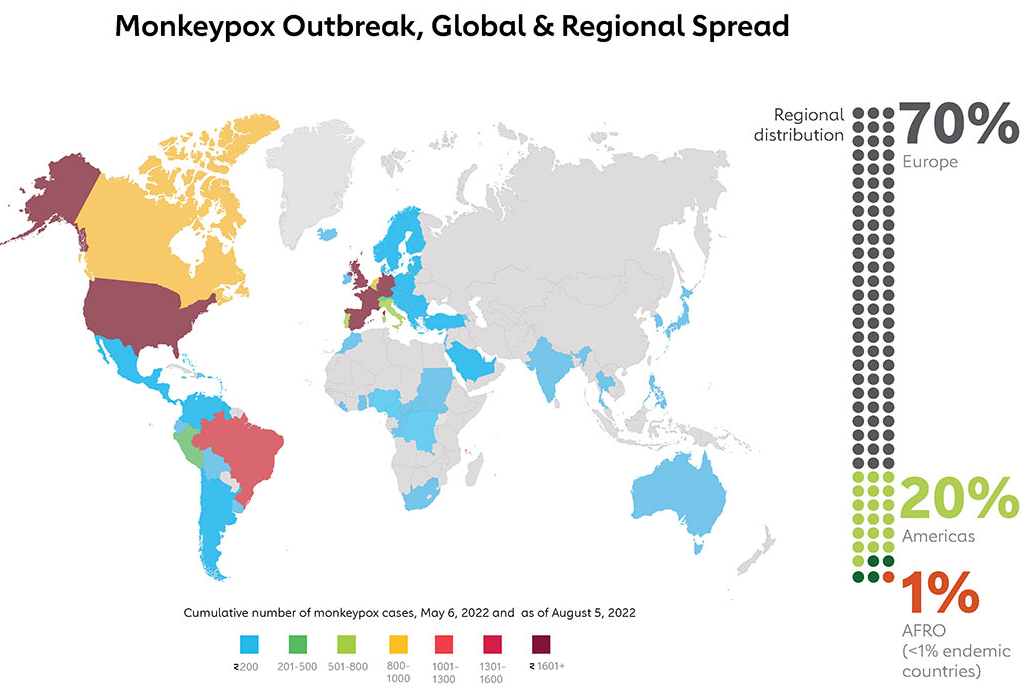
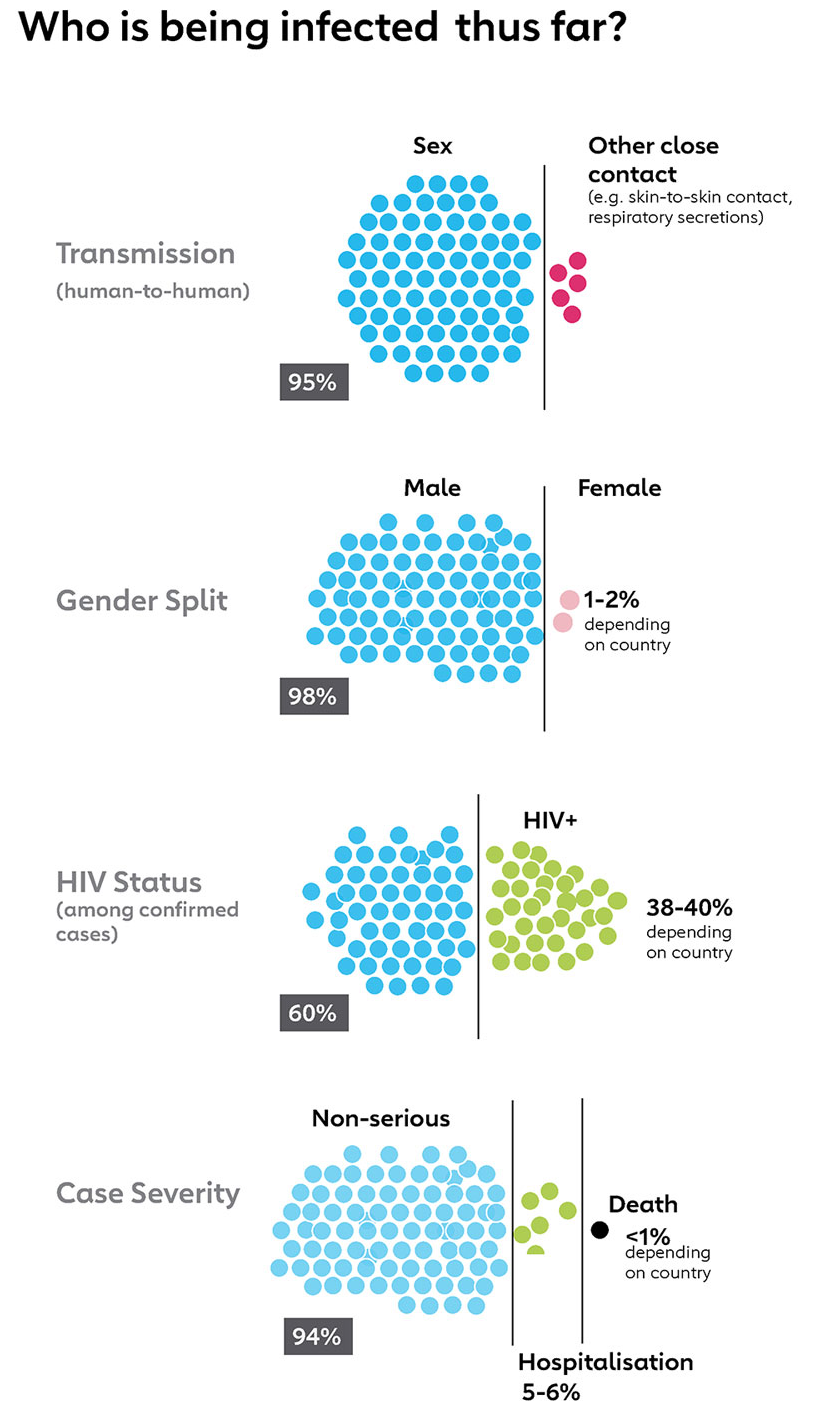
Although cases of monkey pox are not life-threatening, some people may be more likely to get severely ill, including people with severely weakened immune systems, children younger than one people with a history of eczema people who are pregnant (Figures 1 & 2).
Treatment
Tecovirimat
- At the time of this article’s publication, there is not yet a treatment approved specifically for monkey pox infections. However, anti-viral developed for use in patients with smallpox may be beneficial [2].
- If treatment is indicated, Tecovirimat—also known as TPOXX—should be considered as the first-line antiviral for pregnant, recently pregnant, or breastfeeding people. Tecovirimat is a US Food and Drug Administration (FDA)-approved antiviral medication for the treatment of smallpox in children and adults. It is expected to have antiviral activity against monkey pox and is FDA- authorized for this indication under an expanded access protocol.
- The information regarding the effects of Tecovirimat on fetal and reproductive development is limited to animal studies, in which subject animals were given a dose that was 23 times higher than the recommended human dosage. No specific fetal effects were noted, but it is unclear whether it prevents congenital monkey pox.
- While Tecovirimat was present in subject animals’ breast milk, it is unknown if the levels are sufficient for treating a breastfeeding child with monkey pox infection. If indicated, breastfeeding children with monkey pox infection should be treated independently.
Cidofovir and Brincidofovir
While they are considered alternative antiviral therapies for treating monkey pox infection, animal studies have shown evidence of teratogenicity and they should not be used to treat people in their first trimester of pregnancy. Their presence in breast milk is also unknown. Hence, it should also be avoided in breastfeeding people in case of serious adverse reactions in the breastfeeding infant.
Vaccinia Immune Globulin Intravenous (VIVIG)
Researchers have not yet conducted animal reproduction studies with VIVIG, so there is little data on whether it can cause fetal harm during pregnancy, or on a person’s future fertility [3]. However, immune globulins have been used during pregnancy for many years without any apparent negative reproductive side effects. Providers should evaluate the risks and benefits of VIVIG for each individual patient and exercise caution when administering to a breastfeeding person, as it may be excreted in breast milk.
Vaccines
Jynneos
- Live, non-replicating viral vaccine licensed for the prevention of smallpox and monkey pox infection [4].
- Vaccine-associated risks in pregnancy are unknown, but animal studies indicated no evidence of harm to a developing fetus.
- Due to its non-replicating quality, it should not present a risk of transmission to breastfed infants, making it the vaccine of choice for both pregnant and breastfeeding people.
ACAM2000
Replicating viral vaccine licensed for smallpox prevention and contraindicated in pregnant and breastfeeding peoples due to risk of pregnancy loss, congenital defects, and fetal- infant vaccinia virus infection.
Prophylaxis
- Pre- and post-exposure prophylaxis should be offered when indicated to pregnant or breastfeeding people.
- As with any treatment, shared decision-making should be used when discussing the risks and benefits with patients.
Skin-to-Skin Contact during Isolation
- Direct contact between a patient in isolation for monkey pox and their newborn is not advised. Separating the monkey pox-infected person from their newborn is the best way to prevent transmission, and full-time rooming- in is not recommended during the infectious period. Providers should counsel the patient on the transmission risk and potential consequences for severe disease in newborns. If the patient chooses to have infant contact during their infectious period, the following precautions should be taken [5].
- No direct skin-to-skin contact
- Infant should be fully clothed or swaddled, and after contact occurs, the clothing or blanket should be replaced.
- Patient should always wear gloves and a fresh gown, covering all visible skin below the neck.
- Soiled linens should be removed from the area.
- The patient should wear a medical mask or other well- fitting source control during the visit.
- Discharge planning should consider a patient’s isolation period duration, ability to strictly adhere to isolation recommendations and availability of alternate caregivers.
- Breastfeeding should also be delayed until the isolation period has concluded.
Conclusion
World Health Organizations assessment is that the risk of monkey pox is moderate globally and in all regions, except in the European region where we assess the risk as high. There is also a clear risk of further international spread, although the risk of interference with international traffic remains low for the moment. In short, we have an outbreak that has spread around the world rapidly, through new modes of transmission, about which we understand too little and which meets the criteria in the International Health Regulations.
References
-
Petersen, Brett W, Damon, Inger K (2020) Smallpox, Monkey pox and other Pox virus infections. In: Goldman L, et al (Eds.), 26th (Edn.), Goldman-Cecil Medicine. Elsevier, Philadelphia 2: 2180-2183.
-
Simpson K, Heymann D, Brown CS, Edmunds WJ, Elsgaard J, et al. (2020) Human monkey pox-After 40 years, An unintended consequence of smallpox eradication. Vaccine 38(33): 5077-5081.
-
Petersen E, Kantele A, Koopmans M, Asogun D, Yinka-Ogunleye A, et al. (2019) Human Monkeypox: Epidemiologic and Clinical Characteristics, Diagnosis, and Prevention. Infectious Disease Clinics of North America 33(4): 1027-1043.
-
Marriott KA, Parkinson CV, Morefield SI, Davenport R, Nichols R, et al. (2008) Clonal vaccinia virus grown in cell culture fully protects monkeys from lethal monkey pox challenge. Vaccine 26(4): 581-588.
-
Sklenovská N, Van Ranst M (2018) Emergence of Monkeypox as the Most Important Orthopoxvirus Infection in Humans. Frontiers in Public Health 6: 241- 249.
- Potential Medicinal Herbs and Secondary Metabolites in Combating Corona Virus
- Pharmacognostical Analysis of the Leaves of Important Nervine Medicinal Plant: Strychnos Nux-Vomica L
- Assessment of Antibacterial Activity of Various Solvent Extracts of Dictyota Dichotoma Against Multidrug Resistant Bacterial Strain
- An Insights of Bioactive Elements on Malignancy: Mechanistic Avenues
- Advances and Future Directions in Pharmacognosy and Chinese Medicine
- Pharmacognostical and Phytochemical Study of Hibiscus rosasinensis Linn.