
Improving Decentralised Forest Governance Through Polycentric Systems: A Case Study of Kenya's Community Forest Management
Community-Based Forest Management is a tool for local participation in forest management. Community involvement and stakeholder participation became important components of development and natural resource management, prompting developing countries to undertake decentralisation reforms by the 1990s. The reforms aimed to encourage participatory development, local empowerment and poverty reduction, democratisation, and resource sustainability. Their performance has, however, been mixed. Decentralisation efforts have suffered in situations where powerful actors, through various strategies, have managed to retain control over natural resources, obstructing power transfers to the communities. This has resulted in Responsibilisation, which is the transfer of responsibility to local communities without the transfer of requisite power. Responsive, collaborative governance is crucial in efforts to avoid responsibilisation. This refers to governance that devolves responsibilities and powers together, providing the requisite capabilities and support, enabling appropriate management decisions and actions at the devolved levels. Polycentric governance is crucial towards this end. Participatory Forest Management, a modality of Community-Based Forest Management, has been practised in Kenya since the Forest Act of 2005. This paper looks at forest polycentric governance institutional structures with cross-level interactions and representation bodies at each level of forest governance for successful social and ecological outcomes. This paper's product is a proposed forest polycentric governance institutional structure for better social and ecological outcomes in Kenya, which can be generalised to broader cases.
Kasaon Stephanie Jepng’etich1* and Puthenkalam John Joseph2
Introduction
Community forestry is an umbrella term defined by FAO, indicating “any situation which intimately involves local people in a forestry activity”. Community-based forestry incorporates “initiatives, sciences, policies, institutions and processes that are intended to increase the role of local people in governing and managing forest resources” [1]. Community- Based Forest Management(CBFM) improves local social and ecological outcomes and improves efforts towards Sustainable Forest Management(SFM) [2]. It is also argued to contribute to communities’ resilience to internal and external shocks, including climate change impacts. Around a third of the world’s forests are under various forms of CBFM, which varies according to the forms of land tenure and the strength of devolved rights. The devolution process has enabled the transfer of some forest management rights to communities. These rights are often mainly related to the satisfaction of subsistence needs. Limited rights conferred to communities constrain their ability to reap commercial benefits from the forests. The state still holds a significant portion of management rights in certain countries, especially in Africa, where the government retains the most power. Lack of complete devolution in forest management leaves the forest communities with limited decision-making, often taking the role of protectors with little access to valuable forest resources. Results on CBFM has been mixed with limited information regarding its effectiveness. Existing information suggests they are performing below their potential [2].
History of Community-Based Forest Management
Colonisation resulted in centralised forest management for maximum timber production and other forest benefits for the state. In some instances, local and indigenous communities were alienated from their lands. Post-colonial governments inherited and continued with the same centralised forest management systems. The failure to translate centralised forest management systems to beneficial socio-economic and environmental outcomes resulted in widespread deforestation and forest degradation in developing countries [3] in the 1970s and 1980s which called for people’s participation in forest management. CBFM gained more formal recognition following FAO’s 1978 paper titled “Forestry for local community development”. This was further augmented by Elinor Ostrom’s work on local communities and natural resource management and institutions such as FAO’s Forests, Trees and People Programme (FTTP). Reforms in the 1990s, leading to devolution in forest management, reflected the emerging recognition of the importance of CBFM in reducing deforestation and forest degradation and improving local livelihoods. CBFM was also a way of reducing poverty and addressing social inequality by utilising bottom- up development strategies. The main objective was to enable the communities to derive socio-economic benefits from the forest while sustainably managing it. Later on, other socio- economic and political objectives such as democracy, gender equality and social justice emerged [2].
Community forestry emerged early in Asian countries, namely Nepal and India, as a response to the failures of social forestry conducted in the region to remedy deforestation and fuelwood shortages. Social forestry included the establishment of plantations to meet forest communities’ needs. Community forestry emerged in Africa in the 1990s due to the widespread deforestation and forest degradation in the region. It was mainly of two types: benefit-sharing and power-sharing. The benefit-sharing type involved less devolution of management powers to the communities and was mainly state governed with communities given access to forest products and benefits. Power-sharing devolved a significant management authority to the local communities, engaging them in sustainable forest management. This approach is well established in Tanzania [4].
Factors Affecting Community-Based Forest Management
Conditions necessary for effective Community- Based Forest Management include secure property rights [5, 6], enabling regulatory framework, strong governance characterised by effective institutions, local participation, transparency and accountability, fairness and equity, flexible, adaptive and efficient structures [7, 8, 9], viable technology for optimal productivity, adequate market knowledge and access for successful commercialisation of Community-Based Forestry goods and services, and a supportive bureaucracy coupled with an enabling regulatory environment to support effective implementation [2].
Forests can be classified as Social-Ecological systems (SES). These systems are dynamic and [10] involved in coevolution processes with related actors, institutions, and resources [11]. Understanding these processes is crucial for the development of sustainable management strategies. Elinor Ostrom introduced the SES framework as an interdisciplinary diagnostic tool to study complex SESs [12]. Governance systems are among the main components that affect outcomes in SESs [13] and are crucial in natural resource management. Monitoring the resource improves compliance and enhances sustainability and ecological success [14]. Compliance, on the other hand, avoids the overexploitation of the resource. Effectively enforced penalties such as graduated sanctions enhance compliance. It is important to have a locally available low-cost conflict management system that contributes to the institutions’ stability and resource use. Monitoring and compliance with rules become easier when group boundaries are clearly defined. Compliance with rules also increases when the group members are involved in making rules, lowering the monitoring and rule change costs [15]. The participation of most group members also influences transparent and fair processes. Once the rules are made, it is imperative that the local administration ensures effective implementation.
Legal certainty and legitimacy of the community regarding local jurisdiction and authority in natural resource management is a pre-requisite for long term management and investment policies [16]. Information and communication flow enables monitoring and adaptation of rules. Knowledge about the resource is also indispensable in making management plans. Adaptation of policies and rules to fit local contexts is important in natural resource management. Disregarding local social and cultural environmental contexts would inevitably lead to failure. The rules to be adopted have to be clear and simple, and easily understood [17].
Success and Challenges of Community- Based Forest Management
Community-based forest management provides various social and economic benefits such as equitable sharing and forest benefits, poverty, conflict and corruption reduction and better community participation [18]. Studies show the relative advantage of community-managed forests over state forests in restoring and maintaining forest resources [19]. Participatory Forest Management, a modality of CBFM, in addition to income generation, helps build effective local governance structures and aids in democratisation. Studies show that forest income contributes to a higher proportion of total household income for poor and women-headed households [20]. CBFM should explicitly target the poor and marginalised groups. In Indonesia, companies granted logging concessions are required to allocate part of their revenues to the forest communities’ development in their concession area [21]. Commercial use rights of forests beyond subsistence use by communities are also necessary for poverty reduction. Traditional CBFM approaches that focus on subsistence forest use ignore economic aspirations and interests of forest communities.
CBFM studies show mixed outcomes in forest conditions and livelihood impacts [22, 23, 24]. CBFM has been criticised for prioritising conservation and protection of forests and not done enough to help forest communities overcome poverty through revenue creation [25]. There are several challenges associated with CBFM, including the exclusion of marginalised groups in resource access and use [26], inadequate representation of local communities [27], issues of elite capture regarding decision making and benefit- sharing [28, 29, 30, 31, 32, 33], partially elected representatives [34, 35], low levels of accountability and transparency [36, 37, 38, 39], distrust of local institutions [40], low capacity in leadership [41], power struggles [42], unequal access to forest benefits [40, 42], high timber prices excluding the poor from fully accessing forest benefits [43], and ignorance of forest rules and their enforcement [44, 45]. Regulation of resource utilisation is costly to the poor and marginalised [46] and further marginalises them [39, 43]. Benefit-sharing is also susceptible to engendering conflicts within communities [47]. There is a contrast in communities’ sense of ownership when there is active foresters involvement [48] with devolved limited management powers to local communities [49, 50]. In some cases, there is coercion instead of cooperation [27, 51] and weakened central government support to local institutions [38, 52, 53, 54].
Decentralised Governance: Shift to Polycentric Systems
Decentralisation acts as a tool to address sustainable resource management and governance challenges. It is an important component of rural development. According to decentralisation theory, decentralised management of resources will enable local communities to make better informed and effective management decisions. They will have better local knowledge and represent low-cost management strategies. The devolution of management powers also acts as an incentive for local communities to manage their resources better. However, capacity building of local governments and communities is crucial in the effective performance of their expanded roles in resource governance [55]. Decentralisation efforts have suffered in situations where powerful actors, through various strategies, have managed to retain control over natural resources, obstructing power transfers to the community. Devolving both power and responsibility to local levels could increase justice in natural resource management and leaders’ accountability towards their communities [56]. Decentralisation should be considered a dynamic process that evolves and adapts in the presence of downward accountability and transparency [57, 58].
Decentralised forest governance is vulnerable to responsibilisation and derecognising that reinforces power and privileges [59]. Responsibilisation denotes the transfer of responsibility to local communities without the transfer of requisite power [59]. This includes the transfer of forest management responsibilities, previously belonging to the state agency, to forest communities without transferring commensurate powers. The power and capabilities required to carry out the transferred responsibilities should be provided and transferred to the forest communities and local governments. Responsibilisation can be analysed by looking at the rights to capabilities, accountability of agents, and power in the level of structure [60, 61]. Derecognising denotes the process of taking back decentralised powers [62]. In forest governance, this could take technical strategies that alienate local implementation [63]. Responsibilisation creates structures that support derecognition of local governments and communities, supporting symbolic violence, a term referring to the unchallenged privileges, resource and power access of powerful actors [64]. Responsive, collaborative governance is crucial in efforts to avoid responsibilisation. This refers to governance that devolves responsibilities and powers together, providing the requisite capabilities and support. This enables appropriate management decisions and actions at the devolved levels. Multi-level polycentric governance is also crucial towards this end. Non-state actors can also fill in the gap by helping communities exercise their roles and responsibilities; they can act as links between state and communities and help provide responsive governance.
Polycentric Governance
A polycentric governance system is characterised by multiple and overlapping decision-making centres of semi- autonomous authority with competitive and cooperative relationships and supporting actors, nested at multiple levels (local, regional, national), including diverse types of organisations, and capable of conflict resolution [65]. It is characterised by governance centres that cut across levels [66]. Overlapping jurisdiction and authority facilitate mutual learning and adjustment, improved information sharing and redundancy for risk mitigation. They have various interaction and corporation points at different levels and scales for representation, learning, and deliberation. The autonomous centres in polycentric systems are conducive for innovation and learning and are important for adaptation, resilience and institutional fit. Polycentric institutional arrangements capture complex institutional and economic systems, accommodating state, privatisation and user self- governance solutions to cope with the current environmental problems [67]. There are, however, several disadvantages associated with polycentric systems. They have relatively higher coordination transaction costs, and the system’s complexity arguably makes it harder to hold responsible actors accountable [68, 69].
Kenya’s Participatory Forest Management
Community-Based Forest Management in Kenya is based on the Participatory Forest Management (PFM) model, where the Kenya Forest Service (KFS) collaborates with local forest communities in forest management activities through Community Forest Associations (CFAs). PFM started in 2005 with the Forests Act’s adoption, which established both the KFS and the CFAs and conferred the CFAs with various forest user rights. The KFS is involved in the CFA forming process by aiding in capacity development and management support. They assist in the constitution, rules, and regulations preparation process and ensure appropriate representation in the CFAs. They also ensure fair and transparent elections. The main objective of PFM is to conserve biodiversity and sustainably manage forests while enhancing people’s livelihoods.
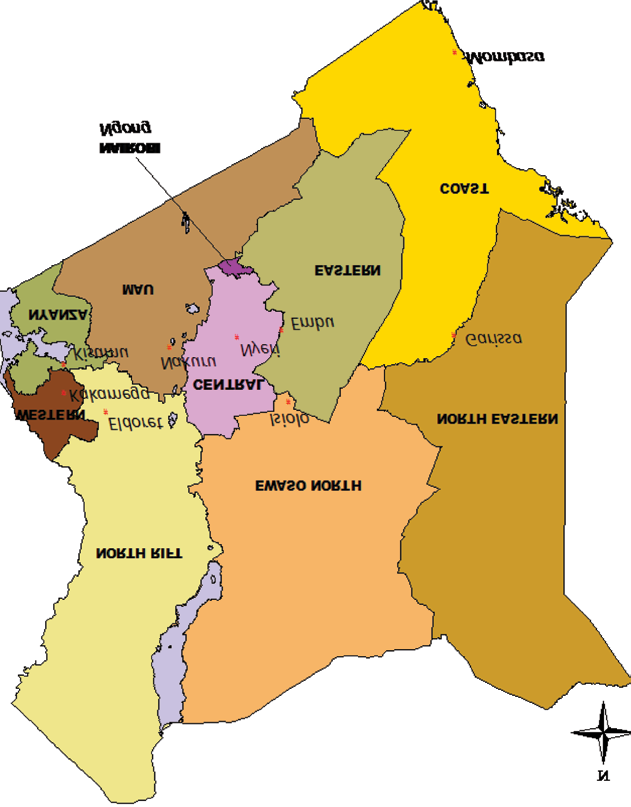
Gazetted public forests managed by the Kenya Forest Service cover about 2.59 million hectares. The Kenya Forest Service has divided the country into ten forest conservancies (Figure 1), each containing a forest conservation committee representing CFAs and other stakeholders at the national level. The conservancies are further divided into forest blocks, each of which is a forest management unit under a forest station’s jurisdiction and contains a CFA. The KFS authorises forest activities and may issue forest-related permits and licenses. They are also in charge of Joint Forest Management (JFM) agreements and contracts, including concession agreements that apply to REDD+ projects [70].
CFA’s have no legal power to make forest management rules as provided for in the Forest Act. This responsibility lies with the Kenya Forest Service and the Ministry in charge of forests. The Kenya Forest Service also makes rules determining the access and fees of different forest products. Before signing a management agreement with the KFS, the CFA could negotiate for provisions to make basic forest management rules in their management plans, such as forest access and fees. Only execution powers are devolved to the CFAs. They are mostly implementers of Kenya Forest Service’s rules. They also have limited autonomy to collaborate and form partnerships with state and non-state actors; the KFS must approve all forms of partnerships. This indicates some degree of responsibilisation in the area where communities have been made responsible for implementing forest management policies without the requisite power and capabilities. Also, the Forest Act does not provide a benefit- sharing mechanism for benefits between the KFS and CFA. It is open for negotiation during the development and implementation of forest management plans. As of 2018, 325 CFAs were registered in the country, with only 156 having forest management plans and 99 have signed a management agreement with the Kenya Forest Service. A majority of the CFAs are operating without legal requirements.
The Plantation Establishment and Livelihood Improvement Scheme (PELIS) has been implemented through CFAs. The scheme allocates forest plots to adjacent forest communities to practice agriculture while planting tree seedlings until the trees form a closed canopy. The aim is to increase forest cover while benefiting these communities in terms of food and income security. This is one way of raising forest plantations and has helped reduce the plantation backlogs in government-owned forests. The plantation system helped reduce the backlog at 5,000 hectares per year between 2000 and 2004 [71]. This system is a cost-effective way of restocking forest plantations and enjoys favourable support in rural areas [72]. PELIS contributes approximately Kshs.14 billion to the Kenyan economy [73] and plays a significant role in ensuring national food security. It is associated with increased forest cover as well as improved income generation. In the Malava forest in Western Kenya, forest cover increased by 51% from 2001 to 2016 from 366.9 ha to 481.4 ha. Respondents in the study realised incomes in the range of Kshs.5,000 Kshs.15,000 per annum from the allocated land [74]. However, the land allocation in the scheme is temporary and generally held for three years, with no long-term security and benefit sharing in the sale of trees cultivated, arguably making the system less effective. The system can be improved by having a mechanism for profit sharing between the KFS and CFAs from forest timber and new plot guarantees for farmers based on past performance [72].
PFM through CFAs is also a valuable model to implement various market-based voluntary schemes such as the Payment for Ecosystem Services (PES) and REDD+. One pilot PES scheme spearheaded by a CFA in Kenya is the Kapingazi River Restoration Project. It promoted tree planting along riverbanks for their protection. Revenues from the scheme helped to alleviate poverty and improve livelihoods [75]. Some of the challenges were issues of accountability and governance among partners. There is enormous potential in utilising CFA as agents in these market-based voluntary schemes. However, experiences with decentralisation and PFM have had mixed results, with CFAs falling short of their expected performance [70].
Studies have shown the importance of PFM to forest adjacent local communities. A study done on the Arabuko- Sokoke forest in Kenya showed that forest benefits exceeded costs in areas with PFM than those without [76]. Another study on the Eastern Mau Forest Reserve highlighted the role of PFM in creating new income opportunities such as beekeeping and seedling production. It, however, noted that PFM had not provided ample devolution of powers regarding forest resources such as timber and firewood to the CFAs. Also, PFM increased burdens on the poorest households due to increased rule enforcement [77]. A case study of Karima forest in Kenya also noted the lack of significant powers devolved to the CFA and poor representation and downward accountability [78].
A 2018 forest taskforce report highlighted institutional corruption, lack of accountability, and unethical behaviour in the Kenya forest service. The protection of forests by KFS has been ineffective due to law enforcement and compliance’s limited capacity. Also, there has been a duplication of roles in the forest sector resulting from inadequate coordination among environmental agencies. All these have contributed to the inefficient management of forests in the country. The report recommends a clear collaboration framework for the national and county governments in forest management matters [79].
Kenya’s Forest Governance Institutional Structure
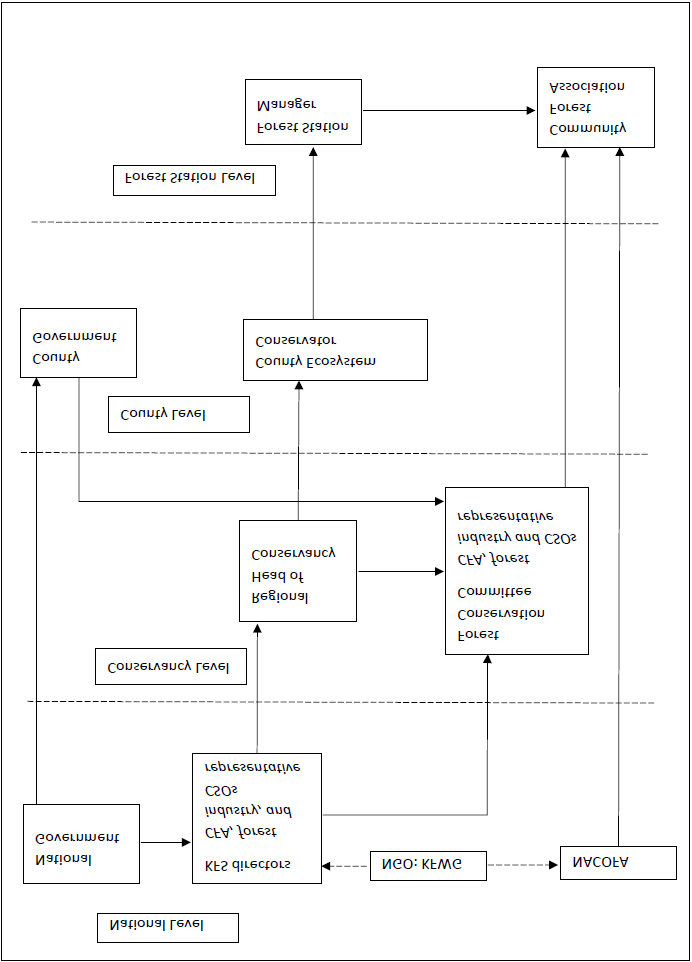
Kenya’s forest governance institutional structure has four main levels (Figure 2). These are the national, conservancy, county and forest station levels. The ministry in charge of forests and the KFS board of directors are found at the national level. The conservancy level comprises the conservancy’s regional head, who is in charge of the county ecosystem conservators at the county level. The forest station manager and the Community Forest Associations are found at the forest station level.
The KFS board includes members nominated by the Forestry Society of Kenya, CFA national body (NACOFA), forest industry, and governors council. This ensures there is the representation of the forest communities, forest industries and civil societies at the KFS board. However, the nomination process of the CFA board member by NACOFA is not clearly defined, making the process vulnerable to corruption and elite capture. A Forest Conservation Committee has been created at the conservancy level. It consists of a county executive committee member, a forest officer, and three board-appointed persons who CFAs, forest industries, and CSOs nominate. External members may be invited to attend meetings but are not eligible to vote. This body tries to connect the four levels of forest governance by having representatives of these levels. The nomination system, however, is also vulnerable to corruption and elite capture.
Kenya Forests Working Group is a national level NGO involved in the country’s forest governance. It promotes sustainable forest management and takes part in forest- related advocacy and policy work; it is the country’s most influential lobby group regarding forest conservation and management. It helps communities in PFM and monitors forest activities. They also help strengthen devolved forest government structures for the effective implementation of forest functions. National Alliance of the Community Forest Associations (NACOFA) is the national level umbrella body of all the community forest associations in Kenya. It connects CFAs at the forest station level and offers avenues of knowledge exchange and learning. It has, however, not been significantly active in recent years due to weak collaboration and inadequate funding. The Forest Act of 2016 provided for the formation of a Forest Conservation and Management Trust Fund, which is supposed to promote and support forest conservation and development activities, including community forestry programs. The fund can support CFAs to enhance their performance. KFS is also mandated to approve the provision of technical training and credit facilities to establish community-based forest industries. However, it has limited institutional and technical capacity.
Forest functions in the devolved government have been transferred to the county governments. However, most have not signed the Transition Implementation Plans (TIPs) to carry out these functions (79) fully; only 17 out of 47 counties had signed the TIPSs by the end of 2018. There is also a lack of a clear coordination framework between the county and national governments. County governments implement national forest policies and are supposed to promote afforestation activities in the county. They are obligated to develop forest legislation and laws to support the implementation of forest development activities. They also advise and assist in the management of private and community forests. KFS is mandated to assist county governments to build capacity in forest management. There are no collaboration frameworks between KFS and other conservation agencies and county governments at the forest and county levels. In some cases, there is a lack of cooperation between KFS and CFAs [79]. There are recommendations to establish forest conservations and management committees at the county and forest station levels that would comprise key stakeholders, representatives from the counties and KFS, and forest communities. Cross-level interactions between the community, national and county governments and KFS devolved bodies would increase levels of accountability, cooperation, and coordination in forest management and facilitate the nomination process of CFA representatives to the committees and KFS board.
Institutional Design for Polycentric Forest Governance
The country’s current institutional framework (Figure 2) has several challenges. There is no clear collaboration framework between national and county governments in matters related to forest management. There is also no clear collaboration framework between KFS, other conservation agencies and county governments. There are low CFA representation levels at the county and conservancy levels that connect them to the national level’s NACOFA, their umbrella body. The KFS also has limited institutional and technical capacity. Continuous learning and reform of the existing forest governance institutional structure that better benefits and works with forest communities at the local, county, conservancy, and national levels will be crucial for forming a responsive, collaborative governance structure.
This paper proposes a new forest polycentric governance institutional structure for the country that will help address some of these challenges (Figure 3). The institutional structure was constructed based on lessons learnt from other countries’ successful CBFM. Lessons from Nepal show the importance of having support from state and non-state actors in CBFM. It also shows the benefits of stakeholders participating in forest-related policymaking, with NGO bodies such as FECOFUN, an umbrella body for community forest user group, and Community Based Forestry Supporter’s Network (COFSUN) supporting forest communities in matters of capacity building, experience sharing among user groups, and involvement in national- level policymaking. They also connect them with the state [80]. Lessons from India show the benefits of an institutional structure that connects various forest-related stakeholders at certain levels. This is reflected in the Forest Development Agency, which connects the forest department and the Joint Forest Management (JFM) committees. Studies demonstrate the advantages of forming cooperative bodies to facilitate sustainable harvesting and marketing of forest products. This is shown through the formation of Forest Development Cooperation and Cooperative Federations [81]. Lessons also demonstrate the importance of Non-Governmental Organisations (NGOs; non-state actors) linking communities and the state to facilitate the transition to responsive forest governance. These NGOs play a major role in community capacity building and market engagement and help ensure the state’s responsiveness [82]. In Chile, representation of local fisher’s union is increased by having their members represented at the regional and national fisher’s federations, reflecting and bridging views of the three levels of governance [83]. In Kenya, the water governance institutional structure demonstrates the benefits of polycentric institutional structures in community representation, rule adaptation, and innovation, leading to improved outcomes [84]. In the Water Resource Users Association (WRUA), a parallel body to the Community Forest Associations, each chairperson in charge of a community water project akin to forest user groups serves at the WRUA’s management committee. This serves to represent the needs of individual projects better.
Umbrella organisations represent the CFAs in this structure at each level which ultimately connects them to NACOFA at the national level. This would help solve the problem of weak alliance and representation and streamline the connection at all forest governance levels, which will aid the CFA board member nomination process by NACOFA. A strengthened NACOFA is better placed and focussed on representing communities’ needs and influence forest policy decisions at the national level. Elections can be conducted in each forest user group with the elected representatives serving in the CFA management committee to improve forest user groups representation.
Forest Conservation and Management Committees are also introduced at the forest station, county and national levels. This will increase the levels of representation at each forest governance level. At the forest station level, the committee is comprised of representatives from the CFA, sub-county government and key forest stakeholders at that level, and the forest station manager. The committee can handle forest management related issues at the forest station level and make recommendations to the relevant county government and county ecosystem office. At the county level, the committee is comprised of representatives from the county level CFA umbrella body, the county government and key stakeholders at that level, and the county ecosystem conservator. The committee can handle forest management related issues at the county level and make recommendations to the relevant conservancy and body of conservancy’s county governments. At the conservancy level, the committee is comprised of representatives from the conservancy level CFA umbrella body, the conservancy’s county governments and key stakeholders at that level, and the regional head of conservancy. The committee can handle forest management related issues at the conservancy level and make recommendations to the national government and KFS directors. At the national level, the committee is comprised of representatives from NACOFA, KFWG, the national government and key stakeholders at that level, and KFS directors. The committee can handle forest management related issues at the national level and make recommendations to the ministry in charge of forests. These committees should have equal representation, decision- making and voting rights to enable fair and effective processes.
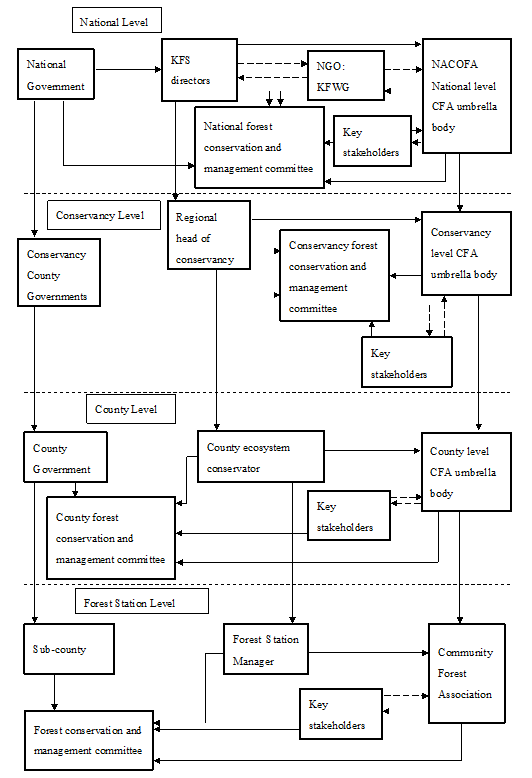
The additional forest committees at the national, county and forest station levels and the modified forest conservation committee at the conservancy level create avenues for adequate representation, social learning and institutional capacity building. They create added structures for accountability and conflict resolution. The added CFA umbrella bodies also provide avenues for better representation, accountability, knowledge exchange, innovation and learning. These structures can help reduce responsibilisation by devolving powers and capabilities at each of the bodies in each level, facilitating a shift to responsive governance; The structure facilitates cross-scale interaction and coordination to help devolution of powers and capabilities to the lowest level.
The polycentric structure links the government from the sub-county to the national levels, providing a framework for collaboration in forest management matters. The forest conservation and management committees provide a framework for collaboration between the KFS, the government, other conservation agencies, key stakeholders and CFAs at each level. The CFAs are also better represented at each level by their umbrella bodies. There is collaboration at each level between key stakeholders, which include non-state actors and the CFAs. This will fill in the gap by effecting capacity building and knowledge sharing and link communities and the state. The key stakeholders, including non-state actors, can help communities identify profitable forest products, engage with markets, establish forest-based enterprises and get product certification. The CFAs and the KFS are also linked at each level, facilitating better communication, rule enforcement, lobbying and accountability.
The proposed forest governance institutional structure differs from the current structure by introducing forest conservation and management committees and CFA umbrella bodies at each level. The structure connects the government, key stakeholders, including non-state actors, CFAs and KFS at each level through the forest conservation and management committees, with collaboration between the CFAs and key stakeholders, including non-state actors. The CFAs are also connected through umbrella bodies at each level to the national body NACOFA. The proposed structure is polycentric and characterised by multiple and overlapping decision-making centres of semi-autonomous authority with competitive and cooperative relationships and supporting actors, nested at various levels (forest station, county, conservancy and national), including diverse types of organisations, and capable of conflict resolution. It has governing bodies that cut across levels. They have various interaction and corporation points at different levels and scales for representation, learning, and deliberation. The structure is conducive to innovation and learning, essential elements for adaptation, resilience and institutional fit.
Generalised Forest Polycentric Governance Institutional Structure
Kenya’s proposed polycentric institutional structure can be generalised, as shown in Figure 4.
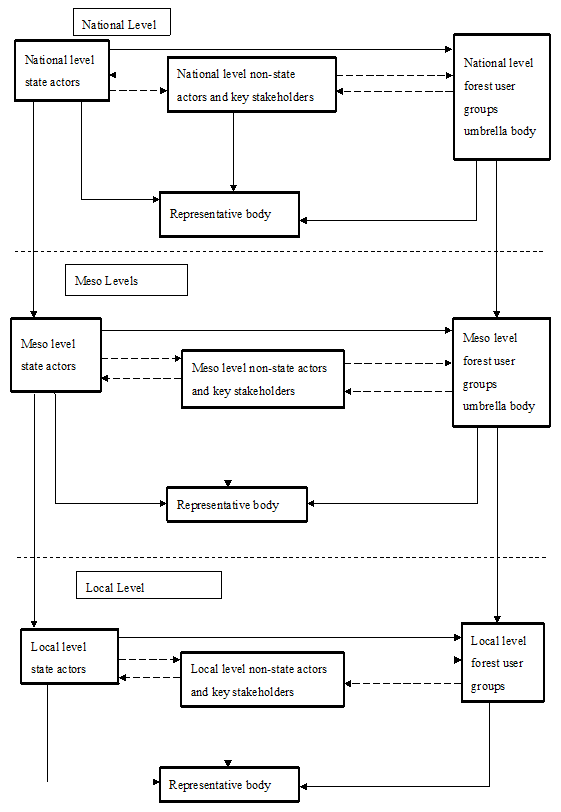
The state actors, non-state actors, key stakeholders, and forest user groups are connected at each level of forest governance through representative bodies to allow for adequate representation, collaboration, deliberation, lobbying, and accountability. The state actors are also connected to forest user groups for adequate communication, rule enforcement and deliberation. The non-state actors and key stakeholders collaborate with both the state actors and forest user groups at each level, linking the state and forest user groups and filling in the gap in capacity building. The forest user groups are connected to the national level through umbrella bodies at each level, streamlining their representation and focussing their agenda and lobbying strength. Each level of forest governance is connected to the next through the state actors and user groups, ensuring the needs and recommendations of lower levels are represented at higher levels. These needs and recommendations are also represented and discussed at the representative bodies of higher levels.
This proposed simplified polycentric forest governance institutional structure connects multiple overlapping decision-making centres making it possible for adequate representation and deliberation at each level. Community involvement in decision-making processes is facilitated through the multiple representative bodies at each level and their umbrella bodies connected to the state. This ensures their needs are represented at each level and that the community plays a role in steering forest policies’ direction. Key stakeholders and non-state actors also participate in decision-making processes at each level, ensuring their needs are considered.
Conclusion
Successful CBFM requires suitable institutional arrangements at the local, regional and national levels with upward and downward accountability and cross- scale interactions. This defines a polycentric institutional structure that connects various forest-related stakeholders at all levels. The policies created through this structure will be better informed, deliberated, and comprehensive, taking all key stakeholders’ needs into account. Polycentric systems, however, have relatively higher coordination transaction costs and would require financial commitments from all stakeholders involved. Dedicated funds from the state would be beneficial towards this end, especially in areas where the communities struggle financially. The polycentric system’s complexity also makes it harder to hold responsible actors accountable. This would require higher transparency levels and coordinated systems of accountability at each governance level to ensure its success.
References
-
RECOFTC (2013) Community forestry in Asia and the Pacific: pathway to inclusive development.
-
FAO (2016) Forty years of community-based forestry: A review of its extent and effectiveness.
-
Gilmour DA, King G, Hobley M (1989) Management of forests for local use in the hills of Nepal-I: Changing forest management paradigms. Journal of world forest resource management. 4(2): 93-110.
-
Alden Wily L, Mbaya S (2001) Land, People and Forests in eastern and southern Africa at the beginning of the 21st Century. The impact of land relations on the role of communities in forest future. Nairobi, IUCN-EARO.
-
Gray E, Veit P, Altamirano JC, Ding H, Rozwalka P, Zuniga I, et al. (2015) The economic costs and benefits of securing community forest tenure: evidence from brazil and Guatemala. World Resources Institute: Washington, DC, USA.
-
Seymour F, La Vina T, Hite K (2014) Evidence linking community-level tenure and forest condition: an annotated bibliography. Climate and Land Use Alliance.
-
Charnley S, Poe MR (2007) Community forestry in theory and practice: Where are we now? Annual Review of Anthropology 36: 301-336.
-
Szulecka J, Secco L (2014) Local institutions, social capital and their role in forest plantation governance: lessons from two case studies of smallholder plantations in Paraguay. International Forestry Review 16(2): 180- 190.
-
Fisher R, Prabhu R, McDougall C (2007) Adaptive collaborative management of community forests in Asia. Center for International Forestry Reserach, Bogor, Indonesia.
-
Scheffer M, Bascompte J, Brock WA, Brovkin V, Carpenter SR, et al. (2009) Early-warning signals for critical transitions. Nature 461(7260): 53-59.
-
Holling CS, Gunderson LH (2002) Panarchy: understanding transformations in human and natural systems: Island Press.
-
McGinnis M, Ostrom E (2014) Social-ecological system framework: initial changes and continuing challenges. Ecology and Society 19(2): 30.
-
Cole D, Epstein G, McGinnis M (2019) The Utility of Combining the IAD and SES Frameworks. International Journal of the Commons 13(1): 244-275.
-
Tucker CM (2010) Learning on governance in forest ecosystems: Lessons from recent research. International Journal of the Commons 4(2): 687-706.
-
Kosfeld M, Okada A, Riedl A (2000) Institution formation in public goods games. American Economic Review 99(4): 1335-1355.
-
Gutiérrez NL, Hilborn R, Defeo O (2011) Leadership, social capital and incentives promote successful fisheries. Nature 470(7334): 386-389.
-
Berkes F (1992) Success and failure in marine coastal fisheries of Turkey. Making the commons work: theory, practice and policy. DW Bromley. San Francisco, ICS Press.
-
Pagdee A, Kim Y-s, Daugherty PJ (2006) What makes community forest management successful: a meta-study from community forests throughout the world. Society and Natural resources 19(1): 33-52.
-
Woldie BA, Tadesse SA (2020) Composition and structure of woody vegetation in community compared to state forests in Tehuledere District, South Wollo, Ethiopia. Journal of Sustainable Forestry: 1-27.
-
Amenu BT, Mamo GS (2020) Importance, Determinants and Gender Dimensions of Forests for Communities Dawuro Zone, South-West Ethiopia a Case Study of Essera Woreda.
-
Safitri MA (2010) Forest Tenure in Indonesia: the socio- legal challenges of securing communities’ rights: Faculty of Law, Leiden University.
-
Bowler DE, Buyung-Ali LM, Healey JR, Jones JP, Knight TM, et al. (2012) Does community forest management provide global environmental benefits and improve local welfare? Frontiers in Ecology and the Environment 10(1): 29-36.
-
Lambrick FH, Brown ND, Lawrence A, Bebber DP (2014) Effectiveness of community forestry in prey long forest, Cambodia. Conservation Biology 28(2): 372-381.
-
Lund JF, Rutt RL, Ribot J (2018) Trends in research on forestry decentralization policies. Current Opinion in Environmental Sustainability 32: 17-22.
-
Winberg E (2011) Participatory forest management in Ethiopia, practices and experiences: Food and Agriculture Organization of the United Nations.
-
Dressler W, Büscher B, Schoon M, Brockington D, Hayes T, et al. (2010) From hope to crisis and back again? A critical history of the global CBNRM narrative. Environmental conservation 37(1): 5-15.
-
Ribot JC, Lund JF, Treue T (2010) Democratic decentralization in sub-Saharan Africa: its contribution to forest management, livelihoods, and enfranchisement. Environmental Conservation 37(1): 35-44.
-
Adhikari S, Kingi T, Ganesh S (2014) Incentives for community participation in the governance and management of common property resources: the case of community forest management in Nepal. Forest Policy and Economics 44: 1-9.
-
Coulibaly-Lingani P, Savadogo P, Tigabu M, Oden P (2011) Decentralization and community forest management in Burkina Faso: Constraints and challenges. International Forestry Review 13(4): 476-486.
-
Etongo D, Kanninen M, Epule TE, Fobissie K (2018) Assessing the effectiveness of joint forest management in Southern Burkina Faso: A SWOT-AHP analysis. Forest Policy and Economics 90: 31-38.
-
Green KE, Lund JF (2015) The politics of expertise in participatory forestry: a case from Tanzania. Forest Policy and Economics 60: 27-34.
-
Luintel H, Bluffstone RA, Scheller RM, Adhikari B (2017) The effect of the Nepal community forestry program on equity in benefit sharing. The Journal of Environment & Development 26(3): 297-321.
-
Lund JF, Saito-Jensen M (2013) Revisiting the issue of elite capture of participatory initiatives. World Development 46: 104-112.
-
Chinangwa L, Sinclair F, Pullin AS, Hockley N (2016) Can co-management of government forest reserves achieve devolution? Evidence from Malawi. Forests, Trees and Livelihoods 25(1): 41-58.
-
García-López GA (2019) Rethinking elite persistence in neoliberalism: Foresters and techno-bureaucratic logics in Mexico’s community forestry. World Development 120: 169-181.
-
Coleman EA, Fleischman FD (2012) Comparing forest decentralization and local institutional change in Bolivia, Kenya, Mexico, and Uganda. World Development 40(4): 836-849.
-
Mollick AS, Rahman MK, Khan MNI, Sadath MN (2018) Evaluation of good governance in a participatory forestry program: A case study in Madhupur Sal forests of Bangladesh. Forest policy and economics 95: 123-137.
-
Mohammed AJ, Inoue M (2012) Drawbacks of decentralized natural resource management: experience from Chilimo Participatory Forest Management project, Ethiopia. Journal of Forest Research 17(1): 30-36.
-
Persson J, Prowse M (2017) Collective action on forest governance: An institutional analysis of the Cambodian community forest system. Forest Policy and Economics 83: 70-79.
-
Nielsen MR, Meilby H (2013) Determinants of compliance with hunting regulations under Joint Forest Management in Tanzania. African Journal of Wildlife Research 43(2): 120-137.
-
Mohammed AJ, Inoue M, Shivakoti G (2017) Moving forward in collaborative forest management: Role of external actors for sustainable Forest socio-ecological systems. Forest policy and economics 74: 13-19.
-
Mogoi J, Obonyo E, Ongugo P, Oeba V, Mwangi E (2012) Communities, property rights and forest decentralisation in Kenya: Early lessons from participatory forestry management. Conservation and Society 10(2): 182-194.
-
Rai RK, Dhakal A, Khadayat MS, Ranabhat S (2017) Is collaborative forest management in Nepal able to provide benefits to distantly located users? Forest Policy and Economics 83: 156-161.
-
Chhetri BBK, Lund JF, Nielsen ØJ (2012) The public finance potential of community forestry in Nepal. Ecological Economics 73: 113-121.
-
Senganimalunje T, Chirwa PW, Babalola F (2015) Potential of institutional arrangements for sustainable management of forests under co-management with local forest organisations in Mua-Livulezi Forest Reserve, Mtakataka, Malawi. International Forestry Review 17(3): 340-354.
-
Kumar K, Singh NM, Kerr JM (2015) Decentralisation and democratic forest reforms in India: Moving to a rights- based approach. Forest Policy and Economics 51: 1-8.
-
Gross-Camp N, Rodriguez I, Martin A, Inturias M, Massao G (2019) The type of land we want: Exploring the Limits of Community Forestry in Tanzania and Bolivia. Sustainability 11(6): 1643.
-
Scheba A, Mustalahti I (2015) Rethinking ‘expert’knowledge in community forest management in Tanzania. Forest Policy and Economics 60: 7-18.
-
Chomba SW, Nathan I, Minang PA, Sinclair F (2015) Illusions of empowerment? Questioning policy and practice of community forestry in Kenya. Ecology and Society 20(3): 2.
-
Das BK (2019) Denial of Rights Continues: How Legislation for ‘Democratic Decentralisation’of Forest Governance was Subverted in the Implementation Process of the Forest Rights Act in India. The European Journal of Development Research 31(4): 957-983.
-
Schusser C, Krott M, Movuh MCY, Logmani J, Devkota RR, et al. (2015) Powerful stakeholders as drivers of community forestry—Results of an international study. Forest Policy and Economics 58: 92-101.
-
Ameha A, Nielsen OJ, Larsen HO (2014) Impacts of access and benefit sharing on livelihoods and forest: Case of participatory forest management in Ethiopia. Ecological Economics 97: 162-171.
-
Bekele T, Ango TG (2015) Do interventions from participatory action research improve livelihood and reduce conflicts over forest resources? A case study from south central Ethiopia. Small-scale forestry 14(4): 441- 458.
-
Dyer J, Stringer L, Dougill A, Leventon J, Nshimbi M, et al. (2014) Assessing participatory practices in community- based natural resource management: Experiences in community engagement from southern Africa. Journal of environmental management 137: 137-145.
-
Roe D, Nelson F, Sandbrook C (2009) Community management of natural resources in Africa: Impacts, experiences and future directions.
-
Ribot JC, Chhatre A, Lankinad T (2008) Introduction: Institutional choice and recognition in the formation and consolidation of local democracy. Conservation and Society 6(1): 1-11.
-
Agrawal A, Ostrom E (2001) Collective action, property rights, and decentralization in resource use in India and Nepal. Politics & Society 29(4): 485-514.
-
Nagendra H (2007) Drivers of reforestation in human- dominated forests. Proceedings of the National Academy of Sciences 104(39): 15218-15223.
-
Mustalahti I, Gutiérrez-Zamora V, Hyle M, Devkota BP, Tokola N (2020) Responsibilization in natural resources governance: A romantic doxa? Forest Policy and Economics 111: 102033.
-
Arts B, Van Tatenhove J (2004) Policy and power: A conceptual framework between the ‘old’and ‘new’policy idioms. Policy Sciences 37(3-4): 339-356.
-
Krott M, Bader A, Schusser C, Devkota R, Maryudi A, et al. (2014) Actor-centred power: The driving force in decentralised community based forest governance. Forest Policy and Economics 49: 34-42.
-
Faye P (2015) Choice and power: Resistance to technical domination in Senegal’s forest decentralization. Forest Policy and Economics 60: 19-26.
-
Lund JF (2015) Paradoxes of participation: The logic of professionalization in participatory forestry. Forest Policy and Economics 60: 1-6.
-
Ojha HR, Cameron J, Kumar C (2009) Deliberation or symbolic violence? The governance of community forestry in Nepal. Forest Policy and Economics 11(5-6): 365-374.
-
Carlisle K, Gruby RL (2019) Polycentric systems of governance: A theoretical model for the commons. Policy Studies Journal 47(4): 927-952.
-
McGinnis MD, Ostrom E (2012) Reflections on Vincent Ostrom, public administration, and polycentricity. Public Administration Review 72(1): 15-25.
-
Ostrom E, Cox M (2010) Moving beyond panaceas: a multi-tiered diagnostic approach for social-ecological analysis. Environmental conservation 37(4): 451-463.
-
Lieberman ES (2011) The perils of polycentric governance of infectious disease in South Africa. Social science & medicine 73(5): 676-684.
-
Wyborn C (2015) Cross‐scale linkages in connectivity conservation: Adaptive governance challenges in spatially distributed networks. Environmental Policy and Governance 25(1): 1-15.
-
Service KF (2015) Participatory Forest Management Guidelines.
-
Kagombe J, Gitonga J (2005) Plantation establishment in Kenya: The Shamba System Case Study.
-
Witcomb M, Dorward P (2009) An assessment of the benefits and limitations of the shamba agroforestry system in Kenya and of management and policy requirements for its successful and sustainable reintroduction. Agroforestry systems 75(3): 261-274.
-
KEFRI (2014) Contribution of PELIS in Increasing Tree Cover and Community Livelihoods in Kenya.
-
Agevi H, Adamba MK, Hillary K, Carolyne M, Calvince KR, et al. (2016) PELIS Forestry Programme as a Strategy for Increasing Forest Cover and Improving Community Livelihoods: Case of Malava Forest, Western Kenya. American Journal of Agriculture and Forestry 4(5): 128- 135.
-
Kagombe JK, Cheboiwo JK, Gichu A, Handa C, Wamboi J (2018) Payment for Environmental Services: Status and Opportunities in Kenya. Journal of Resources Development and Management 40: 1-13.
-
Matiku P, Caleb M, Callistus O (2013) The impact of participatory forest management on local community livelihoods in the Arabuko-Sokoke forest, Kenya. Conservation and Society 11(2): 112-129.
-
Mutune JM, Hansen CP, Wahome RG, Mungai DN (2017) What rights and benefits? The implementation of participatory forest management in Kenya: The case of Eastern Mau Forest Reserve. Journal of sustainable forestry 36(3): 230-249.
-
Thygesen S, Løber T, Skensved E, Hansen C (2016) Implementation of participatory forest management in Kenya: A case study of Karima Forest. International Forestry Review 18(3): 357-368.
-
Forestry MoEa (2018) Taskforce Report on Forest Resources Management and Logging Acivities in Kenya.
-
Pandey GS, Paudyall BR (2015) Protecting forests, improving livelihoods–Community forestry in Nepal.
-
Dhanapal G (2019) Revisiting participatory forest management in India. Current Science 117(7): 1161.
-
Gupta D, Lele S, Sahu G (2020) Promoting a responsive state: The role of NGOs in decentralized forest governance in India. Forest Policy and Economics 111: 102066.
-
Ebel SA (2020) Moving Beyond Co-Management: Opportunities and Limitations for Enabling Transitions to Polycentric Governance in Chile’s Territorial User Rights in Fisheries Policy. International Journal of the Commons14(1): 278-295.
-
McCord P, Dell’Angelo J, Baldwin E, Evans T (2017) Polycentric transformation in Kenyan water governance: A dynamic analysis of institutional and social‐ecological change. Policy Studies Journal 45(4): 633-658.
- Lessons to Learn: Trees are More than the Lungs of the World
- Community Forestry Enterprises as a Model for Sustainable Forest Development: The Case Of The "Baja Tarahumara" in Chihuahua, Mexico
- Ecological and Socio-Economic Impacts of Chromolaena odorata and Mesosphaerum suaveolens, Two Invasive Alien Species in Central and Southern Benin, West Africa
- Epigenetic Sustainability: Modeling the Human Factor as a Natural Resource through Science 4.0 and the NR3C1 Biological Pilot
- Growth-at-Risk: A Framework for Assessing Economic Vulnerability
- The Rural Territory as a Socioecological System for the Management of Public Policy for Sustainable Rural Development