
Post-harvest Loss of Fish at Alwero Reservoir in Abobo, Gambella, Ethiopia
A study was conducted on post-harvest loss and other fishery-related activities at Alwero reservoir in Abobo district. Semistructured questionnaires and focus group discussions were used to gather basic and primary information. The amount of fish catch per single trip was varied from 20kg to 60kg, with an average of 30.350±16.760. However, a considerable amount of fish is lost due to high ambient temperature, shortage of storage facilities, lack of quality fishing gear and transportation. The loss per single trip is 6.780kg of different fish species, which is about 22% of the total catch in a year. The abundance and diversity of fish species in the reservoir are highly threatened. Therefore, a holistic approach to solving at least some of the existing causes of post-harvest loss in the reservoir is badly needed.
Introduction
Fishery contributes a lot to the animal protein requirements of many communities in both the industrialized and developing worlds [1]. Besides, it can also generate income which serves as a source of livelihood for millions of people [2]. However, small-scale fisheries are facing many challenges including post-harvest loss, illegal fishing, and over-fishing [3]. A high level of post-harvest losses occurs during the handling, processing, storage, transportation, and marketing of fish [4, 5]. The level of post-harvest fish losses in the fishing communities determines the income level of the fishers [6]. Post-harvest losses in developing countries estimated to be up to 50% of domestic fish production [7]. In Indonesia, a post-harvest fish loss is estimated as high as 30-40% [8]. Fish is a highly perishable food that needs to be suitably handled, processed, and marketed to reduce post- harvest losses [2]. Fishermen are faced with fish spoilage which is one of the several ways of post-harvest fish losses that results in increased poverty [9]. 30% of landed fish are lost through microbial activity alone [10]. Fresh fish spoilage can be very rapid after it is caught. The spoilage process (Rigor mortis) will start within 12 hours of their catch in the high ambient temperatures of the tropics [11]. the lack of ice boxes for proper storage of fresh fish onboard after hauling of fishing net and unsuitable fish handling method are the causes of losses [12]. Ethiopia loses one-third of its annual production and this was about 10,000 tons of fish per annum [13]. In studying the post-harvest fish losses at Lake Zipway, the total tilapia losses estimated to be 15.17% [14]. In Ethiopia, there is a severe shortage of information on fish post-harvest loss and its impacts on fish diversity. This study is therefore planned to gather baseline information on fish post-harvest loss at Alwero reservoir, Gambella, upon which appropriate conservation strategies would be planned.
Materials and Methods
Description of the study area
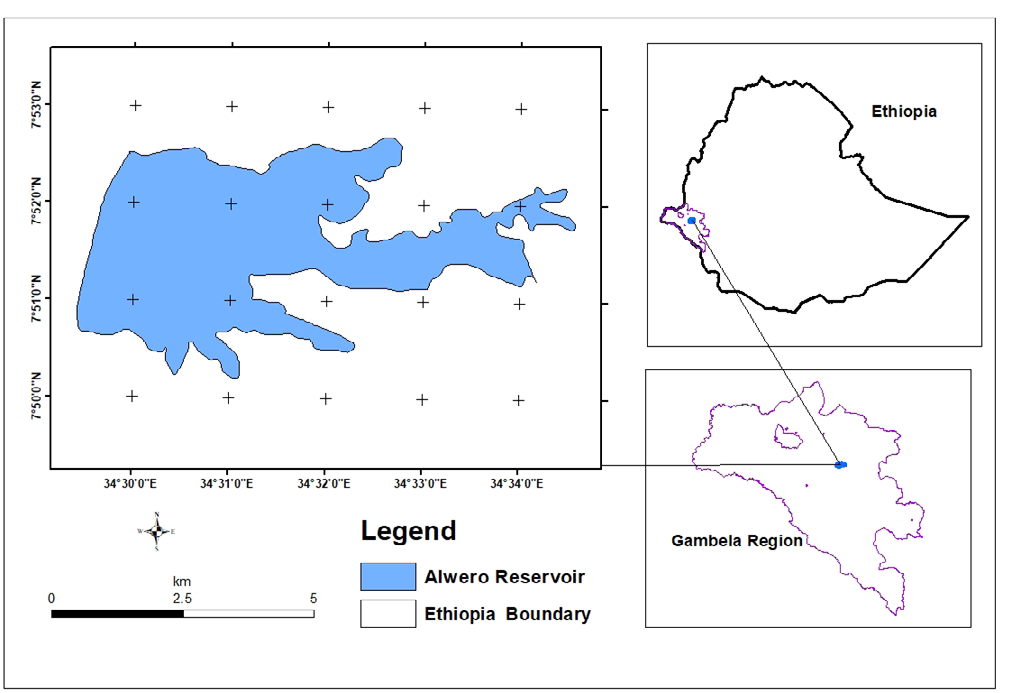
The study was conducted in the Alwero reservoir (Figure 1) in Kano kebele of Abobo wereda, Anuak zone, Gambella National Regional State. The reservoir was built by the then United Soviet Socialist Republic (USSR) for irrigation purposes. It is located at 7.86310N, 34.49390E and has a total area of 22.1km2. The reservoir has a water holding capacity of 74.6 million m3 and is found at a distance of 47km south of Gambella city [15]. Abobo wereda has a total human population of 15,741 [16].
Data Collection Method
Kano kebele, which is geographically closer to the reservoir was systematically selected and respondents (N=49) were interviewed after they were briefly told about the objectives of the study. Both structured and semi- structured questionnaires were used to gather information on the socioeconomic status of the respondents, fish production/catch and price, and the cause of post-harvest loss. Focus group discussion was also held with experienced fishers, heads of administration, and fisheries experts of the district to generate further information on the general aspects of the fishing activities in the study area. Besides, information was generated through observations of the landing site, local market, and means of transportation used to deliver the fishes to hotels and restaurants at Gambella city.
Data analysis
Descriptive statistics (mean, frequency distribution, percentages) of both quantitative and qualitative explanatory variables were calculated using SPSS version 16 [17]. To explore variables that affect fish post-harvest loss at the Alwero reservoir, linear regression analysis was carried out. Besides, the correlation of different variables was also identified using the same software. ArcGIS [18] was used to map the study area.
Results
Socioeconomic Information of the Respondents
The study was conducted in Gambela National Regional State, Anuak zone, Abobo wereda, specifically at Kano kebele. For this study, 49 people were interviewed, of whom 43 (87%) were males and 6 (12.2%) were females. The age of the respondents ranged from 18 to 32 years, the average was being 24.18 ± 3.85 years, and their marital status was dominated by married people (39,79.6%) over singles (10,20.4%). The respondents had different educational statuses ranging from “no formal schooling” (37,75.5%), which was the dominant group, to high school (9,18.4%) and college levels (3,6.1%). The number of household members of the respondents ranged from 1 to 9, with an average value of 2.78 ± 1.98. The majority (45,91.8%) of the respondents were not a member of any organization working on environmental conservation activities, while very few of them (4,8.2%) replied that they are indeed members. Almost all of them (45,91.8%) live in a place that takes less than half an hour walk from Alwero reservoir, while only 4 of them (8.2%) live in half an hour to an hour walking distance from the reservoir. The respondents (48,98%) indicated that they possess land that varied in size from less than 0.25 ha (9, 18.4%), 0.25 ha to 0.5 ha (3, 6.1%) and above 0.5 ha (37,75.5%), but an individual (2%) claimed to have no land. The livelihood of the respondents depends on two major economic activities being practiced in their area, i.e. Agriculture (22,44.9%) and Fisheries and Agriculture combined (27,55.1%). Those respondents who are involved in fisheries are mainly engaged in fishing, fish trade, and gear making.
The amount of fish the respondents catch per single trip varied from 20kg to 60kg, with an average value of 30.35±16.76 kg. All of them (48,98%) agreed that they go fishing six days a week, while a person (2%) reported the number of fishing days as three. The respondents also prioritized the fish species they catch as most economically important in the following order: Mormyrus kannume (local name Dolo) and Heterotis niloticus (local name Uluak/Uloek) as their first choice (49,100%), Citharinus citharus (local name Abel) as their second choice (48, 98%), Oreochromis niloticus (local name Uredo) (47, 96%) as their third choice and Gymnarchus niloticus (local name Wit/Uit) as their fourth choice (41,83.7%).
The maximum, minimum, and average price of each economically important adult fish species during high and low catch seasons in Ethiopian Birr (ETB) was given by the respondents as stated in Table 1. All the respondents (49,100%) reported that they are using a single fishing gear locally called Achiy (It is made of wooden stick 1.5 – 2.5m long. At the end of the stick joined cone-shaped horn then detachable hook-like spear with the horn. The hook-like spear is tied with a 3m rope to other ends of the stick) [15]. The respondents were asked about the major problems they face as fishers and they prioritized the challenges as a shortage of storage and transportation facilities (16,32.7%), shortage of quality fishing gears, storage and transportation (23,46.9%), and aquatic weeds (10,20.41%). Almost all of the respondents (48,98%) reported that they do encounter fish loss and listed the causes as the length of time the fish remains in nets before hauling (27, 55.1%), and predators, and high ambient temperatures (22,44.89%). All these causes of loss were observed in the reservoir, at a landing site (broken fish body parts), during sorting/grading, and storage. Besides, they indicated that the amount of fish they lose per single trip ranges from 4kg to 10kg, the average was being 6.78kg±1.287. Respondents prioritized even the fish species based on how fast they got spoiled as first Bagrus docmac, Bagrus bajad, (_local name Udoora/Adwera), second _Clarias gariepinus local name (Aguwella), third Mormyrus kannume and Mormyrus .niloticus (local name Dolo), and fourth Gymnarchus niloticus (local name Wit/Uit). On top of that, respondents also indicated that they have difficulty in selling their fish and summarized the major cause of post- harvest losses in their area as the absence or shortage of storage and transport facilities (13,26.5%), transportation problem and market distance (the closest local market at Abobo town, which is 5 km from the reservoir and Gambella city at 45km) (34,69.4%), and a high number of fishers (2,4.1%). The fishes are packed in a sack, transported by motorbikes, and distributed to hotels and restaurants in Gambella city every day. To protect the collected fishes from being spoiled, 34 (69.4%) of the respondents are using solar processing methods and the remaining 15 (30.6%) are using both solar and smoking processing methods. As a means to minimize loss, respondents have copping strategies of an immediate sale (44,89.81%), and sale at a lower price and preservations (5,10.2%). Fishing is seasonal in the Alwero reservoir, whereby the highest fish catch (quantity per trip) is expected from May to October and the lowest from February to March of the year. The highest post-harvest loss is observed from January to March, mainly because of the high ambient temperature of the area and severe storage facilities problems (no refrigeration technology used in the area).
Price
The price of all fish species at the Alwero reservoir fluctuates depending on the harvest season. If it is in a high catch season, the price decreases and it increases in a low catch season. The average price of fish species abundantly found in the reservoir both during high and low catch season estimated by the respondents is given in Table 1.
| Species Scientific and local Names | High Catch Season | Low Catch Season | ||||||
|---|---|---|---|---|---|---|---|---|
| Min. | Max. | Mean | Std. Deviation | Min. | Max. | Mean | Std. | |
| Deviation | ||||||||
| Citharinus citharus | 10 | 50 | 33.96 | 15.122 | 25 | 60 | 49.57 | 10.046 |
| Mormyrus kannume | 5 | 50 | 35.32 | 14.43 | 10 | 60 | 48.62 | 12.019 |
| Heterotis niloticus | 10 | 60 | 41.47 | 14.383 | 30 | 60 | 55.91 | 6.668 |
| Oreochromis niloticus | 5 | 50 | 13.37 | 7.532 | 10 | 60 | 24.89 | 14.963 |
| Gymnarchus niloticus | 20 | 50 | 45.37 | 10.824 | 45 | 60 | 56.35 | 3.888 |
Table 1: The average price of each adult fish species in Ethiopian Birr.
Fish Yield and Loss
According to the respondents, the current fish yield of the Alwero reservoir is in a decreasing trend as compared to production a decade ago. In a single trip, respondents indicated that they catch 30.35kg of different fish species, and they are doing this six times a week. Mathematically, it is estimated that they are producing/catching 182.10kg of fish in a week, or 728.40kg of different fish species in a month. It is also reported that they do fishing six months a year, which puts the figure at 4370.4kg of fish in a year. However, a considerable amount of fish is lost due to different factors. The respondents indicated that they are losing 6.78kg of different fish species per trip. They go fishing six times a week, putting the amount of fish they lose at about 40.68kg. The monthly and yearly loss of fish species is estimated to be 162.72kg and 972kg, respectively. They are losing 22% of what they catch in a year.
The Estimated Loss in Monetary Terms
The price of all nine abundantly available different fish species during high production season was used to calculate the average price of fish (regardless of the species variation) (Table 2). It is estimated to be 32.35 ETB/Kg. As calculated above, the loss per month is 162.72kg, which gives the loss in terms of money as (162.72kg* 32.35birr/kg) = 5,263.992ETB/month.
| Species Name | Average price during high production season (ETB/Kg) |
|---|---|
| Clarias gariepinus | 33.96 |
| Mormyrus kannume and Mormyrus niloticus | 30 |
| Bagrus docmac and Bagrus bajad | 35.32 |
| Synodontis frontosus and Synodontis clarias, | 18.33 |
| Auchenoglanis occidentalis | 16.67 |
| Heterotis niloticus | 20 |
| Oreochromis niloticus | 41.47 |
| Gymnarchus niloticus | 13.37 |
| Average | 32.35 |
Table 2: The average price of nine abundantly available fish species in Ethiopian birr at Alwero reservoir
Factors Affecting Fish Post-Harvest Loss at Alwero Reservoir
Results of the linear regression model are presented in (Table 3). Among many variables, the economic activity, high ambient temperature and shortage of storage facilities, and average price of the abundant fish species in the area, i.e., Oreochromis niloticus during high catch season in Ethiopian birr were found to have affected the post-harvest loss significantly.
| Model | Unstandardized Coefficients | Standardized Coefficients | t | Sig. | 95% Confidence Interval for B | ||
|---|---|---|---|---|---|---|---|
| B | Std. Error | Beta | Lower Bound | Upper Bound | |||
| (Constant) | 3.485 | 0.273 | 12.753 | 0.000 | 2.918 | 4.052 | |
| Economic activity respondent’s livelihood depends on | -.357 | 0.061 | -.644 | -5.858 | 0.000* | -.484 | -.231 |
| High ambient temperature, shortage of storage facilities, quality fishing gear, and transportation | 0.451 | 0.163 | 0.282 | 2.776 | 0.011* | .114 | 0.789 |
| The average price of the abundant species, Oreochromis niloticus during high catch season in Ethiopian Birr | -.0420 | 0.013 | -.354 | -3.167 | 0.004* | -.070 | -.015 |
Table 3: The results of linear regression analysis (N = 49), * = significant at 0.01
Dependent variable: How much is the loss because of the condition/quality of fish during selling/distributing in kg? Table 3: The results of linear regression analysis (N = 49), * = significant at 0.01
Correlation
The correlation of variables, which is used to test for the existence of positive, negative, or no association between continuous measurements, is a statistical tool that has significant importance in improving the variables in question without measuring both at a time. The significant correlations observed between different variables in this study are given in Table 4.
| Variables | Number of household members | How much fish you catch per trip (Kg) | What are the major problems you face as a fisher? | How much is the loss because of the condition/ quality of fish during selling/ distributing in Kg? |
|---|---|---|---|---|
| Number of household members Pearson Correlation Sig. (2-tailed) | 1 | 0.289* 0.044 | -0.246 0.091 | -0.562** 0.002 |
| How much fish you catch per trip (Kg) Pearson Correlation Sig. (2-tailed) | 0.289* 0.044 | 1 | -0.610** 0.000 | -0.217 0.259 |
| What are the major problems you face as a fisher? Pearson Correlation Sig. (2-tailed) | -0.246 0.091 | -0.610** 0.000 | 1 | 0.493** 0.008 |
| How much is the loss because of the condition/quality of fish during selling/distributing in Kg? Pearson Correlation Sig. (2-tailed) | -0.562** 0.002 | -0.217 0.259 | 0.493** 0.008 | 1 |
Table 4: Correlations of variables (N = 49).
**. Correlation is significant at the 0.01 level (2-tailed), *. Correlation is significant at the 0.05 level (2-tailed) Table 4: Correlations of variables (N = 49).
Discussion
The demographic nature of a fishing society has a general impact on fishing activities. In this study, the average age of fishers was found to be 24.18±3.85 years indicating how important a fishing activity is in accommodating the youngsters who otherwise would have been unemployed. Besides, more married people are engaged in this activity assuring household food security with more people in the household participating in fishing activities. However, 75% of the respondents had no formal schooling which might be related to low awareness of environmental issues and 91% of them are not a member of any organization working on environmental conservation activities, worsening the already existing mismanagement of the natural resources in and nearby the reservoir. In line with this result, it has been indicated Olusumbo AA [12] that a low level of educational status increases the post-harvest fish loss in Ondo state, Nigeria. Moreover, 91% of the respondents are living at a distance that takes only less than half an hour from the reservoir putting more pressure on it. The relatively high mean fish catch (30.35±16.76kg) per trip and frequency of fishing in a week can also indicate the high exploitation of fish resources in the reservoir. The harvested fishes, which are not sold fresh, are mostly processed by solar and smoking methods that are traditional and not effective to preserve large quantities of fishes as compared to the modern processing techniques. Traditional practices such as exposing fish for long periods to weather elements coupled with traditional methods of preservation (hot smoking, sun- drying, and deep-frying) and poor storage are subjecting fish to different kinds of degradation [19]. A very high level of post-harvest loss occurs during pre-processing, processing, storage, and transportation of fishery products [5]. Absence or shortage of storage, transportation facilities, and quality fishing gears were reported to be the main challenges of the fisher society in the study area, resulting in a very high amount of fish post-harvest loss. After the fishes arrived at the landing site, they are transported by a synthetic plastic bag made from polyethylene (sack) on a motorbike to Gambella city, which is 45 km away from the reservoir. The other option is hanging the fish and taking it to the nearest local market at Abobo town (5km away from the reservoir) where there are no facilities (e.g., shade, water) to handle fresh fish. They are just displayed on the ground while flies are covering the fishes. These very unhygienic ways of handling and transportation methods fasten the loss of fish quality, hence a low market price or full spoilage of the product. This can also be a source of the public health threat that needs due attention. Consumption of low-quality fish has a dangerous effect on human health [20]. Bacterial spoilage in fresh fish can produce toxins that cause food poisoning [21]. The quality loss is also caused by the length of time the fish remains in nets before hauling, predators, and high ambient temperature. Because the fishers have no proper storage facilities, they let the product stay some time in the landing site while dropping their net for the next round of fishing. This exposes the fish to predators. The extreme environmental temperature, together with the absence of refrigeration, spoil the product so fast, especially from January to March. A high temperature of about 200C creates an avenue for fish spoilage [22], but the average yearly ambient temperature of the study area is well above this vividly showing how fast a product can get spoiled. The postmortem formation of amino acids and their rapid decarboxylation biochemically or microbiologically are temperature-dependent that leads to spoilage [23]. The same causes of fish post-harvest loss (high environmental temperature, the presence of predators, the length of time the fish remains in nets before hauling, absence of refrigeration facilities, and delay before marketing) have been reported by other authors Amos B, Asma AA, Diei-Ouadi Y, Yvette, Tesfay S, Olusumbo AA [10, 12, 22, 24, 25, 26] as well. According to the respondents of this study, 6.78±1.287kg of fish spoiled per trip. However, they practice selling the product at a low market price to protect complete loss. But, generally, the price of a fish depends on the season. In the study area, the price of all fish species is relatively lower during the high catch season (May to October) because of high supply and higher at low catch season (January to March) as supply goes down. Based on the information provided by the respondents, a yearly fish catch of a fisherman is estimated to be 4,370.4kg, out of which 972kg of fishes (22%) is lost because of the above-mentioned points. This result is in line with what Nowsad, 2007 reported whereby post-harvest loss is presumed to be about 20 - 30% in different fish and fishery products. In some developing country situations, the post-harvest loss estimated to be 25% of fish caught [27]. Besides, In Tanzania, the post-harvest loss of Rastrineobola argentea/sardine was estimated at 20 – 40% and in Uganda, the loss of Rastrineobola argentea/sardine was 26 – 40% [28]. To estimate the fish loss at Alwero reservoir in terms of money, the average price of a kilogram of fish of all abundantly available different species in the study area was taken as a standard price of one kilogram of fish (regardless of the species) and multiplied with the calculated amount of fish loss per month. As a result, it is estimated that a fisher can lose 5,264 ETB in a month. The fish yield/production and the amount which was being properly utilized by the fishers were not equivalent. A huge amount of fish is lost after harvest threatening the abundance and diversity of fish species in the reservoir.
Different factors can govern the level of post-harvest loss in any water bodies where fish exists. In this study, the economic activity respondents depend on affected the post-harvest loss negatively and significantly (P<0.01). As the number of economic activities respondents relied on increases, the amount of fish post-harvest loss decreases mainly because of a decrease in pressure that was exerted on the fishing sector. This result is in line with the work of Asma AA [24] which indicated that limited opportunity for alternative income-generating activities can affect the distribution of fresh or wet fish, hence increased loss. The existence of high ambient temperature, shortage of storage facilities, quality fishing gears, and transportation problems in the study area affected the post-harvest loss positively and significantly (P=0.011). The high ambient temperature, which is the main cause of fish loss in the area, fastens the fish quality deterioration and spoilage. The absence or extreme shortage of storage facilities in the area also triggers very low market prices and complete spoilage of the product. Shortage of quality fishing gear in the area is considered as one of the causes for physical damage to the product because the traditional fishing gears being used are causing the fish body to be broken and becomes a conductive media for bacterial growth. The extreme problem of means of transportation of the fishes from the landing site to both local market at Abobo and Gambella city is the other major point causing loss of quality of a fish. All the above-identified causes are in line with the findings of Ward AR [29] who reported that fish post-harvest losses can be exacerbated by unreliable transportation, inadequate preservation techniques, adverse weather conditions, species of fish, type of processing methods, fish supply greater than demand, and the fish market not developed.
The other variable that affected post-harvest loss negatively and significantly (P<0.01) was the average price of the abundant fish species, Oreochromis niloticus during high catch season in Ethiopian birr. As the price increases, the post-harvest loss decreases because the harvested fish do not stay long in the market (high demand). In this study, different significant correlations of variables were observed. The number of household members was negatively and significantly correlated with the amount of fish loss (kg) because of the condition/quality of fish during distribution. As the number of household member’s increases, the loss decreases because more people (labor force in the household) are involved in marketing the product before it gets spoiled. The number of household members also positively and significantly correlated with the amount of fish catch (kg) per trip. The higher the household members involved in fishing, the more the amount of fish they catch. The amount of fish catch per trip (kg) was negatively and significantly correlated with the major problems (increased ambient temperature, shortage of storage facilities and quality fishing gear, transportation problem) fishers face in the study area. When the problems intensified, the amount of fish they catch in a single trip decreases. These intensified problems were also positively and significantly correlated with the amount of fish loss caused by condition/quality during distribution. Post-harvest loss in the study area is very high. The fishermen caught a large amount of fish which got spoiled before it reaches the intended end-user, the consumer. This has a direct impact on the fish species abundance and diversity of the reservoir. If no conservation activities and law enforcement are implemented in the area, the rich species diversity and abundance of the reservoir will probably be under a threat of extinction. In line with this result, Felicia C [30] reported that overfishing results in a direct loss of exploited species and the associated biodiversity. Systematic overfishing of freshwaters is largely unrecognized because of weak reporting and because fishery declines take place within a complex of other pressures [31]. Moreover, the ecosystem consequences of changes to the species, size, and trophic composition of fish assemblages are poorly understood. But at Alwero reservoir, according to the respondents, the loss is at an alarming state requiring the immediate contribution of everybody.
Conclusion
This study showed that there is a high amount of fish (30.35±16.76 kg) being caught as compared to the total area of the reservoir. But out of this, 6.78kg of different fish species is being lost per single trip resulting in a loss of 22% of the catch in a year. Many factors were identified as the cause for the loss, among which: Absence or shortage of storage, refrigeration, transportation facilities, quality fishing gears, and the length of time the fish remains in nets before hauling, the existence of predators, and high ambient temperature were the major ones. The observed high amount of fish loss in the reservoir, in one way or the other, affects the abundance and diversity of fish species in the reservoir. Therefore, a holistic approach to solving the existing cause of post-harvest loss in the reservoir is considered to be the remedy for the problem in the area.
References
-
Adewolu MA, Adoti AJ (2010) Effect of mixed feeding schedules with varying dietary crude protein levels on the growth and feed utilization of Clarias gariepinus (Burchell, 1822) fingerlings. Journal of Fisheries and Aquatic Sciences 5: 304-310.
-
Nowsad AKMA (2010) Post-harvest loss reduction in fisheries in Bangladesh: A way forward to food security. Final report PR 5(8): 2-171.
-
FAO (2016) Aquaculture Summary: The state of world fisheries and Aquaculture Report FAO 2016, pp: 1-8.
-
Singh YJ, Santhakumar R, Pandey DK, Bharati H, DebRoy P (2012) Adoption of Hygienic Fish Handling Practices by Fishermen. Indian Research Journal of Extension Education 12(1): 36-38.
-
Rahman MS, Khatun MB, Hossain MN, Nowsad AAKM (2013) Present Scenario of Landing and Distribution of Fish in Bangladesh. Pakistan Journal of Biological Sciences 16(22 ): 148-149.
-
Adam JN, Al-hassan S, Akolgo DA (2016) Small scale irrigation and rural poverty reduction in the upper East region of Ghana. African Journal of Science and Research 5(2): 38-42.
-
FAO (1981) The prevention of losses in cured fish. FAO Fisheries Technical Paper No. 219.
-
Singgih W, Bandol Utomo BS, Syamdidi, Kusumawati R (2014) Evaluating and Monitoring of National Post- Harvest Fish Loss in Indonesia, Proceeding of The 3rd International Seminar of Fisheries and Marine Science, pp: 59-66.
-
Mungai DM (2014) Assessment of post-harvest losses of Nile Perch (Lates Niloticus) incurred by fishermen from Lake Victoria, Kenya, pp: 1-102.
-
Amos B (2007) Analysis of quality deterioration at critical steps/points in fish handling in Uganda and Iceland and suggestions for improvement. UNU-Fisheries Training Programme, pp: 2-35.
-
Berkel BM, Boogaard BV, Heijnen C (2004) Preservation of Fish and Meat. Agromisa Foundation, Wageningen, The Netherlands, pp: 78-80
-
Olusumbo Adeolu Adelaja, Roslina Binti Kamaruddin, Lee Wen Chiat (2018) Assessment of post-harvest fish losses Croaker Pseudotolithus elongatus, (Bowdich, 1825), Catfish Arius heudeloti, (Valenciennes, 1840), and Shrimp Nematopalaemon hastatus (Aurivillius, 1898) in Ondo State, Nigeria. Aquaculture and Fisheries 3: 209 -216.
-
Teklu D (2015) Determinant factors for wasted fish during harvesting at Amerti and Fichawa Reservoirs Oromia/Ethiopia. Journal of Fisheries sciences 9(4): 12- 15.
-
Yared T, Abera D, Ahmed (2007) Kinds and levels of post-harvest losses and the possible ways to reduce the losses in Lake Ziway. In: proceeding of the 15th national conferences of the Ethiopian Society of Animal Production (ESAP), pp: 141-146.
-
Hussien A, Gashaw T, Abebe C (2010) Riverine Fishery Assessment in Gambella Peoples’ Regional State, Agricultural Fishery Development Program, Ministry of Agriculture, Ethiopia.
-
CSA (2007) Central Statistical Agency, Addis Ababa, Ethiopia.
-
SPSS for Windows (2015) Statistical Packages for Social Sciences, Version 16.0. Chicago, SPSS Inc.
-
ArcGIS 10.3.1. CopyRight 1995 -2015 Ersi, USA.
-
Michael TM (1988) Post-harvest fishery losses. Proceedings of an International Workshop, The University of Rhode Island, Kingston, ICMRD, pp: 12-16.
-
Kumolu-Johnson CA, Ndimele PE (2011) A review on post-harvest losses in Artisanal fisheries of some African countries. Journal of Fisheries and Aquatic Science 6(4): 365-378.
-
Ames R, Clucas I, Paul SS (1991) Post-harvest losses of fish in the tropics natural resource institute, London.
-
Diei-Ouadi Y, Mgawe YI (2011) Post-harvest fish loss assessment in small-scale fisheries: A guide for the extension officer. FAO Fisheries and Aquaculture Technical Paper, pp: 93.
-
Halasz A, Barath A, Simon-Sarkadi L, Holzapfel W (1994) Biogenic amines and their production by microorganisms in food. Trends in Food Science Technology 5(2): 42-49.
-
Asma AA (2008) Post-Harvest Losses of Fish in Developing Countries. Nutrition and Health 19(4): 277- 279.
-
Yvette, Yahya I (2011) Post-harvest fish loss assessment in small-scale fisheries, (FAO) Fisheries and Aquaculture Technical Paper. A guide for the extension officer, Rome, Italy, pp: 559.
-
Tesfay S, Teferi M (2017) Assessment of fish post- harvest losses in Tekeze dam and Lake Hashenge fishery associations: Northern Ethiopia. Agric Food Security 6(4): 1-12.
-
FAO (1998a) Fish Utilization and Marketing Service. Responsible fish utilization. FAO Technical Guidelines for Responsible Fisheries. No. 7. Rome, pp: 33.
-
FAO (2010) Post-harvest losses in small-scale fisheries: case studies in five sub-Saharan African countries. FAO, Fisheries and Aquaculture Technical Paper. No. 550. Rome, pp: 72.
-
Ward AR, Jeffries DJ (2000) A Manual for Assessing Post- Harvest Losses, Natural Resources Institute, Chatham, UK, pp: 2-4.
-
Felicia CC, Susan LW (2002) Overexploiting marine ecosystem engineers: potential consequences for biodiversity. Trends in Ecology & Evolution 17(1): 40-44.
-
David A, Robin A, Zeb H, Carmen R, Brad WT, et al. (2005) Overfishing of Inland Waters. BioScience 55(12): 1041- 1051.
- Lessons to Learn: Trees are More than the Lungs of the World
- Community Forestry Enterprises as a Model for Sustainable Forest Development: The Case Of The "Baja Tarahumara" in Chihuahua, Mexico
- Ecological and Socio-Economic Impacts of Chromolaena odorata and Mesosphaerum suaveolens, Two Invasive Alien Species in Central and Southern Benin, West Africa
- Epigenetic Sustainability: Modeling the Human Factor as a Natural Resource through Science 4.0 and the NR3C1 Biological Pilot
- Growth-at-Risk: A Framework for Assessing Economic Vulnerability
- The Rural Territory as a Socioecological System for the Management of Public Policy for Sustainable Rural Development