
Impact of Climate Change on Forests in Cambodia
Cambodia is rich in forest resources, which play critical roles in local rural livelihoods, as well as providing valuable ecological and economic resources for the country’s economic development. Managing forests sustainably and equitably will be essential for maintaining the ecological integrity of the country, maintaining freshwater supplies and protecting biodiversity. Approximately 80% of the Cambodians live in rural areas depend upon the forests to support many people’s lives as a source of food, medicine and building products, and as a source of materials and goods for small business ventures. Forest degradation globally contributes around 17 % to Green House Gases (GHG) emissions, but in Cambodia represents the main factor in the country becoming a net emitter of GHGs. Climate change is one of the most environmental issues facing to the government. The study aimed at i) assessing the impact of climate change on NPP, Vegetation Carbon and Soil Organic Carbon using LPJ model; ii) projecting the spatial representation of Impact of climate change on NPP, Vegetation Carbon stocks, and Soil Organic Carbon. The Lund Potsdam Jena (LPJ) model combines process-based, large-scale representations of terrestrial vegetation dynamics and land-atmosphere carbon and water exchanges in a modular framework. The model climate data requirements are benign as it requires only Temperature, Rainfall and Cloudiness as climatology inputs. Model validation is used for Net Primary Productivity (NPP), Vegetation Carbon (VegC), and Soil Organic Carbon (SoC). Obtaining observation of NPP, VegC, and SoC data for the region from the published literature or from the international databases and compare these with the LPJ projections (Spatially or non- spatially). As results, LPJ Simulated distribution on NPP in Cambodia using different scenarios including Baseline, RCP 8.5, and RCP 8.5 with control CO2 generated based on NPP, VegC, and SoC. Also, LPJ simulated Soil carbon change (%) projections for Cambodia under the RCP 8.5 under the two scenarios of CO2 fertilization and no-CO2 fertilization.
Soben Kim1* and Pheak Sok2
Introduction
The forest resources are a sub-sector considered importance to the overall agricultural sector because of its present and potential contribution to economic growth.
Additional plantings were applied in natural forest in 1915 to 1972 at the rate of 300-400 ha per year to help the replenishment of valuable tree species in logged over areas [1]. Approximately 80% of the Cambodians live in rural areas depend upon the forests to support many people’s lives as a source of food, medicine and building products, and as a source of materials and goods for small business ventures. Besides this, forests also have heritage, cultural and spiritual importance for many people [2]. The rich forest resources of Cambodia play important roles in supporting local rural livelihoods as well as providing valuable ecological and economic resources for the country’s economic development. Managing forests sustainably and equitably will be beneficial to keep maintaining the ecological integrity of the country, providing freshwater supplies and conserving biodiversity in the region. Through managing forests, it also brought much of the potential new climate change finance could be realized in Cambodia, with tremendous potential benefits for human development in the country [3]. Forests provide useful benefits and support the lives of millions of people and animal on the Earth and also create employments. Most of the rural people approximately 84% rely heavily on the fuel wood and charcoal. Anciently, the forest resources particularly, non-timber forest products have provided essential safety nets for local people in the period of crisis [4]. The forest enables them to raise their standard of living beyond simple subsistence [5].
According to the results of the national land use/cover in 2014 by Forestry Administration FA [6], it has classified into 22 classes of which 13 forest classes cover around 8,985,164 hectares equivalent to 49,48% of the whole country’s total land area. Forest degradation globally contributes around 17 % to Green House Gases (GHG) emissions, but in Cambodia represents the main factor in the country becoming a net emitter of GHGs. Moreover, forests will also be impacted by climate change [3]. Climate change is one of the most environmental issues facing to the government and policy makers globally and continues to integrate in the international agenda [7]. Local perceptions of climate change clearly link recently observed climate variability with forest and land degradation. Scientific predictions of climate change for Cambodia suggest that forests will be affected by changes in temperature, precipitation and the shifts in the seasons. Cambodia presented its Nationally Determined Contribution (NDC) in 2015 to the Paris Agreement of the COP21 by proposing a GHG mitigation contribution for the period 2020-2030, where the country is implementing actions in line with its sustainable development needs, include addressing climate change [8]. Obviously, Cambodia is one of the lowest contributors to the causes of climate change. It remains one of the most vulnerable countries to its impact, so the country takes climate change seriously in the development agenda to enhance a greener, low-carbon and climate- resilient, equitable, sustainable, and knowledge- based nation. The country contributed to global efforts to addressing climate change issues through reflecting in the Rectangular Strategy Phase IV (2018-2023) and the National Strategic Development Plan 2019-2023 [8].
Methods
The Lund Potsdam Jena (LPJ) model combines process- based, large-scale representations of terrestrial vegetation dynamics and land-atmosphere carbon and water exchanges in a modular framework. It is a well-established and active model. The Lund- Potsdam-Jena Dynamic Global Vegetation Model (LPJ- DGVM) combines mechanistic treatments of terrestrial vegetation dynamics, carbon and water cycling in a modular framework [9]. This model represents the forest types well across different parts of the world. There are a number of publications that has come out from different applications of this model. The model climate data requirements are benign as it requires only Temperature, Rainfall and Cloudiness as climatology inputs. The model schematic is shown in the following Figure 1.
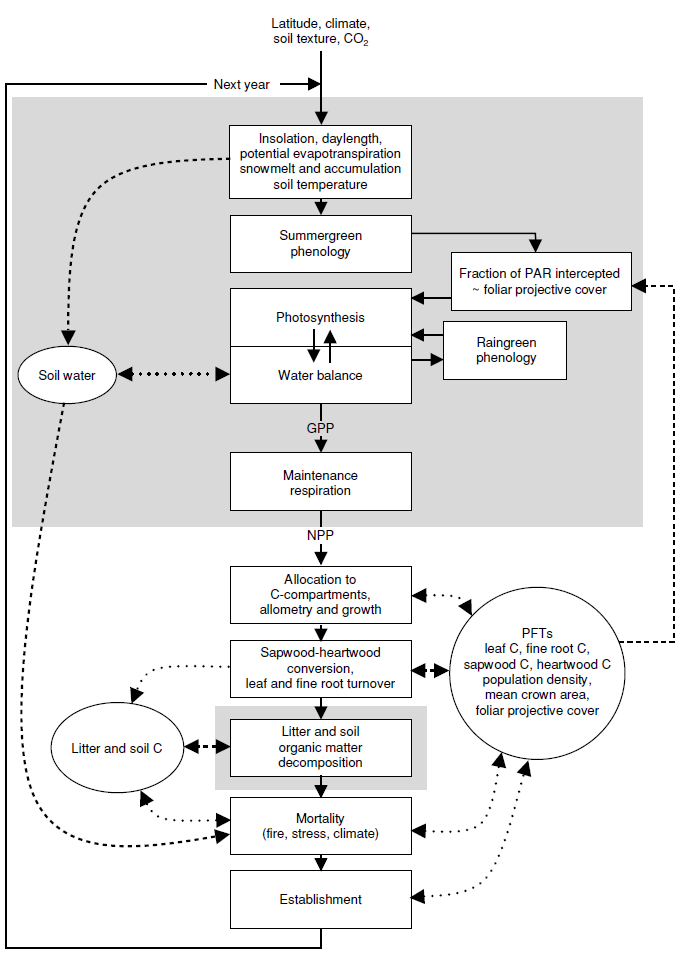
The input data requirements and sources of data used, where the key input data requirements for LPJ were divided into two groups. 1) Climate Parameter: monthly mean cloudiness, monthly mean precipitation, monthly temperature; and 2) Non climatic parameters: soil, CO2, grid or domain (Table 1).
| Non climatic parameters | |
|---|---|
| Monthly mean cloudiness (%) | Soil |
| Monthly mean Precipitation (mm/month) | CO2 |
| Monthly mean Temperature (deg c) | Grid or domain |
Table 1: Key input data requirements for LPJ model.
For the bias correction methodology is carried out to remove the bias or anomaly produced by a climate model. The study follows the mean bias correction method. Here the difference between climatology of the model projected parameter and the historical climatology of the same model parameter is calculated. This difference or the anomaly is then added to the observed data to bring the model closer to the observed estimate. This procedure is called bias correction. It is done with the intent of improving the model projected data.
For the model validation, it is used the observed data available for country and region and compare with the baseline LPJ outputs to check for the reliability of the model.
Model validation is used for Net Primary Productivity (NPP), Vegetation Carbon (VegC), and Soil Organic Carbon (SoC). Obtaining observation of NPP, VegC, and SoC data for the region from the published literature or from the international databases and compares these with the LPJ projections (Spatially or non-spatially). For example, the validation of Relative distribution of forest type as simulated by LPJ with the potential vegetation map obtained from global dataset.
Results
Impact of climate change on NPP, Vegetation carbon and Soil Carbon 3.1.1.Impact of Climate Change on NPP
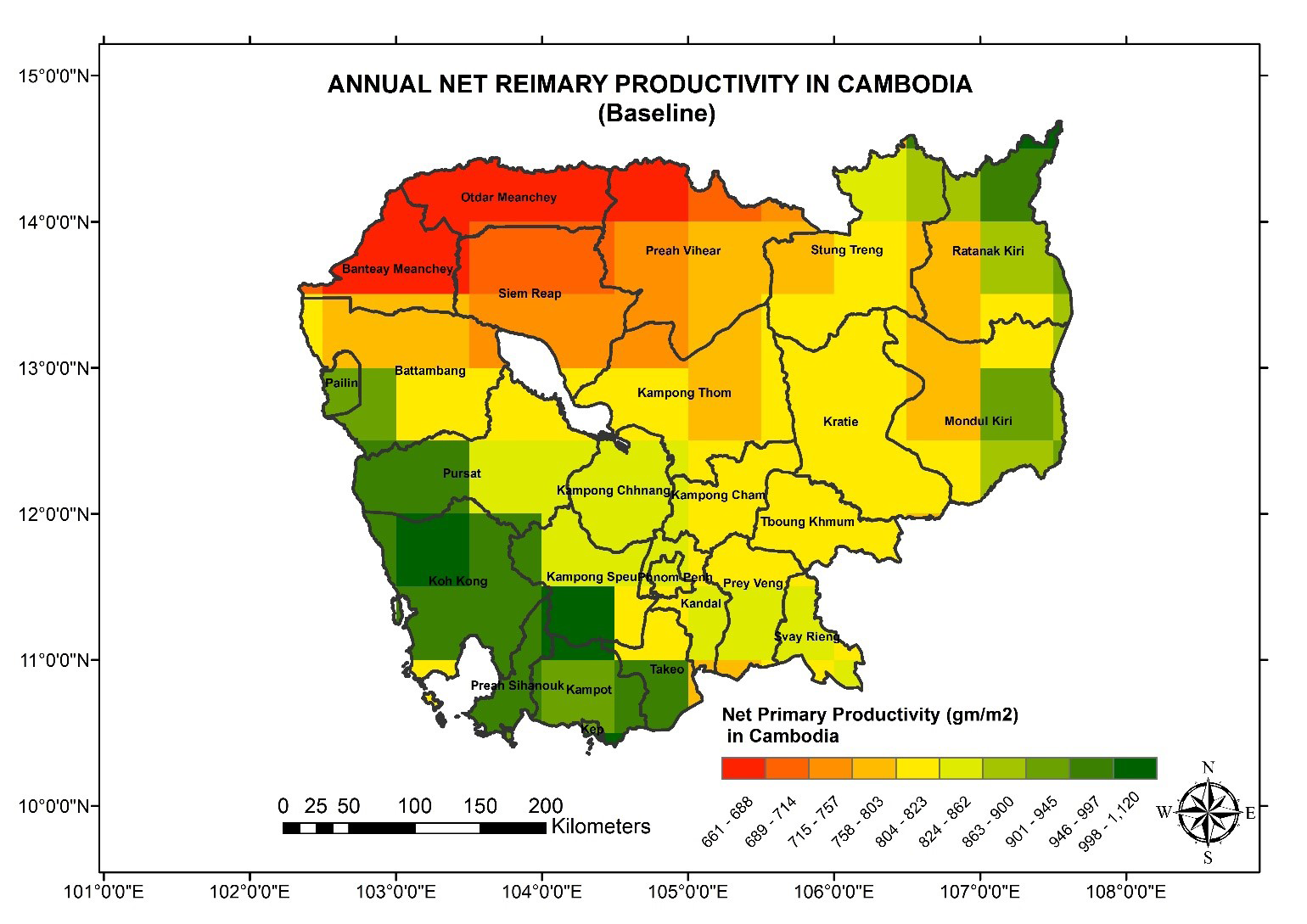
Since the forest cover in Cambodia are slightly decreasing from year to year by the human activities, and forest degradation rate are ranging from 3% to 10% based on each province, so the NPP changing under different scenarios at the country; the averaged scale and percentage change from the baseline scenario starting from 20.06% to 59.55%. By using RCP 8.5 and RCP 8.5 under control CO2 scenario to compare with baseline simulation, the results of simulation are not so different. Some provinces of Cambodia are low NPP, particularly Banteay Meanchey, Oddar Meanchey and Preah Vihear (Figure 2).
| Observe Data source : https://crudata.uea.ac.uk/cru/data/hrg/ | GCM (PROJECTED) Data source: http://cmip-pcmdi.llnl.gov/cmip5/data_portal. html | |
|---|---|---|
| Monthly mean cloudiness (%) | CRU | CMPI5 |
| Monthly mean Precipitation(mm/month) | CRU | CMPI5 |
| Monthly mean Temperature (deg c) | CRU | CMPI5 |
Table 2: Source of input data for LPJ.
| Model | Re gridded Resolution | Historical Period | RCP (4.5 and 8.5) Period | |
|---|---|---|---|---|
| MRI | MRI-CGCM3 | 0.5x0.5 | 1850-2005 | 2006-2099 |
| MIROC | MIROC5 | 0.5x0.5 | 1850-2005 | 2006-2099 |
| MIROC | MIROC-ESM | 0.5x0.5 | 1850-2005 | 2006-2099 |
| MIROC | MIROC-ESM-CHEM | 0.5x0.5 | 1850-2005 | 2006-2099 |
| IPSL | IPSL-CM5A-LR | 0.5x0.5 | 1850-2005 | 2006-2099 |
Table 3: The 5 models used for this study and their attributes.
Plants play an important role in the movements of carbon dioxide throughout Earth’s environment. Living plants both take in CO2 from the air and put out CO2 to the air. The map showed the Annual Net Primary Productivity in Cambodia using RCP 8. 5 scenarios, compared to the baseline data, it has just changed in a small amount of the NPP. The four provinces include Bantey Meanchey, Oddar Meanchey, and some part of Siem Reap and Preah Vihear Province are the low deforestation that lead to increasing CO2 to be taken in. In contrast, the high CO2 taken into the atmosphere, the coastal zones and cardamom mountain areas are potentials to be more forest, such as Pailin, Pursat, Koh Kong, Shihanouk ville, Kampong Speu, and Kampot Prvince (Table 3).
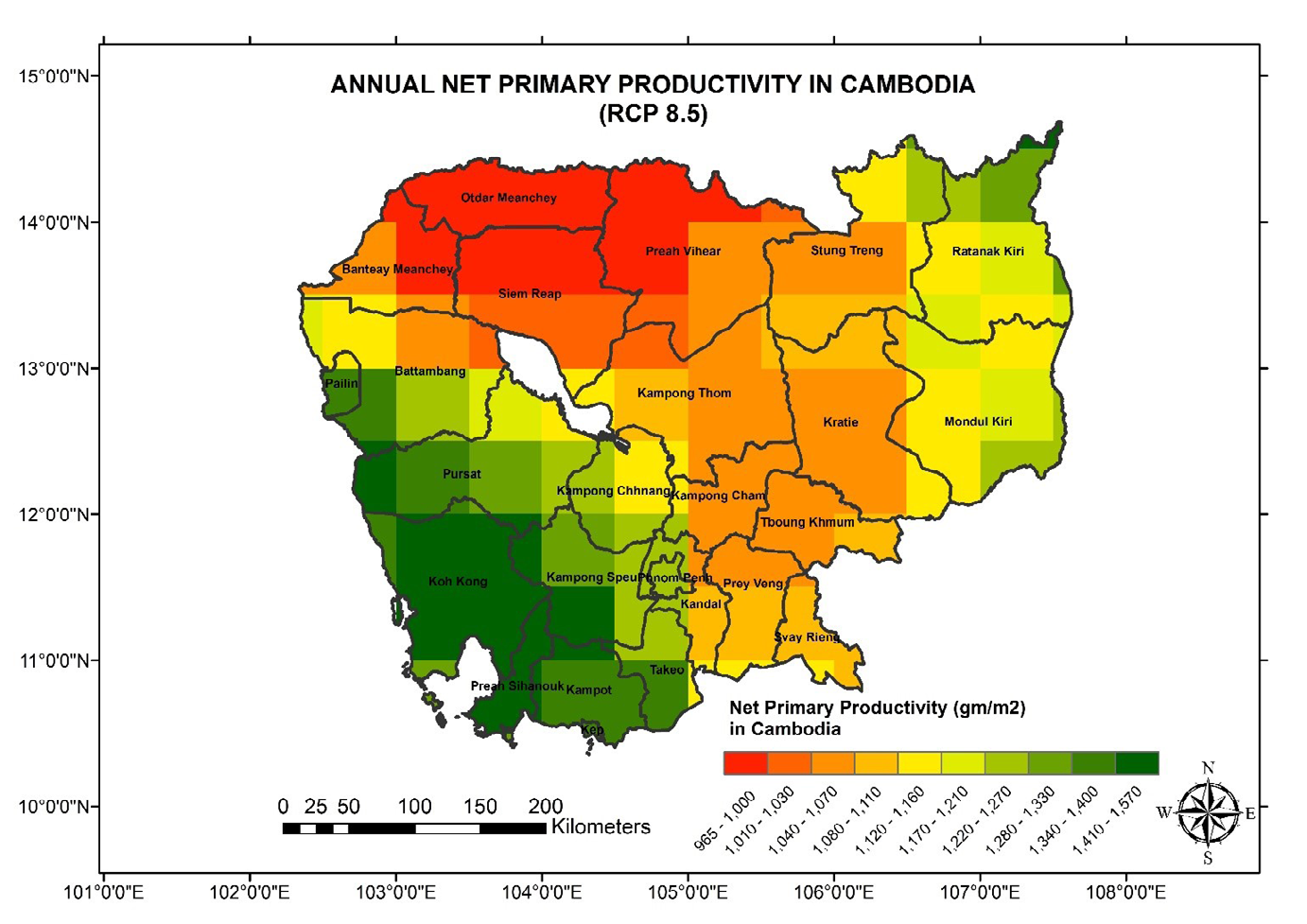
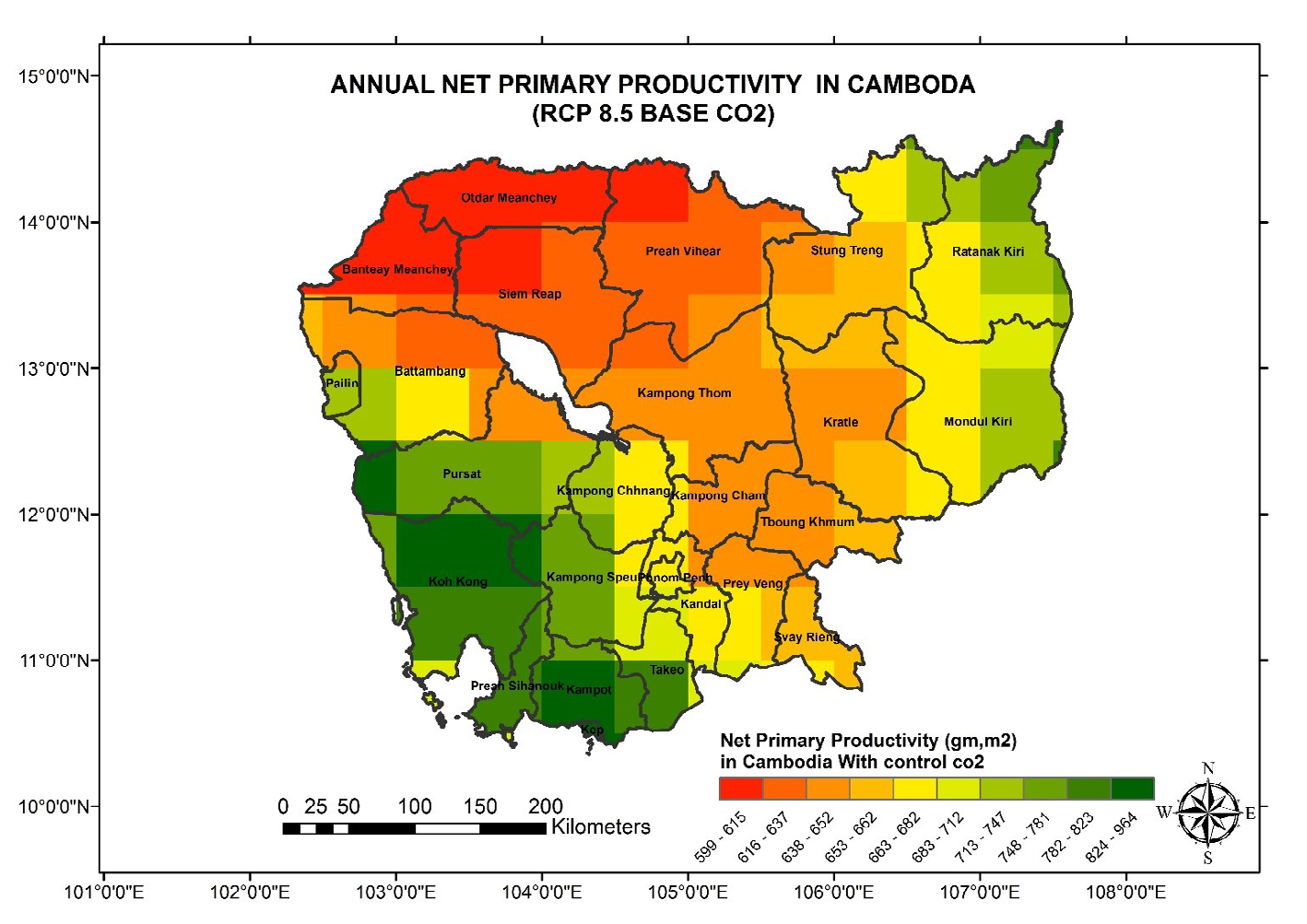
Figure 3: LPJ Simulated distribution on NPP in Cambodia (RCP 8.5 scenario) The annual net primary productivity with RCP 8.5 based on CO2 (Figure 4) are much different due to the level of global atmospheric carbon dioxide (CO2) has increased since the industrial revolutions, mostly due to human activities such as combustion of fossil fuel, deforestation and change of land use. The results indicated that NPP is ranked from 599 to 615 gm/m2 in Bantey Meanchey and Oddar Meanchey Province. Nevertheless, no matter what the situation, climate change alone or climate change resulted from CO2 increase both are not good for NPP accumulation on national scale. The relationship between annual NPP and climatic variables shows temperature rising in the dry season has significant effects on NPP increase in the mid and high latitudes of northern plain, while NPP in the semi-arid regions in the southern part is mainly limited by precipitation.
| Scenario | NPP (gm/m2) | NPP % increase |
|---|---|---|
| Baseline | 661 - 1120 | NA |
| RCP 8.5 | 965 - 1570 | 20.06 – 59.55 |
| RCP 8.5 with control CO2 | 965 – 1570 | NA |
Table 4: The table of NPP and percentage change of NPP under difference scenario.
The baseline of NPP is ranking from 661 – 1120 (gm/ m2), and RCP 8.5 with control CO2 is ranking from 965-1570 (gm/m2) have not increased in NPP, while RCP 8.5 with the NPP is ranking from 965-1570(mg/m2) has a percentage increase of NPP from about 20-60%.
Impact of climate change on vegetation carbon
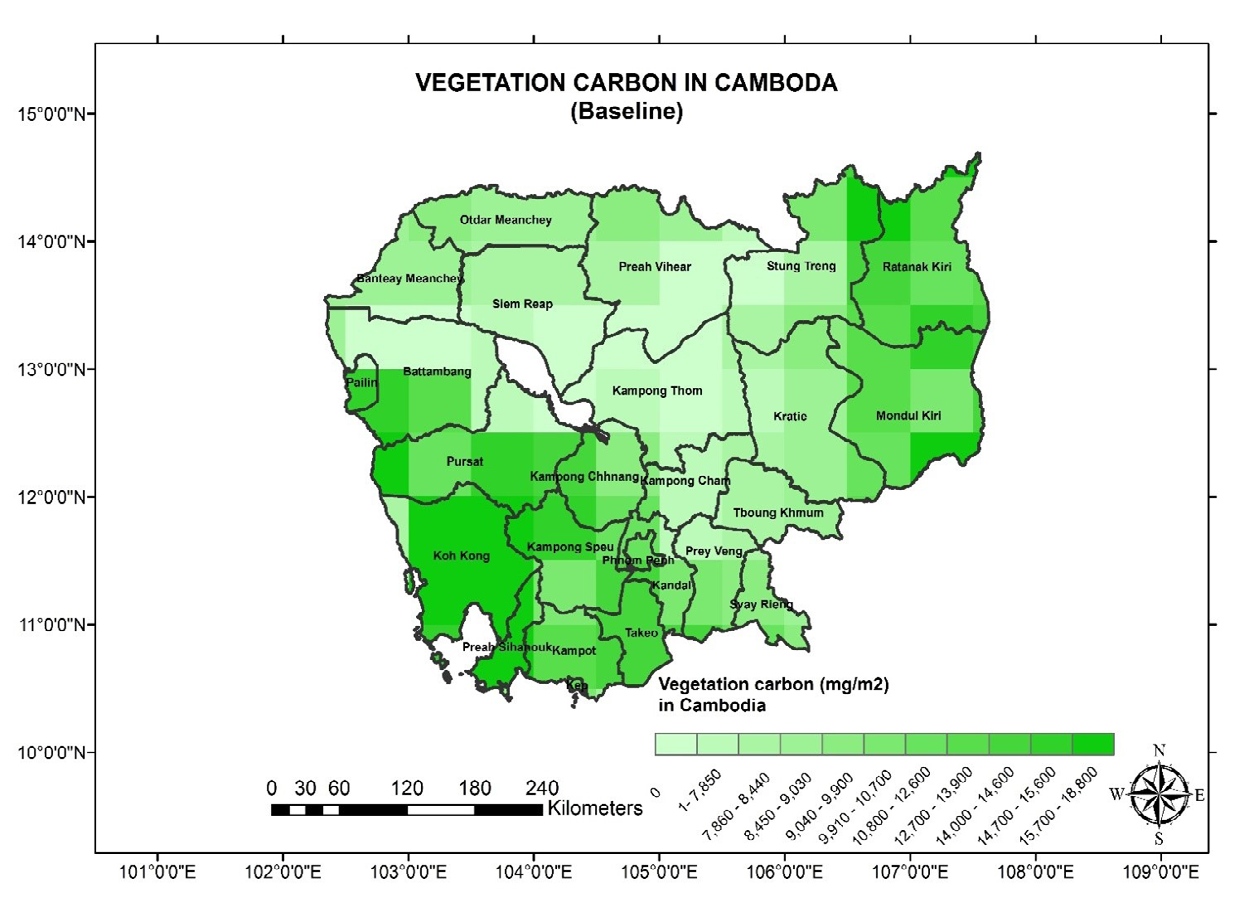
Understanding potential future vegetation changes in these regions requires methods that can resolve vegetation responses to climate change at fine spatial resolutions. Future climate change may significantly alter the distributions of many kind of vegetation in the area. The effects of climate change may be particularly large in mountainous regions where climate can vary significantly with elevation. The LPJ model, a dynamic global vegetation model, is used to assess potential future vegetation changes for vegetation area of the country. LPJ is a process-based vegetation model that mechanistically simulates the effect of changing climate and atmospheric CO2 concentrations on vegetation. Under projected future climate and atmospheric CO2 concentrations, the simulated vegetation changes result in the fine spatial-scale vegetation simulations resolve patterns of vegetation change that are not visible at coarser resolutions and these fine-scale patterns are particularly important for understanding potential future vegetation changes in topographically complex areas. The distribution on vegetation carbon (Figure 5) covered the Cardamom Mountain (Pursat, Kampong Speu, Kampong Chhnang, and Pailin), and upper plateau areas of Stung Treng and Ratana Kiri ranking from 15,700-18,800 mg/m2. Those areas are considered for deforestation.
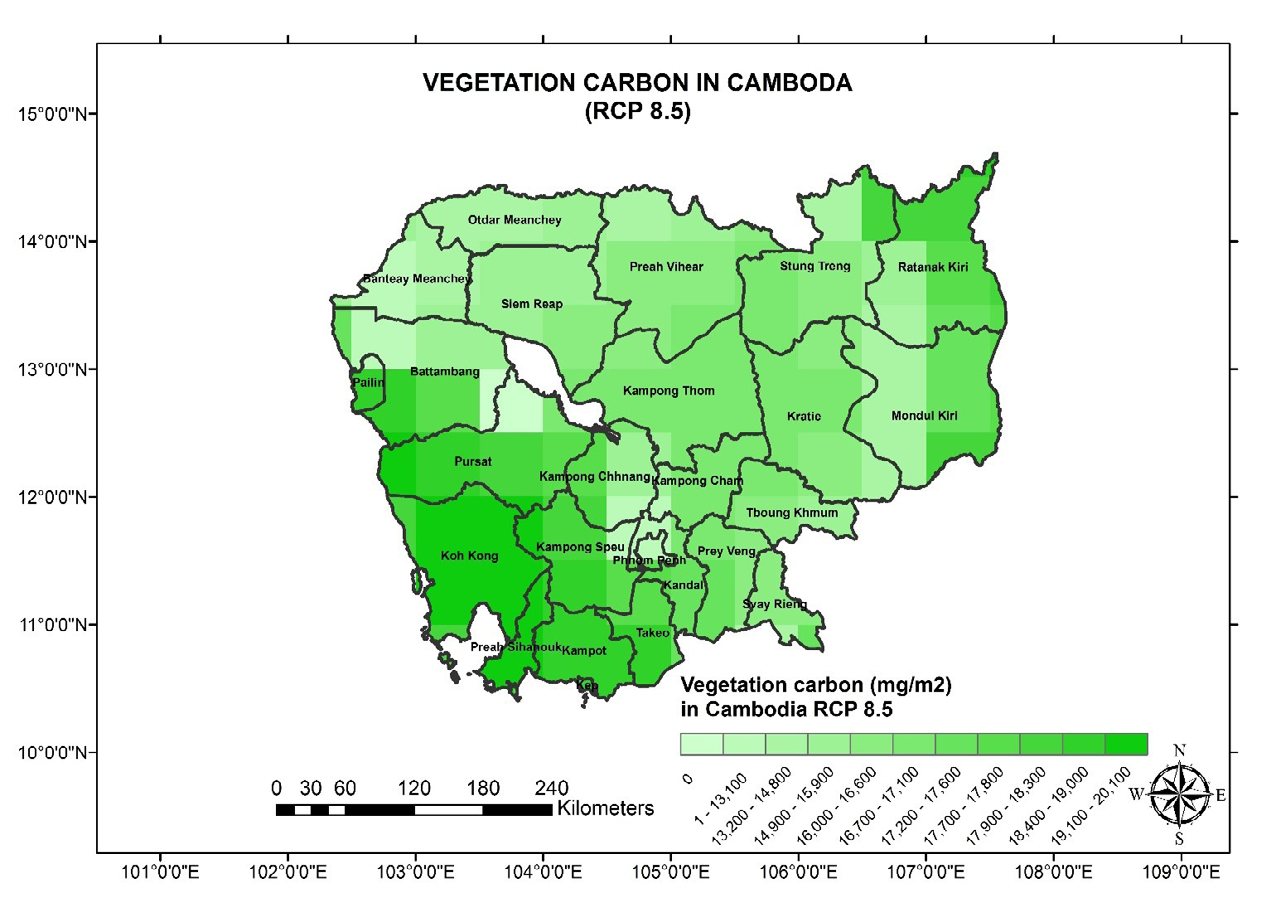
Referring to the distribution on vegetation carbon using scenario RCP 8.5, the two main areas, includes 1) The upper plateau of Rattanak Kiri and Stung Treng; 2) The coastal zone includes almost Koh Kong, Preah Sihanouk, and a small part of Kampot, and the western part of Pursat and Pailin. The areas covered vegetation ranking from 19,100-20,100 mg/m2. So the vegetation carbon is higher than baseline scenario.
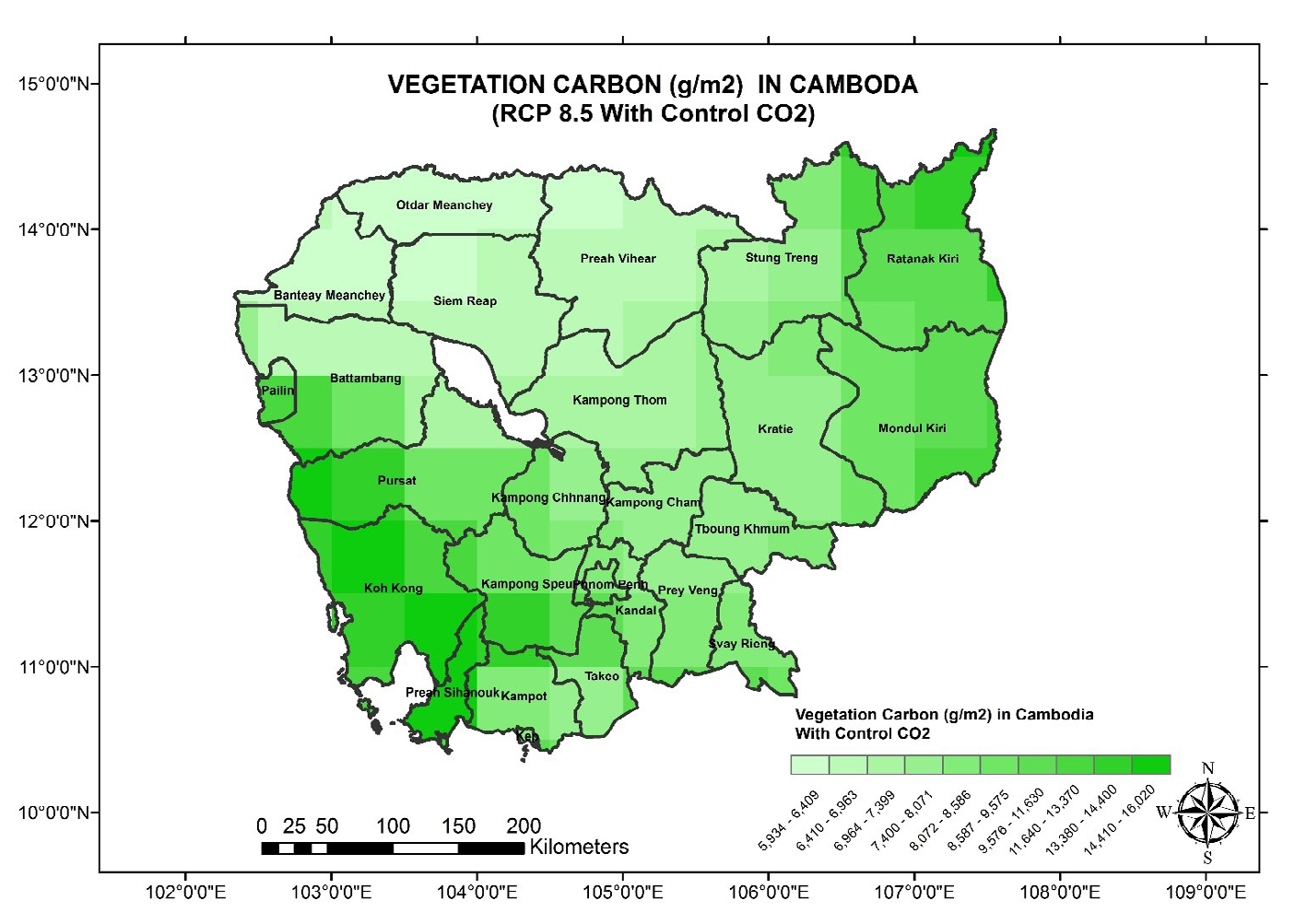
The distribution on vegetation carbon using scenario RCP 8.5 with control CO2, the two main zones are Cardamom Mountain (Kampong Speu, Pursat, Shianouk Ville, and Koh Kong) and plateau of Rattanak Kiri). The NPP is ranking from 14,410 to 16,020 gm/m2. The CO2 was stored in the areas due to having high forest density (Figure 7).
Impact of climate change on soil carbon
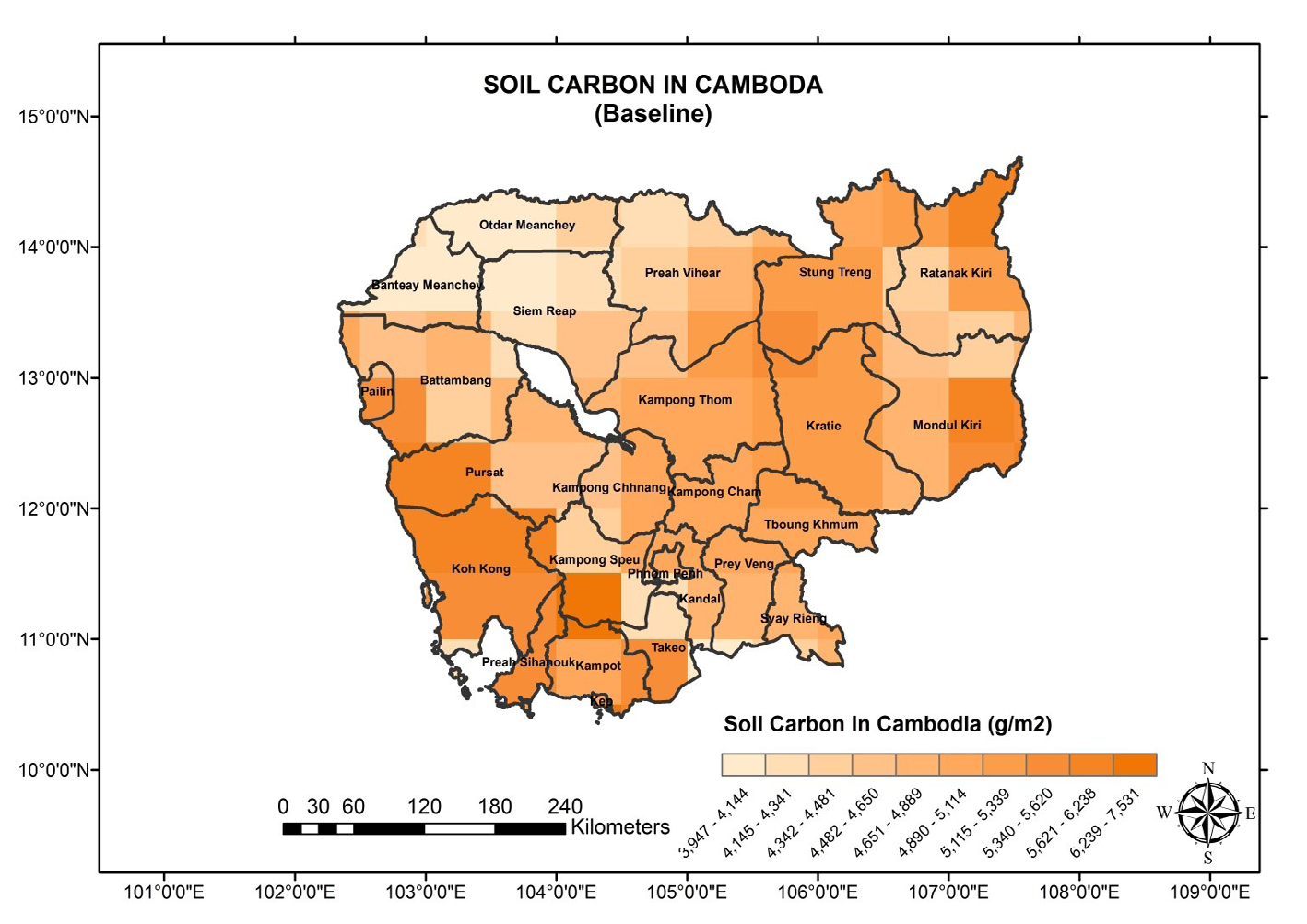
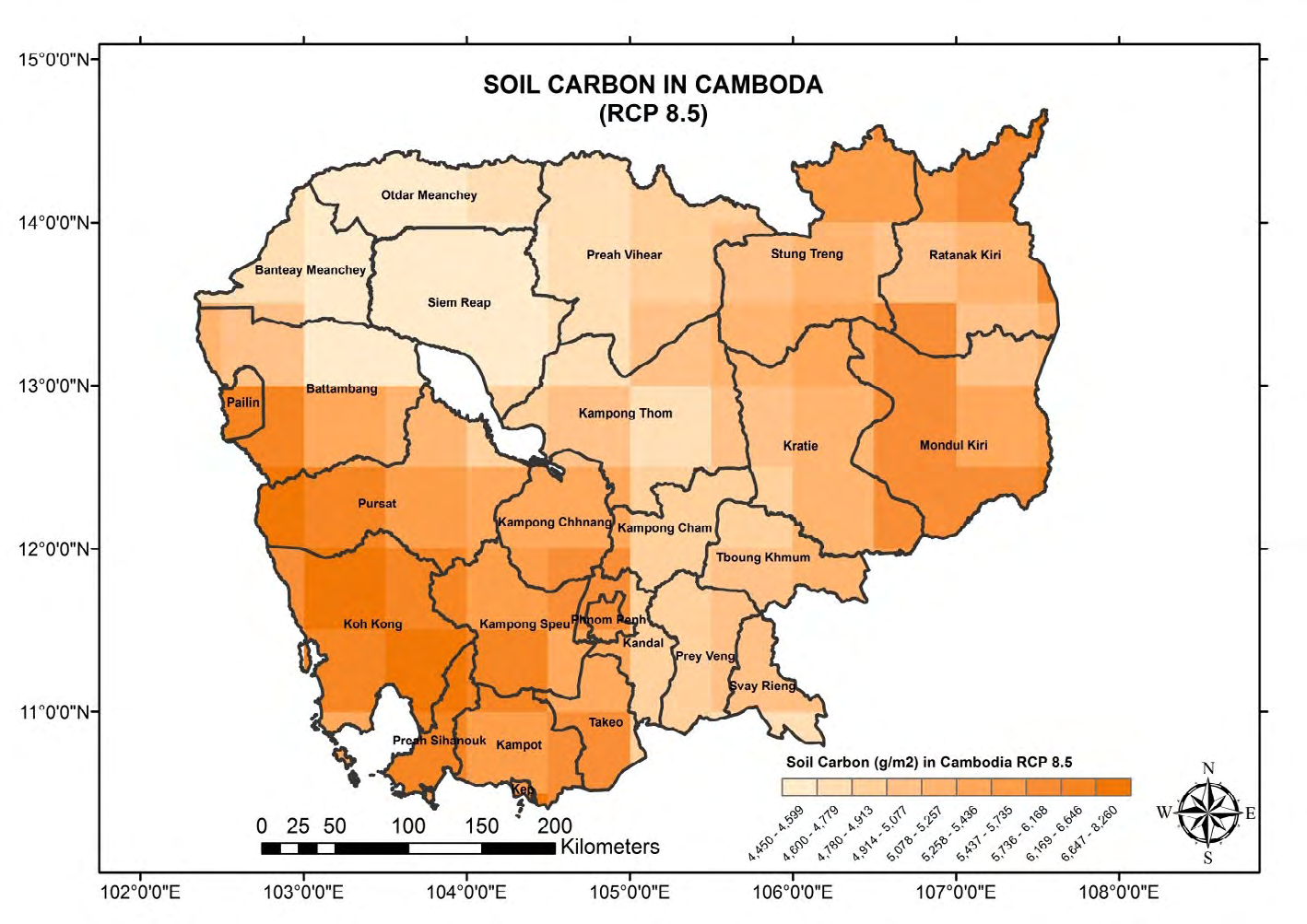
The distribution on soil carbon using the baseline scenario, the results indicated that some parts of plateau area of Ratanakiri and Mondul Kiri and Cardamom Mountain (Kampong Speu, Koh Kong, Pursat, and Pailin) are the highest, ranking from 6,239 to 7,531 g/m2 (Figure 8).
The carbon cycle is a basic part of the life on Earth. The Soil Organic Carbon (SOC) is the amount of carbon stored in the soil, which is a component of soil organic matter– plant and animal materials in the soil. The SOC is the basis of soil fertility. It releases nutrients for plant growth, biological and physical health of soil. Actually, the huge amount of soil organic carbon presents in the soil according to the soil and landscape type. To the northeast part of the country, partly in Ratanak Kiri and some part of the Cardamom Mountain in Koh Kong, Pursat and Pailin ranks from 6,647 to 8,260 g/ m2 (Figure 9). The temperature, rainfall, land management, soil nutrition and soil type all influence soil organic carbon levels.
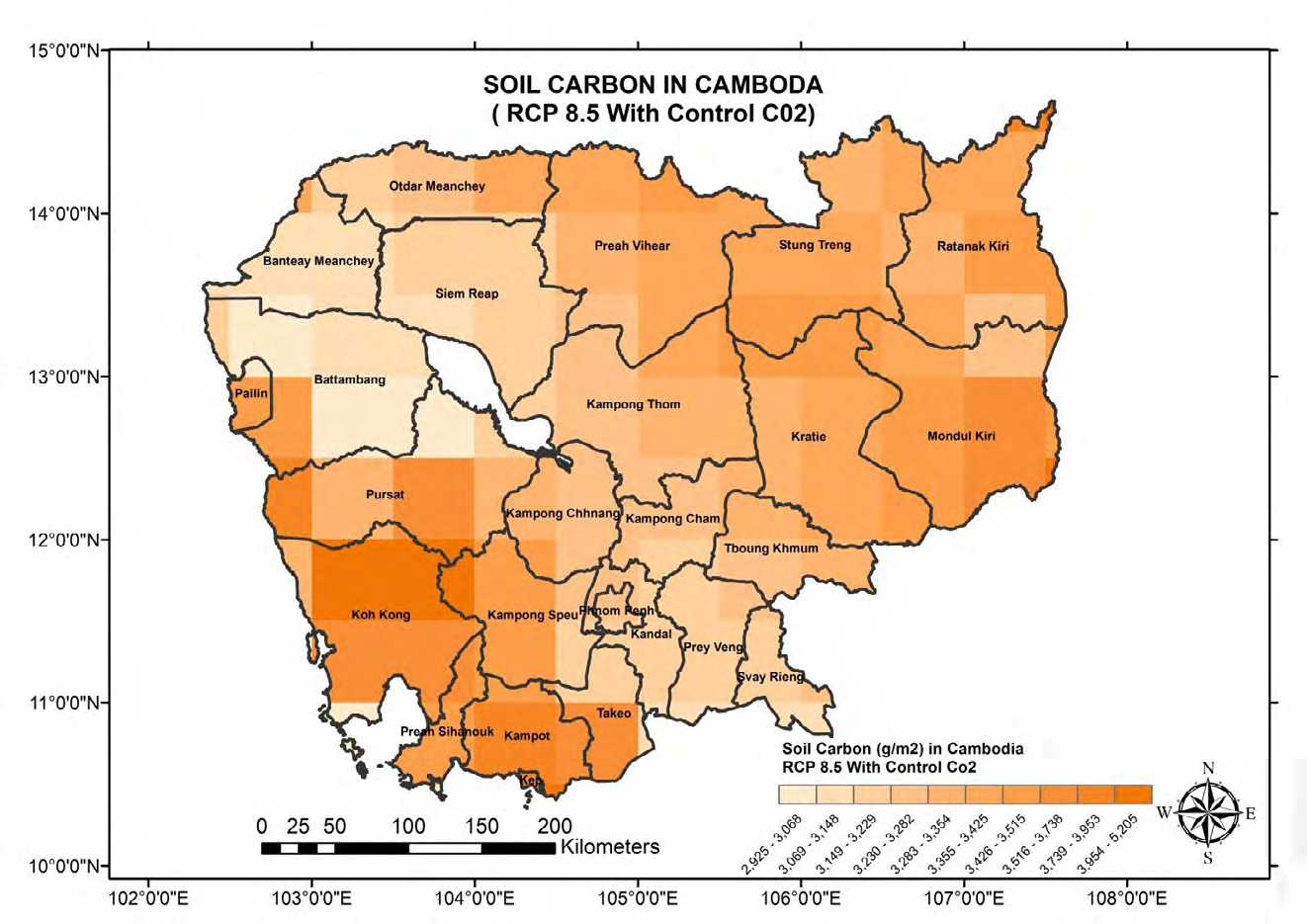
Carbon dioxide is released from the soil through soil respiration, which includes three biological processes, namely microbial respiration, root respiration and faunal respiration primarily at the soil surface or within a thin upper layer where the bulk of plant residue. Forest cover is decreased lead to the decrease CO2 stored in the carbon sink. It ranks from 3,954 to 5,205 g/m2 in Koh Kong and to the east part of Ratanak Kiri and Mondul Kiri (Figure 10).
Spatial representation of Impact of climate change on NPP, Vegetation Carbon stocks, and Soil Carbon
Impact of climate change on NPP
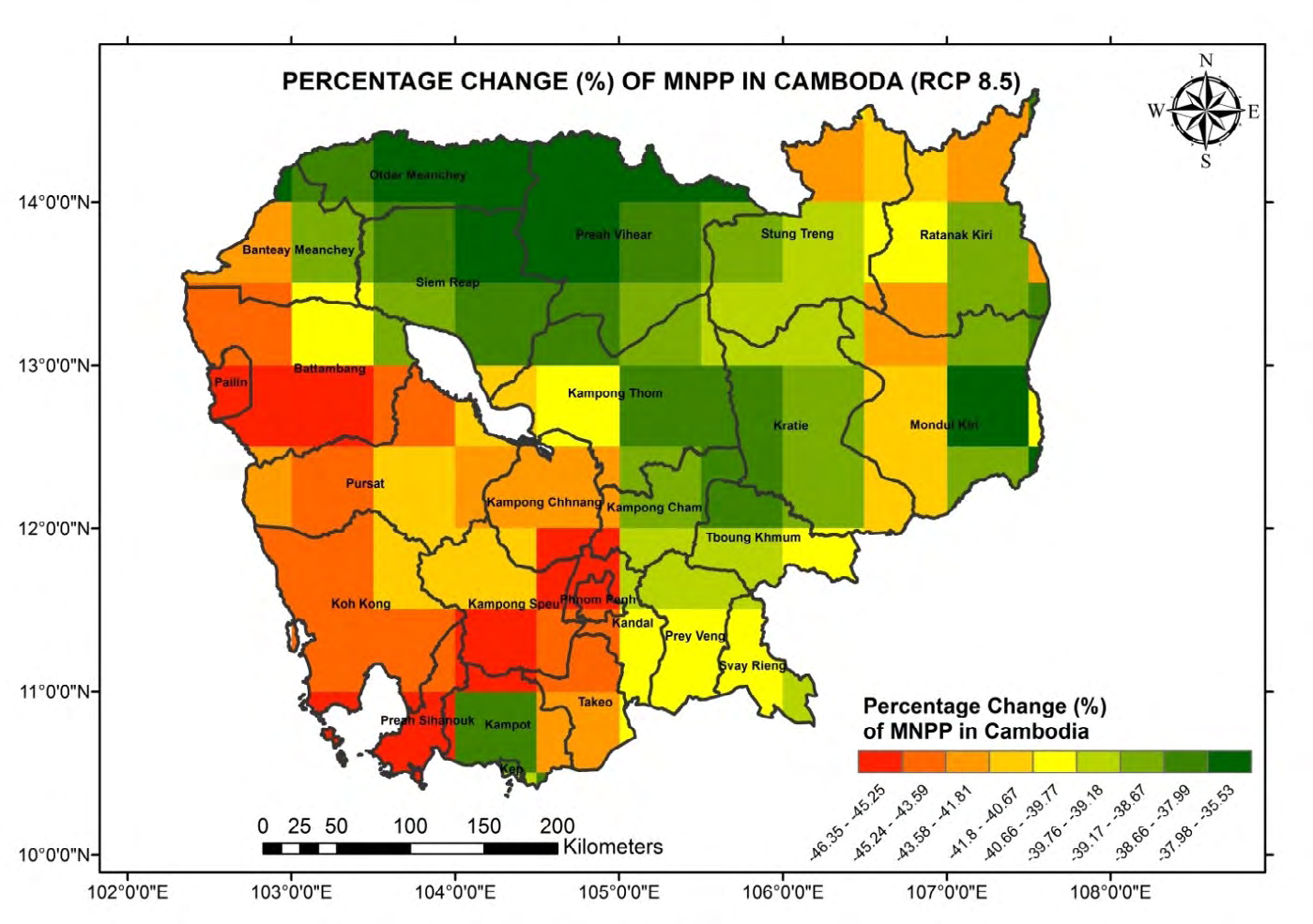
The impact of climate change will be an unprecedented and increasing global threat to life, livelihoods and life- supporting systems. However, the country suffered from the effects of global warming due to excessive emissions in other parts of the world. Like other countries in Southeast Asia, Cambodia is expected to experience higher and more intense rainfall. The effects are likely to include more severe water scarcity and more frequent floods, resulting in crop failures and food shortages. Accelerated loss of biodiversity will cause a decline in ecosystem services. Coastal communities and eco-systems are likely to be affected by rises in sea levels. Higher temperatures and humidity will create conditions for increased incidence of malaria and dengue fever. The poor and marginalized, particularly women and children, will be worst affected. The projection of NPP change (%) for whole of Cambodia under the RCP 8.5 under the two scenarios of CO2 fertilization and no- CO2 fertilization is expected to decrease from -37.98 to -35.53% (Figure 11) in the Northern Part of the country (Oddar Meanchey, Siem Reap, and Preah VIhear) and one province of coastal zone is Kampot Province, where the most forestry is still located in the protected areas.
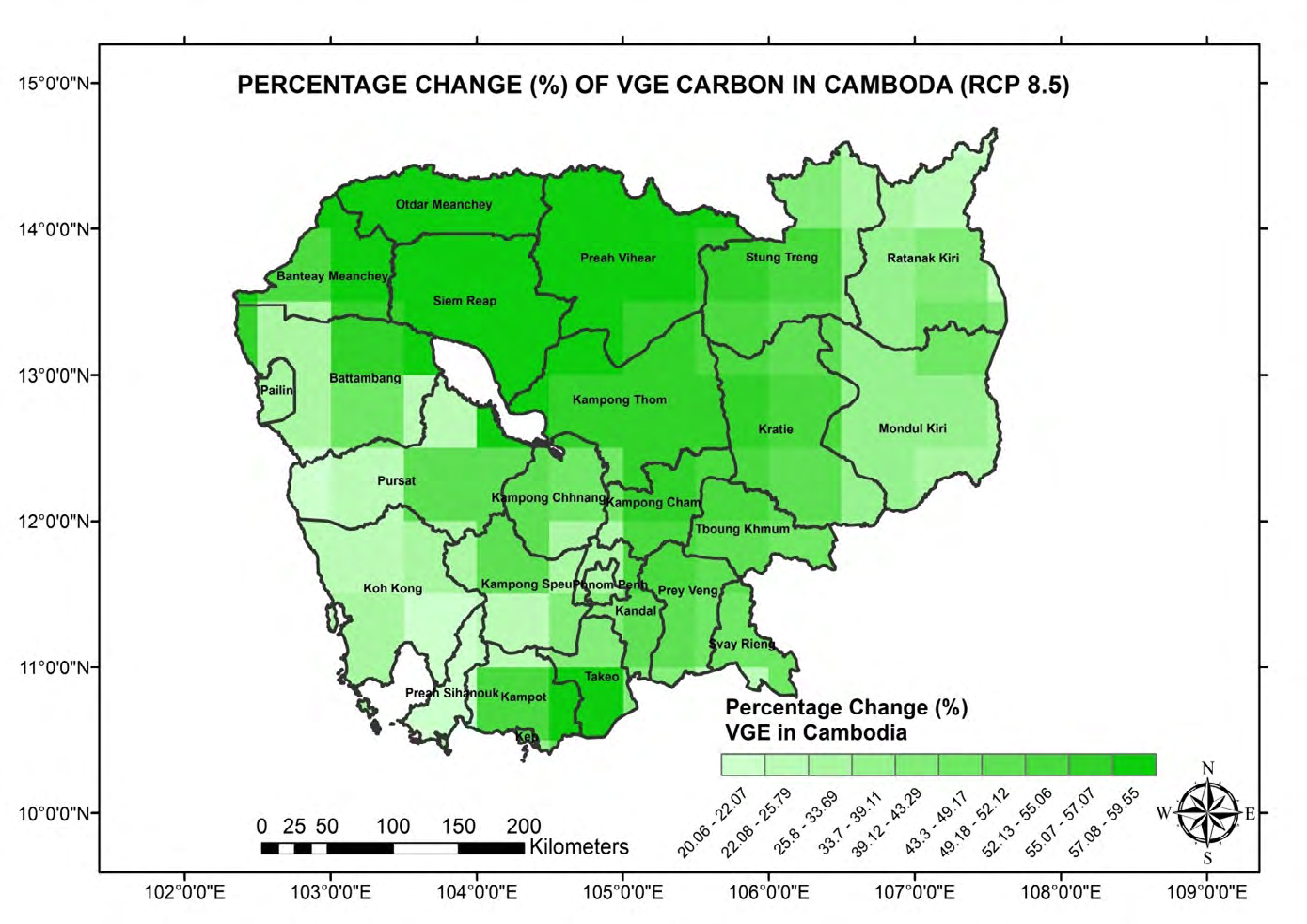
Impact of climate change on Vegetation carbon This study was to dynamically simulate the response of vegetation distribution, carbon to the historical climate and one scenario RCP 8.5 of climate change in Cambodia. The results of the simulations for the historical climate compared to independent estimates and observations. The response to increasing temperatures under the scenarios was characterized by increases in vegetation productivity, especially in the Northern Cambodia, including Preah Vihear, Siem Reap, Oddar Meanchey, and Stung Treng Province. Percentage change (%) of vegetation carbon in Cambodia is from 57.08 to 59.55% (Figure 12). The simulated response to changes in precipitation was complex, involving not only the effect of changes in soil moisture on vegetation productivity, but also changes in tree–grass competition. Summer months were warmer and persistently dry under this scenario, so the trends in under scenarios were primarily a response to changes in vegetation biomass. The results of the simulations underscore the potentially large impact of climate change on Cambodia ecosystems, and the need for further use and development of dynamic vegetation models using various ensembles of climate change scenarios.
Impact of climate change on Soil carbon Temperature has an effect on CO2 evolution from the soil. Increasing in CO2 emission with temperature is a matter of concern, as the possible global warming would increase CO2 evolution from the soil that would accelerate the depletion of soil carbon and soil fertility. The percentage change of soil carbon using RCP 8.5 is changed from 44.23 to 46.99% (Figure 13) is the highest in Phnom Penh, Preah Sihanouk, Koh Kong, and Pailin, and upper part of Ratanak Kiri. In general, the soil organic matter includes a wide variety of organic substances ranged from freshly added leaves or manure to substances in the stages of decomposition. Changes in agricultural practices resulted in changing in both the pool size and turnover rates of soil organic matter.
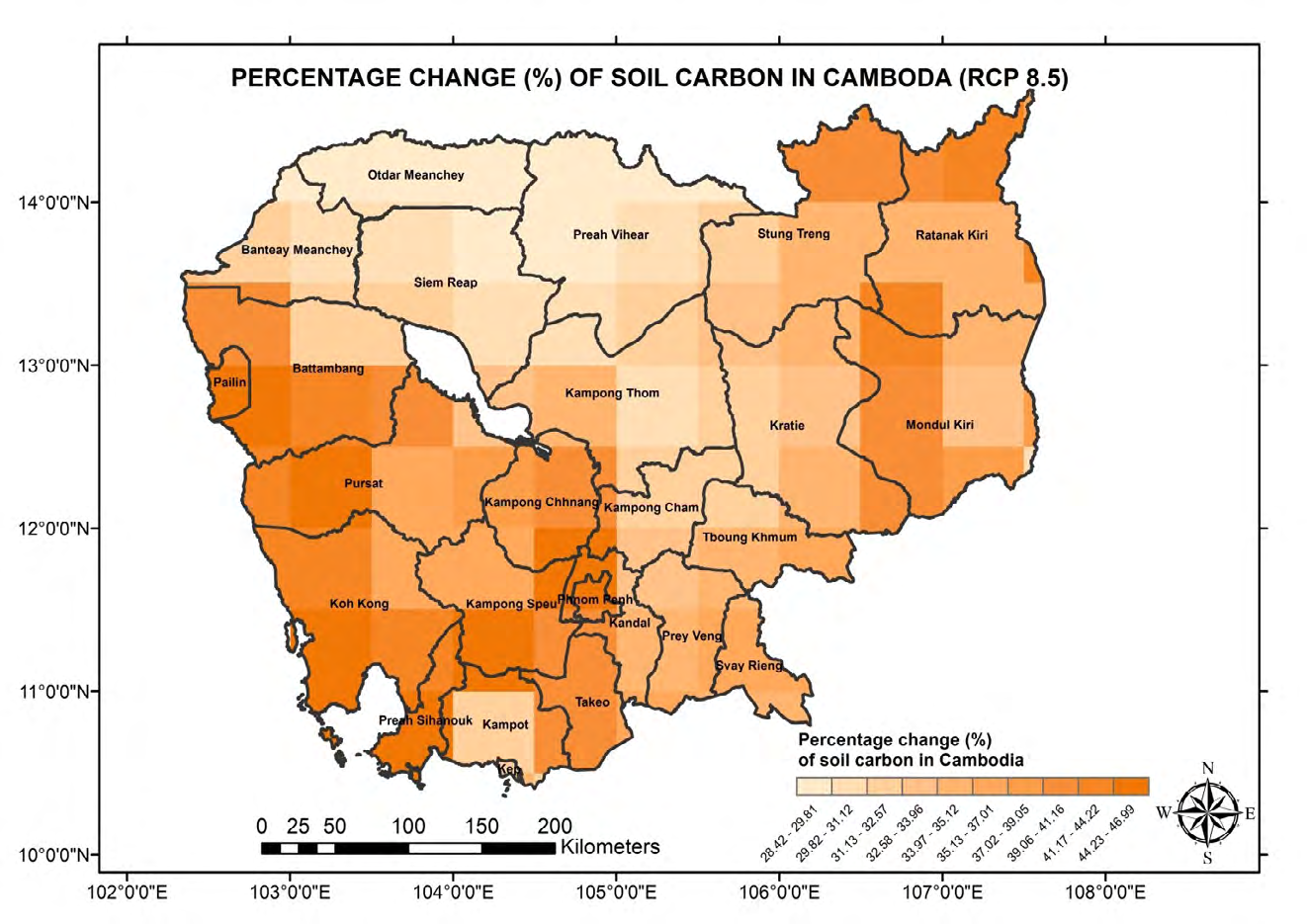
The rate of change in the soil carbon is very low due to the low impact of human activities. The future of the area will be determined in large part by the how local climatic change impact condition and by actions taken to mitigate or adapt to climate change impact.
Discussion
The Forest Law of 2002 “defines the framework for management, harvesting, use, development and conservation of the forests in the Kingdom of Cambodia. The National Forest Programme (2010) states: ‘The forests of Cambodia include evergreen, semi-evergreen, deciduous, swamp, mangrove and bamboo forest in various conditions from closed to disturbed and mosaic formations. There are also re- growth and plantation forests as well as open forest types including evergreen shrub land and dry deciduous shrub land. About 10% of Cambodia’s flora is endemic. Cover is largely dominated by moist lowland evergreen forest, semi- evergreen forest and deciduous forest. A unique seasonally inundated forest is found along the flood plains surrounding the Tonle Sap Lake. Extensive and fairly intact mangroves are found along the southern marine coast [10].
In 1965, Cambodia forest covers resources covered 73.04% of the country’s total land area. The FA, continuously assess the national forest cover resources from 1993 until 2014 [6]. The national land use/cover changes between 2010 and 2014 indicated that forest cover have decreased from 57.7% to 49.48% of the country’s total land area. It decreased around 7.59% equivalent to 1,378,625 hectares [6]. The prediction of climate change for Cambodia suggested that forests will be affected by the change in temperature, precipitation and the shifts in the seasons. The exposing forests to a longer dry period might reduce forest productivity and increase risk of fire [11, 12].
Conclusion
Impact of climate change on NPP, Vegetation carbon and Soil Carbon Impact of climate change on NPP
- By using the baseline scenario from 20.06% to 59.55%. Using RCP 8.5 and RCP 8.5 under control CO2 scenario to compare with baseline simulation, the results of simulation are not so different.
- Annual Net Primary Productivity in Cambodia using RCP 8. 5 scenarios, compared to the baseline data, it has just changed in a small amount of the NPP.
- The annual net primary productivity with RCP 8.5 based on CO2 are much different due to the level of global atmospheric carbon dioxide (CO2) has increased since the industrial revolutions, mostly due to human activities such as combustion of fossil fuel, deforestation and change of land use.
Impact of climate change on vegetation carbon
- The distribution on vegetation carbon covered the Cardamom Mountain and upper plateau areas are ranking from 15,700- 18,800 mg/m2. Those areas are considered for deforestation.
- The distribution on vegetation carbon using scenario RCP 8.5. The areas covered vegetation ranking from 19,100-20,100 mg/m2. So the vegetation carbon is higher than baseline scenario.
- The distribution on vegetation carbon using scenario RCP 8.5 with control CO2. The NPP is ranking from 14,410 to 16,020 gm/m2. The CO2 was stored in the areas due to having high forest density.
Impact of climate change on soil carbon
- The distribution on soil carbon using the baseline scenario, some parts of plateau area and Cardamom Mountain are the highest, ranking from 6,239 to 7,531 g/m2
- To the northeast part of the country, partly in Ratanak Kiri and some part of the Cardamom Mountain in Koh Kong, Pursat and Pailin ranks from 6,647 to 8,260 g/m2 (Figure 9). The temperature, rainfall, land management, soil nutrition and soil type all influence soil organic carbon levels.
- Forest cover is decreased lead to the decrease CO2 stored in the carbon sink. It ranks from 3,954 to 5,205 g/m2 in Koh Kong and to the east part of Ratanak Kiri and Mondul Kiri
Spatial representation of Impact of climate change on NPP, Vegetation Carbon stocks, and Soil Carbon
- The projection of NPP change (%) for whole of Cambodia under the RCP 8.5 under the two scenarios of CO2 fertilization and no-CO2 fertilization is expected to decrease from -
- 37.98 To -35.53% in the Northern Part of the country (Oddar Meanchey, Siem Reap, and Preah VIhear) and one province of coastal zone is Kampot Province, where the most forestry is still located in the protected areas.
- The response to increasing temperatures under the scenarios was characterized by increases in vegetation productivity, especially in the Northern Cambodia, including Preah Vihear, Siem Reap, Oddar Meanchey, and Stung Treng Province. Percentage change (%) of vegetation carbon in Cambodia is from 57.08 to 59.55%.
- The percentage change of soil carbon using RCP 8.5 is changed from 44.23 to 46.99 % is the highest in Phnom Penh, Preah Sihanouk, Koh Kong, and Pailin, and upper part of Ratanak Kiri. The rate of change in the soil carbon is very low due to the low impact of human activities.
References
-
Maningo EV (2014) Study on the Policy and Legislative Framework for Forest Restoration_._ Phnom Penh: Institute of Forest and Wildlife Research and Development/ Forestry Administration.
-
Open Development Cambodia (ODC) (2016) Forests and forestry. Retrieved from Open Development Cambodia.
-
MoE MEF, UNDP (2011) Climate Change and Forestry_._ Phnom Penh: MoE.
-
Ros B, Nang P, Chhim C (2011) Agricultural Development and Climate Change: The case of Cambodia.
-
Phnom Penh: CDRI.
-
FA (2016) Forest Conver 2014. Phnom Penh: Forestry Administration.
-
Ministry of Environment (2016) A Second Study on Understanding of Public Perception of Climate Change in Cambodia: Knowledge, Attitude and Practices. Phnom Penh: MoE.
-
GSSD/MoE (2020) First Binniel Updated Repport to the United Nations Framework Convention on Climate Change. Phnom Penh: The General Secretariat, the National Council for Sustainable Development/Ministry of Environment.
-
Sitch S, Prentice IC, Smith B (2011) LPJ- A Coupled Model of Vegetation Dynamics and the Terrestrial Carbon. 1-41.
-
Johnsen S, Munford G (2012) EU Country Environmental Profile: Cambodia 2012. Phnom Penh: Euronet Consortium.
-
GSSD (2015) Cambodia’s Second National Communication under the UNFCCC. Phnom Penh: General Secretariatl, National Council for Sustainable Development/Ministry of Environment.
-
RGC (2015) Cambodia’s Intended Nationally Determined Contribution. Phnom Penh: Department of Climate Change/Ministry of Environment.
- Lessons to Learn: Trees are More than the Lungs of the World
- Community Forestry Enterprises as a Model for Sustainable Forest Development: The Case Of The "Baja Tarahumara" in Chihuahua, Mexico
- Ecological and Socio-Economic Impacts of Chromolaena odorata and Mesosphaerum suaveolens, Two Invasive Alien Species in Central and Southern Benin, West Africa
- Epigenetic Sustainability: Modeling the Human Factor as a Natural Resource through Science 4.0 and the NR3C1 Biological Pilot
- Growth-at-Risk: A Framework for Assessing Economic Vulnerability
- The Rural Territory as a Socioecological System for the Management of Public Policy for Sustainable Rural Development