
Assessment and Inventory of Capas National Shrine Forest Reservation Located at Camp O'donnell, Capas, Tarlac
The study was conducted from January to March 2021 at Capas National Shrine, Camp O'Donnell Capas, Tarlac, to identify the quantity, measure the extent, condition and select possible good mother trees from the ten percent (10%) intensity of trees of the thirty-five (35) hectares mini forest. The sampling area was 3.5 hectares, and it was divided into seven plots measuring 100mx50m or 0.5 hectares. The study area has 163 estimated trees per plot and 326 estimated trees per hectare. All the poles and standard trees within the sampling area were evaluated. Trees with a diameter at breast height of 30cm to 76cm and a total height of 15 meters above were considered good mother trees. The mean height and diameter at breast height of the mother trees were 16.69 meters and 33.64 cm. Phenotypic characteristics were assessed, including the tree height, tree diameter, stem straightness, stem forking, stem circularity, and tree health as indicated in the Selection Criteria of the Disposition or the DENR Administrative Order No. 2010-11. Out of 1142 trees characterized by mahogany, narra, and eucalyptus, only 55 mother trees of mahogany and one mother tree of eucalyptus were able to pass the DENR Administrative Order 2010-11. Unfortunately, narra trees did not pass the criteria to be considered mother trees. The identified good mother trees of mahogany were dominant in plots number 3 and 6.
Introduction
Forest inventory serves as a vital tool in forest management; it provides the data for planning, monitoring, growth and yield evaluation, research, and timber sale. It is an attempt to describe the quantity, quality, and stocking density (diameter distribution) of forest trees and many characteristics of land upon which trees are growing towards the efficient and sustainable management of the forest ecosystem [1].
It may be compared to census methods of the human population. Similarly, timber inventories seek to enumerate the population of trees within a forest and ascertain other information, such as – species composition, timber volume, value, and growth. Complete enumeration is carried out only in exceptional cases where very high-value timber species are present in the smallest tracts of land. A complete enumeration of individual trees is usually infeasible, and survey sampling techniques are required (“Inventories and APA,” n.d.).
The site of the Concentration Camp (Camp O’Donnell) where the survivors of the infamous Death March during the Second World War were incarcerated, proclaimed as “Capas National Shrine” by President Corazon Aquino on 7 December 1991. One of the shrine features is the mini-forest, where 31,000 trees were planted to symbolize the 6,000 Americans and 25,000 Filipinos who died in the concentration camp. It is also meant to evoke environmental consciousness among the people. Approximately 35 hectares of land have been utilized for the reforestation of the shrine [2]. Therefore, this study intends to identify, measure the extent, quantity, composition, and condition of the ten percent (10%) random intensity and select potential mother trees of Capas National Shrine forest resources.
Statement of the Problem
The study’s general objective is to assess and inventory the trees planted at Capas National Shrine Forest Reservation using a ten percent (10%) random sampling technique.
Specifically, the study aims to:
- Identify the ten percent (10%) random sampling intensity of the mini forest 35 hectares parkland of Capas National Shrine.
- Stem growth assessment; total height, diameter at breast height
- Stem form assessment; stem straightness, stem branching, stem circularity
- Health assessment
- Select potential mother trees.
- Geotagging and mapping.
Significance of the Study
Timber inventory fieldwork is very expensive; thus, it is commonly well worth the effort regardless of the push to invest energy guaranteeing that the inventory plan is as effective as could reasonably be expected, thus increasing the greatest exactness at a bit of expense. Sampling is a process wherein inventory is completed uniquely in an agent bit of the entirety.
The results of this proposed study are beneficial to estimate the intensity of trees in the area and determine the total availability of the potential mother trees before providing a source of planting material that may be used in future afforestation and reforestation programs, as well as promoting the maintenance of Capas National Shrine forest resources for its historical value.
Time and Place of the Study
The study was conducted at Capas National Shrine from January to March 2021 and located at Camp O’Donnell, Capas, Tarlac.
Materials and Methods/Methodology
Locale of the Study
The study was conducted in the ten percent (10%) area of the 35 hectares Capas National Shrine Forest Reservation located at Camp O’Donnell Capas, Tarlac. The shrine covers 54 hectares of parkland, 35 hectares planted with 31,000 trees with different tree species.
Sample and Sampling Procedure
The research method used in this study was the Descriptive method. Systematic random sampling was used as a technique. The study area has 35 hectares, and ten (10%) of them were to assessed and inventoried. To identify the intensity of the trees within the area, the 3.5 hectares area was divided into seven (7) plots measuring 100 meters by 50 meters using a meter tape. They were marking poles embedded in each plot’s four (4) corners, which serves as a guide for the boundary location where the 3.5 hectares were quantified. The population of trees within the ten percent (10%) area was considered and analyzed.
Sampling size
The seven (7) plots established within the study area were represented with the sampling size below.
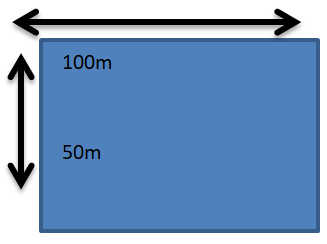
100m x 50m = 5000 meter square (1 plot) 7 plots X 5000m2 = 35,000m2 35ha site X 10% = 3.5 ha 3.5ha = 35,000m2
Subjects/Respondents of the Study
All forest trees categorize as a pole, and standard trees present in the ten percent (10%) area were assessed and inventoried. Total height and diameter at breast height were measured. The selection of good mother trees as phenotypic traits was limited to the straightness of the stem, stem forking, stem circularity, and health. They were measured on the basis of the DENR Administrative Order (DAO) 2010-11 guidelines and requirements.
Data Collection
Diameter Measurement: The Diameter at Breast Height (DBH) or Diameter Above Buttress (DAB) was measured and recorded to the nearest centimeter. The DBH is the average Stem Straightness stem diameter outside bark at a point 1.3 meters above the ground as measured from the uphill side of the stem, while DAB is measured at 0.30 meters above the highest flange/ buttress. The use of Diameter Tape determined DBH. To avoid overestimation of the volume and compensate for measurement error, DBH was adjusted in a decreasing sense (e.g., 24.5cm is recorded as 24cm DBH).
Tree Height Measurement: Total Height was measured using a calibrated Biltmore stick 25 meters away from the tree.
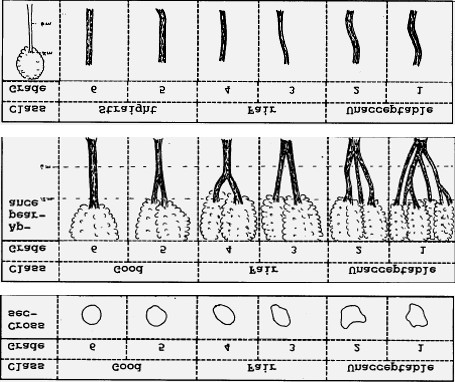
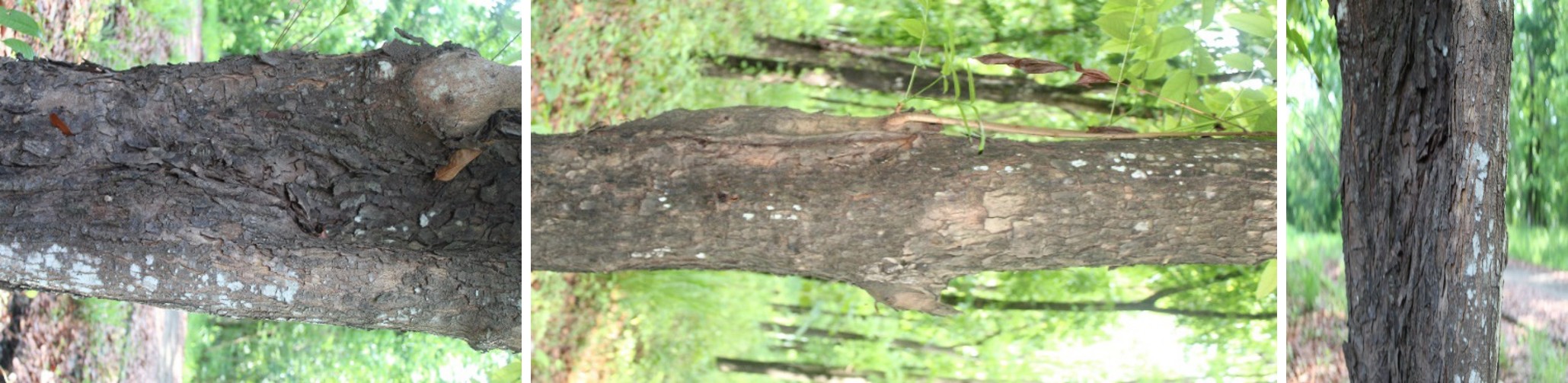
In terms of straightness, a grade of “unacceptable” (1 and 2) was given when the stem has two pronounced bends within its merchantable height, “fair” (3 to 4) was accorded Forking/Stem Branching with one bend, and a stem is regarded as “straight” (5 to 6) when there is almost a slight bend [3].
In terms of forking, three or more stems emanating below the 3 m length from the stem base was considered “unacceptable” (1-2). Two stems occurring below the 6 Stem Circularity m length were considered “fair” (3-4), and a small fork occurring at 12 m stem length was considered “good” (5-6) [3].
A grade of 6 was given if the stem is round, 5 if it is not perfectly round, 4-3 if it is oblong shape, and 2-1 if no shape [4].
The circularity was assessed at diameter at breast height; a wire was used as a guide to assess the circularity’s shape.
Tree Health

A grade of “unacceptable” (1-2) was given if the damage is severe, having 50-80% damage, “fair” (3-4) was given if there is medium damage having 30-40 %, and a grade of “good” (5- 6) if there is a slight and the symptoms are scattered having only 10-20 % damage.
Tree marking
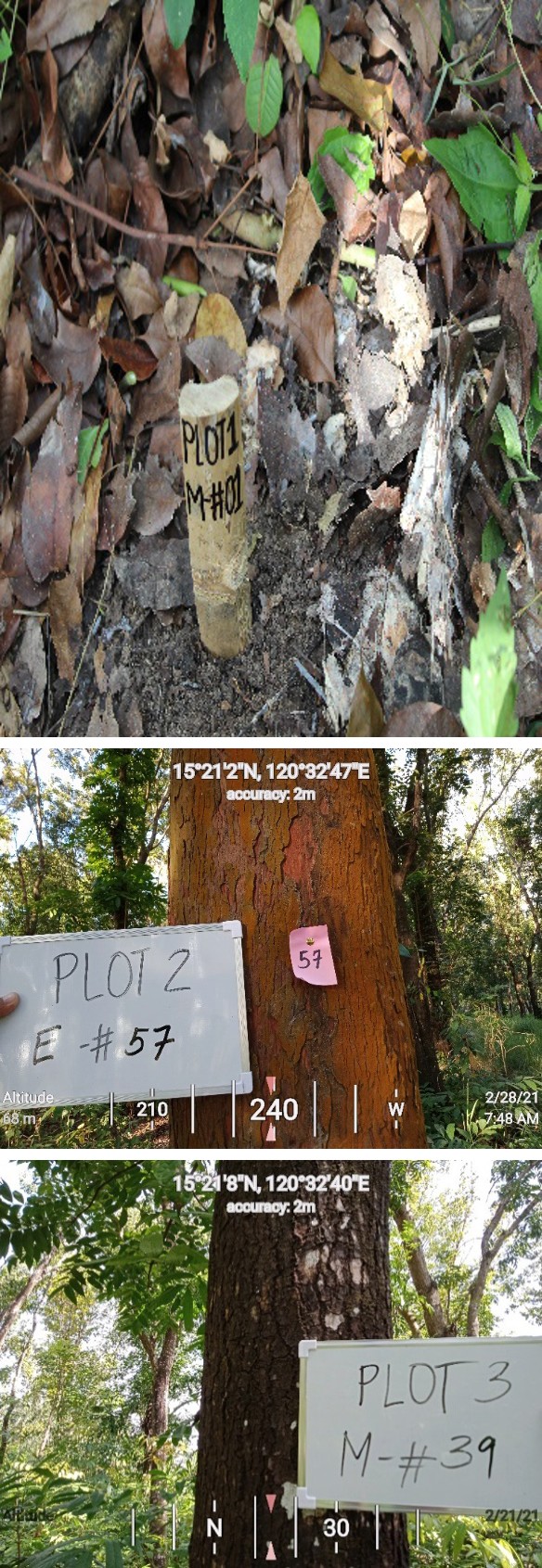
All the forest trees assessed and inventoried were marked with a stick of bamboo with a written modified code. The code was labeled according to plot number, species initial, and species number.
| Plot Number | Species Initial | Number |
| Plot 1 | (N) Narra | 1 |
PLOT1-N-#01
Geotagging and Mapping
The location of the good mother trees was taken using the GPS app, and the coordinates were recorded for mapping.
Statistical Treatment of Data
The data gathered was tabulated and assessed based on the criteria as good mother trees. Percentages, frequency counts, and mean values were computed. The ratings for every parameter will be added and an overall score for every tree were determined by computing the mean score of the individual tree. A scale of 1 to 6 was used to describe the overall rating with 1 and 2 as unacceptable. Then, 3 and 4 for fair; 5 and 6 as good (DAO 2010-11) [5]. Trees having a mean score of 5-6 were considered as good mother trees. The data gathered determined the intensity or number of trees present in the ten (10%) of the 35 hectares Capas National Shrine.
Results and Discussion
Total Number of Trees and Species Measured Per Plot
An inventory of trees and planting spaces is a prerequisite in planning for and making sound management decisions, including budget strategies and priorities [6]. This study aims to identify, measure the extent, quantity, composition, and condition of the ten percent (10%) by a random sampling intensity assessment, inventory, and selecting potential mother trees of Capas National Shrine mini forest.
Table 1 indicates the total number of trees obtained from the ten percent (10%) area or 3.5 hectares of the thirty- five (35) hectares Capas National Shrine. The 3.5 hectares sampling area was divided into seven plots measured 100mx50m or 0.5 hectares. All seven plots accumulated a total of 1,142 trees, and each tree was assessed. The trees are composed of (3) families and are characterized by three (3) species.
| Plot number | Species | Frequency | Percentage (%) |
|---|---|---|---|
| 1 | Mahogany | 188 | 100.00% |
| 2 | Eucalyptus | 3 | 1.60% |
| Mahogany | 165 | 90.70% | |
| Narra | 14 | 7.70% | |
| 3 | Mahogany | 175 | 100.00% |
| 4 | Mahogany | 179 | 96.20% |
| Narra | 7 | 3.80% | |
| 5 | Mahogany | 167 | 100.00% |
| 6 | Mahogany | 159 | 100.00% |
| 7 | Mahogany | 8 | 9.40% |
| Narra | 77 | 90.60% | |
| Total | 1,142 |
Table 2: Total number of tree species measured per plot.
They were mahogany (Swietenia macrophylla King_), narra (Pterocarpus indicus) and eucalyptus (Eucalyptus_ globulus). Among the species, plot 1 attained 188 (100%) mahogany; plot 2 attained 3 (1.6%) eucalyptus, 165 (90.7%) mahogany and 14 (7.7%) narra; plot 3 attained 175 (100%) mahogany; plot 4 obtained 179 (96.2%) mahogany and 7 (3.8%) narra; plot 5 accumulated 167 (100%) mahogany; plot 6 accumulated 159 (100%) mahogany and plot 7 attained 8 (9.4%) mahogany and 77 (90.6%) narra respectively.
Stem Growth Assessment
Diameter at Breast Height: Trees with a diameter at breast height of 30cm to 76cm were considered potential good mother trees. This is because it is the DBH range of trees for standard trees; it was assumed that the trees are in the mature stage at this range. Diameter at Breast Height of Mahogany: Table 2 indicates the diameter at breast height of mahogany trees. The mean diameter at breast height (DBH) of mahogany trees was 29.04 with a minimum and maximum DBH of 10cm and 58cm, respectively. DBH slightly varies, as indicated by the 6.4cm standard deviation. Most of the trees measured were within the DBH of 10cm to 29cm.
| Diameter (cm) | Frequency (f) | Percentage (%) |
|---|---|---|
| Pole (10-29) | 572 | 54.95 |
| Standard (30-76) | 469 | 45.05 |
| Total | 1041 | 100 |
| Mean: 29.04 | ||
| Standard Deviation: 6.4 |
Table 4: Diameter at Breast Height of Mahogany trees.
Diameter at Breast Height of Narra: Table 3 indicates the diameter at breast height of narra trees. The mean diameter at breast height (DBH) of the narra trees was 17.64 with a minimum and maximum DBH of 10cm to 38cm, respectively. DBH slightly varies, as indicated by the 6.35cm standard deviation. Most of the trees measured were within the DBH of 10cm to 29cm.
| Diameter (cm) | Frequency (f) | Percentage (%) |
|---|---|---|
| Pole (10-29) | 93 | 94.9 |
| Standard (30-76) | 5 | 5.1 |
| Total | 98 | 100 |
| Mean: 17.67 | ||
| Standard Deviation: 6.35 | ||
| Range (m) | Frequency (f) | Percentage (%) |
| 05-Sep | 0 | 0 |
| Oct-14 | 1 | 33.33 |
| 15-19 | 2 | 66.66 |
| 20-24 | 0 | 0 |
| Total | 3 | 100 |
| Mean: 14.33 | ||
| Standard Deviation: 2.08 |
Table 5: Diameter at Breast Height of Narra trees.
Diameter at Breast Height of Eucalyptus: Table 4 indicates the diameter at breast height of eucalyptus trees. The mean diameter at breast height (DBH) of eucalyptus trees was 33.67, with a minimum and maximum DBH of 27cm to 38cm, respectively. DBH slightly varies, as indicated by the 5.86cm standard deviation. Most of the trees measured were within the DBH of 30cm to 76cm.
| Diameter (cm) | Frequency (f) | Percentage (%) |
|---|---|---|
| Pole (10-29) | 1 | 33.33 |
| Standard (30-76) | 2 | 66.66 |
| Total | 3 | 100 |
| Mean: 33.67 | ||
| Standard Deviation: 5.86 |
Table 3: Diameter at Breast Height of Eucalyptus trees.
Pole
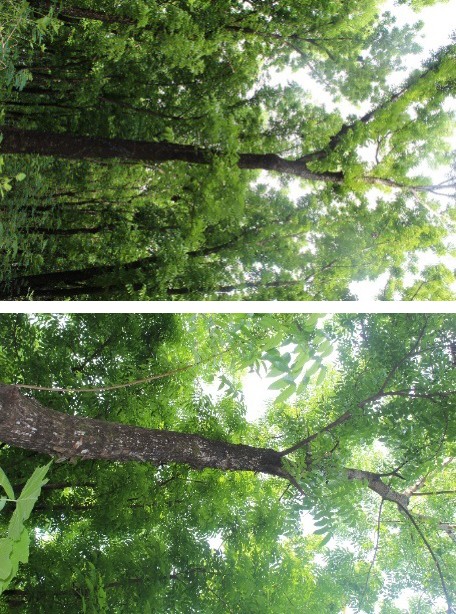
Standard Figure 1. Diameter classes of Mahogany.
Total height
The growth of a good mother tree or the tree is more vigorous than the surrounding comparison tree of the same species; selected trees should be dominants or co-dominants, having a height of more than 15m [7]. Total height of mahogany: Mahogany (Swietenia macrophylla King) is one of the most valuable furniture timbers globally due to the decorative and attractive timber with good technical characteristics. It is widely planted in the tropics in reforestation and afforestation programs. In agroforestry systems, it is used for shade and fuelwood. Usually an evergreen tree, up to 30-35 m. Leaves up to 35- 50 cm long, alternate, glabrous, paripinnate; 4-6 pairs of leaflets, each leaflet 9-18 cm long. Flowers are small and white in large, 10-20 cm long, branching panicles [8].
Table 5 indicates the total height of mahogany trees. Out of 1041 mahogany, 66 or 6.34% obtained a height ranging from 20m to 24m. Some 539 or 51.78% obtained a height from 15m to 19m. Other 433 or 41.59% were measured 10m to 14m, and 3 or 0.29% were measured 5m to 9m. The mean height of mahogany trees was 14.97 meters with a minimum and maximum height of 5m and 24m, respectively. Height is relatively similar, with a standard deviation of 2.70. In summary, a total of 605 mahogany trees are potential good mother trees.
| Range (m) | Frequency (f) | Percentage (%) |
|---|---|---|
| 05-Sep | 3 | 0.29 |
| Oct-14 | 433 | 41.59 |
| 15-19 | 539 | 51.78 |
| 20-24 | 66 | 6.34 |
| Total | 1041 | 100 |
| Mean: 14.97 | ||
| Standard Deviation: 2.70 |
Table 6: Total height of Mahogany trees.
Total Height of Narra: Table 6 indicates the total height of narra trees. Out of 98 narra, 3 or 3.06% obtained a height ranging from 15m to 19m; 86 or 87.76% obtained a height from 10m to 14m; 9 or 9.18% were measured 5m to 9m. The mean height of narra trees was 11.17 meters with a minimum and maximum height of 5m and 19m, respectively. Height is relatively similar, with a standard deviation of 1.81. Conclusively, a total of 3 narra trees are possible good mother trees.
| Range (m) | Frequency (f) | Percentage (%) |
|---|---|---|
| 05-Sep | 9 | 9.18 |
| Oct-14 | 86 | 87.76 |
| 15-19 | 3 | 3.06 |
| 20-24 | 0 | 0 |
| Total | 98 | 100 |
| Mean: 11.17 | ||
| Standard Deviation: 1.81 |
Table 7: Total height of Narra trees.
Total Height of Eucalyptus: Table 7 indicates the total height of eucalyptus trees. Out of 3 eucalyptus, 2 or 66.66% obtained a height ranging from 15 to 19m; and 1 or 33.33% were measured 10 or 14m. The mean height of eucalyptus trees was 14.33 meters with a minimum and maximum height of 12m and 16m, respectively. Height is relatively similar, with a standard deviation of 2.08. In conclusion, a total of 2 eucalyptus trees are possible good mother trees.
Stem Form Assessment
Stem straightness is significant in identifying good mother trees of different tree species. Thus, assessing and selecting good mother trees, straight mahogany, narra and eucalyptus were among the most important considerations. For the assessment of stem straightness, the types of bends were quantified.
Stem straightness Stem straightness of Mahogany: Out of 1041 mahogany, 44 or 4.22% attained a score of “unacceptable” this means trees have stems of two pronounced bends within their merchantable height. At the same time, 715 or 68.68% were “fair” trees accorded with one bend. However, the remaining 282, or 27.1%, were “straight” trees having almost a slight bend. The calculated mean in the straightness of mahogany was 3.98. In general assessment, the phenotypic characteristics in terms of stem straightness of Mahogany trees were “fair”; they were accorded one bend as shown in Table 8.
| Scale | Frequency (f) | Percentage (%) |
|---|---|---|
| 1 -2 (unacceptable) | 44 | 4.22 |
| 3-4 (fair) | 715 | 68.68 |
| 5-6 (good) | 282 | 27.1 |
| Total | 1041 | 100 |
| Mean: 3.98 (fair) |
Table 8: Stem straightness of Mahogany trees.
Stem straightness of Narra: Narra (Pterocarpus indicus) is a briefly deciduous, majestic tree typically growing to 25– 35 m in height. Grown under open conditions, the canopy diameter is similar to the tree height. It has a wide natural distribution in Southeast and East Asia, extending eastward to the northern and southwest Pacific regions [9].
Out of 98 narra, 16 or 16.33% obtained the rating of “unacceptable” this means trees are having stems of two pronounced bends within their merchantable height. In
contrast, 81 or 82.65% were “fair” trees accorded with one bend. However, the remaining 1 or 1.02% were “straight” trees having almost a slight bend. The calculated mean in the straightness of narra was 3.1. In general assessment, the phenotypic characteristic in terms of stem straightness of Narra trees was “fair,” they were accorded one bend as shown in the Table 9.
| Scale | Frequency (f) | Percentage (%) |
|---|---|---|
| 1 -2 (unacceptable) | 16 | 16.33 |
| 3-4 (fair) | 81 | 82.65 |
| 5-6 (good) | 1 | 1.02 |
| Total | 98 | 100 |
| Mean: 3.1 (fair) |
Table 9: Stem straightness of Narra trees.
Stem straightness of Eucalyptus: Eucalyptus (Eucalyptus globulus) is an evergreen tree from the Myrtaceae family that reaches 15 meters or more. Young leaves are cordate, glaucous-blue, and clasping the stem. Mature leaves are leathery, lanceolate, dark green, usually somewhat sickle- shaped, more than 30 centimeters long. Flowers are white,
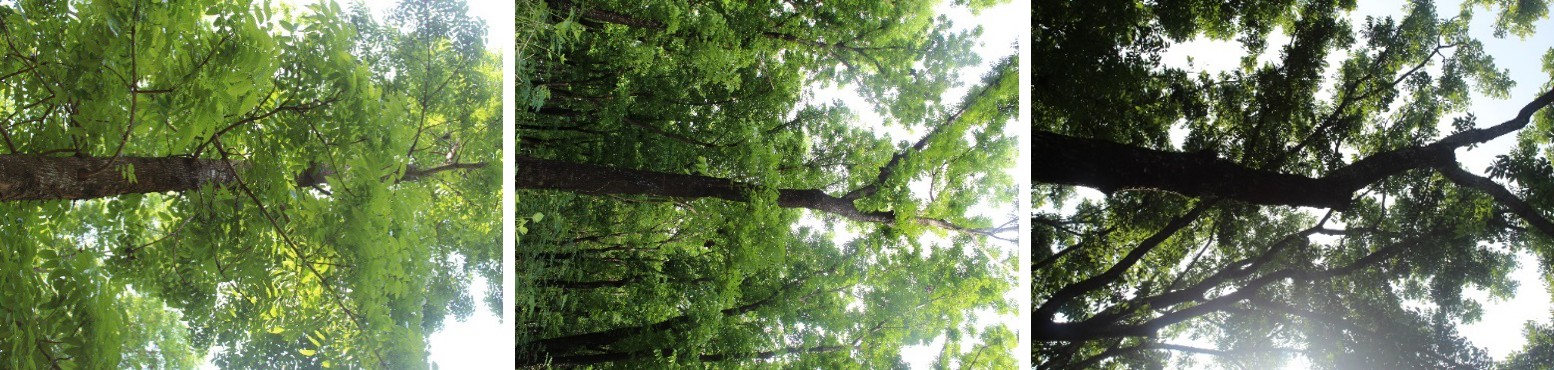
Good Fair Unacceptable Figure 2: Samples for stem straightness.
Stem forking: Mahogany mother trees should have a single- bole to be considered good mother trees of mahogany since mahogany naturally does not produce persistent forking habits [11]. For the determination of stem forking, the characteristics of stem forking were judged for all the species. Stem forking of Mahogany: Table 11 shows the forking habit of the Mahogany trees. Out of 1041 mahogany, the highest frequency of mahogany was fair 605 or 58.12% having two stems occurring below the 6m length, 256 or 24.59% were good, having a small fork occurring from 12m stem length and only 180 or 17. 29% were unacceptable, having three or more stems emanating below the 3m length from the base of the stem. The calculated mean for stem forking of mahogany about 1.5 centimeters in diameter, becoming fragrant as they mature. Fruit is obovoid or somewhat rounded, about 8 millimeters in diameter [10].
Out of 3 eucalyptus trees, no eucalyptus gained the rating of “unacceptable” this means none of the trees having stems of two pronounced bends within its merchantable height. While the 1 or 33% was “fair” tree was accorded with one bend, the remaining 2 or 66.66% were “straight” trees with only a slight bend. The calculated mean in the straightness of eucalyptus was 5. In general assessment, the phenotypic characteristics in terms of stem straightness of Eucalyptus trees were “good”; they have almost a slight bend as shown in table 10 below.
| Scale | Frequency (f) | Percentage (%) |
|---|---|---|
| 1 -2 (unacceptable) | 0 | 0 |
| 3-4 (fair) | 1 | 33.33 |
| 5-6 (good) | 2 | 66.66 |
| Total | 3 | 100 |
| Mean: 5 (good) |
Table 10: Stem straightness of Eucalyptus trees.
is 3.67. In general, assessment of the phenotypic traits in stem forking of mahogany was “fair,” most of the mahogany trees have a small fork occurring in the 12-meter length.
| Scale | Frequency (f) | Percentage (%) |
|---|---|---|
| 1 -2 (unacceptable) | 180 | 17.29 |
| 3-4 (fair) | 605 | 58.12 |
| 5-6 (good) | 256 | 24.59 |
| Total | 1041 | 100 |
| Mean: 3.67 (fair) |
Table 11: Stem forking of Mahogany trees.
Stem forking of Narra: Table 12 shows the forking habit of Narra trees. Out of 98 narra, the highest frequency of narra were fair 49 or 50% two stems occurring below the 6m length, 5 or 5.10% were good having a small fork occurring from 12m stem length and merely 44 or 44.90% were unacceptable having three or more stems emanating below the 3m length from the base of the stem. The calculated mean for stem forking of narra is 2.61. In general, assessment of the phenotypic traits in stem forking of narra was “unacceptable,” most of the narra trees have three or more stems emanating below the 3m length from the base of the stem.
| Scale | Frequency (f) | Percentage (%) |
|---|---|---|
| 1 -2 (unacceptable) | 44 | 44.9 |
| 3-4 (fair) | 49 | 50 |
| 5-6 (good) | 5 | 5.1 |
| Total | 98 | 100 |
| Mean: 2.61 (unacceptable) |
Table 13: Stem forking of Narra trees.
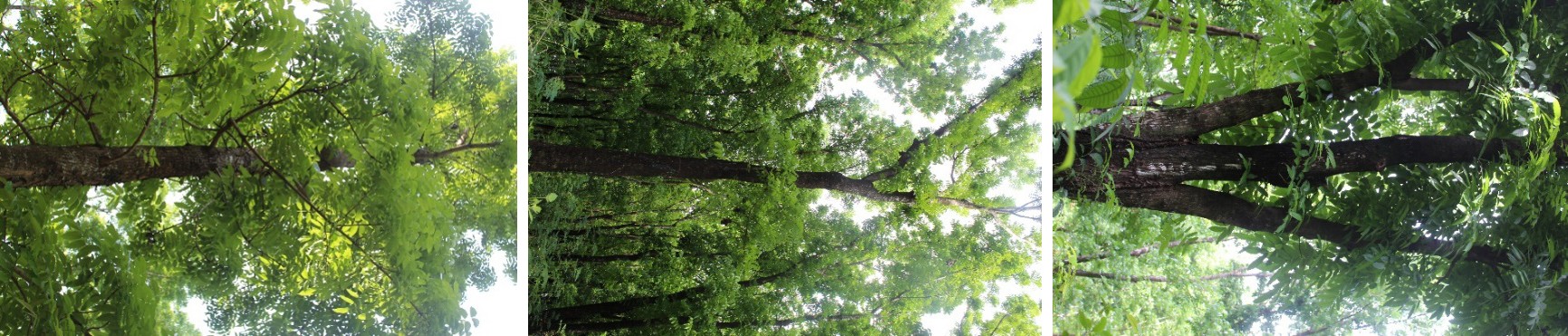
Stem forking of Eucalyptus trees: Table 13 shows the forking habit of Eucalyptus trees. Out of 3 eucalyptus, the highest frequency of eucalyptus were good 2 or 66.66%, having a small fork occurring from 12m stem length and 1 or 33.33% were fair having two stems occurring below the 6m length. The calculated mean for stem forking of eucalyptus is 5. In general, the phenotypic characteristic in stem forking of eucalyptus was “good,” most of the eucalyptus having a small fork occurring from 12m stem length.
| Scale | Frequency (f) | Percentage (%) |
|---|---|---|
| 1 -2 (unacceptable) | 0 | 0 |
| 3-4 (fair) | 1 | 33.33 |
| 5-6 (good) | 2 | 66.66 |
| Total | 3 | 100 |
| Mean: 5 (good) |
Table 12: Stem forking of Eucalyptus.
Good Fair Unacceptable Figure 3: Sample of stem branching.
Stem circularity: A tree that demonstrates superior performance is a good quality timber, meaning it is round. It should be free from pronounced buttress and fluting. Mollick, et al. [12] described that buttressing is a feature of a noncircular cross-section of the stem that typically develops by large plank-like up the growth of the upper side of the roots, providing support for the tree. Buttresses reduce the utilization of the lower part of the stem and are considered an undesirable characteristic. Fluting is the deformation in the circular periphery of a tree, which results in the loss of wood. Stem circularity of Mahogany: Table 14 indicates the stem circularity of Mahogany trees. Out of 1041 mahogany, 13 or 1.25% were “unacceptable”; they have no shape and uniform figure while the 248 or 23.82% were “fair” with an oblong shape and 780 74.93% possessed round stems. The calculated mean for stem circularity of mahogany is 4.01. In conclusion, the stem circularity of mahogany was “fair,” characterized by oblong shape and relatively uniform figure.
| Scale | Frequency (f) | Percentage (%) |
|---|---|---|
| 1 -2 (unacceptable) | 13 | 1.25 |
| 3-4 (fair) | 248 | 23.82 |
| 5-6 (good) | 780 | 74.93 |
| Total | 1041 | 100 |
| Mean: 4.91 (fair) |
Table 14: Stem circularity of Mahogany.
Stem circularity of Narra: Table 15 indicates the stem circularity of Narra trees. Out of 98 narra, 7 or 7.14% were “unacceptable” they have no shape and uniform figure while the 72 or 73.47% were “fair,” having an oblong shape and 19 or 19.39% possessed round stems. The calculated mean for stem circularity of narra is 3.72. In conclusion, the stem circularity of narra trees was “fair,” characterized by oblong shape and relatively uniform figure.
| Scale | Frequency (f) | Percentage (%) |
|---|---|---|
| 1 -2 (unacceptable) | 7 | 7.14 |
| 3-4 (fair) | 72 | 73.47 |
| 5-6 (good) | 19 | 19.39 |
| Total | 98 | 100 |
| Mean: 3.72 (fair) |
Table 15: Stem circularity of Narra trees.
Stem circularity of Eucalyptus: Table 16 indicates the
Health Assessment
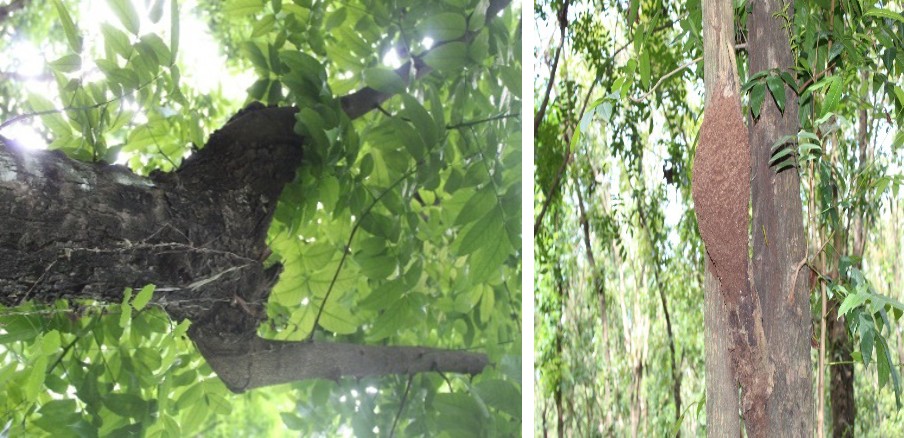
Health condition is considered one of the primary phenotypic traits in the selection criteria for good mother trees. Tree health was assessed based on the health condition of common pests and disease attacks on the trees. In Capas National Shrine, most of the mahogany was destroyed and damaged by termites.
Tree health of Mahogany: Table 17 indicates the health assessment of Mahogany trees. Out of 1041 mahogany, 432 or 41.50% have minimal signs of diseases and damages. At the same time, 570 or 54.76% have fair health conditions and have medium damage. On the one hand, only 39 or 3.74% have unacceptable health conditions with severe damage. The calculated mean in the health assessment of mahogany was 4.25 that fell in the category of “fair.” This means that most of the mahogany was medium damage (30- 40% damaged).
stem circularity of the Eucalyptus tree. Out of 3 eucalypti, 1 or 33.33% were “fair,” having an oblong shape, and 2 or 66.66% possessed around the stem. The calculated mean for stem circularity is 5. In conclusion, the stem circularity of eucalyptus trees was “good,” characterizing the round stem and uniform figure.
| Scale | Frequency (f) | Percentage (%) |
|---|---|---|
| 1 -2 (unacceptable) | 0 | 0 |
| 3-4 (fair) | 1 | 33.33 |
| 5-6 (good) | 2 | 66.66 |
| Total | 3 | 100 |
| Mean: 5 (good) |
Table 16: Stem circularity of Eucalyptus trees.
| Scale | Frequency (f) | Percentage (%) |
|---|---|---|
| 1 -2 (unacceptable) | 39 | 3.74 |
| 3-4 (fair) | 570 | 54.76 |
| 5-6 (good) | 432 | 41.5 |
| Total | 1041 | 100 |
| Mean: 4.25 (fair) |
Table 17: Tree health of Mahogany trees.
Tree health of Narra: Table 18 indicates the health assessment of narra trees. Out of 98 narra, 32 or 32.65% have minimal signs of diseases and damages. At the same time, 55 or 56.12% have fair health conditions and have medium damage. On the one hand, only 11 or 11.22% have unacceptable health conditions with severe damage. The calculated mean in the health assessment of narra was 4.25 that fell in the category of “fair.” This means that most of the mahogany trees were medium damage (30-40% damaged).
| Scale | Frequency (f) | Percentage (%) |
|---|---|---|
| 1 -2 (unacceptable) | 11 | 11.22 |
| 3-4 (fair) | 55 | 56.12 |
| 5-6 (good) | 32 | 32.65 |
| Total | 98 | 100 |
| Mean: 3.88 (fair) |
Table 18: Tree health of Narra trees.
Tree health of Eucalyptus: Table 19 indicates the health assessment of eucalyptus trees. Out of 3 eucalyptus, 1 or 33.33% has minimal signs of diseases and damages, and 2 or
Good Mother Trees
Trees are an integral part of our planet. They clean the air we breathe, help remove pollutants, and provide lovely shade on a hot summer day. They are so essential to life on Earth that merely living close to trees makes human beings healthier and happier.
Table 20 indicates the total number of good mother trees obtained in the ten percent (10%) area of the thirty- five (35) hectares Capas National Shrine. Out of 1142 trees, 56 were identified as phenotypical good mother trees based on the selection standard established by the Department of Environment and Natural Resources Administrative Order No. 2010-11. This protocol gives the standard mechanism and application of criteria that ought to be utilized to choose mother trees and trees of the forest tree species in the Philippines. Within this protocol, phenotypic assessment of the tree was being evaluated abstractly. Phenotypic characteristics assessed include height, diameter, stem straightness, stem forking, stem circularity, and health.
66.66% have fair health conditions and have medium damage. The calculated mean in health assessment of eucalyptus was four that fell in the category of “fair.” This means that most of the eucalyptus was medium damage (30-40% damaged).
| Scale | Frequency (f) | Percentage (%) |
|---|---|---|
| 1 -2 (unacceptable) | 0 | 0 |
| 3-4 (fair) | 2 | 66.66 |
| 5-6 (good) | 1 | 33.33 |
| Total | 3 | 100 |
| Mean: 4 (fair) |
Table 19: Tree health of Eucalyptus trees.
| Plot No. | Species | Frequency | Percentage | No. of good mother tree | |
|---|---|---|---|---|---|
| 1 | Mahogany | 188 | 100.00% | 4 | |
| 2 | Eucalyptus | 3 | 1.60% | 1 | |
| Mahogany | 165 | 90.70% | 3 | ||
| Narra | 14 | 7.70% | 0 | ||
| 3 | Mahogany | 175 | 100.00% | 23 | |
| 4 | Mahogany | 179 | 96.20% | 5 | |
| Narra | 7 | 3.80% | 0 | ||
| 5 | Mahogany | 167 | 100.00% | 5 | |
| 6 | Mahogany | 159 | 100.00% | 15 | |
| 7 | Mahogany | 8 | 9.40% | 0 | |
| Narra | 77 | 90.60% | 0 | ||
| Descri ptive Statistics | DBH | Stem Straight ness | Stem forking | Stem Circularity | Tree Health |
| Mean | 33.64 | 5.33 | 4.79 | 5.58 | 5.14 |
Table 20: Total number of Good Mother trees obtained per plot and species.
These 56 identified phenotypical mother trees were obtained from the 6 plots measured 100mx50m or 0.5
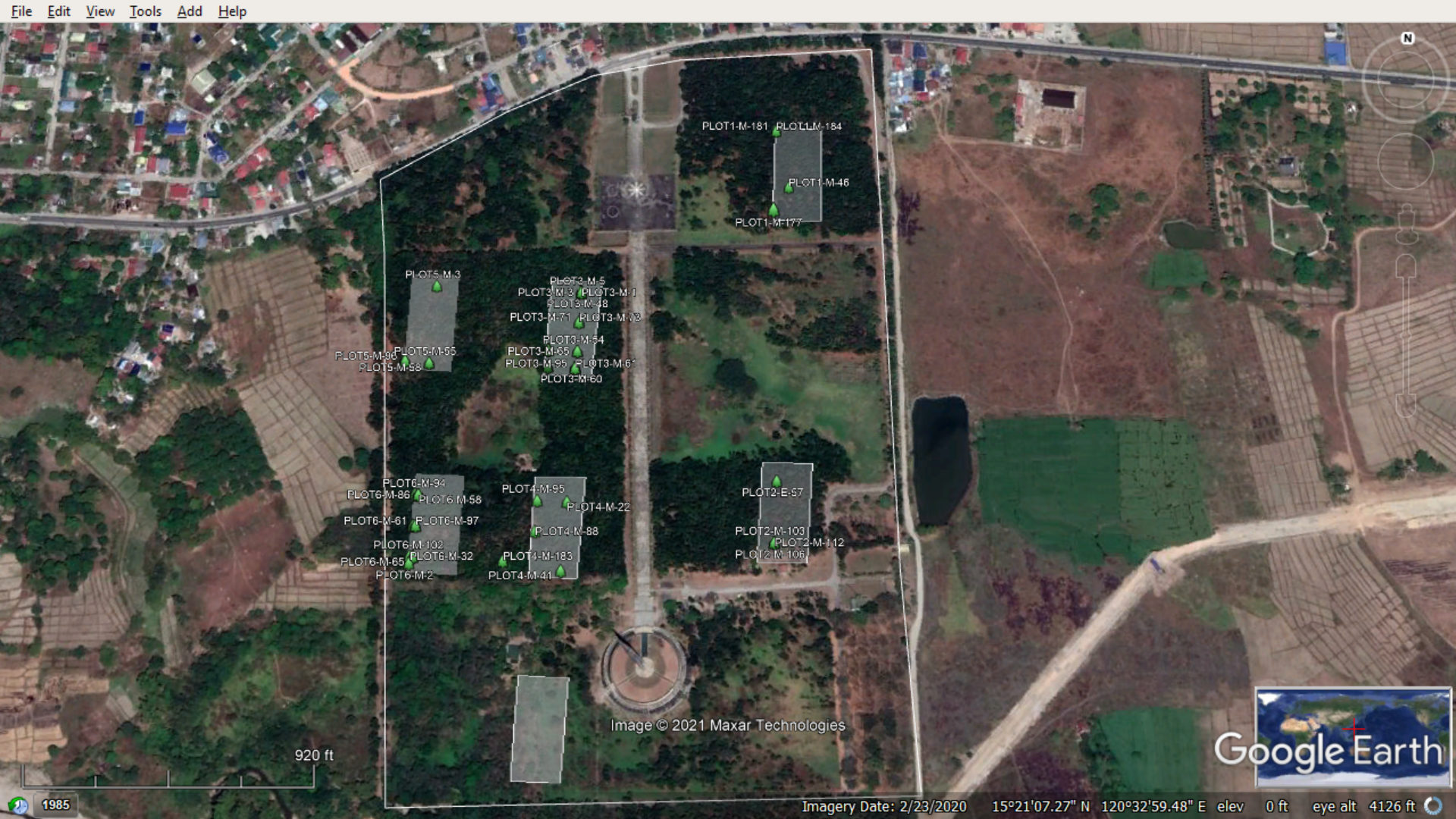
hectares with 3.5 hectares. This mother tree recorded 4.3% of the total trees assessed. Plot 1 obtained four mother trees of mahogany, while Plot 2 acquired 3 and 1 mother tree of mahogany and eucalyptus. Plot 3 obtained 23 mother trees of mahogany, while Plot 4 acquired five mother trees of mahogany. Plot 5 obtained five mother trees of mahogany, and Plot 6 obtained 15 mother trees of mahogany. Unfortunately, in Plot 7, there is no obtained phenotypical good mother tree. This abundant number of good mother trees has resulted from the excellent environment of Capas National Shrine. The shrine has an abundant water source from the O’Donnell River, which is present in the vicinity of the area. Water is vital for the life and survival of all plants. Water is also essential for transporting nutrients and sugars from the soil to the plants [13].
Total height of the selected mother trees Table 21 indicates the total height of the selected good mother trees. Out of 56 mother trees, 55 or 98.21% obtained a height ranging from 15m to 19m, and the remaining 1 or 1.79% measured 20m to 24m. The mean height of mother trees was 16.69. Height is relatively similar, with a standard deviation of 1.69. Table 22 presents the descriptive analysis of phenotypic characteristics of the Selected Mother trees of Mahogany and Eucalyptus [14, 15, 16, 17, 18]. The mean for DBH, stem straightness, stem forking, stem circularity, and tree health were 33.64, 5.33, 4.79, 5.58, and 5.14.
| Range (m) | Frequency (f) | Percentage (%) |
|---|---|---|
| 15-19 | 55 | 98.21 |
| 20-24 | 1 | 1.79 |
| Total | 56 | 100 |
| Mean: 16.69 | ||
| Standard deviation: 1.69 |
Table 21: Total height of selected good mother trees.
Tree marking
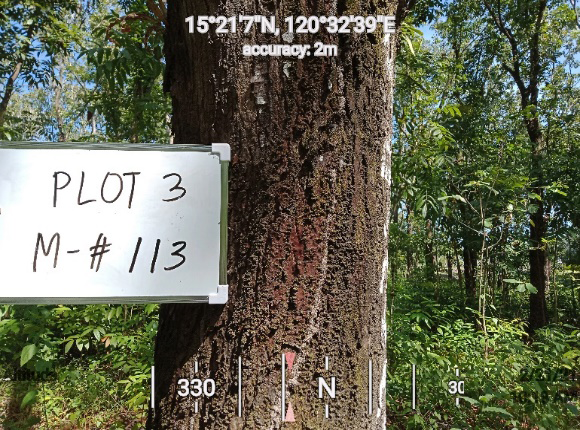
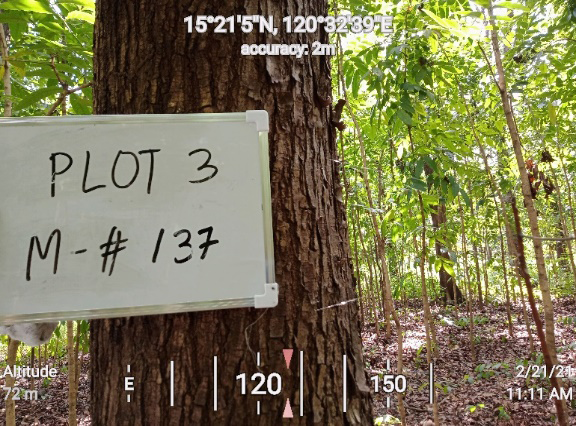
All the 1142 trees assessed were marked using a modified code made of bamboo board. The code was labeled according to plot number, species initial, and species number [19].
Geotagging and Mapping
The geotags were taken from a Mobile GPS app, and the coordinates were recorded for mapping [20, 21, 22, 23]. Figure 6 presents the relative location of the six samples of selected good mother trees. Figure 7 presents the map of good mother trees, which were numbered according to plot [24, 25].
Tree Intensity
Forest inventory serves as an essential tool in forest management; it provides the data for planning, monitoring, growth and yield evaluation, research, and timber sale [26]. It is an attempt to describe the quantity, quality, and stocking density (diameter distribution) of forest trees and many characteristics of land upon which trees are growing towards the efficient and sustainable management of the forest ecosystem [1, 27, 28].
Table 23 presents the intensity of trees present in the ten percent (10%) random sampling area of the 35 hectares Capas National Shrine [29]. The sampling area size was 3.5 hectares, and it is divided by seven plots measuring 100mx50m or 0.5 hectares. Plot 1 obtained 188 or 16.5% trees; plot 2 recorded 182 or 15.9% trees; plot 3 obtained 175 or 15.3% trees; plot 4 obtained 186 or 16.3 trees; plot 5 recorded 167 or 14.6%; plot 6 recorded 159 or 13.9% trees and plot 7 obtained 85 or 7.4% respectively. In conclusion, there are 163 estimated trees per plot and 326 estimated number of trees per hectare.
| Plot number | Frequency (f) | Percentage (%) |
|---|---|---|
| 1 | 188 | 16.5 |
| 2 | 182 | 15.9 |
| 3 | 175 | 15.3 |
| 4 | 186 | 16.3 |
| 5 | 167 | 14.6 |
| 6 | 159 | 13.9 |
| 7 | 85 | 7.4 |
| Total | 1142 | 100.00 |
Table 22: Tree intensity recorded per plot.
Summary, Conclusion, and Recommendation
Summary
This study was conducted from January to March 2021 at the Capas National Shrine Forest Reservation, Camp O’Donnell Capas, Tarlac, to identify the quantity, measure the extent, condition and select possible good mother trees from the ten percent (10%) intensity of trees in the thirty-five (35) hectares mini forest [30]. The method used in the study was the Descriptive Research Method. Phenotypic characteristics were assessed, including tree height, tree diameter, stem straightness, stem forking, stem circularity, and tree health as indicated in the Selection Criteria of the Revised Regulations Governing Forest Tree Seed and Seedling Production, Collection and Disposition or the DENR Administrative Order No. 2010-11 [31].
Trees with a diameter at breast height of 30cm to 76cm were considered good mother trees. This is because it is the DBH range of trees for standard trees. It was assumed that at this range, the trees are in the mature stage. Selected mother trees should also be dominants or co-dominants, having a height of more than 15m. The total mean score of the stem growth, stem form, and health assessment trees having 5 to 6 scores is considered good mother trees [32].
The study revealed that a 3.5-hectare sampling area accumulated 1,142 trees, and each tree was assessed. The trees are composed of (3) families and are characterized by three (3) species. They were one thousand forty-one (1041), Mahogany (Swietenia macrophylla King); ninety-eight (98) Narra (Pterocarpus indicus); and three (3) Eucalyptus (Eucalyptus globulus). The only pole to standard trees was assessed considering the set limits for the 10% random sampling assessment and that only mature trees could be a source of quality planting materials. The tree intensity assessment revealed 163 estimated trees per plot measuring 0.5 hectares and 326 estimated trees per hectare.
Out of 1142 trees, 56 are identified phenotypical mother trees obtained from the six plots measured. Mahogany has the highest number of identified good mother trees with 55 or 96% of the entire identified good mother trees among the species assessed. On the one hand, one good mother tree of Eucalyptus has included accounting for 4% of the total identified good mother trees. However, the Narra trees could not pass the selection criteria to be considered a good mother tree. The abundant number of good mother trees is a result of the excellent environment of Capas National Shrine. The shrine has a present source of water from the O’Donnell River, where it is located in the vicinity of the shrine.
Conclusion
Based on the result of this study, the following are concluded:
- There are abundant good mother trees of mahogany and few good mother trees of eucalyptus in the ten percent (10%) sampling area of the Capas National Shrine. A total of 55 mahogany and one eucalyptus were considered good mother trees. Most of the trees assessed have fair phenotypic traits.
- There is an abundant number of good mother trees due to the excellent environment of Capas National Shrine.
- Most of the identified good mother trees were located at Plot 3 and 6: 23 mahogany trees and 15 mahogany trees.
- The location of the identified good mother trees was scattered throughout the shrine.
- The random sampling tree intensity assessment revealed 163 estimated trees per plot from an area measuring 0.5 hectares and 326 estimated trees per hectare.
Therefore the shrine has a high tree density.
Recommendations
Based on the result of the study, the following recommendations suggested;
- The 56 identified good mother trees in the ten percent (10%) of Capas National Shrine are recommended as a seed source for future plantation or reforestation purposes, maybe at the local or national level.
- The establishment of a Seed Production Area (SPA) inside the Capas National Shrine is also a potential option.
- Apply Silviculture practices such as pruning and thinning to the enhancement of the remaining trees.
- Eliminate and remove the colonies of termites if possible because they were damaging the trees.
- Plant native trees for future tree planting activity since the recorded dominant trees are non-native trees in the Philippines.
- Protect and conserve the native trees found in the Capas National Shrine.
References
-
Dau JH, Mati A, Dawaki SA (2015) Role of Forest Inventory in Sustainable Forest Management: A Review. International Journal of Forestry and Horticulture (IJFH) 1(2): 33-40.
-
(2016) Capas National Shrine. Veterans Memorial and Historical Division.
-
Gregorio N, Doydora U, Harrison S, Herbhon J, Sebua J (2010) Inventory and assessment of Mother Trees of Indigenous Timber Species Leyte Island and Southern Mindanao, The Philippines. ACIAR Seedling Enhancement Project.
-
Lomosbog NT (2015) Characterization of Potential Molave (Vtiext parviflora Juss.). Mother Trees in Lila, Bohol, Philippines. International Journal of Environmental and Rural Development 6(2): 11-16.
-
(2010) Revised regulations governing forest tree seed and seedling production, collection and disposition. Republic of the Philippines. Department of Environment and Natural Resources.
-
Pinoys E (2015) Growing Gmelina (Yemane) and Its Benefits Part 1 Description.
-
Ali SIS (2006) Manual for establishment of seed production areas in dipterocarp forests in peninsular Malaysia. Forestry Department Peninsular Malaysia.
-
Schmidt L, Jøker D (2000) Swietenia macrophylla King. Seed Leaflet.
-
Thomson LAJ (2006) Species Profile for Pacific Island Agroforestry. (Pterocarpus indicus). Permanent Agriculture Resources (PAR).
-
http://www.stuartxchange.com/Eucalyptus.hltml
-
Ramos DP (2018) Selection of Good Mother Trees of Mahogany (Swietenia Macrophylla King) in the Pampanga State Agricultural University, Magalang Pampanga Philippines.
-
Mollick AS, Sajjaduzzaman Md, Golam R, Rana R, Kamal M (2005) Stand Quality Assessment of Teak (Tectona grandis Linn. F.). International Journal of Agriculture & Biology 7(4): 543-546.
-
Why is Water so Important to Plants?
-
Hurrell S (2015) Community forestry to benefit nature and people.
-
Alvey AA (2006) Promoting and preserving biodiversity in the urban forest. Urban Forestry & Urban Greening 5(4): 195-201.
-
Aslam MA (2020) Promoting urban forestry vital for tackling urban environmental risks, says SAPM Malik Amin Aslam. The Frontier Post.
-
Nowak JD, Hirabayashi S, Doyle M, McGovern M, Pasher J (2018) Air pollution removal by urban forests in Canada and its effect on air quality and human health. Urban Forestry & Urban Greening 29: 40-48.
-
Hedberg DPB (2016) Seeing Portland’s Urban Forest for Its History. Western Historical Quarterly 47(4): 463-470.
-
(2014) FMB Technical Bulletin No. 3 Measurement Standards in the Conduct of Timber Inventory. Forest Management Bureau, Department of Environment and Natural Resources, FMB Building, Philippines.
-
Abd-Elrahman AH, Thornhill MA, Andreu MG, Escobedo F (2010) A community-based urban forest inventory using online mapping services and consumer-grade digital images. International Journal of Applied Earth Observation and Geoinformation 12(4): 249-260.
-
Chaudhry P, Tewari VP (2011) Urban forestry in India: development and research scenario. Interdisciplinary Environmental Review 12(1): 80-93.
-
Hilten LC (2018) Urban forests make megacities more environmentally sustainable. Elsevier Connect, Atlas.
-
Hermansen AB (2019) Urban tree canopy assessment: A community’s path to understanding and managing the urban forest. Southern Research Station. Washington, DC.
-
Machado JS, Pereira F, Quilhób T (2019) Assessment of old timber members: Importance of wood species identification and direct tensile test information. Construction and Building Materials 207: 651-660.
-
Zubizarreta M, Cuadrado J, Obre A, Garcia HJ (2019) Modeling the environmental sustainability of timber structures: A case study. Environmental Impact Assessment Review 78: 106286.
-
Cruz H, Yeomans D, Tsakanika E, Macchioni N, Jorrisen A, et al. (2014) Guidelines for On-Site Assessment of Historic Timber Structures. International Journal of Architectural Heritage 9(3): 277-289.
-
Perria E, Sieder M (2020) Six-Step Process of Structural Assessment of Heritage Timber Structures: Definition Based on the State of the Art. Buildings 10(6): 109.
-
Bunyan P (2018) Why A Tree Health Assessment is Important. 494 Harvest Drive Rockwood, PA 15557 PH: 814-443-2991.
-
Li X, Chen WY, Sanesi G, Lafortezza R (2019) Remote Sensing in Urban Forestry: Recent Applications and Future Directions. Remote Sensing 11(10): 1144.
-
Purcell L (2018) Tree Risk Management. Purdue Extension. Urban Forestry Specialist, Purdue University Department of Forestry & Natural Resource.
-
Philippine Medicinal Plants.
-
Leo (2020) Narra Tree. Philippine Trees.
- Lessons to Learn: Trees are More than the Lungs of the World
- Community Forestry Enterprises as a Model for Sustainable Forest Development: The Case Of The "Baja Tarahumara" in Chihuahua, Mexico
- Ecological and Socio-Economic Impacts of Chromolaena odorata and Mesosphaerum suaveolens, Two Invasive Alien Species in Central and Southern Benin, West Africa
- Epigenetic Sustainability: Modeling the Human Factor as a Natural Resource through Science 4.0 and the NR3C1 Biological Pilot
- Growth-at-Risk: A Framework for Assessing Economic Vulnerability
- The Rural Territory as a Socioecological System for the Management of Public Policy for Sustainable Rural Development