
Journey into the ‘Woods’ – A Case Report
This article is a first person account of a novel research work on the wood anatomical studies of mature hardwood tree species carried out on the trees found in the iron ore mines of Odisha, India. The doctoral journey of the researcher right from joining the esteemed institute and the wood anatomy laboratory to the finalizing of research topic, the adventures during sample collection work besides the practical challenges followed by laboratory analysis of respective parameters, statistical brainstorming to arrive at a conclusion and ending into successful culmination of the research with a grand publication is well-depicted. It is aimed at sharing the journey to young researchers in the fraternity and encourage them to explore the wilderness and observe how plants are tolerant and adaptive enough to sustain the effects of anthropogenic disturbances such as mining stress. The results obtained can become fruitful suggestions for choice of species to be used for restoration programs in the mining areas for effective ecological restoration of abandoned lands.
Introduction
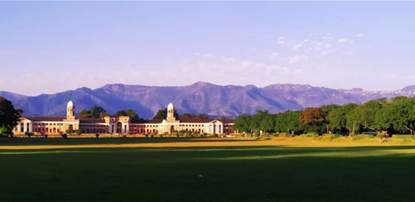
It was the winter of 2005 when I was a graduate student in Mumbai and we were taken on a botanical excursion to Dehradun and Mussoorie. During our visit to the Forest Research Institute of Dehradun, I had made up my mind to join this institute in the future. The architectural marvel of the building constructed in 1906 still retained its vibrant beauty blended with the pleasant weather [1].
Finally, in the autumn of 2013, I joined as a PhD research scholar in the Wood Anatomy Discipline of Forest Botany Department under the guidance of a renowned scientist, Dr. Sangeeta Gupta. I found accommodation with a Punjabi family as a paying guest. I got acquainted with many of my batchmates during the first three months of coursework. Meanwhile, I explored the entire campus as well as the beautiful peaceful valley-town. The daily cycle rides through the Indian Military Academy and the serene campus added to the thrill of beginning a new endeavor in life. At the end of the coursework, I joined the laboratory after interaction with my supervisor. The seniors in the laboratory assisted me and my lab-mate Miss Ankita Gupta quite generously and we were introduced to their working conditions [2].
Methodology & Experiences
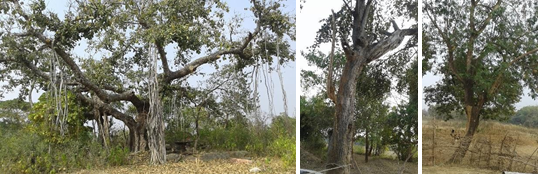
I started narrowing down on a topic of research for pursuing PhD. Intense review of literature and brainstorming sessions with the guide paved the way for finalizing the topic of my work. As wood anatomy is less explored in India, and I always wished to include field work and lab work both in my research, I came upon the idea of studying the effect of any anthropogenic activity on the wood of trees in surrounding vegetation. Ankita belonged to Dhanbad in Jharkhand which is already popular for its huge coal mines. She selected the coal mines of Jharkhand and I selected iron ore mines of Odisha as our respective areas of study. An important reason for me selecting iron ore mines of Odisha was that there are some of the largest mines located in some districts of Odisha which are surrounded by forests having decades-old trees, that formed ideal locations for sample collections and analysis [3, 4].
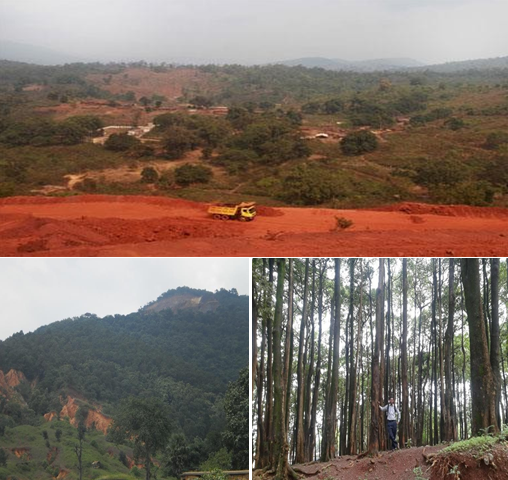
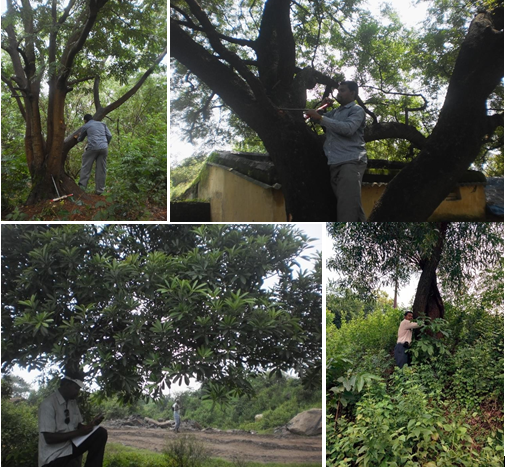
The required permissions from the forest officials and mining authorities of Odisha Mining Corporation, Bolani Ore Mines and Gorumahisani Mines at Barabil and Keonjhar were successfully obtained. The next step was to plan out the sample collection tour to the mining sites as well as forests near Dhanbad for control samples to be used for comparative analysis. The instrument called increment borer had to be carried for inserting into the trunk and collecting the wood samples. Needless to say, the efforts put in convincing the security at railway stations and all checkpoints enroute about the harmlessness of the instrument had its own set of fun!
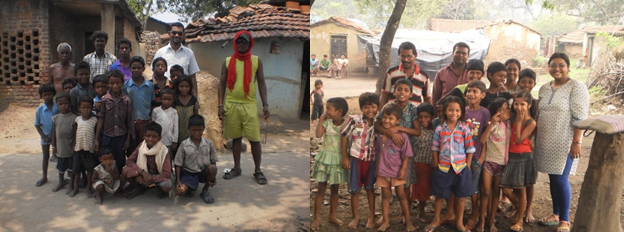
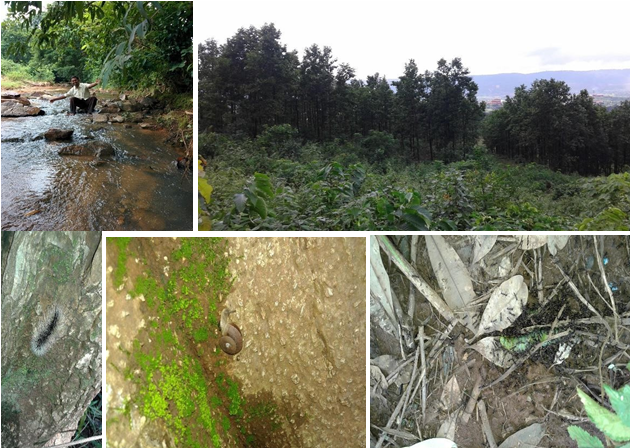
During my tour to all the mining sites, I came across tribal villagers and the interactions with them were extremely enriching and memorable. Initially it felt odd when curious children and anxious adults used to gather around to see what exactly I was up to – inserting a rod into a tree trunk, measuring the girth using a tape, noting down the details of every tree, etc [5, 6, 7].
There were looks of curiosity, amusement, shyness and even fear in their eyes as I came to know later that they are always on the verge of rehabilitation and their livelihoods were at stake. When I interacted with them and explained them why I was there, they understood and were totally welcoming and it was touching to see their hospitality. With meagre earnings and humble lifestyles, they managed to live happily. Their warm gestures of allowing us to relax in their small huts and relish in a hot meal along with them can indeed put any city-folk to shame! The delightful faces of the children on seeing novel things in my possession was overwhelming. How excited they were when I took their pictures! They helped in every possible way right from collecting wood samples to guiding the way through the forests. Having observed their life closely, it made me realize how fortunate I was but nonetheless I learnt great lessons of life from them as well [8].
There were some places in the forests which seemed too haunted and eerie with all the animal life active in the peak monsoon. The thrill was at its peak too. The forests in Odisha were teeming with natural beauty and every moment was spent equally in admiring the mesmerizing beauty around.
The tour to Dhanbad was also equally adventurous. There was complete support provided by Ankita’s family who arranged all the required logistics for exploring the nearby forests and collecting wood samples as control ones for comparative study. I visited a forest off the Grand Trunk Road and after returning from collection that day, I realized I had unknowingly ventured into a Naxalite area [9].
The thought gave me the jitters when I read a news few days later that three Ph.D scholars were kidnapped by Naxalites in a Chattisgarh forest! The six months of tour ended successfully with an enlightening experience. All the wood samples collected were preserved well with appropriate techniques to be carried back to the laboratory at Dehradun.
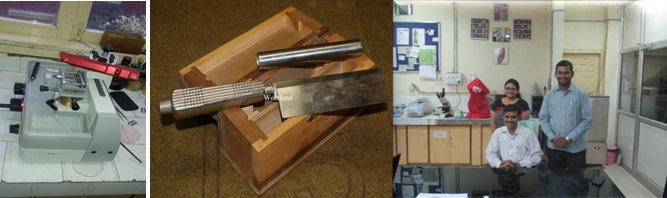
My supervisor was impressed to see my efforts in collecting a substantial number of samples for carrying out the exhaustive comparative analysis. The herbarium sheets of all the species were prepared and authentic identification was carried out by matching it with the preserved specimens at the Herbarium of Botanical Survey of India, Dehradun at the end of which 22 tree species were finalized for the study. This was to be followed by taking sections of all samples and preparing slides for microscopic analysis. I was informed that a latest model of hard tissue sliding microtome was procured at the Plant Anatomy Laboratory, Botany Department, M S University, Vadodara, Gujarat by the principal investigator, Dr. K. S. Rajput who immediately agreed to allow me to work in his laboratory. The next six months were spent at Vadodara and I got a hands-on experience of handling the microtome knife using which thin sections were taken and permanent slides were prepared. The prepared slide boxes were then brought back to Dehradun [10].
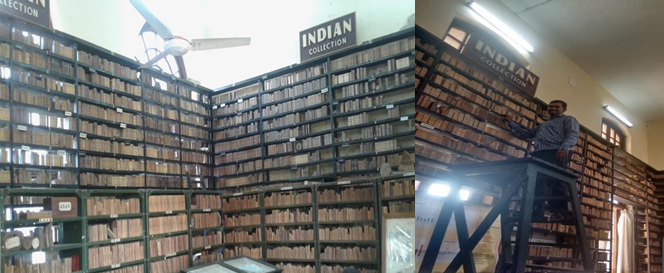
Permanent slides available in the Xylarium of some other control samples were also collected and data of complete microscopic analysis of wood structure was recorded according to the format provided by the International Association of Wood Anatomists (IAWA), 1989. The Xylarium (DDw) of FRI, Dehradun has vast collections of preserved wood samples from all over the world since a century with all details recorded in its inventory. The next 8 to 9 months were spent in collecting the intricate microstructure data from all the wood samples and recording them on a regular basis to be used for statistical analysis and interpretation. Maceration of the wood chips were also carried out according to the standard protocol and the temporary slides prepared were used to observe and collect quantitative data of fibres, vessels and tracheids.
The exhaustive data collection was accompanied by taking photomicrographs of all the slides using the AxioVision Rel. software available in the lab. It was wonderful to observe a good field of view from every slide on a computer screen and after necessary processing, the snap was taken and stored.
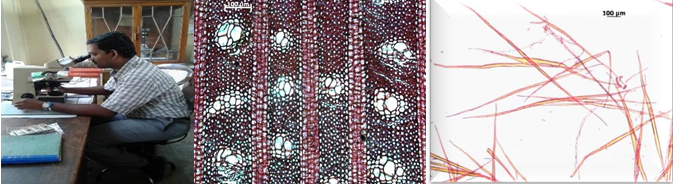
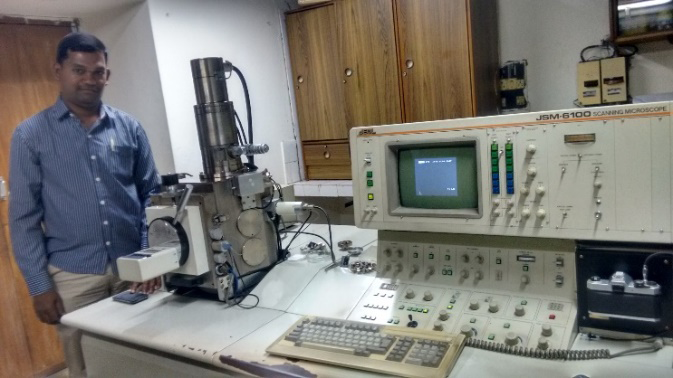
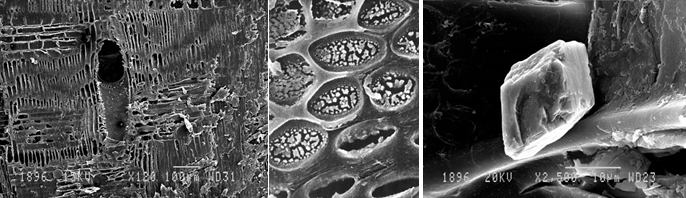
Some samples revealed intriguing observations requiring further magnification, for which they were observed under the Scanning Electron Microscope available at the Panjab University, Chandigarh. It was enthralling to view the electron micrographs and explore the inside world of wood. The architecture of the cell inclusions such as crystals and druses were extremely magnificent.
Statistical analysis using SPSS software and applying required statistical tools like the t-test, ANOVA, Fischer’s exact test, etc. of all the quantitative and qualitative data under the guidance of Mr. Raman Nautiyal, an expert statistician at ICFRE, Dehradun revealed interesting findings about the impact of mining stress on the wood of plants over a longer period of time.
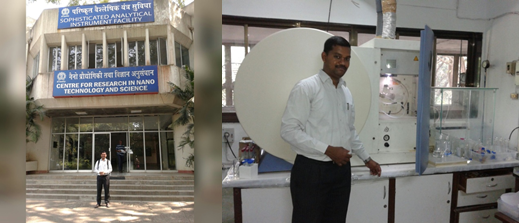
Some physical attributes such as specific gravity was also estimated for all the wood samples by measuring the dry weight and wet weight each and applying the corresponding formula. Since the stressed samples were collected from the iron ore mines, the quantitative estimation of iron content in the wood samples was carried out at IIT-Bombay, adding one more parameter to the study. The acid extracts of the wood samples were prepared and submitted to the ICP-AES (Inductively Coupled Plasma Atomic Absorption Spectrometry) laboratory at IIT-Bombay from which the minute quantities of iron element content were determined in ppm or ppb levels [11].
Results and Conclusions
Finally, the results were summarized for all the species using all the three criteria after effective comparison of species between stressed sites and control ones. Among all the 22 species studied, one of them was found to be the most tolerant while another abundantly available native tree species was the most adaptive one. Based on this, suitable species can be suggested for restoration and plantation programmes in such sites, emphasizing the need for use of native and locally available species for afforestation of the mining sites.
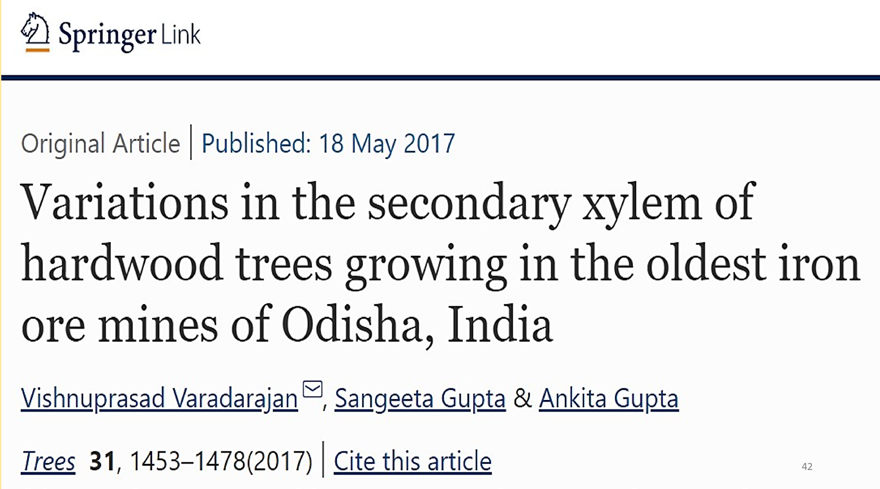
Valuable inputs from the Research and Advisory Committee and the supervisor were incorporated while preparing the thesis. Pre-thesis seminar was successful and the final viva was awaited. Meanwhile, a manuscript of the entire work was submitted to the journal ‘Trees: Structure and Function’ for publication. After subsequent reviews and corrections, my research got published in the esteemed journal.
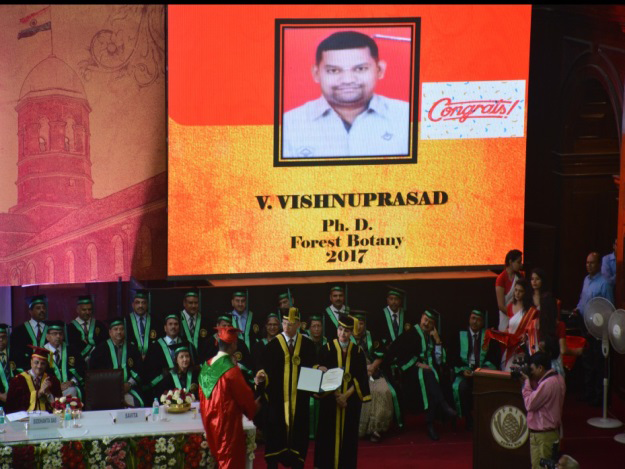
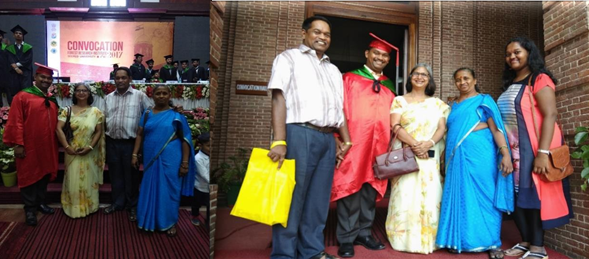
The open viva was conducted and I was able to justify all aspects of the research owing to the confidence in my work and the sincere results obtained. It was a great privilege to receive the honorable Ph.D. degree from the Director of the Institute in the 4th Convocation held at the Forest Research Institute, Dehradun in October, 2017. I was elated to hold the prestigious degree in the presence of my proud supervisor, my supportive and encouraging parents and sister and Ankita and her family as well without whom this journey into the ‘woods’ would not have been memorable.
References
-
Bradshaw A (1997) Restoration of Mined lands—using natural processes. Ecol Eng 8(4): 255-269.
-
Carlquist S (2001) Comparative wood anatomy. 2nd (Edn.), Springer, Berlin, Heidelberg, Germany, pp: 448.
-
Wheeler E, Gasson P (1989) Committee IAWA List of microscopic features for hardwood identification. IAWA Bull 10(3): 219-332.
-
Jacobson AL, Ewers FW, Pratt RB, Paddock WA, Davis SD (2005) Do xylem fibres affect vessel cavitation resistance?. Plant Physiol 139(1): 546-556.
-
Lev-Yadun S, Aloni R (1995) Differentiation of the ray system in woody plants. Bot Rev 61: 45-84.
-
Maiti SK, Nandhini S, Das M (2005) Accumulation of metals by naturally growing herbaceous and tree species in iron ore tailings. Int J Environ Sci 62(5): 593-603.
-
Maximov NA (1931) The physiological significance of the xeromorphic structure of plants. J Ecol 19(2): 273-282.
-
Sengupta S (2005) Orissa’s iron ore attracts massive investments. Steelworld, pp 11-21.
-
Telewski FW, Lynch AM (1991) Measuring growth and development of stems. In: Lassoie JP, Hinckley TM (Eds.), Techniques and approaches in forest tree ecophysiology. CRC Press, Boca Raton, pp: 503-555.
-
Varadarajan V, Gupta S, Gupta A (2017) Variations in the secondary xylem of hardwood trees growing in the oldest iron ore mines of Odisha, India. Trees 31: 1453- 1478.
-
Zobel BJ, van Buijtenen JP (1989) Wood variation: its causes and control. 1st (Edn.), Springer, Berlin, Heidelberg, Germany, pp: 363.
- Lessons to Learn: Trees are More than the Lungs of the World
- Community Forestry Enterprises as a Model for Sustainable Forest Development: The Case Of The "Baja Tarahumara" in Chihuahua, Mexico
- Ecological and Socio-Economic Impacts of Chromolaena odorata and Mesosphaerum suaveolens, Two Invasive Alien Species in Central and Southern Benin, West Africa
- Epigenetic Sustainability: Modeling the Human Factor as a Natural Resource through Science 4.0 and the NR3C1 Biological Pilot
- Growth-at-Risk: A Framework for Assessing Economic Vulnerability
- The Rural Territory as a Socioecological System for the Management of Public Policy for Sustainable Rural Development