
Anatomy of the Heart and the Human Cardiovascular System in the Reflection of Collection Tools
This article presents materials of the conducted research devoted to the reflection of information about the study of anatomy and physiology of the human heart and circulatory system in the reflection of various means of philately, phylocarty and numismatics in collecting media. The article presents, as illustrations, images of postage stamps, envelopes, commemorative medals and coins, gives their description and other additional information.
Introduction
Anatomy of the human body is a basic and obligatory medical discipline, which is an integral part of the knowledge of a doctor of any medical specialty. Not surprisingly, the means of collecting, especially philately and numismatics, in the reflection of stamps, envelopes, postage blocks, commemorative coins and medals, quite brightly and informatively, tell about it. In different information sources, you can find very interesting collectibles, telling about the scientific and practical activities of scientists anatomists from different stations and different periods of time. Also, in the reflection of the means of collecting, advantage in the means of philately, one can find a lot of interesting specimens, on which the anatomy of the human heart and cardiovascular system, including both large and small circuits of the blood circulation, is presented.
Aim of the Work
The purpose of this research article is to present new data on the anatomy and physiology of the human heart and cardiovascular system, using such means of collecting as philately, philocarty, and numismatics.
Material and Methods
When writing this research article, the author used such methods of research as a literary and critical analysis, available thematic materials on the issue under study. Also, actively, with the help of the Internet, special, professional Internet sites and thematic philatelic and numismatic Internet pages and articles were used. All presented illustrative materials are made in the form of screenshot- copies, with strict observance of copyrights and sources of their borrowing.
Results of the Study and Discussion
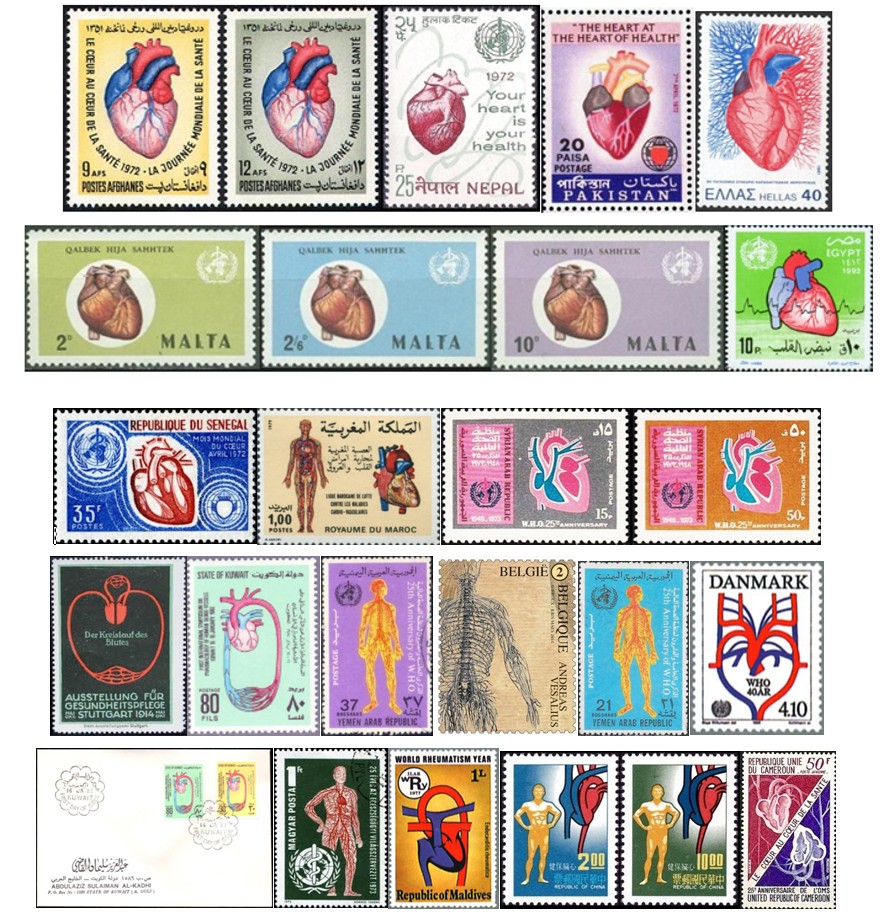
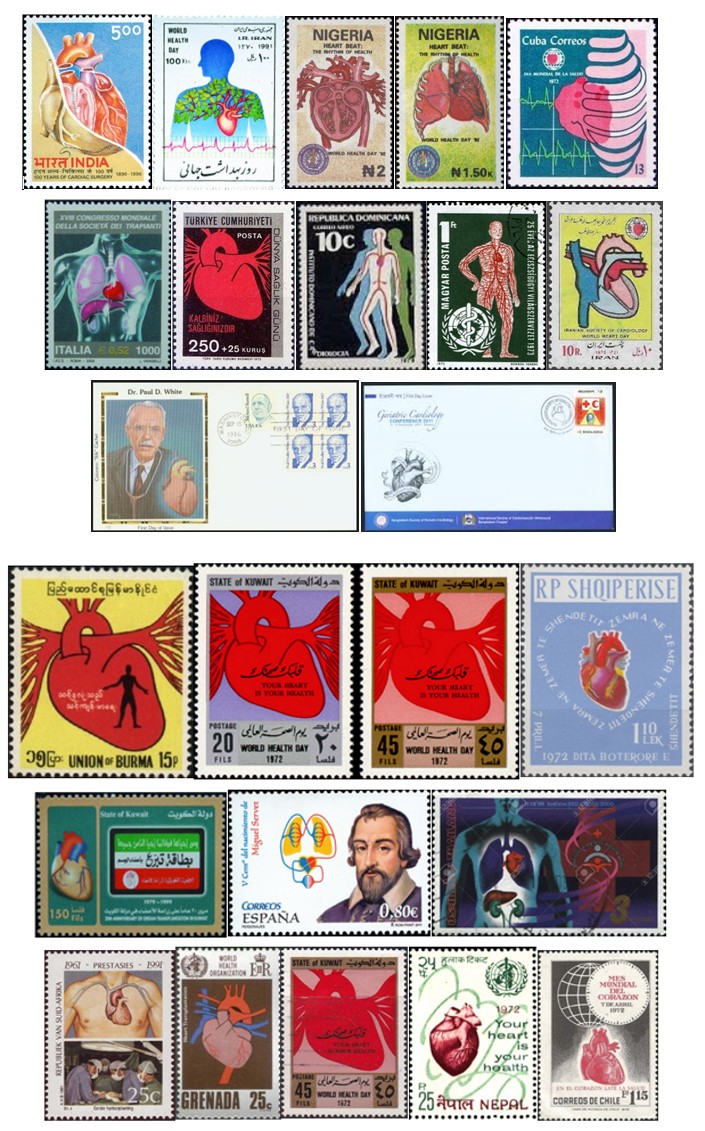
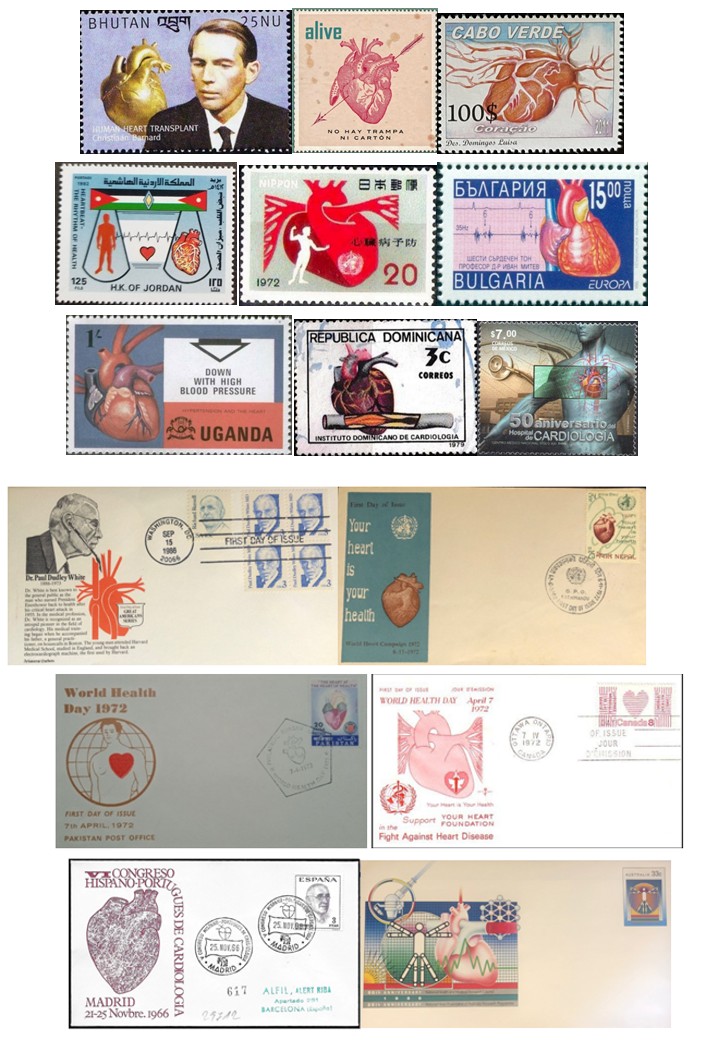
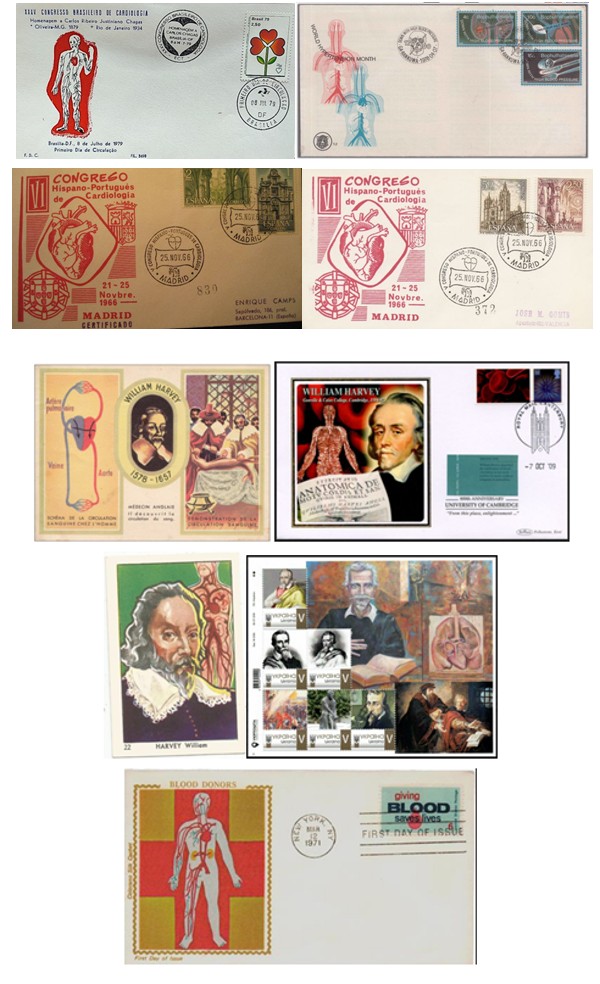
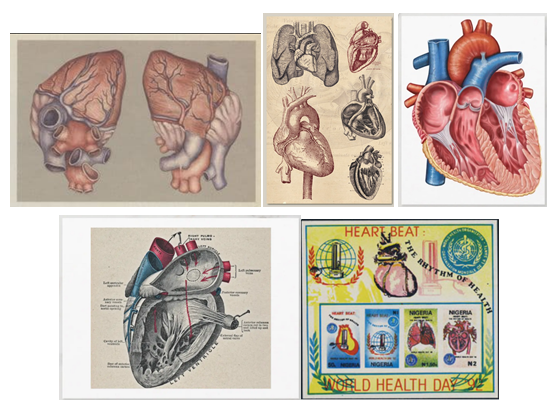
The most represented in the means of philately, is the human cardiovascular system. Basically, it is the image of human heart and vessels, as well as the image of large and small circles of human circulation. Beginning to cover the results of the study concerning the reflection of the structure of the human heart in the means of collecting, I would like to present the reflection in the means of philately (postage stamps, first-day envelopes, and postal blocks) [1]. This section presents: postage stamps - 66 pieces; postal envelopes - 18 pieces; post cards and block - 5 pieces. In total in this research article the author presents 89 philatelic and philocartic miniatures, thematically devoted to anatomy and physiology of human heart and cardiovascular system, in particular to structure and functioning of large and small circuits of blood circulation. Philatelic and phylocartic materials are united by the image of the heart itself, in its whole form and in section, together with blood vessels, as well as materials, bearing information about the structure of the large and small circuits of the blood circulation. A number of philatelic materials, has joint images of human heart, as well as a number of scientists, who dealt with the anatomical structure of the heart itself, its diseases and physiology of the cardiovascular system, such as Miguel Servet (Spain) - small circle of circulation, William (William) Garvey (England) - large circle of circulation; Dr. Paul D. White (USA), Transplant Surgeon Christian Bernard (South Africa) - the world’s first human heart transplant. These collectibles are presented in Figure 1 [1, 2, 3, 4, 5, 6, 7, 8, 9].
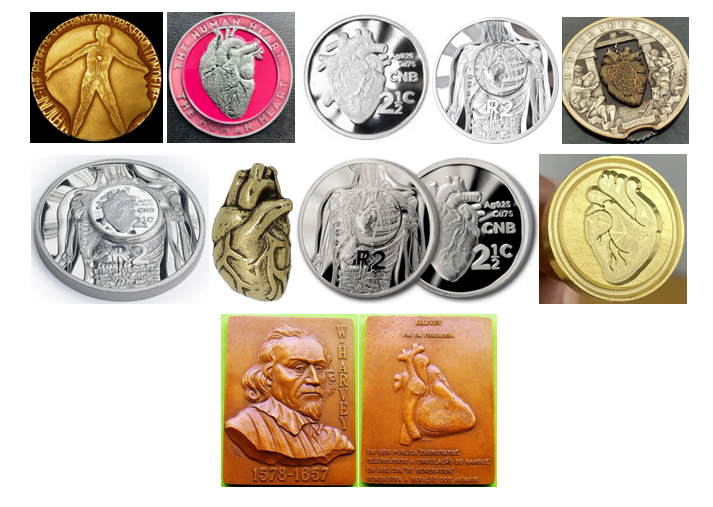
A separate selection, in Figure 2, presents eight numismatic specimens, in the form of commemorative medals, devoted to the human heart and its anatomy [9].
Conclusion
- This article presents significant theoretical and illustrative material on the reflection in philately, phylocarty and numismatics about the anatomy of the heart and the human cardiovascular system.
- The presented illustrative materials can be used as an auxiliary information tool in the study of such disciplines as “Anatomy”, “Cardiology”, “Operative surgery and topographical anatomy”, “History of medicine”, in specialized universities and departments.
References
-
Wiedemann K, Jennifer Z (2021) PaxtonAnatomicum Postcard Box. Children’s, Stationery & miscellaneous items (Children’s / Teenage), Allen & Unwin publishers.
-
Jim Clift Design Human Heart Gold Lapel Pin.
-
Human Anatomy On Stamps-Stamp Community Forum.
-
Hand-Engraved Hobo Nickel.
-
Stunning Coin Contains a Mechanical Beating Heart.
-
SA R2 wins best contemporary coin.
-
The Heart Anterior & Posterior M Postcard Store.
-
Regular Postcard Anatomy.
-
Used stamps - ANDORRA ANDORRE Postes (2021) - Homenatge esforços tothom davant COVID-19 - Timbre, sello, stamp COIN DATÉ Date postmark.
- Pattern of Breast Lesions in Ovu Inland, Delta State, South Southern Nigeria
- Morphometric Analysis of the Human Femur: Exploring Platymetric and Robusticity Indices Among the Nigerian Population
- Anatomical Variation of Arteria Lusoria: Clinical Implications for Dysphagia Lusoria and Surgical Risk
- Morphometric Study of the Vertebral Body and Pedicle of Typical Cervical Vertebrae Using Radiological Image
- Epigenetic Mechanisms Driving Human Evolutionary Changes
- Neuroprotective Effects of Ginkgo Biloba Extract on Bilateral Common Carotid Artery Ischaemic Stroke Induced in Wistar Rat