
Study on the Application of Aluminum Phosphide using the Conventional System Compared to the Long Probe in Soybean Meal Stored in Bulk
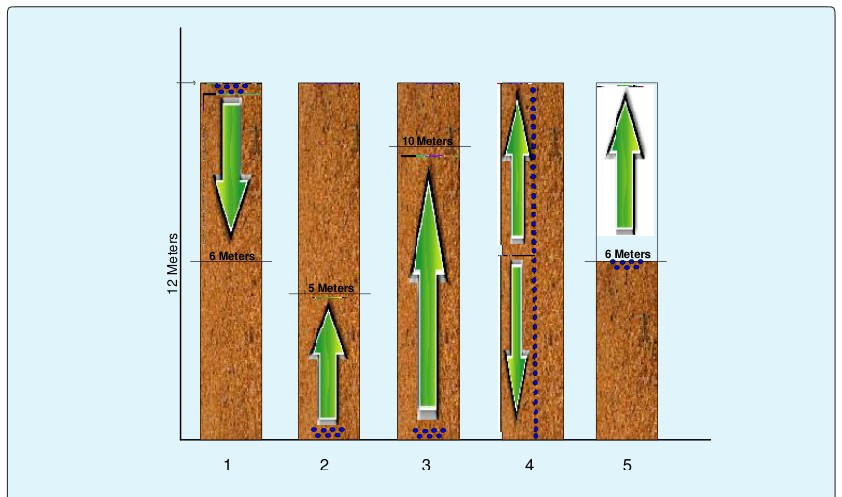
Brazil is one of the mayor’s producers and an exporter of grains requires the purging of these pests from some importing countries seeking preventing these pests to be brought with the grains or meals. Phosphine is the most widely used fumigant worldwide; its application is done though a solid formulation, which once exposed to the environment humidity, will slowly release the phosphine gas through a hydrolysis reaction [1]. Usually the grains or meals receive the application on the surface at a dosage comprised of one or two grams of the active ingredient/m3 of volume of the environment. After applying, the compartment is hermetically sealed on order to prevent leakage of the fumigant. Vessels with 14-20 m deep compartments will never achieve the desired efficiency when using the conventional purging system if the phosphine is not evenly distributed onto the grains or starches. This study compare the conventional method with uniform distribution of phosphine; besides the inefficiency of the treatment due to misdistribution of the gas, this type of treatment in this environment builds a highly dangerous amount of gas. The test were performed in the region of Paranagúa - PR, using five cylindrical plastic tubes of 30 cm in diameter x12 m long, which were filled with soybean meal for appropriate treatments. Making holes on the tubes at every one meter, which were property sealed and constructed to allow the visualization of the gas displacement along the pipe during the period after the application. The treatments were as followings: 1- 1 g/m3 tablets of phosphine on the surface of the mass (conventional system); 2-1 g/m3 tablets on the bottom of the mass;3-g/m3 tablets on the bottom of the mass, and having motor for circulation of the gas; 4-1 g/m3 tablets evenly distributed in the mass, at every meter (long tube system) and 5-1 g/m3 filling up only ½ of the mass and placing the tablets on the surface (slack system). The results demonstrate that the current system of fumigation (tablets or sachet left on the surface of the mass of the grains or starches are not effective and can cause accidents. Compromising public bodies responsible for overseeing the efficient and safe fumigation.
Introduction
Imports and exports of grains and starches among modern countries have to be submitted to purging seeking to ensuring the sanity to these products and preventing harming their agricultural production [2]. Accordingly, there is a mandatory set of phytosanitary acts and rules designed to prevent the entry of harmful organisms through the spraying of insecticides [3]. The product used for this purpose is the phosphide, the only fumigant insecticide recommended for eliminating pests from stored grains pests and their byproducts for boarding into ships. Brazil who has become one of the major producers and exporters of grains requires the purging of these pests from some importing countries seeking to prevent these pests to be brought with the grains. Phosphide is the most widely used fumigant worldwide. Its application is done through a solid formulation of aluminum or magnesium phosphide, which once exposed to the environment humidity, will slowly release the phosphine gas through a hydrolysis reaction. Sea vessels having appropriate compartments for containing exporting starches and grains, receive an application of aluminum phosphide upon completion of each load. The phosphide is applied by means of sachet powders on the surface or in a tablet form at a dosage comprised of one or two grams of the active ingredient/m3 of volume of the environment. After applying the dosage the compartment is hermetically sealed in order to prevent leakage of the fumigant. It is known that aluminum phosphide exposed to high humidity releases a great quantity of gas due to its exothermic reaction. This generates high concentrations of phosphine which can reach the flammability limit of 18,000 ppm, causing explosion as occurred in 2012 near the Port of Paranaguá (see Case 26.896/12 - Acórdão do Tribunal Marítimo) [4]. The losses may be not only material ones but also human lives. If the fumigant is not evenly distributed, the accumulated dosage remains on the surface, very close to water from the sea or the rain, what can cause explosions. In addition, the sachet package is pollutant requiring its removal when opening the compartments, increasing the operating costs. Vessels with 14-20m deep compartments will never achieve the desired efficiency when using the conventional purging system if the phosphine is not evenly distributed onto the grains or starches. As a result, a comparative study was conducted by the Department of Octavio Nakano. Study on the Application of Aluminum Phosphide using the Conventional System Compared to the Long Probe in Soybean Meal Stored in Bulk. J Agri Res 2017, 2(4): 000138.
Entomology of the ESALQ / USP Piracicaba - SP, seeking to obtain data that could demonstrate the advantages of using the "deep probe" (uniform distribution of phosphine) compared to the usual purging system on ships (phosphine distributed only in the upper part of the load) and permitted by the Ministry of Agriculture. Besides the inefficiency of the treatment due to the maldistribution of the gas, this type of treatment in this environment builds a highly dangerous amount of gas. This can be worsened according to the depth of the compartment as the dosage is calculated by the cubic meter of the compartment to be expunged.
Materials and Methods
The tests were performed in the region of Paranaguá – PR [5]. Due to the availability of the required materials; the tests consisted of five cylindrical tubes of 30 cm in diameter x 12 m long, which were filled with soybean meal for appropriate treatments. Holes were made lengthwise on the tubes at every 1 meter, which were properly sealed and constructed and arranged to allow the visualization of the phosphine displacement along the pipe during the period after the application, when needed. Treatments with phosphine (aluminum phosphide tablets) (Phostek® 57%) were as follows: (1) 1 g/m3 of the tube, placing the tablets on the surface of the mass (conventional system); (2) 1 g/m3 of the tube, placing the tablets on the bottom of the mass; (3) 1 g/m3 of the tube, placing the tablets on the bottom of the mass, and having motor for the circulation of the gas; (4) 1 g/m3 of tube, placing the tablets evenly distributed in the mass, at every meter (long probe system); (5) 1 g/m3 of tube, filling up only ½ of the mass and placing the tablets on the surface (slack system); Note: the tubes had the following configuration: 30 cm of diameter x 12 m long; placed vertically, with a total height h = 12 m) (Figure 1). The data refers to readings taken during ten days of exposure to the phosphine soybean meal inside the tubes. The readings were taken at every 1 meter at the holes previously prepared for this purpose, for observing the release of the gas; and are listed in Table 1. The readings of the gas were made with the aid of a specific device which is called: Honeywell® EC- P2 [6].
Copyright© Octavio Nakano.
| Treatments | DAYS | |||||||||||||||||||||||||||||
|---|---|---|---|---|---|---|---|---|---|---|---|---|---|---|---|---|---|---|---|---|---|---|---|---|---|---|---|---|---|---|
| 1º | 2º | 3º | 4º | 5º | 6º | 7º | 8º | 9º | 10º | |||||||||||||||||||||
| Total Load | ||||||||||||||||||||||||||||||
| Phosphineon the surface | 4 | 4 | 6 | 4 | ||||||||||||||||||||||||||
| Total Load | ||||||||||||||||||||||||||||||
| Phosphineon the bottom | ||||||||||||||||||||||||||||||
| Without Motor Engine | 3 | 4 | 4 | 5 | 5 | 5 | 5 | 5 | 5 | 5 | ||||||||||||||||||||
| Total Load | ||||||||||||||||||||||||||||||
| Phosphineon the bottom | ||||||||||||||||||||||||||||||
| With Motor Engine | 10 | 10 | 10 | 9 | 9 | 9 | 8 | 7 | 6 | 5 | ||||||||||||||||||||
| Total Load | ||||||||||||||||||||||||||||||
| Distributed Phosphine |
Octavio Nakano. Study on the Application of Aluminum Phosphide using the Conventional System Compared to the Long Probe in Soybean Meal Stored in Bulk. J Agri Res 2017, 2(4): 000138.
Copyright© Octavio Nakano.
| Long Probe | 12 | 12 | 12 | 12 | 12 | 12 | 12 | 12 | 10 | 7 | ||||||||||||||||||||||
| ½ Load | ||||||||||||||||||||||||||||||||
| Phosphineon the surface | ||||||||||||||||||||||||||||||||
| 6 | 6 | 6 | ||||||||||||||||||||||||||||||
| Temperature oC | 39,9° | 35,5° | 31,0° | 35,0° | 32,2° | 29,3° | 34,1° | 42,0° | 44,0° | 46,0° | ||||||||||||||||||||||
| Humidity (%) | 32 | 42 | 56 | 41 | 48 | 58 | 39 | 26 | 21 | 16 | ||||||||||||||||||||||
Table 2: Distribution of the phosphine gas in the different treatments by placing the tablets for 10 days at different depths Not
Table 1: Distribution of the phosphine gas in the different treatments by placing the tablets for 10 days at different depths in the mass of soybean meal (12 m) (Paranaguá 10 to 20/01/2016). The data shows that for the tablets evenly distributed within the starch mass (long probe) the gas was uniformly distributed, what would be the ideal means of application, as well as the perfect pest control means, and no risks related to accidents. The same can be said of the tablets placed under the mass, with the motor to assist distributing the gas. However this type of application is not feasible because the tablets cannot be placed after loading. In relation to the slack (5), the gas does not penetrate the mass, remaining within the first 6 meters, practically in the empty space above the mass. This application means render the fumigation inefficient, apart from the danger caused by the accumulation of gas in this space [7, 8, 9]. After 10 days of spraying, the tubes were opened and the mass removed through a nozzle located at the bottom of each tube. The material was infested by the pest Tribolium castaneum, and a relationship could be observed, that where the gas had reached the insects were dead. The trial lasted 10 days. The vessels sail for a period longer than this, but during that time, the sea waters where they sail, have a favorable temperature for releasing the gas. For trips over this period, the waters tend to be much colder, what prevents the release of gas. However, this issue loses importance because fumigation is now held in Brazilian waters. Also, days before docking, the compartments must be open for total release of the gas, which have already met their objectives. This research demonstrates that the current system of fumigation, i.e., tablets or sachets left on the surface of the mass of grains or starches are not effective and can cause accidents, compromising public bodies responsible for overseeing the efficient and safe fumigation. The sachets Octavio Nakano. Study on the Application of Aluminum Phosphide using the Conventional System Compared to the Long Probe in Soybean Meal Stored in Bulk. J Agri Res 2017, 2(4): 000138.
after releasing the gases are often thrown overboard by the captains of the ships, becoming pollutants in the sea [10].
Conclusion
Pursuant to the data obtained, we can conclude that:
- The current system of fumigation on ships where the sachets or tablets of phosphine are placed on the surface of bulk grains or starches, are not only dangerous but also does not distributes the gas in a satisfactory manner;
- In the "slack" application on the surface of the mass system, the gas remains in the empty space of the compartment, with an increase in the gas concentration in the upper layer, making the process even more dangerous, and with no purging happening, and
- The distribution of tablets in a uniformly matter throughout the mass with the long-probe system is the ideal means for the application, and the correct technique, offering a much less risk to fumigation.
References
-
(2009) DDP- Fumigação – Fumigação De Cargas Em Porões De Navio Com Uso De Fosfina, Apostila, pp: 11.
-
Andrei E (2005) Compêndio De Defensivos Agícolas - 7º Edição, Editora Andrei Ltda, pp: 1141.
-
Semple RL (1994) Manual Fitossanitário, Editado pela Regional de LGB, Tanzania, pp: 233.
-
(2012) A Cordão Do Tribunal Marítimo **-** Processo nº
-
896/12, pp: 4. Copyright© Octavio Nakano.
-
DDP-Fumigação - Teste Com Fosfina. Paranaguá - PR. Boletim com 7 pp: 2012.
-
Honeywell (2008)–Honeywell EC-P2- Instruction Manual, Illinois, EUA, 25 pp: 25.
-
Detia Degesh- J-System (Low Air Flow Fumigation Method) Folheto, Germany, pp; 2. Octavio Nakano. Study on the Application of Aluminum Phosphide using the Conventional System Compared to the Long Probe in Soybean Meal Stored in Bulk. J Agri Res 2017, 2(4): 000138.
-
Sampaio S (2012) Fumigation treatments. Gaftaword - Promotion International Trade, pp: 8.
-
Detia Degesh- Ensayo De Tolerância a La Fosfamina- Instrucciones de Manejo, Folheto, pp: 11.
-
Detia Degesh- Phostoxin- The Original Made In Germany, Germany, pp: 4. Copyright© Octavio Nakano.
- Enhancement of Vegetative Growth and Fruit Yield in Cucumber (Cucumis sativus L.) via Spiritual Blessing (Biofield) Energy Intervention
- Production of Açaí (Euterpe oleracea Mart.) under Different Agroforestry System Management Intensities in Amazonian Floodplain (Varzea) Forests
- Coffee and the Production Region: What is the Secret to the Expression "Quality"?
- Experiential Agripreneurship Training in Sub-Saharan Africa: Integrating a Business Incubator into Postgraduate Livestock Education at the University of Buea
- Advances in Agricultural High-Quality Development
- Linking Compost Residue to ABAGE in Plants - a Short Note