
Advances in Agricultural High-Quality Development
Agricultural development has gone through a long time. According to the efficiency plant use nature resources, the whole process of agricultural development can be divided into three stages: Low level development stage or primitive agriculture, Level improvement stage and new stage of agriculture high-quality development. Theory foundations of Agriculture highquality development are natural resources use limit by plants, Vegetation carrying capacity and the critical period of plant resources relation regulation and the method of Agriculture High-quality development is to select excellent tree species or varieties, take appropriate initial plant density and take effective measures to ensure plant grow well and get the cultivated goal, maximum yield and benefit.
Abbreviations
VSWC: Volumetric Soil Water Content; MID: Maximum Infiltration Depth.
Introduction
Agricultural development has gone through a long process. There are different kind of agriculture concepts such as ecological agriculture [1], organic agriculture [2], smart agriculture and data agriculture and so on.
Organic agricultural practices respond to and offer alternatives to the health and environmental problems related to conventional technologies and practices of production and embrace many alternative ideals such as alternative distribution and retailing networks and the counter-cultural wholefoods movement.
Study Method
Since 2017, China put forward the concept of high- quality development. In order to solve the question of soil and vegetation degradation and crop failure in modern agriculture development and promote agricultural high-quality development, Author reviews a lot of relative papers and find the new stage of Agriculture high-quality development according to the efficiency of resource utilization by plants based on the innovation study [3, 4, 5, 6, 7, 8, 9, 10, 11, 12, 13], Because the soil water content changes with soil water suction at different soil depth, and the variation of soil water content with soil water suction accords with the Garden equation, so we can use Garden equation to fit soil water content and soil water suction data and establish the soil water characteristics curve and then estimate the wilting coefficient at different soil depth [14]. Before estimated soil water suction at different soil depth, we must take undisturbed soil sample and determine the soil moisture suction of undisturbed soil when plant wilting. In general, the sampling pits (soil profile) was dug in the experimental site for investigating soil profile and sampling purposes, whose dimensions were 1m× 2 m × 4 m depth. The undisturbed soil samples were collected for 3 times at different soil depth with cutting rings (a 5 cm in high and 5 cm in inner diameter). Soil moisture suction at different soil layers were measured by centrifuge method, a HITACHI centrifuge, made by Instrument Co., Jappan, or Pressure Chamber method made in USA. The theory of soil water resources use limit by plant is improved.
Plant root vertical distribution in soil is an important index to estimate soil moisture deficit criteria because plant absorbs soil moisture in the root zone. Soil moisture resources are a good indicator to express the effect of soil moisture on plant growth because plant roots are distributed in soil and suck water in certain soil body. Sometime the root distribution depth is more than tree height and maximum infiltration depth, and suck water from considerable soil depth. The plant growth and vertically distribution of Robinia (Robinia pseudoacacia L.) forest in the semiarid loss hilly region (Guyuan, China) see (Figure 1).
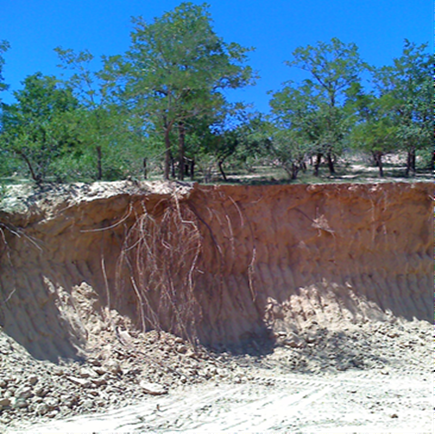
But from the perspective of sustainable development, when soil water resources drop to a certain extent in the deeper soil more than maximum Infiltration depth, the soil water is difficult to restore in the deep soil, which is the soil layer more than maximum Infiltration depth, see Figure 1 it is necessary to control the utilization of soil water resources by plants for sustainable use of soil water resources[8].
The whole process of agricultural development can be divided into three stages: Low level development stage or primitive agriculture, Level improvement stage and high- quality development new stage. The new stage of Agriculture development is Agriculture High-quality development. Only in this way, land can produce more better and health food and service to meet the people’s needs for a better life and crop type, yield and quality.
Results
Agricultural development has gone through a long time. According to the efficiency plant use nature resources, the whole process of agricultural development can be divided into three stages: Low level development stage or primitive agriculture, Level improvement stage and high-quality development new stage. That is the Low-level development stage or primitive agriculture, the Level improvement stage and Agriculture High-quality development.
Low Level Agriculture Development Stage
At Low level development stage or primitive agriculture, people pick up wild fruits and rely on nature for a living because science and technology are underdevelopment and people labour productivity are low. People must live on nature. Today in some African primitive tribe, you can see this kind of Low-level agriculture development. However, with the economic and society development, this kind of Low-level agriculture development will disappear.
Level Improvement Stage
At the Level improvement stage, people start to select or cultivate better plant species, weeding, producing and applicating fertilizer and irrigating, if there are water resources, to increase food kinds, improving quality and amount of food. The turning point from the low level of development to the Level improvement is plant domestication and animal introduction domestication, the development of gathering economy to planting economy. There are some events such as overuse chemical fertilizer and the over dose application of pesticides and so on, which cause crops failure and resources waste happens, which is not good for Agriculture High-quality development but easily cause environment and healthy problem. In most of farmland, you can see this kind of agriculture development. Level improvement stage is a transition stage from Low level agriculture development stage to agriculture high-quality development. With the economic and society development, this kind of agriculture development will be developing into Agriculture high-quality development.
Agriculture High-Quality Development
Now, Agriculture development has entered high-quality development. At the new stage of high-quality development, people must take effective measures or method to get the maximum yield and benefit and produce more better and health food and service to meet the people’s increasing needs for a better life and crop types, yields and quality. To carrying out high-quality development, we must overcome the overuse chemical fertilizer and the over dose application of pesticides and so on in the production process to ensure sustainable use of nature resources and agriculture high yield and benefit.
Theory Foundations of Agriculture High-Quality Development
Theory foundations of Agriculture high-quality development are natural resources use limit by plants, Vegetation carrying capacity and the critical period of plant resources relation regulation.
• Natural Resources Use Limit by Plants: Natural resources is limit. In order to carry out sustainable development, we have to carry out sustainable use of natural resources and Agriculture high quality development, so, we must use the natural resources in sustainable way.
The natural resources use limit by plants is the controlling limit plants use natural resources, expressed by indicator plant in a plant community. The natural resources use limit by plants can be divided into space natural resources use limit by plants in water and nutrient rich regions, soil water resources use limit by plants in water-limit regions and soil nutrient resources use limit by plants in nutrient -limit regions. For example, the natural resources use limit by plants in semiarid loess hilly region is soil water resources use limit by plants. The natural resources use limit by plants changes with plant species and location [13, 15, 16]. For example, natural resources use limit by plants in water-limited region is the limit of soil water resources use limit by plants, which is the soil water resources in the maximum infiltration when soil water content is equal to wilting coefficient.
Infiltration is the process of water entering the soil in a certain time. After the rain event happens, raindrops received on the land surface, infiltration process, there are two vertical soil water characteristics cures left on the soil profile.
There are two vertical distribution curve of soil water with soil depth before and after a period, such as one rain event because soil evaporation,plant transpiration and soil water movement. The two vertical distribution curves can be used to determine infiltration depth and soil water supply for the rain event if we take suitable time to investigate the vertical distribution curve of soil water with soil depth. The infiltration depth for one rain event or a given time was equal to the distance from the land surface to the crossover point between the two soil water distribution curves with soil depth, and the MID could be estimated by a series of two- curve methods.
We can use the two vertical soil water characteristics cures to estimate infiltration depth. Before estimating infiltration depth, a neutron probe was used to monitor the changes of field volumetric soil water content (VSWC) with soil depth before a rain and after the rain event because of its high precision. If we establish the relation between soil water content and soil depth at starting time and ending time of infiltration process in the soil profile, there is a starting vertical distribution curve of soil water before an infiltration process and an ending vertical distribution curve of soil water after the infiltration process. Two curves method was found by Guo in 2004 [17], and used to estimate the depth of infiltration of Caragana shrubland by Guo and Shao in 2009 [6] and Guo in 2014 [9], and named by Guo in 2020 [10].
The indicator plant for original vegetation is dominate species, especially constructive species, the uppermost dominant species, which is native to the local region because for a long time they have developed a good relationship with the local condition. The indicator plant for non-Native vegetation is goal or cultivated plant species.
Soil water resources is the water storage in given soil depth. Plant root cannot suck soil water unlimitedly in water-limited regions. There is a limit plant use soil water. There are some soil water deficit indices, such as crop water index, soil water deficit index, evapotranspiration deficit index, plant moisture deficit index. Because most of the drought indices are based on meteorological variables or on a moisture balance equation, they do not indicates water deficit accumulation or soil water storage (soil water resource) in root zone, they cannot act as a suitable index for distinguishing severe drying of soil in the water-limited regions because soil drought is a nature phenomenon, a water deficit accumulation or a decrease in soil water storage in the root zone soil plant root distribute.
The amount of soil water resources changes with weather condition, plant growth and soil water movement in the soil. To achieve sustainable use of soil water resources, there should be a sustainable use indicator of soil water resources, which is the SWRULP [8]. So, the SWRULP can be defined as the soil water resources in the maximum infiltration depth (MID) when the soil water content within the MID equals the wilting coefficient, expressed by wilting coefficient of an indicator plant in a plant community. The indicator plant is construction species for old vegetation and goal plant species for non-native vegetation [16, 18].
After having analyzed the data of the relationship between soil water content w and soil water suction S in the soil under caragana in 2004 and found the relationship between soil water content w and soil water suction S in the soil under caragana (Caragana korshenskii) shrubland of semiarid loess hilly region can be expressed by the equation: W=a ∙ S–b …(1) the wilting coefficient can be estimated by the above formula: W=a ∙ 15–b …(2) Here, the symbol, W, is volumetric soil water content in %. S is soil water suction in MPa, a and b are coefficient [5, 6].
Generally, the wilting coefficient is assumed to be the soil water content when the soil water suction is 1.5 MPa because soil water potential at wilting ranged from -1.0×10⁶ to -2.0×10⁶ MPa, with an average of approximately -1.5×10⁶ MPa (15 bar).
• Change of Wilting Coefficient with Soil Depth: The loess profile develop from is generally considered to be uniform, However, after the process of soil water Infiltration and maximum Infiltration depth having analyzed the data of soil water content w and soil water suction S at different soil depth and found that there are some changes of soil physical characters such as silt particle content, with soil depth in soil profile, see (Table 1), which cause the changes of wilting coefficient with soil depth.
| Bulk density (g·cm-3) | Organic matter content (g·kg-1) | Clay Particle content (%) | Silt Particle content (%) | Sand Particle content (%) | Physica 1 clay content (%) | Total Porosity (%) | Capillary Porosity (%) | Non-capillary Porosity (%) | |
|---|---|---|---|---|---|---|---|---|---|
| 5 | 1.19 | 6.86 | 13.76 | 65.68 | 20.56 | 24.92 | 55.06 | 35.01 | 20.05 |
| 20 | 1.21 | 3.69 | 13.19 | 68.67 | 18.14 | 23.17 | 54.19 | 33.89 | 20.3 |
| 40 | 1.22 | 3.1 | 10.99 | 71.63 | 17.38 | 21.55 | 53.77 | 34.21 | 19.56 |
| 80 | 1.23 | 3 | 11.94 | 70.39 | 17.67 | 20.99 | 53.43 | 34.07 | 19.36 |
| 120 | 1.25 | 2.62 | 11.42 | 68 | 20.58 | 21.58 | 52.98 | 33.43 | 19.55 |
| 160 | 1.24 | 2.56 | 10.75 | 67.73 | 21.52 | 20.05 | 53.06 | 33.92 | 19.14 |
| 200 | 1.25 | 2.52 | 11.6 | 71.2 | 17.2 | 20.28 | 52.75 | 33.89 | 18.86 |
| 280 | 1.26 | 2.61 | 11.28 | 72.34 | 16.38 | 22.29 | 52.3 | 34.24 | 18.06 |
| 320 | 1.27 | 2.5 | 12.47 | 70.93 | 16.6 | 22.73 | 52.23 | 34.22 | 18.01 |
| 400 | 1.26 | 2.58 | 12.57 | 71.51 | 15.92 | 22.5 | 52.34 | 35.04 | 17.3 |
Table 1: Changes of main soil physical and chemical indicators of huangmian soil with soil depth.
Vegetation Carrying Capacity: The vegetation carrying capacity is the ability of nature or land resources to carry vegetation in given time and space, expressed by the quality or plant density of indicator plant in plant community. The vegetation carrying capacity is the function of plant species, time and location [9, 11]. For example, in water-limited region, vegetation carrying capacity is soil water vegetation carrying capacity, which is the ability of soil water nature resources to carry vegetation, which changes with plant species, times and location [9, 11, 13, 19]. For example, the vegetation carrying capacity in water-limited region is soil water vegetation carrying capacity, which is the ability of soil water resources to carry vegetation in given time and space because soil water is the most important factor to influence plant growth, fruit quality, yield and benefit. Plant resources relationship is very harmony and plant grow well and bear fruit but the goods and service cannot meet people’s need in the stage of primitive agriculture, a lot of original vegetation has been changed into non-native plantation such as Saskatoon berries, red plum apricot and corn in the semiarid region, China. Some plant such as Saskatoon berries, grow and develop well, suitable for local climate, easy to develop. But another plant, such as corn and red plum apricot, they are not suited to the local climate and need to regulate plant resource relationships.
The Critical Period of Plant Resources Relation Regulation: As plant grows, plant canopy and root grow, plant use more resources, and plant resources relation changes with time. When the resources plant use in the appropriate canopy depth or root in the maximum infiltration depth [15, 16] is equal to natural resources use limit by plants, plant resources relation enters the critical period of plant resources relation regulation. The ending time of the critical period of plant resources relation regulation is the ineffective time of plant resources relation regulation such as the ending time of fruit expanding. The critical period of plant resources relation regulation is the most important period in the whole process of plant growth and yield and benefit cultivation, which can be expressed by the amount of available natural resources in canopy or root zone. The vegetation carrying capacity in the critical period of plant resources relation regulation decides the quality, maximum yield and benefit of plant in a plant population and community [20, 21, 22, 23, 24, 25].
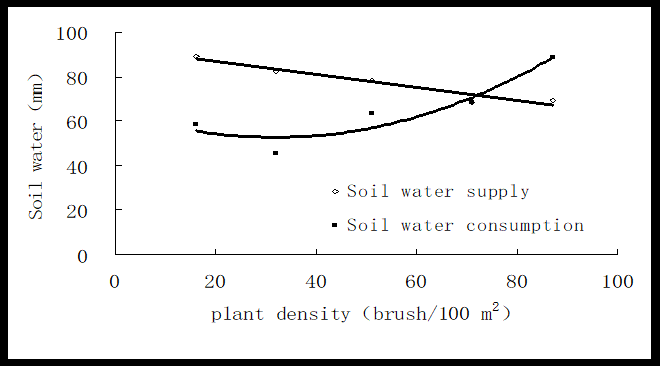
Methods of Agricultural High-Quality Development Because the carrying capacity in the critical period of plant resources relation regulation decides the maximum yield and benefit, we must take the theories of resources use limit by plants, vegetation carrying capacity and the critical period of plant resources relation regulation as a guild, select excellent tree species or varieties, take appropriate initial plant density and take effective measures to regulate the plant resources relation regulation and ensure plant grow well and get the cultivated goal. If the plant density exceeds the vegetation capacity, the plant resources relation should be regulated based on vegetation carrying capacity, especially the vegetation carrying capacity in the critical period of plant resources relation regulation, otherwise the further increase plant use natural resources will lead overuse of natural resources because available natural resources is more than natural resources used by plant, which will lead to the decline of vegetation and the decline of grain yield and quality [26, 27, 28, 29, 30, 31, 32, 33, 34, 35, 36, 37, 38, 39].
Conclusion
Agricultural development has gone through a long process, and now, Agricultural development enters high- quality development stage. Theory foundations of Agriculture high-quality development is Natural resources use limit by plants, vegetation carrying capacity and critical period of plant resources relation regulation. Methods of Agricultural high-quality development is to select excellent tree species or varieties, take appropriate initial plant density and take effective measures to ensure plant grow well and get the cultivated goal.
Because the large agricultural area is huge and the increasing population, population of the world has exceeded 8.2 billion at present in the world, different regions have different climate and crops suitable for growth, so we have to strengthen the agricultural high-quality development research in different regions to determining of excellent tree species or varieties, appropriate initial plant density, resources use limit by plants, vegetation carrying capacity, the critical period of plant resources relation regulation to regulate the plant resources relation, especially The appropriate amount of water and fertilizer application required by plants in the critical period of plant resources relation regulation to make plant grow well and get maximum yield and benefit to realize sustainable use of nature resource and agricultural high-quality development to meet people’s needs for a better life and crop types, yields and quality in different regions.
Acknowledgements
This project was supported by the National Science Foundation of China (Project No: 42077079,41271539 ,41071193) and Study on high quality sustainable development of soil and water conservation (A2180021002). We thank two anonymous reviewers for their helpful suggestions.
References
-
Li L, Huang X, Yang H (2023) Scenario-based urban growth simulation by incorporating ecological- agricultural-urban suitability into a Future Land Use Simulation model 137: 04334.
-
Squalli J, Adamkiewicz (2023) The spatial distribution of agricultural emissions in the United States: The role of organic farming in mitigating climate change. Journal of Cleaner Production 414: 137678.
-
Guo Z, Shao M, Zhang Y, Wu Q (2002) An Layer- dividing Approach to the soil water in forest land,the Proceedings of Soil Physics and Ecological Environmental Construction. In: Mingan S (Ed.), 74-79, Xiaan, Shanxi Science and technology press, China.
-
Guo Z, Shao M (2003) Vegetation carrying capacity of soil water and soil desiccation in artificial forestry and grassland in the semiarid regions of Loess Plateau. Chin J ECOL 23: 1640-1647.
-
Guo Z, Shao M (2004) Mathematical model for determining vegetation carrying capacity of soil water. J Hydr 35(10): 95-99.
-
Guo Z, Li Y (2009) Initiation stage to regulate the caragana growth and soil water in the semiarid area of Loess Hilly Region, China. Chin J ECOL 29: 5721-5723.
-
Guo Z, Shao M (2013) Impact of afforestation density on soil and water conservation of the semiarid Loess Plateau. J Soil Water Conserv pp: 68: 401-410.
-
Guo Z, Shao M (2010) Effect of Artificial Caragana Caragana korshinskii Forest on Soil Water in the Semiarid Area of Loess Hilly Region. Chin Forest SCI 46: 1-8.
-
Guo Z (2014) Theory and Practice on soil water carrying capacity for vegetation. Chin Scientific Press pp: 45-100.
-
Guo Z (2020) Estimating Method of Maximum Infiltration Depth and Soil Water Supply. Scientific Reports 10: 9726.
-
Guo ZS (2021a) Soil water carrying capacity for vegetation. Land Degradation & Development pp: 1-11.
-
Guo Z (2022) High-quality development of agriculture. Encyclopedic Forrum (1): 64-66.
-
Guo Z (2023) Forest restoration, resources sustainable use and high-quality sustainable management. Glob J Ecol 8(1): 007-010.
-
Guo Z (2009) Limit of vegetation rehabilitation for soil and water conservation in semi-arid region of Loess Plateau. Chin J Science Soil Water Conserv 7: 49-54.
-
Guo Z (2010) Soil water resource use limit in semi-arid loess hilly area. Chin J App Eco 21: 3029-3035.
-
Guo ZS (2021b) Soil hydrology process and Sustainable Use of Soil Water Resources in Desert Regions. Water.
-
Guo JY, Li X, Browning JD, RS MacDonald, Rottinghaus GE, et al. (2004) Dietary soy isoflavones and estrone protect ovariectomized ER alpha KO and wild-type mice from carcinogen-induced colon cancer. Journal of Nutrition 134: 179-182.
-
Guo Z (2011) A Review of Soil Water Carrying Capacity for Vegetation in Water-Limited Regions. Chinese journal of forest science 47(5): 140-144.
-
Guo ZS (2025) “Innovation China” agricultural high- quality production industry service group, Chinese scientific and technological achievements, China.
-
Guo Z, Zhang W (2016) Impact of Initial Planting Density on Soil Water Resource Use Limit by Plants. Geoinfor Geostat: An Overview pp: 4:1.
-
Gui Y, Wang Y, He S, Yang J (2022) Self-powered smart agriculture real-time sensing device based on hybrid wind energy harvesting triboelectric-electromagnetic nanogenerator. Energy Convers Manag 269: 116098.
-
Guo Z (2019) Rice carrying capacity and sustainable produce of rice in resources-limited regions. Int J Agric Sc Food Technol 5(1): 054-057.
-
Shan S, Li Z, Guoet S, Shi T, Shi J, et al. (2014) A millet bran-derived peroxidase inhibits cell migration by antagonizing STAT3-mediated epithelial-mesenchymal transition in human colon cancer. Journal of Functional Foods 10: 444-455.
-
Sung H, Lim Y, Choi Y (2006) Soy isoflavones do not alter the effects of fructooligosaccharide on the intestinal ecosystem of colon-cancer model rats. Food Science and Biotechnology 15: 931-936.
-
Tang M, Wang X, Kong L, Han L, Zhang Z, et al. (2023) Recovering breeze energy based on galloping enhancement mechanism for smart agriculture. Sustainable Energy Technologies and Assessments 59: 103419.
-
Yu H, He W (2021) Plant invaders outperform congeneric natives on amino acids. Basic and Applied Ecology 54: 75-84.
-
Abbo S, Gopher A (2020) Plant domestication in the Neolithic Near East: The humans-plants liaison. Quaternary Science Reviews: 242.
-
Budagovski AI (1986) Soil water resources and available water supply of the vegetation cover. Water Resources 12(4): 317-325.
-
Iriarte J, Elliott S, Maezumi SY, Alves D, Gonda R, et al. (2020) The origins of Amazonian landscapes: Plant cultivation, domestication and the spread of food production in tropical South America. Quaternary Science Reviews 248: 106582.
-
Kaur J, Kaur G (2015) An insight into the role of citrus bioactives in modulation of colon cancer. Journal of Functional Foods 13: 239-261.
-
Ko Y, Jeong J, Choi Y, Ryu C (2013) Soy soluble polysaccharide induces apoptosis in HCT-116 human colon cancer cells via reactive oxygen species generation. Molecular Medicine Reports 8: 1767-1772.
-
Leenders M, Siersema PD, Overvad K, Jonneland T, Olsen A, et al. (2015) Subtypes of fruit and vegetables, variety in consumption and risk of colon and rectal cancer in the European Prospective Investigation into Cancer and Nutrition. International Journal of Cancer 137: 2705- 2714.
-
Moyo M, Aremu AO, Staden JV, Plackova L, Plihalova L, et al. (2018) Deciphering the growth pattern and phytohormonal content in Saskatoon berry (Amelanchier alnifolia) in response to in vitro cytokinin application. New Biotechnology 42: 85-94.
-
Sharma H, Haque A, Jaffery ZA (2019) Maximization of wireless sensor network lifetime using solar energy harvesting for smart agriculture monitoring. Ad Hoc Networks 94: 101966.
-
Sheflin AM, Borresen EC, Kirkwood JS, Boot CM, Whitney AK, et al. (2017) Dietary supplementation with rice bran or navy bean alters gut bacterial metabolism in colorectal cancer survivors. Molecular Nutrition & Food Research 61(1): 1500905.
-
Shi J, Shan S, Li H, Song G, Li Z (2017) Anti-inflammatory effects of millet bran derived-bound polyphenols in LPS- induced HT-29 cell via ROS/miR-149/Akt/NFkappa B signaling pathway. Oncotarget 8: 74582-74594.
-
Singh B, Singh JP, Kaur A, Singh N (2020) Phenolic composition, antioxidant potential and health benefits of citrus peel. Food Research International 132: 109114.
-
Signorelli P, Fabiani C, Brizzolari A, Paroni R, Casas J, et al. (2015) Natural grape extracts regulate colon cancer cells malignancy. Nutrition and Cancer-An International Journal, 67: 494-503.
-
Wehrmaker AM, Draijer N, Bosch G, Goot AJVD (2021) Evaluation of plant-based recipes meeting nutritional requirements for dog food: the effect of fractionation and ingredient constraints. Animal Feed Science and Technology 290: 115345.
- Enhancement of Vegetative Growth and Fruit Yield in Cucumber (Cucumis sativus L.) via Spiritual Blessing (Biofield) Energy Intervention
- Production of Açaí (Euterpe oleracea Mart.) under Different Agroforestry System Management Intensities in Amazonian Floodplain (Varzea) Forests
- Coffee and the Production Region: What is the Secret to the Expression "Quality"?
- Experiential Agripreneurship Training in Sub-Saharan Africa: Integrating a Business Incubator into Postgraduate Livestock Education at the University of Buea
- Linking Compost Residue to ABAGE in Plants - a Short Note
- Building Living Structures – The Use of Space and Time for their Development