
Early Growth Response of Ceiba Pentandra to Organic and Inorganic Fertilizers under Field Conditions in Southeastern Nigeria
This study was carried out at the Department of Crop Science, University of Nigeria, Nsukka to investigate growth response of Ceiba pentandra to organic and inorganic fertilizers under field conditions. The treatments consisted of six fertilizer application rates (No fertilizer, 5 t ha-1 PM + 200 kg ha-1 NPK, 10 t ha-1 PM, 20 t ha-1 PM, 450 kg ha-1 NPK and 20 t ha-1 PM + 100 kg ha-1 NPK). The experiment was laid out in a randomized complete block design (RCBD) with four replications. Data were collected on plant height, number of leaves, stem girth and number of branches at 2, 3, 4, 5, 6 and 7 months after transplanting (MAT). The result of the analysis of variance indicated significant (p
Introduction
Ceiba pentandra is a tropical tree of order Malvales and the family Malvaceae. It is the largest African forest tree reaching as high as 60 m and severally known among some Nigerian ethnic groups as Araba ogungun (Yoruba), Akpu ogwu (Igbo), Rimi (Hausa) and Bamtami (Fulani) [1]. The tree is also known as the Java cotton, Hara kapok, Silk cotton or Ceiba [2]. Their thick columnar trunks often have large buttresses [3]. The young trunks and branches are armed with thick conical spines and are often green due to photosynthetic pigment [4]. The leaves are alternate and palmately compound with 5-8 entire-margined leaflets.
The leaves of Ceiba pentandra have been reported to have both nutritional and medicinal properties. In Nigeria, the leaves are cooked in form of slurry sauce comparable to Okra. The young leaves or the shoots are normally used for soup (sausage). A powder prepared from dried leaves is used to prepared sauce during the dry season [5]. The leaves of C. pentandra can also be used as livestock fodder [6]. The seeds, leaves, bark and resin are used to treat fever, asthma, dysentery and kidney disease [7]. The seed oil which has antimicrobial activity is used for making soap, the residue is used as fertilizer and cattle feed [8]. Presently, Ceiba pentandra has high value in plywood manufacturing but can also be used for making boxes and crates, and for lightweight joinery [9]. Formerly, it was best known for the fibre produced by its fruit. The floss derived from the inner fruit wall is used for stuffing cushions, pillows and mattresses, and for insulation, absorbent material and tinder [9, 10, 11, 12].
In spite of the numerous benefits of C. pentandra, particularly the leaves in diet, it has never been under regular cultivation like the other indigenous vegetable species in Nigeria due to some factors such as low soil fertility, pests, extreme temperatures, erratic rainfall pattern and long drought. Yield of any crop is determined by its nutritional requirements and sustaining the yield and quality of a new crop requires appropriate crop management practices, especially soil fertility management [13, 14]. Soil nutrients could be supplied in organic or inorganic form (chemical fertilizers and lime) and in combinations [15]. A continuous use of chemical fertilizers alone cannot, however, sustain crop yields on the strongly weathered soils of the tropics [16]. Thus, organic soil amendments are needed on such soils to replenish the lost nutrients and improve the physicochemical and biological properties for sustained crop production. It has been established that soil amendments using both organic and inorganic sources (otherwise known as integrated plant nutrition system) supports the best crop performance [17, 18]. The combined application of manure with mineral fertilizers supports the prompt release of applied nutrients to satisfy crop nutrient demand [19]. Meanwhile, the quality of any agricultural produce is predetermined by the prevailing growth environment of which soil fertility variables are major determinants [20, 21]. However, to the best of our knowledge, this is the first report on deliberate cultivation of Ceiba pentandra under different fertilizer rates in Nigeria. Therefore, investigations into Ceiba fertilizer requirement can provide valuable information that can encourage the domestication of this wild species for commercial cultivation and prevent it from going into extinction. This will eventually result in increased productivity, sustained food and nutrition security with eco-friendly strategies. There is, therefore, the need to plant Ceiba in the field to examine its growth response to organic and inorganic fertilizers. The objective of this study was to examine response of growth of Ceiba pentandra to organic and inorganic fertilizers in southeastern Nigeria.
Materials and Methods
Experimental Site: The experiments were conducted at the Department of Crop Science Teaching and Research Farm, Faculty of Agriculture, University of Nigeria, Nsukka (07 0 29’ N, 06 0 51’ E and 400 m above sea level). Nsukka is characterized by lowland humid tropical conditions with bimodal annual rainfall distribution that ranges from 1155 mm to 1955 mm with a shift in the second peak of rainfall from September to October, a mean annual temperature of 29°C to 31°C and a relative humidity that ranges from 69 % to 79 % [22].
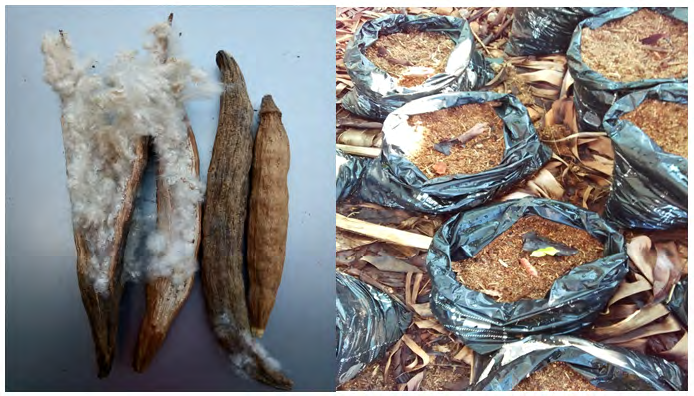
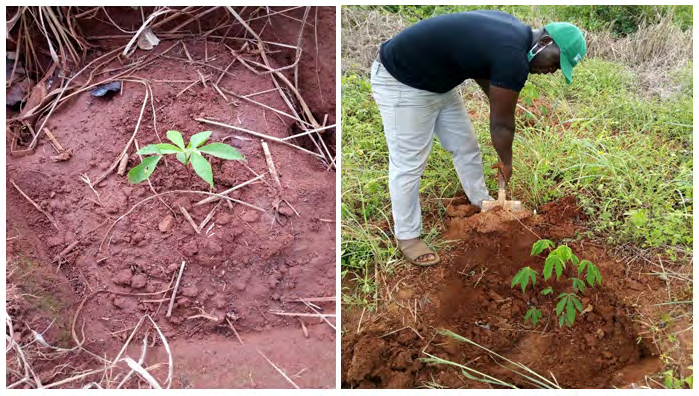
Collection of Ceiba Germplasm: Dried pods of Ceiba were collected from Unosi in Ajaokuta Local Government Area of Kogi State, North Central Nigeria in June, 2020. The seeds were extracted from the pod and planted in nursery bags of size 48 x 38.5 filled with cured saw dust in July 2020 and placed under banana plantation to provide shade. Regular watering was done to accelerate emergence. A month after seedling emergence, seventy-two uniformly sized seedlings were transplanted to the field. Organic and inorganic fertilizers were applied as split doses and at the required quantity one month after transplanting to the field, 40 % of the required quantity was applied as first dose in September, 2020 and the second dose (60 %) was applied in November, 2020 with heavy watering. Weeding was done with the use of glyphosate at 4 weeks interval.
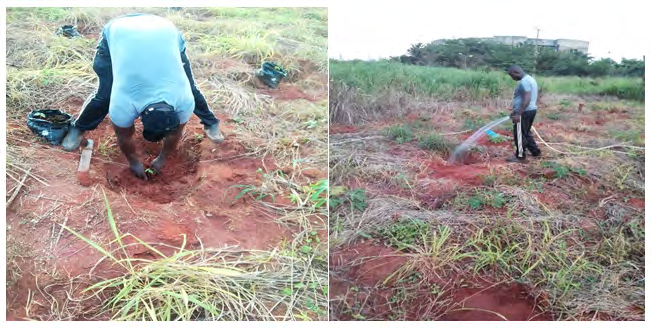
Experimental Design and Field Layout: The treatments consisted of six fertilizer application rates (No fertilizer, 5 t ha-1 PM + 200 kg ha-1 NPK, 10 t ha-1 PM, 20 t ha-1 PM, 450 kg ha-1 NPK and 20 t ha-1 PM + 100 kg ha-1 NPK). The experiment was laid out in a Randomized Complete Block Design (RCBD) with four replications. The plants were spaced at an inter- row distance of 3 m and intra-row distance of 2 m on a single row plot of 3 plants. Planting holes (35 cm x 35 cm x 35 cm dimension) were dug according to the marked plant spacing. An alleyway of 3.0 m separated each block. The experiment was carried out between July 2020 to February 2021.
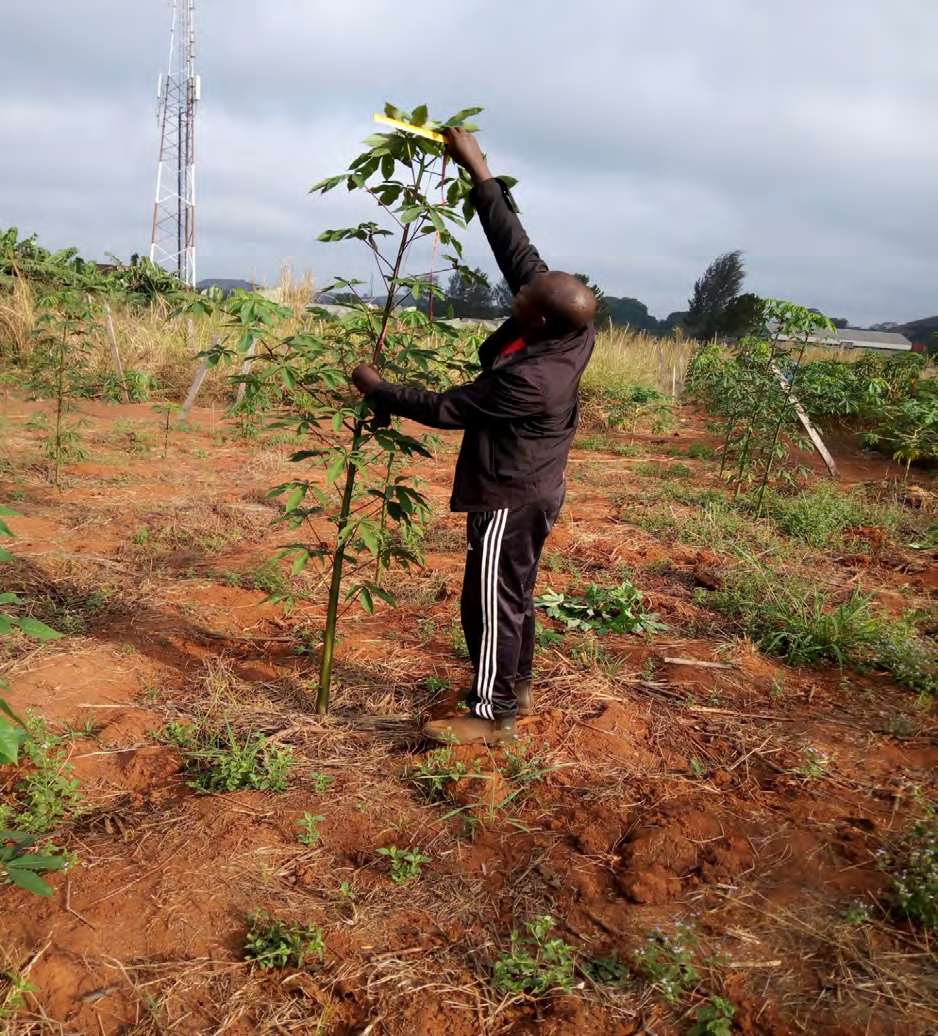
Data Collection: Data were collected on plant height (height of each plant was measured in cm from the ground to the apex with the use of measuring tape and the average recorded), number of leaves (the leaves of each plant were counted and the average recorded), stem girth (the stem of each plant was measured round at 5 cm above ground level using measuring tape and the average recorded) and number of branches (the branches of each plant were counted and the average recorded). All the data were taken at 2, 3, 4, 5, 6 and 7 months after transplanting (MAT).
Statistical Analysis: Data collected from this study were subjected to analysis of variance (ANOVA) following the procedure for RCBD using GENSTAT [23]. Means separation to detect the effect of manure and accession was by least significant difference (LSD) at 5 % probability level.
Results
Physicochemical Properties of Soil of the Experimental Site (Prior Transplanting) and the Poultry Manure Sample Used in the Study
The physicochemical properties of the soil from the experimental site before transplanting indicated that the soil was not fertile (Table 1). The percent nitrogen was very low (0.098 mg/100g) and the available phosphorus (12.59 ppm) was also low. The potassium content was (0.10 mg/100g). The cation exchange capacity was (10.80 mg/100g), the base saturation was (51.48 %), organic carbon and organic matter were 1.857 % and 3.201%, respectively indicating that the soil was low in fertility. The soil was classified as sandy loam.
The poultry manure (PM) utilized was very high in organic matter (85.12 %), nitrogen (1.315 %), potassium (0.18) and sodium (0.0155 %). The pH of the PM in water was strongly alkaline (8.5).
| Mechanical properties | Soil Particle size Poultry manure |
| Clay (%) | 17 - |
| Silt (%) | 9 - |
| Fine sand (%) | 35 - |
| Coarse sand (%) | 39 - |
| Textural class | Sandy loam |
| Chemical properties | |
| pH in water | 4.8 8.5 |
| pH in Kcl | 3.8 8.1 |
| Organic carbon (%) | 1.857 58.905 |
| Organic matter (%) | 3.201 85.12 |
| Total nitrogen (%) | 0.098 1.315 |
| Phosphorus (ppm) | 12.59 0.52 (%) |
| Exchangeable base | |
| Sodium (Na+) cmol/kg | 0.06 0.0155 (%) |
| Calcium (Ca2+) cmol/kg | 4.20 6.8 (%) |
| Potassium (K+) cmol/kg | 0.10 0.18 (%) |
| Magnesium (mg2+) cmol/kg | 1.20 5.12 (%) |
| CEC | 10.80 - |
| Base saturation (%) | 51.48 - |
| Exchangeable acidity in me/ 100 g soil | |
| Aluminium (Al3+) | 0.80 - |
| Hydrogen (H+) | 2.40 - |
Table 1: Physicochemical properties of soil of the experimental site (prior transplanting) and the poultry manure sample used in
As shown in Table 2, fertilizer application rates significantly (p<0.05) influenced Ceiba height across the months. Highest plant height (64.3, 132.7, 199.6, 262.3, 300.8 and 324.7 cm) was produced by plants that received 20 t ha-1 of PM at 2, 3, 4, 5, 6 and 7 months after transplanting (MAT), respectively. The lowest height (15.4 cm) was obtained from plants that received no PM at 2 MAT while at 3, 4, 5, 6 and 7 MAT, the least height (16.8, 29.1, 43.9, 60.9 and 68.1 cm) was attributed to the plants that received 450 kg ha-1 NPK, this implies that inorganic fertilizer may not be suitable for growing Ceiba as sole application of PM at rate 20 t ha-1 PM gave the tallest plants. The results on comparison between organic and inorganic fertilizers with respect to plant height at the sixth months after planting was in the following order 20 t ha-1 PM > 10 t ha-1 PM > 20 t ha-1 PM + 100 kg ha-1 NPK > 5 t ha-1 PM + 200 kg ha-1 NPK > No fertilizer > 450 kg ha-1 NPK.
| Fertilizer rates | Plant height (cm) in months after transplanting | |||||
|---|---|---|---|---|---|---|
| 2 | 3 | 4 | 5 | 6 | 7 | |
| No fertilizer | 15.4 | 27.7 | 52.2 | 78.8 | 92.3 | 123.8 |
| 5 t ha-1 PM + 200 kg ha-1 NPK | 37.8 | 78.3 | 130.1 | 172.1 | 194.3 | 217.1 |
| 10 t ha-1 PM | 55.4 | 123.4 | 195.3 | 252.4 | 289.9 | 322.1 |
| 20 t ha-1 PM | 64.3 | 132.7 | 199.6 | 262.3 | 300.8 | 324.7 |
| 20 t ha-1 PM + 100 kg ha-1 NPK | 45.9 | 100.7 | 158.9 | 181.4 | 251.2 | 287.5 |
| 450 kg ha-1 NPK | 16.1 | 16.8 | 29.1 | 43.9 | 60.9 | 68.1 |
| LSD (0.05) | 16.1 | 25.8 | 38.4 | 45.2 | 46.4 | 51.2 |
Table 2: Effect of fertilizer rates on plant height (cm) of Ceiba pentandra at 2, 3, 4, 5, 6 and 7 months after transplanting.
Number of leaves of Ceiba was significantly (p<0.05) influenced by the application of organic and inorganic fertilizers (Table 3). Number of leaves increased with the application of 20 t ha-1 of PM at 2, 3, 4, 5, 6 and 7 MAT with respective values of 21.8, 59.5, 129.6, 237.8, 298.3 and 495.0. Decrease in number of leaves (7.3, 5.3, 9.4, 19.2, 18.9 and 28.0) was observed in plants treated with 450 kg ha-1 NPK at 2, 3, 4, 5, 6 and 7 MAT, respectively. Plants that received 10 t ha-1 of PM was superior to plants grown with 20 t ha-1 PM + 100 kg ha-1 NPK, 20 t ha-1 PM+ 100 kg ha-1 NPK was superior to 5 t ha-1 PM + 200 kg ha-1 NPK, 5 t ha-1 PM + 200 kg ha-1 NPK was superior to No fertilizer while No fertilizer was superior to 450 kg ha-1 in number of leaves. This indicated that values obtained from the application of fertilizers that possesses NPK were lower compared to the control and that of organic fertilizer with respect to number of leaves.
| Fertilizer rates | Number of leaves in months after transplanting | |||||
|---|---|---|---|---|---|---|
| 2 | 3 | 4 | 5 | 6 | 7 | |
| No fertilizer | 7.7 | 10.7 | 16.2 | 25 | 30.7 | 54 |
| 5 t ha-1 PM + 200 kg ha-1 NPK | 12.5 | 27.4 | 70.6 | 150.6 | 152.2 | 267 |
| 10 t ha-1 PM | 18.4 | 51.6 | 101.8 | 168.9 | 255.6 | 398 |
| 20 t ha-1 PM | 21.8 | 59.5 | 129.6 | 237.8 | 298.3 | 495 |
| 20 t ha-1 PM+ 100 kg ha-1 NPK | 16.3 | 39.2 | 90.3 | 181.2 | 203.2 | 336 |
| 450 kg ha-1 NPK | 7.3 | 5.3 | 9.4 | 19.2 | 18.9 | 28 |
| LSD (0.05) | 4.8 | 15.8 | 31.4 | 54.4 | 63.5 | 101.4 |
Table 3: Effect of fertilizer rates on number of leaves of Ceiba pentandra at 2, 3, 4, 5, 6 and 7 months after transplanting.
Significant (p<0.05) difference was observed among the fertilizers on stem girth (Table 4). Widest stem girth (3.7, 7.8, 11.0, 15.6, 23.5 and 25.4 cm) was associated with the application of 20 t ha-1 of PM across the months. The least girth (1.4 cm) was obtained in plants that received no PM at
2 MAT while at 3 MAT, plants grown with no PM and plants treated with sole application of NPK had the least (1.7 cm). At 4, 5, 6 and 7 MAT, sole application of 450 kg ha-1 NPK gave the least stem girth (2.2, 3.7, 3.8 and 5.9 cm).
| Fertilizer rates | Stem girth (cm) in months after transplanting | |||||
|---|---|---|---|---|---|---|
| 2 | 3 | 4 | 5 | 6 | 7 | |
| No fertilizer | 1.4 | 1.7 | 3.29 | 4.9 | 6.1 | 7.4 |
| 5 t ha-1 PM + 200 kg ha-1 NPK | 2.2 | 4.1 | 6.8 | 10.2 | 13.1 | 14.1 |
| 10 t ha-1 PM | 3.2 | 6.7 | 10.4 | 14.3 | 17.2 | 19 |
| 20 t ha-1 | 3.7 | 7.8 | 11 | 15.6 | 23.5 | 25.4 |
| 20 t ha-1 PM+ 100 kg ha-1 NPK | 2.9 | 6.5 | 9.3 | 12.9 | 14.9 | 17.7 |
| 450 kg ha-1 NPK | 1.6 | 1.7 | 2.2 | 3.7 | 3.8 | 5.9 |
| LSD (0.05) | 0.8 | 1.8 | 2 | 2.7 | 6.2 | 6.5 |
| Fertilizer rates | Number of branches in months after transplanting | |||||
| 2 | 3 | 4 | 5 | 6 | 7 | |
| No fertilizer | 0 | 0 | 0.2 | 2.2 | 3 | 4.2 |
| 5 t ha-1 PM + 200 kg ha-1 NPK | 3.8 | 9.6 | 10.1 | 14.7 | 15.9 | 23.7 |
| 10 t ha-1 PM | 8.5 | 15.5 | 17.3 | 19.5 | 23.1 | 30.9 |
| 20 t ha-1 | 11.4 | 20.2 | 22.6 | 29.1 | 37.6 | 48.4 |
| 20 t ha-1 PM+ 100 kg ha-1 NPK | 6 | 12 | 13.1 | 16.3 | 22.7 | 29.2 |
| 450 kg ha-1 NPK | 1.4 | 1.4 | 3 | 4 | 4.5 | 5.1 |
| LSD (0.05) | 2.2 | 3.7 | 6.1 | 6.2 | 9.2 | 13.1 |
Table 4: Effect of fertilizer rates on stem girth of Ceiba pentandra at 2, 3, 4, 5, 6 and 7 months after transplanting.
Number of branches differed significantly (p<0.05) due to the application of organic and inorganic fertilizers (Table 5). Greater number of branches (11.4, 20.2, 22.6, 29.15, 37.6 and 48.4) was obtained with the sole application of 20 t ha-1 of PM at 2, 3, 4, 5, 6 and 7 MAT, respectively while the least (0, 0, 0.2, 2.2, 3.0 and 4.2) was recorded in plants that was not treated with any fertilizer.
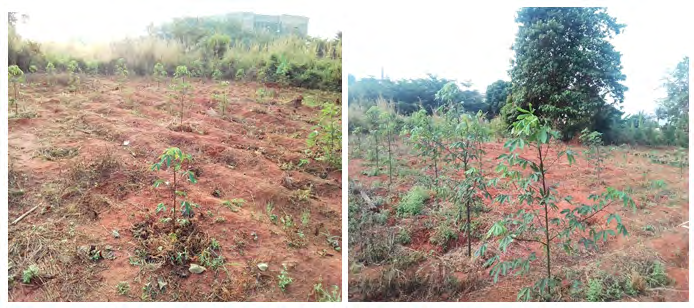
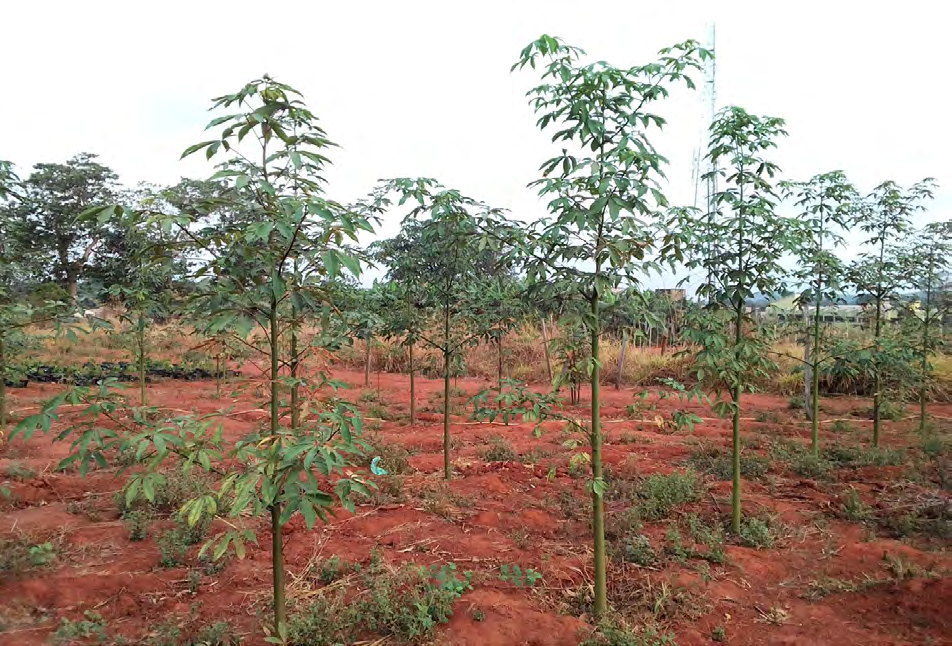
The results obtained in this study revealed that organic and inorganic fertilizers significantly influenced growth of Ceiba pentandra. The increase in growth of Ceiba with the sole application of poultry manure at 20 t ha-1 of PM indicated that this rate provided adequate nutrients which the roots of the plants were able to absorb and used for growth and development. Husseini, et al. [24] also found that organic manure increased growth and leaf yield of Adansonia digitata seedlings. Mukhtar [25] reported that organic manure improved early growth of A. digitata. Adebayo, et al. [26] found that organic amendment increased both the vegetative and dry matter yield of M. oleifera. Poultry manure and other organic fertilizers increase the nutrient status of most soils and boost crop productivity [27, 28]. Stevens, et al. [29] reported that application of organic manure significantly influenced growth and leaf yield of Moringa oleifera. Sole application of NPK at 450 kg ha-1 and other treatment combinations to which NPK was applied resulted in decrease in some growth attributes of Ceiba plants in comparison with the control. This clearly shows that although Ceiba may thrive in marginal soils, it does better with the application of PM. Husseini, et al. [24] reported that Baobab seedlings without soil treatment showed positive effect than when NPK was applied while organic manure enhanced early growth and leaf yield. Failure of NPK to increase growth of Ceiba could be due to acidification of the rhizosphere. Husseini, et al. [24] observed that NPK gave relatively low growth and leaf yield of Baobab. Qaswar, et al. [30] reported that NPK application decreased soil pH and increased soil acidification, whereas organic matter addition buffered acidification. For certain reasons, organic manure is preferred to inorganic fertilizers. Apart from adding nutrients to the soil [31], it also improves soil structural properties [32] and acts as a liming material by reducing soil acidity [33].
Improving the soil nutrients with poultry manure increased growth attributes of Ceiba pentandra. It was evident that sole application of PM at 20 t ha-1 could support the growth performance of Ceiba. Therefore, 20 t ha-1 of PM is recommended for the production of Ceiba pentandra in the study area.
References
-
Anigo KM, Dauda BMD, Sallau AB, Chindo IE (2012) Chemical composition of Kapok (Ceiba pentandra) seed and physicochemical properties of its oil. Nigerian Journal of Basic and Applied Science 21(2): 105-108.
-
Enechi DC, Ugwu KK, Ugwu OPC, Omeh YS (2013) Evaluation of the antinutrient levels of Ceiba pentandra leaves. International Journal of Research and Review in Pharmacy and Applied Science 3(3): 394-400.
-
Woodward CL (2009) The Ceiba Tree in Ceiba Foundation for Tropical Conservation.
-
Tropicos (2009) Subordinate Taxa of Ceiba Mission Botanical. Garden. pp: 13-10.
-
Friday ET, Omale J, Olupinyo O, Adah G (2011) Investigations on the nutritional and medicinal potentials of Ceiba pentandra leaf: A common vegetable in Nigeria. International Journal of Plant Physiology and Biochemistry 3(6): 95-101.
-
Iroka FC, Okereke CN, Okeke CU (2014) Comparative phytochemical and proximate analyses on Ceiba pentandra (L) Gaertn and Bombax buonopozense (P) Beauv. International Journal of Herbal Medicine 2(2): 162-167.
-
Olusola L, Ike CO, Mariam SJ (2003) Hypoglycaemic properties of aqueous bark extract of Ceiba pentandra in streptozotocin induced diabetic rats. J Ethnopharmacol 84(2-3): 139-142.
-
Ravi KC, Koteswara RP, Bhaskar RD (2012) Physico- chemical characterization and antimicrobial activity of Ceiba pentandra (kapok) seed oil. J Alt med studs 2(1): e9.
-
Orwa C, Mutua A, Kindt R, Jamnadass R, Anthony S (2009) Agroforestree Database: a tree reference and selection guide version 4.0. World agroforestry centre.
-
Bates DM (2004) Malvales. Encyclopaedia Britannica, CD version.
-
Chaiarrekij S, Apirakchaiskul A, Suvarnakich K, Kiatkamjornwong S (2011) Kapok I: Characteristics of kapok fiber as a potential pulp source for papermaking. Bio resources 7(1): 475-488.
-
Adeniji IT, Olomola DB, Jegede OC (2019) Seed germination and seedling growth of Ceiba pentandra (L) as influenced by different soil types in Ibadan, southwest Nigeria. Journal of Research in Forestry, Wildlife & Environment 11(3): 316-320.
-
Ani JU, Baiyeri KP (2008) Impact of poultry manure and harvest season on juice quality of yellow passion fruit (Passiflora edulis var. flavicarpa Deg.) in the sub-humid zone of Nigeria. Fruits 63: 239-247.
-
Ndukwe OO, Baiyeri KP (2020) Agronomic evaluation of two passion fruit genotypes in containers (mega- pot) predicted corresponding performances under field conditions. Tropical and Subtropical Agroecosystems 23(2): 1-15.
-
Aba SC, Baiyeri KP, Ortiz R (2020) Effect of fertilizer treatments on fruit nutritional quality of plantain cultivars and derived hybrids. Fruits 75(6): 281-287.
-
Kang BT, Balasubramanian V (1990) Long-term fertilizer trials on alfisols in West Africa. Transactions of 14 int. soil science congress.
-
Shiyam JO, Oko BFD, Obiefuna JC, Ofoh MC (2011) Optimizing the productivity of plantain/cocoyam mixture by mulching and fertilizer application. World J Agric Sci 7(5): 633-637.
-
Osundare OT, Fajinmi AA, Okonji CJ (2015) Effects of organic and inorganic soil amendments on growth performance of plantain (Musa paradisiaca L.). Afr J Agric Res 10(3): 154-160.
-
Mohammed JM (2002) Imbalance in nutrient supply as a threat to sustainable crop production. In: Krauu A, (Ed.), Int. Fertilizer Correspondence No. 8, (Basel, Switzerland: Int. Potassium Institute).
-
Wills RBH, McGlasson WB, Graham D, Daryl J (1998) Postharvest: An introduction to physiology and handling of fruits, vegetables and ornamentals. CAB International.
-
Lundegardh B, Martensson A (2003) Organically produced plant foods – Evidence of health benefits. Acta Agric Scand 53(1): 3-15.
-
Uguru MI, Baiyeri KP, Aba SC (2011) Indicators of climate change in the derived savannah niche of Nsukka, Southern-eastern Nigeria. Agro Science 10(1): 7-26.
-
Genstat (2013) Genstat 10 Release 4.23 DE, Discovery. Lawes Agricultural Trust, Rothamsted Experimental Station, UK.
-
Husseini R, Mahunu GK, Wireku P, Dzomeku IK (2016) Response of growth and leaf yield of Adansonia digitata seedlings to soil amendments and harvesting regimes. Journal of Multidisciplinary Engineering Science and Technology 3(12): 6114-6119.
-
Mukhtar RB (2016) Response of Adansonia digitata seedlings to organic manure in Aliero Area of Kebbi State. Nigerian Journal of Agriculture, Food and Environment 12(4): 120-122.
-
Adebayo AG, Akintoye HA, Olufolaji AO, Aina OO, Olatunji MT, et al. (2011) Assessment of organic ammendments on vegetative development and nutrient uptake of Moringa oleifera Lam in the nursery. Asian J of Plant Sci 10(1): 74-79.
-
Annenber F (2010) How to plant and grow moringa.
-
Singh SK (2010) Effect of fertility levels, plant population and detasseling on the growth yield and quality of babycorn (Zea mays L.). Ph.D Thesis. BHU Varnasi, India, pp: 125.
-
Stevens CG, Ugese FD, Baiyeri KP (2018) Effect of pig manure on growth and productivity of twenty accessions of Moringa oleifera in Nigeria. Journal of Tropical Agriculture, Food, Environment and Extension 17(3): 19-26.
-
Qaswar M, Jing H, Ahmed W, Li DC, Liu SJ, et al. (2020) Yield sustainability, soil organic carbon sequestration and nutrients balance under long-term combined application of manure and inorganic fertilizers in acidic paddy soil. Soil Tillage Res 198: 104569.
-
Ndukwe OO, Baiyeri KP, Muoneke CO, Tenkouano A (2009) Impact of the organic and inorganic fertilizers on the postharvest fruit qualities of four Musa (AAB sub group) genotypes in sub humid zone of Nigeria. Global J Agric Sci 8(2): 185-194
-
Thompson LM, Troeh FR (1978) Soils and soil fertility. 4th (Edn.), MacGraw Hill Publication in Times, USA.
-
Olatunji O, Ayuba SA, Anjembe BC, Ojeniyi SC (2012) Effect of NPK and poultry manure on cowpea and soil nutrient composition. Nigerian J of Soil Science 22(1): 108-113.
- Enhancement of Vegetative Growth and Fruit Yield in Cucumber (Cucumis sativus L.) via Spiritual Blessing (Biofield) Energy Intervention
- Production of Açaí (Euterpe oleracea Mart.) under Different Agroforestry System Management Intensities in Amazonian Floodplain (Varzea) Forests
- Coffee and the Production Region: What is the Secret to the Expression "Quality"?
- Experiential Agripreneurship Training in Sub-Saharan Africa: Integrating a Business Incubator into Postgraduate Livestock Education at the University of Buea
- Advances in Agricultural High-Quality Development
- Linking Compost Residue to ABAGE in Plants - a Short Note