
Genetic Diversity and Performance of Tuberose (Polianthes Tuberosa L.) Genotypes at Gazipur, Bangladesh
Seven Tuberose genotypes viz. TR-001, TR-002, TR-003, TR-004, TR-005, TR-006 and BARI Tuberose-1 were studied to evaluate their performance at the Floriculture Research Field, Horticulture Research Centre (HRC), Bangladesh Agricultural Research Institute (BARI), Gazipur during the period from April, 2015 to January, 2016. The genotype TR-001, TR-004 and TR-005 produced strong scented flowers. The quantitative data revealed that BARI Tuberose-1 required the minimum days (17.67) to reach 50% germination of bulbs and also to reach 50% spike emergence (90 days). TR-001 produced the longest spike (86.49cm). The longest rachis (42.18cm) and the maximum number of florets/spike (47.23) were recorded by TR004. The longest (6.03cm) and the largest (3.80cm) florets were observed in TR-003 and TR-002, respectively. The largest (3.40cm) and the heaviest bulbs (30.0g) were recorded in TR-001. The maximum number of flower sticks/clump (4.33) as well as the maximum flower and bulb yield/ha (266,000 spikes and 582,270 bulbs/ha, respectively) were recorded in TR-003. TR-006 produced the highest bulblets weight/ha (6.60 t). BARI Tuberose-1 remained fresh for the longest time (14.83 days) in the field and also in the vase (7.07 days). The highest percentage of florets (65.63%) was opened by the genotype TR-004. Number of florets showed significantly positive association with rachis length. The spikes length showed significantly positive association with number of spikes and negative significant correlation with leaves/clump.
Introduction
Tuberose (Polianthes tuberosa L.) is one of the most important bulbous flowering plants which is native to Mexico and belongs to the family Agavaceae (formally known as Amaryllidaceae). Their lingering delightful fragrance and charm, they are adorned with romantic vernacular name in Bengali “Rajanigandha”. “Rajani” means at night and “Gandha” means fragrance which is in worthy consideration in the perfume industry. From Mexico it spreads to the different parts of the world during 16 the century [1]. Tuberose, a superb ornamental plant was the first introduced to this sub-continent during the period of Mughals from England and other European countries mainly by the Englishmen
and the Portuguese, missionary priests and individual amateur gardeners [2]. Tuberose produces attractive, elegant and fragrant white cut flowers which is considered as one of the most important fragrant truncated (cut branch) flowers of tropical and semitropical areas [3]. It produces conspicuous and showy cut flower that are very important commercially as well as aesthetically. It is also used in vase, floral arrangements, for making bouquets, garlands etc. [4]. In tuberose, like any other plant species, the phenotypic expression of a character is mainly governed by the genetic make-up of the plant, the environment in which it is grown and the interaction between the genotype and environment [5].
Several tuberose varieties those are named on the basis of number of petals, types of variegation on the leaves, coloration, sizes of flowers etc. are available in India [6, 7, 8]. Farmers generally grow “Rajanigandha” i.e. cv. “single” due to its good storage quality and quick and more flower giving habits. Few farmers grow another cultivar locally called “Goluprajoni” i.e. cv. “double” due to its bigger flower size and relatively high prices. But it gave flowers fewer with low storage quality compared to single variety [9].
For the last few years, tuberose has become a popular cut flower in Bangladesh for its attractive fragrance and beautiful display in the vase. Now, it is one of the most important commercial cut flowers and cultivated in different parts of Bangladesh. It has high demand in the market and its production is highly profitable [10]. Its commercial cultivation was introduced during 1980 by some pioneer and innovative farmers at the Panishara union of Jhikorgacha upazila under Jessore district [9]. The successful cultivation of tuberose depends on selection of suitable varieties. There are two types of tuberose cultivars viz. single and double are commonly available in Bangladesh. Recently some varieties have been appeared in the flower market which have not been characterized yet. But some of these varieties may have desirable characteristics which could possibly be used in varietal improvement. To meet out this necessity, it is indispensable that germplasm performance should be studied along with genetic diversity along with their morphological variation, growth, yield, post-harvest life, improvement, and also find out the suitable cultivars for commercial tuberose cultivation in Bangladesh.
Materials and Methods
Experimental Site, Duration and Climate
The experiment was conducted at the Floriculture Research Field, Horticulture Research Centre (HRC), Bangladesh Agricultural Research Institute (BARI), Gazipur during April, 2015 to January, 2016. The location of the site was about 35 km North of Dhaka city with 24.090 North Latitude and 90.260 East Longitude and elevation of 8.40 m from the sea level [11]. The experimental site was situated in the subtropical climatic zone and characterized by heavy rainfall during the month of May to September while scanty rainfall during the rest of the year.
Soil and Planting Materials
The soil of the experimental field was silty clay loam in texture and acidic in nature. It belongs to the “Shallow Red- Brown Terrace” soil of Madhupur Tract [12]. Soil sample of the experimental plot was analyzed by the Soil Science Division, Bangladesh Agricultural Research Institute (BARI), Gazipur. Uniform bulbs (3.0cm to 3.5cm in diameter) of different tuberose genotypes were selected and planted on 9 April, 2015. The bulbs were treated with Bavistin (0.2%) before planting. Five uniform bulbs were planted in each row and six rows containing 30 bulbs in each unit plot at a depth of 9cm. Bulbs of six tuberose (Polianthes tuberosa L.) genotypes were collected from different sources and considered as treatments. BARI Tuberose-1 was considered as check. Details of the tuberose genotypes with source of collection were given in (Table 1).
| Treatments | Source of Collection |
|---|---|
| TR-001 | Sarder Nursery, Godkhali, Jhikorgacha, Jessore. |
| TR-002 | Jehad Nursery, Godkhali, Jhikorgacha, Jessore. |
| TR-003 | Farmers field, Jhinaidah. |
| TR-004 | Sarder Nursery, Godkhali, Jhikorgacha, Jessore. |
| TR-005 | Jehad Nursery, Godkhali, Jhikorgacha, Jessore. |
| TR-006 | Farmers field, Jessore. |
| BARI Tuberose-1 | Bangladesh Agricultural Research Institute |
Table 1: Name and source of collection of tuberose genotypes.
Design and Layout
The experiment was laid out in the Randomized Complete Block Design (RCBD) with three replications. The unit plot size was 1.5m × 1.8m and spacing was maintained 30cm × 30cm for accommodating 30 plants per plot [13]. Two adjacent unit plots were separated by 50 cm space and there was 100 cm space between the blocks.
Land Preparation, Sowing and Intercultural Operation
The land was opened with a tractor in the middle of March, 2015 and then land was harrowed, ploughed and cross ploughed several. All the weeds and stubbles were removed and then the land was finally prepared by adding 10 t cowdung and fertilized @435 kg urea, 400 kg TSP, 300 kg MoP, 12 kg boric acid and 8 kg ZnSO4/ha [13]. Cowdung, TSP, MoP, Boric acid and ZnSO4 were applied as basal and urea was top dressed in two equal splits at 21 days after planting and spike initiation stage. The soil at the base of each plant was raised at 40, 60 and 80 days after planting to make a continuous ridge for facilitating easy drainage of excess water.
Plant Protection Measurement
During the study period no severe disease infestation was appeared only except stem rot. For controlling this disease Bavistin (0.1%) was sprayed thrice at an interval of 10 days started as soon as disease appeared. Savin powder was applied to protect the ants during the growing period.
Harvesting and Data Collection
The spikes were harvested when the 1-2 pair of basal florets had opened by sharp secateurs from 4-6 cm above the ground. The bulb and bulblets were lifted on 15 January, 2016. The uprooted bulb and bulblets were cured for three days under shade for data collection. Observations on different characters were recorded from each genotype. Data was recorded randomly chosen 10 plants from each plot on following parameters.
Qualitative data of tuberose genotypes i. Flower type, bud and petal color: Flower types were identified as single, semi double and double on the basis of row of petals. Single was considered when the floret has one row of petals. The florets have more than three rows of petals, the florets were considered as double and when the floret has 2-3 rows of petals, it was categorized as semi- double [13]. And also the bud and petal color were measured by eye estimation as pink, deep pink, green, light green and greenish white color.
ii. Floret arrangement on spike, visibility of anther and fragrance: Floret arrangement was classified as compact and loose. When the gap between two florets is comparatively high, the habit was said to be open and when very few gaps between two florets, it was considered as compact. After dissection of floret the anther were seen by naked eye. Among all the tuberose genotypes fragrance are different characteristics which also being identified taking the smell. According to fragrance, the tuberose genotypes were categorized as strong scented, medium scented, low to medium scented and scentless.
Growth parameter of tuberose genotypes i. Days to 50% germination of bulb and Germination (%): Number of days required from bulb sowing to 50% plant emergence of the total bulb sown. And the germination percent was calculated using following formula:
1 −
1 Germination % = ×100 Number of plants emerged plot Total number of bulbs planted plot ( ) − ii. Plant height (cm), leaf length (cm) and leaf breadth (cm): Plant height, leaf length, and leaf breadth refer to the average length and breadth of the 10 selected plants was measured by a meter scale.
iii. Leaves/clump, leaves/flower stick, and days to 50 % spike emergence: Number of leaves/clump and Leaves/flower sticks were recorded by counting all the leaves from 10 randomly selected plants of each unit plot and the mean was calculated. Also the number of days required from bulb sowing to 50% spikes emergence of the total emerged plant.
Flower yield and yield contributing characters 1. Days to floret opening from spike emergence: This data was recorded from the day when the first floret of the spike opened after the spike emergence. 2. Spike length (cm), rachis length (cm), floret length (cm), floret diameter (cm): Spike length and rachis length were measured from the end where from it was cut off at the base to the tip of the spike by measuring scale from 10 randomly selected spikes. Floret length and floret diameter were also measured of five florets from the base of the flowering area by using measuring scale from randomly sampled five spikes of each unit plot. 3. Spike weight (g), florets/spike, spikes/clump, spikes/ha, flower sticks (%): Ten spikes were cut from randomly selected plants from each unit plot and weight of spikes was recorded and the number of florets from spikes, clump and spikes as well were calculated. And the flower sticks were calculated using following formula:
( ) Number of flow 0 er sticks obtained/plot Flower sticks % Tot = al number of plant/plo ×10 t Bulb yield and yield contributing characters: Bulb yield and yield contributing characters (Bulbs/clump, Bulb weight (g), Bulb diameter (cm), Bulblets/clump, Bulblets weight/ clump (g), Bulbs/ha, Bulblets weight/ha (t)) were calculated from the number of bulbs obtained from 10 randomly selected plants and mean was calculated.
Flowering life of tuberose in field and vase: Flowering life of tuberose in field and vase related parameters (Flowering duration (days), Flowering life in the field (days), Deterioration started in vase (days), Floret opening (%), and Vase life (days)) were recorded by counting days and percentages from bulb planting to last flowering from randomly selected 10 plants in each plot, then averaged and calculated.
Statistical Analysis
The correlation coefficient and path analysis were performed using Statistical Tool for Agricultural Research [14]. The recorded data on different parameters were statistically analyzed using MSTAT-C software to find out the significance of variation resulting from the experimental treatments. The mean for the treatments was calculated and analysis of variance for each of the characters was performed by F (variance ratio) test. The differences between the treatment means were evaluated by Duncan’s Multiple Range Test (DMRT) according to Gomez, et al. [15].
Results and Discussion
Qualitative Data of Tuberose Genotypes
Tuberose genotypes showed wide variations in respect of qualitative characters (Table 2) i. Flower type: Among the tuberose genotypes, TR- 001, TR-002 and TR-003 produced single type flowers whereas double type flowers were produced by TR-005, TR-006 and BARI Tuberose-1; and TR-004 produced only semi double type flowers. There are three types such as single type, semi double type and double type flowers were reported [16] (Table 2).
ii. Bud color: Bud color is an important characteristic in the variation of tuberose genotypes. The bud of TR-001 and BARI Tuberose-1 was recorded deep pink in color whereas TR-003 and TR-006 those where our local genotypes produced greenish white color bud (Table 2). On the other hand, light green and green flower bud was produced by the genotypes TR-002 and TR-004, respectively. The genotype TR-005 produced pink flower bud only. Deep pink and pink color of flower buds may be due to the presence of flavonoids whereas green and light green color buds may contain chlorophyll pigments [16].
iii. Petal color: The petal color of all the genotypes was white except TR-006 which produced creamy white petals (Table 2).
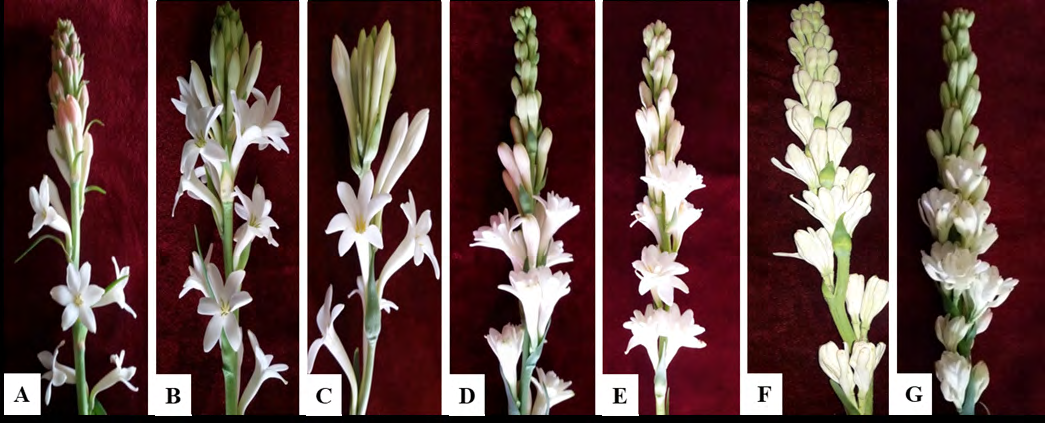
iv. Floret arrangement on spike: The maximum genotypes like TR-002, TR-004, TR-005, TR-006 and BARI Tuberose-1 showed compact floret arrangements whereas TR-001 and TR-003 demonstrated loose floret arrangements ((Figure 1A-G) and Table 2). Mahawar [16] showed the loose and compact floret arrangement on spikes.
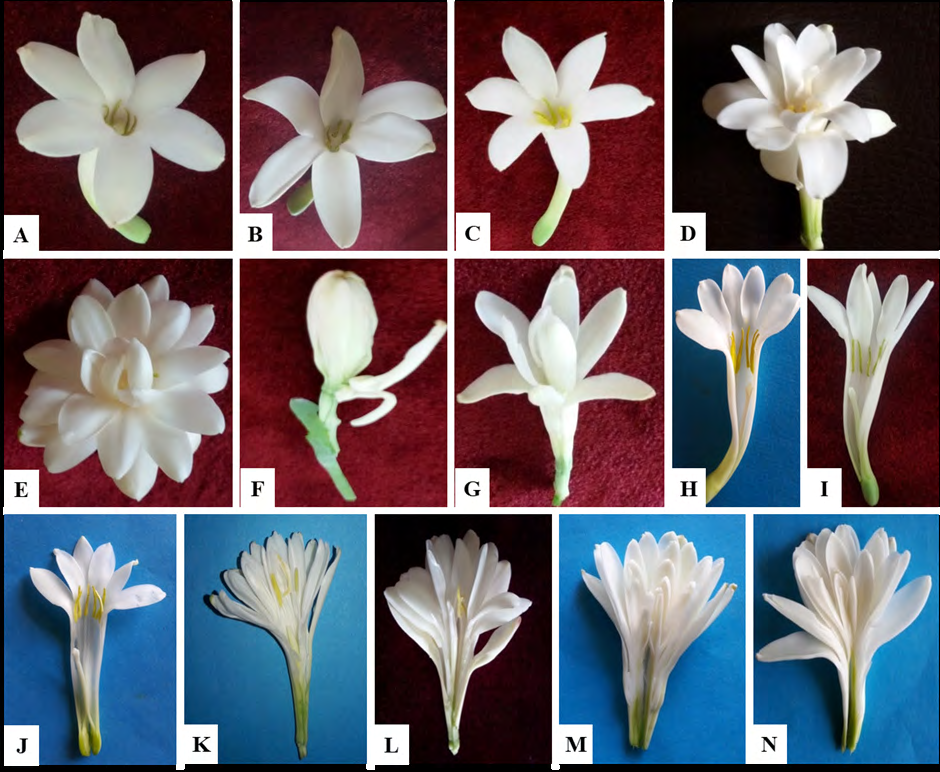
i. Visibility of anther: The anther was found visible in the genotypes TR-001, TR-002, TR-003, TR-004 and TR- 005 whereas no anther was visible in the genotype TR-006 and BARI Tuberose-1 (Figure 2: H-N).
i. Fragrance: Regarding fragrance, TR-001, TR-004 and TR-005 produced strong scented flowers whereas medium scented flowers were produced by TR-002 and BARI Tuberose-1 (Table 2). The local single genotype TR-003 emitted low to medium scent and the double genotype TR- 006 was scentless.
| Treatments | Flower Type | Bud Color | Petal Color | Floret Arrangement on Spike | Visibility of Anther | Fragrance |
|---|---|---|---|---|---|---|
| TR-001 | Single | Deep pink | White | Loose | Visible | Strong scented |
| TR-002 | Single | Light green | White | Compact | Visible | Medium scented |
| TR-003 | Single | Greenish white | White | Loose | Visible | Low to medium scented |
| TR-004 | Semi double | Green | White | Compact | Visible | Strong scented |
| TR-005 | Double | Pink | White | Compact | Visible | Strong scented |
| TR-006 | Double | Greenish white | Creamy white | Compact | Not Visible | Scentless |
| BARI Tuberose-1 | Double | Deep pink | White | Compact | Not Visible | Medium scented |
Table 2: Qualitative traits of tuberose genotypes.
Growth parameter of tuberose genotypes (Table 3) i. Days to 50 % germination of bulb: Significant difference was found in days taken to 50% germination in tuberose genotypes studied. The minimum days (17.67 days) were required to reach 50% germination by the genotype BARI Tuberose-1followed by TR-003 (18.0 days), TR-006 (18.67 days) and TR-002 (20.33 days). Genotype TR-005 took the maximum days (36.0 days) to reach 50% germination (Table 3). Chaturvedi, et al. [17] reported that cultivar local of India took the minimum days (12.46 days) for 50% germination of bulbs. In the present investigation, it is noticed that local cultivars of tuberose took comparatively lower days for bulb germination. Similar findings have been reported by Bist, 2005. This might be due to the fact that cultivar local was well adapted in these agro-climatic conditions.
ii. Germination (%): Though germination percentage did not show significant variations among the treatments studied, genotype single local TR-003, semi double TR-004 and double local TR-006 showed 100% germination (Table 3).
iii. Plant height (cm): Though plant height did not show significant variations among the treatments, the range of plant height of tuberose genotypes were 49.43cm to 58.87cm (Table 3).
iv. Leaves/clump: Leaves/clump was highly significant among the tuberose genotypes studied. The maximum number of leaves/clump (88.33) was found in TR-005 which was statistically similar with that of TR-003 (82.07) and TR- 002 (74.70) (Table 3). The genotype TR-001 produced the minimum number of leaves/clump (35.47) which was at par with BARI Tuberose-1, TR-006 and TR-004. Near about similar findings (97.8 leaves/clamp) were reported by Singh and Singh (2013) in Suvasini. In the present findings, the range of the leaves/clump was 35.47 to 88.33. Ranchana, et al. [18] showed higher number of leaves/clump (235 to 270) in some tuberose varieties which showed large variation compare to the present findings.
v. Leaves/flower stick: The maximum number of leaves/flower stick was found in TR-005 (9.83) which was statistically identical with TR-006 (9.50), BARI Tuberose-1 (8.80) and TR-003 (8.57) (Table 3). The minimum number of leaves/ flower stick was found in TR-004 (5.57).
vi. Leaf length (cm): The result revealed that there was non-significant variation of leaf length among the treatments studied. The range of leaf length was 46.20cm in the genotype TR-004 to 58.87cm in the genotype TR-005 (Table 3). Krishnamoorthy [19] recorded the range of leaf length was 66.5cm to 71.0cm in some tuberose varieties which showed higher range compared to the present findings. This might be due to difference of genotypes studied or the difference of various environments.
vii. Leaf breadth (cm): The widest leaf (2.07cm) was produced by the single tuberose TR-001 and closely followed by TR-004 and TR-006, respectively whereas local single TR- 003 produced the narrowest leaf (1.37cm) (Figure 3A &Table 3). In another experiment, Singh and Singh showed the range of leaf width was 1.37cm to 2.24cm which supported the present findings.
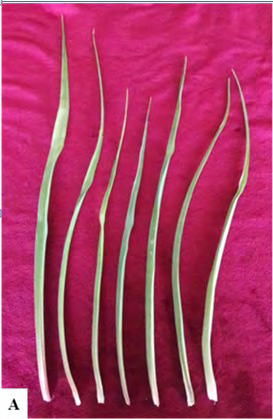
Figure 3A: Variability in leaves of tuberose genotypes, TR- 001, TR-002, TR-003, TR-004, TR-005, TR-006 and BARI Tuberose-1 respectively.
viii. Days to 50% spike emergence: The early spike emergence was recorded to reach 50% spike emergence in the treatment BARI Tuberose-1 (90.0 days) and was at par with TR-003 (91.0 days) and the late spike emergence was observed in genotype TR-005 (97.0 days) which was statistically identical with the treatment TR-001 (95.0 days) (Table 3). Chaturvedi [17] reported that local cultivar of India took the minimum days (81.25 days) for 50% spike emergence. In the present investigation, it was noticed that local cultivars of tuberose took comparatively lower days for spike emergence. Similar results were recorded by Bist D [20]. This might be due to early sprouting of local cultivar, fast growth that ultimately led to earlier spike emergence than others cultivar.
| Treatment | Leaves/ Clump | Leaves/Flower Stick | Leaf Length (cm) | Leaf Breadth (cm) | Days To 50% Spike Emergence |
|---|---|---|---|---|---|
| TR-001 | 35.47 c | 7.87 b | 51.85 | 2.07 a | 95.0 ab |
| TR-002 | 74.70 ab | 6.23 c | 48.77 | 1.40 bc | 94.0 b |
| TR-003 | 82.07 ab | 8.57 ab | 51.03 | 1.37 c | 91.0 cd |
| TR-004 | 54.07 bc | 5.57 c | 46.2 | 1.77 ab | 93.0 bc |
| TR-005 | 88.33 a | 9.83 a | 58.87 | 1.57 bc | 97.0 a |
| TR-006 | 54.95 bc | 9.50 a | 52.47 | 1.77 ab | 93.0 bc |
| BARI Tuberose-1 | 51.03 bc | 8.80 ab | 53.1 | 1.60 bc | 90.0 d |
| Level of Significance | ** | ** | NS | ** | ** |
| CV (%) | 19.14 | 7.42 | 8.69 | 8.6 | 0.91 |
Table 3: Growth parameters as influenced by tuberose genotypes (Cont’d). Means with the same letter(s) are not significantly diff
Flower yield and yield contributing characters: Various flowering parameters were also significantly influenced by the tuberose genotypes except florets/spike (Figure 4A & Table 4).
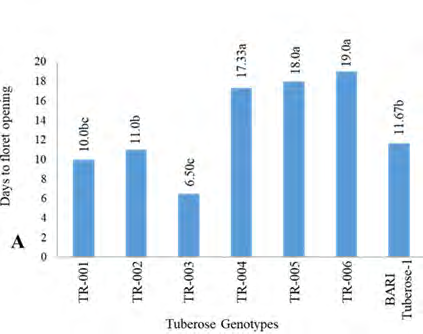
Figure 4A: Days required to floret opening from spike emergence by tuberose genotypes (A).
i. Days to floret opening from spike emergence: There was a significant variation in the days to floret opening from spike emergence among the genotypes studied (Figure 4A). Early floret opening from spike emergence were in the genotype TR-003 (6.50 days) whereas the genotype TR-006 was late (16.0 days) to open the florets which was statistically identical with the genotypes TR-005 (18.0 days) and TR-004 (17.33 days). ii. Spike length (cm): Spike length was found highly significant among the genotypes. The longest spike was recorded in TR-001 (86.49cm) and the genotype TR-002 produced the shortest spike (62.32cm) (Table 4). Singh and Singh 2013 reported that the range of spike length by some tuberose genotypes was 58.38cm to 80.38cm which partially supported the present findings. iii. Rachis length (cm): The longest rachis (42.18cm) was recorded in the treatment TR-004 (Figure 1D) which closely followed by BARI Tuberose-1 (40.97cm) (Figure 1G) and TR-006 (37.87cm) (Figure 1F) (Table 4). The shortest rachis (22.75cm) was produced by the genotype TR-003 (Figure 1C) which was at par with TR-001 and TR-005 (Figure 1A and E). This finding agreed with the findings of Singh and Singh (2013) that was 22.83cm to 42.35cm. iv. Florets/spike: Florets/spike did not show significant variations among the treatment yet the maximum (47.23) and the minimum (37.13) number of florets/spike were registered in TR-004 and TR-001, respectively (Figure 1 and Table 4). A similar result was reported by Singh and Singh where florets/spike also did not show significant variation. Mahawer, et al. [16] also showed the range of floret/spike (20.83 to 49.83) which also in consonance with the present findings. v. Floret length (cm): The highest length of floret was recorded in the treatment TR-003 (6.03cm) which was closely followed by the treatment TR-001 (5.70cm) and TR- 002 (5.53cm) (Table 4). On the other hand, BARI Tuberose-1 produced the lowest length of florets (5.0cm) which was statistically identical with TR-004, TR-006, TR-005 and TR- 002. Little bit longer floret length (6.70cm to 7.5cm) was recorded in some tuberose genotypes by Ranchana P, et al. [18]. This finding was in consonance with the findings of Patil VS, et al. [21]. vi. Floret diameter (cm): Significant variation was observed among the studied genotypes in respect of floret diameter (Table 4). The range of floret diameter was 2.70cm
in the genotype TR-006 to 3.80cm in the genotype TR-002. Ramachandrudu and Thangam [22] also reported that the range of floret diameter (3.22cm to 4.12cm) which was a little bit higher to the present findings. On the other hand, Singh and Singh (2013) reported that the range of floret diameter of some tuberose genotypes was 4.50cm to 5.38cm which showed much larger floret compared to the present findings.
| Treatments | Spike Length (Cm) | Rachis Length (Cm) | Florets/Spike | Floret Length (Cm) | Floret Diameter (Cm) |
|---|---|---|---|---|---|
| TR-001 | 86.49 a | 30.59 c | 37.13 | 5.70 ab | 3.35 ab |
| TR-002 | 62.32 c | 30.12 c | 40.4 | 5.53 abc | 3.80 a |
| TR-003 | 79.57 ab | 22.75 d | 34.83 | 6.03 a | 3.23 abc |
| TR-004 | 80.13 ab | 42.18 a | 47.23 | 5.13 bc | 3.27 abc |
| TR-005 | 74.17 b | 31.27 bc | 39 | 5.27 bc | 3.29 abc |
| TR-006 | 79.93 ab | 37.87 ab | 41.27 | 5.17 bc | 2.70 c |
| BARI Tuberose-1 | 82.65 ab | 40.97 a | 40.8 | 5.00 c | 3.17 bc |
| Level of Significance | ** | ** | NS | ** | ** |
| CV (%) | 4.18 | 8.2 | 15.72 | 4.72 | 6.71 |
Table 4: Flowering parameters as influenced by tuberose genotypes. Means with the same letter(s) are not significantly different
vii. Spike weight (g): The result revealed that there was significant variation in spike weight among the tuberose genotypes studied. The heaviest stick was produced by the genotype TR-004 (80.0g) followed by the genotype TR-006 (75.0g) (Figure 4B). The lightest stick (46.89g) was recorded in the genotype TR-003. Mahawer, et al. [16] showed that the range of spike weight (33.50g to 109.33g) which was within the range of the present findings. This might be due to different genetic make-up of the different cultivars and prevailing environmental conditions.
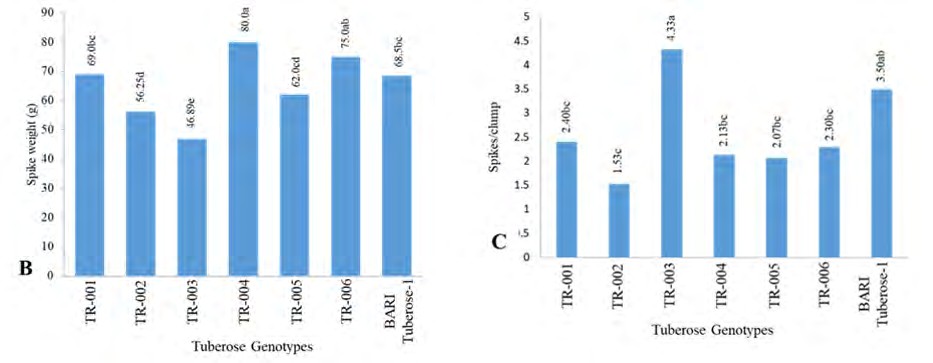
Figure 4B: Spike weight (g) of tuberose genotypes.
viii. Spikes/clump: The result revealed that there was significant variation in number of spikes/clump among the genotypes studied. The maximum number of spikes/clump (4.33) was recorded in TR-003 during the study period which was statistically similar with that of BARI Tuberose-1 (3.50) (Figure 4C). The minimum number of spikes/clump (1.53) was recorded in TR-002. The numbers of spikes/ clump increased by the genotype TR-003 may be due to the maximum number of bulbs were obtained/clump by the same genotype. Ramachandrudu and Thangam [22] reported that 2.43 to 5.73 spikes/clump. Patil, et al. [8] showed 2.5 to 4.7 spikes/clump and Murthy [23] showed 2.1 to 3.4 spikes/ clump were obtained under agro-climatic conditions of Goa which support at the present findings. This might be due to various agro climatic conditions.
Figure 4C: Spikes/clump produced by tuberose genotypes.
ix. Spikes/ha: The result revealed that there was a significant variation in number of spikes/hectare among the genotypes studied (Figure 4D). When considering spikes number production in hectare, TR-003 produced the highest spike/hectare (2,66,000) closely followed by the genotype BARI Tuberose-1 (2,12,000). The single genotype TR-002 demonstrated the lowest spike production (91,000). This might be due to varietal performance, management practices etc. Susila [24] reported that there was a variation regarding the production of spikes/ha among tuberose genotypes (90,000 to 1,62,000). This finding was lower compared to the present findings. This might be due to the difference of genotypes and the growing environment.
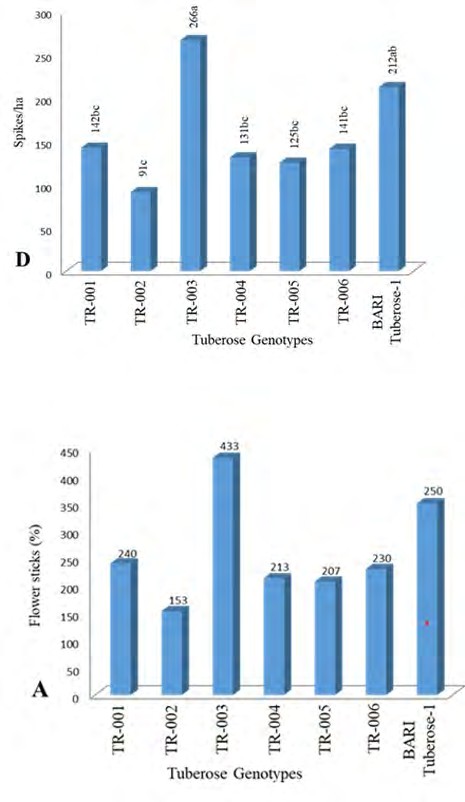
Figure 4D: Production of spikes/ha influenced by tuberose genotypes.
x. Flower sticks (%): During the study period, the highest percentage of flower sticks (433%) were recorded in TR-003 on the basis of number of bulbs planted per unit area (Figure 5A).
Figure 5A: Percent flower sticks produced by tuberose genotypes.
All tuberose genotypes produced >100% flower sticks per unit area and range was 153% to 433%. The maximum amount of flowers sticks were recorded by TR-003 due to its capacity to produce more flower sticks as well as its well adaptability with the soil and environment of the country. Ranchana [25] also showed that >100% flower sticks per unit area were produced by tuberose genotypes which were comparable with the present study.
Bulb yield and yield contributing characters (Table 5)
i. Bulbs/clump: Significantly higher number of bulbs/ clump was recorded in TR-003 (9.50) closely followed by TR- 006 (9.0) and the minimum number of bulbs/clump were produced by the genotype TR-001 (4.50) (Table 5). Singh and Singh (2013) reported that higher number of bulbs/clump (14.48 to 18.73) were obtained by some tuberose genotypes. The present findings were lower compared to report results. Different agro-ecological conditions, size of planting materials, varieties may be reason behind the variation of bulbs number/clump.
ii. Bulb weight (g): The heaviest bulbs were produced by the genotype TR-001 (30.0g) that was statistically similar to the genotype TR-006 (28.70g), BARI Tuberose-1 (26.0g), TR-004 (22.50g) and TR-005 (20.70g) (Figure 3B, G, H, E, F and Table 5). The genotype TR-001 showed better performance in respect of bulb weight which may be due to the production of minimum number of bulbs/clump. On the other hand, the maximum number of lightest bulbs was recorded in the genotype TR-003 (14.60g) which may cause the less weight of single bulbs/clump. Singh and Singh (2013) showed the range of bulb weight was 16.57g to 32.83g which supported the present findings.
iii. Bulb diameter (cm): A significant bulb diameter was observed among the genotypes studied (Table 5). The largest bulb diameter was recorded in TR-001 (3.40cm) and the smallest bulb was produced by the genotype TR-003 (2.40cm) (Figure 3B, 3D). Singh and Singh (2013) showed the range of diameter of tuberose bulb was 1.94cm to 3.05cm which was more or less similar to (2.40cm to 3.40cm) the present findings.
iv. Bulblets/clump: The maximum number of bulblets/ clump was found in the genotype TR-004 (55.0) which was statistically different from the rest of the genotypes (Table 5), whereas, the minimum number of bulblets were produced by the genotype TR-003 (18.0). Ranchana [25] showed higher amount of bulblets/clump (19.29 to 34.16) in some tuberose varieties which was comparable to the present findings.
| Treatments | Bulbs/ Clump | Bulb Weight(G) | Bulb Diameter(Cm) | Bulblets/ Clump | Bulblets Weight/Clump (G) |
|---|---|---|---|---|---|
| TR-001 | 4.50 d | 30.00 a | 3.40 a | 22.00 f | 60.00 e |
| TR-002 | 8.00 bc | 15.00 b | 2.57 b | 35.00 d | 65.00 d |
| TR-003 | 9.50 a | 14.60 b | 2.40 b | 18.00 g | 70.00 c |
| TR-004 | 7.00 c | 22.50 ab | 3.20 a | 55.00 a | 77.50 b |
| TR-005 | 5.50 d | 20.70 ab | 3.20 a | 42.00 c | 72.50 c |
| TR-006 | 9.00 ab | 28.70 a | 3.30 a | 31.00 e | 107.50 a |
| BARI Tuberose-1 | 8.00 bc | 26.00 a | 3.30 a | 51.00 b | 80.00 b |
| Level of Significance | ** | ** | * | ** | ** |
| CV (%) | 5.97 | 16.05 | 11.11 | 1.95 | 2.32 |
Table 5: Production of bulb and bulblets as influenced by tuberose genotypes Means with the same letter(s) are not significantly
Table 5: Production of bulb and bulblets as influenced by tuberose genotypes Means with the same letter(s) are not significantly different at 1% by DMRT. = Significant at 1% level of probability * = Significant at 5% level of probability v. Bulblets weight/clump (g):** The maximum bulblets weight/clump was recorded in the genotype TR- 006 (107.50g) which was significantly superior from the rest of the genotypes (Table 5). The minimum bulblets weight /clump was found in the genotype TR-001 (60.0g). Ranchana [25] reported that the range of bulblets weight/ clump was70.37g to 144.92g in 10 tuberose genotypes and Krishnamoorthy [19] reported that the range was 74.4g to 124.3g which supported the present findings.
vi. Bulbs/ha: The result revealed that there was a significant variation in bulbs number/hectare among the genotypes studied. When considering bulb production TR-003 produced the highest bulbs (582,270) which was identical with that of TR-006 (5,52,430) (Figure 5B).
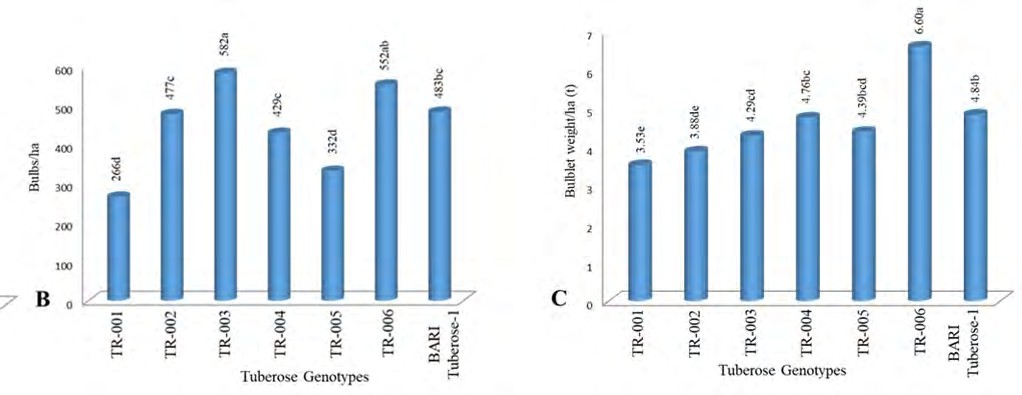
Figure 5B: Bulbs/ha influenced by various tuberose genotypes.
The BARI Tuberose-1 also produced good production (483,380). The single genotype TR-001 demonstrated the lowest bulbs/ha (2,65,980). The numbers of bulbs/ha increased which was closely followed by the genotype TR- 005 (3,32,000). Under agro-climatic conditions of Allahaba. Chaturvedi [17] showed the bulb production/ha by some tuberose genotypes those produced comparatively (2,03,942 to 2,91,665 bulbs/ha) which lower to the present findings. Different agro ecological condition, quality of the planting materials, varieties, management practices etc. may be the reason behind it. Mahawer [16] showed the range of bulb production/hectare was (4,99,999 to 5,55,555).
vii. Bulblets weight/ha (t): The result revealed that there was a significant variation in the weight of bulblets/ hectare among the genotypes studied (Figure 5C).
Figure 5C: Bulblet weight/ha (t) influenced by various tuberose genotypes.
viii. The highest weight of bulblets/hectare (6.60t) was recorded in the genotype TR-006 and the lowest was recorded by the genotype TR-001(3.53t). Singh and Singh (2013) reported that the production of bulblets weight/ha 0.14t to 0.30 t/ha in some double petaled tuberose cultivars under Delhi condition. This was very low compared to the present study. This might be due to difference of growing environment and genotypes.
Flowering life of tuberose in field and vase (Table 6) i. Flowering duration (days): Flowering duration is an important parameter which not only extends the availability of flowers but also the income of a farmer added over the period of crop. In tuberose, cultivar with longer period of flowering are preferred over the short duration as reported by Srivastava R, et al. [26]. The genotype TR-003 was the superior in respect to flowering duration (206 days) which was statistically at par with TR-001 (204 days) and BARI Tuberose-1 (203 days) (Table 6), whereas, TR-005 showed the minimum (56.0 days only). Bhaskar [27] showed that the range of flowering duration was (25.07 days to 15.84 days) under Kerala condition which was very lower from the present findings.
ii. Flowering life in the field (days): After blooming, BARI Tuberose-1 remained fresh for the longest time (14.83 days) in the field which was statistically identical with the genotype TR-004 (14.0 days), TR-006 (13.0 days) and TR- 005 (11.50 days) (Table 6). The lowest field life of flower was observed by the genotype TR-003 (7.50 days). Singh and Singh (2013) reported that the range of flowering duration was 15.14 days to 25.07 days in some tuberose cultivars under Delhi condition. The present findings were lower in flowering life as compared to the reported results. This was due to difference of genotypes and growing conditions.
iii. Deterioration started in vase (days): In the normal room condition, BARI Tuberose-1 took the longest time to start deterioration (4.67 days) in the vase and closely followed by TR-005 (4.17 days) (Table 6). The shortest time (3.17 days) was needed to start deterioration by TR-001.
| Treatments | In Field Condition | In Vase Condition | |||
|---|---|---|---|---|---|
| Flowering Duration (Days) | Flower Life in The Field (Days) | Treatments | Flowering Duration (Days) | Flower Life in The Field (Days) | |
| TR-001 | 204.0 a | 9.00 bc | 3.50 bc | 42.80 bc | 5.17 cd |
| TR-002 | 108.0 d | 9.50 bc | 3.50 bc | 49.56 b | 5.27 bcd |
| TR-003 | 206.0 a | 7.50 c | 3.17 c | 36.86 c | 4.67 d |
| TR-004 | 128.0 c | 14.0 a | 3.75 bc | 65.63 a | 5.83 bc |
| TR-005 | 56.0 e | 11.50 abc | 4.17 ab | 60.27 a | 6.50 ab |
| TR-006 | 159.0 b | 13.0 ab | 3.83 bc | 21.54 d | 5.83 bc |
| BARI Tuberose-1 | 203.0 a | 14.83 a | 4.67 a | 41.94 bc | 7.07 a |
| Level of Significance | ** | ** | ** | ** | ** |
| CV (%) | 0.91 | 13.34 | 7.91 | 6.88 | 5.34 |
Table 6: Flowering life of tuberose in field and vase life. Means with the same letter(s) are not significantly different at 1% b
i. Floret opening (%): During the vase life, the highest percentage of opened florets were recorded in TR- 004 (65.63%) which was statistically at par with TR-005 (60.27%) (Table 6), whereas the local double TR-006 showed the lowest percentage in floret opening (21.54%).
ii. Vase life (days): The maximum vase life (7.07 days) was recorded by BARI Tuberose-1 which was identical with that of TR-005 (6.50 days) (Table 6). The minimum vase life (4.67 days) was recorded in the genotype TR-003. Mahawer et al., 2013 showed that the range of vase life (5.90 days to 7.57 days) which supported the present findings. Sateesha, et al. [28] reported that the range of vase life was (9.67 days to
9.33 days) which was higher from the present findings. The correlation coefficient between all possible combinations of seven characters is presented in (Table 7). Among the 21 associations, 3 were found significant. Number of floret/ spike showed significantly positive association with rachis length (r = 0.56**) and number of spike/clump showed significantly positive association with spike length (r = 0.50*). On the other hand, spike length showed negative significant correlation with leaves/clump. Ranchana [18] reported that spike length was positively significant with spike/plant which was the reverse performance with the present findings.
| Leaves/ Clump | Plant Height | Spike Length | Rachis Length | Floret/ Spike | Spike/ Clump | Blubs / Clump | |
|---|---|---|---|---|---|---|---|
| Leaves/clump | 1 | 0.42 | -0.45* | -0.43 | -0.05 | 0.17 | 0.26 |
| Plant Height | 1 | 0.21 | -0.03 | -0.04 | 0.08 | -0.2 | |
| Spike Length | 1 | 0.25 | 0.12 | 0.50* | -0.2 | ||
| Rachis Length | 1 | 0.56** | -0.25 | -0.04 | |||
| Floret/ spike | 1 | -0.05 | 0.03 | ||||
| Spike/ clump | 1 | 0.35 | |||||
| Blubs / clump | 1 |
Table 7: Correlation coefficient of different parameters of seven cultivar of Tuberose (Polianthes tuberosa L.). ** Significant a
Conclusion
Noticeable variation was observed in the qualitative parameters like flower type, bud and petal color, floret arrangement of spike and fragrance. The genotype TR-001, TR-004 and TR-005 produced heavy scented flowers. The longest spike, the heaviest and largest bulb were produced by TR-001. TR-004 produced the longest rachis and the heaviest stick. The highest (65.63%) of florets were also opened by the genotype TR-004. The longest floret, the maximum number of flower sticks/clump (4.33) as well as the maximum flower and bulb yield/ha were recorded in TR-003. BARI Tuberose-1 remained fresh for the longest time (14.83 days) in the field and also in the vase (7.07 days). TR-005 gave better results in floret diameter, bulb production and performances in vase. Number of florets showed significantly positive association with rachis length. The spikes length showed significantly positive association with number of spikes and negative significant correlation with leaves/clump.
Recommendation
Considering fragrance, longest spike, floret length and diameter, heaviest and largest bulb, genotype TR-001 found suitable as single type cut flower for commercial cultivation in Bangladesh.
Considering fragrance, longest rachis, heaviest stick and the highest percentage of florets opening in the vase, genotype TR-004 found suitable as semi double type cut flower for commercial cultivation in Bangladesh.
Considering fragrance, floret diameter, bulb weight and diameter including performances in the vase, TR-005 was found suitable as double type cut flower for commercial cultivation in Bangladesh. Adaptive trial may be taken with TR-001 and TR-004 in some flower growing areas in Bangladesh.
Acknowledgements
We would like to express our gratitude to the Department of Horticulture, Bangabandhu Sheikh Mujibur Rahman Agricultural University, Gazipur, Bangladesh for providing the assistance.
Conflict of Interest
The authors declare no conflict of interest.
References
-
Yadav LP, Bose TK, Maity RG (1984) Effect of bulb size and depth of planting on growth and flowering of tuberose (Polianthes tuberosa L). Prog Hort 16(3 & 4): 209-213.
-
Das TK, Mitra AK, Sarkar SC (1988) Economics of tuberose cultivation in Naida district (West Bengal). Economic Affairs 33: 103.
-
Jokar MM, Salehi H (2006) The Effect of Various Preservatives Solutions on Life time of Jai Flower of Truncated Tuberose Flower, Large Flower Type of Mahalat. Agric Nat Resour 3: 299-308.
-
Randhawa GS, Mukhopadhyay A (1986) Tuberose. In: Randhawa GS (Eds.), Floriculture in India. Allied Publishers Private Limited, New Delhi, pp: 425-426.
-
Vanlalruati, Mandal T, Pradhan S (2013) Correlation and path coefficient analysis in tuberose. J Crop Weed 9(2): 44-49.
-
Bhattacharjee SK, Mallik R, Yadav LP, Mukherjee T (1981) Response of Polianthes tuberosa L to nitrogen, phosphorus and potash fertilization. Bulletin Bot Soc Bengal 35: 75-80.
-
Banker GJ, Mukhopadhyay A (1980) Varietal trail on tuberose (Polianthes tuberosa L). South Indian Hort 28(4):150-151.
-
Patil, JD, Patil BA, Chonghule BB, Bhat NR (1987) Performance of different tuberose cultivars under Pune conditions. Current Research Reporter, MPAU, Maharashtra 3(1): 118.
-
Baksh ME, Huq ASMA, Rahman MM, Elias SM (1993) J Agric Res 20(2):197-204.
-
Ara KA, Sharifuzzaman SM, Ahmed S (2009) Floriculture in Bangladesh. Expert Consultation Meeting of Floriculture. Kunming, China, pp: 09-20.
-
Uddin MN (2007) Morpho molecular characterization, diversity and heterosis in cucumber (cucumissativas L). A dissertation of Doctor of Philosophy, Department of Horticulture, BSMRAU, Salna, Gazipur, pp: 45.
-
Haider J, Maruomoto T, Azad AK (1991) Estimation of microbial biomass, carbon and nitrogen in Bangladesh. Soil Sci Plant Nutr 37(4): 591-599.
-
Khan, FN, Dadlani NK (2014) Tuberose (in Bangla). In: Khan FN (Eds.), Flower Production Technology and Post-harvest management. Second Crop Diversification Project, Department of Agricultural Extension, Khamarbari, Dhaka, pp: 9-16.
-
STAR, version 2.0.1 (2014) Biometrics and Breeding Informatics. PBGB Division, International Rice Research Institute, Los Baños, Laguna, pp; 02.
-
Gomez KA, Gomez AA (1984) Statistical procedures for Agricultural Research. John Wiley and Sons Publication, New York, pp: 20-215.
-
Mahawer LN, Bairwa, HL, Shukla AK (2013) Field performance of tuberose cultivars for growth, floral and economic characters under sub-humid southern plains and Aravalli hills of Rajasthan. Indian J Hort 70(3): 411- 416.
-
Chaturvedi A, Mishra TS, Kumar N, Singh SS (2014) Screening of different cultivars of tuberose (Polyanthes tuberosa L) under agro climatic conditions of Allahabad. Prog Hort 46(1): 146-148.
-
Ranchana P, Kannan M, Jawaharlal M (2013a) The Assessment of Genetic Parameters: Yield, Quality Traits and Performance of Single Genotypes, of Tuberose (Polianthes tuberosa L). Advan Crop Sci Technol 1(3): 1-4.
-
Krishnamoorthy V (2014) Assessment of tuberose (Polianthes tuberosa L) Varieties for growth and yield characters. Asian J Hort 9(2): 515-517.
-
Bist D (2005) Screening of tuberose (Polianthes tuberosa L) varieties for suitability under tarai conditions. MSc Thesis, G B Pant University of Agriculture and Technology, Pantnagar, pp: 39.
-
Patil VS, Munikrishnappa, PM, Tirakannanavar S (2009) Performance of growth and yield of different genotypes of tuberose under transitional tract of north Karnataka. J Eco biol 24: 327-333.
-
Ramachandrudu K, Thangam M (2009) Performance of tuberose (Polianthes tuberosa L) cultivars in Goa. J Hortic Sci 4(1): 76-77.
-
Murthy N, Srinivas M (1997) Genotype performance and character association studies in tuberose. J Ornamental Hortic 5: 31-32.
-
Susila T (2013) Performance of Tuberose cultivars under North Coastal Andhra Pradesh, India. Agric Sci Dig 33(2): 161-162.
-
Ranchana P, Kannan M, Jawaharlal M (2013b) Genetic and Correlation Studies in Double Genotypes of Tuberose (_Polianthes tuberosa_ L) for Assessing the Genetic Variability. Advan Crop Sci Technol 1(3): 05-09.
-
Srivastava R, Bist D, Chandra R (2008) Screening of tuberose (Polianthes tuberosa L.) varieties for their suitability under Taraiconditions of Uttarakhand. In: Srivastava R, et al. (Eds.), Book of Abstracts of National Symposium on Recent Advances in Floriculture. Gujarat Agricultural University, Navsari, Gujarat, pp: 1-14 & 17.
-
Bhaskar VV, Reddy PS (2006) Performance of tuberose (Polianthes tuberosa L) cultivars under the northern Telangana zone of Andhra Pradesh. National Symposium on Ornamental Bulbous Crops, pp: 30.
-
Sateesha GR, Anil K, Biradar MS (2011) Performance of different tuberose varieties under field conditions. Plant Arch 11: 359-60.
- Enhancement of Vegetative Growth and Fruit Yield in Cucumber (Cucumis sativus L.) via Spiritual Blessing (Biofield) Energy Intervention
- Production of Açaí (Euterpe oleracea Mart.) under Different Agroforestry System Management Intensities in Amazonian Floodplain (Varzea) Forests
- Coffee and the Production Region: What is the Secret to the Expression "Quality"?
- Experiential Agripreneurship Training in Sub-Saharan Africa: Integrating a Business Incubator into Postgraduate Livestock Education at the University of Buea
- Advances in Agricultural High-Quality Development
- Linking Compost Residue to ABAGE in Plants - a Short Note