
Determining Absorbance in Different Inks Using VSC-8000 H/S Technique- A Non-Destructive Optical Microspectrophotometer Modality
Examination of inks is an important aspect of questioned documents. In the present study, a non-destructive examination of inks was done owing to their different compositions namely, colorants, vehicles, solvents, dyes, resins, pigments, etc. This offers a chance for the questioned document examiner to individualize the ink when its authenticity and writer’s ownership, period of writing, or placement of ink on paper and individualization is under scrutiny. This is helpful in cases of threats, blackmail, kidnapping, suicide, ink-back dating, fake cheques and other cases. Conventionally, ink examination has been happening using TLC, HPLC, LC-MS, GC-MS, etc. In this paper, VSC-8000 has been used owing to its in-built micro-spectrophotometric modality, as it offers a non-destructive method to determine the absorbance and help individualize inks. For the present study Ball, Gel, Fiber tip pen, Sketch pen and Pencil of five different colors were used. Even bubbles on white paper were made and using VSC-8000 absorbance was noted for the visible length range. The results showed promising differentiation among the absorbance for different colors and pens. A lot more can be done by making a database library and exploring the absorbance under different VSC-based micro-spectrophotometric modalities. This method is clean, non-destructive, time-saving and userfriendly.
Introduction
The development of writing within human societies began with the purpose of sharing thoughts and information with others. Initially, people relied on spoken language for communication, but over time, they devised a more efficient method of conveying ideas through visible symbols and signs that could be easily understood by a wide audience. As the need for writing grew, people began to search for suitable writing materials [1]. The selection and variety of writing tools also evolved with time. Contemporary writing aids include graphite-based materials, lead pencils, chalk, wax and pastel crayons, various types of pens, and more. Writing can be made visible on paper or any chosen surface through the processes of adhesion or absorption. The penetration of liquid-based writing ink is primarily due to absorption [2].
The writing instruments used to sign or create documents play a crucial role in determining their authenticity and integrity. These writing tools contain specialized ink composed of two essential components: colorant and vehicle. Colorants are responsible for providing the ink with its color, while the vehicle serves as the medium in which colorants dissolve. Sometimes, a combination of two or more colorants is mixed to achieve the desired ink color. Vehicles incorporate lubricants, polymers, flow control agents, and various other components to enhance the quality and properties of the ink based on specific requirements [2, 3].
Types of Inks
Carbon Ink
Carbon ink, also known as Indian ink [2], stands as one of the oldest types of ink in existence. It is a straightforward ink variety composed of amorphous carbon in the form of a solid cake mixed with adhesive. A water-based adhesive medium is employed to dissolve the ground cake particles, and pigmented dyes are added to this liquid medium to introduce color. These liquid carbon inks are readily available in the market.
Fountain Pen Inks
Two commonly used types of inks found in fountain pens are iron-Gallo tannate ink and aqueous solutions of synthetic dyes. An advanced formulation of ink features synthetic dyes that initially produce a blue color on the paper surface but gradually turn black due to oxidation, hence earning the name “blue-black fountain pen ink” [3]. This category of ink is known for its stability as it is insoluble in water and remains resistant to abrasion. The aqueous solution of synthetic dye ink was developed in the 1950s and has since become the most popular type of fountain pen ink [3, 4].
Ballpoint Inks
The production of these inks commenced in Europe around 1939 and made their way to Argentina by approximately 1943. Reynolds ballpoint inks were introduced to the United States around 1946. These inks are composed of a blend of synthetic dyes and various glycol solvents. On occasion, carbon or graphite is added to the mixture to enhance ink stability. To impart specific characteristics, a range of other substances like fatty acids, resins, and viscosity adjusters are incorporated into the ink [5, 6, 7].
Rolling Ball Marker Inks
Rolling ball marker inks are aqueous inks with organic components and were originally produced in Japan. Organic substances, including glycols and formamide, are incorporated into these inks to prevent rapid drying of the pen. The dye retention capacity of these inks varies from efficient to poor, depending on the specific dyes used [4, 5, 7]. Certain dyes added to rolling ball marker inks have an affinity for cellulose fibers found in the paper. Some of these inks are designed to be water-resistant and contain potent organic solvents like pyridine, rendering them insoluble in water [6, 7, 8].
Fiber or Porous Tip Pen Inks
Fiber tip pen inks, which incorporate water or xylene as components, were first produced in Japan in the year 1962. These inks share similar constituents with those found in rolling ball marker ink and fountain pen ink[5]. Water-based fibre inks are soluble in water, while xylene-based fibre inks are water-resistant and only soluble in organic solvents. To prevent the drying of the fibre tip, glycol solvents are added to these inks [9].
Gel Pen Inks
Gel pen inks, a relatively recent innovation in the ink industry, were also introduced by Japanese manufacturers. Four prominent brands of gel inks entered the market: Uniball Signo, Zebra J-5, Pentel Hybrid, and Sakura Gelly Roll. These pens gained popularity due to their smoothness, ease of use, writing comfort, and versatile utility. The composition of gel inks may vary among different manufacturers, typically comprising a mixture of solvent (water), a gel polymer matrix (polysaccharides), and organic. In addition to organic dyes, these inks also contain insoluble coloured pigments. Gel pen inks produce a similar appearance to ballpoint inks [10, 11, 12].
Chemical Composition of Inks
Since 1945, various types of pens have been introduced, each with specific ink formulations tailored to meet market demands. The composition of ink has evolved significantly since its inception. Initially, natural dyes were used for coloring, but these were eventually replaced by synthetic dyes. The fundamental components of every type of ink include dyes and pigments, solvents, resins, emulsifiers, and antioxidants [13].
Dyes: Aromatic colouring agents that are readily soluble in organic solvents are commonly referred to as dyes.
The colour of dyes results from their absorption of visible electromagnetic radiation. This absorption occurs due to changes in the energy of delocalized electron systems within the dye’s aromatic structure, a phenomenon influenced by atomic configurations called chromophores [14, 15]. Pigments: Pigments are also used as colorants, encompassing natural, synthetic, organic, or inorganic colouring agents [16]. Unlike dyes, pigments have relatively low solubility and exist as insoluble finely divided particulate powders dispersed in a liquid medium. Whether a compound is considered a dye or pigment depends on its form. Examples include Blue 15 and Green 15 [17, 18, 19]. Solvents and Vehicles: The most commonly used solvent in ink formulations is water, although various organic solvents are also employed in different formulations. Glycol- based inks do not use water as a solvent, but they may be present within certain limits (up to 10% by weight) for quality control. Ballpoint pens typically contain glycol-based solvents. Benzyl alcohol is another commonly used solvent in ballpoint pens by various manufacturers [19]. Resins: Resins refer to solid or amorphous semi-solid fusible substances characterized by their high molecular weight and solubility in organic solvents. These materials remain insoluble in water. The primary source of resins used in ink formulations is derived from the secretions of trees [20]. The primary function of incorporating resins into ink is to adjust its viscosity in ballpoint pens [21, 22, 23, 24]. Lubricants: Lubricants play a significant role in ballpoint pens compared to gel ink or fountain ink pens as they facilitate the free rotation of the ball in the socket. The most commonly used lubricant to date is oleic acid, which also serves as a drying agent and viscosity regulator when added to inks [22]. Miscellaneous Ingredients: Various additional components are introduced into ink formulations to impart specific properties. Biocides, surfactants, corrosion inhibitors, thinning agents, preservatives, emulsifying agents, diluting agents, buffers, pH adjusters, and more are incorporated into inks. Forensic Examination of Inks: The examination of pen inks for purposes such as identification, comparison, age estimation of writing media, or dating is the fundamental aspect of questioned document examination. The writing instruments used to sign or write documents play a crucial role in establishing their authenticity. Manufacturers may use different ink compositions to achieve specific properties or cater to market trends, leading to variations even within batches of ink from the same producer. These variations can provide distinctive characteristics and evidential value for ink discrimination in forensic examinations such as solvents, resins, and colorants, which can be achieved through a two- step process involving the destructive or chemical analysis and a non-destructive or visual examination. The Video Spectral Comparator (VSC) is commonly used by document examiners for questioned document examinations due to its optical properties. It incorporates micro-spectrometers, effectively used for ink and paper examination. In our forensic document examination research, we aim to characterize ink features in pens using the VSC 8000. The SC 8000 conducts hyperspectral image analysis using multi-wavelength LED technology, micro-spectrophotometry, monochromators, multi-spectral cameras, and super-resolution imaging, providing a screening platform developed by Foster-Freeman. While VSC analysis can distinguish between ink samples, its advantage of comparing multiple samples simultaneously is lost, making it best suited for one-on-one comparisons with a small number of samples. The VSC can separate inks into four groups through analysis and can offer supplementary data for examining microscopic modifications, line crossings, and forgeries. Additionally, it can differentiate inks used by various pen manufacturers and detect the presence of multiple inks.
Materials and Methods
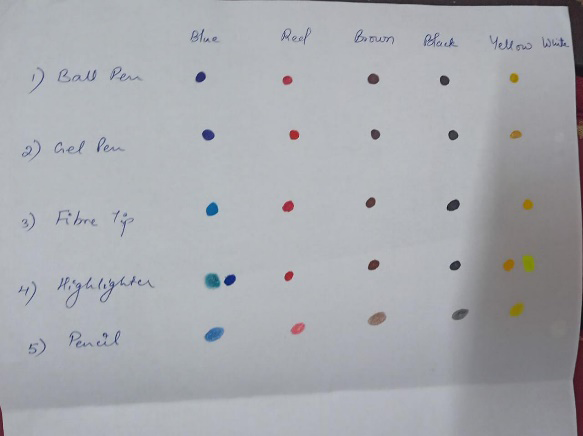
In this paper, we selected five distinct types of writing instruments: Gel Pen, Ballpoint Pen, Fiber Tip Pen, Pencil, and Highlighter. We considered ink colors of blue, black, brown, red, and yellow from popular brands like Cello, Linc, Rorito, DOMS, Luxor, and Flair. These materials were procured from the Market in South-west Delhi. We created 25 uniform and evenly spaced circles or bubbles on A-4 paper from JK-Copier using the five writing instrument types. Subsequently, we calculated the absorbance, or the percentage of maximum intensity (Y-Axis) specific or individual for that ink type, across a wavelength range of 400nm to 1000 nm (X-Axis). Absorbance was measured initially by recording the absorbance for blank or paper absorbance and then the laser light from a microspectrophotometer was placed on the bubble made by the writing instrument directed to locate them, and absorption spectral graphs were generated for the samples based on the difference between blank or paper absorbance to that of the inks absorbance. This advanced version of the VSC, developed by Foster and Freeman, offers cutting-edge capabilities for examining various types of documents, including banknotes, passports, official letters, and checks. It incorporates state-of-the-art multi-spectral LED light sources coupled with highly advanced digital imaging technology. The VSC-8000/HS can authenticate documents by scrutinizing the presence or absence of security features and signs of alterations or tampering (Robson Forensic, 2015). Notably, it features non-destructive spectral analysis to identify distinctive characteristics in paper and ink formulations. This technology enables the acquisition of Absorption, Fluorescence, Reflectance, and Transmitted spectra for the document being examined (VSC- 8000/HS, 2020) Figure 1.
Examination Procedure with VSC 8000
An analytical assessment was conducted utilizing optical properties, particularly absorption, for 25 different samples. The absorption analysis was performed on various samples, and corresponding images were captured for future reference. Additionally, spectrometer graphs were recorded for each sample during the absorption examination. The procedure commenced by powering on the system and launching the VSC software. The samples were carefully positioned on the document panel, and the camera was activated. After accurately placing the samples, the camera box was closed to ensure optimal imaging conditions. Illumination was applied to the samples to enhance picture clarity, and the samples were displayed on the screen. Within the instrument’s tool section, options were available for examining absorbance, reflectance, and fluorescence. Each sample underwent an absorbance analysis, resulting in the generation of absorbance graphs. Images were also captured for each sample, serving as a reference for future purposes. When radiation is directed onto a surface, a portion of that radiation can be absorbed by the molecules constituting the surface material. The absorption spectrum, which provides insights into the energy states of the electrons within these molecules, represents the likelihood that molecules of a particular substance will absorb photons possessing specific energy levels [25, 26, 27, 28, 29].
Results
1) For the Yellow colour maximum intensity was observed at the following wavelengths: As seen in Table 1, the least intensity is observed in the pencil writing instrument type with yellow color and highest in the sketch pen type.
| Pencil (1): | Sketch Pen (10) | Fibre Tip (15) | Gel (16) | Ball (21) | |
|---|---|---|---|---|---|
| Wavelength | 447 nm | 458 and 459 nm | 455 nm | 406 nm | 444 and 445 nm |
| % Of maximum intensity | 70.46 | 90.44 | 89.92 | 51.19 | 84.72 |
Table 1: Showing the Maximum intensity provided at a particular wavelength by different writing instruments for yellow colour ink
2) For the Black colour maximum intensity was observed at the following wavelengths: As observed in Table 2 the lowest intensity i.e. 67.31 is observed in pencil at 442 nm whereas fiber tip pen showed the maximum intensity at 461 nm.
| Pen type | Pencil (2) | Sketch Pen (11) | Fibre Tip (14) | Gel (17) | Ball (22) |
|---|---|---|---|---|---|
| Wavelength (nm) | 442 | 492 | 461 | 436 | 523 |
| % Of Max Intensity | 67.31 | 90.2 | 93.75 | 88.1 | 90.87 |
| Pen type | Pencil (3) | Sketch Pen (8) | Fibre Tip (13) | Gel (18) | Ball (23) |
| Wavelength (nm) | 435 | 448 | 484 | 489 | 439 |
| % Of Max Intensity | 63.33 | 90.02 | 90.36 | 90.84 | 88.14 |
Table 2: Showing the Maximum intensity provided at a particular wavelength by different writing instruments for black colour of i
3) For the Brown colour maximum intensity was observed at the following wavelengths: As seen in Table 3 the maximum intensity is observed for the fiber tip pen and the least intensity is observed for the pencil- type writing instrument at 484 and 435 nm respectively.
4) For the Red colour maximum intensity was observed at the following wavelengths: As observed in Table 4 pencil showed the least intensity of
78.72 % at 515 nm, whereas sketch pen showed 92.86 at 519 nm which was highest among other samples.
| Pen type | Pencil (4) | Sketch Pen (7) | Fibre Tip (12) | Gel (19) | Ball (24) |
|---|---|---|---|---|---|
| Wavelength (nm) | 515 | 519 | 519 | 499 | 550 |
| % Of Max Intensity | 78.72 | 92.86 | 92.28 | 93.08 | 89.24 |
Table 3: Showing the Maximum intensity provided at a particular wavelength by different writing instruments for the red colour of
5) For the Blue colour maximum intensity was observed at the following wavelengths: As observed in table-5 the max absorbance (% of max intensity) is absorbed for sketch pen and fiber tip pen type writing instrument with blue color of ink at 624 nm and 628 nm respectively and the least intensity is observed in pencil i.e. 78.72%.
| Pen type | Pencil (5) | Sketch Pen (6) | Fibre Tip (9) | Gel (20) | Ball (25) |
|---|---|---|---|---|---|
| Wavelength (nm) | 609 | 624 | 628 | 550 | 541 |
| % Of Max Intensity | 78.72 | 91.55 | 91.81 | 89.82 | 86.23 |
Table 4: Showing the Maximum intensity provided at a particular wavelength by different writing instruments for the blue colour o
Discussion
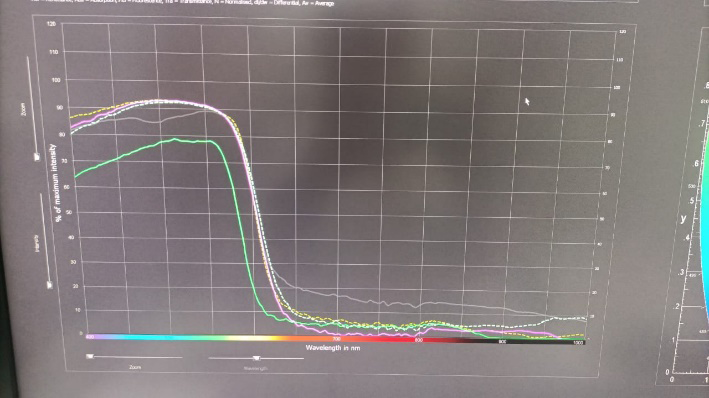
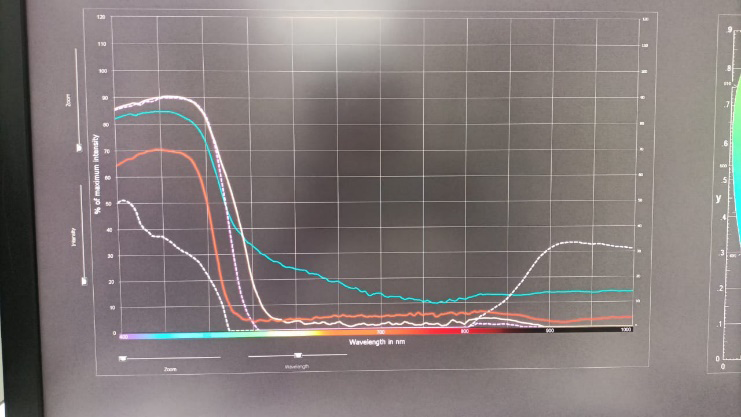
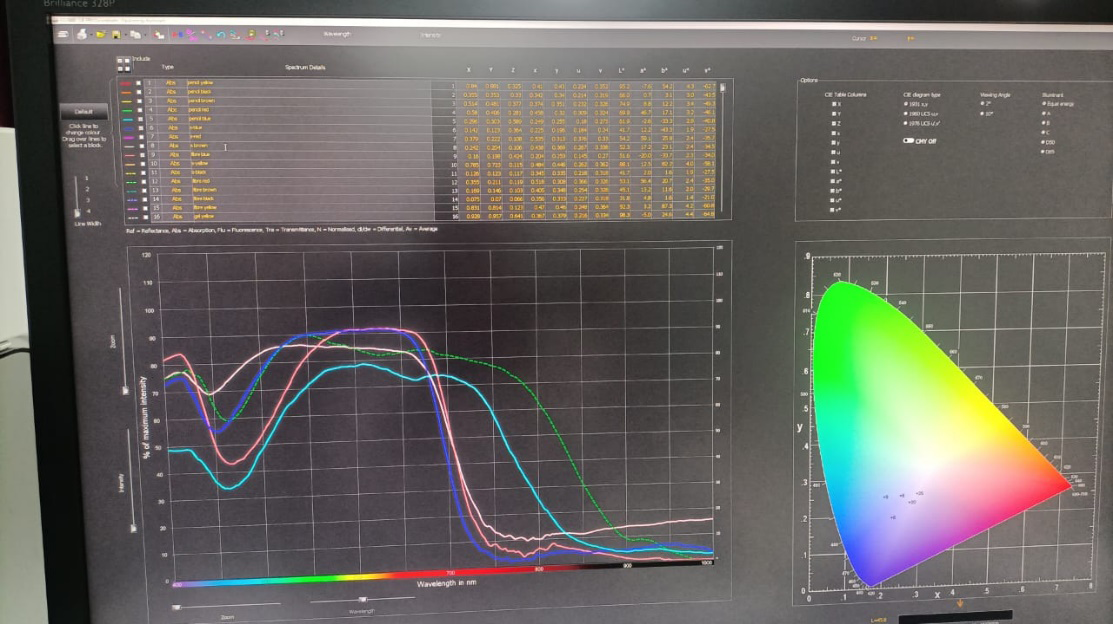
This study involved the examination and analysis of 25 distinct samples encompassing various writing instruments and ink colors. The investigation revealed that different writing instruments and inks exhibit unique peak values for specific parameters at different wavelengths, which can be valuable in forensic document examination. Notably, ink of the same color but from different brands exhibited distinct spectrographs, suggesting variations in ink components among brands. The presence of multiple absorption bands was evident, as depicted in Figures 2-6. Spectral analysis using microspectrophotometer instruments proved effective in distinguishing inks based on their relative amplitudes and positions. Such analysis provided additional reference points when comparing inks, aiding in determining the source of ink, a critical factor in forensic evidence.
From Figure 2, it can be observed that yellow ink displayed high intensity at 459 nm, reaching 90.44 with a sketch pen. For black ink from a fiber Tip Pen, the highest intensity was recorded at 461 nm, with a value of 93.75 as seen in Figure 3. Brown ink from a Gel Pen exhibited a peak intensity of 90.84 at 489 nm as evident from Figure 4. Red ink from a sketch pen displayed an intensity of 92.86 at 519 nm as depicted in Figure 5. Similarly, Blue ink from a Fiber Tip Pen exhibited a peak intensity of 91.81 at 628 nm as provided in Figure 6. One trend which was noticeable and peculiar is of the closeness of intensity values among sketch pen and fiber tip pen. For example, the case of blue color ink type sketch pen showed an intense peak at 624 nm with max intensity of 91.55, whereas fiber tip pen at 628nm showed 91.81 which might be because of the same color type or similar composition type or might be because both the sketch pen and fiber tip pen possess almost the fibrous tip only. A similar trend for fiber tip and sketch pen was observed for other colors as well namely red, yellow etc.
No such trend was seen in blue and gel pen as well making a clear distinction in the values of intensity and providing one of the non-destructive approaches for ink examination.
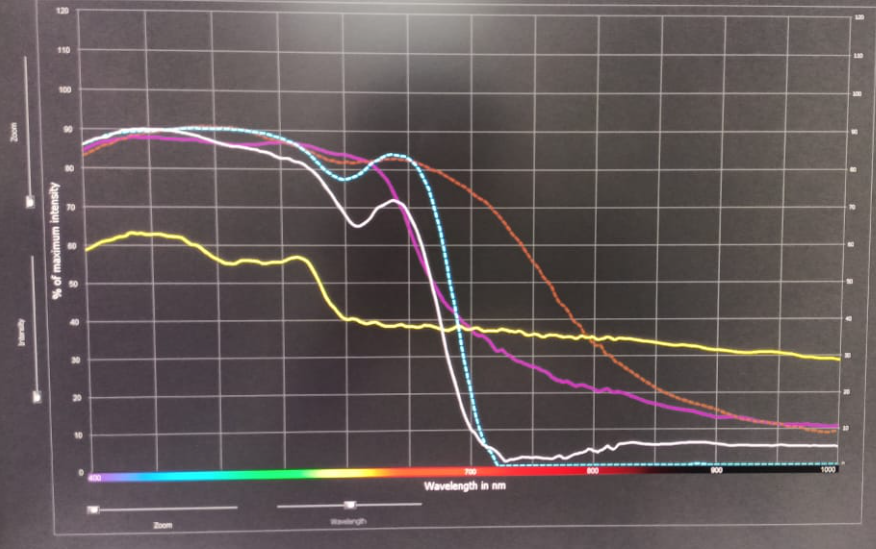
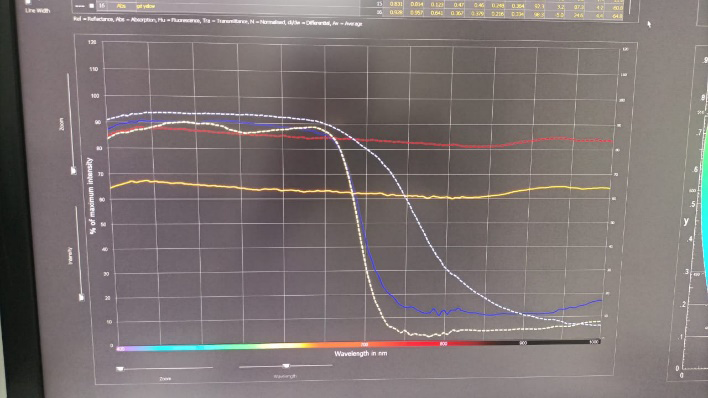
The absorption spectrum serves as a distinguishing feature for materials and can be employed to identify substances based on prior analysis. This form of spectroscopy provides insights into the chromatic characteristics of specimens. However, it’s important to note that absorbance properties are influenced not only by color and composition but also by surface type and lighting conditions. Identifying writing inks is a significant challenge in forensic document examination. This study contributes to the development of tools and procedures for forensic intelligence generation. The analysis of ink entries on questioned documents is crucial, as it can provide evidence in cases where document alterations are suspected. Additionally, the study explores the potential of ink dating techniques and the detection of ink tampering, which is prevalent in documents like bank cheques, invoices, and contracts. Future research on a broader range of ink types may further strengthen these findings.
Conclusion
In conclusion, this study examined various ink types and colors to analyze their characteristics. Parameters such as absorbance, fluorescence, and reflectance were assessed using different VSC 8000 filters. The non-destructive analysis of document examination followed by spectrograph formation for absorbance was conducted. The study concluded that the presence of multiple chromatic components in ink leads to variations in its optical properties. It characterized and analyzed inks from various writing instruments, forming a database of optical parameters. This study is a significant step towards standardizing feature-comparison methods in questioned document examination, aiding forensic document examiners in decision-making. The use of non-destructive techniques like the VSC 8000 is highlighted for ink analysis, emphasizing its rapid and effective nature in delivering results. For the future perspective, a digital library can be made for the max. and min. intensity related to the major manufacturing companies and the results can be matched against the same. Differentiation can also be made based on IR range, X-ray and other wavelengths based on the nature of their composition. This method is clean and saves the sample as well as the time of the questioned document examiners.
References
-
Agarwal A, Sharma N, Negi YS (2016) Review Techniques for the characterization of inks. IOSR J Appl Chem 9(10): 76-96.
-
Age of signature/ink (2018) Anil Gupta Forensic & Handwriting Expert.
-
Bisesi MS (2006) Scientific examination of questioned documents. CRC press.
-
Brunelle RL, Crawford KR (2003) Advances in the forensic analysis and dating of writing ink. Charles C Thomas Publisher.
-
Brunelle RL, Reed RW (1984) Forensic Examination of Ink and Paper Springfield IL CC Thomas, pp: 124-133.
-
Azri AH, Mohd Nazri MAI (2020) Plink the 9th International Innovation Invention and Design Competition pp: 285-287.
-
Fryd CFM (1974) The examination of inks on documents. Med Sci Law 14(2): 87-92.
-
Harralson HH, Miller LS (2017) Huber and Headrick’s Handwriting Identification Facts and Fundamentals. CRC Press.
-
Harrison WR (1958) Suspect documents their scientific examination.
-
Hilton O (1992) Scientific examination of questioned documents. CRC press.
-
Koppenhaver KM (2007) Forensic document examination principles and practice.
-
Lewis J (2014) Forensic document examination fundamentals and current trends. Elsevier.
-
Mohammed LA (2009) Alterations erasures and obliterations of documents. Wiley Encyclopedia of Forensic Science.
-
Moody CM (2010) Black writing ink analysis by direct infusion electrospray mass spectroscopy. Electronic Theses and Dissertations 1648.
-
Mozayani A, Noziglia C (2010) The forensic laboratory handbook procedures and practice. Springer Science & Business Media.
-
Purba MK, Gupta S, Gupta RR, Shukla SK (2019) A survey of techniques used for Ink examination. Journal of Punjab Academy of Forensic Medicine and Toxicology 19(1): 155.
-
Robertson EW (1991) Fundamentals of document examination. Rowman & Littlefield.
-
Shrivastava PK (2021) Electronic evidence in crime investigation-darknet & policing. The Indian Police Journal 68(3): 43-51.
-
Sharma DB (2005) Forensic science in criminal investigation & trials. Universal Law Publishing Company.
-
Amador VS, Pereira HV, Sena MM, Augusti R, Piccin E (2017) Paper spray mass spec-trometry for the forensic analysis of black ballpoint pen inks. J Am Soc Mass Spectrom 28(9): 1965-1976.
-
Asri MN, Noor A, Nor AM, Desa WN, Ismail D (2019) Forensic Analysis of Gel Pen Inks using Hyperspectral Imaging coupled with Chemometric Procedures. Arab Journal of Forensic Sciences and Forensic Medicine 1(9):1174-1184.
-
Braz A, Lopez-Lopez M, Garcia-Ruiz C (2013) Raman spectroscopy for forensic analysis of inks in questioned documents Forensic Sci Int 232(1-3): 206-212.
-
Brown C, Kirk PL (1954) Paper Electrophoresis in the Identification of Writing Inks Comparison with Horizontal Paper Chromatography. J Crim L Criminology Police Sci 45(4): 473.
-
Brunelle RL, Reed RW (1984) Forensic examination of ink and paper. Spring-field, IL: CC Thomas, pp: 124-133.
-
Bugler J, Buchner H, Dallmayer A (2004) Differentiation of ballpoint pen inks by thermode-sorption and gas chromatography mass spectrometry. Arch Kriminol 214(5-6): 141-148.
-
Bugler JH, Buchner H, Dallmayer A (2005) Characterization of ballpoint pen inks by thermal desorption and gas chromatography-mass spectrometry. J Forensic Sci 50(5): 1209-1214.
-
Bugler JH, Buchner H, Dallmayer A (2008) Age determination of ballpoint pen ink by thermal desorption and gas chromatography mass spectrometry. J Forensic Sci 53(4): 982-988.
-
Burkinshaw SM, Hinks D, Lewis DM (1993) Capillary zone electrophoresis in the analysis of dyes and other compounds employed in the dye manufacturing and dye using industries. Journal of Chromatography 640(1-2): 413-417.
-
Copper C, Erbach T, McDonough M, Drury N, Moini M (2019) Analysis of ballpoint pen inks directly from paper using capillary electrophoresis. Forensic Chemistry 13: 100145.
- Reassessing Baldus Study Data
- Suicide and the Emotions of Men and Women in Uniform
- The Need to Teach Research Methods to Criminal Justice Students
- Combating Cyber VAT Fraud in the EU Member States: A Comparative Study of Criminal and Criminal Procedure Law
- Cyber VAT Fraud in the EU: A Criminological Analysis
- Advancing Compassionate Justice: Redefining Victim and Offender Rights in Victimology and Penology