
Influence of PGPR, AM Fungi and Conventional Chemical Fertilizers Armament on Growth, Yield Quality, Nutrient’s translocations and Quercetin Content in Onion Crop Cultivated in Semi-Arid Region of India
The rhizosphere is the thin region of the soil that is directly affected by secretion from the roots and the microbes accompanying the soil, known as the root microbiome. The rhizosphere involving the pores of the soil includes many beneficial bacteria and other diverse microorganisms. The field experiment was conducted during the Kharif season at the Lasalgaon taluka of Nashik district farmers’ field, Maharashtra, India, to determine the influence of biofertilizers on onion. To study the effect of five combinations of biofertilizers compared with the recommended rate of chemical fertilizers on cash crop onion cv. Nashik Red. The treatments were control (100% RRF), Azotobacter + AM fungi, Azospirillum + AM fungi, Azotobacter + Azospirillum, Azotobacter + Azospirillum + AM fungi and Bio consortium (NPK) + Azospirillum + AM fungi. Height (64.24 ± 3.22 cm) and the number of leaves (13.58 ± 3.12) of the plant was maximum with the application of the consortium (NPK) + Azospirillum + AM fungi. The maximum leaf area (84.45 ± 2.44 cm2) was recorded in T6 and the minimum in T4 (82.45 ± 2.25). Different doses of onion plants inoculated with biofertilizers showed a significant increase in quality parameters such as neck thickness (1.12 ± 0.22cm), bulb diameter (14.45 ± 0.53cm), bulb size index (19.45 to ± 0.51 cm2), bulb weight (68.15 ± 2.27g), bulb length (6.21 to ± 1.48 cm), bulb scale (11.23 ± 1.23) was maximum in the consortium (NPK) + Azospirillum + AM fungi treated onion. Biofertilizers such as consortium treatments such as consortium (NPK) + Azospirillum + AM fungi resulted in a better morphological character, quality yield, TSS, starch, reduction sugar, quercetin contents among root colonization of mycorrhizae compared to the uninoculated control (100% RRF). The consortium (NPK) + Azospirillum + AM fungi and 100% RRF provided a maximum bulb length of 6.21 ± 1.48cm and 6.12 ± 1.59cm, respectively. The maximum number of scales per bulb (11.23 ± 1.23) was counted by the consortium (NPK) + Azospirillum + AM fungi. Plants treated with the consortium (NPK) + Azospirillum + AM fungi produced the maximum bulb weight (68.15 ± 2.27g) and the minimum (64.23 ± 2.39 g) in Azotobacter + Azospirillum. The maximum TSS (13.354 %) was noticed in T6 and the minimum in T3. The maximum percentage of starch (6.65%) and the highest percentage of reducing sugars (1.98%) were detected by Azotobacter + Azospirillum + AM fungi. Total pooled weight loss (%) up to 60 days was found to be minimal (11.87%) by Azotobacter + AM fungi followed by Azotobacter + Azospirillum (14.40%). The maximum colonization of mycorrhizae (79.9%) was recorded in the consortium (NPK) + Azospirillum + AM fungi and the minimum in the control (46.67%). It was therefore concluded that the combination of the consortium (NPK bioinoculum) + Azospirillum + AM fungi are improved for onion quality and productivity than the others in terms of sustainable production and environmental consideration.
Introduction
Microbial populations (MP) play an important role within the functioning of plants by influencing their morphology, physiology and overall crop development. Numerous members of the beneficial rhizosphere microbiome (BRM) colonize the roots to protect microbic defense through plant defense mechanisms (PDM) and are useful to plant growth (PG), quality yield (QY) and productivity. The importance of the rhizosphere microbiome (RM) for plant growth and productivity has been well-reputed for the overwhelming majority of rhizosphere microbiome (RM). The rhizosphere soil (RS) is completely influenced by root secretions and associated soil microorganisms (SMO) known as the root microbiome (RMB). The RMB plays a vital role in the functioning of plants by prompting their overall performance. Microbial species of the rhizosphere are much helpful to PG, productivity and increase Soil health (SH). The valuable plant- microbe associations (PMA) within the rhizosphere are the foremost factors of plant development and SH. Various PGPR and AM fungi are very potential rhizosphere microorganisms (PRM) to colonized and associated with plant roots and supportive to phosphate (P) and K solubilizing, free-living symbiotic nitrogen fixating (SNF), antibiotic manufacturing and reducing plant pathogens (PP), predators and parasites in terrestrial plants in global ecologies. The principal common RM within the mycorrhizosphere is Pseudomonas, Azotobacter, Pseudomonas, Fraturia, Azospirillum, Rhizobium and AM fungi.
Onion (Allium cepa L.) belongs to the genus Allium of the family Alliaceae. Onion is by far the most important of the bulb crops cultivated commercially in nearly most parts of the world. India is the world’s second-largest onion producer country. Indian onions are renowned for their pungency and are accessible round the year. Onion is one of the crucial spices and vegetable crops having massive use in daily cooking. Onion is the most indispensable vegetable crop used as condiments globally. Onion is rightly called as “Queen of Kitchen” an important bulbous vegetable crop. It is used in the preparation of different foods, and in therapeutic medicine all over the world. Besides, they are rich in flavonoids like quercetin and sulfur compounds, such as allyl propyl disulfide, that have perceived benefits to human health [1]. Onion and garlic have immense medicinal value, as a possible cancer preventive [2]. Onions contribute significant nutritional value to the human diet, have medicinal properties, and are primarily consumed for their unique flavor or for their ability to enhance the flavor of other foods [3]. They are used primarily as flavoring agents and their distinctive pungency, which is due to the presence of volatile oil (allylpropyl disulphide). The mature bulb contains some starch, appreciable quantities of sugars, some protein, and vitamins A, B, and C [4]. It is also used as a preservative and medicine [5]. The indiscriminate use of chemical fertilizers resulted in degradation of SH, soil erosion (SE) and loss of organic matter (MO), nitrate pollution (NP) and health hazard (HH) for human beings. For eco-friendly production and productivity along with quality, organic farming is perhaps the alternative means. Only a few researchers like [3, 6, 7] studied in this regard to find out the effect of biofertilizers on onion. However, till now no systematic approaches have so far been made to utilize the agro-ecological condition of this state and little information is available about the organic cultivation of this crop in the country. Therefore, it was considered worthwhile to carry out the present investigation for studying the growth, yield, and quality of onion cv. Nashik Red under alluvial conditions of Maharashtra. PGPR is an aggressive group of beneficial bacteria associated with the rhizosphere. PGPR’s benefited for PG because of their ability to provide and mobilize or facilitate the absorption of various nutrients in the soil as well as synthesize and change the concentration of various phytohormone to improve growth and can suppress the activity of a pathogen by producing various compounds or metabolites such as antibiotics and siderophore [8]. The management of mineral nutrition could be a key pre-harvest issue that determines the quality yield of the onion plant. The target of this study is to work out the results of inoculating onion with consortium PGPR and AM fungi on the standard of onion under field conditions and compared with conventional agriculture (CA) during winter cultivation the results are helpful to farmers and societies to nutritionary values of onion producing through organic nutrients.
Materials and Method
Location, Climate, and Soil of the Experimental Site
A field experiment was conducted at the farmer’s field of Lasalgaon taluka of Nashik district, Maharashtra, India during the winter cultivation. The site Lasalgaon taluka is positioned among 8’27.74” N and 740 13’24.44”E longitude and its elevation from sea level is 581 meters. The climate is sub-tropical with a mean maximum temperature ranging between 24 - 35°C in summer and a mean minimum temperature ranging between 10-3°C in winter. The mean annual rainfall is around 1232 mm. The soil is clay to sandy loam, deep, well-drained, and productive for growing a large variety of different agricultural/ horticultural crops.
Soil Sampling and Analysis
Soil samples (0-30cm) were collected randomly from each site using the standard conning and quartering method before (Initial time) and after harvest. Air-dried soil samples were used for different physiochemical analyses. pH was determined in 1.25 (w/v) solutions of dried samples in water and the same was used for the determination of electrical conductivity (EC). Air-dried samples were processed (addition of 40% NaOH and distillation) in a Kel Plus Nitrogen estimation system (Class DX, Pelican Equipment’s) followed by determination of available nitrogen by titration with 0.02N H2SO4 [9]. Available phosphorus was determined by the Olsen method using samples with high pH sodium bi- carbonate as extracting agent [10, 11]. Available potassium was determined in a 1N ammonium extract using a flame photometer [11].
PGPR’s, AM Fungi and Chemical Fertilizers
Microorganisms Preparation and Applications PGPR Inoculant: PGPR microbial inoculants (Azotobacter, Pseudomonas, Fraturia, and Azospirillum) have been proliferated in nutrient broth medium. Then each PGPR develops eliminated on the top of a logarithmic growth phase, and become aseptically transferred to plastic containers, which include triple sterile talc powder and then were mixed well. PGPR concentration was adjusted to 1×10¹⁰ CFU/g in all inoculants. PGPR consortium prepared and contained Pseudomonas, Azotobacter, and Fraturia (1:1:1 CFU). PGPR and Azotobacter and Azospirillum (1:1 ratio). As per treatment combination all PGPR @ 1.0 g/plant become inoculated across the seedling during the time of transplanting. PGPR has been additionally applied to onion growth stages in four equal splits dose.
AM fungi Inoculant: The density of consortium AM fungi that were mixed with triple sterile talc powder, adjusted with 3000 infected propagules (IP) per gram of inoculant containing growing subtract, infected roots bits and hyphal and mycelial mass. AM fungi inoculum contained Aculospora logula-15%, Glomus fasciculatum-20%, Glomus intraradices-40%, Gigaspora margarita-15%, and Scutellospora heterogama-10% infective propagules (IP). AM fungi @500 IP/ plant were applied as a root dipping method at the time of planting. After planting onion, necessary irrigation was given to all treated and untreated plots.
Chemical Fertilizers (CF): Various levels of chemical fertilizers was applied in control treatment in the form of Di- ammonium phosphate (DAP) 1.08 q ha-1, K 1.0 q ha-1, and N 2.275 q ha-1 as 100% recommended rate of fertilizers (RRF) as farmers practiced. Urea was also applied as a top dressing in equal splits as per recommendations.
Field Preparation, Nursery Raising, and Experimental Design
The experimental field was opened with a power tiller and kept exposed to the sun prior to the next ploughing. It was prepared afterward by ploughing and cross ploughing followed by laddering. The cropping pattern of the land was paddy - onion- paddy and paddy - garlic - paddy. The experiment was laid out in randomized block design with four replications. After 30 days, uniform peanut-sized of onion seedlings (Variety: Nashik Red nursery raised in the same field) was selected and treated with and without PGPR and AM fungi and transplanted in experimental plots with the spacing of 20cm x10cm in bed size of 10.0 × 10.0 meter. PGPR and AM fungi treatments were considered as Azotobacter + AM fungi, Azospirillum + AM fungi, Azotobacter + Azospirillum, Azotobacter + Azospirillum+ AM fungi and consortium (NPK) + Azospirillum + AM fungi (consortium PGPR consist of Azotobacter, Pseudomonas and Fraturia) and compared to control treatment without microbial inoculant (100% RRF). The plantation was finished in the first week of December with four replicate in each treatment in a randomized complete block design (RCDB). 100% RRF was added to control treatments only. Recommended cultural operations (RCO) were carried out during the entire cropping period to ensure a healthy crop. Field soil analysis was estimated initial time and after harvest. The starch was estimations through the stander method [12] and reducing sugar [13] were followed. The bulbs were harvested at the mature stage. The loss of weight of different treatments was recorded at fortnight intervals up to 60 days. For this purpose, randomly selected bulbs of known weight were kept open in perforated trays by taking 50 from each treatment and kept at room temperature. Nutrient uptake in the shoot was determined. The physicochemical properties of the soil were determined (Figure 1-8) (cm), biomass (q ha-1) and gross yield (q ha-1) were recorded after harvest of the crops.
Morphological and Yield Attributes Trials
The observations were recorded at 75 DAS and at the maturity of the crops. Randomly, twenty plants were selected after one meter of each plot boundary in each replicates for all the characters such as plant height (cm), the number of leaves/plant, neck thickness (cm) and leaf water potential (LWP) percentage, and leaf area (cm2). The observation of bulb diameter (cm), bulb size index (cm), yield (q ha-1), total soluble sugar (TSS) percentage, Dry matter percentage, dry biomass (q ha-1), and Quercetin (mg kg-1 dw) content was recorded after harvest of the crops.
Assessment of Relative Leaf Water Potential (RLWP)
RLWP percentage was measured as fresh and constant weight method.
Data Collection and Analysis
Assessment of Shoot Nutrients (ASN): Arbitrarily four places were selected for plants samplings in all onion plots. For nutrient analysis of the shoot systems, the oven- dried samples were finely ground. Nitrogen (N) in the shoots was determined using an elemental analyzer (EA 3000, Eurovector, Italy). To estimate the phosphate (P) and potassium (K) level in the shoots, 1g of the finely ground sample was subjected to a wet oxidation treatment using tri-acid (HNO3: H2SO4: HClO4; 10:1:4) digestion in a digestion block (KELPUS, KES121; Pelican Equipment, Chennai, India) at 200o C. Following acid digestion, the samples were diluted and filtered for further nutrient analysis. Shoots P was determined by the vanado molybdo phoshoric acid colorimetric method [14] using a spectrophotometer (Specord 200; Analytik Jena, Germany). K was measured by the ammonium acetate method of Hanway, et al. [15] by using a flame photometer (Model FP114; Thermo Scientific, USA). To determination of iron (Fe), copper (Cu), and zinc (Zn) content in shoot samples were digested in a microwave (Mars 5, CEM). Following the US EPA 3051A method (US EPA 2007), the metal concentration in the acid digestive was determined using atomic absorption spectrophotometer (AAS) (SOLAAR, TJA Solution, UK).
Biochemical Changes of Onion
Assessment of Quercetin Extraction in Onion Bulb: Onion happens to be one of the most quercetin-rich crops (300 mg kg-1 fw) as compared to kale (100 mg kg-1 fw), blackcurrants (40 mg kg-1 fw), and broccoli, black grapes, and apple (30 mg kg-1 fw) [16]. Red and white onion with a 4-6 cm diameter and a weight of about 80-100gm were selected for extraction of Quercetin content. The leaves, roots, and outer dry skins were removed to mimic domestic peeling after 75 DAS and at harvest. Each onion was divided longitudinally from the top to the base into four wedge-shaped pieces. Two opposite pieces from each onion were chopped and homogenized in a Waring blender. Each onion sample were comprising 5.0g of homogenized onion tissue, were extracted for two weeks at -200 C in 20 mL of acidified (150mM HCL) ethanol.
HPLC Analysis: The analysis of the onion and garlic extracts was performed on an Agilent 1100 HPLC system. The column used was a Phenomenex Luna 5u C18 (2) (150 x 4.6 mm, 5um). The mobile phase consisted of (A) 50 mM acetic acid (HAC) in Millipore ultrapure water with 5% acetonitrile (v/v) and (B) acetonitrile with 5% methanol (v/v). The flow rate was 1.0mL min-1 and the injection volume 10 uL. The double gradient used was as follows: 0-2 min, 0% eluent B; 2-17 min, 0-45% B; 17-20 min, 45-80% B; 20-21 min, 80% B; 21-23 min, 80-0% B; 23-35 min, 0% B. External standards used for identification and quantification were quercetin (SigmaAldrich Chemie Gmbh) and quercetin 4- glucoside (Extra synthase). The absorbance will be measured at 370 nm using an Agilent 1100 (G1315B) diode array detector (Agilent Technologies). Results will be presented as milligrams (mg) of quercetin 4 glucoside equivalent per kilogram fresh weight of onion (mg kg-1 fw) for all forms of quercetin.
Estimation of AM Fungal Colonization in Onion Root
Assessment of mycorrhizal root colonization (MRC) percentage in the root system, approximately 1-2 g freshly collected fine roots were used for staining and the assessment of MRC percentage. Roots were washed in freshwater, cleared with 10% KOH, acidified with 1N HCl, and stained with 0.05% Trypan blue [17]. Quantification of root colonization for AM fungi was conducted using the gridline intersection method [18] and 100 segments of each sample were observed under a compound microscope (Leica DM750). The presence or absence of AM fungal structure in the root system such as vesicles, arbuscules, and hyphae at particular fixed points was recorded, and the results were expressed as a percentage MRC of observations.
Statistical Analysis
Statistical Analysis Observations on growth, productivity, and alternation in physio-chemical properties in soil and nutrient uptake were analyzed using SPSS (SPSS Inc. version 17.0). Results were subjected to one-way analysis of variance and the significant difference was determined according to Duncan’s Multiple Range Test at a significant level of P<0.05.
Results and Discussion
Physio-chemical Properties of Soil (Initial Time and at Harvest
Comparing the physio-chemical properties of the soil before and after the experiment is presented in Figures 1-6. A
slight alteration of pH was recorded between the treatments (Figure 1). Increase and decrease the response of nutrients concentration was observed with an increase in fertilizer treated with and without PGPR and mycorrhiza inoculation. Microbial-mediated onion showed a significant (P< 0.05) decrease in electrical conductivity (Figure 2). The continuous alterations of equilibrium between cations and anions present in the soil. Plant uptake of soluble salts by crops and or leaching of cations such as calcium, magnesium can decrease the pH and at the same time chloride accumulation in the surface due to capillary action can be responsible for the decrease in EC [3, 5, 19, 20, 21, 22]. Available N in the soil is directly associated with soil organic matter (SOM). The gradual increase in N is due to an increase in soil organic matter (SOM) and the microbial activities (MA) which make N available from organic matter (OM) to microbial inoculants treated plots. A maximum significant increase (P<05) in available N (0.0078%) was recorded from consortium (NPK) + Azospirillum + AM fungi treated plot (Figure 3,4) and minimum in control (0.0065%). Available P content was noticed significantly lower in treatment T6 (39ppm) as compared to treatment T1 control (49 ppm) soil and it may be due to P mobilizing activity of mycorrhiza, added during plantation activities (Figure 5). A sharp decrease in K content in soil was noticed in all microbial treated onions compared to control (Figure 6). Maximum decrease of K has been recorded in consortium (NPK) + Azospirillum + AM fungi treatment T6 (140ppm) and minimum in control (105 ppm) as compared to initial time (38ppm). Various factors including weathering, upward translocation of soluble ions through capillary action, involvement from the degradation of plants litters can be responsible for such variation of K content in different treatments of onion crop [23, 20].
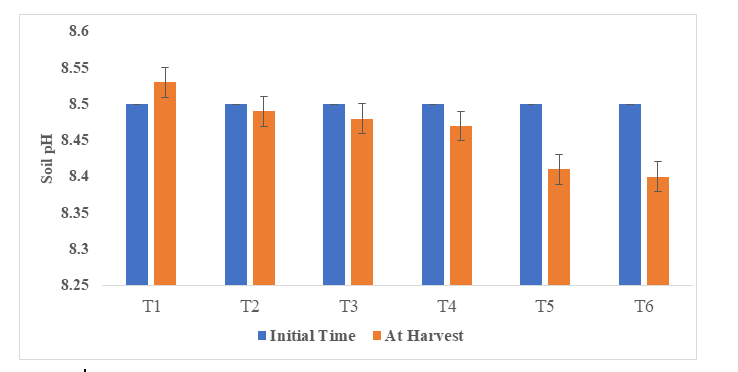
T1 = Control (100% RRF); T2 = Azotobacter + AM fungi; T3 = Azospirillum + AM fungi’ T4 = Azotobacter + Azospirillum; T5 = Azotobacter + Azospirillum+ AM fungi; T6 = Consortium (NPK) + Azospirillum+ AM fungi; DAS= Days after sowing. Figure 1: Soil pH at Initial time and after crop harvest (R-4).
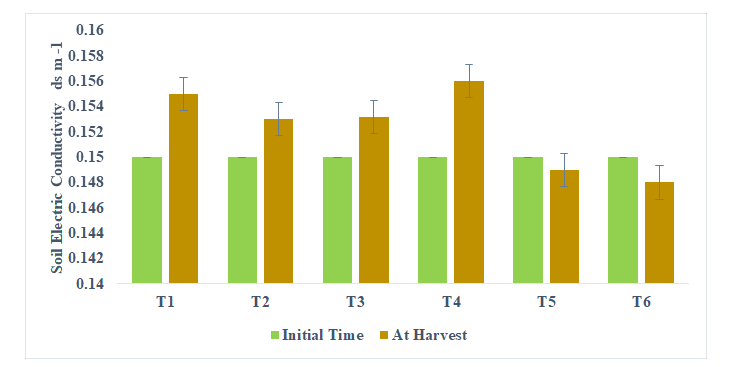
T1 = Control (100% RRF); T2 = Azotobacter + AM fungi; T3 = Azospirillum + AM fungi’ T4 = Azotobacter + Azospirillum; T5 = Azotobacter + Azospirillum+ AM fungi; T6 = Consortium (NPK) + Azospirillum+ AM fungi; DAS= Days after sowing. Figure 2: Soil Electric Conductivity at Initial time and after crop harvest (R-4).
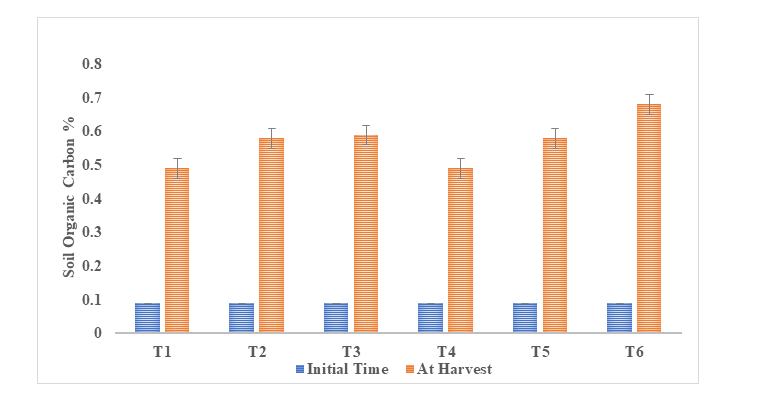
T1 = Control (100% RRF); T2 = Azotobacter + AM fungi; T3 = Azospirillum + AM fungi’ T4 = Azotobacter + Azospirillum; T5 = Azotobacter + Azospirillum+ AM fungi; T6 = Consortium (NPK) + Azospirillum+ AM fungi; DAS= Days after sowing. Figure 3: Soil organic carbon at initial time and after crop harvest (R-4).
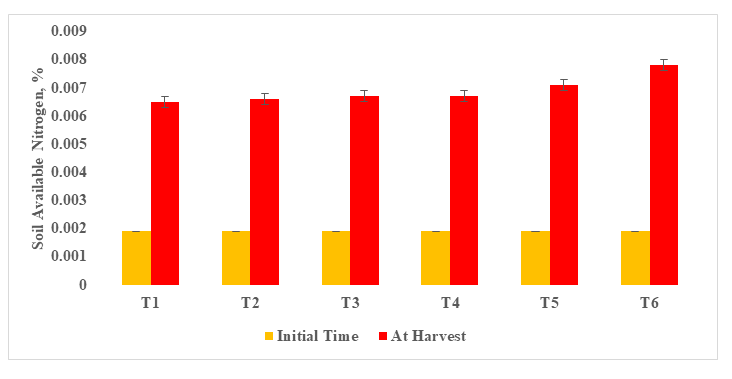
T1 = Control (100% RRF); T2 = Azotobacter + AM fungi; T3 = Azospirillum + AM fungi’ T4 = Azotobacter + Azospirillum; T5 = Azotobacter + Azospirillum+ AM fungi; T6 = Consortium (NPK) + Azospirillum+ AM fungi; DAS= Days after sowing. Figure 4: Soil available nitrogen concentration at initial time and after crop harvest (R-4).
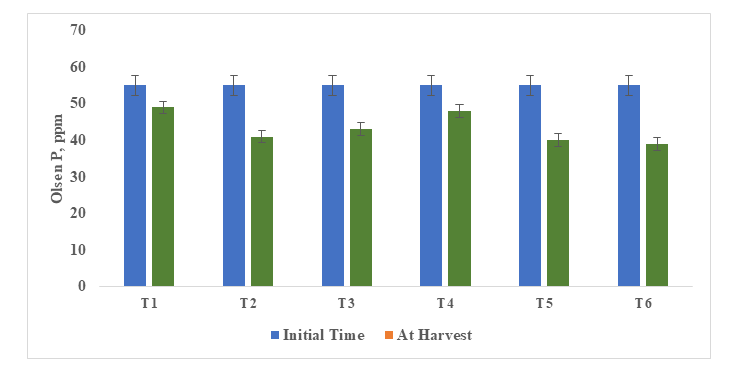
T1 = Control (100% RRF); T2 = Azotobacter + AM fungi; T3 = Azospirillum + AM fungi’ T4 = Azotobacter + Azospirillum; T5 = Azotobacter + Azospirillum+ AM fungi; T6 = Consortium (NPK) + Azospirillum+ AM fungi; DAS= Days after sowing. Figure 5: Soil Olsen’s P concentration at initial time and after crop harvest (R-4).
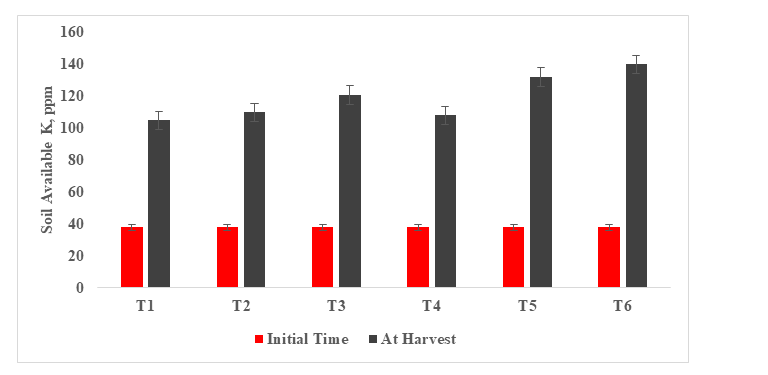
T1 = Control (100% RRF); T2 = Azotobacter + AM fungi; T3 = Azospirillum + AM fungi’ T4 = Azotobacter + Azospirillum; T5 = Azotobacter + Azospirillum+ AM fungi; T6 = Consortium (NPK) + Azospirillum+ AM fungi; DAS= Days after sowing. Figure 6: Soil available Potassium concentration at initial time and after crop harvest (R-4).
Measurement of Plant Growth Parameter (MPGP)
Morpho- agronomic Characters (MAC): The consortium PGPR and AM fungi-treated onion performed better than the untreated control (100% RRF). No significant differences were recorded at 75 DAS. At the time of harvest, the mean results indicate that T6 (consortium (NPK) + Azospirillum+ AM fungi) has been found to produce the highest onion height (64.24±3.22 cm) followed by T1 (100% RRF). Results agreed with [24]. Schmitz O, et al. [25] reported that the maximum plant height of onion was found through the application of AM fungal inoculation. Prasad [3] reported that the maximum plant height of onion red was found through the application of AM fungi. At 75 DAS, T1 (100% RRF) produced the maximum number of leaves (6.45 ± 1.98), and the minimum (6.35 ± 1.98) was recorded from T6 (consortium (NPK) + Azospirillum+ AM fungi). A maximum of 13.58 leaves was recorded from T6 (Consortium (NPK) + Azospirillum+ AM fungi) and a minimum of (12.64± 2.27) in T5 (Azotobacter + Azospirillum + AM fungi) before harvest (Table 1). Plant height and number of leaves of inoculated onion red showed significant (P<0.05) increase growth parameters as compared to non-inoculated plants (table 1).
| Treatment | Analysis | Plant Height (cm) | No. of Leaves/plant | Leaf Moisture (%) | Leaf Area (cm2) |
|---|---|---|---|---|---|
| T1 | 75 DAS | 16.95b±0.59 | 6.45c±0.27 | 81.23a±0.99 | 20.45c±1.10 |
| At harvest | 49.65b±1.31 | 12.45b±2.45 | 23.45c±3.26 | 87.68b±3.89 | |
| T2 | 75 DAS | 15.61c±0.40 | 5.23c±1.21 | 81.35a±0.78 | 19.23c±1.29 |
| At harvest | 45.23a±1.21 | 11.45ab±3.19 | 23.45b±2.25 | 85.39a±4.23 | |
| T3 | 75 DAS | 15.45c±0.89 | 5.22c±0.28 | 82.54a±4.24 | 20.45b±1.49 |
| At harvest | 53.56a±4.25 | 11.6b±3.17 | 23.56b±1.22 | 84.29a±2.44 | |
| T4 | 75 DAS | 14.86c±1.22 | 5.11c±0.98 | 81.23a±0.96 | 21.09c±1.63 |
| At harvest | 63.15a±3.24 | 11.23c±3.55 | 22.56b±2.23 | 82.45a±2.25 | |
| T5 | 75 DAS | 17.11b±1.27 | 5.95c±1.38 | 79.67a±1.18 | 21.96d±1.38 |
| At harvest | 52.23a±2.26 | 12.65bc±2.27 | 33.45c±2.12 | 86.32a±3.29 | |
| T6 | 75 DAS | 17.75c±1.36 | 6.35b±1.98 | 82.45a±1.23 | 22.45c±1.59 |
| At harvest | 64.24a±3.22 | 13.58a±3.12 | 34.23ab±2.15 | 88.45a±2.44 |
±SE-Std error; Values in a column followed by the same letter are not significant at p<0.05 according to DMRM. T1 = Control (100% RRF); T2 = Azotobacter + AM fungi; T3 = Azospirillum + AM fungi’ T4 = Azotobacter + Azospirillum; T5 = Azotobacter + Azospirillum+ AM fungi; T6 = Consortium (NPK) + Azospirillum+ AM fungi; DAS= Days after sowing. Table1: Morphological observation of Onion crop (Mean ± SE) of 75 DAS and at harvest (n-20).
T6 (Consortium (NPK) + Azospirillum + AM fungi) produced the maximum LWP (82.45±1.23%) and the minimum (79.67 ±1.18%) was noticed in T5 at the time of 75 DAS. Maximum (34.23% ± 2.15%) LWP was recorded from T6 and the minimum of (22.56±2.23%) in T4 at the time of harvest. Maximum leaf area (88.45±2.44cm2) was recorded in T6 and minimum in T4 (82.45±2.25cm2) at the time of harvest. PGPR and AM fungi association has positively correlated with plant growth and biomass [3, 5, 19, 20, 26]. It is assumed that the allium plant benefits positively from PGPR and AM fungi symbiosis [3, 27, 28, 29], it makes little growth without mycorrhiza unless heavily fertilized [3, 20, 30, 31, 32, 33, 34]. The consortium PGPR and AM fungi alone and with a combination (PGPR) treated onion performed better than untreated control (100% RRF). Significant differences were recorded between the treatments. Consortium PGPR and AM fungi- treated onion showed a significant increase in plant height, the number of leaves/plant, LWP, and leaf area compared to non-microbial control (100% RRF, Farmer’s practiced). Multiple PGPR and AM fungi association has also positively correlated with plant growth and productivity. It is expected that the onion plant benefited positively from Pseudomonas, Azotobacter, Fraturia, Azospirillum PGPR microbes, and AM fungi symbiosis in an early application.
Quality attributes characters of onion recorded at harvest and mentioned in Table 2. Maximum bulb neck thickness was noticed in T6 (1.12 ±0.22cm) followed by T5 (1.09c±0.13cm), T1 (0.97±0.17cm), T3 (0.95±0.14cm), T4 (0.93±0.16cm) and T2 (0.92±0.15cm) whereas the diameter of bulb is concerned, T6 (Consortium (NPK) + Azospirillum+ AM fungi) performed the maximum of 14.45±0.53c and minimum of 11.06±0.52cm in T4 (Azotobacter + Azospirillum) (Table 2). Highest bulb size index was recorded in T6 (19.45±0.51 cm2) followed by T1 (16.56±0.42cm2), T3 (16.24±0.39 cm2), T2 (16.23±0.56) cm2), T5 (15.98±0.54cm2) and T4 (15.34±0.49cm2). The highest bulb weight of 68.15±2.27gm was observed from T6 (Consortium (NPK) + Azospirillum+ AM fungi) and the lowest of 64.23±2.39 gm from T4 (Azotobacter + Azospirillum) (Table 2). These results might be due to the role of mineral fertilizers in the promotion of onion plants growth and the role of biofertilizers in increasing the availability of nitrogen, phosphorus, and potassium to onion plant absorption through consortium NPK and AM fungi.
The data presented in the Table 2 reveals that maximum bulb length (6.21±1.48cm) of onion was recorded under treatment T6 (consortium (NPK) + Azospirillum + AM fungi) followed by T1 (6.12 ±1.59cm), T4 (6.03±1.33cm), T5 (5.67±1.45cm), T3 (5.18±1.42cm) and T2 (4.89±1.29cm). The microbial inoculants such as different PGPR and AM fungi-mediated onion plants were found to have a significant effect on the bulb length. The maximum number of scales (11.23 ±1.23) was noticed in T6 (Consortium (NPK) + Azospirillum+ AM fungi) and the minimum of (9.02 ±11.59) in T3 (Azospirillum + AM fungi) (Table 2). Results indicate that consortium PGPR and AM fungi improve almost all morpho- agronomic characters of onion under field conditions.
| Treatment | Neck Thickness (cm) | Bulb diameter (cm) | Bulb size index (cm2) | Weight of Bulb (gm) | Bulb length (cm) | Scale (in number) |
|---|---|---|---|---|---|---|
| T1 | 0.97b±0.17 | 13.14a±0.59 | 16.56c±0.42 | 67.36a±2.59 | 6.12ab±1.59 | 10.11b±2.59 |
| T2 | 0.92c±0.15 | 12.45b±0.47 | 16.23c±0.56 | 66.45c±1.88 | 4.89cd±1.29 | 9.23c±3.45 |
| T3 | 0.95b±0.14 | 12.11b±0.61 | 16.24c±0.39 | 65.96c±2.42 | 5.18c±1.42 | 9.02c±11.59 |
| T4 | 0.93c±0.16 | 11.06c±0.52 | 15.34c±0.49 | 64.23b±2.39 | 6.03c±1.33 | 9.45ab±17.59 |
| T5 | 1.9a±0.13 | 13.11ab±0.49 | 15.98b±0.54 | 66.86a±2.26 | 5.67b±1.45 | 10.10ab±7.64 |
| T6 | 1.12a±0.22 | 14.45a±0.53 | 19.45a±0.51 | 68.15a±2.27 | 6.21a±1.48 | 11.23a±1.23 |
Table 2: Attributes characters of onion crop (Mean ± SE) at the time of harvest (R-4).
±SE-Std error; Values in a column followed by the same letter are not significant at p<0.05 according to DMRM. T1 = Control (100% RRF); T2 = Azotobacter + AM fungi; T3 = Azospirillum + AM fungi’ T4 = Azotobacter + Azospirillum; T5 = Azotobacter + Azospirillum+ AM fungi; T6 = Consortium (NPK) + Azospirillum+ AM fungi; DAS= Days after sowing. Table 2: Attributes characters of onion crop (Mean ± SE) at the time of harvest (R-4).
Macronutrients Translocation by Shoot System
Nitrogen Uptake: An examination of data indicates that N uptake (Figure 7) through onion shoot systems shows that all the microbial treatments had a significant influence by N uptake as compared to NMC (100% RRF) treatment. The maximum N uptake (6.4% at 75DAS and 9.5% at harvest) was obtained under treatment T6 (Consortium (NPK) + Azospirillum + AM fungi) where the five microbial inoculants were applied. However, the lowest value of N uptake (5.9% at 75 DAS and 6.7% at harvest) by onion shoot was recorded under NMC treatment (100% RRF). The uptake of N by the onion plants went on increasing with the successive microbial application because the uptake is a resultant of strength and biological yield.
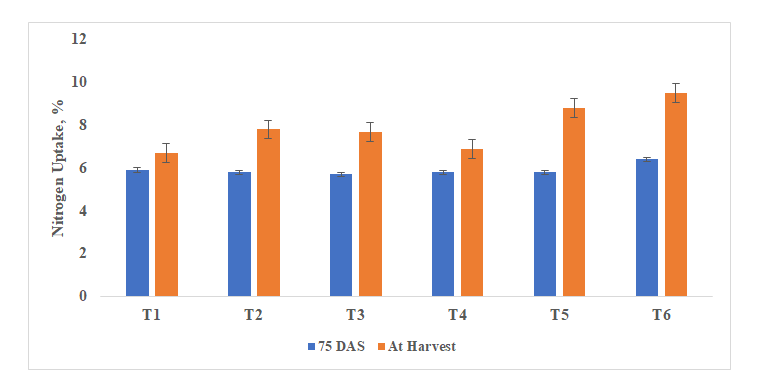
T1 = Control (100% RRF); T2 = Azotobacter + AM fungi; T3 = Azospirillum + AM fungi’ T4 = Azotobacter + Azospirillum; T5 = Azotobacter + Azospirillum+ AM fungi; T6 = Consortium (NPK) + Azospirillum+ AM fungi; DAS= Days after sowing. Figure 7: Nitrogen uptake in onion at 75 DAS and at harvest (R-4).
Phosphorus Uptake: A glance at data in Figure 8 shows the highest uptake of P (1756.71ppm at 75 DAS and 2254.54 ppm at harvest) by the onion under treatment T6 (Consortium (NPK) + Azospirillum + AM fungi). The minimum P uptake was recorded under T1 (1445.12 ppm at 75 DAS and 1715.8 ppm at harvest). The effect of microbial (PGPR + AM fungi) inoculation on P uptake was significant (Figure 8). P uptake increased may be due to improved absorption and utilization of available soil P at higher rates.
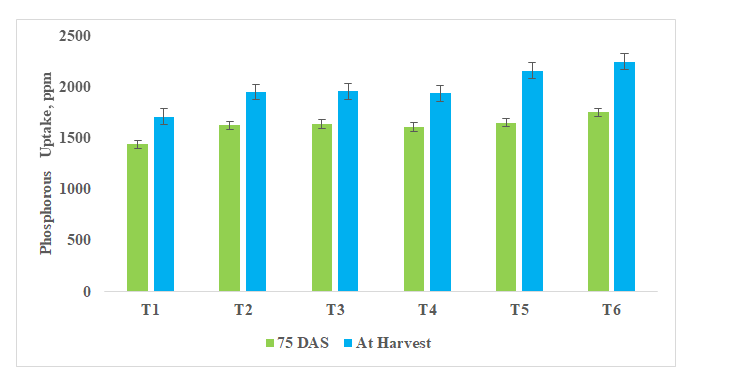
T1 = Control (100% RRF); T2 = Azotobacter + AM fungi; T3 = Azospirillum + AM fungi’ T4 = Azotobacter + Azospirillum; T5 = Azotobacter + Azospirillum+ AM fungi; T6 = Consortium (NPK) + Azospirillum+ AM fungi; DAS= Days after sowing. Figure 8: Phosphorous uptake in onion at 75 DAS and at harvest (R-4).
Potassium Uptake: Potassium translocation in onion plants has been presented in Figure 9. An inquisition of data indicates that maximum K uptake (16458.45 ppm at 75 DAS and 22430.678 ppm at harvest) by onion shoot recorded in consortium (NPK) + Azospirillum + AM fungi treatment, where the five consortium microbial stimulants were applied followed by T5 (Azotobacter + Azospirillum +AM fungi), T4 (Azotobacter + Azospirillum), T1 (control (100% RRF)), T3 (Azospirillum + AM fungi) and T2 (Azotobacter + AM fungi). K uptake was increasing may be due to improved absorption and utilization of potassium at higher rates of available soil potassium.
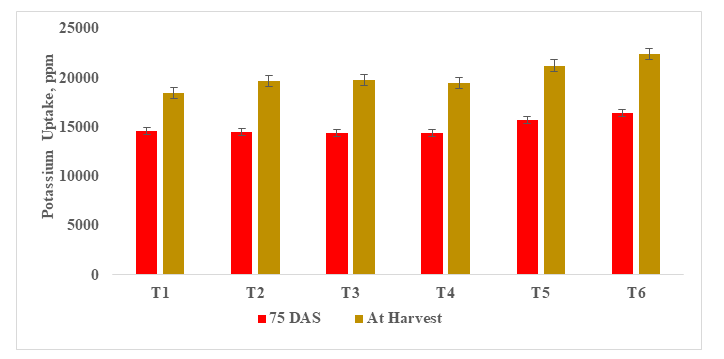
T1 = Control (100% RRF); T2 = Azotobacter + AM fungi; T3 = Azospirillum + AM fungi’ T4 = Azotobacter + Azospirillum; T5 = Azotobacter + Azospirillum+ AM fungi; T6 = Consortium (NPK) + Azospirillum+ AM fungi; DAS= Days after sowing. Figure 9: Potassium uptake in onion at 75 DAS and at harvest (R-4).
Micronutrient Translocation by Shoot
Copper Uptake: The glimpse of data presented in Figure 10 shows the highest uptake of Cu (4.2 ppm) by the onion shoot was recorded in treatment consortium (NPK) + Azospirillum + AM fungi + PGPR. The effect of five consortium bio inoculants treatments was noticed to exert a significant effect on the Cu removal by onion shoot. The minimum Cu (3.8 ppm) uptake was recorded under NMC (100% RRF) treatment at harvest.
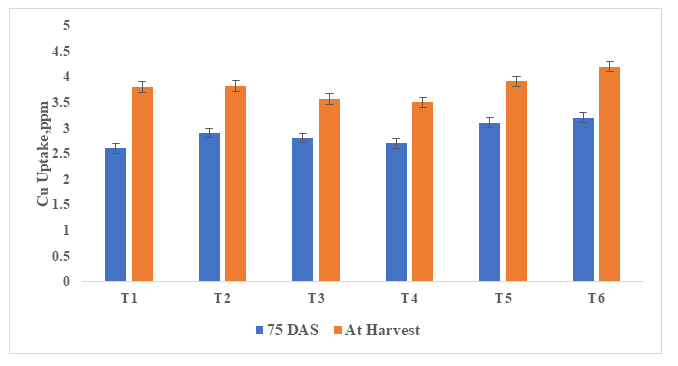
T1 = Control (100% RRF); T2 = Azotobacter + AM fungi; T3 = Azospirillum + AM fungi’ T4 = Azotobacter + Azospirillum; T5 = Azotobacter + Azospirillum+ AM fungi; T6 = Consortium (NPK) + Azospirillum+ AM fungi; DAS= Days after sowing. Figure 10: Cupper uptake in onion at 75 DAS and at harvest (R-4).
Iron Uptake: The perusal of data presented in Figure 11 reveals the highest uptake of iron (1345.56ppm at 75 DAS and 1864.67ppm at harvest) by the onion shoot was recorded in treatment T6 (consortium (NPK) + Azospirillum + AM fungi).
The effect of PGPR and AM fungi in treatments was noticed to exert a significant effect on the iron removal by onion shoot followed by NMC there 100% RRF was applied (1023.45 ppm at 75 DAS and 1234.65ppm at harvest).
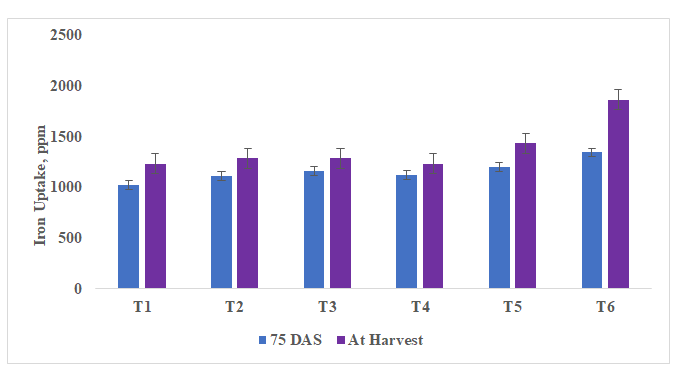
T1 = Control (100% RRF); T2 = Azotobacter + AM fungi; T3 = Azospirillum + AM fungi’ T4 = Azotobacter + Azospirillum; T5 = Azotobacter + Azospirillum+ AM fungi; T6 = Consortium (NPK) + Azospirillum+ AM fungi; DAS= Days after sowing. Figure 11: Iron uptake in onion at 75 DAS and at harvest (R-4).
Zinc Uptake: The data presented in Figure 12 reveals that maximum Zn uptake (45.45 ppm at 75 DAS and 72.67 ppm at harvest) by onion recorded under treatment T6 (Consortium (NPK) + Azospirillum + AM fungi) followed by T5 (44.23ppm at 75 DAS and 64.98ppm at harvest), T2 (42.56ppm at 75 DAS and 56.45ppm at harvest), T3 (41.45ppm at 75 DAS and 56.89ppm at harvest), T1 (37.78ppm at 75 DAS and 55.45at harvest). The microbial inoculant such as PGPR and AM fungi-mediated onion plants were found to exert a significant effect on the Zn uptake by onion shoot.
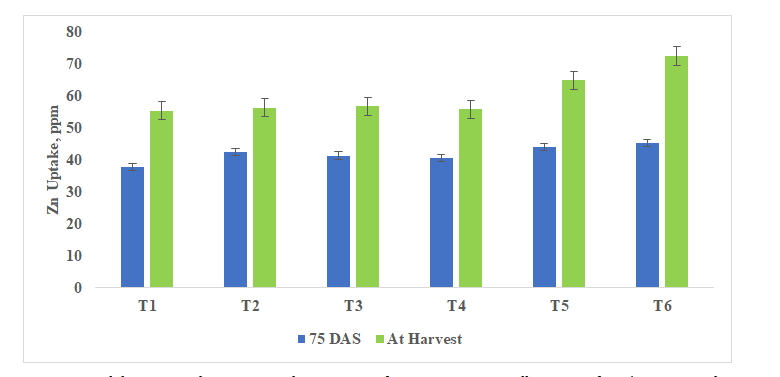
T1 = Control (100% RRF); T2 = Azotobacter + AM fungi; T3 = Azospirillum + AM fungi’ T4 = Azotobacter + Azospirillum; T5 = Azotobacter + Azospirillum+ AM fungi; T6 = Consortium (NPK) + Azospirillum+ AM fungi; DAS= Days after sowing. Figure 12: Zink uptake in onion at 75 DAS and at harvest (R-4).
Yield and its Attributes Character
The onion dry matter, dry biomass, and yield increased significantly in the plants receiving treatment of T6 in comparison to the other biological treatment and control (100% RRF) (Table 3). Maximum onion dry matter was recorded in the treatment T6 (Consortium (NPK) + Azospirillum + AM fungi) followed by T1 (Control (100% RRF) T5 (Azotobacter + Azospirillum +AMF), T3 (Azospirillum + AM fungi), T2 (Azotobacter + AM fungi) and T4 (Azotobacter + Azospirillum) whereas maximum dry biomass (6.65±0.25 q h-1) in T6 (Consortium (NPK) + Azospirillum + AM fungi) and minimum 4.68±0.26 q h-1) in T4 (Azotobacter + Azospirillum). The highest yield was recorded from T6 (Consortium (NPK) + Azospirillum + AM fungi) of 345.45±0.44 q h-1 and the lowest of 265.45 ±0.48 q h-1 in T3 (Azospirillum + AM fungi) (Table 3). The superiority of the treatments T6 (Consortium (NPK) + Azospirillum + AM fungi), T5 (Azotobacter + Azospirillum +AMF), and T1 (100% RRF) may be due to the role of nitrogen fertilizers and biofertilizers application are increasing the availability of nitrogen to the onion plant. The higher bulb yield may be due to greater root proliferation, more uptakes of nutrients and water, more photosynthesis rate, and enhanced food accumulation. Prasad [3, 35] also reported the efficiency of PGPR strains and mycorrhiza as a potential supplement to nitrogenous fertilizer in onion.
| Treatment | Dry matter (%) | Dry biomass (q ha -1) | Yield (q ha -1) |
|---|---|---|---|
| T1 | 12.15b±1.28 | 6.12bc±0.28 | 322.75b±0.38 |
| T2 | 11.12c±1.36 | 5.45c±0.19 | 285.45ab±0.42 |
| T3 | 11.34c±1.66 | 5.25c±0.23 | 265.45ab±0.48 |
| T4 | 10.98cd±1.41 | 4.68bc±0.26 | 281.75c±0.45 |
| T5 | 12.35ab±1.53 | 6.12b±0.21 | 299.45bc±0.46 |
| T6 | 13.68a±1.49 | 6.65a±0.25 | 345.45a±0.44 |
Table 3: Onion dry matter, dry biomass and yield characters (Mean ± SE) at the time of harvest (R-4).
±SE-Std error; Values in a column followed by the same letter are not significant at p<0.05 according to DMRM. T1 = Control (100% RRF); T2 = Azotobacter + AM fungi; T3 = Azospirillum + AM fungi’ T4 = Azotobacter + Azospirillum; T5 = Azotobacter + Azospirillum+ AM fungi; T6 = Consortium (NPK) + Azospirillum+ AM fungi; DAS= Days after sowing. Table 3: Onion dry matter, dry biomass and yield characters (Mean ± SE) at the time of harvest (R-4).
Highest TSS% (13.354 %) was recorded from T6 (Consortium (NPK) + Azospirillum + AM fungi) and the lowest (9.45%) from T2 (Azotobacter + AM fungi) (Figure 13). Maximum (6.65 %) starch was found in T5 (Azotobacter + Azospirillum +AM fungi) and the minimum (1.45%) in T1 (Control 100% RRF) (Figure13). Percentage reducing sugar was found maximum (1.88%) in T6 (Consortium (NPK) + Azospirillum + AM fungi) and minimum of 0.98% in T2 (Azotobacter + AM fungi). The dominance of the different types of consortium bioinoculant such as consortium (NPK) + Azospirillum + AM fungi might be due to the fact that nitrogen has helped in dynamic vegetative growth and imported deep green color to the greenery which favored photosynthesis activity of the plants resulting in the greater accumulation of food material. These are in conformity with Prasad [3].
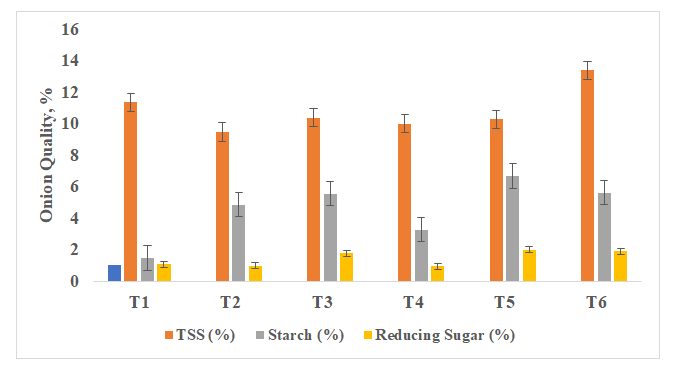
T1 = Control (100% RRF); T2 = Azotobacter + AM fungi; T3 = Azospirillum + AM fungi’ T4 = Azotobacter + Azospirillum; T5 = Azotobacter + Azospirillum+ AM fungi; T6 = Consortium (NPK) + Azospirillum+ AM fungi; DAS= Days after sowing. Figure 13: Effect of biofertilizers on quality characters of Onion at the time of harvest (R-4).
Storability Study of Onion
The data presented in Figure 14 reveals that at 15 DAH, maximum and minimum weight loss was observed in T1 (Control) and T4 (Azotobacter + Azospirillum) and at 30 DAH also the maximum and minimum weight loss were documented in T1 (100% RRF) and T4 (Azotobacter + Azospirillum). The overall storage weight loss percentage was recorded a maximum of 16.29% in T1 (control, 100% RRF) and the minimum of T2 (Azotobacter + AM fungi) in 14.64 % followed by T4 (Azotobacter + Azospirillum) in 14.40 %.
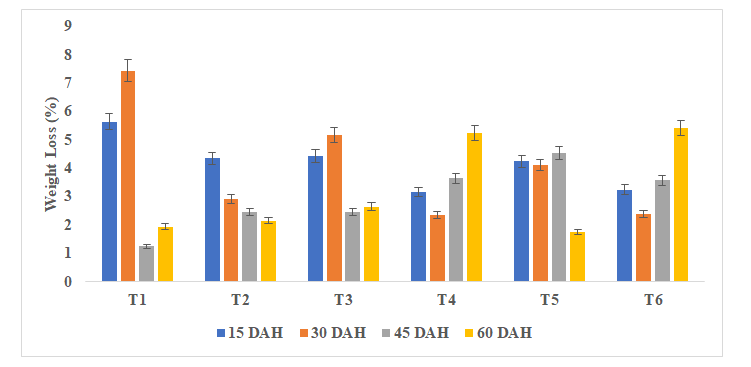
T1 = Control (100% RRF); T2 = Azotobacter + AM fungi; T3 = Azospirillum + AM fungi’ T4 = Azotobacter + Azospirillum; T5 = Azotobacter + Azospirillum+ AM fungi; T6 = Consortium (NPK) + Azospirillum+ AM fungi; DAS= Days after sowing. Figure 14: Impact of biofertilizers on storability (weight loss percentage) of onion after harvest (R-4).
Biochemical Changes in Onion
Quercetin Glucoside Content in Onion: A glance on data in Figure 15 shows that maximum total quercetin glucoside content (2986.65 mg kg-1 dw) was noticed in T6 (Consortium (NPK) + Azospirillum + AM fungi) treated onion followed by control (2856.45 mg kg-1 dw), Azotobacter + Azospirillum +AM fungi (2851.45 mg kg-1 dw), Azotobacter + AM fungi (2745.45 mg kg-1 dw), Azospirillum + AM fungi (2725.56 mg kg-1 dw), Azotobacter + Azospirillum (2710.45 mg kg-1 dw). Significant differences (P<0.05) were observed between the treatment and age of the plant. Maximum total quercetin glucosides content was noticed after harvest of the crop as compared to 75DAS. This increase in quercetin content gives pungency to onion plants. Previous experiments showed that mycorrhizal fungi tended to affect the pungency of Allium cepa (Guo et al., 2006a, Prasad, 2021a) and Allium fistulous [35]. The increased absorption surface area offered by the extended soil network of fungal hyphae external to roots [3,33,34,36,] might have increased P supply and promoted plant growth to give high bulb yields. Iqbal and Qureshi, et al. [37] reported that 85% increase in height of sunflower plants inoculated with AM fungi compared to uninoculated control under field conditions.
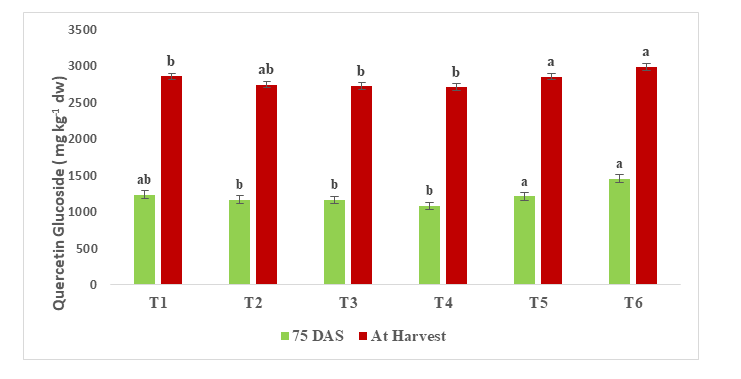
T1 = Control (100% RRF); T2 = Azotobacter + AM fungi; T3 = Azospirillum + AM fungi’ T4 = Azotobacter + Azospirillum; T5 = Azotobacter + Azospirillum+ AM fungi; T6 = Consortium (NPK) + Azospirillum+ AM fungi; DAS= Days after sowing. Figure 15: Total quercetin glucoside content per kg dried onion at 75 DAS/P and at harvest (R-4).
Mycorrhiza Root Colonization (MRC) Percentage
MRC percentage in the onion root system was observed in all treatments including NMC (100% RRF) plants (Figure 16). Maximum 79.9 percentage of MRC was observed in T6 (consortium (NPK) + Azospirillum + AM fungi) bioinoculant mediated onion crop followed by T5 (Azotobacter + Azospirillum +AM fungi) (75.45%), T3 (Azospirillum + AM fungi) (67.56%), T2 (Azotobacter + AM fungi) 65.89%, T4 (Azotobacter + Azospirillum) (48.56%) and NMC (46.67%) plants at harvest. Statistically significant (P<0.05) differences were observed between the treatment. MRC was increased with additionally added PGPR with mycorrhizae. In general, AM fungal strains mediated plants have been encouraged by higher water and mineral nutrients uptake from the soils because they increased the total root surface [19, 20, 32, 38, 39]. The colonization potential of AM fungi decreases in control treatment due to 100% RRF applied in onion whereas increase in PGPR application. MRC percentage was affected with an added in PGPR and values were statistically different compared to NMC (100% RRF).
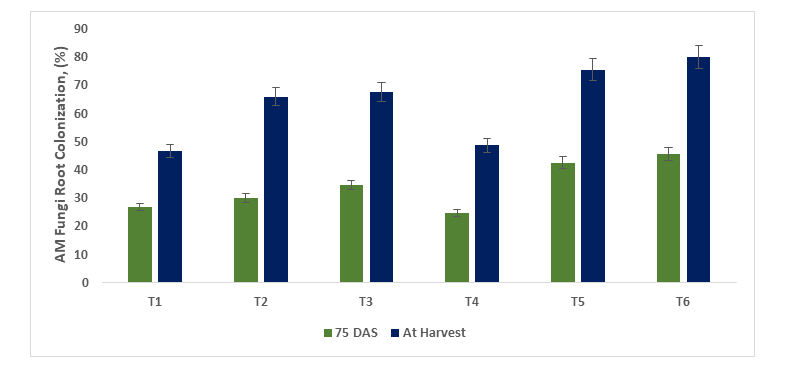
T1 = Control (100% RRF); T2 = Azotobacter + AM fungi; T3 = Azospirillum + AM fungi’ T4 = Azotobacter + Azospirillum; T5 = Azotobacter + Azospirillum+ AM fungi; T6 = Consortium (NPK) + Azospirillum+ AM fungi; DAS= Days after sowing. Figure 16: Mycorrhiza root colonization percentage in onion at 75 DAS and at harvest (R-4).
The results in this study revealed that increased plant growth parameters, nutrients concentration in soil, plant shoot uptake, and AM fungal root colonization percentage when consortium PGPR and AM fungi inoculated plants, and this was comparable to uninoculated plants treated with high dosages of fertilizer (100% RRF). The influence of PGPR and AM fungi in decreasing fertilizer demand of major crop species was reported by [3, 20, 30, 40]. It is assumed that PGPR’s and AM fungi have the potential to reduce the high application rate of fertilizer needed to produce high onion yield [3, 20, 31, 32]. Moreover, the onion plant benefits positively to AM fungal symbiosis [3, 29]. It creates small growth without mycorrhiza unless severely fertilized [31, 41]. Diminution in plant growth characteristics, shoot nutrient content, root colonization, and yield of control plant with improvement in fertilizer function. From the results, it appears that onion should be incorporated with a consortium of Azotobacter, Pseudomonas, Fraturia in combination with Azospirillum and AM fungi for better growth, yield, and quality. For increasing storability, the combination of Azotobacter and AM fungi is effective. Though the consortium (NPK) + Azospirillum + AM fungi bioinoculant produced the best result compared to different combinations of biofertilizers and recommended rate of CF’s. The next may be a particular level with certain considerations of sustainability in production and environmental protection.
Based on the findings; maximum yield and quercetin glucoside content were noticed in consortium (NPK) + Azospirillum + AM fungi treatment followed by other biological and NMC treatments. On the other hand, these treatments had the maximum nutrients uptake by the shoot. A significant difference (P<0.05) was noticed between quercetin and nutrient uptake by onion. It has been determined that the maximum utmost was within the consortium PGPR + Azospirillum + AM fungi treatment and the minimum was discovered within the PGPR treatment that was higher than NMC (100% RRF) treatment. One of the physiological processes which can markedly alter or cut back the nutritionary quality of the various plant products consumed by humans is oxidative stress. The environmental factors that induce oxidative stress in plants include air pollution, herbicide/pesticide utilization, heavy metal contamination, drought, salinity, injuries, UV
light, unfavorable temperatures and photoinhibition from excessive solar radiation [42, 43]. The utilization of the PGPR and AM fungi could also be due to the ability to reduce the negative effects of environmental stress improved bulb quality. The production of plant growth regulators (PGR) by PGPR microorganisms is another vital mechanism usually related to growth stimulation [44]. AM fungi are identified to have an effect on PG and health by increasing resistance to the tolerance of biotic [45, 46] and abiotic stress [3, 5, 59, 47, 48, 49, 50, 51, 52, 53, 54, 55, 56, 57, 58, 59, 60, 61, 62, 63, 64].
Conclusion
The outcomes indicate that inoculation with consortium (NPK) PGPR, Azospirillum and AM fungi had positive effects on onion growth and its attributes characters along with improving shoot nutrients uptake which controlled to producing superior yield without uses of chemical fertilizers. It is determined that the usage of consortium PGPR or AM fungi alone or in combination can increase overall growth characters, total quercetin glucoside content, and nutrients uptake of onion shoot compared with NMC (100% RRF), and once PGPR additional to the AM fungi treatment, these factors are greater, that show an optimistic interaction between consortium (NPK)+ Azospirillum + AM fungi. The promotion of mycorrhizal and bacterial biofertilizers has the advantage of permitting reduced chemical fertilizers inputs to save the environment. Economize on chemical fertilizers used in onion crop production providing a sustainable and environmentally safer substitute and farmers should encourage the uses of RM such as biological bioinoculant for example consortium (NPK)+ Azospirillum +AM fungi and PGPRs biofertilizers for field assessment. The present study revealed that plants mediated with consortium PGPR, and AM fungi can play a key role in reducing chemical fertilizers inputs in sustainable production systems (SPS) of the onion cash crops. PGPR and AM fungal biofertilizers inoculation influenced growth, productivity, TSS, starch, reducing sugar, quercetin glucoside content, and nutrients uptakes (N, P, K, Cu, Fe, and Zn) as compared to the different doses of chemical fertilizers (NMC). From this study, it can be concluded that using consortium PGPR and AM fungi inoculums could reduce the chemical fertilizers inputs needed to produce vegetables since increased plant growth parameters, LMP, nutrients concentration and shoots, and MRC percentage were obtained when consortium PGPR and AM fungi were applied to onion plants, and this was comparable to NMC plants treated with 100% RRF. It can be concluded that the use of consortium PGPR and AM fungi to economize on fertilizer use in onion crop production provides a sustainable and environmentally safer substitute and farmers should be encouraged using of biofertilizers for sustainable development.
Acknowledgments
The authors would like to thank the CEO, Absolute Biologicals to provide financial assistance and another necessary facility for the field experiments. Mr. Avnindra Shrivastava’s support and assistance for the field experiments, Ms. Kavita Yadav and Mr. Anubhav Srivastava for technical assistance, and Mr. Ankus Arora for releasing the payment.
Conflict of interest
The authors declare no conflict of interest.
References
-
Griffiths G, Trueman L, Crowther T, Thomas B, Smith B (2002) Onions: A global benefit to health. Photother Res 16(7): 603-615.
-
Krest I, Keusgen M (1999) Quality of herbal remedies from Allium sativum: differences between allinase from garlic powder and fresh garlic. Planta Med 65(2): 139- 143.
-
Prasad K (2021) Impact of Biological Fertilizer Arbuscular Mycorrhizal Fungi and Conventional Fertilizers Mobilization on Growth, Yield, Nutrient’s uptake, Quercetin and Allin Contents in Allium Crops Cultivation under Field Conditions in Semi-Arid Region of India. South Asia Journal of Experimental Biology 11(1): 15-26.
-
Decoteau DR (2000) Vegetable crops. Prentice-Hall inc, USA, pp: 464.
-
Prasad K (2021) Diversification of Glomermycota form Arbuscular Mycorrhizal Fungi Associated with Vegetable Crops Cultivated underneath Natural Ecosystems in Arid Region of Rajasthan, India. Current Investigations in Agriculture and Current Research 9(2): 1205-1212.
-
Yadav BD, Khandelwal RB, Sharma YK (2005) Use of bio- fertilizer (Azospirillum) in onion. Indian JHort Sci 33: 281-83.
-
Jha AK, Netra P, Saxena AK, Dhyan S, Jha GK (2005) Coincubation effect of VAM and PGPR on growth and yield of onion. Ind J Hort 63(1): 44-47.
-
Rosyidah A, Wardiyati T, Abadi AL, Magfoer MD (2013) Enhancement in the effectiveness of antagonistic microbe by means of microbial combination to control Ralstonia solanacearum on potato planted in middle latitude. Agrivita 35(2): 174-183.
-
Subbiah BV, Asija GL (1956) A rapid procedure for the determination of available nitrogen in soils. Curr Sci 25: 259-260.
-
Olsen SR, Cole CV, Wantabe FS, Dean LA (1954) Estimation of available phosphorus in soils by extraction with sodium bicarbonate. Circular (United States. Department of Agriculture), pp: 939.
-
Singh D, Chhonkar PK, Dwivedi BS (2007) Soil analysis. In: Manual on soil, plant and water analysis. Delhi: Westville Publishing House, pp: 11-75.
-
Hedge JE, Hofreiter BT (1962) Carbohydrates Chemistry 17. Whistles RL, Miller BE JH, (Eds.), Acad Press, New York.
-
Somogyi M (1952) Estimation of reducing sugar. In: Thimmaiah SK (Ed.), Standard methods of biological analysis. Kalyani publisher, Ludhiana, pp: 51-55.
-
Tandon HIS (1993) Methods of analysis of soil, plants, waters and fertilizers and organic manures. FDCO, New Delhi.
-
Hanway JJ, Heidel H (1952) Soil analysis methods as used in Iowa state collage soil testing laboratory. Iowa State College of Agriculture Bulletin 57: 1-31.
-
Hollman PCH, Arts ICW (2000) Flavonols, flavones and flavanols - nature, occurrence and dietary burden. Journal of the Science of Food and Agriculture 80(7): 1081-1093.
-
Phillips JM, Hayman DS (1970) Improved procedure for cleaning roots and staining parasitic and vesicular arbuscular mycorrhizal fungi for rapid assessment of infection. Transactions of the British Mycological Society 55(1): 158-161.
-
Giovanetti M, Mosse B (1980) An evaluation of techniques for measuring vesicular-arbuscular mycorrhizal infection in roots. New Phytologist 84(3): 489-500.
-
Prasad K (2021) Stimulation Impact of Rhizospheric Microbe’s Glomeromycota AM Fungi and Plant Growth Promoting Rhizobacteria on Growth, Productivity, Lycopene, Β-Carotene, Antioxidant Activity and Mineral Contents of Tomato beneath Field Condition Cultivated in Western Ghats Covering Semi-Arid Region of Maharashtra, India. Journal of Bioscience & Biomedical Engineering 2(3): 1-14.
-
Prasad K (2021) Influence of arbuscular mycorrhizal fungal biostimulants and conventional fertilizers on some solanaceous crops for growth, productivity and nutrient stoichiometry under field conditions in semi- arid region of Maharashtra, India. JEBAS 9(1): 75-86.
-
Brinkman R (1980) Saline and sodic soils. In: Land reclamation and water management. International Institute for Land Reclamation and Improvement (ILRI), Wageningen, The Netherlands, pp: 62-68.
-
Carrow RN, Dunvan RR (2004) Soil salinity monitoring: present and future.
-
Ashley MK, Grant M, Grabov A (2006) Plant responses to potassium deficiencies: a role for potassium transport proteins. J Exp Bot 57(2): 425-436.
-
Mandhare VK, Patil PL, Gadekar DA (1998) Phosphorus uptake of onion as influenced by Glomus fesciculatum, Azotobacter and phosphorus levels. Agril Sci Digest 18: 228-230.
-
Schmitz O, Danneberg G, Hundeshagen B, Kinger A, Bothe H (1991) Quantification of vesicular-arbuscular mycorrhiza by biochemical parameters. J Pl Physiology 139(1): 106-114.
-
Prasad K (2021) Arbuscular Mycorrhizal Fungi and Plant Collaborations Influences Ecology and Environmental Changes for Global Sustainable Development. Journal of Ecology & Natural Resources 5(1): 1-16.
-
Ahmed MJ, Iya IR, Dogara, MF (2020) Proximate, Mineral and Vitamin Content of Flesh, Blanched and Dried Tomatoes (Lycopersicum esculentum). Asian Food Science Journal 18: 11-18.
-
Melo PED (2003) The root system of onion and Allium fistulosumin in the context of organic farming a breeding approach. Ph D thesis, Wageningen University, The Netherlands, Pp: 136.
-
Steinmetz KA, Potter JD (1996) Vegetables, fruits and cancer prevention: a review. J Am Diet Assoc 96(10): 1027-1039.
-
Mosse B (1973) Advances in the study of Vesicular arbuscular mycorrhiza. Annual review of phytopathology 11: 171-196.
-
Smith SE, Read DJ (1997) Mycorrhizal symbiosis. 2nd (Edn.), Academic Press, London.
-
Prasad K (2017) Biology, Diversity and Promising Role of Mycorrhizal Entophytes for Green Technology. In: Maheshwari D (Ed.), Endophytes: Biology and Biotechnology, Sustainable Development and Biodiversity. Springer, Chem, Switzerland, pp: 15: 267- 301.
-
Prasad K (2021) Potential Impact of Seed Coating with Beneficial Microorganisms to Meticulousness Sustainable Organic Agriculture for Quality Nutritive Food Production for Modern Lifestyle, Improve Global Soil and Environmental Health towards Green Technology. Aditum Journal of Clinical and Biomedical Research 2(4): 1-9.
-
Prasad K (2021) Advantages and Nutritional Importance of Organic Agriculture Produce Food on Human, Soil and Environmental Health in Modern Lifestyle for Sustainable Development. ADITUM, pp: 1(2).
-
Guo T, Zhang J, Christie P, Li X (2005) Influence of nitrogen and sulfur fertilizers and inoculation with arbuscular mycorrhizal fungi on yield and pungency of spring onion. Journal of Plant Nutrition 29(10): 1767- 1778.
-
Kothari SK, Marschner H, Romheld V (1991) Contribution of the VA Mycorrhizal Hyphae in Acquisition of Phosphorus and Zinc by Maize Grown in Calcareous Soils. Plant and Soil 131(2): 177-185.
-
Iqbal SH, Qureshi SK (1972) The effect of vesicular- arbuscular mycorrhizal association on growth of sunflower (Helianthus annus L.) under field conditions. Biologia 23: 189-193.
-
Prasad K (2020) Positive Importance of Arbuscular Mycorrhizal fungi for global Sustainable Agriculture and Environment Management for green technology. Current Investigations in Agriculture and Current Research 9(2): 1182-1184.
-
Prasad K (2021) Effect of Dual Inoculation of Arbuscular Mycorrhiza Fungus and Cultivar Specific Bradyrhizobium Japonnicum on the Growth, Yield, Chlorophyll, Nitrogen and Phosphorus Contents of Soybean (Glycine Max (L.) Merrill.) Grown on Alluvial Soil. Journal of Innovation in Applied Research 4(1): 1-12.
-
Lidermann RG, Davis EA (2004) Evaluation of commercial inorganic and organic fertilizer effects on arbuscular mycorrhizae formed by Glomus intraradices. Horttechnology 14(2): 196-202.
-
Gerdemann JW (1968) Vesicular-Arbuscular mycorrhiza and plant growth. Annual review of phytopathology 6: 397-418.
-
Apel K, Hirt H (2004) Reactive oxygen species: metabolism, oxidative stress and signal transduction. Ann Rev Plant Biol 55:373-399.
-
Buchanan BB, Gruissem W, Jones RL (2000) Biochemistry and Molecular Biology of Plants. American Society of Plants Physiologist, Rockville, MD, pp: 1189-1197.
-
Vessey KJ (2003) Plant growth promoting rhizobacteria as biofertilizers. Plant and Soil 255: 571-575.
-
Trotta A, Varese GC, Gnavi E, Fusconi E, Sampo S, et al. (1996) Interaction between the soil-borne pathogen Phytophthora parasitica var. parasitica and the arbuscular mycorrhizal fungus Glomus mosseae in tomato plants. Plant and Soil 185: 199-209.
-
Cordier C, Trouvelot A, Gianinazzi S, Pearson GV (1996) Arbuscular mycorrhiza technology applied to micro propagated Prunus avium and to protection against Phytophthora cinnamomi. Agronomie 16: 676-688.
-
Turnau K, Haselwandter K (2002) Arbuscular mycorrhizal fungi, an essential component of soil microflora in ecosystem restoration. In: Gianinazzi S (Ed.), Mycorrhizal Technology in Agriculture. Birkhäuser, Basel, pp: 137-149.
-
Siddiqui S, Alrumman SA, Meghavanshi MK, Chaudhary KK, Prasad K, et al. (2015) Role of Soil Amendment with Micronutrients in Suppression of Certain Soil-Borne Plant Fungal Diseases: A Review In: Meghavanshi MK (Ed.), Organic Amendments and Soil Suppressiveness in Plant Disease management, Springer Soil Biology, Springer International Publishing Switzerland, pp: 46: 363-380.
-
Bloem E, Haneklaus S, Schnug E (2006) Influence of nitrogen and sulfur fertilization on the alliin content of onions and garlic. Journal of Plant Nutrition 27: 1827- 1839.
-
Bolandnazar SA, Neishabury MR, Aliasgharzad N, Chaparzadeh N (2007) Effects of mycorrhizal colonization on growth parameters of onion under different irrigation and soil conditions. Pak J Biol Sci 10(9): 1491-1495.
-
Bolandnazar S, Aliasgharzad N, Neishabury MR, Chaparzadeh N (2007) Mycorrhizal colonization improves onion (Allium cepa L.) yield and water use efficiency under water deficit condition. Scientia Horticulture 114: 11-15.
-
Desuki EL, Asmaa M, Mohmoud R, Hafiz MM (2006) Response of onion plants to minerals and bio-fertilizers application. Res J Agric Biol Sci 2(6): 292-298.
-
Gryndler M, Larsen J, Hrselova H, Rezacova V, Gryndlerova H, et al. (2006) Organic and mineral fertilization, respectively, increase and decrease the development of external mycelium of arbuscular mycorrhizal fungi in long-term field experiment. Mycorrhiza 16(3): 159-166.
-
Guo T, Zhang J, Christie JL, Li XL (2006) Effects of arbuscular mycorrhizal fungi and NH+4:NO−3 ratios on growth and pungency of onion seedlings. J Plant Nutri 29(6): 1047-1059.
-
Martinez, VR, Dibut AB, Gonzalez PP, Acosta RMC (1994) Effect of application of biopreparation based on Azotobacter chrococcum on tomato and onion in red ferratic soils. 90 anos-de la Estacion Expl, Agronomica de Santiago de las vega, pp: 167-84.
-
Mosse B (1981) Vesicular arbuscular Mycorrhizal research in tropical agriculture. Research bulletin pp: 194.
-
Prasad K (2015) Biofertilizers: A new dimension for agriculture and environmental development to improve production in sustainable manner. Journal of Basic and Applied Mycology 11(1& II): 5-13.
-
Prasad K (2021) Glycoprotein Producing AM Fungi lifecycle and Potential Role in Agricultural Plant Lifespan and Global Environmental Changes for Sustainable Green Technology. Journal of Ecology & Natural Resources 5(2): 1-18.
-
Prasad K, Warke RV, Khadke K (2019) Management of soilborne pathogens to improve the production of pulses using organic Technologies for sustainable agriculture. International Journal of Research and Analytical Reviews 6(2): 82-101.
-
Sharma MP, Adholeya A (2000) Enhanced Growth and Productivity following Inoculation with Indigenous AM Fungi in Four Varieties of Onion (Allium cepa L.) in an Alfisol. Biological Agriculture and Horticulture 18 (1): 1-14.
-
Singh K (1991) Bulb crops. Textbook of vegetables, tuber crops and spices. P: 179.
-
Ukey RN (1993) A pragmatic approach for supplementation of Chemical Fertilizers with Biofertilizers to onion crops (Allium cepa L.). Ph.D (Agric.), Thesis, IARI, New Delhi.
-
Valentine AJ, Osborne BA, Mitchell DT (2001) Interactions between phosphorus supply and total nutrient availability on mycorrhizal colonization, growth and photosynthesis of cucumber. Scientia Horticulturae 88(3): 177-189.
-
Walkley A, Black IA (1934) An examination of the Degtjareff method for determining soil organic matter and a proposed modification of the chromic acid titration method. Soil Science 37(1): 29-38.
- Antifungal Activity of New Acetophenone Derivatives
- Interconnected Microbiomes Human Health Within an Environmental Framework
- Silkworm-Based Vaccine Production for H5N1: A One Health Approach to Pandemic Preparedness
- Microbial Diversity and Lipolytic Activity of Bacteria and Fungi from Oil-Contaminated Sites in Makurdi Metroplois
- Antibiotic Resistance Profile of Bacteria Isolated at the Central Laboratory of the National Hospital Center of Nouakchott
- Epidemiology and Sensitivity to Antibiotics of Germs Isolated from Blood Cultures in the Laboratory of the National Hospital Center of Nouakchott-Mauritania