
Intestinal Microbiota as a Necessary Basis for Homeostasis, General Pathology, and Ageing, or Back to Elia Metchnikov
The article is aimed to overview the field of microbiota and endotoxin science and their role in the interaction with innate immune system and pathogenesis of a variety of acute and chronic diseases. The methodology for studying the LPS biological role under clinical conditions created by Russian scientists is based on the ability of LPS blood level reducing tools to increase the patient treatment efficacy. The next findings have been created and formulated: 1. The LPS and stress factors’ involvement to the induction of inflammation, general adaptation syndrome and disseminated intravascular coagulation (DIC) condition which represent starting points for the development of multiple organ failure syndrome; 2. The LPS involvement to pathogenesis of broncho-obstructive syndrome, of chronic hepatitis C, AIDS and SARS-COV-2, of atherosclerosis and acute myocardial infarction, of alimentary obesity, septic shock, and/or type 1 diabetes, of autoimmune diseases, etc.; 3. The creation of interdisciplinary definitions of inflammation and sepsis, and introduction into scientific semantics new definitions such as "Systemic Endotoxinemia" (SE) as an obligate homeostasis factor and "Endotoxin Aggression" (EA) as a pre-disease and/or universal factor of disease pathogenesis. Furthermore, it was found that some bacterial preparation have ability to strengthen the intestinal barrier, which appeared to be one of the most significant achievements of current clinical microbiology. The EA prevention and/or endotoxin elimination would become a mandatory component of the treatment and preventive medicine, including delaying aging. The finding that "inflammation as a driving forces of aging" would be considered as one of the most outstanding clinical achievements of the century. It is declared that aging represents “burning of human organism in the flame of inflammation”. It is suggested that a specific anti-endotoxin therapy could be developed to combat the pathogenesis of chronic and acute diseases. There are several approaches to reduce the LPS level in human body for health maintaining. The First International Congress "Intestinal Microbiota: Homeostasis, Inflammation, and Aging" is planned to be held in Russian Federation (not far from City-of-Kazan), from 6-8 September 2024. It may become the first worldwide discussion of the questions and problems raised here in sense of LPS-centered medicine, as well as a generalization of ideas on the role of intestinal endotoxins and stress in adaptation processes and induction of inflammation, inflammaging, and aging.
Introduction
Elia Metchnikoff’s (1845-1916) genius ideas [1] started to be rejuvenated from the mid-1980s. At that time, the ability of both intestinal microflora (lipopolysaccharides LPS) and stress to induce inflammation was postulated [2], the central receptor for innate immunity (TLR4) was approved to be an endotoxin receptor (2011 Nobel Prize in Physiology and Medicine) [3], and the endotoxin theory of human physiology and pathology being formulated [4, 5].
Systemic Endotoxinemia and Endotoxin Aggression
The methodology for studying the LPS biological role under clinical conditions created by Russian scientists is based on the ability of LPS blood level reducing tools (introduction of intestinal sorbents, hepatoprotectors, bifid bacterium, intravenous laser blood irradiation as well, etc.) to increase the patient treatment efficacy [5]. These efforts and works resulted in and allowed following events and discoveries, in particular: i) to formulate of the LPS and stress involvement to the induction of general adaptation syndrome (basing on the models of psycho-emotional stress and physical overtraining) [6, 7] or disseminated intravascular coagulation (DIC) condition (postsurgical complications being considered) [8], which represent starting points for the development of multiple organ failure syndrome; ii) to establish the LPS involvement to pathogenesis (possibly even to induction) of broncho-obstructive syndrome [9], of chronic hepatitis C, AIDS and SARS-COV-2 as well [10, 11, 12, 13], of atherosclerosis and acute myocardial infarction [14, 15, 16], of alimentary obesity and/or type 1 diabetes [13, 17, 18], of female infertility [19], of endogenous iridocyclitis and endophthalmitis [20] of autoimmune diseases [21] and endogenous psychoses as well [22]; iii) to create interdisciplinary definitions of inflammation and sepsis, to introduce into scientific semantics new definitions such as “Systemic Endotoxinemia” (SEE) [5] as an obligate homeostasis factor and “Endotoxin Aggression” (EA) as a pre-disease and/or universal factor of disease pathogenesis (Figure 1) [4, 5, 23].
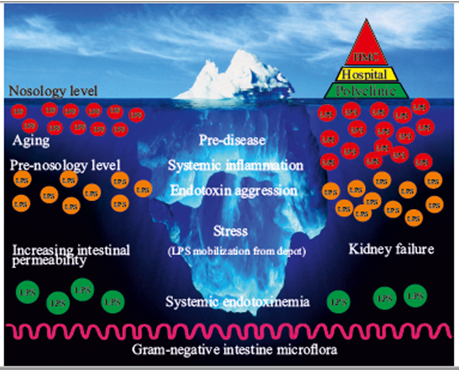
Figure1: Illustrative presentation of the role of SEE and EA phenomena in the treatment and preventive medicine.
Triangle (right up) represents: HMC – high-technological medical care; Hospital and Polyclinic where current “drug” medicine hosts now. “Systemic endotoxinemia” SEE phenomenon is a process of controlling the activity of adaptive systems (including immune system) by intestinal endotoxin with the participation of the hypothalamic-pituitary-adrenal system whose activity determines the LPS level entry into the general bloodstream from the depot (intestine, and adipose tissue). The LPS excess in the blood circulation (increased intestinal permeability, stress, and renal failure) results in the development of “endotoxin aggression” EA (inducing systemic inflammation). The EA phenomenon represents a pre-disease and/or universal factor of general pathology, manifested by one or another form of disease due to genetic and/or acquired predisposition.
Intestinal Permeability towards Endotoxin
The results of experimental and model-based studies played a very important key role in understanding the position of the microbiota (and LPS) phenomenon in general pathology. Cani, et al. [24] proposed an alimentary model of chronic EA (CEA), which they called “metabolic endotoxemia” ME (which is not the best term, in our opinion). Using the model the authors discovered a direct relationship between the LPS level in general blood circulation (i.e., CEA), obesity, and insulin resistance [24]. They established an entirely new direction in the prevention of type 2 diabetes and other metabolic disorders associated with decreasing intestinal permeability [24]. In terms of the endotoxin theory of human physiology and pathology [4, 5], obesity and insulin resistance are also a direct consequence of CEA phenomenon, due to several circumstances at once. There are among them: 1) Such as transport of the LPS hydrophobic form (a recirculating molecule pool along the gut-blood-liver- gut-blood pathway) via the intestinal wall occurs due to its involvement into chylomicron-”fatty food” composition and increases intestinal permeability and body weight (probably LPS activate lipogenesis); 2) The obesity patients are characterized by a tendency to flaccid inflammatory diseases, increased pro- inflammatory background, and enhanced LPS blood levels; 3) Due to the adipose tissue represents the LPS depot therapeutic fasting and use of a gastrointestinal lipase inhibitor in nutrition reduces body weight, the integral indices of systemic endotoxinemia (SE) being returned to the normal values [17].
The first successful attempt to reduce intestinal permeability with a probiotic preparation (live bifidobacteria culture) was made in 2004 to reduce the LPS patient blood level and decrease the frequency of chronic disease exacerbation [23]. Furthermore, it was found that Akkermansia muciniphila-based preparation has even greater ability to strengthen the intestinal barrier [25], which, in our opinion, appeared to be one of the most significant achievements of current clinical microbiology. It happens due to the EA prevention and/or elimination should become a mandatory component of the treatment and preventive medicine, including delaying aging.
Aging: Burning of Human Organism in the Flame of Inflammation
In our opinion, inflammaging phenomenon discovered by Dr. Claudio Franceschi and colleagues (University of Bologna, Italy) - “Inflammation as a driving force of aging” - should be considered as one of the most outstanding clinical achievements of the century [26, 27] (which couldn’t be probably noted on the term “inflammaging” itself). They defined accelerated aging of the organism as a result of the accumulation of chronic inflammation factors [26]. Autoimmune inflammation is predetermined by the nature of the immunity function itself, which protects and destroys simultaneously the host, ensures self-renewal of the population and species evolution [5]. It accompanies us from the birth and increases under aging, without acquiring new qualities. The main trend in the maintaining health and longevity would be decreasing the activity of adaptive immunity (controlled by innate immunity and its ligands), since life itself and aging represent “a process of organism combustion in the fire of chronic inflammation” including, perhaps primarily, autoimmune one [4, 5]. Of principal importance is the fact that the LPS blood level, the number and severity of age-associated chronic diseases (including those of atherosclerotic nature) are increased progressively under aging (Figure 2) [5]. These phenomena are accompanied by a decrease in the activity of anti-endotoxin immunity and the organism ability to respond to the excessive LPS level in the bloodstream by increasing body temperature. In other words, there is a growing tolerance to intestinal endotoxins under aging (age-related endotoxin tolerance). The phenomenon is probably required as individual purposes for the short term to block excessive activity (aggression) of the immune system in extreme situations (sepsis, shock), and for the long term - to ensure the aging self-renewal pool as a part of species evolution. The gut microbiota plays a key role in this process as a source of innate immunity ligands [5].
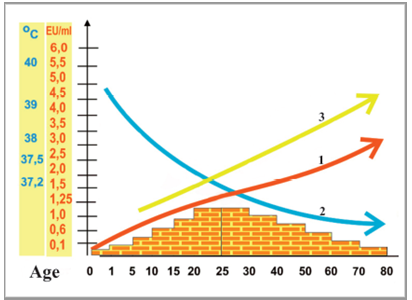
The LPS blood level (red curve 1) and the number of chronic diseases are increased permanently, atherosclerosis being in progress (yellow curve 3). The ability of human organism to increase body temperature and the activity of anti-endotoxin immunity are decreasing (blue curve 2).
Intestinal Microbiota: Either Friend or Enemy?
At the first glance, the interaction of the intestinal microbiota with the host is contradictory. On the one hand, it provides digestive processes, synthesis of compounds vital for homeostasis (including vitamins, signaling molecules, ligands of innate immunity, etc.). On the other hand, the microbiota is the first enemy of its host due to the aging and self-destruction processes are realized with its participation, which is predetermined by innate immune system itself and the interaction with LPS. At the same time, it has become clear that endotoxin is not only a marker, but also serves as an aging inducer [5, 28]. Thus, the statement that aging looks, and it is not far from the truth, like combustion process in which the human body burns in a fire of chronic (low-intensity) inflammation with periods of exacerbation, induced respectively by CEA and acute EA [5].
Specific Anti-endotoxin Therapy or Novel Medicine?
At present, there is a question of concern: could a specific anti-endotoxin therapy exist to combat the pathogenesis of chronic and acute diseases, especially septic shock [5, 23, 28, 29, 30, 31]? There are several approaches to reduce the level and activity of endotoxins in human body, namely: 1) The use of intestinal sorbents to eliminate endotoxins from the bloodstream, hence acute or chronic endotoxin aggression (e.g., ToxipacTM device, U.S.A.) [29, 32]; 2) Extra-corporal plasma purification by therapeutic plasmapheresis using appropriate membranes/sorbents with immobilized antibodies against endotoxins; 3) Correction of the profile of Gram-negative intestinal microorganisms by microbial preparations such as bifid bacteria administered to patients with chronic disease under remission [23]; 4) Impact onto endotoxins’ level and the profile of Gram- negative intestinal microorganisms using nutritional diets and natural bioantioxidant complexes (onion, garlic, ginger) [33, 34]; 5) Strengthening of natural anti-endotoxin immunity in various ways including usage of chaotropic agents [35]; and selective enterosorption of sources of endotoxin aggression development basing on finding out an EA etiology [36].
The World-Wide Discussion on Role of Intestinal Microbiota in Homeostasis, Inflammation, and Aging is Needed
The First International Congress “Microbiota: Homeostasis, Inflammation, and Aging”, which planned to be held at City-of-Naberezhnye Chelny, Republic of Tatarstan Russian Federation (not far from City-of-Kazan), from 6-8 September 2024 [37], may become the first worldwide discussion of the questions and problems raised in the present mini-review article, as well as a generalization of ideas on the role of intestinal endotoxins and stress in adaptation processes and induction of inflammation [4, 5, 36], inflammaging [26, 27], and aging [28], which have already become classical. Over the past 35 years, there has been a major breakthrough in the understanding of the mechanisms of interaction between the microbiota and the host, and a number of interesting findings have been published that have not yet been fully systematized and, therefore, not properly understood. We are convinced that the time has come for such an International Congress to be held with the participation of leading researchers from a wide range of biological, biomedical, and medical disciplines.
The following issues and problems are proposed for discussion at the Congress: consensus on the terminology and definitions used; establishment of scientific contacts between clinicians and basic scientists; creation of a unified database on the problems studied and the possibility for publication in open (not engaged) Internet publications; determination of directions for the search of means for normalization of systemic endotoxinemia indicators as the basis for preventive medicine [36], among them: probiotics and prebiotics, intestinal sorbents, hepatoprotectors, immune drugs, chaotropic effects (plasmapheresis, blood irradiation, and other); clinical and experimental models for disease study; prospects for dynamic monitoring of systemic endotoxinemia indicators; creation a research protocol to establish the range of integral indicators of systemic endotoxinemia (LPS level and activity of anti- endotoxin immunity); discussion of information on the study of LPS-factor pathogenesis of diseases and ways to learn the mechanism of development of endotoxin tolerance and its overcoming; the need to include new information in the curricula of doctors’ training; and finding financial resources to conduct “independent research”.
Conclusions
1. The LPS factor is involved to pathogenesis: of broncho- obstructive syndrome, of chronic hepatitis C, AIDS and SARS-COV-2, of atherogenesis and acute myocardial infarction, of alimentary obesity and/or type 1 diabetes, of autoimmune diseases;
2. New definitions are introduced into scientific semantics: such as “Systemic Endotoxinemia” (SEE) as an obligate homeostasis factor and “Endotoxin Aggression” (EA) as a pre-disease and/or universal factor of disease pathogenesis; 3. The EA prevention and/or elimination would become a mandatory component of the treatment and preventive medicine, including delaying aging. Human life and aging look like “burning of human organism in the flame of chronic inflammation” with periods of exacerbation; 4. A specific anti-endotoxin therapy could be developed to combat the pathogenesis of chronic and acute diseases (especially septic shock) which surely represents a basis for creation of novel direction in current medicine;
The Worldwide discussion of the topics and problems is needed in sense of LPS-centered medicine, as well as a generalization of ideas on the role of intestinal endotoxins and stress in adaptation processes and induction of inflammation, inflammaging, and aging.
References
-
Metchnikoff E (1903) Etudes sur la nature humaine; & Essai de philosophie optimiste. Paris: Masson.
-
Iakovlev MY (1988) Role of intestinal microflora and insufficiency of the liver barrier function in the development of endotoxinemia and inflammation. Kazan Med Journal (Russia) 69(5): 353-358.
-
Poltorak A, He X, Smirnova I, Liu MY, Huffel CV, et al. (1998) Defective LPS signaling in C3H/HeJ and C57BL/10ScCr mice: mutations in Tlr4 gene. Science 282(5396): 2085-2088.
-
Iakovlev MI (2003) Elements of the endotoxin theory of human physiology and pathology. Fiziol Cheloveka 29(4): 98-109.
-
Lakovlev MI (2021) Systemic Endotoxinemia: Homeostasis and General Pathology. Monograph. Moscow: Nauka Publishing house, pp: 182.
-
Anikhovskaya IA, Oparina ON, Yakovleva MM, Yakovlev MI (2006) Intestinal endotoxin as a universal factor of adaptation and pathogenesis of general adaptation syndrome. Fiziol Cheloveka 32(2): 87-91.
-
Anikhovskaya IA, Dvoenosov VG, Zhdanov RI, Koubatiev AA, Mayskiy IA, et al. (2015) Emotional stress as a clinical model to study the pathogenesis of the initial phase of general adaptation syndrome. Patol Fiziol Eksp Ter 59(4): 87-92.
-
Meshkov MV, Anikhovskaya IA, Iakovleva MM, Iakovlev MI (2005) Intestinal endotoxin in regulation of hemostasis activity and in pathogenesis of the DIC syndrome. Fiziol Cheloveka 31(6): 91-96.
-
Khasanova GR, Anokhin VA, Urazaev RA, Yakovlev MYu (1993) Endotoxinemia and bronchial obstruction syndrome under respiratory viral infections. Kazan Med Journal 74(1): 21-24.
-
Sozinov AS, Anikhovskaya IA, Enaleeva DS, Zinkevich OD, Likhoded VG, et al. (2001) Functional activity of endotoxin binding factors in chronic viral hepatitis B and C. Zh Mikrobiol Epidemiol Immunobiol 6: 56-59.
-
Sozinov AS (2002) Systemic endotoxinemia during chronic viral hepatitis. Bull Exp Biol Med 133(2): 153- 155.
-
Anikhovskaya IA, Kubatiev AA, Khasanova GR, Yakovlev MY (2015) Endotoxin is a component in the pathogenesis of chronic viral diseases. Human Physiology 41(3): 328- 335.
-
Yartsev IA, Beloglazov VA, Klimchuk AV (2021) Effect of overweight and obesity on endotoxinemia and systemic inflammation under acute SARS-COV-2 lung injury. Medical Aliance.
-
Anikhovskaya IA, Kubatiev AA, Iakovlev MI (2015) Endotoxin theory of atherosclerosis. Fiziol Cheloveka 41(1): 106-116.
-
Pokusaeva DP, Anikhovskaya IA, Korobkova LA, Enukidze GG, Yakovlev MY (2019) Prognostic Importance of systemic endotoxinemia indicators in atherogenesis. Human Physiology 45(5): 543-551.
-
Anikhovskaya IA, Golyshev IS, Tebloev KI, Yakovlev MY (2014) The Role of endotoxin aggression in pathogenesis of acute myocardial infarction. Human Physiology 40(3): 348-351.
-
Okorokov PL, Anikhovskaya IA, Yakovleva MM, Lazareva SI, Melamud AA, et al. (2012) Nutritional factors of inflammation induction or lipid mechanism of endotoxin transport. Fiziol Cheloveka 38(6): 105-112.
-
Okorokov PL, Anikhovskaya IA, Volkov IE, Yakovlev MY (2011) Intestinal endotoxin as a trigger of type 1 diabetes mellitus. Human Physiology 37(2): 247-249.
-
Enukidze GG, Anikhovskaya IA, Мarachev АА, Iakovlev MY (2007) Antiendotoxin direction in the treatment of chronic inflammation and female infertility. New Therapeutic and Diagnostics Technologies Moscow, “Moscow Textbooks” Publishing House 3: 78.
-
Vyshegurov YK, Anikhovskaya IA, Rascheskov AY, Usov IA, Yakovlev MY (2006) Etiology of endotoxin aggression and its role as an obligate pathogenic factor in iridocyclites of different origin. Human Physiology 32(6): 726-730.
-
Gordienko AI, Beloglazov VA, Kubyshkin AV, Khimich NV, Yakovlev MY (2019) Humoral anti-endotoxin immunity imbalance as a probable factor in the pathogenesis of autoimmune diseases. Human Physiology 45(3): 337- 341.
-
Zozulya SA, Otman IN, Oleichik IV, et al. (2020) Conjugacy between processes of systemic inflammation and systemic endotoxinemia in endogenous psychoses. Siberian Herald of Psychiatry and Addiction Psychiatry 3(108): 17-27.
-
Anikhovskaya IA, Vyshegurov IK, Usov IA, Yakovlev MY (2004) Bifidobacteria as means of prevention or treatment of endotoxin aggression in patients with chronic diseases during remission or exacerbation. Fiziol Cheloveka 30(6): 125-127.
-
Cani PD, Amar J, Iglesias MA, Poggi M, Knauf C, et al. (2007) Metabolic endotoxemia initiates obesity and insulin resistance. Diabetes 56(7): 1761-1772.
-
Cani PD (2018) Human gut microbiome: hopes, threats and promises. Gut 67(9): 1716-1725.
-
Franceschi C, Garagnani P, Parini P, Giuliani C, Santoro A (2018) Inflammaging: a new immune-metabolic viewpoint for age-related diseases. Nat Rev Endocrinol 14(10): 576-590.
-
Franceschi C (2019) Inflammaging and its role in aging and age-related diseases. Moscow Physical and Technical Universtiy, MFTI / MPhTU, Russian Federation.
-
Iakovlev MYu (2020) Intestinal endotoxins: immunity- inflammation-aging as links of the one chain. Pathogenesis 18(1): 82-94.
-
Chernikhova EA, Anikhovskaya IA, Gataullin YK, Ivanov VB, Yakovlev MY, et al. (2007) Enterosorbtion as an approach to the elimination of chronic endotoxin aggression. Human Physiology 33(3): 373-374.
-
Yaguchi A, Yuzawa J, Klein DJ, Takeda M, Harada T (2012) Combining intermediate levels of the Endotoxin Activity Assay (EAA) with other biomarkers in the assessment of patients with sepsis: results of an observational study. Crit Care 16(3): R88.
-
Monti G, Bottiroli M, Pizzilli G, Minnini M, Terzi V, et al. (2010) Endotoxin activity level and septic shock: a possible role for specific anti-endotoxin therapy? Contrib Nephrol 167: 102-110.
-
Morozov AS, Bessonov IV, Nuzhdina AV, Pisarev VM (2016) Sorbents for extracorporal removal of toxic substances and molecules with non-desirable biological activity a Review. General resuscitation 12(6): 82-107.
-
Zhdanov RI, Khabibullin IM, Khammatova EF, Aidarov VI, Zhdanova SI, et al. (2020) Active longevity: long- term clinical observation. Russian Journal of Geriatric Medicine 4: 339-349.
-
Florina MG, Mariana G, Csaba N, Gratiela VL (2022) The Interdependence between diet, microbiome, and human body health – a systemic review. Pharmacophore 13(2): 1-6.
-
Gordienko AI, Khimich NV, Beloglazov VA, Kubyshkin AV, Yakovlev MY (2020) Polyreactive transformation of class G immunoglobulins as a vector for search of potential means for improving the activity of anti-endotoxin immunity. Human Physiology 46(5): 554-559.
-
Rascheskov АА, Markelova ММ, Anikhovskaya IА, Beloglazov VA, Gordienko AI, et al. (2022) Determining of the endotoxin aggression as a prospect for improving the efficiency of the treatment and prophylactic process. Kazan Med J 103(3): 467-475.
-
The 1st International Congress “Intestinal Microbiota: Homeostasis-Inflammation-Aging”, September 6-8, 2024. EXPO-KAMA, Cityof-Naberezhnye-Chelny, Republic of Tatarstan, Russian Federation.
- Antifungal Activity of New Acetophenone Derivatives
- Interconnected Microbiomes Human Health Within an Environmental Framework
- Silkworm-Based Vaccine Production for H5N1: A One Health Approach to Pandemic Preparedness
- Microbial Diversity and Lipolytic Activity of Bacteria and Fungi from Oil-Contaminated Sites in Makurdi Metroplois
- Antibiotic Resistance Profile of Bacteria Isolated at the Central Laboratory of the National Hospital Center of Nouakchott
- Epidemiology and Sensitivity to Antibiotics of Germs Isolated from Blood Cultures in the Laboratory of the National Hospital Center of Nouakchott-Mauritania