
Phenotypic and Genotypic Identification of Typical and Atypical Staphylococcus aureus Isolated From Bovine Milk Samples
This study aimed to determine the phenotypic and genotypic identification and differentiation of typical coagulase positive Staphylococcus aureus (CPSA) and atypical coagulase negative Staphylococcus aureus (CNSA) from other Staphylococci isolated form bovine milk. Out of 111 milk samples, 67 Staphylococcus strains were isolated, phenotypically, based on resistance to Acriflavine; Staphylococcus aureus (S. aureus) was detected in 44 isolates of them (30 CPSA strains and 14 CNSA strains). Twenty five from CPSA and 5 from CNSA isolates were positive for slime production on Congo red agar plates. Genotypically, the all five tested typical Staphylococcus aureus (CPSA) as well as three atypical Staphylococcus aureus (CNSA) strains encoded all investigated genes (nuc, spa-x and clfA), while the other two atypical CNSA strains, one encoded only nuc gene and the other encoded both nuc and clfA genes. Acriflavine sensitivity test must be included in the routine of phenotypic identification S. aureus as the gold method together with tube coagulase test. PCR analysis is most important confirmation method by detection of nuc gene. Genotypically both typical and atypical S. aureus isolates are virulent. Typical and atypical S. aureus isolated from isolated from bovine milk samples sold in dairy shops were with higher percentage than subclinical mastitic milk samples threating public health hazard. Attention must be paid toward detection and identification of atypical tube coagulase negative S. aureus strains.
Introduction
Staphylococcus aureus (S. aureus) is one of the most significant pathogens responsible for contagious mastitis in dairy cattle [1, 2, 3]. Also, different food can act as good medium for S. aureus such as raw milk and dairy products causing food poisoning [1]. The pathogenicity of S. aureus is related to a number of virulence factors that help it to adhere to surface, invade or avoid the immune system and cause harmful toxic effects to the host [4]. These factors include cell surface components e.g., protein A, fibronecting- binding protein, collagen-binding protein, and clumping factor [5]. Moreover, the ability of S. aureus to form biofilm is one of the virulence factors that facilitate the adherence and colonization of Staphylococci spp. on the mammary gland epithelium [6], result its contributing to the evasion of the immunological defenses and to the difficulty of pathogen eradication with antibiotics [7], leading to recurrent or persistent infections [3, 6].
As coagulase and clumping factor, A and B (ClfA and ClfB) are species-specific proteins of S. aureus were implicated in binding to fibrinogen [4] considered the major virulence factor of bovine mastitis pathogen [6]. The most important typical feature that differentiates the most pathogenic S. aureus from less pathogenic Staphylococcal strains is the ability to produce coagulase enzyme. Tube – coagulase test (TCT) is still the gold standard in identification of S. aureus in clinical laboratory, as S. aureus is mainly coagulase positive; but some may be with atypical behavior that does not produce coagulase enzyme [8, 9, 10], despite the presence of thermonuclease gene (nuc gene) [11]. Although atypical S. aureus is not routinely identified as an agent of bovine mastitis, certain studies reported that it may be an etiological agent of mastitis in cows [12], but still less subjected to study [11, 13]. Attention must be paid toward accurate detection and identification of atypical tube coagulase negative S. aureus or atypical methicillin resistant Staphylococcus aureus (MRSA) [14].
Thus, this study aimed to identify CPSA and CNSA strains from other Staphylococcus spp. isolated from subclinical mastitic milk and bovine milk samples sold in dairy shops, determination of acriflavine sensitivity test of all S. aureus isolates as well as genotypic character of typical and atypical S. aureus using PCR for presence of species specific thermonuclease gene (nuc gene) and virulence genes as surface protein in X region of protein A (spa gene) and clumping factor A (clfA gene).
Material and Methods
Samples
One hundred and eleven milk samples were collected (56 bovine milk samples sold in dairy shops and 55 samples from cows & buffalos suffering from subclinical mastitis, Polled milk sample was collected from every lactating cow, the udders were washed and dried and the teat ends swabbed with 70% alcohol. The first stripping was discarded, and then approximately 10 mL of milk were collected from each quarter into sterile vials. Milk samples were tested by California mastitis test), according to Ollis, et al. (1995) [15]. All milk samples were immediately put in ice container and be chilled to avoid high temperature weather and then transported immediately to the laboratory.
II-Isolation and Phenotypic Identification of Staphylococcus Species
According to Quinn, [16] for enrichment only before culturing samples incubated for 6-12 hours at 37°C. Then, a loopful was incubated aerobically into trypticase soy broth with 10% Nacl at 37ºC/24 hours [17]. The incubated samples were cultured onto both nutrient agar medium and blood agar medium containing 7% of sheep blood and then were incubated aerobically at 37°C for 24-48 hours. Purified colonies were morphologically identified by the presence of hemolysis, size and pigmentation, Gram-stained smears, catalase test and tube coagulase test (TCT) with human plasma. Then, the purified colony from primary Staphylococcal isolates was streaked onto Mannitol salt agar (MSA), Baird-Parker agar base supplemented with egg yolk tellurite (BPET) only, and with acriflavine hydrochloride (7 µg ∕ ml) (BPRA); [15, 16, 17, 18]. Plates were incubated at 37ºC for 24-48 h.
Slime Production Assay
It was performed by cultivation of S. aureus strains on Congo Red Agar (CRA) medium consists of brain heart infusion broth 37 g/l, sucrose 50 g/l, agar 10 g/l, and Congo red dye 0.8 g/l. The Congo red dye was prepared as a concentrated aqueous solution and autoclaved separately at 121 ºC for 15 min and was added when the agar had cooled to 55oC. Plates were inoculated and incubated aerobically at 37oC for 24-48 h. Isolates that produced black colonies with dry crystalline consistency were regarded as slime positive, where as those showing pink colonies were slime negative [19].
PCR for Detection of nuc, clfA and spa-x Genes
Post phenotypically characterization of the isolated S. aureus, PCR procedures were performed on ten random selected S. aureus isolates (5 strains typical S. aureus s and other 5 strains atypical S. aureus) as follows:
DNA Extraction: DNA extraction from samples was performed using the QIA amp DNA Mini kit (Qiagen, Germany, GmbH) with modifications from the manufacturer’s recommendations. Briefly, 200 µl of the sample suspension was incubated with 10 µl of proteinase K and 200 µl of lysis buffer at 56OC for 10 min. After incubation, 200 µl of 100% ethanol was added to the lysate. The sample was then washed and centrifuged following the manufacturer’s recommendations. Nucleic acid was eluted with 100 µl of elution buffer provided in the kit.
Oligonucleotide Primer: The primers used (supplied from Metabion - Germany) are listed in Table 1. For PCR amplification, primers were utilized in a 25- µl reaction containing 12.5 µl of Emerald Amp Max PCR Master Mix (Takara, Japan), as 1 µl of each primer of 20 pmol concentrations, 5.5 µl of water, and 5 µl of DNA template. The reaction was performed in an applied bio-system 2720
thermal cycler.
Analysis of the PCR Products: The products of PCR were separated by electrophoresis on 1.5% agarose gel (Applichem, Germany, GmbH) in 1x TBE buffer at room temperature using gradients of 5V/cm. For gel analysis, 15 µl of the products was loaded in each gel slot. A generuler 100 bp ladder (Fermentas, Germany) was used to determine the fragment sizes. The gel was stained ethidium bromide stain and photographed by a gel documentation system (Alpha Innotech, Biometra) and the data was analyzed through computer software (automatic image capture proteinsimple formerly cell bioscience, USA) [20, 21, 22].
| Target gene | Primers sequences | Amplified segment (bp) | Primary denatu ration | Secondary denatu ration | Anneal ing | Extension | Final extension | Reference |
|---|---|---|---|---|---|---|---|---|
| clfA | GCAAAATCCAGCACAACAGGAAACGA | 638 | 94˚C | 94˚C | 55˚C | 72˚C | 72˚C | 20 |
| CTTGATCTCCAGCCATAATTGGTGG | 5 min. | 30 sec. | 40 sec. | 45 sec. | 10 min. | |||
| nuc | ATATGTATGGCAATCGTTTCAAT | 395 | 94˚C | 94˚C | 55˚C | 72˚C | 72˚C | 21 |
| GTAAATGCACTTGCTTCAGGAC | 5 min. | 30 sec. | 40 sec. | 40 sec. | 10 min. | |||
| Spa (X region) | CAA GCA CCA AAA GAG GAA | 94˚C | 94˚C | 60˚C | 72˚C | 72˚C | 22 | |
| CAC CAG GTT TAA CGA CAT | Variable | 5 min. | 30 sec. | 40 sec. | 40 sec. | 10 min. |
Table 1: Primers sequences, target genes, amplicon sizes and cycling conditions.
Results and Discussion
S. aureus is a causative agent of mastitis in dairy cattle. When causing mastitis, it can also be found in milk, where high levels of contamination can be rapidly achieved if conditions are favorable [8]. The most important typical feature that differentiates the high pathogenic S. aureus from less pathogenic Staphylococcal strains is the ability to produce coagulase enzyme [23] which enzyme implicated to produce biofilm [24]. Tube-coagulase test that detects the free coagulase was the first standard and considered the gold test that differentiates S. aureus from other species of staphylococci [18], but some strains of S. aureus give negative reaction in TCT are more virulent effects so called atypical free coagulase – negative S. aureus strains causing subclinical or clinical forms of mastitis [12]. Lack of coagulase or clumping factor in some S. aureus strains is not result of genetic defect or absence but may be due to suppress of expression of coagulase or clumping factor gene [23], subsequently, atypical CNSA can be misidentified as clinically non important organism if diagnosis based only on tube coagulase test [25, 26]. Phenotypically atypical MRSA found negative in the tube coagulase and latex coagulase [14].
In the present study, about the characterization phenotypic assays, out of 111 milk samples, 67 Staphylococcus strains were isolated (60.4%) showing Gram-positive cocci in clusters and catalase positive reaction, and based on TCT, 34 (50.74%) and 33 (49.25%) strains were coagulase positive staphylococci (CPS) and coagulase negative staphylococci (CNS), respectively, (Table 2). According to the results of TCT and the sensitivity of isolates to Acriflavine, out of 33 tube coagulase negative Staphylococcal strains, 14 (20.9%) were atypical coagulase negative Staph. aureus resistance to Acriflavine (CNSA), and out of 34 tube coagulase positive Staphylococcal strains, 30 (44.78%) were typical coagulase positive Staph. aureus resistance to Acriflavine (CPSA) as shown in Table 2. Former studies [10] detected Staphylococcus strains from individual milk samples and bulk tank milk as 80.9% and 100%, respectively and based on phenotypic identification of S. aureus from subclinical were 81.5% and 70% [10, 27], respectively. Also, S. aureus was isolated from subclinical mastitic cattle and buffaloes were 80% and 72.73%, respectively [2]. S. aureus isolated as 45.6% from both clinical and subclinical mastitis [28]. While from raw milk S. aureus isolated was 56% [1].
Baird Parker agar contains sodium pyruvate to protect damaged cells and aid in their recovery and egg yolk emulsion as a diagnostic agent as well as Glycine and lithium chloride are the selective agents which suppress the growth of most bacteria, without inhibiting S. aureus. Potassium tellurite is reduced to form grey-black shiny colonies and the halo is a result of lipase activity and the clearing zone is due to proteolytic action [29, 30]. Nonlipolytic (atypical) strains may be frequent in dairy products or milk samples coming from mastitic animals [12, 29, 30].
| Milk samples | Slime production from (colony colour) | ||||||||||||
|---|---|---|---|---|---|---|---|---|---|---|---|---|---|
| Staph.sp. isolation on MSA and catalase test | Tube coagulase test | CPSA (typical S. aureus) Acriflavine resistant | CNSA (Atypical S. aureus) Acriflavine resistant | Other Staph.sp. isolation from | |||||||||
| +ve | -ve | Total | Black colonies | Red colonies | Total | Black colonies | Red colonies | Total | Black colonies | Red colonies | Coagulase + ve | Coagulase - ve | |
| Dairy shops (Bulk samples) -56 | 40 | 16 | 26 | 18 | 8 | 22 | 17 | 5 | 8 | 4 | 4 | 4 | 6 |
| Subclinical mastitis milk (55) | 27 | 28 | 8 | 7 | 1 | 8 | 8 | 0 | 6 | 1 | 5 | 0 | 13 |
| Total (111) | 67 | 44 | 34 | 25 | 9 | 30 | 25 | 5 | 14 | 5 | 9 | 4 | 19 |
Table 2: Phenotypic identification of Staphylococcal spp. isolates and their sensitivity to acriflavine. CPSA: coagulase positive
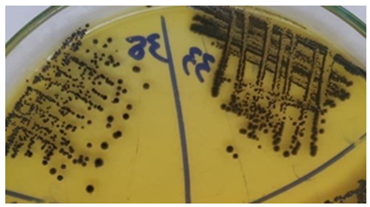
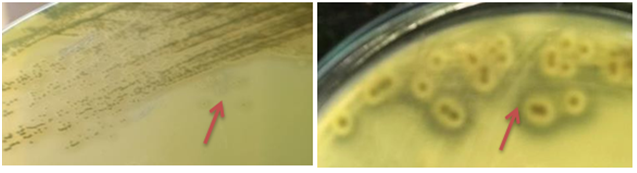
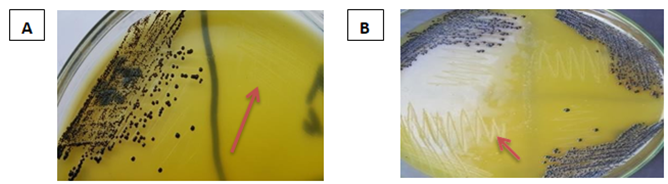
The present finding achieved public hazard where dairy shop’s milk revealed more prevalence as [22 (32.84%) & 8 (11.94%)], while subclinical mastitis milk showed [8 (11.94%) & 6 (8.96%)] of typical and atypical S. aureus, respectively Table 2. Since, the TCT is an essential test for diagnosis of S. aureus; the emergence of atypical coagulase negative S. aureus (CNSA) strains is a warning about the misdiagnosis which was detected in about 7.2 – 20% of all S. aureus isolated [18, 23, 25, 31, 32, 33] but was detected with higher percentages as 58.6% [34]. In the present study those atypical free coagulase negative S. aureus (CNSA), on MSA media the colonies appeared mucoid yellow colour surrounded by yellow halo zone with yellow colour medium and on Baired Parker agar with egg yolk telluride (BPET), atypical S. aureus (CNSA) colonies were black, large in size and not surrounded by halo or clear zone, Figure 1, while typical S. aureus (CPSA) colonies on BPET medium were 1-1.5mm diameter, surrounded by a 2-5 mm halo zone Figure 2. Meanwhile, on Baired Parker agar with egg yolk telluride supplemented with Acriflavine hydrochloride (BPRA), both typical Figure 3&4A and atypical Figure 4B S. aureus strains were acriflavine resistance and had ability to be grown showing black colonies, but the other Staph. spp. can’t grow, Figure 4. The same results were found also by da Silva, WP [8, 18]. Both BPET and BPRA are effective media for suppressing or inhibiting most environmental organisms present in bulk tank milk without damage the recovery of S. aureus [15]. The sensitivity and specificity for detecting S. aureus in bulk tank milk were 94.8% and 100%, respectively, using Baird-Parker agar base supplemented with egg yolk tellurite emulsion and Acriflavine (BPRA) [15]. Acriflavine sensitivity test is the most be included in the phenotypic identification of both CPSA and CNSA where its result was the closest to that of mPCR assay results in confirmation of CPSA and CNSA through detection of thermonuclease gene (nuc gene) [10, 18].
![Figure 2: Meanwhile, on Baired Parker agar with egg yolk telluride supplemented with Acriflavine hydrochloride (BPRA), both typical Figure 3&4A and atypical Figure 4B _S_. _aureus_ strains were acriflavine resistance and had ability to be grown showing black colonies, but the other _Staph. spp._ can’t grow, Figure 4. The same results were found also by da Silva, WP [8,18]. Both BPET and BPRA are effective media for suppressing or inhibiting most environmental organisms present in bulk tank milk without damage the recovery of _S._ _aureus_ [15]. The sensitivity and specificity for detecting _S._ _aureus_ in bulk tank milk were 94.8% and 100%, respectively, using Baird-Parker agar base supplemented with egg yolk tellurite emulsion and Acriflavine (BPRA) [15]. Acriflavine sensitivity test is the most be included in the phenotypic identification of both CPSA and CNSA where its result was the closest to that of mPCR assay results in confirmation of CPSA and CNSA through detection of thermonuclease gene (_nuc_ gene) [10,18].](/fulltextimages/9948/fig_2.png)
Slime producing S. aureus strains are more resistant to antibiotics than non-slime producing strains [3, 24], where coagulase enzyme is implicated in the formation of biofilm- like aggregates [24]. Biofilm formation, mediated by a polysaccharide intercellular adhesin (PIA) is considered to be an important virulence factor in S. aureus. The Congo red dye directly interacts with certain polysaccharides, forming colored complexes or more likely some metabolic changes of the dye to form a secondary product could play a more important part in the formation of dark colonies [35, 36].
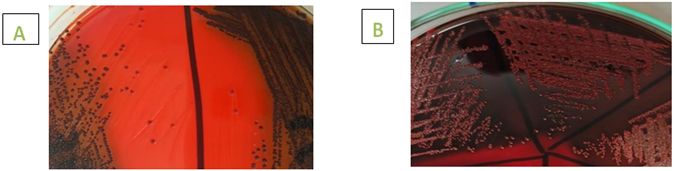
About the biofilm production study, all over the present work, out of 67 Staphylococcus spp. strains, 34 were CPS and 33 were CNS, where on CRA 25 (37.3%) and 9 (13.4%) were in vitro positive biofilm producers, respectively according to the phenotype of the colonies on CRA. While among all S. aureus strains, out of the 30 CPSA and 14 CNSA isolates, 25 (37.3%) and 5 (7.46%) isolates were in vitro positive for slime production, respectively Table 2 and Figure 5 A&B.
Slime-producing S. aureus isolates from different clinical origins such as bovine mastitis has been detected in vitro using Congo Red Agar plate in percentage as 60, 35.18, 37.2 and 91.4%, [3, 37, 38, 39], respectively. Phenotypic characteristics can be defined for recognition S. aureus; but for precise identification it is necessary to use molecular methods for detection of S. aureus species-specific thermonuclease gene (nuc gene), since identification and differentiation of CNSA from other coagulase – negative Staphylococci spp. depends on detection nuc gene [10, 18]. In present work, molecular identification of S. aureus a primer pairs for the gene (nuc gene) were designed for all the tested selected random 10 isolates of S. aureus (5 typical and 5 atypical S. aureus strains), the amplicon size of the examined gene (nuc gene) at 395 bp, where all those tested typical and atypical S. aureus strains encoded species-specific thermonuclease nuc gene confirmed (100%) the phenotypic characterization Table 3 & Figure 6. Some studies [26, 331, 32] detected nuc gene in all (100%) tested atypical S. aureus strains, while nuc gene was found among 97.3, 85% and 66.7 % of the S. aureus isolates; [28, 40, 41], respectively. Out of 35 staphylococcus strains, 16 isolates were possessed nuc gene specific of S. aureus, [18].
| Phenotypically identified S. aureus | Genotypically identified S. aureus | |||
|---|---|---|---|---|
| nuc gene | clfA gene | Spa-x region gene | ||
| Typical (CPSA) | 1 | + | + | + |
| 2 | + | + | + | |
| 3 | + | + | + | |
| 4 | + | + | + | |
| 5 | + | + | + | |
| Atypical (CNSA) | 6 | + | + | + |
| 7 | + | + | + | |
| 8 | + | + | - | |
| 9 | + | + | + | |
| 10 | + | - | - |
Table 3: Genotypic characteristics and virulence related gene in both typical and atypical S. aureus isolates.
![Figure 6: Some studies [26,331,32] detected _nuc_ gene in all (100%) tested atypical _S. aureus strains, while nuc_ gene was found among 97.3, 85% and 66.7 % of the _S. aureus_ isolates; [28,40,41], respectively. Out of 35 _staphylococcus_ strains, 16 isolates were possessed _nuc_ gene specific of _S. aureus_, [18].](/fulltextimages/9948/fig_6.png)
As S. aureus virulence clumping factor, A (ClfA) is one of microbial surface components recognizing adhesive matrix molecules (MSCRAMM) and the ability of intercellular adhesion and biofilm formation of S. aureus is contributed to clumping factors A through its ability to bind fibrinogen [42]. The current study was designed to assess the encoding of ClfA in the genotyping tested S. aureus strains besides the phenotypic biofilm production. The present finding of the two targeted virulence genes clumping factor (clfA gene) and surface protein in the X – region of protein A (spa-X region) were detected in all (100%) tested typical S. aureus strains, as well as clfA gene was detected in 4 out 5 isolates and spa-X region gene was detected in 3 out 5 of the investigated atypical S. aureus isolates (Table 3 and Figure 7&8).
The virulence clumping gene (clfA) in previous studies was detected in as 100 & 98 % [9, 43] in atypical S. aureus tested strains respectively, while few studies [44, 45]
detected clfA in (33.3%) and (19.2%) of the S. aureus isolates, respectively. In contrast, a study [18] failed to detect clfA gene in all the atypical S. aureus isolates, negative reaction for clumping factor test attributed to block up the expression of this gene or too low concentration of the expressed protein or reduced availability on the bacterial surface [46, 47], Protein A (spa) is a bacterial cell wall – associated molecule that binds immunoglobulin (IgG), impairing opsonisation and phagocytosis [48]. In the present work, the spa-X gene was detected in all 5 typical S. aureus isolates and three isolates out of 5 the atypical S. aureus, Table 3 and Figure 8. During previous studies [18, 41, 49], spa gene in X-region binding was detected in all typical and atypical S. aureus isolates, while it was detected in 26 (70.3%) S. aureus isolates [40]. Atypical S. aureus strains seem not to be differed in genetic ability to poses very virulence adhesins genes from typical S. aureus strains [46, 50].
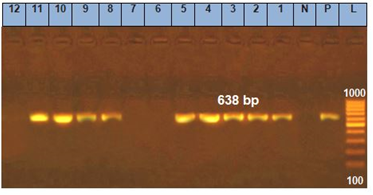
Figure 7: PCR assay for detection of clfA gene in typical and atypical S. aureus isolates. LAN L: 100-1000bp DNA ladder. P: Positive control (at 638) N: Negative control. Lanes: 1- 5, clfA gene positive typical S. aureus isolates. Lanes: 8, 9, 10 and 11 clfA gene positive atypical S. aureus. Lanes 12: clfA gene negative atypical S. aureus isolates.
![Figure 8: During previous studies [18,41,49], _spa_ gene in X-region binding was detected in all typical and atypical _S. aureus_ isolates, while it was detected in 26 (70.3%) _S. aureus_ isolates [40]. Atypical _S. aureus_ strains seem not to be differed in genetic ability to poses very virulence adhesins genes from typical _S. aureus_ strains [46,50].](/fulltextimages/9948/fig_8.png)
Figure 8: PCR assay for detection of protein A (spa-X) gene in typical and atypical S. aureus isolates. L: 100-1000 bp Ladder DNA marker. P: Positive control (at 320 bp) N: Negative control. Lanes: 1-5 spa-X gene typical S. aureus isolates positive isolates. Lines: 8,9,11 spa-X gene atypical S. aureus isolates positive isolates. Lines: 10 and 12 spa-X gene atypical S. aureus isolates negative isolates.
Conclusion
It was concluded that for accurate identification and differentiation of typical and atypical S. aureus from other Staphylococcal strains, acriflavine sensitivity test must be included in the scheme of phenotypic identification as the gold method together with TCT. PCR analysis is most important confirmation method by detection of thermonuclease gene (nuc- gene). Genotypically both typical and atypical S. aureus isolates are virulent.
Recommendation
Typical and atypical S. aureus isolated from milk resembled high incidence as 44.78% & 20.9% respectively, where dairy shop samples with higher percentage than subclinical mastitis threating public health hazard. So, Attention must be paid toward detection and identification of atypical tube coagulase negative S. aureus strains.
References
-
EI-Jakee J, Marouf SA, Ata NS, Abdel-Rahman, EHEl- Moez SIA, et al. (2013) Rapid Method for Detection of Staphylococcus aureus enterotoxins in Food. Global Veterinaria 11(3): 335-341.
-
Elsayed MS, El-Bagoury AEM, Dawoud MA (2015) Phenotypic and genotypic detection of virulence factors of S. aureus isolated from clinical and subclinical mastitis in cattle and water buffaloes from different farms of Sadat City in Egypt. Vet World 8(9): 1051-1058.
-
Sayed SM (2014) Bacteriological study on staphylococcal bovine clinical mastitis with reference to methicillin- resistant Staph. Aureus (MRSA). AJMI 60(140): 38-46.
-
Campos B, Pickering AC, Rocha LS, Aguilar AP, Klein MHF, et al. (2022) Diversity and pathogenesis of Staphylococcus aureus from bovine mastitis: current understanding and future perspectives. BMC Veterinary Research 18: 115.
-
Eidhin DN, Perkins S, Francois P, Vaudaux P, Hook M, et al. (1998) Clumping factor B (clfB), a new surface-located fibrinogen binding adhesion of Staphylococcus aureus. Mol Microbial 30(2): 245-257.
-
Zaatout N, Ayachi A, Kecha M (2020) Staphylococcus aureus persistence properties associated with bovine mastitis and alternative therapeutic modalities. J Appl Microbiol 129(5): 1102-1119.
-
Pedersen RR, Krömker V, Bjarnsholt T, Pedersen KD, Buhl R, et al. (2021) Biofilm Research in Bovine Mastitis. Front Vet Sci 8: 656810.
-
Silva WPD, Destro MT, Landgraf M, Franco BDGM, (2000) Biochemical characteristics of typical and atypical S.aureus in mastitic milk and environmental samples of Brazilian dairy farms. Braz J Microbiol 31(2): 103-106.
-
Wisniewska K, Garbacz K, Piechowicz L (2008) Genotypic screening of atypical Staphylococcus aureus strains isolated from clinical samples for presence of selected adhesin genes. Med Mal Infect 38(10): 549-553.
-
Hanaa AEA, Darwish SF (2014) Evaluation of Phenotypic Methods versus Molecular Methods for Differentiation of Coagulase Positive Staphylococci causing Bovine Mastitis with a Special Reference to atypical Staphylococcus aureus. Int J Curr Microbiol App Sci 3(5): 543-558.
-
Rusenova N, Gebreyes W, Koleva M, Mitev J, Penev T, et al. (2013) Comparison of three methods for routine detection of Staphylococcus aureus isolated from bovine mastitis. Kafkas Univ Vet Fak Derg 19(4): 709-712.
-
Malinowski E, Lassa H, Tomaszewska J, Horodyska MM (2011) Phenotypical identification of atypical Staphylococcus aureus strains isolated from milk of cows from one herd. Bull Vet Inst Pulawy 55: 211-215.
-
Akineden Ö, Hassan AA, Schneider E, Usleber E (2011) A coagulase-negative variant of staphylococcus aureus from bovine mastitis milk. J Dairy Res 78(1): 38-42.
-
Kim JS, Choi Q, Jung BK, Kim JW, Kim GY (2019) Non- hemolytic, Mucinous, Coagulase Negative MRSA Isolated from Urine. Korean J Clin Lab Sci 51: 260-264.
-
Ollis GW, Rawluk SA, Schoonderwoerd M, Schipper C (1995) Detection of staphylococcus aureus in bulk tank milk using modified Baird-Parker culture media. Can Vet J 36(10): 619-623.
-
Quinn PJ, Markey BK, Leonard FC, Hartigan P, Fanning S, et al. (2011) Veterinary microbiology and microbial disease. 2nd (Edn.), Wiley-Blackwell, pp: 928.
-
Baird RM, Lee WH (1995) Media used in the detection and enumeration of Staphylococcus aureus. Int J Food Microbiol 26(1): 15-24.
-
Tawab AAA, Darwish SF, Fatama IEH, Shoieb EM (2018) Phenotypic and genotypic characterization of coagulase negative S. aureus isolated from different sources. Benha Vet Med J 34(3): 129-149.
-
Freeman DJ, Falkiner FR, Keane CT (1989) New method for detecting slime producing by coagulase negative staphylococci. J Clin Pathol 42: 872-874.
-
Mason WJ, Blevins JS, Beenken K, Wibowo N, Ojha N, et al. (2001) Multiplex PCR protocol for the diagnosis of Staphylococcal infection. J Clin Microbiol 39(9): 3332– 3338.
-
Gao J, Ferreri M, Liu XQ, Chen LB, Su JL, et al. (2011) Development of multiplex polymerase chain reaction assay for rapid detection of Staphylococcus aureus and selected antibiotic resistance genes in bovine mastitic milk samples. J Vet Diagn Invest 23(5): 894-901.
-
Momtaz H, Dehkordi FS, Rahimi E, Asgarifar A, Momeni M (2013) Virulence genes and antimicrobial resistance profiles of S. aureus isolated from chicken meat in Isfahan province, Iran. J Appl Poult Res 22(4) : 913-921.
-
Garbacz K, Janusz Galiñski (2006) Atypical S.aureus strains defective in coagulase or clumping factor (CF). Post Mikrobiol 45(1): 3943.
-
Zapotoczna M, McCarthy H, Rudkin JK, O’Gara JP, O’Neill E (2015) An Essential Role for Coagulase in Staphylococcus aureus Biofilm Development Reveals New Therapeutic Possibilities for Device-Related Infections. J Infect Dis 212(12): 1883-1893.
-
Laevens H, Devriese LA, Deluyker H, Hommezc J, Kruif AD (1996) An atypical Staphylococcus aureus intramammary infection in a dairy herd. Vet Microbiol 52(3-4): 271-275.
-
Malinowski E, Lassa H, Kłossowska A, Smulski S, Kaczmarowski M (2009) Atypical Staphylococcus aureus as an aetiological agent of mastitis in cows. Bull Vet Inst Pulawy 53(3): 383-387.
-
Hase P, Digraskar S, Ravikanth K, Dandale M, Maini S (2013) Management of subclinical mastitis with mastilep gel and herbal spray (AV/AMS/15). International Journal of Pharmacy and Pharmacology 2(4): 64-67.
-
Abdel-Tawab AA, Maarouf AAA, El-Hofy FI, Abbas SAH (2016) Molecular detection of some virulence genes of S. aureus isolated from mastitic Cows by PCR. Benha Veterinary Medical Journal 30(1): 238‐245.
-
Bennett RW, Lancette GA (1995) S. aureus. In: Bacteriological Analytical Manual. 8th(Edn.), Gaithersburg, pp: 1201-1205.
-
Thatcher FS, Clark DS (1968) Microorganisms in foods: Their significance and methods of enumeration. 2nd(Edn.), Toronto: University of Toronto Press, pp: 248.
-
Młynarczyk G, Kochman M, Lawrynowicz M, Fordymacki P, Młynarczyk A, et al. (1998) Coagulase-negative variants of methicillin-resistant Staphylococcus aureus subsp. aureus strains isolated from hospital specimens. Zentralbl Bakteriol 288(3): 373-381.
-
Młynarczyk A, Młynarczyk G, Szymanowska A, Stańczak J, Luczak M, et al. (2000) Use of PCR for evaluating detection of coa and nuc genes in methicillin-resistant, coagulase-negative strains of Staphylococcus aureus (MRSA-CN). Med Dosw Mikrobiol 52(3): 217-222.
-
Garbacz K, Lidia P, Katarzyna W, Janusz G (2002) Characteristics of defective strains of methicillin resistance staphylococcus aureus that do not produce coagulase or CF. Med Dosw Mikrobiol 54(1): 1-8.
-
Horodyska MM, Kubiak J, Lassa H, Malinowski E (2013) Changes in antibiotic susceptibility pattern of atypical s. aureus strains isolated from cows of the same herd in 2008-2010. Bull Vet Inst Pulawy 56: 139-143.
-
Arciola CR, Baldassarri L, Montanaro L (2001) Presence of icaA and icaD genes and slime production in a collection of staphylococcal strains from catheter- associated infections. J Clin Microbiol 39(6): 2151-2156.
-
Jain A, Agarwal A (2009) Biofilm production, a marker of pathogenic potential of colonizing and commensal staphylococci. J Microbiol Methods 76(1): 88-92.
-
Vasudevan P, Nair MKM, Annamalai T, Venkitanarayanan KS (2003) Phenotypic and genotyping characterization of bovine mastitis isolates of staphylococcus aureus for biofilm formation. Vet Microbiol 92(1-2): 179-185.
-
Ciftci A, Findik A, Onuk EE, Savasan S (2009) Detection of methicillin resistance and slime factor production of S. aureus in bovine mastitis. Brazilian J Microbiology 40: 254-261.
-
Klein MHF, Santos MJC, Klein RC, Souza GND, Ribon ADOB (2015) An association between milk and slime increases biofilm production by bovine Staphylococcus aureus. BMC Vet Res 11: 3.
-
Kalorey DR, Shanmugam Y, Kurkure NV, Chousalkar KK, Barbuddhe SB (2007) PCR-based detection of genes encoding virulence determinants in staphylococcus aureus from bovine subclinical mastitis cases. J Vet Sci 8(2): 151-154.
-
Memon J, Yang Y, Kashifa J, Yaqoob M (2015) Genotypes, Virulence Factors and Antimicrobial Resistance Genes of staphylococcus aureus Isolated in Bovine Subclinical Mastitis from Eastern China. Pak Vet J 33(4): 486-491.
-
Arrizubieta MJ, Arana AT, Amorena B, Penadés JR, Lasa I (2004) Calcium inhibits bap dependent multicellular behavior in Staphylococcus aureus. J Bacteriol 186(22): 7490-7498.
-
Hakim AS, Shimaa TO, Elgabry EA, Bakry MA (2016) Molecular screening of clumping factor and some antibiotic resistance genes in staphylococcal isolates obtained from retail pork byproducts in Egyptian markets. International Journal of Chem Tech Research 9(8): 37-42.
-
EL-khabaz KHAS, Hussien MF, Naser EMDE, Ahmed HA (2011) Studying the occurrence of clumping factor gene in S. aureus isolated from cases of subclinical mastitis and the effect of such pathogen on milk composition. Assuit Vet Med J 57(129): 1-17.
-
Santos VM, Hellen BM, Izadora SR, Maysa SB, Ewerton FA, et al. (2014) Virulence factor profile of Staphylococcus aureus isolated from bovine milk from Brazil. Food and Nutrition Sciences 5: 1496-1505.
-
Foster TJ, Hook M (1998) Surface protein adhesions of Staphylococcus aureus. Trends Microbiol 6(12): 484- 488.
-
Patti JM, Allen BL, McGavin MJ, Hook M (1994) MSCRAMM-mediated adherence of microorganisms to host tissues. Ann Rev Microbiol 48: 585-617.
-
Bystroń J, Bania J, Lis E (2009) Characterization of staphylococcus aureus strains isolated from cows’ milk. Bull Vet Institute in Puławy 53(1): 59-63.
-
Bhati T, Nathawat P, Sharma SK, Yadav R, Bishnoi J, et al. (2016) Polymorphism in spa gene of Staphylococcus aureus from bovine subclinical mastitis. Vet World 9(4): 421-424.
-
Vancraeynest D, Hermans K, Haesebrouck F (2004) Genotypic and phenotypic screening of high and low virulence Staphylococcus aureus isolates from rabbits for biofilm formation and MSCRAMMs. Vet Microbiol 103(3-4): 241-247.
- Antifungal Activity of New Acetophenone Derivatives
- Interconnected Microbiomes Human Health Within an Environmental Framework
- Silkworm-Based Vaccine Production for H5N1: A One Health Approach to Pandemic Preparedness
- Microbial Diversity and Lipolytic Activity of Bacteria and Fungi from Oil-Contaminated Sites in Makurdi Metroplois
- Antibiotic Resistance Profile of Bacteria Isolated at the Central Laboratory of the National Hospital Center of Nouakchott
- Epidemiology and Sensitivity to Antibiotics of Germs Isolated from Blood Cultures in the Laboratory of the National Hospital Center of Nouakchott-Mauritania