
Immunotherapeutic Efficacy of Dietary Black Cumin Seed Synergistic Action of Curcumin Experimental Eimeria Tenella Infections in Chicks
Coccidiosis is a major health and economic problem in the poultry industry. This work was planned to study the effect of Nigella sativa grinded seeds and Curcumin on experimental infection of chicks with Eimeria tenella. Chicks were divided into six groups; G (1) received N. sativa 500 part million (ppm), and curcumin 500 ppm, G (2) received N. sativa 1000 ppm, G (3) received Curcumin 1000 ppm, G (4) received anticoccidial drug (diclazuril), G (5) received no herbs or drugs as a control infected and G (6)10 normal non-infected control. All chicks were infected at 28 days old with 20,000 sporulated Eimeria tenella oocysts. Daily counting of oocysts was done for eight days post infection (p. i.). Chicks were weighed during the six weeks of the experiment. Blood was collected at 30 and 42 days for total WBCs count and total protein determination. Caeca from chicks were collected and preserved in 10% formalin to see gross pathological changes and (6μm) sections for histopathological examination. The results of this work showed that group (1) had a higher body weight gain from 14 to 21 d of age. Also, it had total WBCs count as normal healthy birds (32,250± 3,218 /μl) and a total serum protein (5.5 ± 1.2 g/ dl). However, after experimental infection with Eimeria tenella, group (2) had higher body weight (1767.2 ± 64.1g). Also, total WBC count as normal healthy birds (57,750 ± 5,687/ μl), a total serum protein (5.1 ± 1.15 g/dl) and the lowest oocyst count. Histopathological examination during the recovery phase in Nigella ration showed mild infection of schizonts and inflammation of all layers of intestinal wall with crypt abscess composed of Eimeria schizonts and chronic inflammatory cells and parasitic granuloma composed of chronic inflammatory cells and fibrosis. These results are statistically significant. Thus, it can be concluded that Nigella sativa and curcumin have significant anticoccidial activity comparable to/ or better than Diclazoril.
Introduction
Coccidia are a group of intracellular opportunistic protozoa which contain different genera. They share general features in morphology, life cycle and pathogenicity. Isospora is a human intestinal coccidian closely related to members of the genus Eimeria. Eimeria causes disease in various domestic animals, fish and birds [1]. Eimeria
causes the most widespread health problem in the broiler industry and remains one of the most expensive diseases of commercial poultry production [2, 3, 4]. The introduction of natural herbs into feeding programs also proved to have beneficial effect on poultry health and production [5]. For preventive therapy, coccidiostatics should be used for long time which may interfere with development of immunity and drug resistance also they may depress egg production and increase embryonic mortality. These drugs may have a bad effect on the consumers due to residual effects in poultry products ‘’ meats and eggs’’. Hence, they should be withdrawn at least 4 days before slaughtering ‘’broilers’’ and 4 weeks before commencement of egg production [6]. N. sativa have been used in folk medicine in the Middle and Far East as a traditional medicine for a wide range of illness. The original research articles have shown the potential immunomodulatory and immunotherapeutic potentials of N. sativa seed active ingredients, in particular thymoquinone (TQ). The immunotherapeutic efficacy of TQ is linked to its antitoxic, anti-histaminic and anti-inflammatory properties. These effects with its immunomodulatory properties can explain the anti-microbial and anticancer properties of N. sativa oil or TQ. Schistosomiasis, a tropical parasitic disease, is endemic in the third world countries. Protection from this disease is mediated by both cellular and humoral immunity [7]. N. sativa seeds in a ratio of 2% in feed of poultry showed that it has an immuno-stimulant and growth promoter effects and Anti-helmenthic effect. AL- sayed, [8] found that it stimulates immunity by initiationand increase in cellular immunity and humoral immunity. Also, it has improved the immune response in vaccinated chickens against coccidial infection [9]. Nigella sativa was reported to have anticoccidial, vaccine promoting, growth promoting [10] and antihelminthics [7] effects. Curcumin was used as a nematocidal [11] and anti-inflammatory [12] and as antioxidant [13]. Furthermore, the plant was effective in reducing upper- and mid-small intestinal infections caused by E. acervulina and E. maxima [14]. Because of the difficulty in cycling Isospora than Eimeria, the present study was conducted to determine the effect of addition of some natural herbs (Nigella sativa Grinded Seeds and Curcumin powder) in chicks infected with Eimeria tenella isolates as an example of the coccidia family.
Materials and Methods
Experimental animals: 160clinically healthy broiler chicks, Cobb 308 hybrids, one day old and weighing 40 gm; the birds were housed in cages on slat floors under conditions excluding further Eimeria infection. The birds received a standard diet without antibiotics or coccidiostatics given ad libitum access to water and un-medicated starter feed.
Chicks were divided into 6 groups:
- Group (1): 30 chicks infected and received Nigella sativa at a dose of 500 ppm and Curcumin at a dose of 500 ppm.
- Group (2): 30 chicks infected and received Nigella sativa at a dose of 1000 ppm. Group (3): 30 chicks infected and received Curcumin at a dose of 1000 ppm.
- Group (4): 30 chicks infected and treated with anti- coccidial drug ‘’Diclazuril’’ as a reference control treated group.
- Group (5): 30 chicks infected and received no treatment and serve as infected control.
- Group (6): 10 chicks non-infected and serve as a normal control.
- The experimental feed was a starter feed with non- anticoccidial additives. The feed was mixed with Nigella sativa powder and Curcumin as experimental protocol.
Parasites and Experimental Infection
Eimeria tenella strain was isolated from infected birds and propagated at the animal housing facility of the poultry project in Libya. Sporulated oocysts were isolated in 2.5% sodium hypochlorite, washed three times with dist. water, and counted using a McMaster slide under a light microscope. All chicks in groups (1 – 5) were inoculated with 20,000 sporulated E. tenella oocysts in 0.5 ml water/ each at 28th day old. The 4th and 5th groups were infected and received complete ration free from additive as reference treated and control non-treated groups, respectively.
- All chicks were subjected to the following: 1. Parasitological Studies: Oocysts index measured, Daily oocysts count in excreta 5 times / day for eight days after the infection. In order to determine parasitological parameters, lesion scores per bird were assessed according to Johnson and Reid [15] and the oocyst index measured [16]. Counting coccidial oocysts (Eimeria spp.) has been performed according to the procedure given by Taylor, et al., [17] employing the commonly used variation of using gauze rather than a sieve to screen the faeces [18]. Each test sample was prepared and counted by using McMaster counting slide. Five samples were taken from each cage along the 24 h at 6, 10, 14, 18 and 22 h and the mean number is calculated / day.
2. Blood was Collected at 30 and 42 days for Total Leucocytic Count [19].
3. Examination of Pathological Changes in Caeca: Caeca from chicks were collected from the age of 32 to 45 days and preserved in 10% formalin to see gross pathological changes and 6 µm sections from infected and healthy chicks were prepared for histopathological examination. Caecal samples from each chick (~25mm in length) were fixed in 10% neutral buffered formalin for 48 hours and washed then placed in 70% ethyl alcohol (EtOH) for preparation of
- paraffin sections to see the changes in the caeca. Staining the sections with H & E. stain and microscopic examination to see the histopathological changes were done according to
- Ahlqvist and Anderson [20]. at P ≤ 0.05.
- Results
- Mortality and necropsy records: The total number of deaths in the experimental groups was 6 in Group (1), 5 in
- Group (2), 6 in Group (3), 9 in Group (4) and 9 in Group (5) with a total of 35 (Tables 1,2 and Figures 1-8).
- Statistical Analysis: Statistical analysis of the results was done by using SPSS [21] Version 8.0 software. After oneway analysis of variance, Tukey’s multiple range test (HSD) was used to test significance between different treatments
- Oocyst Count
- Days Post Infection (X 105)/ Day
- Group
- 1st
- 2st
- 3st
- 4st
- 5st
- 6st
- 7st
- 8st
- 1
- 3 ± 0.28
- 2.5c ± 0.38
- 0.5c ± 0.08
- 0.225b ±0.09
- .250 ±0.06
- 4.00Dc ± 0.45
- 5.00b ± 0.22
- 2.00b ±.32
- 2
- 1.25d ± 0.14
- 1.5c ± 0.14
- 0.5c ± 0.08
- 0.25b ± 0.07
- 0.25 ± 0.05
- 1d ± 0.11
- 2.5d ± 0.24
- 3.5b ± 0.22
- 3
- 2.5b ± 0.16
- 3c ± 0.16
- 0.25c ± 0.07
- 0.25b ± 0.07
- 0.3 ± 0.08
- 3.5c ± 0.47
- 6bc ± 0.27
- 4b ± 0.32
- 4
- 2.7a ± 0.25
- 10b ± 0.84
- 3. b ± 0.16
- 0.25b ± 0.05
- 0.25 ± 0.05
- 17.5b ± 0.55
- 7.5a ± 0.32
- 2.5b ± 0.32
- 5
- 3.75c ± 0.07
- 20a ± 0.70
- 3.75a ± 0.29
- 1a ± 0.08
- 0.75 ± 0.11
- 30a ±1.38
- 12.5d ± 0.55
- 7.7a ± 0.37 prop
- ***
- **
- **
- **
- NS
- ***
- ***
- **
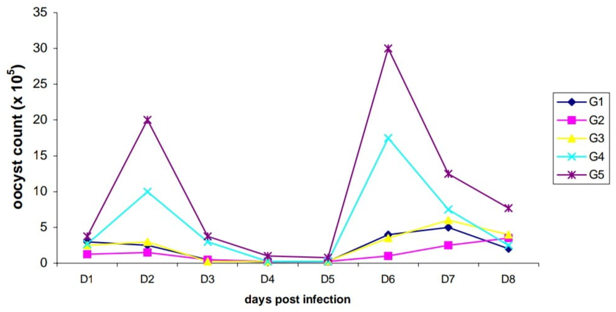
Table 1: Days Post Infections among different groups.
Total White Blood Cell Count
| WBCS Count | Experimental Groups | |||||
|---|---|---|---|---|---|---|
| G1 | G2 | G3 | G4 | G5 | Prob | |
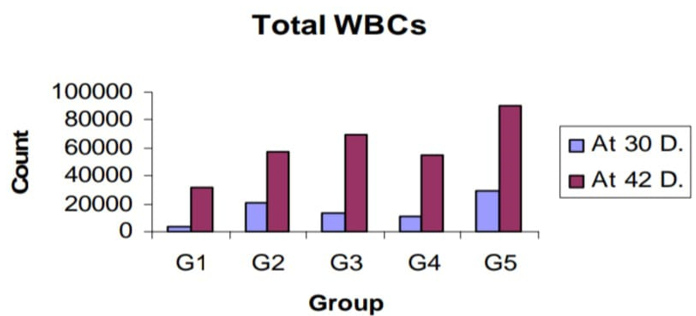
| 30th day | 3500c±270.7 | 20.500b±860.5 | 13,550c±677.8 | 10,800a±590.6 | 28,750a±1170 | *** |
| 42nd day | 32,250c±3,218 | 57.750c±5,687 | 69,600a±7,128 | 54,900a±5,461 | 90,250a±8,513 | *** |
Table 2: Total WBCs count among different groups.
a,b,c,d,e Means with different superscripts are statistically different within the same row. ***P≤0.00 Table 2: Total WBCs count among different groups.
Postmortem Examination of Chicks’ Coeca (Macroscopic Lesion)
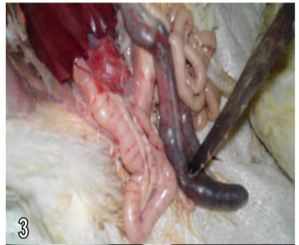
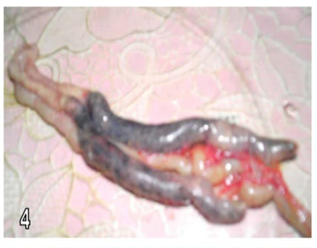
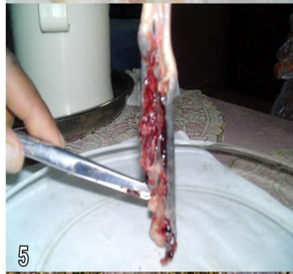
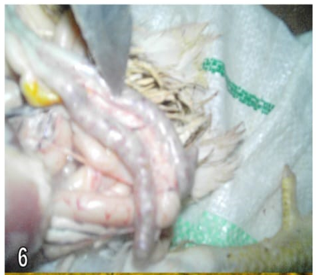
Macroscopic lesions are presented in Figures 3-6. There were haemorrhages and necrosis affecting the two caeca of infected chicks.
Microscopic Examination of Excreta and Mucosal Scraping
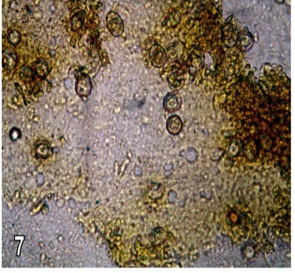
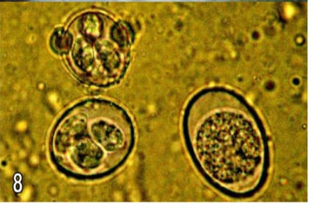
Examination of excreta and mucosal scraping in the different groups reveals that the oocyst has the size of E. tenella oocyst (19 x 22 μm). The test groups vary in the intensity of infection (Figures 7 & 8).
Histopathological Finding
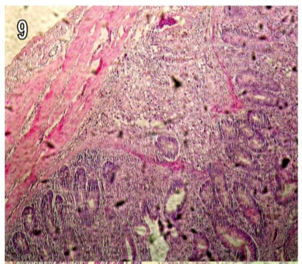
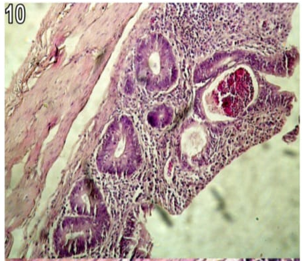
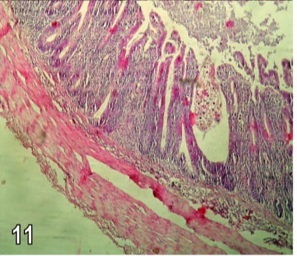
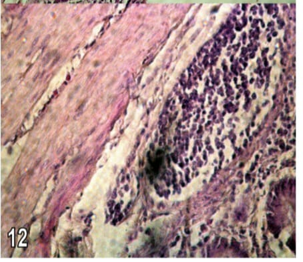
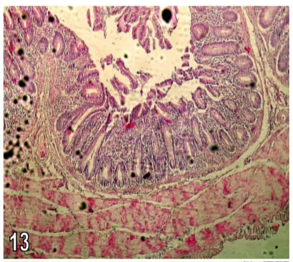
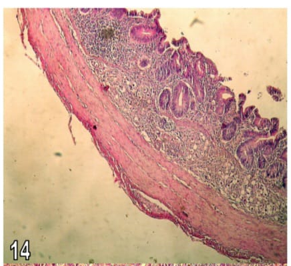
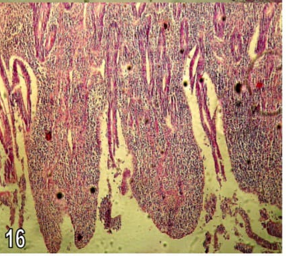
The histopathological examination of H& E stained sections of caeca from the different groups showed that there were multiple parasitic schizonts and oocysts in the mucosa and submucosa. There were invasion of the layers of the caecum by different inflammatory cells mainly lymphocytes and eosinophils. Small focal areas of necrosis in underlying connective tissue were seen. Small areas of hemorrhage and necrosis were seen separating the underlying connective tissue. The epithelium may contain sufficient parasitized cells that can produce degeneration of surrounding connective tissues. The caeca showed inflammation over 80% of the distal areas. The lumen is filled with blood and shedding of mucosa. Edema and necrosis are seen in muscularis mucosa and submucosal areas. Fibrosis is seen in the submucosal layer. Both asexual and sexual forms of the parasites develop beneath the nuclei of the epithelial cells. The number of schizont is increased and the degree of inflammation is severe. There was transmural inflammation affecting all layers of intestinal wall in group (4). While group (5) showed mild inflammatory infiltrate and extensive fibrosis. There were extensive invasion of the mucosa and muscularis mucosa by schizonts and inflammatory cells forming crypt abscess in group (1) Figures 9 & 10. There were moderate infection of schizont with the presence of Crypt abscess & parasitic granuloma in group (2) Figures 11 & 12. However, group (3) showed partial shedding of the mucosa, ulceration and infiltration by a large number of acute and chronic inflammatory cells (Figures 13-16).
Discussion
Coccidia are a group of intracellular opportunistic protozoa which contain different genera. They share general features in morphology, life cycle and pathogenicity. Isospora is a human intestinal coccidian closely related to members of the genus Eimeria. Eimeria causes disease in various domestic animals, fish and birds [1]. One of the main expenses facing poultry industry is the loss associated with poultry diseases, including costs of vaccination, prevention, treatment, reduction in weight gains, and mortality [22, 23]. Coccidiosis is an economic and health problem in the poultry industry and can infect any type of poultry in any type of facility and its occurrence is worldwide [24].
This work was planned to study the effect of grinded N. sativa seeds and curcumin on experimental E. tenella infection in chicks. The present work showed that the results of total oocyst count in group (1) and group (3) were nearly the same count during the eight days post infection (p.i) which was statistically significant as compared to groups (4 & 5). However, group (2) had the lowest oocyst count as compared to the other test and control groups. These results were statistically significant. These results agreed with the work done by Cumming, [25]. However, Allen and Fetterer [14] showed no agreement with these results and stated that N. sativa had no therapeutic effect on E. tenella.
The present work showed that the total white blood cell count was decreased in group (1) (3,500 ± 270.7/μl), as compared to group (2) (20,500 ± 860.5/μl) at the age of 30th day old. However, significant differences were observed among the other groups. While at the age of 42 nd day, group (3) (69,600 ± 7,128/μl) showed high white blood cell count then group (2) (57,750 ± 5,687/μl) followed by group (4) (54,900 ±5,461/μl) as compared with control which was statistically highly significant.
These results agreed with the work done by Antony, et al. [26] who stated that the use of tumeric inclusion (0.5 and 1.0%) increased total leucocytic count. Also, Hashim, [9] found that the use of Nigella sativa (1000 ppm) inclusion increased the total WBC count in chickens due to improvement of the immune response in vaccinated chickens against coccidial infection.
The histopathological examination of caecal sections from the different groups revealed alteration of the epithelium, inflammatory cellular infiltration, abscess and fibrosis which differed in intensity among the different groups. Also, the number of schizonts and their location in the wall of the caecum varied widely. Group (2) showed mild infection with schizonts and there was cryptabscess and parasitic granuloma and the degree of penetration was superficial and slightly deep, there was sloughing of mucosa and regeneration in epithelial cells. Group (1) showed moderate number of schizonts in submucosal layer and crypt abscess which was comparable to group (2).
Group (3) showed partial shedding of the mucosa, ulceration and infiltration by a large number of acute and chronic inflammatory cells). Group (4) showed severe infection with schizonts and transmural inflammation affecting all layers of intestinal wall. Control group showed inflammatory infiltrate and extensive fibrosis, sloughing of mucosal cell with fibrin network entailing acute and chronic inflammatory cell. These results agreed with the work done by Schat, [27] who found sloughing of the intestinal lining exposing the lamina propria and Barker, [28] who found alteration of the villus structure.
Results from the present experiments indicated that the host response in group (1) differently than group (3) at the level of the caecal mucosa comparing to control. These results agreed with the work done by Rose [23]. In the present experiment, there was an increase in intestinal crypt depth. Crypt abscess and hyperplasia was found to be present in group (1) challenged birds and group (2). Which agreed with the work done by Fernando and McCraw [29].
Thus, it can be concluded that the use of Nigella sativa and curcumin are recommended for control of coccidiosis. Further studies on the role of N. sativa as an anticoccidial are recommended to confirm the results obtained by this work and to examine their role as human anticoccidial.
References
-
Markell EK, John DT, Krotoski WA (1999) Medical Parasitology. 8th(Edn.), W.B. Saunders Company, USA, pp: 196-197.
-
Edgar SA (1992) Field diagnosis of coccidiosis in chickens. Agri-Bio Corporation.
-
Henken AM, Ploeger HW, Graat EA, Carpenter TE (1994) Description of a simulation model for the population dynamics of Eimeria acervulina infection in broilers. Parasitol 108(Pt 5): 503-512.
-
Yun CH, Lillehoj HS, Lillehoj EP (2000) Intestinal immune responses to coccidiosis. Dev Com Immunol 24(2-3): 303-324.
-
Ismail S (2004) Therapeutic nutrition of poultry. Poultry Middle East and North Africa (177): 12.
-
Bassiouni AA, Ahmed A, Sokkar IM, ELsisi MA (1982) Guide to Diseases and parasites of poultry and rabbits.
-
Mahmoud MR, El-Abhar HS, Saleh S (2002) The effect of Nigella satia oil against the liver damage induced by Schistosoma mansoni infection in mice. J Ethnopharmacol 79(1): 1-11
-
El-Sayed EM, Hashim ME (2000) Effect of Nigella sativa on the immune response to Eimeria vaccination in chicken. Egypt J Agri Res 78(1 Special issue): 231-239.
-
Hashim M (2002) Effect of Nigella sativa in immuno- response vaccination against coccidian in local chicken. Poultry Middle East and North Africa (165): 32.
-
Guler T, Dalklc B, Ertas ON, Ciftci M (2006) The effect of dietary black cumin seeds (Nigella sativa L.) on the performance of broilers. Asian Australian J Anim Sci (19): 425-430.
-
Kiuchi F, Goto Y, Sugimoto N, Akao N, Kondo K, et al. (1993) Nematocidal activity of turmeric: synergistic action of curcuminoids. Chem Pharm Bull (Tokyo) 41(9): 1640-1643.
-
Ammon HP, Safayhi H, Mack T, Sabieraj J (1993) Mechanism of anti-inflammatory actions of curcumin and boswellic acids. J Ethnopharmacol 38(2-3): 113- 119.
-
Osawa T, Sugiyama Y, Inayoshi M, Kawakishi S (1995) Antioxidative activity of tetrahydrocurcuminoids. Biosci Biotechnol Biochem 59(9): 1609 -1612.
-
Allen PC, Fetterer RH (2002) Recent Advances in Biology and Immunobiology of Eimeria Species and in Diagnosis and Control of Infection with These Coccidian Parasites of Poultry. Clin Microbiol Rev 15(1): 58-65.
-
Johnson J, Reid WM (1970) Anticoccidial drugs: lesion scoring techniques in battery and floor-pen experiments with chickens. Exp Parasitol 28(1): 30-36.
-
Cuckler AC (1959) The laboratory evaluation of coccidiostatic drugs. In: Proceedings of the Conference on Methods of Testing Coccidiostats, Merck Chemical Division, Rahway 2, pp: 1-14.
-
Taylor M, Catchpole J, Marshall R, Norton CC, Green J (1995) Eimeria species of sheep. In: Eckert J, et al. (Eds.), COST 89/820, Biotechnology, Guidelines on Techniques in Coccidiosis Research, European Commission, Luxembourg, pp: 25-39.
-
Holdsworth PA, Conway DP, McKenzie ME, Dayton AD, Chapman HD, et al. (2004) World Association for the Advancement of Veterinary Parasitology (WAAVP) guidelines for evaluating the efficacy of anticoccidial drugs in chickens and turkeys. Vet Parasitol 121(3-4): 189-212.
-
Dein FJ (1984) Laboratory manual of Avian hematology. Association of Avian veterinaries. East-North port, USA.
-
Ahlqvist J, Anderson L (1972) Methyl green-pyronin staining: effects of fixation use in routine pathology. Stain Technol 47(1): 17-22.
-
SPSS Inc (1997) SPSS for Windows Graduate Pack Advanced Version. Version 8.0. SPSS Inc., Chicago, IL.
-
Biggs PM (1981) The world of poultry disease. Avian Pathology 11(2): 281-300.
-
Rose ME (1987) Immunity to Eimeria infections. Vet Immunol Immunopathol 17(1-4): 333-343.
-
McDougald LR, Reid WM (1997) Coccidiosis. In: Calnek BW (Ed.), Diseases of Poultry, 10th (Edn.), Lowa State University Press, Ames, ISA, pp: 865-883.
-
Cumming RB (1987) Cumming, the effect of dietary fibre and choice feeding on coccidiosis in chickens. Proceedings of the Fourth Association of Asian Australasian Association of Animal Production Societies Congress Hamilton, New Zealand, pp: 216.
-
Antony S, Kuttan R, Kuttan G (1999) Immunomodulatory activity of curcumin. Immunol Invest 28(5-6): 291-303.
-
Schat KA (1991) Avian intestinal immunity. Critical Reviews in Poultry Biology (3): 19-34.
-
Barker IK (1993) Pathological processes associated with coccidiosis. 6th International Coccidiosis Conference. Guelph, Canada, pp: 81-94.
-
Fernando MA, McCraw BM (1973) Mucosal morphology and cellular renewal in the intestine of chickens following a single infection of Eimeria acervulina. J Parasitol 59(3): 493-501.
- Antifungal Activity of New Acetophenone Derivatives
- Interconnected Microbiomes Human Health Within an Environmental Framework
- Silkworm-Based Vaccine Production for H5N1: A One Health Approach to Pandemic Preparedness
- Microbial Diversity and Lipolytic Activity of Bacteria and Fungi from Oil-Contaminated Sites in Makurdi Metroplois
- Antibiotic Resistance Profile of Bacteria Isolated at the Central Laboratory of the National Hospital Center of Nouakchott
- Epidemiology and Sensitivity to Antibiotics of Germs Isolated from Blood Cultures in the Laboratory of the National Hospital Center of Nouakchott-Mauritania