
Algae Therapy: Highlights on the Pharmaceutical Potentials of Algae
The markets for prescribed drugs are growing quickly worldwide. A developing share of today’s promising pharmaceutical research focuses on the manufacturing of effective bioactive compounds from algae. Pharmaceutically treasured products from algae and its industrial commercialization today are still in its infancy and can be considered as a gateway to a multibillion dollar industry. Algae represent a principal untapped useful resource of genetic potential for precious bioactive agents and high-quality biochemical. This tested capability of algae to produce these compounds places these microorganisms in the biotechnological highlight for functions and commercialization as in the pharmaceutical industry. The manufacturing of algal metabolites, which stimulate protection mechanisms in the human body, has spurred extreme find out about of the utility of algal biomass and products thereof in more than food preparations, pharmacological and clinical products. There is, therefore, a massive scope in addition learn about of the identified algal compounds and their activities in the treatment and prevention of various diseases, in addition to an ongoing search for other, as yet undetected, metabolites.
Introduction
Certainly, “our life depends on microalgae” since they compose 50 percent of overall oxygen production [1]. As autotrophs support aquatic ecosystems, and in general all land plants and animals lean on microalgae directly or indirectly. Firstly, the primary production of marine and freshwater bodies relies on microalgae [2]. Secondly, they are situated in the base of food chains having an essential role in the world’s aquaculture industries for their protein needs [3]. Based on the size and morphology, algae may be subdivided into 2 main categories: macroalgae and microalgae. Macroalgae are composed of multiple cells, organized into structures that resemble higher plant roots, stems, and leaves (e.g. kelp). Microalgae are mostly unicellular, a diverse group of primary producers (autotrophs) organisms capable of forming organic compounds from pure inorganic materials like atmospheric or marine carbon dioxide [4]. They are microscopic in comparison to algae which are simpler autotrophic organisms with a large variety [5]. Today’s advanced plant life is believed to have been developed from these basic plant-like microscopic organisms.
Around 41,000 species of macroalgae and microalgae were described. The microalgae are categorized according to the quality of photosynthetic pigments, the food reserve for carbohydrates, the cell walls, the structure and orientation of flagella 1 [6]. Furthermore, these microalgae contain proteins, pigments, essential fatty acids, vitamins, polysaccharides and minerals [7]. Such high-value products Furthermore, these microalgae contain proteins, pigments, essential fatty acids, vitamins, polysaccharides and minerals [7]. Such high-value products may be proven particularly important and beneficial to the pharmaceutical industry by giving new choices to treat illnesses like inflammation and immunomodulating actions [8]. Eventually, the microalgae that provide us with oxygen, foods, and car fuel, also provide us with effective medical substances against virus diseases (Herpes simplex and AIDS), cancer and drug-resisting bacterial strains. Pharmaceutical products of quality and their industrial marketing are still developed and can be viewed as a key to a multimillion-dollar industry. Scientists have just begun to explore the huge biological resource and physiological perspective of microalgal species as growing in every environmental niche [9].
Bioactive compounds from algae and their types
Bioactive compounds are physiologically active substances with functional properties in the human body. There is, therefore, a super enthusiasm for the improvement and manufacture of a number of bio-compounds that can probably be used as functional ingredients such as phycocyanins, carotenoids, fatty acids, polyphenols, and polyunsaturated compounds [10]. The manufacturing of bioactive compounds from natural sources has currently emerged, pushed by using a developing wide variety of scientific research that exhibit the advisable consequences of these compounds on health benefits [11]. These natural products are important in the search for new pharmacologically active compounds and play necessary position in new drug discovery for the treatment of human diseases [12].
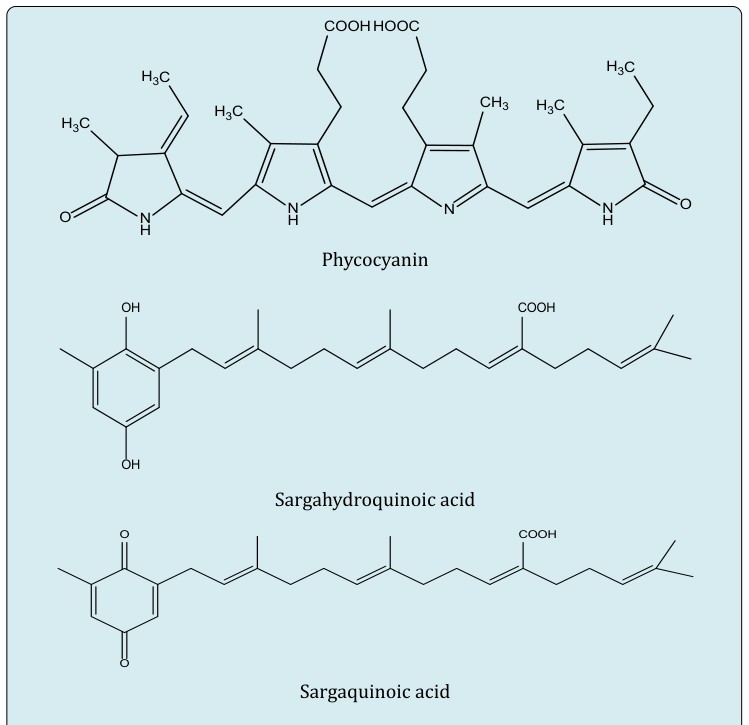
Bioactive compounds from algae (Figure 1) can be obtained directly from primary metabolisms, such as therapeutic proteins, fatty acids, vitamins, and pigments, or can be synthesized from secondary metabolism. Such compounds can present antivirals, antialgals, antifungals, antienzymatic, or antibiotic actions [13, 14]. Many of these compounds (Cyanovirin, linolenic acid, oleic acid, palmitoleic acid, β-carotene, vitamin E, B12, β-carotene, phycocyanins, zeaxanthin and lutein) have antioxidant, antimicrobial and anti-inflammatory properties, with the potential for the reduction and prevention of diseases [15, 16, 17]. In most microalgae, the bioactive compounds are accrued in the biomass; however, in some cases, these metabolites are excreted into the medium; these are recognized as exometabolites.
Physiological effects of algal bioactive compounds
Polysaccharides symbolize a type of excessive value- added elements with functions in pharmaceuticals, food, cosmetics, fabrics, stabilizers and emulsifiers [18]. Microalgal polysaccharides incorporate sulfate esters, are referred to as sulfated polysaccharides, and possess special clinical applications. The primary mechanism of therapeutic action is based totally on the stimulation of macrophages and modulation. The biological activity of sulfur polysaccharides is linked to their sugar composition, position, and degree of sulfation [19]. Sulfated polysaccharides derived from algae inhibit some viral infections, such as herpes simplex virus, swine fever virus, varicella virus and salmonid virus [20, 21, 22].
The lipid compositions of microalgae are found to be responsible for its antimicrobial activity. This antimicrobial property of microalgae is because of their potential to produce compounds such as β-cyclocitral, α- and β-ionone, neophyte diene, and phytol [20]. Antimicrobial activity against human pathogens, such as Pseudomonas aeruginosa, E. coli, Pseudomonas aeruginosa, Staphylococcus epidermidis, and S. aureus, has been attributed to eicosapentaenoic acid, docosahexaenoic acid, γ-linolenic acid, hexadecatrienoic acid, palmitoleic acid, lauric acid, oleic acid, lactic acid, and arachidonic acid [23].
Carotenoids have extremely good conceivable advantages to human health, together with the treatment of degenerative diseases, such as macular degeneration and cataract development. These compounds act as antioxidants, lowering oxidative harm by using ROS. Studies indicated that multiplied consumption of phenols diminished the prevalence of degenerative diseases. Phenolic compounds from microalgae with the attainable to fight free radicals have been reported [24]. Oxidative damage through reactive oxygen species (ROS) to proteins, lipids and nucleic acids can cause many continual illnesses such as coronary heart disease, cancer and atherosclerosis. In general, algal strains are regarded a prosperous supply of antioxidants, with viable functions in food, cosmetics, and pharmaceuticals [25]. Antioxidant compounds such as mycosporine amino acids, and dimethylsulfoniopropionate isolated from algae and are amazing chemical blockers of UV radiation [26]. In addition to these compounds, pigments, lipids, and polysaccharides with antioxidant recreation can additionally be discovered in algae.
In humans, the oxidation reactions pushed by using ROS can lead to irreversible harm to cell components, along with proteins, lipids, and DNA mutation or degradation. Consequently, this injury can lead to numerous syndromes such as cardiovascular disease, some cancers, and the degenerative illnesses of getting older [27]. Pigments derived from microalgae have neuroprotective properties, being treasured sources as practical substances in pharmaceutical products that exhibit environment friendly motion in the O N O O HN cure and/or prevention of neurodegenerative diseases. Vitamin E derived from algae has preventive results for many diseases, such as atherosclerosis and coronary heart disease, as nicely as neurodegenerative diseases, such as a couple of sclerosis [28].
OH HO
O
HO O
O
O
OH
OH
Calothrixin A Dioxinodehydroeckol
H
O
H
H
O
H
H
H
H
H
H H
H
H H
H
H
H
H
H
H
O
H
H
O
Docosahexaeonic acid Eicosapentaenoic acid
HO
Lutein
HO
Zeaxanthin
OH
OH
Pharmaceutical uses of algae/algal drugs
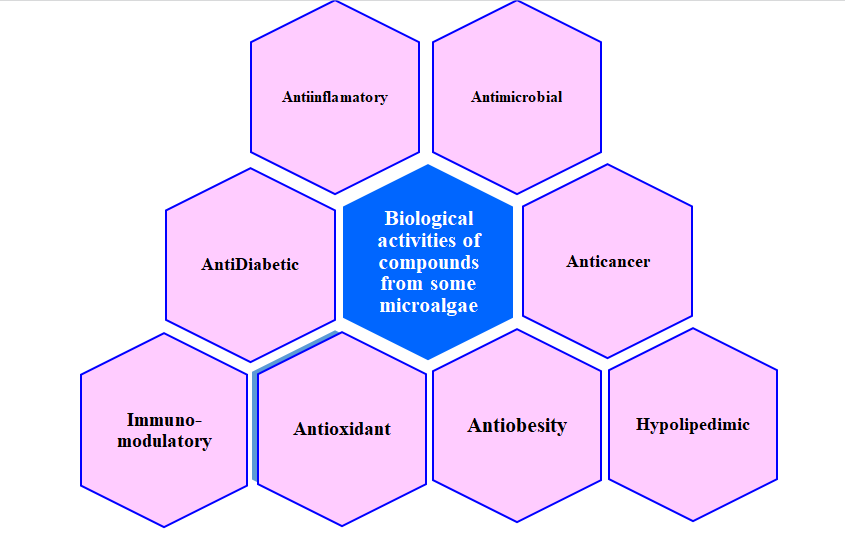
Macroalgae contain high valuable bio-products used in cosmetics, food supplements; some drugs used in treatments from different diseases (Table, 1). Whereas, microalgae play a big role in development of anti-cancer drugs [29]. A huge volume of research on bioactive compounds from well-studied algal forms such as Arthrospira (Spirulina), Chlorella vulgaris, Dunaliella salina, and Nostoc has led to the identification of antimicrobial, antiviral, anticoagulant antienzymatic, antioxidant, antifungal, anti-inflammatory, and anticancer activity (Figure 2, Table 2). These studies have been based on the extraction of bioactive compounds from these microalgae.
The polyunsaturated fatty acid, eicosapentaenoic acid, obtained from Phaeodactylum tricornutum showed antibacterial activities [30, 31]. The Cyclic depsipeptides, apratoxin A, originated from Lyngbya spp. exhibited promising anticancer activity [32, 33]. Similarly, the polyketide, trichophycin A, from Trichodesmium thiebautii showed anticancer activity against neuroblastoma cell line [34]. The alkaloids Calothrixin A obtained from Calothrix sp., and Haplindole H from Fischerella muscicola exerted potent Antiproliferative action against Jurkat cancer cells, and against PC-3 prostate cancer cell line respectively [35, 36]. On the other hand, many carotenoids such as astaxanthin was reported to inhibit breast cancer cell migration, inhibited growth of xenografted sarcoma (S180) mice [37]. Similarly, Fucoxanthin suppressed expression of bcl-2 and enhanced expression of cleaved caspase-3 [38]. One of the potent antiviral compounds secreted by algae is the sulphated polysaccharide, calcium spirulan, that was isolated from Spirulina platensis. Calcium spirulan showed activity against both herpes simplex virus type 1 (HSV-1) and HIV-1 [39]. Moreover some spirulan-like compounds from Spirulina inhibited human cytomegalovirus, HIV-1, HSV-1, human herpes virus type 6 [40].
The carotenoid, lycopene showed various biological activities including its ability to inhibit the growth and colony formation of prostate cancer cell lines PC-3 and DU-145 [41].
Furthermore, in vivo studies it showed the antiinflammatory effects of lycopene on decreasing the inflammatory marker enzymes lipoxygenase, cyclooxygenase, and myeloperoxidase in an arthritis rat model, compared to tomato lycopene and the anti-inflammatory drug indomethacin [42]. In another study, the pigment C-phycocyanin, showed immunomodulatory effect against many allergic responses in a rat model [43].
| Uses | References | |
|---|---|---|
| Acetabularia | Treatment from edema and urinary diseases. | Amer, et al. [44]; Cemile and Çigdem, [45]; Kulikova, et al. [46]; Shanab, et al. [29]; Zhang, et al. [47]. |
| Enteromorpha | Treatment from hemorrhoids, parasitic disease, goiter, coughing and bronchitis; fever reducyion capacity and ease pain | Amer, et al. [44]; Cemile and Çigdem, [45]; Kulikova, et al. [46]; Shanab, et al. [29]; Zhang, et al. [47]. |
| Grateloupia | Treatment from tonsils, goitre | Amer, et al. [44]; Cemile and Çigdem, [45]; Kulikova, et al. [46]; Shanab, et al. [29]; Zhang, et al. [47]. |
| Gelidium | Produce agar used in cosmetics. | Amer, et al. [44]; Cemile and Çigdem, [45]; Kulikova, et al. [46]; Shanab, et al. [29]; Zhang, et al. [47]. |
| Laminaria | Treatment from thyroid problems and urinary diseases. | Amer, et al. [44]; Cemile and Çigdem, [45]; Kulikova, et al. [46]; Shanab, et al. [29]; Zhang, et al. [47]. |
| Grateloupia | Blood sugar lowing capability | Amer, et al. [44]; Cemile and Çigdem, [45]; Kulikova, et al. [46]; Shanab, et al. [29]; Zhang, et al. [47]. |
| Sargassum | Treatment from edema; cervical lymphadenitis; diminishes inflammation. | Amer, et al. [44]; Cemile and Çigdem, [45]; Kulikova, et al. [46]; Shanab, et al. [29]; Zhang, et al. [47]. |
Table 1: Medicinal uses of some macroalgae.
| Uses | References | |
|---|---|---|
| Chlorella | Food supplement; formation and regeneration of blood cells; anticoagulant, antitumor, antioxidant and antibacterial effects | Beheshtipour, et al. [48]; Chang, et al. [49]; Costa and Morais, [50]; Costa, et al. [51]; Falquet, [52]; Henrikson, [53]; Lee, et al. [54]; Lorenz, [55]; Madkour and Abdel-Daim, [56]; Plaza, et al. [57]; Temina, et al. [58]; Zhao and Sweet, [59]. Lee, et al. [60]. |
| Dunaliella | Antioxidant, bronchodilatory, antihypertensive, muscle relaxant, analgesic, hepatoprotective and antiedemal properties.Dunaliella cells contained antibiotic substances. | Beheshtipour, et al. [48]; Chang, et al. [49]; Costa and Morais, [50]; Costa, et al. [51]; Falquet, [52]; Henrikson, [53]; Lee, et al. [54]; Lorenz, [55]; Madkour and Abdel-Daim, [56]; Plaza, et al. [57]; Temina, et al. [58]; Zhao and Sweet, [59]. Lee, et al. [60]. |
| Nostoc | Used as dietary supplement, treatment of fistula, anti-inflammatory, and anticancer | Beheshtipour, et al. [48]; Chang, et al. [49]; Costa and Morais, [50]; Costa, et al. [51]; Falquet, [52]; Henrikson, [53]; Lee, et al. [54]; Lorenz, [55]; Madkour and Abdel-Daim, [56]; Plaza, et al. [57]; Temina, et al. [58]; Zhao and Sweet, [59]. Lee, et al. [60]. |
| Spirulina | Used in food industry, medicine, health beneficial properties, antioxidant, anticancer, antiviral and antibacterial activities. Have positive effects against obesity, diabetes, malnutrition, hyperlipidemia, anti-inflammatory and anemia. | Beheshtipour, et al. [48]; Chang, et al. [49]; Costa and Morais, [50]; Costa, et al. [51]; Falquet, [52]; Henrikson, [53]; Lee, et al. [54]; Lorenz, [55]; Madkour and Abdel-Daim, [56]; Plaza, et al. [57]; Temina, et al. [58]; Zhao and Sweet, [59]. Lee, et al. [60]. |
Table 2: Medicinal uses of some microalgae.
Conclusion
In recent years, innovative processes and products have been introduced in both macro- and microalgal biotechnology. Bioactive metabolites of algal origin are of special interest in the development of new products for pharmaceutical, cosmetic, and food industries. Further research should be conducted with these bioactive compounds to verify their beneficial effects for humans, their degradability when released into the environment, and their effects when used in animals. These will be adapted to the au ecological demands of strains and to application aims for biomass, valuable substances, and ecology. The therapeutic drugs prepared from algae which exist on both sunlight and carbon dioxide in the air will be manufactured at one-thousandth of today’s costs, which makes it cheaper. The use of algae established of scientists in the direction of algal products has multiplied its sustainability in drug improvement field. Yet the improvement of these drugs has few drawbacks which are developing hindrance. Many strains are clearly commercially useful.
References
-
Chapman RL (2013) Algae: the world’s most important “plants”—an introduction. Mitigation and Adaptation Strategies for Global Change 18(1): 5-12.
-
Santos-Sánchez NF, Valadez-Blanco R, Hernández- Carlos B, Torres-Arino A, Guadarrama-Mendoza PC, et al. (2016) Lipids rich in ω-3 polyunsaturated fatty acids from microalgae. Applied microbiology Biotechnology 100(20): 8667-8684.
-
Han P, Lu Q, Fan L, Zhou W (2019) A review on the use of microalgae for sustainable aquaculture. Applied Sciences 9(11): 2377.
-
Singh UB, Ahluwalia AS (2013) Microalgae: a promising tool for carbon sequestration. Mitigation and Adaptation Strategies for Global Change 18(1): 73-95.
-
Kamarudin KF, Rajkumar R, Takriff MS, Badar SN (2014) The current methods for the biomass production of the microalgae from wastewaters: an overview. World Applied Sciences Journal 31(10): 1744-1758.
-
Deb S (2015) Morphology and biochemical study of a microalga Euglena tuba reported from the aquatic ecosystem of cachar. Res Rev J Pharmacog Phytochem 3: 1-10.
-
Junior WG, Gorgich M, Corrêa PS, Martins AA, Mata TM, et al. (2020) Microalgae for biotechnological applications: Cultivation, harvesting and biomass processing. Aquaculture 528: 735562.
-
Sathasivam R, Radhakrishnan R, Hashem A, Abd_Allah EF (2019) Microalgae metabolites: A rich source for food and medicine. Saudi journal of biological sciences 26(4): 709-722.
-
Bhattacharjee I (2016) Pharmaceutically valuable bioactive compounds of algae. Asian J Pharm Clin Res 9(6): 43-47.
-
Plaza M, Santoyo S, Jaime L, García-Blairsy Reina G, Herrero M, et al. (2010) Screening for bioactive compounds from algae. J Pharm Biomed Anal 51(2): 450-455.
-
Herrero M, Castro-Puyana M, Mendiola JA, Ibañez E (2013) Compressed fluids for the extraction of bioactive compounds. Trends Anal Chem 43: 67-83.
-
Newman DJ, Cragg GM (2012) Natural products as sources of new drugs over the 30 years from 1981 to 2010. J Nat Prod 75(3): 311-335.
-
Volk RB (2008) A newly developed assay for the quantitative determination of antimicrobial (anticyanobacterial) activity of both hydrophilic and lipophilic test compounds without any restriction. Microbiol Res 163(2): 161-167.
-
Silva M, Vieira LM, Almeida AP, Silva A, Seca AM, et al. (2013) Chemical study and biological activity evaluation of two Azorean macroalgae: Ulva rigida and Gelidium microdon. Oceanography 1(1): 1-7.
-
Harun R, Singh M, Forde GM, Danquah MK (2010) Bioprocess engineering of microalgae to produce a variety of consumer products. Renew Sustain Energy Rev 14(3): 1037-1047.
-
Markou G, Nerantzis E (2013) Microalgae for high-value compounds and biofuels production: A review with focus on cultivation under stress conditions. Biotechnol Adv 31(8): 1532-1542.
-
Ibañez E, Cifuentes A (2013) Benefits of using algae as natural sources of functional ingredients. J Sci Food Agric 93(4): 703-709.
-
Arad SM, Levy-Ontman O (2010) Red microalgal cell- wall polysaccharides: Biotechnological aspects. Curr Opin Biotechnol 21(3): 358-364.
-
Kim M, Yim JH, Kim SY, Kim HS, Lee WG, et al. (2012) In vitro inhibition of influenza A virus infection by marine microalga-derived sulfated polysaccharide p-KG03. Antiviral Res 93(2): 253-259.
-
Smelcerovic A, Knezevic-Jugovic Z, Petronijevic Z (2008) Microbial polysaccharides and their derivatives as current and prospective pharmaceuticals. Curr Pharm Design 14(29): 3168-3195.
-
Amaro HM, Guedes AC, Malcata FX. (2011). Antimicrobial activities of microalgae: An invited review. In: Méndez- Vilas A, editor. Science against Microbial Pathogens: Communicating Current Research and Technological Advances. Badajoz: Formatex Research Center: 1272- 1280.
-
Raposo MF, de Morais AM, de Morais RM (2014) Influence of sulphate on the composition and antibacterial and antiviral properties of the exopolysaccharide from Porphyridium cruentum. Life Sci 101(1-2): 56-63.
-
Smith VJ, Desbois AP, Dyrynda EA (2010) Conventional and unconventional antimicrobials from fish, marine invertebrates and micro-algae. Mar Drugs 8(4): 1213- 1262.
-
de Morais MG, Stillings C, Dersch R, Rudisile M, Pranke P, et al. (2010) Preparation of nanofibers containing the microalga Spirulina (Arthrospira). Bioresour Technol 101(8): 2872-2876.
-
Li HB, Cheng KW, Wong CC, Fan KW, Chen F, et al. (2007) Evaluation of antioxidant capacity and total phenolic content of different fractions of selected microalgae. Food Chem 102(3): 771-776.
-
Mata TM, Martins AA (2010) Caetano NA. Microalgae for biodiesel production and other applications: A review. Renew Sustain Energy Rev 14(1): 217-232.
-
Kang SM, Heo SJ, Kim KN, Lee SH, Jeon YJ (2012) Isolation and identification of new compound, 2,7″-phloroglucinol- 6,6′-bieckol from brown algae, Ecklonia cava and its antioxidant effect. J Funct Foods 4(1): 158-166.
-
Pangestuti R, Kim SK (2011) Biological activities and health benefit effects of natural pigments derived from marine algae. J Funct Foods 3(4): 255-266.
-
Shanab SM, Mostafa SS, Shalaby EA, Mahmoud GI (2012) Aqueous extracts of microalgae exhibit antioxidant and anticancer activities. Asian Pacific Journal of Tropical Biomedicine 2(8): 608-615.
-
Desbois AP, Mearns-Spragg A, Smith VJ (2009) A fatty acid from the diatom Phaeodactylum tricornutum is antibacterial against diverse bacteria including multi-resistant Staphylococcus aureus (MRSA). Marine Biotechnology 11(1): 45-52.
-
Wang S, Said IH, Thorstenson C, Thomsen C, Ullrich MS, et al. (2018) Pilot-scale production of antibacterial substances by the marine diatom Phaeodactylum tricornutum Bohlin. Algal Research 32: 113-120.
-
Luesch H, Chanda SK, Raya RM, DeJesus PD, Orth AP, et al. (2006) A functional genomics approach to the mode of action of apratoxin A. Nature chemical biology 2(3): 158-167.
-
Ma D, Zou B, Cai G, Hu X, Liu JO (2006) Total synthesis of the cyclodepsipeptide apratoxin A and its analogues and assessment of their biological activities. Chemistry 12(29): 7615-7626.
-
Bertin MJ, Wahome PG, Zimba PV, He H, Moeller PD (2017) Trichophycin A, a cytotoxic linear polyketide isolated from a Trichodesmium thiebautii bloom. Marine drugs 15(1): 1-10.
-
Chen X, Smith GD, Waring P (2003) Human cancer cell (Jurkat) killing by the cyanobacterial metabolite calothrixin A. Journal of applied phycology 15(4): 269- 277.
-
Acuña UM, Mo S, Zi J, Orjala J, de Blanco EJ (2018) Hapalindole H induces apoptosis as an inhibitor of NF-ĸB and affects the intrinsic mitochondrial pathway in PC-3 androgen-insensitive prostate cancer cells. Anticancer Research 38(6): 3299-3307.
-
McCall B, McPartland CK, Moore R, Frank-Kamenetskii A, Booth BW (2018) Effects of astaxanthin on the proliferation and migration of breast cancer cells in vitro. Antioxidants 7(10): 135.
-
Wang J, Chen S, Xu S, Yu X, Ma D, et al. (2012) In vivo induction of apoptosis by fucoxanthin, a marine carotenoid, associated with down-regulating STAT3/ EGFR signaling in sarcoma 180 (S180) xenografts- bearing mice. Marine drugs 10(9): 2055-2068.
-
Ahmadi A, Zorofchian Moghadamtousi S, Abubakar S, Zandi K (2015) Antiviral potential of algae polysaccharides isolated from marine sources: a review. BioMed research international 2015: 825203.
-
Rechter S, König T, Auerochs S, Thulke S, Walter H, et al. (2006) Antiviral activity of Arthrospira-derived spirulan- like substances. Antiviral Research 72(3): 197-206.
-
Renju GL, Muraleedhara Kurup G, Saritha Kumari CH (2013) Anti-inflammatory activity of lycopene isolated from Chlorella marina on type II collagen induced arthritis in Sprague Dawley rats. Immunopharmacol Immunotoxicol 35: 282-291.
-
Renju GL, Kurup GM, Bandugula VR (2014) Effect of lycopene isolated from Chlorella marina on proliferation and apoptosis in human prostate cancer cell line PC- 3. Tumor Biology 35(11): 10747-10758.
-
Remirez D, Ledon N, Gonzalez R (2002) Role of histamine in the inhibitory effects of phycocyanin in experimental models of allergic inflammatory response. Mediat Inflamm 11(2): 81-85.
-
Amer SA, AL-Harbi MS, Saad DY, Mahdi EA, Saleh DI, et al. (2016) Protective role of some antioxidants on arsenic toxicity in male mice: physiological and histopathological perspectives. Biology and Medicine 8(1): 1-10.
-
Cemile MS, Çigdem E (2016) The Effects of Oxidative Stress and Some of the Popular Antioxidants on Reproductive System: A Mini Review. J Nutr Food Sci 6(2): 464.
-
Kulikova OI, Fedorova TN, Lopachev AV, Orlova VS, Grachev VA (2016) Effects of antioxidants on the viability of the human neuroblastoma SH-SY5Y cell culture under the conditions of heavy-metal toxicity. Biology and medicine 8(4): 1-10.
-
Zhang E, Duan Y, Tan F, Zhang S (2016) Effects of long- term nitrogen and organic fertilization on antioxidants content of tomato fruits. Journal of Horticulture 3(1): 1-5.
-
Beheshtipour H, Mortazavian A, Haratian P, Khosravi- Darani K (2012) Effects of Chlorella vulgaris and Arthrospira platensis addition on viability of probiotic bacteria in yogurt and its biochemical properties. Eur Food Res Technol 235(4): 719-728.
-
Chang T, Ohta S, Ikegami N, Miyata H, Kashimoto T, et al. (1993) Antibiotic substances produced by a marine green alga, Dunaliella primolecta. Bioresour Technol 44(2): 149-153.
-
Costa JA, Morais MG (2013) Microalgae for food production. In: Soccol CR, Pandey A, Larroche C, editors. Fermentation Process Engineering in the Food Industry. Boca Raton, USA: Taylor & Francis, pp: 486.
-
Costa JA, Radmann EM, Cerqueira VS, Santos GC, Calheiros MN (2006) Fatty acids from the microalgae Chlorella vulgaris and Chlorella minutissima grown under different conditions. Alimentos Nutr Araraquara 17(4): 429-436.
-
Falquet J The Nutritional Aspects of Spirulina, Antenna Technologies.
-
Henrikson R (2009) Earth Food Spirulina. 6th (Edn.); Ronore Enterprises, Inc: Hana, Maui, Hawaii.
-
Lee JB, Hayashi T, Hayashi K, Sankawa U, Maeda M, et al. (1998) Further purification and structural analysis of calcium spirulan from Spirulina platensis. J Nat Prod 61(9): 1101-1104.
-
Lorenz RT (1999) A review of Spirulina and Haematococcus algae meal as a carotenoid and vitamin supplement for poultry. Spirulina Pacifica Technical Bulletin 53: 1-14.
-
Madkour FF, Abdel-Daim MM (2013) Hepatoprotective and antioxidant activity of Dunaliella salina in paracetamol-induced acute toxicity in rats. Indian J Pharm Sci 75(6): 642-648.
-
Plaza M, Herrero M, Cifuentes A, Ibáñez E (2009) Innovative natural functional ingredients from microalgae. J Agric Food Chem 57(16): 7159-7170.
-
Temina M, Rezankova H, Rezanka T, Dembitsky VM (2007) Diversity of the fatty acids of the Nostoc species and their statistical analysis. Microbiol Res 162(4): 308- 321.
-
Zhao L, Sweet BV. (2008). Lutein and zeaxanthin for macular degeneration. American Journal of Health- System Pharmacy 65(13): 1232-1238.
-
Lee JC, Hou MF, Huang HW, Chang FR, Yeh CC, et al. (2013) Marine algal natural products with anti-oxidative, anti- inflammatory, and anti-cancer properties. Cancer Cell International 13(1): 1-7.
- Acido Labile or Gastro Irritant Apis and Enteric Release in Galenic Practice: An Overview
- A Study on Knowledge, Attitude and Practice of Hand Hygiene among Healthcare Professionals at a Tertiary Care Hospital, India
- Influence of Inoculum Concentration on In Vivo Incubation Period of Emmia lacerata, Pathogenesis and Management of Wilt in Pepper (Capsicum annuum L.)
- Vanilla’s Chemistry
- Marine Anti-Cancer Compounds and Adverse Effects of Global Warming on Oceans: An Overview
- Serological Investigation of Chikungunya Virus Antibody among Malaria-Suspected Febrile Patients in Some Healthcare Facilities in Rivers State