
Current Status and Challenges of Serialization in Pharma Industry
Access to safe and quality medicines to all is long stated goal of healthcare agencies across the globe. Pharmaceutical industry has reached the new milestones with respect to quality of the manufactured medicines due to combined efforts of all - industries, regulators, international agencies etc. However merely manufacturing of quality medicines does not necessarily guarantee its access to those in need. In fact, more organized efforts are required to control the counterfeit medicine trade which is finding easy access to the countries in the world, especially middle or low income countries having weak legal framework of drug regulations. Pharmaceutical serialization is proving to be critical tool to help control the illegal trade across the globe. Though serialization and subsequent aggregation is getting good pace in recent time, the implementation of the system is having some challenges. Adaptation of the serialization, its current status and the difficulties involved for industry is discussed in the current review.
Introduction
Like any other commodity, medicines are also vulnerable to the falsification and counterfeit by the peoples, groups involved in it. In all aspect medicines are lifesaving and cannot be compared with other commodities, however the counterfeiters do not have any such distinction. Data of 2019 OECD/EUIPO report shows that between 2014 and 2016 custom seized items mentioned medicines as 10th most counterfeit product. In 2016, this illegal business of counterfeit pharmaceuticals amounted to USD 4.4 billion. This is 0.84% of total worldwide imports of pharmaceutical products. This figure rises to 10% globally, although in some developing countries it is as high as 50%. The World Health Organization (WHO) estimate, these substandard and unsafe medicines accounts for over 700,000 deaths annually and 50% of medicines available via the internet are counterfeit [1, 2, 3].
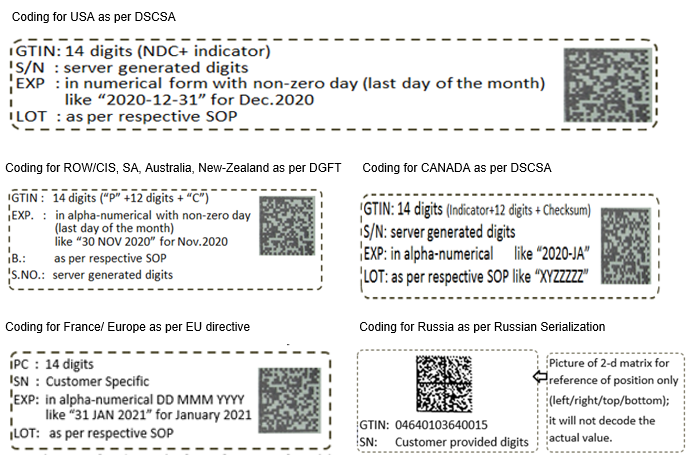
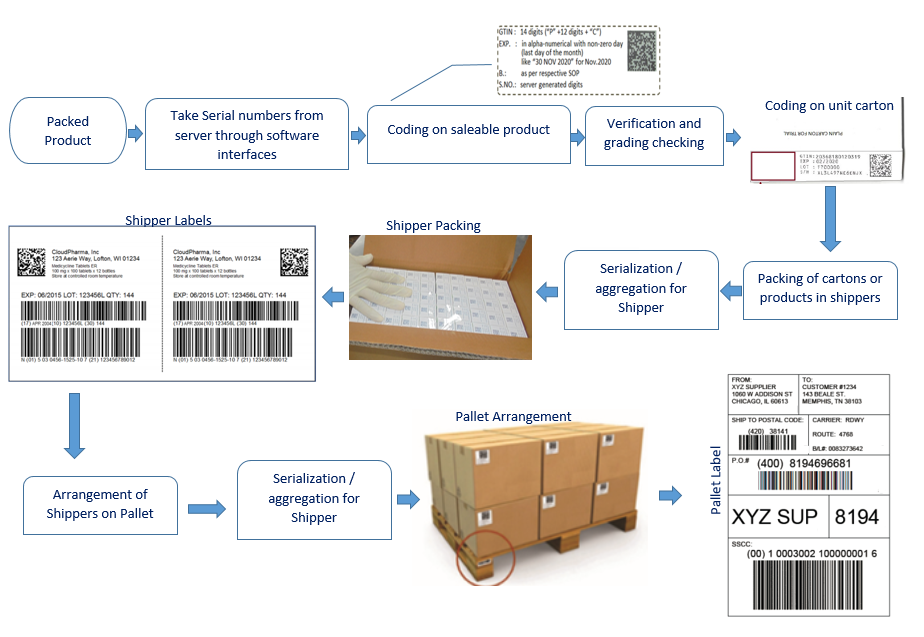
This challenge of falsified, counterfeit medicines is not recent and pharmaceutical industry and regulators are fighting the challenge since long. Various changes in packaging were made to ensure that the medicine reaches to intended population safe without tampering or adulterating. Tamper evident packaging is helpful to avoid such incidences but only to some extent. Due to advances in the packaging easy availability of ‘me too’ or ‘look alike’ printed packaging component circumvents the earlier efforts to counter falsification. Hence the need of better technological solutions which are difficult to recreate was obvious. Now a days, drug distribution chains are becoming more complex due to multiple exports and ever-expanding generic industry competing to provide affordable medicines, especially to developed world. Therefore tackling the issue of counterfeit medicines is of paramount importance. Serialization concept was emerged which utilizes a unique random serial number to be applied on each unit of pharmaceutical product during manufacturing. This unique number can be traced back to the original source of supply [4]. Efforts in this regard were already initiated more than a decade ago where EU has initiated the serialization in 2008 (France with CIP code). The idea was to provide a digital code (2d-matrix) which will be an alphanumeric combination unique to each packaging unit describing limited product details e.g. Batch Number and expiry date. Initially it was applied only to saleable unit of packaging. However, this method was not full proof to take care of the other product related information from security perspective. With the help of GS1, many countries started adopting new format which comes with unique combination specifying each pack of the product. GS1 is an international, nonprofit organization that publishes a system of supply chain standards [5]. This has helped to regulate the practice by issuing prefix and suffix to the product code. Prefix letter is a packing level indicator digit to represent primary, secondary and tertiary packing. Suffix is a checksum character which is a last digit in the barcode used for verification. Use of GS1 in serialization was an important milestone and it helped to initiate the proper mechanism for various countries from around year 2010 onwards. Currently more than 2 million companies operating in 145 countries, designed to work together in concert. The overall serialization information available on product includes the related information like product or drug description, stock-keeping unit (SKU), lot or batch number, expiration date, date of production, along with line and plant in which it was manufactured along with GTIN (Global Trade Identification Number), is a part of serialization code [6]. Template used for some of the countries and steps followed for serializations are shown in Figure 1 and Figure 2 respectively.
Serialization Efforts Across Globe
While many countries of the world doing good progress to control the counterfeit medicine, the other part of the world is left behind especially countries with poor healthcare system. African countries mostly depend on the institutional supplies to fulfill their medicinal requirements. Various factors like poor infrastructure, economic disparity and fragmented legal framework contribute to the prevalence of counterfeit medicines. Such substandard medicines not only result in the low efficacy but also potentially unsafe and can have fatal consequences. Data reported to WHO between 2013 and 2017 shows 42% fake drugs only from African region. In the absence of accurate data from the region, estimate shows fake drugs for pneumonia and malaria accounts for a death toll of around 250,000 children every year. On the other hand, for counterfeiter’s it may be a lucrative industry worth roughly $200bn a year. The menace is not only limited to any specific diseases like malaria but includes many others. In 2019, WHO alerted fake meningitis vaccines in Nigeria, fake hypertension drugs in Cameroon and falsified versions of the antibiotic Augmentin which were found in Uganda and Kenya [7].
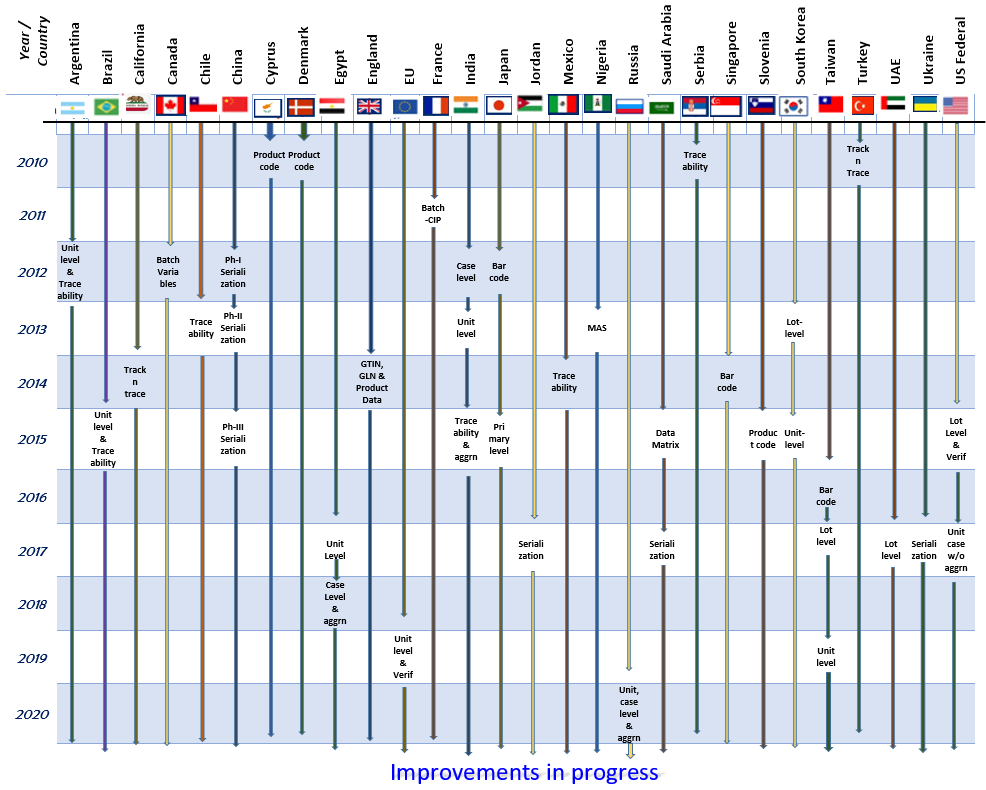
An estimated 1 in 10 medical products in low- and middle-income countries are substandard or falsified. This is a major concern for countries like India and China which are major exporter of medicines. 53% of total value of seized counterfeit pharmaceuticals worldwide in 2016 belonged to India and 30% to China. To control this, Indian government has DGFT (Directorate General of Foreign Trade) guidelines in place and is under implementation. Similarly China has recently updated their guideline published by NMPA (National Medical Products Administration) [8]. Majority of the drugs from these countries are exported to mainly US and Europe. Regulatory agencies of the respective countries like USFDA and EMA have adopted certain rules and regulations to counter the falsified and counterfeit practices. While US has enacted Drug Supply Chain Security Act (DSCSA) in 2013 which outlines steps to build an electronic, interoperable system to identify and trace certain prescription drugs as they are distributed in the United States [9]. Also EU in 2011 strengthened the protection of patients and consumers by adopting a new Directive on falsified medicines for human use. Various related aspects like supply chain and good distribution practice were updated in the guidelines [10]. Serialization progress across various countries at different stages with respective timelines is depicted in the Figure 3.
Advantages of Serialization
Serialization offers various benefits to both patient and pharmaceutical manufacturers as listed below:
Product Authentication
The key benefit and main intent of the Serialization is to identify with assurance that the product is authentic and belong to the manufacturer. Due to the technological advances in packaging it is very difficult to know the correctness and reality of the product by visual description. This identification is not only challenging for the common public but at a times even impossible to be identified by the concerned people - involved in the trade, pharmacists, clinicians and government agencies responsible for public health. Merely by doing cosmetic changes, counterfeiters and criminals easily get away with all the control mechanisms in place. This not only affects the patient health but also damages company brand and its image.
Better Supply Chain Co-Ordination
As volumes of import and export are increasing, effective management of supply chain of medicines is becoming tougher. Given the complexity of the process many stakeholders are involved at each of the stages of stock movements from one manufacturer to many wholesalers and retailers through logistics. At every stage the quantity received and further dispatched, calls for effective data management. This data management is mainly passive and depends on the data collectors who are required to verify and enter the data. Without serialization and aggregation, this process being manual, is not only time consuming but also error causing. Due to track n trace and aggregation system, manufacturers can get accurate information about product as it moves through the supply chain. Supply chain visibility can help a company control inventory. Any supply chain disruptions and its impact can be tracked by Manufacturers in real time. This will help manufacturers to take appropriate actions and do better planning to maintain the un-interrupted supply. This indirectly reduces the losses by utilizing the resources in-time and well-planned manner. All of this adds up to the value of the business.
Efficient Recall Process
In case of any unwanted quality issue which triggers recall, the entire process is time consuming and requires lots of deliberations and follow ups. Given the magnitude and complexity of the distribution network, recall process becomes challenging task. The issue becomes more serious and urgent depending upon the category of recall. USFDA expects the recalls to be handled properly and promptly. Further as recall happens at various levels depending on the category, tracking the overall process is practically exhausting. Especially when recall happens at pharmacy retailer, tracing of each packs is important. As per Kaisen Health News (KHN) report, recently thousands of the drugs are recalled annually after reaching pharmacies. According to USFDA and other drug regulators, firms are fully responsible for the overall recall process; it becomes inevitable for manufacturers to adapt full proof process. In this scenario, serialization and aggregation process together can conduct precise recalls by pinpointing locations that received the product in question [11].
Helpful in Investigations
During manufacturing process various incidences affecting quality can occur which include deviations, out of specifications, out of expectations etc. Some of these defects can be identified during manufacturing or during testing of the batch. However, in some cases such defects remain unchecked and only get identified by the patient, pharmacist or caretaker. This is reported as market complaint which warrants thorough investigation. Such investigation involves verification of the incident occurrence and its reason i.e. roots cause. Traditionally the limited information from complainant involved not more than batch number details which barely helps to get deep insight for investigation. In such cases manufacturers can find it difficult to properly verify and identify the cause. However, if the serialization details are obtained from the complainant, it is possible to know when the impacted pack was manufactured. Specific information about the date and time of packing of the specified pack using the serial number details from the stored data allows investigator to get the proper insight. This opens up lots of option whereby any unwanted incidence related to the machine, men involved or environment can be traced. Alternatively in-process or control samples collected in the given time zone can also be used for verification and identification of the cause.
Revenue Growth
Serialization and aggregation have potential benefits of controlling counterfeit medication which otherwise spreads across and can reach to the customers in substandard or hazardous form. Such substandard, ineffective and dangerous medicines can create disbelief and low confidence about the company and also towards modern health care system of medicine. However digital coding in the form of serialization can reverse this situation, which in turn can boost faith in the manufacturer and modern medicine. Hence serialization efforts can also boost the growth aspects of the pharma companies via adaptation of the track n trace and aggregation system for the overall mutual benefits it offers.
Challenges Faced by Industry
While serialization is being taken up by various countries, there are many challenges need to be overcome, some of these are as below -
Productivity Impact
Most of the companies are either aligned or aligning themselves to comply with the serialization process. However, the process was not easy and had various challenges to overcome. As the digital coding is done on the printed packaging, the impact is seen on the packaging line productivity. The process of serialization coding involves printing of the required data on the specified part of the packaging component. The process involves printing, verification, checking of grading and reconciliation of the generated serial numbers and synchronization of serial numbers. All these steps are critical and have limitation on the speed with which packaging can be performed. Line stoppages due to hardware and software related issues are common which have additional impact on the delivery speed.
Hardware & Software Requirements
As serialization involves printing of the coded data, specialized printer coupled with software is required. PLC for input and display of data. Multiple scanners are required to install across the packaging line for data verification and collection. Appropriate validated software is required and the data collected through the software is stored in server. Portable scanners are also required at packaging line. Complete set of these hardware and software is also required at warehouse for palletization. Further as the product moves forward the scanners are required to read and verify through network sites by stockiest and retailers. Hence requirements of hardware are at multiple stages. Further the types of hardware and software at each stage are different for the intended purpose.
Adaptation of Packaging Lines/Area
The packaging area needs hardware installation at various places on the line essential for printing, scanning and reconciliation activities. This requires necessary modification and extension of existing packing lines. The automated packaging lines already occupy the considerable place which is designed mostly parallel in the given area to utilize the available space. Depending on the vendors providing the hardware and software solution for serialization, the requirement differs which may include addition of ancillary equipment fitted to the original line or may require overall line replacement. This design reconsideration of the packaging area can be costly and consume time and extra space. Major changes in the existing packaging line or area may require requalification activity.
Training of Skilled Manpower
The serialization coding is performed by the specialized hardware and software. Production personnel need to be trained on the operational aspects of the software handling which includes data feeding, monitoring and handling any deviations. However, this knowledge and skills upgradation not only be limited to the production operators but also other stakeholders like maintenance, packaging development, quality assurance, IT persons who are also required to perform respective functions. This knowledge and technology transfer training is an essential part in the overall serialization implementation process.
Data Storage Security
Serialization involves generation, printing and storage of the data for each batch. This data needs to be stored both on local drives and also to be uploaded on the appropriate server where it can be easily accessible to various stakeholders in the pipeline which mainly includes stockiest and regulatory agencies. This data is also to be integrated with the outer packs, cartons and pallet to cover aggregation. Hence security of the data is of paramount significance over a period of the expiry of the product or as required by the concerned regulatory agencies. Immediate availability of stored serialization data is mandatory requirement by the regulatory agencies. Failure to provide the data within stipulated timeline may attract penalty. The protection of the digital data is required from the available threat which can be in the form of malware attack or may be the physical damage to the server. Principles of data integrity need to be followed and hence appropriate control strategy against such damage is required [12].
Packaging Material Reconfiguration
Digital coding of 2D-matrix requires certain space on the printed packing materials. To accommodate this printing, dedicated area needs to be available on the package. This requires revisiting the available artwork and if require modifying it for the purpose. Printing on the large size packaging units does not pose much of the problem, however for the small size packs e.g. individual vial packs, limited unit ampule pack; unit dose packs have insufficient space available on the pack to accommodate required printing details. This trigger increasing pack size dimension and eventually create other related concerns adding up the overall cost.
Cost Aspects
Generic industry is aimed at cost effective alternatives to the branded medicines. In recent times generic industry is already facing pricing pressure due to various factors like market competition, patent expiration, stringent regulatory expectations etc. Hence generic industry is struggling to keep the pricing under control which has always been the key factor for this industry’s growth and survival. While serialization and aggregation are aimed to help both customer and also to the manufacturer, the initial cost considerations are higher. For big companies the additional cost can be accommodated considering the long term prospects but for the small and budding generic players, the cost propositions are generally far stretched.
Lack of Common Guideline
While some of the countries have set up the principles and guidelines for serialization and upcoming aggregation part, most of the other countries are yet to frame effective rules and regulations. Also target date of the implementations for already existing regulations of some countries are being extended due to the slower progress and demand from the manufacturers who are facing some realistic challenges. While most of the firms are keeping the pace, requirement from country to country differs which hinders smooth adaptation for the manufacturers who are catering to the multiple countries from the same facility. Confusion and complexity brought by the overlapping or different format of each regulator put the vendors and manufacturer in the difficult state leading to the delays. To avoid the same, similar digital code format which can be generated and delivered through the common hardware and software is required. Common understanding and agreement by all the regulators through ICH like common body is the need of an hour.
Conclusion
While serialization had long been pursued by industry and regulators across the nations, with the right intend to control the falsification of the lifesaving drugs, the progress has been bumpy. At least the major exporting countries like India and China have come up with their versions of serialization regulations through DGFT and NMPA respectively. Similarly, next phase of aggregation is also voluntarily taken up by many exporting manufacturers well before actual implementation target by regulatory agencies. Such controls need to be adopted at swift speed across the globe avoiding the hiccups in the process due to individual approach to the universal problem of counterfeit medicines. This marks the need for overall, unified approach involving all stakeholders and led by international common regulatory agency. This will give an extra edge in the battle to provide safe and effective medicine to the patient without being compromised in the process of worldwide distribution.
References
-
OECD library (2021) Trade in Counterfeit Pharmaceutical Products.
-
(2021) The Case for Pharmaceutical Serialization and Aggregation.
-
Kon SG, Mikov M (2011) Counterfeit drugs as a gobal threat to health. Med Pregl 64(5-6): 285-290.
-
Warna (2020) Serialization Requirements in the Pharmaceutical Industry.
-
(2021) GS1 standards involved in serialization.
-
(2021) What is Serialization?
-
(2020) Abi Miller, Pharmaceutical Technology, Newsletter.
-
Dirk Rodgers (2019) China: NMPA Drug Traceability Guidance.
-
USFDA (2021) Drug Supply Chain Security Act (DSCSA).
-
EMA (2021) Falsified medicines: overview | European Medicines Agency.
-
Yvette C, Terrie (2019) Overview of the FDA’s Drug- Recall Process. US Pharm 44(9): 28-31
-
Laurent Arnould (2019) Pharmaceuitcal engineering, ISPE.
- Acido Labile or Gastro Irritant Apis and Enteric Release in Galenic Practice: An Overview
- A Study on Knowledge, Attitude and Practice of Hand Hygiene among Healthcare Professionals at a Tertiary Care Hospital, India
- Influence of Inoculum Concentration on In Vivo Incubation Period of Emmia lacerata, Pathogenesis and Management of Wilt in Pepper (Capsicum annuum L.)
- Vanilla’s Chemistry
- Marine Anti-Cancer Compounds and Adverse Effects of Global Warming on Oceans: An Overview
- Serological Investigation of Chikungunya Virus Antibody among Malaria-Suspected Febrile Patients in Some Healthcare Facilities in Rivers State