
Highlights on the Wood Blue-Leg Mushroom Clitocybe Nuda and Blue-Milk Mushroom Lactarius Indigo Ecology and Biological Activities
The need to improve the life quality together with the increase in the frequency of treating diseases attracted the attention of many researches to view food as a source of nutritional and therapeutical agents. Since earliest times, several mushrooms have been reported as a nutritious food with valuable medicinal properties. The genus Clitocybe and Lactarius belonging to Basidiomycota fungi, is a potential group of edible mushrooms that are distributed in Europe, North America, Asia, Australia and Mexico. The studies on Clitocybe nuda and Lactariusindigo species have revealed high nutritional and medicinal potentials. This review aims to present Clitocybe and Lactarius genus importance as both food and medicine, and which will offer a new vision to researchers to develop new drugs from natural sources.
Introduction
Mushrooms (Phylum Basidiomycota and Ascomycota) naturally produce numerous substances with bioactive properties such as antitumoral, antidiabetic, immunomodulatory, antioxidant, trypanocide, leishmanicide, anti-inflammatory, antiviral and antimicrobial [1, 2, 3, 4, 5, 6, 7, 8, 9, 10]. The research on new substances have biological activities especially as antimicrobial is highly necessary, due to the emergence of resistant bacterial strains and new opportunistic species. Mushrooms produce a variety of bioactive compounds that are known to have a potential source of biological activities. Natural antioxidants can protect against free radicals without any side effects. For millennia, mushrooms have been valued by humankind as an edible and medical resource. The Basidiomycetes mushrooms are famous for their use as sources of therapeutic bioactive compounds, such as Geastrum fimbriatum and Hydnellum peckii which exhibit promising anticoagulant activity. Handkea utriformis, Hericium erinaceus, Sparassis crispa, Agaricus blazei and Ganoderma oregonense have wound- healing capabilities, Trametes versicolor and Dictyophora indusiata show promising antioxidant, antimicrobial, antihyperlipidemia, antitumor and immunity enhancement effects, Fomes fomentarius and Polyporus squamosus have significant importance as antifungal, antibacterial, anti- inflammatory, antioxidant, antitumor and antiviral agents [3, 5, 10, 11, 12, 13, 14, 15, 16, 17].
Many mushroom genera are famous for their promising therapeutic capabilities and one of the mushrooms attracting attention is Ganoderma lucidum (Reishi), Lentinus edodes (Shiitake), Inonotus obliquus (Chaga) and many others have been collected and used for hundreds of years in Korea, China, Japan, and eastern Russia. Those practices still form the basis of modern scientific studies of fungal medical activities, especially in the field of stomach, prostate, and lung cancers. All these vital activities have been reported from extracts of fruit bodies of these mushrooms or their biologically active isolated compounds [18, 19, 20, 21, 22, 23, 24, 25, 26, 27, 28]. Polysaccharides are the best known and most potent mushroom derived substances with antitumor and immunomodulating properties. Biologically active polysaccharides are widespread among higher Basidiomycetes mushrooms, and most of them have unique structures in different species. Moreover, different strains of one Basidiomycetes or Ascomycetes species can produce polysaccharides with different properties [29, 30, 31, 32, 33, 34, 35, 36, 37, 38, 39]. This review describes pharmacologically active compounds from mushrooms.
Clitocybe Nuda
Clitocybe nuda also known as Lepista nuda, and sometimes given the common name “blewit or blue-Leg mushroom. Clitocybe nuda belonging to; Basidiomycota; Class: Agaricomycetes; Order: Agaricales; Family Tricholomataceae. Clitocybe nuda is fairly easily recognized when fresh and young, but older specimens can be confused with many potential look-alikes. Gorgeous shades of lilac and lavender on the cap, gills, and stem fade quickly; the cap becomes brownish, and the gills and stem fade to buff. But this color transformation is one of the mushroom›s unique features, along with its pale pinkish spore print, its lack of a partial veil, and its tendency to grow in plenty on organic remains. Clitocybe nuda may look innocent enough, from a human perspective, Clitocybe nuda sends out tiny hyphae that penetrate bacteria colonies and kill them, sucking up their nutrients.
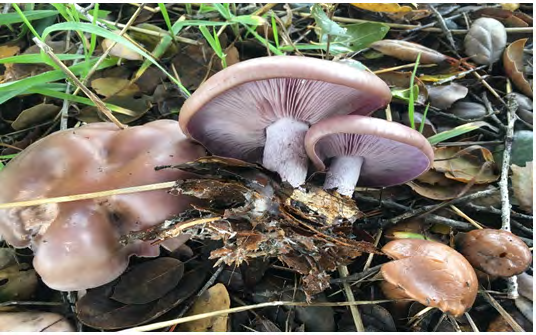
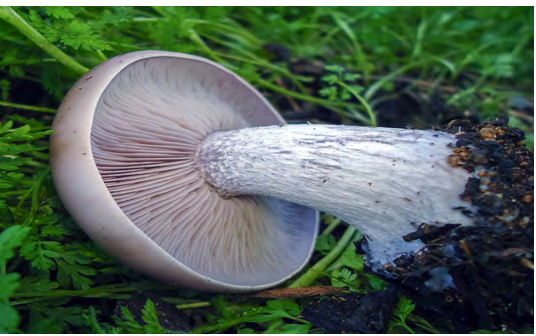
Clitocybe nuda ecology: Saprobic; growing alone, scattered, or in clusters in organic debris in woods or in urban locations; late summer and fall; widely distributed in North America. Cap: 4-20 cm; convex with an enrolled margin when young, becoming broadly convex to nearly flat or with an uplifted, wavy margin in age; surface smooth, slightly sticky when moist; sometimes finely cracked over the center; usually dull purple, or purplish with brown shades when fresh, fading to brownish, flesh colored, tan, or lighter. Gills: Attached to the stem sometimes by a notch or beginning to run down it; close or crowded; pale lavender to lilac, fading to buff, pinkish buff, or brownish. Stem: 3-10 cm long; 1-3 cm thick at apex; equal, or enlarged at the base; dry; finely hairy, and/or mealy near the apex; pale purple or colored like the gills; becoming brownish in age; base often covered with lilac to buff mycelium. Flesh: Thick; soft; purplish to lilac-buff or whitish. Odor and Taste: Taste not distinctive, pleasant, or slightly bitter; odor fragrant. Spore Print: Pinkish. Microscopic Details: Spores 5.5-8 x 3.5-5 µ; ellipsoid; roughened or sometimes smooth; in amyloid. Cystidia absent Pileipellis a cutis of hyphae 1-4 µ wide. Clamp connections present (Figures 1, 2) [40, 41, 42, 43].
Clitocybe nuda biological activities
Clitocybe nuda (Fr.) (Lepista nuda, commonly known as wood blewit or blue stalk mushroom) is an edible woodland mushroom found in Europe, North America, Asia, and Australia [44]. Due to its special cologne and delicate texture, it has been cultivated in France, Holland, Britain, and Taiwan. Several bioactive extracts from Clitocybe nuda have been found to exhibit antioxidant and antimicrobial properties [45]. Furthermore to its edible properties, many researchers have conducted biological activity studies on Clitocybe nuda. Many studies have shown that Clitocybe nuda mushroom has, antimicrobial, cytotoxic, enzymatic, antiviral and antiproliferative activities [46]. As a result, Clitocybe nuda, which is an edible mushroom, has important medicinal properties in addition to its nutritional properties [47]. Clitocybe nuda is reported to exhibit many biological activities. Clitocybe nuda extract was studied its action on HL60 (leukemia) and MCF7 (breast cancer) cancer cell lines by Özmen and Değirmenci [48]. The extract showed fairly significant (IC50 ~15 mg/mL) of biologic activity compared with drugs protocatechuic acid, paclitaxel and doxorubicin against HL-60 cell line with regard to both proliferation and apoptotic effects (>%75).
Clitocybe nuda was extracted, with 95% ethanol and the extract showed good antibacterial activity against four pathogenic foodborne bacteria: Listeria monocytogenes, Salmonella typhimurium, Escherichia coli and Staphylococcus aureus [49, 50]. Secondary metabolites of Clitocybe nuda displayed antimicrobial activity against Phytophthora capsici. The culture filtrate of Clitocybe nuda was extracted with ethanol and chromatographically separated on a Sephadex LH-20 column and fractionated on a silica gel column to give eight fractions. These fractions were tested for the ability to inhibit zoospore germination of Phytophthora capsici. The most active fraction was further purified by silica gel column chromatography to yield three compounds: 2-methoxy- 5-methyl-6-methoxymethyl-p-benzoquinone, 6-hydroxy- 2H-pyran-3-carbaldehyde, and indole-3-carbaldehyde. At a concentration of 500 mg/L, indole-3-carbaldehyde showed complete inhibition of zoospore germination, while 2-methoxy-5-methyl-6-methoxymethyl-p-benzoquinone and 6-hydroxy-2H-pyran-3-carbaldehyde, showed inhibition rates of 97 and 86%, respectively.
The culture filtrates of Clitocybe nuda was studied by Chen and Huang, and reported that Clitocybe nuda culture filtrates was able to completely inhibit spore germination of Colletotrichum higginsianum [51]. The culture filtrate of Clitocybe nuda contained substances that had the capacity to completely inhibit spore germination of Alternaria brassicicola. Clitocybe nuda culture filtrate showed complete suppression of spore germination of Phytophthora capsici and moderately inhibited spore germination of Fusarium oxysporum. The culture filtrates of Clitocybe nuda and Coprinus comatus effectively reduced the disease severity of Phytophthora blight of pepper caused by Phytophthora capsici. All these results suggest that substances from edible mushrooms have the potential to be developed into biocontrol agents for the control of plant diseases [51].
Lactarius indigo
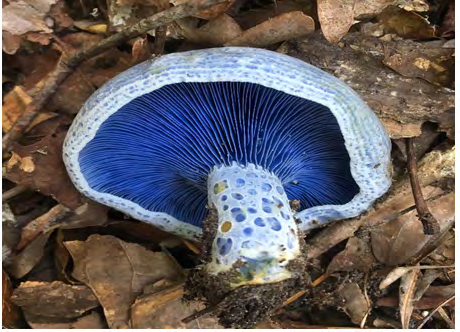
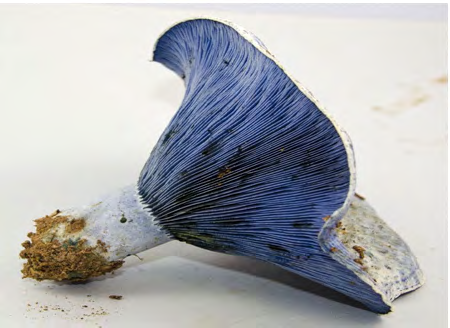
Lactarius indigo belonging to; Basidiomycota; Class: Agaricomycetes; Order: Russulales; Family Russulaceae. Lactarius indigo it is a truly beautiful, blue species that exudes dark blue milk when damaged with a knife point. Only Lactarius indigo, Lactarius chelidonium and Lactarius paradoxus come close in appearance and they only do so when very young, before they have begun to develop their brown and yellow shades (they also have yellowish and brown milk, respectively). Lactarius indigo description; small cap (3-5 cm across), flesh that turns green within a few minutes of exposure, and a pure white spore print. Lactarius indigo was found in many diverse ecosystems from oak-hickory forests to ponderosa pine zones in the southwestern United States to cloud forests in Mexico. Ecology: Mycorrhizal with oaks and with pines; growing alone, scattered, or grouped; summer and fall; fairly widely distributed in North America from the northeast to the southwestern United States, Texas, and Mexico [52, 53, 54]. Cap: 5-15 cm; convex becoming flat or vase- shaped; the margin at first inrolled; deep to medium blue when fresh; grayish or silvery blue when faded; sometimes developing brownish areas when old; with concentric zones of color, or sometimes evenly colored; sticky or slimy when fresh; bruising and discoloring deep green, especially with age. Gills: Attached to the stem or beginning to run down it; close; colored like the cap or a little paler; becoming nearly yellowish at maturity; staining green. Stem: 2-8 cm long; 1-2.5 cm thick; equal or tapering to base; sometimes a little off-centre; slimy at first but soon dry; hard; hollowing; usually with potholes on the surface. Flesh: Whitish, turning indigo blue when cut; staining slowly greenish. Milk: Deep indigo blue; becoming dark green on exposure. Odor and Taste: Odor not distinctive; taste mild to (sometimes) slowly, slightly acrid. Spore Print: Cream. Microscopic Features: Spores 7-10 x 5.5-7.5 µ; broadly ellipsoid to subglobose; ornamentation about 0.5 µ high, as amyloid warts and connecting lines that sometimes form partial reticula. Pleuromacrocystidia cylindric-ventricose; inconspicuous; to about 60 x 8 µ. Cheilocystidia inconspicuous; clavate to subcylindric; to about 30 x 6 µ. Pileipellis an ixocutis (Figures 3, 4) [54, 55].
Lactarius indigo biological activities
The major role of Lactarius indigo in the world is in cooking. It is known for its fascinating color and the cultural significance it has in countries such as Mexico [56]. However, research has indicated the mushroom has antibacterial and cytotoxic properties [57]. Bioassays and cytotoxic assays were created to compare the inhibition of strains with only hexane and methanol versus with the Lactarius indigo. When tested against different bacteria, such as diarrheagenic Escherichia coli strains, the Lactarius indigo inhibited proliferation of certain pathogenic bacteria, the inhibitory effect depended on the bacteria it was tested against and the dosage of Lactarius indigo. Overall, the study indicated possible medicinal properties in L. indigo [57]. Both aqueous and organic extracts of Lactarius indigo basidiocarp have pharmacological activity, Ochoa-Zarzosa, et al., show that the basidiocarp of the edible Lactarius indigo is a source of pharmacological substances having varied therapeutic applications, which makes it necessary to perform further studies in that regard by isolating and characterizing the molecules responsible for the observed activities [58].
Conclusion
Basidiomycetous mushrooms represented by Clitocybe nuda and Lactarius indigo have a rich history of use as a food source and well-claimed medicinal properties. This review summarises a number of sources with details of nutritional content and beneficial compounds (Antimicrobial properties to antitumor, health-promoting nutrients and others). Despite these advances, there is much we have yet to understand and these hypogeal fruiting Basidiomycetes prove to be a fruitful source of novel medicinal compounds.
References
-
Elkhateeb WA, Daba GM, Thomas PW, Wen TC (2019) Medicinal mushrooms as a new source of natural therapeutic bioactive compounds. Egypt Pharmaceu J 18(2): 88-101.
-
Elkhateeb WA, Daba GM, Elnahas M, Thomas P, Emam M (2020) Metabolic profile and skin-related bioactivities of Cerioporus squamosus hydromethanolic extract. Biodiversitas 21(10): 4732-4740.
-
Elkhateeb WA, Daba G (2020) The endless nutritional and pharmaceutical benefits of the Himalayan gold, Cordyceps; Current knowledge and prospective potentials. Biofarmasi Journal of Natural Product Biochemistry 18(2): 70-77.
-
Elkhateeb WA, Daba GM (2020) Termitomyces Marvel Medicinal Mushroom Having a Unique Life Cycle. Open Access Journal of Pharmaceutical Research 4(1): 1-4.
-
Daba GM, Elkhateeb W, EL Dien AN, Fadl E, Elhagrasi A, et al. (2020) Therapeutic potentials of n-hexane extracts of the three medicinal mushrooms regarding their anti- colon cancer, antioxidant, and hypocholesterolemic capabilities. Biodiversitas Journal of Biological Diversity 21(6): 1-10.
-
Elkhateeb WA (2020) What medicinal mushroom can do?. Chem Res J 5(1): 106-118.
-
Elkhateeb WA, Daba GM, Elmahdy EM, Thomas PW, Wen TC, et al. (2019) Antiviral potential of mushrooms in the light of their biological active compounds. ARC J Pharmac Sci 5(2): 45-49.
-
El-Hagrassi A (2020) In vitro bioactive potential and chemical analysis of the n-hexane extract of the medicinal mushroom, Cordyceps militaris. Malays J Microbiol 16(1): 40-48.
-
Elkhateeb WA, Daba GM, El-Dein AN, Sheir DH, Fayad W, et al. (2020) Insights into the in-vitro hypocholesterolemic, antioxidant, antirotavirus, and anticolon cancer activities of the methanolic extracts of a Japanese lichen, Candelariella vitellina, and a Japanese mushroom, Ganoderma applanatum. Egyptian Pharmaceutical Journal 19(1): 67.
-
Elkhateeb WA, Elnahas MO, Thomas PW, Daba GM (2019) To Heal or Not to Heal? Medicinal Mushrooms Wound Healing Capacities. ARC Journal of Pharmaceutical Sciences 5(4): 28-35.
-
Elkhateeb WA, Daba GM, Elnahas MO, Thomas PW (2019) Anticoagulant capacities of some medicinal mushrooms. ARC J Pharma Sci 5(4): 1-9.
-
Elkhateeb W, Elnahas MO, Paul W, Daba GM (2020) Fomes fomentarius and Polyporus squamosus models of marvel medicinal mushrooms. Biomed Res Rev 3(1): 1-4.
-
Elkhateeb WA, Daba GM (2021) Mycotherapy of the good and the tasty medicinal mushrooms Lentinus, Pleurotus, and Tremella. Journal of Pharmaceutics and Pharmacology Research 4(2): 1-6.
-
Elkhateeb WA, Daba GM (2021) The Fascinating Bird’s Nest Mushroom, Secondary Metabolites and Biological Activities. International Journal of Pharma Research and Health Sciences 9(1): 3265-3269.
-
Elkhateeb WA, Daba GM, and Gaziea SM (2021) The Anti- Nemic Potential of Mushroom against Plant-Parasitic Nematodes, Open Access Journal of Microbiology & Biotechnology 6(1): 1-6.
-
Elkhateeb WA, Elnahas MO, Thomas PW, Daba GM (2020) Trametes Versicolor and Dictyophora Indusiata Champions of Medicinal Mushrooms. Open Access Journal of Pharmaceutical Research 4(1): 1-7.
-
Thomas PW, Elkhateeb WA, Daba GM (2020) Chaga (Inonotus obliquus): a medical marvel but a conservation dilemma?. Sydowia 72: 123-130.
-
Sharma SK, Gautam N (2017) Chemical and bioactive profiling, and biological activities of coral fungi from north-western Himalayas. Scientific reports 7(1): 1-13.
-
Jais HM, Tajuddin R, Iffendy KA (2014) Macrofungi of a Healty Campus (Penerbit USM). Penerbit USM.
-
Kuo M, Methven A (2010) 100 cool mushrooms. University of Michigan Press.
-
Kamalakannan A, Syamala M, Sankar P, Shreedevasena M, Ajay M (2020) Mushrooms–A Hidden Treasure. JPS Scientific Publications, Tamil Nadu, India, pp: 1-136.
-
Cheung PC (2010) The nutritional and health benefits of mushrooms. Nut Bull 35(4): 292-299.
-
Hobbs C (2002) Medicinal mushrooms: an exploration of tradition, healing, and culture. Book Publishing Company, pp: 1-402.
-
Rathee S, Rathee D, Rathee D, Kumar V, Rathee P (2012) Mushrooms as therapeutic agents. Braz J Pharmacog 22(2): 459-474.
-
Xu T, Beelman R (2015) The bioactive compounds in medicinal mushrooms have potential protective effects against neurodegenerative diseases. Adv Food Technol Nut Sci 1(2): 62-66.
-
Halpern G (2007) Healing mushrooms. Garden City Park, New York, USA: Square One Publishers Inc., pp. 1-194.
-
Rahi D, Malik D (2016) Diversity of mushrooms and their metabolites of nutraceutical and therapeutic significance. J Mycol pp: 1-19.
-
De Silva D, Rapior S, Sudarman E, Stadler M, Jianchu X, et al. (2013) Bioactive metabolites from macrofungi: ethnopharmacology, biological activities and chemistry. Fungal Div 62: 1-40.
-
Vandegrift R (2014) Newsletter of the Mycological Society of America. Mycologia 65: 6.
-
Mortimer PE, Xu J, Karunarathna SC, Hyde KD (2014) Mushrooms for trees and people: A field guide to useful mushrooms of the Mekong region. Kunming: The World Agroforestry Centre (ICRAF).
-
Venkatachalapathi A, Paulsamy S (2016) Exploration of wild medicinal mushroom species in Walayar valley, the Southern Western Ghats of Coimbatore District Tamil Nadu. Mycosphere 7(2): 118-130.
-
Wasser SP (2002) Medicinal mushrooms as a source of antitumor and immunomodulating polysaccharides. Applied microbiology and biotechnology 60(3): 258-274.
-
Lindequist U, Niedermeyer TH, Jülich WD (2005) The pharmacological potential of mushrooms. Evidence- based complementary and alternative medicine 2(3): 285-299.
-
Krupodora TA, Barshteyn VY, Zabeida EF, Pokas EV (2016) Antibacterial Activity of Macromycetes Mycelia and Culture Liquid. Microbiology and Biotechnology Letters 44(3): 246-253.
-
Korzeniewska E, Korzeniewska A, Harnisz M (2013) Antibiotic resistant Escherichia coli in hospital and municipal sewage and their emission to the environment. Ecotoxicology and Environmental Safety 91: 96-102.
-
Magiorakos AP, Srinivasan A, Carey RB, Carmeli Y, Falagas ME, et al. (2012) Multidrug‐resistant, extensively drug‐resistant and pandrug‐resistant bacteria: an international expert proposal for interim standard definitions for acquired resistance. Clinical Microbiology and Infection 18(3): 268-281.
-
Ajith TA, Janardhanan KK (2015) Medicinal Mushroom Cracked-Cap Polypore, Phellinus rimosus (Higher Basidiomycetes) Attenuates Acute Ethanol-Induced Lipid Peroxidation in Mice. International Journal of Medicinal Mushrooms 17(11): 1061-1067.
-
Alves MJ, Ferreira ICFR, Dias J, Teixeira V, Martins A, et al. (2012) A review on antimicrobial activity of mushroom (Basidiomycetes) extracts and isolated compounds. Planta Medica 78(16): 1707-1718.
-
Rosa LH, Machado KM, Rabello AL, Souza-Fagundes EM, Correa-Oliveira R, et al. (2009) Cytotoxic, immunosuppressive, trypanocidal and antileishmanial activities of Basidiomycota fungi present in Atlantic Rainforest in Brazil. Antonie Van Leeuwenhoek 95(3): 227-237.
-
Flores R, Díaz G, Honrubia M (2005) Mycorrhizal synthesis of Lactarius indigo (Schw.) Fr. with five Neotropical pine species. Mycorrhiza 15(8): 563-570.
-
Montoya L, Bandala VM (1996) Additional new records on Lactarius from Mexico. Mycotaxon 57: 425-450.
-
Kalita K, Bezbaroa RN, Kumar R, Pandey S (2016) Documentation of wild edible mushrooms from Meghalaya, Northeast India. Current Research in Environmental & Applied Mycology 6(4): 238-247.
-
DõÂaz G, Flores R, Honrubia M (2007) Lactarius indigo and L. deliciosus form mycorrhizae with Eurasian or Neotropical Pinus species. Nine 32: 45.
-
Barros L, Venturini BA, Baptista P, Estevinho LM, Ferreira IC (2008) Chemical composition and biological properties of Portuguese wild mushrooms: a comprehensive study. Journal of Agricultural and Food Chemistry 56(10): 3856-3862.
-
Chen MH, Lin CH, Shih CC (2014) Antidiabetic and antihyperlipidemic effects of Clitocybe nuda on glucose transporter 4 and AMP-activated protein kinase phosphorylation in high-fat-fed mice. Evidence-Based Complementary and Alternative Medicine 2014: 1-14.
-
Dulger B, Ergul CC, Gucin F (2002) Antimicrobial activity of the macrofungus Lepista nuda. Fitoterapia 73(7-8): 695-697.
-
Mercan N, Duru ME, Turkoglu A, Gezer K, Kivrak I, et al. (2006) Antioxidant and antimicrobial properties of ethanolic extract from Lepista nuda (Bull.) Cooke. Annals of Microbiology 56(4): 339-344.
-
Özmen A, Değirmenci EH (2021) In vitro anticancer and apoptotic activity of edible mushroom Lepista nuda (Bull.) Cooke on leukemia and breast cancer compared with protocatechuic acid, paclitaxel and doxorubicin. Indian Journal of Experimental Biology (IJEB) 59(3): 147-152.
-
Bo L (2012) Antibacterial activities of Clitocybe nuda extract on foodborne pathogens (Doctoral dissertation).
-
Hou Z (2013) Antibacterial activities of secondary metabolites from Clitocybe nuda (Doctoral dissertation).
-
Chen JT, Huang JW (2010) Antimicrobial activity of edible mushroom culture filtrates on plant pathogens. Plant Pathology Bulletin 19: 261-270.
-
Lamus V, Montoya L, Aguilar CJ, Bandala VM, Ramos D (2012) Ectomycorrhizal association of three Lactarius species with Carpinus and Quercus trees in a Mexican montane cloud forest. Mycologia 104(6): 1261-1266.
-
Ban SE, CHO, DH (2011) Study on Korean Basidiomycetes. Korean Journal of Nature Conservation 9(3-4): 153-161.
-
Rogers C (2005) Database of the Macrofungi of the Monteverde Reserve. CIEE, Monteverde, Costa Rica, pp: 260-70.
-
Guzmán G (2008) Diversity and use of traditional Mexican medicinal fungi. A Review. International Journal of Medicinal Mushrooms 10(3): 209-217.
-
Montoya A, Hernández-Totomoch O, Estrada-Torres A, Kong A, Caballero J (2003) Traditional knowledge about mushrooms in a Nahua community in the state of Tlaxcala, México. Mycologia 95(5): 793-806.
-
Zarzosa AO, Garcidueñas S, Fuentes V, Marrufo G (2011) Antibacterial and cytotoxic activity from basidiocarp extracts of the edible mushroom Lactarius indigo (Schw.) Fr. (Russulaceae). African Journal of Pharmacy and Pharmacology 5(2): 281-288.
-
Ochoa-Zarzosa A, Vázquez-Garcidueñas MS, Robinson- Fuentes VA, Vázquez-Marrufo G (2011) Antibacterial and cytotoxic activity from basidiocarp extracts of the edible mushroom Lactarius indigo (Schw.) Fr.(Russulaceae). African Journal of Pharmacy and Pharmacology 5(2): 281-288.
- Acido Labile or Gastro Irritant Apis and Enteric Release in Galenic Practice: An Overview
- A Study on Knowledge, Attitude and Practice of Hand Hygiene among Healthcare Professionals at a Tertiary Care Hospital, India
- Influence of Inoculum Concentration on In Vivo Incubation Period of Emmia lacerata, Pathogenesis and Management of Wilt in Pepper (Capsicum annuum L.)
- Vanilla’s Chemistry
- Marine Anti-Cancer Compounds and Adverse Effects of Global Warming on Oceans: An Overview
- Serological Investigation of Chikungunya Virus Antibody among Malaria-Suspected Febrile Patients in Some Healthcare Facilities in Rivers State