
Stakeholder Environmental Concerns and Adoption of Green SCM Practices: Role of Stakeholder Characteristics
Literature has widely recognized the influence of stakeholder pressures on the development and deployment of green supply chain management (GSCM) practices. However, how firms perceive and prioritize environmental demands of different groups of stakeholders is not clear yet. This paper posits that not all stakeholder environmental concerns are equally important to firms; rather stakeholders' characteristics will be a main factor to determine the extent of attention allocated by firm to satisfy the environmental demands of a specific segment of stakeholders compared to others. It also argues that not all stakeholder environmental concerns are considered as antecedents to adoption of GSCM, rather characteristics of specific groups of stakeholders and their level of market-power play a key role in determining antecedent–consequent relations of stakeholder’s environmental concerns to the implementation of GSCM. This theoretical belief was confirmed in this study using structural equation modelling of data collected through a survey of 138 Omani manufacturing firms. Results of this study revealed that effect of market stakeholders pressure on firms’ willingness to adopt both internal and external types of GSCM is stronger than effect of non-market stakeholders pressure, and that environmental demands of market stakeholders is considered as antecedents to GSCM implementation while environmental concerns of non-market stakeholders is considered consequence in this process.
Introduction
The importance of satisfying stakeholder environmental demands has increasingly become a critical issue for researchers and practitioners. The strategic importance of environmental management in improving firms’ competitiveness have largely been recognized by the managers of business enterprises [1, 2, 3, 4, 5]. This was largely due to the growing environmental demands of numerous groups of green stakeholders such as local government, customers, society, suppliers, and media demanding more environmentally responsible production processes, products and services from firms [6, 7, 8, 9]. It has also been motivated by empirical findings of previous GSCM studies, highlighting the critical influence of stakeholder pressure on the environmental attitudes of firms [10, 11, 4]. All of these have encouraged firms to spend more resources in adopting numerous environmental practices that can better satisfy the growing environmental expectations of their green stakeholders [1, 2, 11].
Stakeholder theory is used to investigate how pressure of various groups of stakeholders can influence organizational behavior. It has been widely used by existing GSCM researches to justify firms’ decisions to invest in developing certain environmental practices [4]. This theory posits that all stakeholders have something to gain or lose as a result of firms’ operations and thus, requirements of all stakeholders should be considered by the firm [12].
The association of stakeholder pressure and firms’ adoption of proactive environmental practices has been discussed extensively in the strategic management, corporate social responsibility and GSCM literatures. In general, most of the empirical GSCM researchers found that stakeholder environmental demand is positively related to organizational green initiatives [13]. However, findings of these studies are still inconsistent in relation to the specific group of stakeholders that causes the adoption of GSCM practices [6, 8]. Findings of existing researches reveal that not all GSCM initiatives are developed in order to achieve a competitive advantage. Some of these green initiatives, for example, are implemented in response to demands of specific groups of stakeholders including the central government, local community, media and NGOs [14, 9]. Others have also argued that not all stakeholders are forcing firms to adopt proactive GSCM initiatives [4, 8]. These mixed arguments of previous studies reveal that the issue of stakeholder pressure and firms’ adoption of GSCM may require further investigation.
Within stakeholder theory, stakeholder pressure can generally be generated by either market or non-market groups of stakeholders [15, 16]. Market stakeholders tend to have more power to control organizations’ resources and include those groups of stakeholders who tend to have more direct economic transactions with the firm [17]. Such market forces may include customers, competitors, shareholders, suppliers and employees of the firm. Non- market stakeholders, on the other hand, consist of media, NGOs, political, social and regulatory agencies that structure the interactions among companies and their public [18]. The role of these groups of stakeholders in promoting higher environmental commitments among firms has been recognized in the literature [19]. For many companies, these groups of stakeholders tend to have major impact on performance because they got more capacity to change public opinion for or against certain environmental practices of those companies [14, 20, 4]. Accordingly, it can be argued that environmental pressures of all market and non-market groups of stakeholders are related to firms’ environmental commitments and thus warrant the same high attention in business strategy [18]. However, the actual influence of each specific segment of stakeholders on firms’ adoption of certain types of GSCM is not clear yet and deserve further investigation. Further, whether both sources of pressure (i.e. from market and non-market sources) for adopting GSCM practices are considered as antecedents for adopting such proactive practices or whether awareness of a particular group of stakeholders is considered as a consequence, rather than an antecedent, is still not clear enough and has not been empirically investigated yet. Accordingly, the current study focuses on exploring the actual relationship between two types of stakeholders (i.e. market and non-market stakeholders) and the adoption of two categories of GSCM practices (i.e. external GSCM and internal GSCM). Specifically, it aims to (a) determine whether pressure of both market and non-market stakeholders are equally important in influencing firms’ willingness to adopt internal and external GSCM initiatives, and (b) to explore whether environmental demands and preferences of both groups is considered as antecedents to the adoption of these practices. Such investigations are needed in order to gain new insights on how firms strategically perceive and priorities their stakeholders’ environmental concerns. It may also provide better understanding on how firms effectively use their critical resources and capabilities to respond to the ongoing, and maybe conflicting, demands of various groups of stakeholders in a way that enable them to achieve their economic and environmental objectives. To achieve its objectives, the rest of the paper will be structured in the following way. The next section provides a review of the existing literature on the relationship between firms’ adoption of GSCM and stakeholders’ environmental pressure, which helped in the development of the research hypotheses. Then, the second section provides discussion on data collection process, presentation of the descriptive statistics and the results of data analysis. Finally, the last section highlights the main theoretical and practical implications of this study and provides suggestions future research areas are in the area of stakeholder pressure and GSCM adoption.
Literature Review and Hypotheses Development
Green Supply Chain Management
Green Supply Chain Management (GSCM) practices can be broadly defined as the process of integrating the environmental thinking into the operations and supply chain management activities of an organization [21]. It includes the management systems and production procedures, mechanisms and equipment that conserve natural resources and energy, and in turn help to protect the natural environment by minimizing environmental impact of human activities [22]. Several GSCM practices are proposed in the literature that can be used by firms to help them enhance their environmental capabilities throughout the entire product life cycle [23, 24]. In general, these GSCM practices can be classified as either internal GSCM practices aiming to, or external GSCM practices aiming to extend GSCM outside organizations’ boundaries.
Previous GSCM researches have given great attention to the importance of recognizing and managing the environmental impacts of enterprises throughout the entire supply chain [25], where a collective approach of GSCM is recommended [26, 5]. The collective approach of GSCM adoption suggests a balanced adoption of various internal and external GSCM practices when responding to stakeholder environmental pressures, which is also expected to provide a better understanding of how drivers and practices of GSCM are related. Thus, in this research two distinct yet interrelated groups of green practices will be used to reflect the efforts and resources allocated by firms to respond to stakeholders’ environmental requirements and improve their environmental situation. The focus of this study is on the adoption of advanced and proactive GSCM, which go beyond the minimum legal and social environmental requirements.
There are many internal and external GSCM initiatives a firm can use to improve its environmental capabilities and meet the environmental expectations of stakeholders. The internally focused GSCM practices are generally controlled by the firm and its internal staff, and involves those environment activities used mainly to minimize or eliminate the environmental impacts of firms’ internal activities [26]. This may include the implementation of practices related to formal and informal environmental management systems (EMSs), and practices associated with source-reduction and eco-design [24]. Many of these internally focused GSCM practices provide more proactive ecological solutions and are used internally for pollution prevention (e.g., recycling, waste separation, process and product redesign). The EMSs is an important component of firms’ internal environmental management. It focuses on the management and evaluation of GSCM practices and concentrate on the formal procedures of monitoring performance, collecting, processing and reporting critical information related to firms’ environmental initiatives and performance to all stakeholders [27, 28]. The external GSCM practices, on the other hand, play a key role in extending the environmental management commitment of firms outside their internal operations. Firms’ on-going initiatives of focusing on the environmental alliance with their external members of the supply chain and developing log-term environmental protection plans with them are clear examples of the external GSCM practices [27, 29]. Although most of the time these practices require more resources and are complex [2, 23, 25], their positive environmental outcomes are incremental if planned and implemented properly [2, 30]. Addressing the critical roles of these two main categories of proactive GSCM initiatives in satisfying the environmental demands and preferences of several groups of stakeholders’ is a main focus of this study.
Although companies are increasingly adopting numerous types of GSCM practices to meet the environmental expectations of its stakeholders, obtaining satisfactory sustainable solutions from adopting these green practices may not always achievable [2, 31, 3, 32]. Accordingly and in order to identify satisfactory sustainable solutions, a main challenge for managers of these companies is to explore how various GSCM initiatives are able to satisfy the growing environmental demands of various stakeholders [33].
Stakeholder Theory of the Firms
After the introduction of the stakeholder theory by Freeman [12] it has gained a great popularity in management and organizational behaviour studies in general. A good amount of research can also be found in GSCM literature, in particular, use of this theory to understand how individual stakeholders influence firms’ environmental operations. ‘Stakeholders’ refers to “any group or individual who can affect or is affected by the achievement of an organization’s objectives” [12]. The Resource-Dependence Theory [34] suggests that firms depend on other factors from their environment (e.g. its stakeholders), to obtain the resources needed for their operations and long-term survival. The theoretical rationale of the resource-dependence theory [34], which emphasizes on the high dependence of firms and their environment such as their stakeholders, provides sufficient explanation to the positive influence of stakeholders on firms’ environmental pro-activeness.
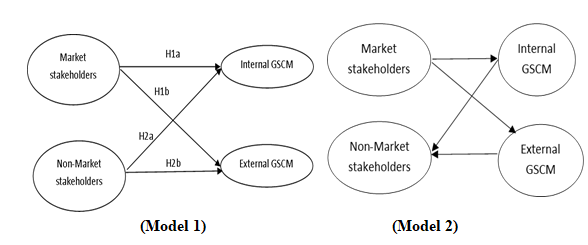
When considering the environmental issues, results of previous studies suggest that each group of stakeholders (i.e. market and non-market) has different ability to influence firms’ environmental commitments in order to develop environmentally sound products and production processes. For example, suppliers’ development and deployment of some proactive environmental practices such as EMSs and development of green materials or components has become mandatory for most industrial customers [35, 23]. Also, in order to minimize the environmental impacts of the entire supply chain activities, suppliers sometimes may force their customers to use proactive GSCM [35]. Furthermore, managers’ and employees’ commitment are essential to ensure firms’ success. Managers’ and employees’ commitment are more likely to be enhanced by adopting more proactive environmental practices [36], which is essential to ensure firms’ success. Shareholders also are often considered as the main source of the capital needed for future development of firms, and responding to their environmental concerns by adopting more proactive practices is essential to reduce their economic risks [29]. On the other hand, non-market groups of stakeholders such as community, government, media, NGOs and can also significantly influence firms’ decisions to adopt GSCM practices [37, 9]. For example, the on-going government pressure for environmentally friendly operations and the associated penalties has been widely recognized as one of the most fundamental drivers for the environmental commitment of firms. Unlike reactive firms, proactive firms tend to also adopt various green practices beyond the legal requirements in order to enhance their relationships with the government agencies [24]. In most of the developed countries, the intensity and nature of local community opinion about firms’ environmental commitments have also been considered as a main reason for the introduction of several environmental regulations [38]. Furthermore, the media can influence a firm’s environmental behaviour by publishing the environmental initiatives or environmental violations associated with its operations. This can ultimately lead to obtain more support from the public for firms’ operations or protests against their activities [39]. All of these evidences suggest that environmental pressures of various market and non-market stakeholders are associated with a firm’s decision to develop various green practices, accordingly they should be considered as crucial drivers for firms’ willingness to implement various proactive GSCM initiatives to maintain their competitiveness. Accordingly, the following hypotheses are proposed and illustrated in Figure 1 (Model 1), to explore the interrelationship among pressures of market and non-market stakeholders and the two sets of GSCM practices introduced earlier:
- H1 (Model 1): Market stakeholders’ environmental demand is positively related to adoption of internal GSCM (H1a) and external GSCM (H1b) by firms.
- H2 (Model 1): Non-market stakeholders’ environmental demand is positively related to the adoption of internal GSCM (H2a) and external GSCM (H2b) by firms.
The above discussion clearly shows that stakeholders’ ability to influence firms’ environmental decisions may vary depending on the type of stakeholders [40], and thus firms are expected to react differently. This leads to the question of whether or not pressure of market and non-market groups of stakeholders should be considered as antecedents for implementing such proactive GSCM practices. Certain groups of environmentally sensitive stakeholders might force enterprises to develop and deploy proactive environmental practices that normally exceed the minimum legal and social environmental demands [37]. Thus, the environmental pressure of this group of stakeholders can be seen as antecedents to adopting proactive GSCM initiatives. On the other hand, adopting these proactive practices might be encouraged, rather than forced, by the growing environmental interests of less sensitive groups of stakeholders such as NGOs and media. In the latter situation, firms are expected to pay lesser attention to this group of stakeholders but will try to communicate their environmental investments to them for the sake of maximizing their satisfaction. This could indirectly lead to enhancing a firm’s performance and thus the awareness of these lesser sensitive groups of stakeholders might be considered as consequences of adopting GSCM practices. These arguments may suggest for the need to have an alternative conceptual view of stakeholder influence and firms’ adoption of various types of GSCM practices that is based on value chain perspective and the perceived threats and opportunities of stakeholders’ environmental influences. The alternative model of stakeholder and GSCM activities relationship proposed here (Figure. 1, Model 2) suggests that environmental demands and preferences of market stakeholder will be considered as antecedents for GSCM adoption while the environmental preferences of non- market stakeholders will be considered as consequences in this process. As the discussion in this paper is on firms’ adoption of proactive GSCM initiatives and practices, firms’ adoption of these practices would result in their desire to create a general awareness among non-market stakeholders on firm proactive initiatives to implement particular types of GSCM practices. Sometimes stakeholder pressure does not necessarily lead to implementation of GSCM practices, but they only result in creating awareness in the firm about the environmental concerns and the possibility that the firm will be featured. This, in turn, may encourage the firm later to start implementing specific types of green practices, if these practices have not been implemented yet. In other cases, as in the case of green customers and suppliers [23, 30], pressures of stakeholder directly result in implementing proactive GSCM practices. This alternative model has some critical advantages. For example, it suggests that it should be kept in mind that adoption of advanced and proactive GSCM initiatives play a crucial role as a mediator of green stakeholder influence. Adopting certain GSCM initiatives for the sake of satisfying needs of highly environmentally sensitive and powerful stakeholders may be disposed later to fit with interest of other categories of stakeholders.
Accordingly, the following proposition is proposed and illustrated Figure 1 (Model 2), to explore the possible alternative interrelationship between stakeholder environmental pressure and firms’ adoption of GSCM practices:
• P1 (Model 2): Environmental demands of market stakeholders is considered as an antecedent for adopting proactive GSCM practices while preferences of non- market stakeholders are considered as a consequence.
Methodology
Instrument Development and Data Collection
This study focuses on investigating the direct and indirect influences of market and non-market stakeholders on firms’ adoption of internal and external GSCM initiatives, and exploring alternative ways of relating these variables, using data collected through a large-scale survey of Omani firms.
| Construct (Label) / Source | Measurement items | Mean/ S.D | Factorial weight | CR | AVE |
|---|---|---|---|---|---|
| Market Stakeholder pressures (M_St)/ [4] | Customers | 3.50/1.24 | 0.84 | 0.9 | 0.7 |
| Suppliers | 3.28/1.04 | 0.855 | |||
| Shareholders | 3.02/1.27 | 0.849 | |||
| Employees | 3.18/1.14 | 0.811 | |||
| Average | 3.25/1.17 | ||||
| Non-Market Stakeholder (NoM-St) [4] | Non-Government Organisations | 3.27/0.901 | 0.773 | 0.84 | 0.57 |
| Government | 3.70/1.27 | 0.812 | |||
| Society | 3.86/0.965 | 0.684 | |||
| Media | 2.76/1.31 | 0.737 | |||
| Average | 3.40/1.10 | ||||
| External Environmental management (ExtEM) [26] | Developing a mutual understanding of responsibilities regarding environmental performance with our suppliers | 3.55/1.12 | 0.77 | 0.89 | 0.61 |
| Working with our customers to reduce the environmental impact of supply chain activities | 3.24/1.19 | 0.754 | |||
| Including environmental considerations in selection criteria for suppliers | |||||
| Providing suppliers with written environmental requirements for purchased items | 3.31/1.23 | 0.834 | |||
| Providing customers with written environmental information related to our products | |||||
| Average | 3.43/1.25 | 0.82 | |||
| 0.882 | |||||
| 3.52/1.31 | |||||
| 3.41/1.22 | |||||
| Internal GSCM | Using advanced inventory management techniques | 4.07/1.024 | 0.855 | 0.93 | 0.62 |
| Zhu, et al. [26] | Regular maintenance of the production equipment | 4.28/0.579 | 0.873 | ||
| Adopting environmental management systems and procedures for internal use | 3.67/1.134 | 0.842 | |||
| Using packaging and pallets which can be reused | |||||
| Increase the life cycle of the product | 3.79/1.24 | 0.882 | |||
| Use of recycled materials in production | 4.01/0.873 | 0.77 | |||
| Reducing the variety of materials used to produce company products | 3.11/1.26 | 0.642 | |||
| Avoidance of harmful materials or components | 3.67/1.14 | 0.73 | |||
| Average | 3.04/1.25 | 0.686 | |||
| 3.71/1.06 |
Table 1: Descriptive statistics for constructs used in the current study.
The survey questionnaire administered to the target manufacturing companies included 21 items. All of items used in the survey were developed based on the literature Table 1 and were measured using a 5-point Likert scale. Before circulating the questionnaire, it was first reviewed by academic and industry and then piloted on 15 Omani manufacturing firms. Suggestions of the experts and results of the pilot testing were used to refine and establish the content validity of the study instrument. Additionally, size and age of the firm were included as control variables, measured as the total number of full-time employees and the total year is business of the firms respectively.
The survey was mailed to a total of 438 Omani manufacturing companies with at least 20 full- time employees each. Smaller companies were excluded from this research because it was argued that small companies lack the resources needed to develop proactive GSCM initiatives, and thus are less motivated to adopt them [40]. At the end of this stage and after sending another copy of the questionnaire and a reminder letter to non-respondents, the data collection processes resulted in obtaining 138 valid responses (giving approximately an 31.5% response rate). All of the participants had senior to middle management experience. Information about the responding companies is summarized in Table 2.
The non-response bias was assessed in this study by undertaking an independent t-test of the early and late sets of respondents and examining if there were significant differences in the mean values of responses on years in business [41]. Results of the t-test indicated no significant differences (p< .05) between the two sets on years in business. The common method bias was also assessed in this study by conducting Harman’s single-factor test. In this test an unrelated factor analysis with eigenvalue greater than 1 was used, which resulted in the presence of four different factors representing all items used in the survey. It also showed that the first factor explains only 11.2% of the variance in the data, and thus it can be concluded that the common method bias should not be considered as critical issue in the data [42].
Results of Data Analysis
Structural Equation Modelling (SEM) was used as the main methodology in this study for measurement validation and testing Hypotheses H1 and H2 and Proposition P1 in the structural model. SEM is recommended when assessing complex and alternative models that involve latent variables [43]. AMOS 21.0 with maximum likelihood estimation was used to conduct all of the inferential analyses.
Composite reliability (CR) was used to verify the reliability of the measures (Table 1). The results suggested a good reliability of constructs as their CR ranged between 0.84 and 0.93 [44]. Furthermore, the convergent validity of the constructs was obtained after satisfying the following recommended criteria [45, 43] 1) factorial weights for all indicators exceeded 0.5 (p<.05), and 2) the values of Average Variance Extracted (AVE) for all constructs exceeded the recommended threshold 0.5, the factorial loading values were between 0.642 and 0.882, and the AVE were between 0.57 and 0.70 (Table 1). The discriminant validity holds for the measurement model when assessing the square root of AVE of the constructs against the correlations among any pair of the constructs. Results in Table 3 show that the square root of AVE of all constructs are larger than the correlation between each construct and the other constructs [46, 43].
| Industry/Main production | N | % |
|---|---|---|
| Chemical products | 23 | 16.7 |
| Plastic products | 19 | 13.8 |
| Non-metallic mineral products | 16 | 11.6 |
| Basic metals | 10 | 7.2 |
| Fabricated metals products | 22 | 15.9 |
| Manufacturing of machines & equipment | 10 | 7.2 |
| Electronic appliances & electronic machines | 14 | 10.1 |
| Food & beverage | 7 | 5.1 |
| Wood & wood products | 1 | 0.7 |
| Paper & paper products | 1 | 0.7 |
| Publishing activities, printing, photocopying | 4 | 2.9 |
| Refined oil & liquid natural gas | 5 | 3.6 |
| Textiles & garments | 3 | 2.2 |
| Leather & saddles | 2 | 1.4 |
| Medical & optical equipment and machinery | 1 | 0.7 |
| Number of employees | ||
| 20-99 | 39 | 28.3 |
| >100 | 99 | 71.7 |
| Age of the company in Oman | ||
| 2-5 years | 18 | 13 |
| 6-10 years | 21 | 15.2 |
| >10 years | 99 | 71.2 |
Table 2: Profile of respondents (N= 138).
| Market stakeholders | Non-Market stakeholders | Internal GSCM | External GSCM | |
|---|---|---|---|---|
| Market stakeholders | 0.841 | |||
| Non-Market stakeholders | 0.518*** | 0.755 | ||
| Internal GSCM | 0.399*** | 0.304** | 0.781 | |
| External GSCM | 0.283** | 0.178* | 0.461*** | 0.787 |
Table 3: Correlations between constructs.
Once the measurement validation was established, several recommended procedures were used [46, 44, 43] for testing the structural model and achieving the study objectives. First, the overall fit of model 1 and model 2 was assessed using several indices. Then, the relationships between all constructs were examined by evaluating the size, direction and significance of structural path coefficients in both models when; a) both market and non-market stakeholder pressure is considered as antecedents for GSCM adoption (Model 1), and (b) market stakeholder pressure is considered as antecedent for GSCM adoption while non- market stakeholder pressure is considered as consequence for GSCM adoption (Model 2). Figure 2 and Figure 3 illustrate the results of the statistical model of both Model 1 and Model 2 respectively.
As discussed earlier, model 1 was developed for the sake of achieving an insight of whether pressure of both market and non-market stakeholders are equally important in influencing firms’ decisions in implementing both internal and external types of GSCM initiatives, which was done linking the two different groups of stakeholders as critical antecedents to firms’ adoption of the two types of GSCM practices (Figure 1, model 1). To achieve this objective, the overall model fit and path significances of this model were assessed. Results of Table 4 show that this model has achieved a good level of fit, providing initial support that requirement of both groups of stakeholders positively influence the adoption of proactive GSCM initiatives.
| Models\indices | χ2 (df) | Normed χ2 | GFI | CFI | IFI | RMSEA | PNFI |
|---|---|---|---|---|---|---|---|
| Model 1 | 398.1(201) | 1.981 | 0.868 | 0.94 | 0.941 | 0.07 | 0.713 |
| Model 2 | 507.6(287) | 1.769 | 0.87 | 0.941 | 0.942 | 0.069 | 0.718 |
| Recommended values (Shah & Goldstein, 2006) | NA | <3.0 | ≥.8 | ≥.9 | ≥.9 | <.10 | ≥0.70 |
Table 4: Structural models good of fit results.
Concerning hypotheses testing, results of model 1 Figure 2 show that the links between market and non- market stakeholder pressures and the two types of GSCM initiatives were all significant, except for the link between non-market stakeholders and external GSCM practices, which supports H1a, H1b, and H2a but rejects H2b. Although both groups of stakeholders have significant effect on firm willingness to implement internal GSCM practices, the effect of market stakeholder pressure is stronger (β =0.525, p< 0.01). On the other hand, the influence of market stakeholder pressure on external GSCM practices is very strong (β =0.447, p< 0.01) while the impact of non-market stakeholders on this type of GSCM is not significant. These empirical results confirmed those obtained by previous studies, emphasizing the strong effects of stakeholder pressure on firms’ development of internally focused GSCM such as EMSs, when compared to their effect on externally focused GSCM [4]. Further, findings of Mass, Schuster, and Hartmann [47], among others, have highlighted the critical role of market stakeholders on firm’s willingness to adopt various internal and external GSCM such as those related to internal supportive practices, internal pollution prevention and service stewardship practices with their external supply chain members. In general, these results suggest that market stakeholders’ environmental demands tend to have stronger effects on firm decisions to adopt proactive GSCM decisions that include the adoption of both internal and external GSCM initiatives than the influence of environmental preferences of non-market stakeholder.
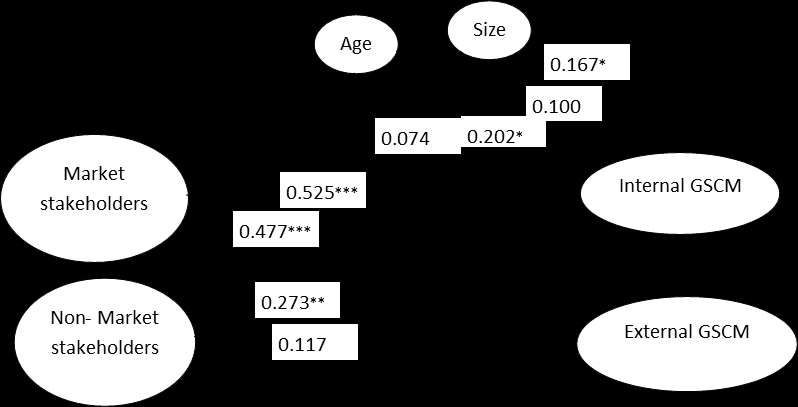
* p < .01, p < .05,* P < .1 Figure 2: (Model 1) Empirical results of stakeholder effect structural model.
The second objective of this study is to provide a different understanding how stakeholder pressure is related to GSCM adoption, by examining whether environmental demands and preferences of both market and non-market stakeholders is considered as antecedents to the adoption of GSCM, or whether the pressure of one group is considered as an antecedent while the pressure of another group is considered as a consequence to this process. To achieve this objective, an alternative competing model was created (Model 2) and then compared with Model 1. Model 2 includes the links of stakeholder pressures and different types of green practices where pressures of market stakeholders are conceptualized as antecedents to the implementation of GSCM practices, while environmental demands of non-market stakeholders is conceptualized as a consequence of the implementation of GSCM practices. The overall model fit for Model 2 was tested and assessed with several indices [43]. Although both model 1 and model 2 achieved good fit to the data (see Table 4), model 2 achieved a slightly better fit in all indices, providing support for the theoretical proposition (P1) of this study and emphasizing the importance of considering stakeholder characteristics when studying and conceptualizing the relationship between stakeholder pressure and GSCM practice implementation. Further, as illustrated in Figure 3 and when compared to Model 1, the size and significance of structural path coefficients of Model 2 of all links between the two groups of stakeholders to the two categories of GSCM initiatives are strongly significant and even stronger than those obtained for Model 1, which provides further support for Proposition 1. All of the above statistical results clearly reveal that model 2 of stakeholder pressure and GSCM relations can better explain how stakeholder pressure is related to GSCM adoption when considering various market and non-market characteristics of different groups of stakeholders. Proposition 1 is thus accepted. Based on these results, it is important to consider pressures of less environmentally sensitive stakeholders as consequences of the development and deployment of proactive GSCM initiatives, and pressure of more environmentally sensitive stakeholders as antecedents to the implementation of these practices.
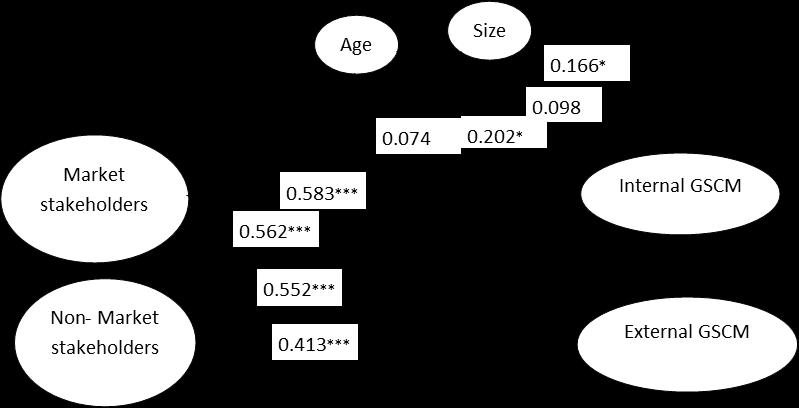
* p < .01, p < .05,* P < .1 Figure 3: (Model 2) Results of the alternative structural model.
Discussion and Conclusions
The empirical analysis of this study found support for most of the research hypotheses and proposition, generally revealing that environmental pressures of various stakeholders are related to the adoption of various green initiatives, and that pressure of less environmentally sensitive stakeholders should be considered as a consequence of the adoption of proactive GSCM initiatives. Particularly, by classifying the GSCM practices into two distinct groups, this research found that the strongest effect of stakeholder pressure on the implementation of GSCM practices occurred between the two groups of stakeholders (i.e., market and non-market stakeholders) and the adoption of internal GSCM practices compared to their effect on the adoption of external GSCM practices. These results provide insights on the extent to which internal GSCM is important to respond to stakeholders’ pressure compared to external GSCM practices. The importance of the internal GSCM in responding to the environmental challenges found in this study is consistent with the literature, in which these practices were recognized as the basis for the adoption of other types of green practices and for enhancing the environmental capabilities of a firm [27, 23, 29]. These results are important, since most of the previous studies have used only individual or limited dimensions of a firm’s environmental initiatives (i.e. either internal environmental practices or external practices) when studying the influence of stakeholder pressure and the adoption of environmental programs by firms, which may lead to incomplete conclusions. The examination of the stakeholders’ influence on the environmental initiative of firms can be fully understood when both internal and external aspects of the GSCM are considered in a single conceptual model and considered as separate constructs. For managers, these results revealed that for firms to be able to respond to on-going stakeholder pressure they need to focus initially on developing good internal green capabilities including the establishment of environmental management systems, and designing the production processes and/or the products in a more environmentally friendly way before extending their environmental investment to developing external green practices.
Further, as highlighted earlier in this paper, stakeholders were classified into market and non-market stakeholders. This classification was used with the aim of providing new insights on how pressure of market stakeholders influences a firm decision to use internal and external types of GSCM initiatives compered to influence of non-market groups of stakeholders. The statistical results of the inferential analyses generally supported H1 and H2, indicating that generally stakeholder pressure is related to firms’ decision to adopt proactive GSCM initiatives. While pressure of market stakeholders is positively and significantly related to the adoption of both internal and external GSCM initiatives (strongly supporting H1), the influence of non-market stakeholders on internal GSCM is lesser and even not significant in the case of external GSCM initiatives (partially supporting H2). These results support the stakeholder theory arguments when explaining firms’ green behaviours [17], and are in consistent with those findings reported by previous GSCM studies [48, 4, 7], highlighting the critical role of stakeholder pressures in driving the introduction of various operational environmental initiatives by firms.
When grouping stakeholders into two groups based on their market power and its related environmental sensitivity characteristics, results of this study clearly indicate that not all stakeholders are equally important in their environmental influences. Firms tend to establish priorities among stakeholders’ preferences to satisfy the conflicting demands of their stakeholders [49]. When considering the environmental investments of firms, findings of this study empirically show that stakeholders’ market characteristics are used by firms as a critical factor for establishing stakeholder priority. This suggests that firms are expected to expend their environmental commitments in introducing more proactive GSCM initiatives when they experience more pressure from market groups of stakeholders.
The results of this study confirmed that dissimilar groups of stakeholders have various influences on firms’ GSCM decisions [8] and accordingly top priority will be allocated by firms to meet requirements of more environmentally sensitive stakeholders, such as the green market stakeholders. The contributions of these market stakeholders on firms’ operations is more significant [50] compared to contributions of other groups of stakeholders. Thus, firms are highly encouraged to meet the expectations and preferences of market stakeholders such as customers and suppliers in order to gain better market opportunities [51], and to add new value for them [51]. On the other hand, the threat perspective of firms and pressures of non-market stakeholders [50, 4], may encourage firms to spend minimum environmental efforts when dealing with requirements of non-market stakeholders. This is just to avoid any risk of negatively influencing firms’ relations with market stakeholders or damaging their image with the public. These findings illustrate the importance of classifying stakeholder pressure based on the opportunities, threats and value-add perspectives when studying their influences on implementing GSCM initiatives. By doing so, this study offers different understanding of how enterprises prioritize various environmental pressures requesting them to adopt more green production processes, using market-oriented stakeholder characteristics as a main factor for classifying stakeholder pressures. For decision-makers, results of this study suggest that market approaches of encouraging firms’ green commitment are needed (e.g. governmental financial incentives and technical support), and that non-market approaches are less likely to promote further investment in developing and deploying more proactive GSCM initiatives.
This study also aims to determine the possibility of conceptualizing the green preferences and concerns of some groups of stakeholders as a consequence of, rather than an antecedent for the development of GSCM practices by firms. Most of the previous GSCM studies have hypothesized stakeholder pressure as the main antecedent for GSCM, with very limited efforts to empirically examine whether this pressure can be considered as a consequence for a firm’s decision to develop advanced GSCM practices. Results of this study revealed that in the case of developing proactive green practices, while the pressure of market stakeholders is considered as an antecedent, the pressure of non- market stakeholders should be better conceptualized as a consequence of the implementation of these practices. The positive environmental outcomes of firms’ green initiatives, such as the development and use of proactive GSCM initiatives, should encourage firms to communicate these initiatives to other less sensitive groups of stakeholders in order to enhance their awareness of firms’ green initiatives and commitment. This, in turn, may lead to indirectly enhancing the firm’s reputation and increasing the number of customers and market share. Previous studies have revealed that firms tend to develop short-term pollution control solutions and achieve the minimum environmental requirements of non-market stakeholders [17]. However, the environmental preferences of market stakeholders encourage firms to develop long-term proactive green initiatives to satisfy their environmental demands [4]. Firms also establish specific internal capabilities in order to better anticipate, understand and develop green initiatives that better match the demands and preferences of market stakeholders [52, 4]. These findings of the previous GSCM researches may provide partial explanation on the strong relationship between pressure of market stakeholders and GSCM the weak relationships between non-market stakeholders and GSCM initiatives. Thus, increasing the environmental awareness of lesser environmentally sensitive stakeholders is considered as an outcome of the development of pollution prevention and proactive GSCM practices. In general, a caution interpretation of the results on the influence of the various groups of stakeholders on firms’ GSCM adoption reveals that while non-market stakeholders such as regulations pressure may still have a major influence on firms’ environmental commitments, other market forces are becoming more significant. This may suggest that the perception of proactive GSCM concerns is more often based on value-based process. The focus on stakeholders with market and business-oriented interests is logical as many firms, especially in the developing countries, have devoted great attention to implementation of advanced GSCM practices that meet or exceed environmental expectations of highly environmentally sensitive customers and suppliers in the global markets to enhance their international market shares.
Although this study provided new practical and theoretical insights on the relationships between stakeholder pressure and GSCM, there are some limitations to this study which should be considered by future studies. For example, it must be recognized that this study uses data from a single country and a single respondent per firm. Future studies could attempt to confirm findings of this study using data from companies operating in more developed countries and use more than one respondent per firm. Also, future studies may consider controlling for the effects of industry and other firms’ characteristics [32] on the relationships tested in this study which was difficult to be done due to the insufficient total sample size obtained in this study [53, 54, 55, 56, 57].
References
-
Hart S (1995) A natural resource-based-view of the firm. Academy of Management Review 20(4): 986-1014.
-
Bowen F, Cousins P, Lamming R, Faruk A (2001) The role of supply management capabilities in green supply. Production and Operations Management 10(2): 174- 189.
-
Bocken NMP, Short SW, Rana P, Evans S (2014) A Literature and Practice Review to Develop Sustainable Business Model Archetypes. Journal of Cleaner Production 65: 42-56.
-
Sarkis J, Pilar G, Belarmino A (2010) Stakeholder pressure and the adoption of environmental practices: The mediating effect of training. Journal of Operations Management 28(2): 63-176.
-
Chen Y, Zhu Q, Sarkis J (2022) Green supply chain management practice adoption sequence: a cumulative capability perspective. International Journal of Production Research.
-
González-Benito J, González-Benito Ó (2006) The role of stakeholder pressure and managerial values in the implementation of environmental logistics practices. International Journal of Production Research 44(7): 1353-1373.
-
Wagner M (2011) Corporate performance implications of extended stakeholder management: New insights on mediation and moderation effects. Ecological Economics 70(5): 942-950.
-
Meixell MJ, Luoma P (2015) Stakeholder pressure in sustainable supply chain management: A systematic review International Journal of Physical Distribution & Logistics Management 45(1/2): 69-89.
-
Damberg S, Hartmann J, Heese S (2022) Does bad press help or hinder sustainable supply chain management? An empirical investigation of US-based corporations. International Journal of Production Economics 249: 108504.
-
Henriques I, Sadorsky P (1999) The relationship between environmental commitment and managerial perceptions of stakeholder importance. Academy of Management Journal 42(1): 87-99.
-
Kitsis AM, Chen IJ (2021) Do stakeholder pressures influence green supply chain Practices? Exploring the mediating role of top management commitment. Journal of Cleaner Production 316: 128258.
-
Freeman RE (1984) Strategic management: A stakeholder Approach. Pitman, Marshfield.
-
Delmas M, Montiel I (2009) Greening the supply chain: When is customer pressure effective? Journal of Economics and Management Strategy 18(1): 171-201.
-
Buysse K, Verbeke A (2003) Proactive Environmental Strategies: A Stakeholder Management Perspective. Strategic Management Journal 24(5): 453-470.
-
Baron DP (2009) Business and Its Environment. 3rd(Edn.), Prentice Hall, pp: 812.
-
Lawrence AT (2010) Managing Disputes with Nonmarket Stakeholders: Wage a fight, withdraw, wait, or work it out?. California Management Review 53(1): 90-113.
-
Sharma S, Henriques I (2005) Stakeholder influences on sustainability practices in the Canadian forest products industry. Strategic Management Journal 26(2): 159-180.
-
Baron DP (1995) The non-market strategy system. Sloan Management Review 37(1): 73-86.
-
Rivera JE (2006) Institutional Pressures and Voluntary Environmental Behavior in Developing Countries: Evidence from the Costa Rican Hotel Industry. Society and Natural Resources 17(9): 779-797.
-
Roome N, Wijen F (2005) Stakeholder power and organizational learning in corporate environmental management. Organizational Studies 27(2): 235-263.
-
Chin TA, Tat HH, Sulaiman Z (2015) Green Supply Chain Management, Environmental Collaboration and Sustainability Performance. Procedia CIRP 26: 695-699.
-
Klassen RD, Whybark DC (1999) Environmental management in operations: the selection of environmental technologies. Decision Sciences 30(3): 601-631.
-
Vachon S, Klassen RD (2008) Environmental management and manufacturing performance: The role of collaboration in the supply chain. International Journal of production economics 111(2): 299-315.
-
Zhu Q, Sarkis J, Cordeiro JJ, Lai KH (2008) Firm-level correlates of emergent green supply chain management practices in the Chinese context. Omega 36(4): 577-591.
-
Sarkis J, Gonzalez EDS, Koh SCL (2019) Effective multi- tier supply chain management for sustainability. International Journal of Production Economics 217: 1-10.
-
Zhu Q, Sarkis J, Lai KH (2012) Examining the effects of green supply chain management practices and their mediations on performance improvements. International Journal of Production Research 50(5): 1377-1394.
-
Melnyk SA, Sroufe RP, Calantone R (2003) Assessing the impact of environmental management systems on corporate and environmental performance. Journal of Operations Management 21(3): 329-351.
-
Sroufe R (2003) Effects of environmental management systems on environmental management practices and operations. Production and Operations Management 12(3): 416-431.
-
Zhu Q, Sarkis J (2004) Relationships between operational practices and performance among early adopters of green supply chain management practices in Chinese manufacturing enterprises. Journal of Operations Management 22(3): 265-289.
-
Vachon S, Klassen RD (2006) Extending green practices across the supply chain.International Journal of Operations & Production Management 26(7): 795-821.
-
Vanessa M, Jan S, Felix D (2010) Can companies profit from greener manufacturing? Measuring Business Excellence 14(2): 22-31.
-
Geng R, Mansouri A, Aktas E (2017) The relationship between green supply chain management and performance: A meta-analysis of empirical evidences in Asian emerging economies. International Journal of Production Economics 183 Part A: 245-258.
-
Matos S, Jeremy H (2007) Integrating sustainable development in supply chain: The case of life cycle assessment in oil and gas and agricultural biotechnology. Journal of Operations Management 25(6): 1083-1102.
-
Pfeffer J, Salancik GR (1978) The External Control of Organizations: A Resource Dependence Perspective. Harper & Row, New York.
-
Vachon S (2007) Green supply chain practices and the selection of environmental technologies. International Journal of Production Research 45(18-19): 4357-4379.
-
Hanna MD, Newman WR, Johnson P (2000) Linking operational and environmental improvement through employee involvement. International Journal of Operations and Production Management 20(2): 148- 165.
-
Huang YC, Borazon EQ, Liu JM (2021) Antecedents and consequences of green supply chain management in Taiwan’s electric and electronic industry. Journal of Manufacturing Technology Management 32(5): 1066- 1093.
-
Banerjee SB, Iyer ES, Kashyap RK (2003) Corporate environmentalism: antecedents and influence of industry type. Journal of Marketing 67(2): 106-22.
-
Barkemeyer R, Holt D, Figge F, Napolitano G (2010) A longitudinal and contextual analysis of media representation of business ethics. European Business Review 22(4): 377-396.
-
Camino J (2007) Re-evaluating green marketing strategy: a stakeholder perspective. European Journal of Marketing 41(11-12): 1328-1340.
-
Armstrong J, Overton T (1977) Estimating nonresponse bias in mail surveys. Journal of Marketing Research 14(3): 396-402.
-
Flynn B, Huo B, Zhao X (2010) The impact of supply chain integration on performance: A contingency and configuration approach. Journal of Operations Management 28(1): 58-71.
-
Hair JF, Anderson RE, Tatham RL, Black WC (2010) Multivariate Data Analysis with Readings. 4th (Edn.), Pearson College Division, New Jersey, USA.
-
Shah R, Susan Meyer Goldstein SM (2006) Use of structural equation modeling in operations management research: Looking back and forward. Journal of Operations Management. 24(2): 148-169.
-
Fornell C, Larcker DF (1981) Evaluating structural equation models with unobservable variables and measurement error. Journal of Marketing Research 18(1): 39-50.
-
Anderson JC, Gerbing DW (1988) Structural equation modeling in practice: a review and recommended two- step approach. Psychological Bulletin 103(2): 411-423.
-
Maas S, Schuster T, Hartmann E (2018) Stakeholder Pressures, Environmental Practice Adoption and Economic Performance in the German Third-party Logistics Industry—A Contingency Perspective. Journal of Business Economics 88(2): 167-201.
-
Kassinis G, Vafeas N (2006) Stakeholder pressures and environmental performance. Academy of Management Journal 49(1): 145-159.
-
Mitchell RK, Agle BR, Wood DJ (1997) Towards a theory of stakeholder identification and salience: defining the principle of who and what really matters. Academy of Management Review 22(4): 853-886.
-
Backer L (2007) Engaging stakeholders in corporate environmental governance. Business and Society Review 112(1): 29-54.
-
Hillman AJ, Keim GD (2001) Shareholder value, stakeholder management, and social issues: what’s the bottom line? Strategic Management Journal 22(2): 125- 139.
-
Rueda-Manzanares A, Aragon-Correa JA, Sharma S (2008) The influence of stakeholders on the environmental strategy of service firms: the moderating effects of complexity, uncertainty and munificence. British Journal of Management 19(2): 185-203.
-
Aragon-Correa J, Sharma S (2003) A Contingent Resource Based View of Proactive Corporate Environmental Strategy. Academy of Management Review 28(1): 71-88.
-
Delmas MA, Toffel MW (2008) Organizational responses to environmental demands: opening the blackbox. Strategic Management Journal 29(10): 1027-1055.
-
Juan AA, Enrique AR (2007) Proactive corporate environmental strategies:myths and misunderstandings. Long Range Planning 40(3): 357-381.
-
Mishra A, Shah R (2009) In union lies strength: Collaborative competence in new product development and its performance effects. Journal of Operations Management 27(4): 324-338.
-
Wu Z, Pagell M (2011) Balancing priorities: Decision- making in sustainable supply chain management. Journal of operations management 29(6): 577-590.
- Electronic Waste Management in the Top Ten Economies in the World: A Critical Review on Waste Generation, Regulations, Collection, Recycling and Environmental Challenges
- Some Challenging Transdisciplinary Aspects of the Sustainable Waste Management in the Permacrisis Context
- Use of Mobile Autonomous Systems for Pollution Control of Inland Water Bodies
- Environmental Impact Perspective Sustainable Online Textile Retailing: Harnessing Augmented Reality-Based Digital Twins in Bangladesh
- Composite Treatment Module for Removing Acidity and Metal (Loid)S from Acid Rock Drainage
- Household E-Waste Management Systems [E-Wms] in Malaysia