
Diclofenac Degradation by New AOP System Zero Valent Aluminium Acid (ZVAl/H+) Process and its Modifications
Drugs and other pharmaceutical compounds are often used substances around the world. Diclofenac is one of the widely used anti-inflammatory drug for the treatment of acute and chronic pain, rheumatoid and osteoarthritis. In recent years diclofenac was considered as a new emerging environmental contaminant of water and soil ecosystems. In the present work the new AOP system based on the ZVAl/H+ and its modifications was applied to degrade diclofenac water solutions with its initial concentration of 25 mg L−1. The effects of initial pH, dosage of Al0, addition of hydrogen peroxide, ferrous, ferric and aluminium ions were studied in the dark experiments. In addition, effects of irradiation with sunlight lamp were also investigated. Finally, environmental toxicity studies were conducted according to OECD tests with terrestrial plants. Degradation efficiency was measured by UV-VIS spectroscopy. After all experiments the degree of resulting TOC removal was determined. Concentration of dissolved oxygen in reaction mixture during and after reaction was also monitored. The results showed that all used systems are able efficiently remove diclofenac. The best diclofenac removal reached 98 % efficiency at pH of 3.0 in 4 hours, with Al0 dosage used of 2.0 g L−1 and with addition of 10 mg L−1 of aluminium ions (Al3+). The best TOC removal (83 %) was achieved under experimental condition of ZVAl/H+ with Al0 dosage of 4.0 g L−1 at pH of 3.0 after 4 hours. Negative results with the utilization of radical scavenger for hydroxyl radicals (methanol) led us to conclusion that degradation process in the first steps of reaction proceeds parallel by both two different mechanisms – reductive dehalogenation and hydrogenolysis. Finally, before and after treatment processes toxicity tests according to OECD Guideline 208 were performed. Resulted toxicity values showed that diclofenac solutions in concentration range from 5 to 25 mg L−1 and solutions after treatment processes had only a low toxic effect on terrestrial plants.
Introduction
Thousands tons of drugs are annually produced by pharmaceutical industry because of the growing populations and the increasing interest to promote human health and a comfortable lifestyle. Different types of drugs have been monitored in last decade in environment as new emerging environmental pollutants [1]. One of the most common drugs is diclofenac (DCF) (2-[(2,6-dichlorophenyl)amino] benzene acetic acid; sodium salt). DCF is used since 1973 as a synthetic nonsteroidal antiinflammatory drug (NSAID), commonly prescribed as effective antiinflammatory, analgesic and antipyretic agent. It is widely used for the treatment of acute and chronic pain, rheumatoid and osteoarthritis [2, 3]. Low water solubility (2.37 mg L-1, 25 °C) predicted its distribution and accumulation mainly in hydrophobic media (Log Kow = 4.51). Thus diclofenac fate and transport in environmental compartments and its toxic effects are given by its properties. It is estimated that about 1443 tons of DCF is consumed globally per year. For example, Germany 86 tons, England 26 tons and France 16 tons. Above mentioned data do not include veterinary uses. Main sources of organic pharmaceuticals such as DCF in aquatic environment are wastewaters (WWs) [4], where different types of drugs including DCF have been found.
The main of such wastewaters pollution came from hospitals, industrial companies, and households. Because of DCF is not fully removed by the treatment process its concentrations in effluents from wastewater treatment plants (WWTPs) can be relative high. For example, in effluents from eight Slovak WWTPs concentrations of DCF ranged from 0.28 μg L−1 in Banská Bystrica to 11.86 μg L−1 in Trenčín with the median concentration 1.24 μg L−1 [5]. Moreover, many forms of DCF’s metabolites after metabolic activation by cytochrome P450 and glucuronidation in human body have been also found as pollutants in wastewaters. The main metabolites of DCF are 3’-hydroxydiclofenac and 8-chlorocarbazole-1-yl-ethanoic acid. These metabolites were observed, for example, in Malir River and Lyari River water in Karachi, Pakistan, in concentration range between 0.080.3 μg L−1 and 0.030.4 μg L−1, respectively [6, 7]. However, studies of occurrence, fate and toxicity of these metabolites and other DCF byproducts after treatment processes are scarce [8].
Several authors demonstrated, that DCF in high concentration can be efficiently removed from aqueous solution by different Advanced Oxidation Processes (AOPs) such as Fenton reaction, ozonation, sonolysis, photolysis, combination of UV and H2O2, UV and TiO2 or by pyrite nanoparticles [9, 10, 11, 12]. In literature there is a little evidence about microbial or enzymatic decomposition of DCF. These biological methods described so far can be potentially divided on the methods with application of white-rot fungi or Phane-rochaete chrysosporium or the methods that utilize enzymatic conversion with the use of fungal nonspecific peroxygenases or chloroperoxidases [13]. Although mild and environmental-friendly character of biotic methods, AOPs are much more effective in decomposition of wide spectrum of organic compounds to the mostly harmless final products.
Recently, new AOPs processes based on the zero-valent metals have been used by several authors [14]. In recent years, one of them, zerovalent aluminium – acid system (ZVAl/H+) was frequently used for oxidative decomposition of numerous organic pollutants such as chlorinated compounds, drugs, endocrine disruptors, pesticides, environmental priority pollutants, surfactants or for oxidative removal of toxic metal ions [15, 16, 17]. In the year of 2009 such a system has been practically introduced by Bokare & Choi. They reported that the main advantage of this new AOP system is spontaneous production of hydrogen peroxide (H2O2) under airequilibrated condition and its subsequent conversion to hydroxyl radicals (HO
- ) by Fenton-like reaction (FLR) (1, 2) [18]. Production of H2O2 strongly depends on pH, concentration of dissolved oxygen and on aluminium dosage. Generally, lower level of pH, higher concentration of oxygen and higher dosage of zerovalent aluminium (ZVAl) improves the production of H2O2 [19]. Conversion of H2O2 to HO
- radicals can be accelerated by the addition of zero-valent iron (ZVI), or ferrous or ferric ions. Under acidic condition ZVI is able to produce ferrous ions (3), which can converted H2O2 to HO
- radicals by classical Fenton reaction (FR) more efficiently (4). Moreover, ZVAl is able to reduce added or in FR formed ferric ions back to ferrous ions (5) [20] and thus restarted FR again (4).
2 Al0 + 3 O2 + 6 H+ → 2 Al3+ + 3 H2O2 (1) Al0 + 3 H2O2 → Al3+ + 3 HO
- + 3 HO– (2) Fe0 + 2 H+ → Fe2+ + H2 (3) Fe2+ + H2O2 → Fe3+ + HO
- + HO− (4) 3 Fe3+ + Al0 → 3 Fe2+ + Al3+ (5) In addition, there are known several other factors, which can improve ZVAl/H+ system. Very important is the form of added ZVAl and used process of its surface activation. Using of ZVAl powder or washing of ZVAl surface slices before addition to reaction by acid significantly improves oxidative power of system [21, 22]. Addition of chelating agent such as humic acid (HA) had ambivalent effect and EDTA significantly enhanced the degradation power [23]. HA facilitated formation of H2O2 by acting as an electron shuttle between ZVAl and dissolved molecular oxygen. On the other hand, in higher concentrations HA can act as scavenger for HO
- radicals, which are the main reactive particle in degradation process [19] and thus lowered degradation efficiency.
Beside the great oxidative power of ZVAl/H+ system, its adsorptive properties have been also observed. For arsenic removal, for example, ZVAl/H+ system in combination with polyoxometalate (POM) under oxic conditions has been used. Great adsorption potential of ZVAl itself and after neutralization formed aluminium hydroxide is presumed as the main process for arsenic removal [24]. In combination with POM system ZVAl/H+ is also able efficiently reduce chromate ion (Cr6+) to chromium ion (Cr3+). From mechanistic point of view it is of interest that POM is able to dissolve the oxide layer on ZVAl surface and thus it is played simultaneously a role as an electron shuttle between ZVAl and dissolved oxygen. In the ZVAl system which formed H2O2 POM is able to enhance reduction of Cr6+ ion as well [25].
The objective of this study was to examine the possibilities of degradation of DCF by ZVAl/H+ system and by its modifications under air equilibrated condition. The main investigated influencing factors were pH, aluminium and H2O2 dosages, addition of Fe2+, Fe3+, Al3+ ions, and sunlight lamp irradiation. Finally, before and after treatment processes toxicity tests according to OECD Guideline 208 were performed and also mechanism of DCF degradation by ZVAl/H+ system was discussed.
Experimental
Materials and Reagents
Diclofenac, sodium salt (C14H10Cl2NO2Na, purity > 98.5 %) was purchased from SigmaAldrich (U.S.A.). DCF solution was prepared in 500 mL volumetric flask with concentration 25 mg L−1 and stored under laboratory condition at temperature 20 ± 1°C. Sulfuric acid, sodium hydroxide, hydrogen peroxide (5 %), methanol, ferrous sulphate heptahydrate, ferric sulphate nonahydrate and aluminium sulphate octadecahydrate were purchased from MikroCHEM (Slovakia) in analytical grade. As a source of ZVAl slices aluminium foil (5×5 mm) with aluminium content > 99.5 % was used. All solutions were prepared in deionized water.
Reaction Setup
All reactions were carried out in 250 mL Erlenmeyer flasks covered by aluminium foil with a solution volume of 100 mL under air-equilibrated conditions in the dark. The initial pH was adjusted by 5 % H2SO4 or NaOH solutions to required value. Reactions were initiated by addition of ZVAl. Before addition to the reaction mixture ZVAl was washed by 5 % NaOH and by deionized water. Reactions were stirred with magnetic stir bars at 250 rpm. During the reaction course in time intervals of 5, 30, 60, 120, 180 and 240 minutes 5 mL of sample was taken and immediately analyzed by UV-VIS to determine residual DCF concentration. Reaction time was 4 hours.
To evaluate influencing reaction factors specific effects on reactions were studied. The 2.0 g L−1 of ZVAl slices and initial pH of 3.0 were the basic reaction conditions. Firstly, the effect of addition of Fe2+, Fe3+ or Al3+ ions and H2O2 in different amount was studied. Methanol (1.0 mL) was used as a scavenger of hydroxyl radicals. Photochemical degradation experiments were carried out with the use of artificial sunlight lamp (Osram E27/ES 300 W). The lamp distance from irradiated Erlenmeyer flask was 50 cm. The luminous flux was measured by a luxometer (Extech Instruments HD450). Emitted light at the front side of the Erlenmeyer flask was 23 500 lx and 3 000 to 4 500 lx at the back side.
Analysis
Firstly, stock water solution of DCF with concentration of 25 mg L−1 was prepared. UV-VIS spectra were measured by HACH LANGE DR5000 UV-VIS spectrophotometer in the wavelength range from 190 to 900 nm. Further, calibration solutions with lower DCF concentrations for UV-VIS measurements under different pH values (pH range from 1.5 to 7.0) were also prepared. DCF solution had in all measured pH´s an absorbance maximum at 201 nm and 276 nm [26]. Calibration curve for concentration range of 0 mg L−1 to 25 mg L−1 was measured for λ max = 276 nm with the resulted value of correlation coefficient R2 = 0.9999.
Adjusted initial and final pH´s were determined by pH- meter HANNA Instruments HI2002-02 with HI1131B probe. Concentration of dissolved oxygen in DCF solutions in open reaction systems was measured at the beginning, during and at the end of the all reactions by HACH LANGE HQ30D with LDO10101 probe. Initial and final amount of total organic carbon (TOC) was determined by ELEMENTAR vario TOC cube.
Toxicity Tests
Toxicity tests were performed on the terrestrial plant seeds Sinapis Alba (Mustard) according to OECD Guidelines 208: “Terrestrial plants, Growth tests” method [27]. Sinapis Alba seeds were purchased from Forestina (Czech Republic). All seeds were visually inspected and undamaged seeds with similar size were used in experiment. All experiment tests were carried out in Petri dishes with diameter of 10 cm, which were lined with filter paper. To every Petri dish were added 30 seeds in geometric configuration. All solutions were adjusted to pH 7.0 and after dilution with dilution water in ratio 1:1, 5 mL of sample was added into Petri dishes. Used experimental conditions were as follows: Exposure time was 72 hours, experimental temperature was 20 ± 1°C, and all tests were carried out in the dark under air equilibrated conditions in three parallels. As reference sample deionized water diluted by dilution water was used. Next test was carried out with standard DCF solutions. Finally, solutions obtained after treatment processes with ZVAl/H+ system with ZVAl content 2.0 g L−1 and at the initial pH of 3.0 were also tested. Subsequently statistical evaluation of the growth inhibition of Sinapis Alba roots was done in all experiments.
Results and Discussion
Efficiency of DCF Removal by Zval System
Under laboratory conditions and used pH values and in absent of ZVAl DCF is stable. But after addition of activated ZVAl in amount of 2.0 g L−1 and under pH values conditions of 1.5, 2.0, 3.0, 4.0, 5.0, 6.0 and 7.0 the concentrations of DCF gradually declined Figure 1.
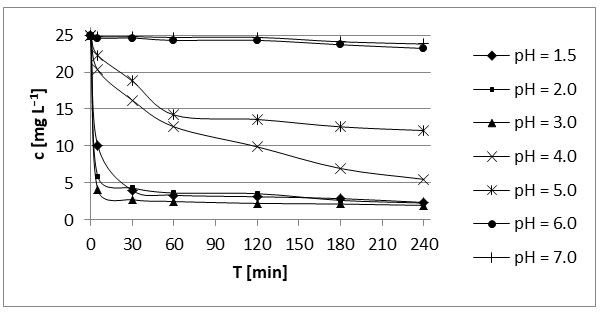
Very low DCF removal was observed under pH 6.0 and 7.0 where after 4 h of reaction time only 7.2 % or 4.8 % were removed. But in lower pH the removal efficiencies are increased, e.g., for pH 4.0 to 51.6 % and for pH 5.0 to 78.0 %. Similarly as in the case of acetaminophene [21] under pH values smaller than 4.0 the best results were also obtained in our experiments. In this case DCF removal efficiency was achieved 92.1 % at pH 3.0. With lower pH only moderate DCF removal efficiency was achieved. This is in contrast with published results where authors observed increasing degradation [20]. Moreover, addition of methanol as a hydroxyl radical scavenger practically do not affected a reaction course. It means that degradation of DCF proceeds by two parallel processes – reductive dehalogenation and hydrogenolysis. In the case of activated ZVAl the reduction of chlorine containing substrate is possible due to a low redox potential of Al3+/Al0 = –1.67 V [28]. Because of DCF contains two chlorine atoms it is possible to suggest that in the first step of reaction radical anion is formed by the electron transfer from ZVAl surface (6). Its cleavage to radical and anion (7) lead to the oxidative degradation (8). This degradation pathway is connected with oxygen consumption. For example, at pH < 4.0 under open reaction system decline of oxygen concentration was in the range of 1.0 to 2.6 mgO2 L–1. But in the cases when the both lower efficiency and lower reaction rate were observed, the oxygen concentration decline was neglected. Similar reaction course for DCF degradation was also observed for the used Zn0 [29]. After 5 min of reaction 81% degradation efficiency was achieved with initial DCF concentration of 10 mg L–1. Because of the system Zn2+/Zn0 = –0.76 V has higher redox potential it is not surprising that one of the primary analyzed degradation product of DCF was compound with the loss of one Cl atom [29]. We are also observed that resulting pHs are changed during reaction course depending on initial reaction pH value. DCF–Cl + e– aq → [DCF–Cl]
- – (6) [DCF–Cl]
- – → DCF
- + Cl– (7) DCF
- + O2 → DCF–O–O
- → oxidative degradation products (8) Initial TOC value of stock solution was 14.3 mg L–1. After reactions final TOC value was in the range of 52 to 63 % at pH < 5.0. The most TOC decline (63 %) was achieved at pH 3.0. Under pH values of 6.0 to 7.0 resulting TOC was changed only slightly, approximately to 0.6 mg L–1. It means that under pH < 5.0 the formation of CO2 is occurred partly and the TOC value is mainly affected only by the loos of volatile organic carbon. From these results it is clear that under pH < 5.0 only a small part of compounds are mineralized to CO2 and further carbon is containing in volatile organic compounds that are formed during mineralization process.
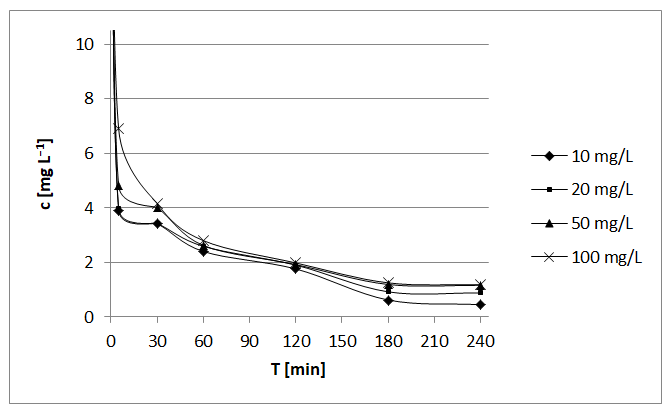
Influencing of reaction by the amount of the used of ZVAl was studied at pH 3.0. In recent study was observed that higher amount of the used ZVAl led to higher degradation efficiency [25]. In our experiments the used amount of activated ZVAl was 0.5, 1.0, 2.0, 3.0 a 4.0 g L–1 and in this order the degradation efficiency was also increased. With the utilization of 4 g L–1 final value of degradation efficiency was 96.88 % Figure 2. In relation to the added Al amount of 2.0 g L–1 the degradation efficiency was increased only about 4.8 %.
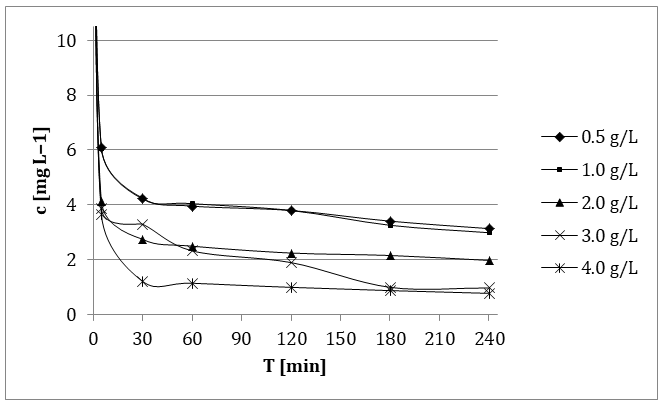
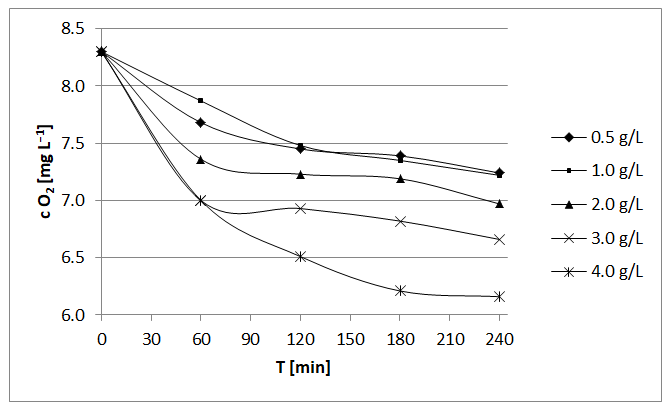
Consumption of dissolved oxygen increased with the increasing of added ZVAl. In two times increased amount from 2.0 to 4.0 g L–1 the oxygen consumption was increased by 0.8 mgO2 L–1, whereas with the use 1.0 g L–1 the oxygen consumption lowered by 0.2 mgO2 L–1 Figure 3. Also TOC value increased from 63 % for 2.0 g L–1 ZVAl to 87 % for 4.0 g L–1. This result means that degradation power of the used system was also increased similarly as final pH values.
It means that more H+ ions are needed for the reaction with higher amount of ZVAl or for the production of atomic hydrogen (H•), which may react in hydrogenolysis with DCF radical produced in reaction 7 (reactions 9 and 10) [30].
H+ + e– aq → H
- (9) DCF
- + H
- → DCF–H (product of hydrogenolysis) (10)
Influence of H2O2 Addition on DCF Removal Efficiency by ZVAl System
H2O2 is important part of AOPs oxidative systems based on ZVAl. These systems are namely able spontaneously produced hydrogen peroxide according to equation (1) and consequently hydroxyl radical as a strong oxidizing particle [18]. In DCF degradation which is proceeded by the reductive dehalogenation mechanism hydrogen peroxide can be secondary source of dissolved oxygen (11) or, on the other hand, it can also be a source of reactive hydroxyl radicals HO
- . HO
- radicals may further recombine with DCF
- radical or react directly with DCF to form different hydroxylated byproducts or radical intermediates (12). Such byproducts were observed, for example, during metabolic reactions of DCF [11]. Therefore, mechanism of hydrogenolysis remains to be studied in detail due to similarity of radical intermediates produced during biological and chemical degradation processes. In addition, the formation of N-oxide is some another transformation reaction of DCF [6]. This is a reason why the effect of different amounts of hydrogen peroxide (1.0, 2.0, 4.0 a 8.0 mL L–1) on ZVAl/H+ system was examined.
H2O2 → H2O + ½ O2 (11) DCF or DCF
- + HO
- → DCF–OH (12)
It was observed that the addition of H2O2 has only very low effect on the resulting degradation efficiency. In contrast with lower addition of H2O2 degradation efficiency increased from 88.6 % to 92.3 % similarly as in the experiments without addition of H2O2. Concentration of dissolved oxygen in the system to which 4.0 and 8.0 mL L–1 H2O2 was added was approximately 8.0 mgO2 L–1 almost for all reaction time. On the contrary, in the systems with H2O2 addition of 1.0 and 2.0 mL L–1 it declined from initial 8.3 mgO2 L–1 to 6.8 or 7.4 mgO2 L–1. In all experiments resulting pH values increased approximately by 0.36 and average removed TOC was 60 % almost in all cases.
Enhanced Efficiency of DCF Removal by Addition of Iron Ions to ZVAl System
It is known that iron ions play important role in chemical or biological reaction as a source of electrons or as an electron transfering agents. Redox potential of the system Al3+/Al0 = –1.67 V is more negative than for the systems Fe3+/ Fe2+ = 0.77 V or Fe2+/Fe0 = −0.41 V. It means that added ferric ions will be reduced to ferous ions similarly as in the case of mercury in the system ZVI/Cu2+ [31]. By this way formed or added ferous ions may transfer electron to the substrate or can be further reduced to zero-valent iron. In our system as electron acceptor can be formed H2O2 or substrate, in our case DCF. In order to investigate the effect of added iron ions on DCF degradation they were added in amounts of 5, 10, 25 a 50 mg L–1, whereby in both cases lowest addition of Fe2+ or Fe3+ ions led to the highest efficiencies of DCF removal Figure 4.
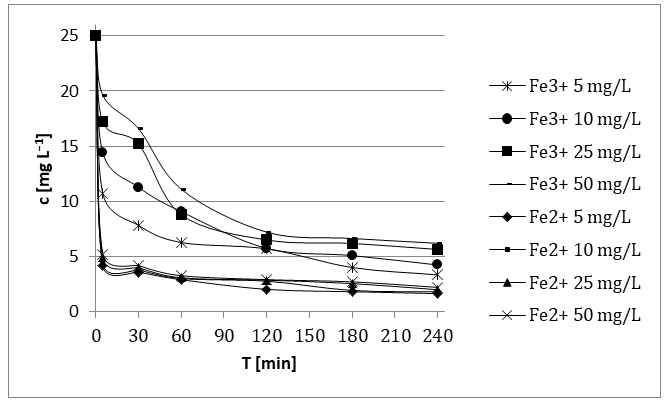
Each addition of Fe3+ ions resulted in a decrease in the efficiency of degradation, which may be caused by the use of the electron from ZVAl only for the reduction of Fe3+. The reduction can be direct using ZVAl, or through H2O2 produced in the ZVAl/H+ system (13, 14) [32]. The best result was obtained with the addition of 5 mg L–1 of ferric ions when degradation efficiency was 86.6% and TOC removal only 28 %. In another experiments the removal of TOC was higher (from 34 to 50 %) but DCF removal was lower. The reason of this fact could be caused by the degradation of formed intermediates by Fenton reaction. Fe3+ + H2O2 → Fe-OOH2+ + H+ (13) Fe-OOH2+ → Fe2+ + HOO• (14) ZVAl/H+ system with addition of Fe2+ ions was more efficient than the system without the addition only in the case when the added amount was 5 and 10 mg L–1. Efficiencies of DCF removal under this experimental conditions were 93.4 and 92.7 %, whereby TOC removal was lower in relation to system without addition iron ions and achieved 50 to 56 %.
Efficiency of DCF Removal by Aluminium Ions Enhanced ZVAl System
In our work was for the first time also studied effect of Al3+ ions addition to the ZVAl/H+ system. According to deep analysis of the H2O2 production by ZVAl/H+ system (1) the first reactive product is superoxide radical anion (O2
- −) (15-17) [15]. It is known that aluminium can formed with different inorganic and organic compounds depending on pH great spectrum of complexes [33]. Besides aqua- and hydroxo complexes it is suggested also the formation of the complex with superoxide (18) [33]. Similarly as in the case of another transition metals such as V, Co, Fe or Mn [34] where some different structures and reactivities are assumed also in the complexes of superoxide with aluminium . Addition of Al3+ ions could be help to the better electron transfer from ZVAl, with the formation of the short lived Al2+ or Al+ ions which are able easily transfered electron to DCF molecule. Thus, Al3+ ions worked as electron shuttle [35]. 2 Al0 + 3 O2 + 6 H+ → 2 Al3+ + 3 H2O2 (1) 2 Al0 + 6 O2 → 2 Al3+ + 6 O2 –
- (15) 6 O2 –
- + 6 H+ → 6 HOO
- (16) 6 HOO
- → 3 H2O2 + 3 O2 (17) Al3+ + n O2 –
- → [Al(O−O
- )n](3−n)+ (18) Aluminium ions were added to the reaction in amounts of 10, 20, 50 a 100 mg L–1. From obtained results appeared that aluminium ions catalyze electron transfer from ZVAl to DCF. Similarly as in iron ions addition the most efficiencies of DCF removal were achieved with the lowest added amount of Al3+, when aluminium ions work as electron shuttle between metalic aluminium and DCF Figure 5. But it is important to note that, in relation to the only ZVAl use at pH 3.0, every amount of added Al3+ ions increased efficiency of DCF removal. DCF removal efficiencies increased in the range of 95.3 to 98.2 % with decline of the added amount of Al3+. Dissolved oxygen consumption in the open systems was highest among all studied systems and in average was 2.9 mgO2 L–1. Total TOC removal was in the range of 75.7 to 77.8 %. It is about 13 to 15 % more than in the case without Al3+ addition.
DCF Degradation by Artificial Sunlight Irradiation
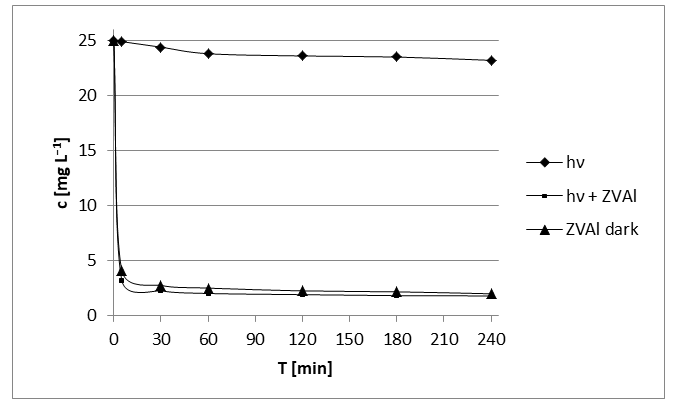
Our photochemical experiments of DCF stability have been investigated by artificial sunlight irradiation. In literature, similar investigations of photochemical stability of DCF in water solution and identification of resulting products formed have been also published [36]. DCF alone undergous photochemical degradation to form different products. By this way mainly intermediates and products without chlorine are formed, products in which chlorine is substituted with hydroxyl group or decarboxylated products [37].
Under irradiation with artificial sunlight only very low of DCF degradation was observed. Thus after 4 h irradiation at pH 3.0 only 7.2 % was removed and the TOC decreases by 0.3 %. But with the use of ZVAl system at pH 3.0 under irradiation very rapid degradation of DCF was observed. However, similar results were also obtained under dark experimental conditions. In photodegradation the higher electrons production from metal surface is proposed and thus also the degradation efficiency increaces [38]. These electrons can reduced DCF (19), but observed degradation efficiency was affected only in small level. Al0 + DCF + hν → Al+ + [DCF–Cl]•–(19).
Toxicity Tests of DCF Solutions
DCF and its metabolites are currently observed around the world in all environmental parts. Environmental toxicity assessment of DCF and its metabolites was not done sufficiently till now [8]. Therefore, before and after treatment processes toxicity tests according to OECD Guideline 208 were performed with the use of seeds of Sinapis Alba [27]. From the reason that WWTP produced sludge is often applied as a fertilizer in agriculture it is needed to study the toxicity of wastewater before and after WWTP treatment processes [39]. In our experiments solutions of DCF were studied in the concentration range of 5 to 25 mg L−1. The most inhibition of Sinapis Alba roots was observed at DCF concentration of 15 mg L−1, when it was reach of 20.2±1.1 % with germination of 71.1 % in relation to control with germination of 81.1 %. Higher DCF concentrations presented lower roots inhibition in the range of 11.7±1.2 to 15.3±0.9 % with the germination of 74.4 and 70.0 % Figure 7.
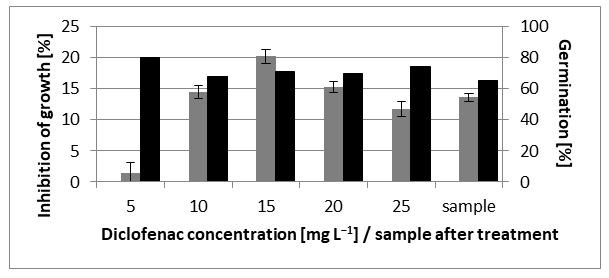
The value of inhibition concentration IC10 was 9.12 mg L−1. After application of ZVAl/H+ system with initial concentration of ZVAl 2.0 g L−1 at pH 3.0 and 4 h of reaction time resulting solution shown inhibition of 13.6±0.6 % with germination of 65.6%. After degradation process the remaining DCF concentration was 2.0 mg L−1 and resulting TOC 5.3 mg L−1. Observed toxicity can be caused by DCF degradation products such as phenol, catechol, aniline and oxalic acid [29]. Another cause can be remaining concentration of aluminium ions, which can also inhibited growth of Sinapis Alba roots [15, 40, 41].
Conclusion
AOPs systems based on metal aluminium can be used on the degradation of different environmental persistant pollutants such are drugs. The degradation efficiency of such systems is depended on different factors such as the property of pollutant, used form of aluminium or pH value. In one our system more than 98 % of DCF with initial concentration of 25 mg L−1 and 77 % TOC was removed with the use ZVAl/ H+ system. In this experiment the used amount of metal aluminium was 2.0 g L−1, the pH 3.0 and with addition 10 mg L−1 Al3+ ions. At the first stage the oxidative degradation is proposed, followed by the total mineralization. This pathway was indirectly confirmed by decreasing of dissolved oxygen in reaction mixture. Degradation of DCF was positive influenced by sun irradiation and by addition of hydrogen peroxide or ferrous ions. Water solutions of DCF in concentration range of 5 to 25 mg L−1 reached only low growth inhibition for terestrial plants. After degradation procesess resulting intermediates and degradation products also show low negative toxicity. . But some authors suggested that toxicity of DCF byproducts may be more toxic than DCF itself and this is a reason why individual degradation products formed after treatment by different AOPs processes should be explored in detail. Diclofenac, like other pharmaceuticals, currently represents a serious pollution problem of the environment [42, 43, 44].
References
-
Kotyza J, Soudek P, Kafka Z, Vaněk T (2009) Pharmaceuticals new environmental pollutant. Chemicke Listy 103(7): 540-547.
-
Kleemann A, Engel J, Kutshier B, Reichert D (2001) Pharmaceutical Substances Syntheses Patents Applications. 4th(Edn.), Pharmaceutical Substances. Thieme, 1: 629-630.
-
Naveed S, Qamar F (2014) UV spectrophotometric assay of Diclofenac sodium available brands. Journal of Innovation Pharmaceuticals and Biological Sciences 1(3): 92-96.
-
Mackuľak T, Škubák J, Grabic R, Ryba J, Birošová L, et al. (2014) National study of illicit drug use in Slovakia based on wastewater analysis. Science of the Total Environment 494-495: 158-165.
-
Fáberová M, Bodík I, Ivanová L, Grabic R, Mackuľak T (2017) Frequency and use of pharmaceuticals in selected Slovakian town via wastewater analysis. Monantshefte für Chemie chemical monthly 148: 441-448.
-
Boerma JS, Vermeulen NPE, Commandeur JNM (2014) One electron oxidation of diclofenac by human cytochrome P450s as a potential bioactivation mechanism for formation of 2´- (glutathion-S-yl) – deschlorodiclofenac. Chemico-Biological Interactions 207: 32-40.
-
Scheurell M, Franke S, Shah RM, Hühnerfuss H (2009) Occurrence of diclofenac and its metabolites in surface water and effluent samples from Karachi Pakistan. Chemosphere 77(6): 870-876.
-
Lonappan L, Brar SK, Das RK, Verma M, Surampalli RY (2016) Diclofenac and its transformation products Environmental occurrence and toxicity A review. Environment International 96: 127-138.
-
Nie ER, Yang M, Wang D, Yang X, Luo X, et al. (2014) Degradation of diclofenac by ultrasonic irradiation Kinetic studies and degradation pathways. Chemosphere 113: 165-170.
-
Khabbaz M, Entezari MH (2017) Degradation of Diclofenac by sonosynthesis of pyrite nanoparticles. Journal of Environmental Management 187: 416-423.
-
Bae S, Kim D, Lee W (2013) Degradation of diclofenac by pyrite catalyzed Fenton oxidation. Applied Catalysis B Environmental 134-135: 93-102.
-
Yu H, Nie E, Xu J, Yan S, Cooper WJ, et al. (2013) Degradation of Diclofenac by Advanced Oxidation and Reduction Perocesses: Kinetic Studies, Degradation Pathways and Toxicity Assessments. Water Res. 47(5): 1909-1918.
-
Li X, He Q, Li H, Gao X, Hu M, et al. (2017) Bioconversion of non steroidal anti inflammatory drugs diclofenac and naproxen by chloroperoxidase. Biochemical Engineering Journal 120: 7-16.
-
Bokare AD, Choi W (2014) Review of iron-free Fenton- like systems for activating H2O2 in advanced oxidation processes. Journal of Hazardous Material 275: 121-135.
-
Hrdlička L, Prousek J (2015) Aluminium Participation in the formation of Reactive Oxygen Species ROS and Consequences of These Reactions in Chemical and Biological Systems. Chemicke Listy 109(12): 923-929.
-
Alaton IA, Olmez-Hanci T, Korkmaz G, Sahin C (2017) Removal of iopamidol an iodinated X ray contrast medium by zero valent aluminum activated H2O2 and S2O8 2−. Chemical Engineering Journal 318: 64-75.
-
Arslan-Alaton I, Olmez-Hanci T, Khoei S, Fakhri H (2017) Oxidative degradation of Triton X 45 using zero valent aluminum in the presence of hydrogen peroxide persulfate and peroxymonosulfate. Catalysis Today 280: 199-207.
-
Bokare AD, Choi W (2009) Zero valent aluminum for oxidative degradation of aqueous organic pollutants. Environment Science Technology 43(18): 7130-7135.
-
Lin K, Cai J, Sun J, Xue X (2013) Removal of 2,4 dichlorophenol by aluminium /O2/ acid system. Journal of Chemical Technology Biotechnology 88(12): 2181- 2187.
-
Liu W, Zhang H, Cao B, Lin K, Gan J (2011) Oxidative removal of bisphenol A using zero valent aluminum-acid system. Water Research 45(4): 1872-1878.
-
Zhang H, Cao B, Liu W, Lin K, Feng K (2012) Oxidative removal of acetaminophen using zero-valent aluminum acid system: Efficacy, influencing factors and reaction mechanism. Journal of Environment Science 24(2): 314319.
-
Cheng , Fu F, Pang Y, Tang B, Lu J (2015) Removal of phenol by acid-washed zero-valent aluminium in the presence of H2O2. Chemical Engineering Journal 260: 284-290.
-
Liu X, Fan JH, Ma LM (2014) Elimination of 4 chlorophenol in aqueous solution by the bimetallic Al Fe/O2 at normal temperature and pressure. Chemical Engineering Journal 236: 274-284.
-
Wu CC, Hus LC, Chiang PN, Liu JC, Kuan WH, et al. (2013) Oxidative removal of arsenite by Fe(II)- and polyoxometalate (POM)-amended zero-valent aluminum (ZVAl) under oxic conditions. Water Research 47(7): 2583-2591.
-
Lin CJ, Wang SL, Huang PM, Tzou YM, Liu JC, et al. (2009) Chromate reduction by zero-valent Al metal as catalyzed by polyoxometalate. Water Research 43(20): 5015-5022.
-
Bucci R, Magrì AD, Magrì AL (1998) Determination of diclofenac salts in pharmaceutical formulations. Fresenius Journal of Analytical Chemistry 362: 577-582.
-
OECD (2003) Terrestrial plants, growth test. OECD Guideline 208, Organization for Economic Cooperation and Development, Paris, France.
-
Lin KYA, Lin CH (2016) Simultaneous reductive and adsorptive removal of bromate from water using acid-washed zero valent aluminum ZVAl. Chemical Engineering Journal 297: 19-25.
-
Huang T, Zhang G, Chong S, Liu Y, Zhang N, et al. (2017) Effects and mechanism of diclofenac degradation in aqueous solution by US/Zn0. Ultrason Sonochem 37: 676-685.
-
Matheson LJ, Tratnyek PG (1994) Reductive dehalogenation of chlorinated methanes by iron metal. Environment Science Technology 28(12): 2045-2053.
-
Choi K, Lee W (2012) Enhanced degradation of trichloroethylene in nano-scale zero-valent iron Fenton system with Cu(II). Journal of Hazardous Material 211- 212: 146-153.
-
Prousek J (2007) Fenton chemistry in biology and medicine. Pure of Applied Chemistry 79(12): 2325-2338.
-
Kiss T (2013) From coordination chemistry to biological chemistry of aluminium. Journal of Inorganic Biochemistry 128: 156-163.
-
Exley C (2012) The coordination chemistry of aluminium in neurodegenerative disease. Coordination Chemistry Reviews 256(19-20): 2142-2146.
-
Jo Y, Annaraj J, Seo MS, Lee YM, Kim SY, et al. (2008) Reactivity of a cobalt III peroxo complex in oxidative nucleophilic reactions. Journal of Inorganic Biochemistry 102(12): 2155-2159.
-
Zhang N, Liu G, Liu H, Wang Y, He Z, et al. (2011) Diclofenac photodegradation under simulated sunlight: Effect of different forms of nitrogen and kinetics. Journal of Hazardous Material 192(1): 411-418.
-
Larabie SP, Segura PA, Gagnon C (2016) Degradation of the pharmaceuticals diclofenac and sulfamethoxazole and their transformation products under controlled environmental conditions. Science of the Total Environment 557-558: 257-267.
-
Malato S, Fernández-Ibáñez P, Maldonado MI, Blanco J, Gernjak W (2009) Decontamination and disinfection of water by solar photocatalysis: Recent overview and trends. Catalalysis Today 147(1): 159.
-
Ioannou LA, Kassinos DF (2013) Solar photo-Fenton oxidation against the bioresistant fractions of winery wastewater. Journal of Environmental Chemical Engineering 1(4): 703-712.
-
Hrdlička L, Prousek J, Villette T (2016) Influence of aluminium salts to toxicity tests. Industrial toxicology, pp: 55-61.
-
Hajiboland R, Barceló J, Poschenrieder CH, Tolrà R (2013) Amelioration of iron toxicity: A mechanism for aluminium-induced growth stimulation in tea plants. Journal of Inorganic Biochemistry 128: 183-187.
-
Lu X, Shao Y, Gao N, Chen J, Zhang Y, et al. (2017) Degradtion of diclofenac by UV-activated persulfate process: Kinetic studies, degradation pathways and toxicity assessment. Ecotoxicol Environment Safety 141: 139-147.
-
Radovic S, Pap S, Niemi L, Prodanovic J, Turk M, et al. (2023) Review on sustainable technologies for pharmaceutical elimination in wastewaters. A ubiquitous problem of modern society. Yamaguchi Journal of Molecular Liquids 383: 122121.
-
Ruziwa DT, Oluwalana AE, Mupa M, Meili L, Selvasembian R, et al. (2023) Pharmaceuticals in wastewater and their photocatalytic degradation using nano-enabled photocatalysts. Journal of Water Process Engineering 54: 103880.
- Electronic Waste Management in the Top Ten Economies in the World: A Critical Review on Waste Generation, Regulations, Collection, Recycling and Environmental Challenges
- Some Challenging Transdisciplinary Aspects of the Sustainable Waste Management in the Permacrisis Context
- Use of Mobile Autonomous Systems for Pollution Control of Inland Water Bodies
- Environmental Impact Perspective Sustainable Online Textile Retailing: Harnessing Augmented Reality-Based Digital Twins in Bangladesh
- Composite Treatment Module for Removing Acidity and Metal (Loid)S from Acid Rock Drainage
- Household E-Waste Management Systems [E-Wms] in Malaysia