
“Exploring the Impact of Hand-Foot Syndrome on Fingerprint Persistence: A Comprehensive Review”
The hand-foot syndrome, also known as Palmar-Plantar Erythrodysesthesia (PPE), is a dermatological condition associated with certain chemotherapeutic agents. From a forensic perspective, understanding the manifestations of PPE becomes crucial in cases involving drug-related exposures or poisoning. This abstract explores the dermatological aspects of handfoot syndrome, its potential forensic implications, and the importance of recognizing and documenting such findings in medico legal investigations. Additionally, the abstract discusses the relevance of PPE in establishing a link between a specific chemotherapeutic drug and its adverse effects, aiding forensic experts in determining the cause of morbidity or mortality in relevant cases. Hand-Foot Syndrome (HFS), a dermatological condition commonly associated with chemotherapy, presents a unique avenue for forensic investigation. This study endeavors to unravel the forensic implications of HFS, shedding light on its potential significance in post-mortem examinations. Characterized by erythematous and desquamative changes on the palms and soles, HFS has distinct clinical manifestations that may serve as valuable markers in forensic pathology. Our research employs a comprehensive approach, integrating dermatological analysis with forensic perspectives. Through an extensive review of case studies and medical records, we aim to establish a nuanced understanding of HFS patterns and their correlation with diverse forensic scenarios. By identifying and documenting these distinctive dermatological features, forensic professionals can potentially utilize HFS as an additional tool in their investigative arsenal. Furthermore, this study explores the temporal aspects of HFS progression, seeking to determine the reliability of its manifestation timeline in forensic reconstructions. By elucidating the chronological patterns of HFS development, forensic experts may enhance their ability to establish a timeline of events in cases involving suspicious or unexplained deaths. In conclusion, this research contributes to bridging the gap between dermatology and forensic science, offering insights into the forensic relevance of Hand-Foot Syndrome. The findings presented here aim to empower forensic practitioners with an additional layer of diagnostic precision, ultimately aiding in the pursuit of justice and accurate cause-of-death determinations.
Introduction
Fingerprints are increasingly important in many areas of public life. For example, law enforcement individuals use fingerprints to establish the identify of criminal suspects, fingerprints are required to apply for a passport for entering certain countries fingerprints are must and also, they are increasingly being used to replace passwords to log into electronic devices such as laptops and smart phones. Fingerprints are also used in banks to withdrawal money, And for personal identification. In India fingerprint is used in UIDAI (Unique Identification Authority of India). Fingerprints are to help investigators link one crime scene to another involving the same person.
The loss of fingerprints, also known as fingerprint erasure or dermatoglyphic ridges disappearance, is a relatively rare condition and can be caused by several factors. One of the factors is medical condition which can affect the skin’s texture and lead to changes in fingerprints. Conditions like psoriasis, eczema, and scleroderma can cause alterations in the skin’s ridges. Sometimes loss of fingerprint is occurring in cancer patient by the chemotherapy. Chemotherapy is a drug treatment that uses powerful chemicals to kill fast-growing cells in your body. Chemotherapy is most often used to treat cancer, since cancer cells grow and multiply much more quickly than most cells in the body. Many different chemotherapy drugs are available. Capecitabine is one of the drugs used for chemotherapy. By the use of capecitabine there are a lot of side effects from that. One of side effect is known as Hand Foot Syndrome.
Hand Foot Syndrome
Hand-foot syndrome, also known as palmar-plantar erythrodysesthesia (PPE), is a common side effect of certain chemotherapy drugs and is characterized by a set of symptoms affecting the palms of the hands and the soles of the feet. In mild to moderate cases, there may be painful erythema and edema, various degrees of dysesthesia, which may be followed by dry or moist desquamation of the palms and the soles. In more severe cases, there may be cracking, flaking, peeling of skin, blisters, ulcers and severe pain. These may interfere with the daily activities [1]. Hand–foot syndrome (HFS) is the main side effect of capecitabine and affects the compression zones of the body such as the palms and soles, causing numbness, parenthesis, skin swelling or erythema, scaling, chapping, hard nodule-like blisters, and severe pain. Loss of fingerprints is also observed in some cases. Loss of fingerprints has a serious impact on patients’ daily life, especially on personal identification. This report describes a patient who lost her fingerprints during the early stage of chemotherapy. Our aim is to draw the medical profession’s attention to this problem [2].
History
The history of hand-foot syndrome can be traced back to its recognition and description as a side effect of certain medications and medical treatments.
Early Observation
The first documented observations of hand-foot syndrome occurred in the context of chemotherapy treatment. Oncologists and medical professionals began to notice that some cancer patients, particularly those undergoing chemotherapy, developed skin-related symptoms on their hands and feet. These observations date back to the mid- 20th century. First reported in 1974, this this complication was notice in patients [3].
Association with Chemotherapy
Hand-foot syndrome is most commonly associated with the use of chemotherapy drugs, particularly those containing 5-fluorouracil (5-FU) or its prodrugs, like capecitabine. These drugs were found to cause redness, swelling, pain, and skin changes in the hands and feet of some patients. Common toxicities associated with such agents include myelosuppression, mucositis, nausea, vomiting, diarrhoea, alopecia, fatigue, sterility, infertility, infusion reactions. Furthermore, there is an increased risk of infections due to immunosuppression. Chemotherapeutic agents are commonly associated with side effects [4].
Early Terminology
In the early days, the condition went by various names, including “hand-foot syndrome” “hand-foot reaction “and” hand-foot skin reaction.” The term “palmar-plantar erythrodysesthesia” was introduced to describe the erythema and discomfort associated with the condition. Drugs that can cause redness, swelling and blistering on the palms of the hands and soles of the feet [5].
Capecitabine
Capecitabine is a nucleoside metabolic inhibitor indicated to treat different gastrointestinal, including pancreatic cancer, and breast cancer. Brand name is Ecansya, Xeloda. Capecitabine is an orally-administered chemotherapeutic agent used in the treatment of metastatic breast and colorectal cancers. Capecitabine is a prodrug that is enzymatically converted to fluorouracil (antimetabolite) in the tumour, where it inhibits DNA synthesis and slows growth of tumour tissue [6].
In the body, capecitabine gets broken down into substances that interfere with the production of DNA, RNA, and proteins. This stops cancer cells from dividing [7]. Capecitabine is a carbonate ester that is cytidine in which the hydrogen at position 5 is replaced by fluorine and in which the amino group attached to position 4 is converted into its N-(penyloxy) carbonyl derivative [8].

Metabolism
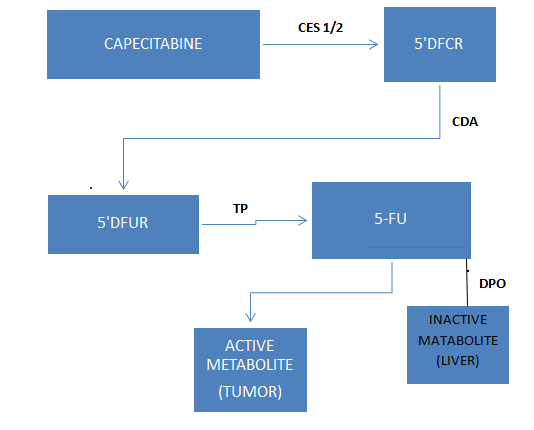
Capecitabine undergoes metabolism by carboxyl esterase and is hydrolysed to 5’-DFCR. 5’-DFCR is subsequently converted to 5’-DFUR by cytidine deaminase. 5’-DFUR is then hydrolysed by thymidine phosphorylase (dThd Pase) enzymes to the active metabolite fluorouracil.
Fluorouracil is subsequently metabolized by dihydropyrimidine dehydrogenase to 5-fluoro-5, 6-dihydro- fluorouracil (FUH2). The pyrimidine ring of FUH2 is cleaved by dihydropyrimidinase to yield 5-fluoro-ureido-propionic acid (FUPA). Finally, FUPA is leaved by β-ureido-propionase to α-fluoro-β-alanine (FBAL) [9].
Side Effects of Capecitabine
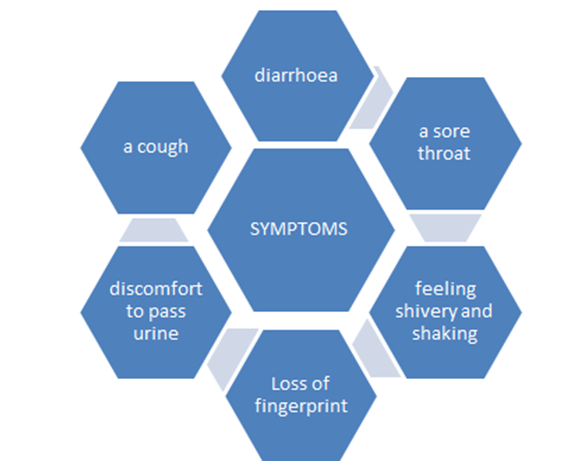
Side effects-This treatment can reduce the number of white blood cells in your blood. These cells fight infection if the number of white blood cells is low; you are more likely to get an infection. A low white blood cell count is sometimes called neutropenia. An infection can be very serious when the number of white blood cells is low. It is important to get any infection treated as soon as possible. Contact the hospital straight away on the 24-hour contact number you have been given if [10].
Capecitabine Induced Hand Foot Syndrome
Hand-foot syndrome is a common side effect of capecitabine treatment. The exact mechanism by which capecitabine leads to HFS is not fully understood, but it is believed to be related to the high concentrations of 5-FU in the hands and feet, which can cause damage to the small blood vessels in these areas.5-Fluorouracil (5-FU) is the fluorinated analog of uracil which was first synthesized in 1957. It belongs to the antimetabolite family and is a chemotherapeutic agent with activity against a variety of solid tumours, including head and neck, breast, prostate, pancreatic, liver, genitourinary and gastrointestinal tract carcinomas. When combined with radiation therapy, improved local control and survival rates have been reported in a variety of malignancies, compared to radiotherapy alone [11].
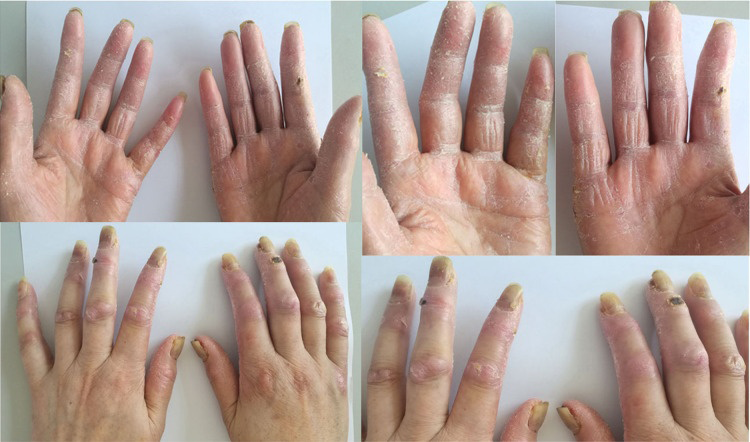
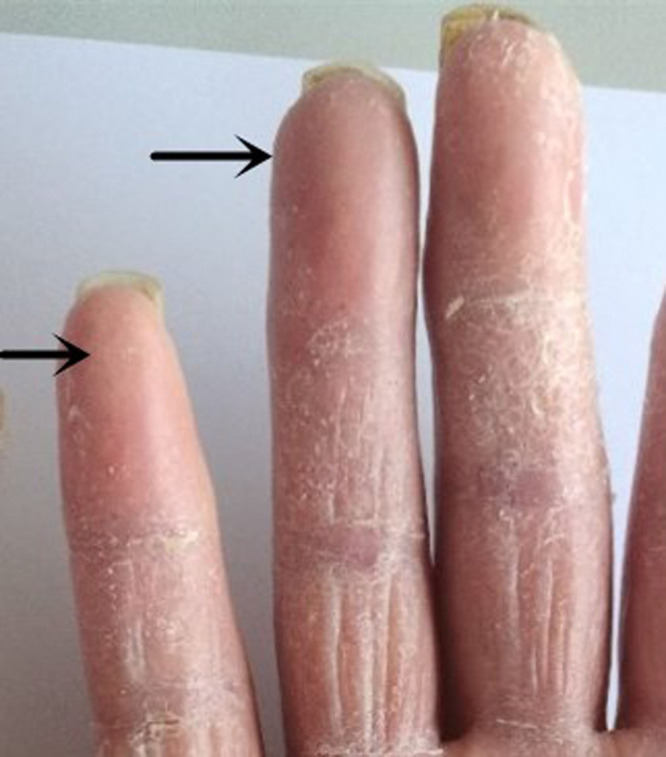
In the third cycle of chemotherapy, the patient developed limited use of her hands and feet. The dosage of capecitabine was subsequently reduced. No acute toxicity occurred, but the patient’s fingerprints disappeared. The authors believed that the loss of fingerprints in this patient was closely related to the HFS caused by Xeloda. After the second and third cycles of chemotherapy, and a grade 3 HFS and disappearance of fingerprints after the fifth and sixth cycles of chemotherapy [12].
Management and Prevention in Hand Foot Syndrome
Managing hand-foot syndrome involves a combination of preventive measures and symptomatic relief. Patients are advised to keep their hands and feet cool, elevate them when possible, and use moisturizers to prevent excessive dryness. Dose adjustments or drug changes may be considered if the condition becomes severe, it is essential to educate patients on preventive measures. These can include wearing comfortable, loose-fitting shoes, avoiding hot water exposure, using sunscreen on hands and feet, and maintaining well hand and foot hygiene. Patients should also be encouraged to report any symptoms to their healthcare provider promptly. Patients should be used a fragrance free lotion that does not contain alcohol, because alcohol can dry patient’s skin and worsen HFS symptoms. To avoid weeding a garden (gripping garden tools).Apply ice packs or cold compresses to your wrist and ankles to reduce blood flow to your hand and feet [13].
Diseases Impact on Patient And their Pain Management
Hand-foot syndrome can significantly impact a patient’s quality of life. Pain and discomfort can limit their ability to perform daily tasks, such as walking, typing, or handling objects. Emotional and psychological well-being can also be affected, as the visible symptoms can be distressing. Managing pain and discomfort is a crucial aspect of hand- foot syndrome treatment. Over-the-counter pain relievers or topical creams can be used to alleviate discomfort. However, it is important to consult a healthcare professional before using any medications. Avoid exposure to high temperatures around administration (e.g. bathing with hot water, vigorous exercise, wearing tight clothing and shoes). Referral to dermatologist for treatment of pre-existing dermatologic conditions.
Reduce Exposure of Hands and Feet to Friction and Heat by Avoiding the following
- Hot water (washing dishes, long showers, hot baths)
- Impact on your feet (jogging, aerobics, walking, jumping)
- Using tools that require you to squeeze your hand on a hard surface (garden tools, household tools, kitchen knives)
- Rubbing (applying lotion, massaging) [14].
Treating Hand-Foot Syndrome
When taking medications known to cause hand-foot syndrome, topical anti-inflammatory medications may help. These include corticosteroid creams such as clobetasol (multiple brand names) or halobetasol (Ultravate). In addition, your doctor may lower your chemotherapy dose or change your chemotherapy schedule. Your doctor may need to temporarily stop your chemotherapy until the symptoms of hand-foot syndrome get better.
The following Options can be used to Treat Hand-Foot Syndrome. • Topical pain relievers, such as lidocaine (multiple brand names). These are used as a cream or a patch over painful areas in the palms and soles.
• Topical moisturizing exfoliant creams are available, either over the counter or through your doctor. Those containing urea, salicylic acid, or ammonium lactate are most useful.
• Pain relievers, such as ibuprofen (multiple brand names), naproxen (multiple brand names), and celecoxib (Celebrex). Tell your doctor if you are already taking any of these or other non-steroidal anti-inflammatory drugs (NSAIDs).
• Ice packs under the hands and feet while chemotherapy is being given to prevent hand-foot syndrome from paclitaxel, docetaxel, or doxorubicin.
• Antidote use for the treatment of hand foot syndrome [15].
Case Report
1. A 75-year-old female with advanced gastric cancer and peritoneal metastasis was admitted to our hospital. In terms of treatment scheme selection, according to multi-disciplinary team’s advice, she was recommended to use chemotherapeutic drugs to treat illness. And since July 14, 2020, this patient has been treated with nab- paclitaxel combined tegafur and prior to each period; she was premeditated with 5 mg dexamethasone, 5 mg tropisetron, 50 mg diphenhydramine, and 150 mg fosapitan [16].
2. A 10yearold male patient reported to the department with the complaint of stains on his teeth since 1 month. The patient also complained of ulcers in the mouth since 1 week. History revealed the presence of fever and erythematous lesions on hands, legs, and in the mouth since 1 week. The patient had consulted a physician and was prescribed on medication for the same. Fever had subsided within few days. Vesicles ruptured, which contained a clear fluid leaving behind the healing scars on the hands and the legs. On examination the patient was moderately built and nourished. Healing lesions were noticed on the legs and hands. Intraoral examination revealed multiple ulcers on the gingiva, retro molar area of the left side, and on the soft palate. Vesicles and ulcers were observed in the lower labial mucosa. Ulcers had regular borders and were surrounded by an erythematous halo. Extrinsic stains were observed on the teeth surface. Based on the history and clinical features diagnosis of HFMD was arrived upon. Application of local anaesthetic agent was advised to provide relief from the discomfort. The patient was placed on soft diet. The patient was followed up and healing of all lesions was noticed within 1 week. Thorough oral prophylaxis was done. Informed consent was obtained from the patient for reporting the case [17].
3. A 16-day-old male infant was confronted with fever and quantity of maculopapular rashes on face, trunk, breech, arms, legs, palms, and feet for 3 days. He was breastfed and in touch with his sister with symptoms of fever previously. The laboratory findings revealed WBC 4.63 109/L, NEUT% 62.8%, PCT 0.52 ng/Dl,CRP 7.2mg/dL, CSF cell 220 106/L, both throat and CSF enterovirus positive, blood and CSF cultures negative. Antibiotic was administrated when admitted and stopped when the CSF turned normal and the cultures came out negative. Cranial magnetic resonance imaging (MRI) was normal [18].
Graphical Representation
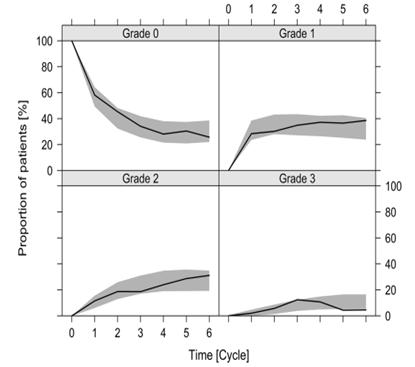
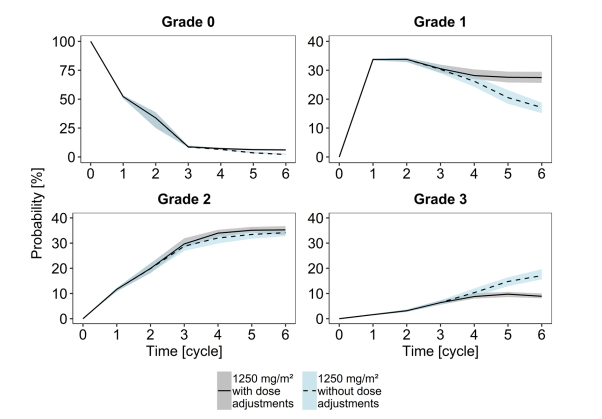
Figure 7: Solid Lines Indicate the Median Probability when Dose Adjustments were Performed According to the Capecitabine Smpc. Grey Shaded Areas are the Respective 95% Confidence Intervals of the Median. Dashed Lines Indicate the Median Probability when no Dose Adjustments were performed. Blue Shaded Areas are the Respective 95% Confidence Intervals of the Median.
Conclusion
In conclusion, hand-foot syndrome, a common side effect of certain chemotherapy drugs, can be a challenging and uncomfortable condition for patients. It’s characterized by symptoms such as pain, redness, and blistering on the palms of the hands and soles of the feet. Management and prevention strategies, including dose adjustments and skin care, play a crucial role in improving the quality of life for those affected by this condition. Close monitoring and communication with healthcare providers are essential to address symptoms promptly and minimize their impact on patients’ daily lives.
In the forensic science perspective, hand-foot syndrome, a side effect of certain medical treatments, can offer valuable insights into the medical history of a deceased individual. This condition, characterized by redness, swelling, and pain in the palms and soles, may indicate that the person had undergone cancer treatment or other relevant therapies. While it’s not a direct determinant of criminal activity, it plays a role in identifying individuals, shedding light on their health journey.
Hand-foot syndrome’s presence can assist forensic investigators in constructing a comprehensive profile of the deceased, contributing to their identification. However, it is crucial to recognize the temporal aspect of this syndrome concerning the individual’s death and consider it in conjunction with other forensic evidence and medical records. Ultimately, hand-foot syndrome serves as a valuable but supplementary piece of information that can aid forensic professionals in unravelling the complex narratives of the deceased in a broader context of forensic investigation.
References
-
Surjushe A, Vasani R, Medhekar S, Thakre M, Saple DG (2008) Hand-foot syndrome due to capecitabine. Indian J Dermatol 54(3): 301-302.
-
Zhao J, Zhang X, Cui X, Wang D, Zhang B, et al. (2020) Loss of Fingerprints as a Side Effect of Capecitabine Therapy: Case Report and Literature Review. Oncol Res 28(1): 103-106.
-
Polovich M, White JM, Kelleher LO (2009) Chemotherapy and Biotherapy Guidelines and Recommendations for Practice. In: Olsen M, et al. (Eds.), Oncology Nursing Society. 3rd (Edn.), Pittsburgh, Pennsylvania, pp: 658.
-
Amjad MT, Chidharla A, Kasi A (2023) Cancer Chemotherapy. StatPearls Publishing.
-
Demarco C (2021) Chemotherapy side effect: hand-foot syndrome (palmar-plantar erythrodysesthesia). MD Anderson cancer center.
-
Alqahtani S, Alzaidi R, Alsultan A, Asiri A, Asiri Y, et al. (2022) Clinical pharmacokinetics of capecitabine and its metabolites in colorectal cancer patients. Saudi Pharm J 30(5): 527-531.
-
Fine RL, Gulati AP, Krantz BA, Moss RA, Schreibman S, et al. (2013) Capecitabine and temozolomide (CAPTEM) for metastatic, well-differentiated neuroendocrine cancers: The Pancreas Center at Columbia University experience. Cancer Chemother Pharmacol 71(3): 663-70.
-
Jones KB, Goodwin AF, Landan M, Seidel K, Tran DK, et al. (2013) Characterization of X-linked hypohidrotic ectodermal dysplasia (XL-HED) hair and sweat gland phenotypes using phototrichogram analysis and live confocal imaging. Am J Med Genet A 161A(7): 1585- 1593.
-
Petty RD, Cassidy J (2004) Novel fluoropyrimidines: improving the efficacy and tolerability of cytotoxic therapy. Curr Cancer Drug Targets 4(2): 191-204.
-
Clark EM, Taylor HJ, Harding I, Hutchinson J, Nelson I, et al. (2014) Association between components of body composition and scoliosis: A prospective cohort study reporting differences identifiable before the onset of scoliosis. J Bone Miner Res 29(8): 1729-1736.
-
Wu R, Zhong W, Chen J, Dou X (2023) A novel large deletion mutation involving the PORCN gene in a Chinese patient with focal dermal hypoplasia and literature review. Int J Dermatol 62(9): 1164-1167.
-
Zhao J, Zhang X, Cui X, Wang D, Zhang B, et al. (2020) Loss of Fingerprints as a Side Effect of Capecitabine Therapy: Case Report and Literature Review. Oncol Res 28(1): 103-106.
-
Kwakman JJM, Elshot YS, Punt CJA, Koopman M (2020) Management of cytotoxic chemotherapy-induced hand -foot syndrome Oncol Rev 14(1): 442.
-
Pendharkar D, Goyal H (2004) Novel & effective management of capecitabine induced Hand Foot Syndrome. Journal of Clinical Oncology 22(14): 8105.
-
Jiaying L, Chang W, Yizhuo W, Linying X, Shijie Z, et al. (2023) A Case Report and Literature Analysis of Dorsal Hand-Foot Syndrome Induced with Albumin-Bound Paclitaxel. J Oncology 3(1): 1077.
-
Shin JU, Oh SH, Lee JH (2010) A Case of Hand-foot-mouth Disease in an Immunocompetent Adult. Ann Dermatol 22(2): 216-218.
-
Guo SJ, Wang DX, Dai CL, Wu H (2014) A neonate with hand, foot, and mouth disease complicated with brainstem encephalitis and pulmonary edema: a complete recovery. Pak J Med Sci 30(4): 917-919.
-
Schmulenson E, Krolop L, Simons S, Ringsdorf S, Ko YD, et al. (2020) Evaluation of patient-reported severity of hand–foot syndrome under capecitabine using a Markov modeling approach. Cancer Chemother Pharmacol 86(3): 435-444.
- Hydrogen Peroxide Scavenging by Methanolic Extracts of Coriander: An In Vitro Antioxidant Study
- Aromatherapy in Palliative Care: A Fragrant Quest for Relief
- Empowering Women, Securing Futures: Contraception’s Role in Socioeconomic Progress in India
- Effect of Crospovidone, Croscaramellose Sodium in Combination on the Drug Release of Anti diabetic Medication in Tablet Form
- Knowledge, Attitudes, Anxiety, and Preventive Behaviors Regarding Covid-19 Affliction among Healthcare Workers in Pakistan
- “Competitive Landscape and Brand Equivalents: Implications for ANDA (Abbreviated New Drug Application) Approval”