
Exploring the Role of Empathy in the Associations of Family Functioning and Purpose in Life with Attitude towards Abortion among Undergraduates: A Moderation Analysis
Although evidence exists on the impact of family functioning and purpose in life on attitudes toward abortion, studies examining factors that could moderate this link are sparse. The present study explored empathy as a moderator in the links between family functioning and purpose in life and attitude towards abortion among Nigerian undergraduates. Using a crosssectional design, 387 undergraduates aged 17-28years (77 male, 310 female; mean age = 20.82, SD = 2.07) were conveniently sampled. These participants completed relevant measures of family functioning, purpose in life, empathy, and attitudes towards abortion. The results revealed that family functioning, purpose in life, and empathy were significantly and positively associated with negative attitude towards abortion. Interestingly, empathy moderated the relationship between purpose in life and attitude towards abortion, such that undergraduates with high, moderate, and low levels of empathy had higher negative attitude towards abortion. These findings highlight the need for interventions that strengthen family support, promote a sense of purpose, and enhance empathy to shape informed attitude towards reproductive rights and healthcare services.
Abbreviations
IRB: Institutional Review Board; PIL: Purpose in Life Questionnaire; ECQ: Empathy Components Questionnaire; ABAS: Abortion Attitudes Scale.
Introduction
Abortion is a major global reproductive and public health concern globally [1]. It is a serious issue in the physical domain of human development, in the sense that life, which is expected to change progressively, is being destroyed or terminated. It has wide-ranging consequences for the physical, social, emotional, and psychological development and well- being of people, particularly undergraduate students, and is typically portrayed as a one-sided debate with opposing opinions [2, 3]. However, this simplistic framing ignores the complexities of the issue, as scholars and critics argue that abortion cannot be reduced to a simple pro-choice position (referring to the idea that women have the right to autonomy over their own bodies as well as informed decisions about their reproductive choices, health and well-being) or pro-life position (referring to the idea that Zygote/embryo/fetus is an animate structure that has the probability of becoming a human, so abortion ought to be an illegal action) because it involves complex ethical, legal, and social considerations [4, 5, 6, 7].
Abortion, referred to as the process of removing the fetus from the womb, resulting in pregnancy termination [1], can be induced (if it is artificially performed for therapeutic or personal reasons) or not induced (when it occurs spontaneously and miscarriage occurs) [8]. Abortion can also be considered safe (if performed in hospitals) and unsafe (when performed outside hospitals, probably due to restrictive laws and social stigma attached) [9]. Evidence shows that unsafe abortions are common in developing countries [1]. With 15% of unsafe abortions occurring among females under the age of 20, abortion is a major global public health concern, particularly among adolescents [10].
Between 2015 and 2019, an estimated 73 million abortions occurred each year globally, reflecting a 61% increase in unwanted pregnancies resulting in abortion since the 1990s [9, 11].
In Nigeria, the prevalence of abortion among female undergraduates is estimated at 79.5% [12], thus posing a serious threat due to its social and health consequences which include decreased educational attainment, maternal mortality, infertility, and lasting health problems [13]. Nigeria has some of the toughest abortion laws in the world, making it illegal except in life-threatening instances: abortion doctors, risk up to 14 years in prison, collaborators face three years, and abortion patients face seven years [14, 15, 16, 17]. Beyond these legal restrictions, social norms and personal beliefs influence abortion attitudes in Nigeria, limiting access to reproductive healthcare [17]. Young adult females are expected to remain in chaste until marriage, and premarital pregnancies are stigmatized and have serious cultural consequences [18]. Pregnant unmarried young adult females may face familial rejection, financial difficulties, academic failure, and public humiliation [19, 20]. Many of them seek abortions to avoid financial problems and social stigma [21, 22]. Strict societal views contribute to poor sexual and reproductive health (SRH) outcomes despite the fact that some legislative frameworks provide access to safe abortion [23, 24]. Many girls experience coercive parenting, unwanted pregnancy continuation, and failed abortion attempts in restrictive settings [25].
Given the greater prevalence of abortion among adolescents and young adults [26, 27] and its significant consequences, it calls for an examination of the factors that could impact attitude towards abortion among undergraduates, which comprise mostly adolescents and young adults. The present study considered family functioning and purpose in life as two factors. The study further aimed to explore whether empathy moderates the association between family functioning and purpose in life with abortion attitudes. These findings can inform tailored interventions aimed at enhancing the reproductive health of undergraduates.
According to Roncone R, et al. [28], family functioning is the quality of interactions between family members and their ability to adapt to obstacles while maintaining a nurturing environment. Relatively few studies have examined how family functioning influences attitudes towards abortion. However, studies have investigated related subjects, such as how family dynamics influence reproductive choices or how society perceives abortion. For instance, studies have found that adolescents from cohesive and communicative families reported more supportive parental involvement when seeking abortions, suggesting that positive family dynamics promote candid conversations about reproductive choices [29, 30]. Conversely, dysfunctional family situations may result in negative views of abortion since family attitudes frequently impact personal beliefs [31]. Furthermore, Osborne D, et al. [3] found that opposition to abortion is linked to gender- role beliefs and traditional family structures, emphasizing the significance of familial ideology in shaping views on abortion. Pacheco and Kreitzer [31] found that people whose mothers believe in traditional gender roles were more likely to reject legal abortion than those whose mothers believe in progressive values. Moreover, Arambepola, et al. [32] revealed that women with larger families or closely spaced pregnancies might engage in unsafe abortion procedures regardless of their socioeconomic position. Research on how family functioning affects attitudes towards abortion, particularly in the undergraduate population, is lacking.
This study further considers purpose in life as a factor that affects attitude towards abortion among undergraduates. Purpose in life refers to a person’s sense of meaning in life, which encompasses their understanding of their own values and contributions to the world [33, 34, 35]. Numerous positive outcomes have been linked to a strong sense of purpose in life, including increased psychological well-being and meaning-making [36], resilience to stress [37], engagement in healthier behaviors such as physical activity and quitting smoking [38], and greater perceived support and security during crises [39]. There appears to be a scarcity of studies directly examining the relationship between an individual’s sense of purpose in life and their attitude towards abortion. Religion, political affiliation, cultural norms, purpose-driven advocacy, and increased awareness of reproductive justice are among the factors that have been extensively researched in relation to abortion attitudes [40, 41]. However, little is known about how a people’s perceived meaning or purpose in life influences their attitudes. This gap suggests the need to explore how purpose in life could influence people’s attitudes toward difficult moral and societal issues, such as abortion. We aimed to bridge this gap in the literature.
The moderating role of empathy in the associations of family functioning, purpose in life and abortion attitudes is another important pathway examined in this study. Empathy, which refers to a wide range of cognitive and affective responses to other people’s experiences, including sharing and understanding [42], has been linked to prosocial activities such as caring for others [43, 44] and a decline in stigma and conflict [45, 46]. Because individuals frequently show empathy for both pregnant women and unborn children, research has shown that opinions on abortion tend to remain consistent across time [47, 48, 49].
Embree RA [50] demonstrated that participants’ empathy for the unborn was moderate in 64% of cases and high in 17% of abortion cases. Cheng J, et al. [51] found that empathy for the pregnant woman was positively associated with support for both traumatizing abortions (like pregnancies caused by rape) or elective (like when a mother decides she no longer wants the child), whereas empathy for the unborn revealed a negative relationship across the abortion categories. Although scholars have called for the inclusion of empathy in mental health interventions related to abortion [52], the role of empathy in attitude towards abortion remains underexplored.
The role of empathy in moderating the impact of family functioning and purpose in life on attitude towards abortion can be best understood through the lens of moral foundation Theory [53, 54, 55]. This theory posits that individuals’ moral judgments are influenced by innate modular foundations, which are shaped by cultural and social contexts [53, 54, 55]. Within this framework, empathy may moderate the link between family functioning, meaning in life, and abortion attitudes by influencing individuals’ moral reasoning. In families with high open communication and emotional bond, empathy may encourage care- and fairness-based moral reasoning that is reflected in more empathetic abortion attitudes [56, 57]. By contrast, tight or dysfunctional families with high levels of loyalty, authority, and sanctity may internalize stronger moral absolutism and therefore generate more restrictive attitudes toward abortion [58, 59, 60].
Moreover, undergraduates who perceive their life as meaningful tend to solve moral issues such as abortion with respect to others’ well-being [40, 61]. However, to what extent purpose in life translates into empathetic abortion attitudes may be contingent on individual levels of empathy, depending on whether the empathy is directed towards the pregnant woman or the fetus [47, 48, 49, 51]. In addition, highly empathic individuals may extend their sense of purpose in empathy and contribute to challenging moral dilemmas to the point that more sophisticated abortion perceptions are facilitated [62]. Individuals with a high sense of purpose and low empathy can rigidly adhere to ideological beliefs to the extent that less empathic abortion perceptions are enhanced [63]. Thus, empathy may be a significant moderator that determines whether family functioning and a sense of purpose contribute to open-mindedness or reinforce rigid moral assumptions in relation to abortion.
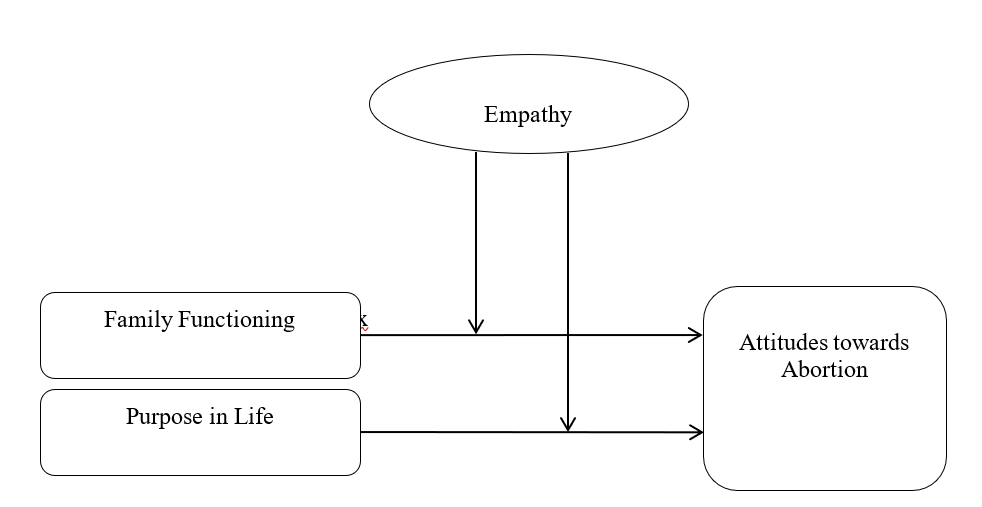
To the best of our knowledge, this study is the first to examine empathy as a moderator in the links between family functioning and purpose in life with attitude towards abortion. It is thus hypothesized that (a) family functioning will predict attitude towards abortion among undergraduates, (b) purpose in life will predict attitude towards abortion among undergraduates, (c) empathy will predict attitude towards abortion among undergraduates, (d) empathy will significantly moderate the link between family functioning and attitude towards abortion among undergraduates, and (e) empathy will significantly moderate the link between purpose in life and attitude towards abortion among undergraduates.
Methods
Participants and Procedure
Participants for the present study were 387 undergraduates aged 17 to 28 years (mean age = 20.82, SD = 2.07) from the University of Nigeria Nsukka. Participants were selected using convenience sampling. Of the total sample, 77 were males and 310 were females. Participation in the study was voluntary. Regarding religion, the majority (98.4%, n=381) were Christians, Muslims were represented with 1.3% (n=5) while 3% (n = 1) were others. The Institutional Review Board (IRB) of the University of Nigeria approved the study protocol and procedures. The data collection for this study was aided by two trained research assistants. The researchers approached the participants in their faculty quadrangles, classrooms, lodges, and hostels. Only individuals who consented were given the survey to complete, as participation was entirely voluntary. The researchers informed the participants about the nature of the study, the tasks they would perform, and the identity of the researchers. Participants were informed that their personal information would be kept confidential and that they could withdraw from the study at any time without facing any consequences. In addition, they were urged to be as honest as possible in their responses.
The ability to read and comprehend English, as well as being an undergraduate, constitutes the criteria for inclusion in this study. Given that all the questionnaire items were written in simple English, the majority of participants had no trouble understanding them. Each participant required approximately 30 to 45 minutes to complete all questionnaire items. As soon as the participants completed the questionnaire, they returned it. Data collection ran between early December 2023 and late February 2024. Four hundred and twenty (420) copies of the questionnaire were administered to the participants individually, but only 400 copies (98.59%) of the total questionnaire, were completed and returned to the researchers. Three hundred and eighty-seven (387) copies were used for the analysis due to incomplete data.
Instruments
Purpose in Life Questionnaire (PIL)
The PIL scale, developed by Crumbaugh JC, et al. [64], is a 20-item measure of a person’s sense of meaning and purpose in life. The PIL particularly assesses people’s perceptions of the purpose and direction of their life, drawing from Viktor Frankl’s existential psychology and logotherapy [65]. It is a 4-point Likert scale, with 1 denoting “strongly disagree” and 5 denoting “strongly agree.” Higher scores indicate a greater sense of purpose, whereas lower scores suggest existential frustration or loss of meaning in life (frequently linked to Viktor Frankl’s concept of noogenic neurosis). PIL has been validated in a number of studies, including undergraduate populations in various cultural situations. For example, in the U.S. sample of undergraduates, Schulenberg SE, et al. [66] reported a Cronbach’s alpha of.86 for the PIL-Short Form while Temane L, et al. [67] reported a Cronbach’s alpha of .85 in a South African undergraduate sample, indicating good internal consistency. In the present study, the items yielded high internal consistency reliability, with a Cronbach alpha of .79.
Abortion Attitudes Scale (ABAS)
The ABAS, developed by Taylor MG, et al. [68], is a 12-item measure that assesses support or opposition to abortion. It asked respondents if they agreed or disagreed with statements regarding abortion rights, accessibility, and ethical considerations using a 4-point Likert scale, with 1 denoting “strongly agree” and 4 denoting “strongly disagree.” Higher scores on this scale indicate less support for abortion (i.e., higher scores reflect more opposition to abortion). Sample items include: “Abortion is not acceptable under any circumstances,” and “It is better to have the baby and put it up for adoption than an abortion. ”Taylor MG, et al. [68] reported a Cronbach’s alpha of .92 for the ATAS, indicating high internal consistency. The ABAS has been utilized across various samples of young people and has been found to be robust in assessing young adults’ attitude towards abortion. For example, Tutic-Groksa I, et al. [69] found an excellent reliability coefficient (Cronbach’s alpha) of .92, indicating high internal consistency. In the present study, the ABAS items yielded a high internal consistency reliability (Cronbach’s alpha) of .79.
Empathy Component Questionnaire (ECQ)
Batchelder L, et al. [70] developed the Empathy Components Questionnaire (ECQ), a 28-item measure that assesses individual differences in empathy across cognitive and affective domains. The ECQ assesses drive (motivation) and ability (capacity) within the cognitive and affective components of empathy using a 4-point Likert scale ranging from 1 (“strongly disagree”) to 4 (“strongly agree”). The items were adapted from well-known empathy measures, specifically, 22 items from the Empathy Quotient’s (EQ-Short) short form, which was based on the original 60-item EQ. Sample items include “It is easy for me to understand why other people feel the way they do” and “I try to look at everybody’s side of a disagreement before I make a decision.” Batchelder, et al. [70] reported that the subscales’ Cronbach’s alpha coefficients ranged from .73 to .80, indicating good internal consistency in their initial validation study. The reliability of the ECQ was further assessed in subsequent studies. For example, Ge, et al. [71] found that the total scale had Cronbach’s alpha values of .89, with subscale alphas of .83 for cognitive ability, .80 for cognitive drive, .84 for affective ability, and .81 for affective drive, indicating good internal consistency. Ge, et al. [71] reported that the total reliability coefficient supports the use of the ECQ composite score. With a Cronbach’s alpha of .70, the ECQ showed acceptable internal consistency in the present study.
Family Functioning Questionnaire (FFQ)
The Family Functioning Questionnaire (FFQ), a 24-item self-report tool developed by Roncone R, et al. [28], assesses family functioning within the context of psychoeducational family interventions. The FFQ assesses three primary dimensions: personal, communicative, and problem- solving abilities. A 4-point Likert scale, with 1 denoting “strongly disagree” and 4 denoting “strongly agree,” was used to rate each item; higher scores indicated better family functioning. “In our family, we discuss problems and look for solutions together” (Problem-Solving), “Family members express their feelings openly” (Communication Skills), and “We support each other in achieving Personal Goals” (Personal Goals) are a few examples of the FFQ items. With Cronbach’s alpha coefficients of .84 for the total scale and.83 for Problem-Solving, .71 for Communication Skills, and .66 for Personal Goals, Roncone R, et al. [28] initial validation study showed acceptable internal consistency for the subscales and supported the use of the FFQ as a composite scale. The FFQ has been used to evaluate family dynamics in several studies, proving its usefulness in a range of settings. For instance, Zebrea T, et al. [72] reported a Cronbach’s alpha of .82 for the total scale for Ethiopian sample, indicating good internal consistency. In the present study, the FFQ demonstrated a Cronbach’s alpha of .84 for the total scale, confirming its reliability in assessing family functioning.
Design and Statistics
A sample size of approximately 108 respondents was deemed adequate by an a priori power analysis (G*Power 3.1.9.7) based on the expected effect size (f2 =.10) with an alpha level of .05, and a statistical power of .90 [73]. This study used a cross-sectional survey design. The correlations between the variables were examined using Pearson’s correlation analysis, and the study’s hypotheses were tested using the Hayes PROCESS Macro-based moderation analysis. Moderation analysis allows for a more thorough examination of complex relationships in data, providing vital insights into the underlying mechanisms and external variables that influence results [74].
Results
In Table 1, family functioning was positively correlated with purpose in life (r = .56, p<.01), empathy (r = .25, p<.01), and attitude towards abortion (r = .28, p<.01), meaning that undergraduates with better family functioning were more likely to be empathic and opposed abortion. Similarly, purpose in life was positively correlated with empathy (r = .27, p<.01) and attitude towards abortion (r = .25, p<.01). Moreover, empathy was positively related to attitude towards abortion (r = .28, p<.01). The correlation between age and level of study was positive and significant (r = .59, p<.01), but age was negatively correlated with attitude towards abortion (r = -.17, p<.01). Gender was positively correlated with purpose in life (r = .17, p<.01), empathy (r = .31, p<.01), and attitude towards abortion (r = .14, p<.01), indicating that female students found more meaning in life, were more empathic, and had more oppositional attitude towards abortion compared to their male counterparts, reflecting more opposition to abortion). The level of study was negatively related to attitude towards abortion (r = -.13, p<.01), indicating that students with higher levels of education held less opposition towards abortion. Marital status was not related to any of the study variables.
| Variables | M | SD | 1 | 2 | 3 | 4 | 5 | 6 | 7 | 8 | |
|---|---|---|---|---|---|---|---|---|---|---|---|
| 1 | Age | 20.82 | 2.07 | - | |||||||
| 2 | Gender | - | - | 39 | - | ||||||
| 3 | LOS | - | - | .59** | -0.06 | - | |||||
| 4 | Marital Status | - | - | 0.03 | -0.04 | -0.08 | - | ||||
| 5 | Family Functioning | 73.12 | 7.43 | -0.01 | 0.1 | -0.08 | -0.01 | - | |||
| 6 | Purpose in Life | 75.74 | 8.97 | -0.03 | .17** | -0.07 | -0.04 | .56** | - | ||
| 7 | Empathy | 79.23 | 8.25 | 0.02 | .31** | 0.03 | 0.01 | .25** | .27** | - | |
| 8 | Abortion Attitude | 40.27 | 6.01 | -.17** | .14** | -.13** | -0.06 | .28** | .25** | .28** | - |
Table 1: Pearson’s correlations of demographics, family functioning, purpose in life, empathy and attitude towards abortion among
| Variables | B | Β | T | P | 95% CI | R2 | F |
|---|---|---|---|---|---|---|---|
| Family Functioning | |||||||
| Age | -0.41 | 0.17 | -2.4 | 0.017 | [-.75, -.07] | 0.16 | 11.72(6, 377)*** |
| Gender | 0.48 | 0.76 | 0.63 | 0.527 | [-1.01, 1.96] | ||
| Level of Study | -0.18 | 0.3 | -0.6 | 0.547 | [-.76, .41] | ||
| Family Functioning (FF) | 0.17 | 0.04 | 4.28 | 0 | [.09, .25] | ||
| Empathy (E) | 0.15 | 0.04 | 4.08 | 0 | [.08,.23] | ||
| (FF) x (E) | 0.01 | 0 | 1.17 | 0.241 | [-.00, .01] | ||
| Purpose in Life | |||||||
| Purpose in Life (PL) | 0.11 | 0.03 | 3.29 | 0.001 | [.05, .18] | 0.15 | 10.77(6, 377)*** |
| Empathy (E) | 0.16 | 0.04 | 4.27 | 0 | [.09, .23] | ||
| (PL) x (E) | 0.01 | 0 | 2.16 | 0.032 | [.00, .01] |
Table 2: The Hayes PROCESS Macro results for prediction of attitude towards abortion among undergraduates by family functioning,
In Table 2, age, gender and level of study were added as covariates. Age was significantly associated with attitude towards abortion (β = .17, p<.05). The B showed that older undergraduates had more opposition to abortion. Gender (β = .76, p>.05) and level of study (β = .30, p>.05) were not significantly associated with attitude towards abortion. Family functioning was significantly associated with attitude towards abortion (β = .04, p<. 001).
The B showed that each unit increase in family functioning was associated with .17 unit increase in attitude towards abortion, indicating that undergraduates with better family functioning were more likely to exhibit oppositional attitude towards abortion. Empathy was significantly associated with attitude towards abortion (β = .04, p<.001). The B showed that each unit rise in empathy was associated with .15 unit increase in attitude towards abortion.
These results indicate that family functioning and empathy are associated with more oppositional attitude towards abortion. The interaction between family functioning and empathy for attitude towards abortion was not significant (β = .00, p>.05), indicating that empathy did not moderate the relationship between family functioning and attitude towards abortion among undergraduates.
The R2 of .16 for the model indicated that 16% of the variance attitude towards abortion were explained on account of the entire variables, {F (6, 377) = 11.72}. In Table 2, purpose in life was significantly associated with attitude towards abortion (β = .03, p< .01). The B showed that each unit increase in purpose in life was associated with .11 unit increase in attitude towards abortion, indicating that undergraduates with higher purpose in life were more likely to hold oppositional attitude towards abortion.
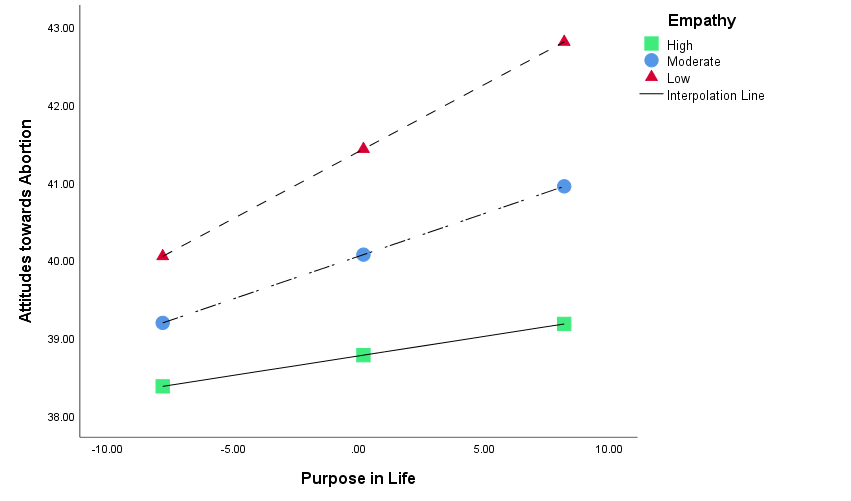
The interaction between purpose in life and empathy on attitude towards abortion was significant (β = .00, p>.05), indicating that empathy moderated the relationship between purpose in life and attitude towards abortion. The slope of the interaction shown in Figure 1 indicates that purpose in life was significantly related to attitude toward abortion for undergraduates who were high, moderate, and low in empathy.
Specifically, undergraduates with low empathy exhibited a stronger positive association between purpose in life and anti-abortion attitude. Conversely, for individuals with high empathy, purpose in life was only weakly related to abortion attitudes, suggesting a potential weakening effect of higher empathy in the link between purpose in life and attitude towards abortion.
The R2 of .15 for the model indicated that 15% of the variance on attitude towards abortion were explained on account of the entire variables, {F (6, 377) = 10.77} Figure 2.
Discussion
The main aim of this study was to investigate whether empathy moderates the relationship between family functioning and purpose in life and attitude towards abortion among Nigerian undergraduates. Consistent with previous studies on the impact of family dynamics on abortion attitudes [30, 31, 32, 33], the researchers found that family functioning is associated with oppositional attitude towards abortion. Thus, our findings support our hypothesis that family functioning predicts attitude towards abortion among undergraduates. The positive communication, emotional support, and shared values that undergraduates from functional families may internalize are likely to encourage more conservative or oppositional views on abortion. This may be explained by the moral principles that are valued in harmonious family settings, such as the value of life and authority, which frequently influence people’s moral frameworks for making decisions [53].
Thus, families that prioritize emotional closeness, open communication, and shared values may cultivate a sense of moral obligation that results in more anti-abortion attitudes [75]. It may be that when individuals grow up in environments where values are strongly articulated and reinforced, their attitude towards abortion become more ideologically rigid. Such environments may limit exposure to alternative perspectives, further reinforcing conservative views of abortion. By contrast, individuals from dysfunctional or less supportive family structures may experience more ambivalence or less defined stances on the issue, as they may lack the moral coherence and guidance provided by more cohesive family dynamics.
Furthermore, the researchers found that undergraduates with a higher purpose in life were more likely to hold oppositional attitude towards abortion. This finding supports the hypothesis that purpose in life predicts attitude towards abortion among undergraduates. Extant study findings indicate that having a strong sense of purpose in life is linked to psychological well-being, stress resistance, and adopting healthy behaviours [36, 37, 38, 39]. The relationship between meaning of life and moral or cultural dilemmas, such as abortion, has not received much attention. This study bridges this gap by demonstrating that undergraduates with a stronger sense of purpose may approach moral decisions with a more rigid belief system, potentially leading to more opposition to issues such as abortion. Our findings indicate that undergraduates’ moral opinions are influenced by their life’s purpose. People with a strong sense of purpose may take stricter positions on issues such as abortion, which usually require complex moral and ethical conflicts, since they are more committed to their beliefs [36].
Additionally, the hypothesis that empathy would significantly predict attitude towards abortion among undergraduates was supported by the findings that higher scores on empathy were associated with more oppositional attitude toward abortion. This finding is consistent with some extant literature [63, 47] that demonstrated empathy to be associated with oppositional views of abortion. However, this does not align with other study findings [56, 57], which have linked empathy to supportive attitude towards abortion. The present findings suggest that moral reasoning regarding controversial issues, such as abortion, may be significantly impacted by individual differences in empathy levels. The finding that higher empathy levels are linked to stronger anti-abortion attitudes suggests that undergraduates who respond more sympathetically are more likely to hold moral absolutist views, especially when it comes to matters involving life sanctity. This implies that people may filter their moral and ideological beliefs through empathy, reinforce preconceived ideas, or endorse more rigid moral stances. People with high empathy may oppose abortion probably because, putting themselves in the shoes of the embryo or fetus to be terminated or the pregnant mother who could lose her life particularly in the case of unsafe abortion, could feel opposed to abortion at the mere thought of it.
The researchers further found that empathy did not moderate the relationship between family functioning and attitude towards abortion among undergraduates. Therefore, the hypothesis that empathy will significantly moderate the link between family functioning and attitude towards abortion among undergraduates was not supported by the findings. One possible explanation for this finding is that family functioning, while influential in shaping moral beliefs [53, 54], may exert a more direct influence on abortion attitudes without the need for empathy as a moderating factor. When family cohesion is strong, prescriptive norms and moral frameworks may be internalized so deeply that they override dispositional characteristics such as empathy. In such cases, loyalty to family-derived values may overshadow empathetic concern for the individuals directly involved in an abortion decision, thereby rendering empathy’s potential moderating role negligible. The findings suggest that the attitudes of these undergraduates toward abortion may already be significantly influenced by family norms and values, such that empathy becomes an insignificant factor influencing their views, especially if they come from harmonious or healthy family systems. This interpretation aligns with evidence that in collectivist or tightly knit family contexts, intergenerational value transmission can dominate individual difference variables when forming moral judgments [58, 59, 60]. It could be inferred that family dynamics, such as open communication and emotional support, may directly foster particular opinions about abortion, such that the moderating role of empathy may be less significant in this case. This suggests that family functioning itself may have a stronger impact on attitude towards abortion than empathy does, particularly when the family context is already supportive or protective of specific moral positions.
Finally, it was found that empathy significantly moderated the relationship between purpose in life and attitude towards abortion, thus supporting the hypothesis that empathy would significantly moderate the link between purpose in life and attitude towards abortion among undergraduates. Specifically, the researchers found that undergraduates with low empathy exhibited a stronger positive association between purpose in life and anti-abortion attitudes, whereas those with high empathy and purpose in life were only weakly related to abortion attitudes. This finding suggests that undergraduates with a high sense of purpose in life may typically hold more structured, value-driven beliefs [36, 37], but their views on abortion may be tempered by the level of empathy they feel toward others involved in the issue and may be unborn children [51]. By contrast, individuals with low empathy may have more rigid, ideologically driven views on abortion, where their sense of purpose reinforces a strong opposition to abortion, regardless of empathetic considerations.
These findings contribute to the ongoing discussion on Moral Foundations Theory [53, 55], suggesting that undergraduates with a strong sense of purpose may approach moral dilemmas, such as abortion, with a focus on care and fairness if they have high empathy, leading to more nuanced or open-minded views on abortion [62]. On the other hand, individuals with low empathy may adhere more strictly to moral absolutism, resulting in more rigid, anti-abortion attitudes [58, 59]. The researchers urge stakeholders, such as policymakers, healthcare providers, educators, and mental health professionals, to prioritize open, empathetic communication, and evidence-based education when addressing attitude towards abortion. Policymakers should create inclusive and non-coercive policies that respect individuals’ autonomy, while considering the diverse moral and cultural contexts that shape public opinion. Healthcare providers must ensure that they offer non-judgmental and comprehensive reproductive health services, provide accurate information about abortion, and address the emotional and psychological needs of those seeking assistance. Evidence exists regarding the effectiveness of this approach [76, 77]. Educators are encouraged to integrate discussions about reproductive rights, family dynamics, and empathy into curricula, fostering critical thinking and respect for differing perspectives, as this has been shown to be effective [78, 79]. Finally, mental health professionals should offer support to individuals grappling with complex emotions regarding abortion, helping them navigate the psychological consequences of their decisions, and ensuring that their mental well-being is prioritized. Together, these stakeholders can contribute to a more informed, compassionate, and supportive environment for individuals navigating difficult decisions regarding abortion.
Although the present study provides valuable insights into the relationship between purpose in life, empathy, family functioning, and attitude towards abortion, it also has some limitations. This study relied on self-report measures and a cross-sectional design, which limits the ability to draw causal conclusions. Future research could build on these findings by using longitudinal designs to explore how changes in purpose in life and empathy over time influence attitudes toward abortion. Also, future research could examine how factors such as political beliefs, religious convictions, and cultural background interact with life’s purpose to influence attitude towards abortion among undergraduates. Additionally, investigating potential moderators or mediators, such as moral reasoning and social support, could provide a more nuanced understanding of the factors that shape abortion attitudes among undergraduates. Despite these limitations, the present study contributes significantly to the understanding of how purpose in life and empathy influence attitude towards abortion, particularly among undergraduate students. By highlighting the role of family functioning and empathy in shaping moral perspectives on abortion, it opens up avenues for further exploration of how individual factors, such as life purpose and emotional responses, interact with cultural and familial influences. These findings provide a foundation for future research and practical applications in educational, healthcare, and counseling settings.
Conclusion
In summary, the findings contribute to the understanding of the complex relationship between empathy, family functioning, purpose in life, and attitude towards abortion. While empathy was directly associated with more oppositional attitude towards abortion, it did not moderate the relationship between family functioning and attitude toward abortion. However, empathy played a significant moderating role in the relationship between purpose in life and abortion attitudes, highlighting that individuals with a high sense of purpose may experience different abortion attitudes, depending on their level of empathy. These findings underscore the importance of considering empathy as a dynamic factor that shapes individuals’ moral reasoning, particularly in relation to complex societal issues, such as abortion. Future research should explore the underlying mechanisms by which empathy interacts with personal values and family dynamics to influence moral attitudes.
Ethics Declarations
Ethics Approval
All study procedures were approved by the Institutional Review Board (IRB) of the University of Nigeria.
Data Availability Statement
The data for this study are from the authors and can be made available upon request.
Funding
No funding was received for this study.
References
-
Hu JX, Chang R, Du JQ, He M (2024) Attitudes of medical students towards abortion and their willingness to perform abortion: Meta-analysis. African Health Sciences 24(3): 242-250.
-
Kimport K (2021) No real choice: How culture and politics matter for reproductive autonomy. Rutgers University Press.
-
Osborne D, Huang Y, Overall NC, Sutton RM, Petterson A, et al. (2022) Abortion attitudes: An overview of demographic and ideological differences. Political Psychology 43: 29-76.
-
Borgmann CE (2009) The meaning of life: Belief and reason in the abortion debate. Columbia Journal of Gender & Law 18(2): 551-568.
-
Clifton S (2021) Disability and the complexity of choice in the ethics of abortion and voluntary euthanasia. The Journal of Medicine and Philosophy 46(4): 431-450.
-
Jozkowski KN, Crawford BL, Hunt ME (2018) Complexity in attitudes toward abortion access: Results from two studies. Sexuality Research and Social Policy 15(4): 464- 482.
-
Matthews AA, Kreitzer RJ (2021) How personal beliefs and identity affect bodily autonomy attitudes. University of Detroit Mercy Law Review 99(3): 373-423.
-
Olaitan O (2011) Attitudes of university students towards abortion in Nigeria. International Journal of Tropical Medicine 6: 52-57.
-
Bell SO, Shankar M, Moreau C (2021) Global epidemiology of induced abortion. Oxford University Press.
-
Espinoza C, Samandari G, Andersen K (2020) Abortion knowledge, attitudes and experiences among adolescent girls: A review of the literature. Sexual and Reproductive Health Matters 28(1): 1744225.
-
Bearak J, Popinchalk A, Ganatra B, Moller AB, Tunçalp Ö, et al. (2020) Unintended pregnancy and abortion by income, region, and the legal status of abortion: Estimates from a comprehensive model for 1990–2019. The Lancet Global Health 8(9): e1152-e1161.
-
Center for Reproductive Rights (2020) The world’s abortion laws. CRR.
-
Akande OW, Adenuga AT, Ejidike IC, Olufosoye AA (2020) Unsafe abortion practices and the law in Nigeria: Time for change. Sexual and Reproductive Health Matters 28(1): 1758445.
-
Bankole A, Adewole IF, Hussain R, Awolude O, Singh S, Akinyemi JO (2015) The incidence of abortion in Nigeria. International Perspectives on Sexual and Reproductive Health 41(4): 170–181.
-
Guttmacher Institute (2015). Abortion in Nigeria. USA.
-
Katz AJ, Ramirez AM, Bercu C, Filippa S, Dirisu O, et al. (2022) I just have to hope that this abortion should go well: Perceptions, fears, and experiences of abortion clients in Nigeria. Plos One 17(2): e0263072.
-
Kasso T, Obidinnu EN (2022) Knowledge and prevalence of induced abortion among female undergraduates in Port Harcourt, Southern Nigeria. International Journal of Reproduction, Contraception, Obstetrics and Gynecology, 11: 1854-1860.
-
Familusi OO (2012) African culture and the status of women: The Yoruba example. The Journal of Pan African Studies 5(1): 299-313.
-
Oyeniran AA, Bello FA, Oluborode B, Awowole I, Loto OM, et al. (2019) Narratives of women presenting with abortion complications in Southwestern Nigeria: A qualitative study. Plos One 14(5): e0217616.
-
Onyeka IN, Miettola J, Ilika AL, Vaskilampi T (2011) Unintended pregnancy and termination of studies among students in Anambra state, Nigeria: Are secondary schools playing their part. African Journal of Reproductive Health 15(2): 109-116.
-
Gelman A, Rosenfeld EA, Nikolajski C, Freedman LR, Steinberg JR, et al. (2017) Abortion stigma among low‐income women obtaining abortions in western Pennsylvania: A qualitative Assessment. Perspectives on Sexual and Reproductive Health 49(1): 29-36.
-
Hanschmidt F, Linde K, Hilbert A, Riedel‐Heller SG, Kersting A (2016) Abortion stigma: A systematic review. Perspectives on Sexual and Reproductive Health 48(4): 169-177.
-
Bell SO, Omoluabi E, OlaOlorun F, Shankar M, Moreau C (2020) Inequities in the incidence and safety of abortion in Nigeria. BMJ Global Health 5(1): e001814.
-
Ushie BA, Juma K, Kimemia G, Ouedraogo R, Bangha M, et al. (2019) Community perception of abortion, women who abort, and abortifacients in Kisumu and Nairobi counties, Kenya. Plos One 14(12): e0226120.
-
Casas X (2019) They are girls, not mothers: The violence of forcing motherhood on young girls in Latin America. Health and Human Rights 21(2): 157-167.
-
Ayamolowo LB, Ayamolowo SJ, Adelakun DO, Adesoji BA (2024) Factors influencing unintended pregnancy and abortion among unmarried young people in Nigeria: A scoping review. BMC Public Health 24(1): 1494.
-
Onukwugha FI, Magadi MA, Sarki AM, Smith L (2020) Trends in and predictors of pregnancy termination among 15–24 year-old women in Nigeria: A multi-level analysis of demographic and health surveys 2003–2018. BMC Pregnancy and Childbirth 20: 1-13.
-
Roncone R, Mazza M, Ussorio D, Pollice R, Falloon IR, et al. (2007) The questionnaire of family functioning: A preliminary validation of a standardized instrument to evaluate psychoeducational family treatments. Community Mental Health Journal 43: 591-607.
-
Griffin-Carlson MS, Schwanenflugel PJ (1998) Adolescent abortion and parental notification: Evidence for the importance of family functioning on the perceived quality of parental involvement. Journal of Child Psychology and Psychiatry 39(4): 543-553.
-
Hasselbacher LA, Dekleva A, Tristan S, Gilliam ML (2014) Factors influencing parental involvement among minors seeking an abortion: A qualitative study. American Journal of Public Health 104(11): 2207-2211.
-
Pacheco J, Kreitzer RJ (2016) Adolescent determinants of abortion attitudes: Evidence from the children of the National Longitudinal Survey of Youth. Public Opinion Quarterly 80(1): 66-89.
-
Arambepola C, Rajapaksa LC, Attygalle D, Moonasinghe L (2016) Relationship of family formation characteristics with unsafe abortion: Is it confounded by women’s socio-economic status? A case–control study from Sri Lanka. Reproductive Health 13: 75-83.
-
Frankl VE (1959) The spiritual dimension in existential analysis and logotherapy. Journal of Individual Psychology 15: 157-165.
-
Greenway KA (2006) The role of spirituality in purpose in life and academic engagement. Journal of College and Character 7(6): 1-5.
-
Steger MF, Frazier P, Oishi S, Kaler M (2006) The meaning in life questionnaire: assessing the presence of and search for meaning in life. Journal of Counseling Psychology 53(1): 80-102.
-
King LA, Hicks JA (2021) The science of meaning in life. Annual Review of Psychology 72(1): 561-584.
-
Burrow AL, Hill PL, Stanley M, Sumner R (2024) The role of purpose in the stress process: A homeostatic account. Journal of Research in Personality 108: 104-444.
-
Kim ES, Shiba K, Boehm JK, Kubzansky LD (2020) Sense of purpose in life and five health behaviors in older adults. Preventive Medicine 139: 106172-106181.
-
Nowicki GJ, Ślusarska B, Tucholska K, Naylor K, Chrzan- Rodak A, et al. (2020) The severity of traumatic stress associated with COVID-19 pandemic, perception of support, sense of security, and sense of meaning in life among nurses: Research protocol and preliminary results from Poland. International Journal of Environmental Research and Public Health 17(18): 6491-1510.
-
Hyatt EG (2023) Integrating reproductive justice into social work education: Implications for abortion attitudes. Journal of Social Work Education 59(2): 215- 232.
-
Pew Research Center (2024) Public opinion on abortion.
-
Pfattheicher S, Nockur L, Böhm R, Sassenrath C, Petersen MB (2020) The emotional path to action: Empathy promotes physical distancing and wearing of face masks during the COVID-19 pandemic. Psychological Science 31(11): 1363-1373.
-
Moudatsou M, Stavropoulou A, Philalithis A, Koukouli S (2020) The role of empathy in health and social care professionals. Healthcare 8(1): 26-34.
-
Klimecki OM, Mayer SV, Jusyte A, Scheeff J, Schönenberg M (2016) Empathy promotes altruistic behavior in economic interactions. Scientific Reports 6(1): 31961.
-
Batson CD, Polycarpou MP, Harmon-Jones E, Imhoff HJ, Mitchener EC, et al. (1997) Empathy and attitudes: Can feeling for a member of a stigmatized group improve feelings toward the group?. Journal of Personality and Social Psychology 72(1): 105-118.
-
Klimecki OM (2019) The role of empathy and compassion in conflict resolution. Emotion Review 11(4): 310-325.
-
Dozier JL, Hennink M, Mosley E, Narasimhan S, Pringle J, et al. (2020) Abortion attitudes, religious and moral beliefs, and pastoral care among Protestant religious leaders in Georgia. PloS one 15(7): e0235971.
-
Jelen TG, Wilcox C (2003) Causes and consequences of public attitudes toward abortion: A review and research agenda. Political Research Quarterly 56(4): 489-500.
-
Pew Research Center (2022) Public opinion on abortion.
-
Embree RA (1998) Attitudes toward elective abortion: Preliminary evidence of validity for the personal beliefs scale. Psychological Reports 82(3): 1267-1281.
-
Cheng J, Xu P, Thostenson C (2024) Psychological traits and public attitudes towards abortion: The role of empathy, locus of control, and need for cognition. Humanities and Social Sciences Communications 11(1): 1-11.
-
Brown L, Swiezy S, McKinzie A, Komanapalli S, Bernard C (2022) Evaluation of family planning and abortion education in preclinical curriculum at a large midwestern medical school. Heliyon 8(7): e09894.
-
Haidt J, Joseph C (2004) Intuitive ethics: How innately prepared intuitions generate culturally variable virtues. Daedalus 133(4): 55-66.
-
Haidt J, Joseph C (2011) How moral foundations theory succeeded in building on sand: A response to Suhler and Churchland. Journal of Cognitive Neuroscience 23(9): 2117-2122.
-
Graham J, Haidt J, Nosek BA (2009) Liberals and conservatives rely on different sets of moral foundations. Journal of Personality and Social Psychology 96(5): 1029-1046.
-
Cranston CM (2024) Comparing the informational judgements of autistic and typically developing children: A pilot study. Concordia University.
-
Feinberg M, Willer R (2013) The moral roots of environmental attitudes. Psychological Science 24(1): 56-62.
-
Baker CA (2018) The impact of socioeconomic status, parenting style, and religion on the moral development of young adults. University of Hartford.
-
Davis PL (2019) Faith and abortion: Listening to Pentecostal women’s stories, seeking ethical church responses. Drew University.
-
Htun M (2003) Sex and the state: Abortion, divorce, and the family under Latin American dictatorships and democracies. Cambridge University Press.
-
Zenebe M, Haukanes H (2019) When abortion is not within reach: Ethiopian university students struggling with unintended pregnancies. International Journal for Equity in Health 18: 1-13.
-
Batson CD, Lishner DA, Cook J, Sawyer S (2005) Similarity and nurturance: Two possible sources of empathy for strangers. Basic and Applied Social Psychology 27(1): 15-25.
-
Decety J, Cowell JM (2014) The complex relation between morality and empathy. Trends in Cognitive Sciences 18(7): 337-339.
-
Crumbaugh JC, Maholick LT (1964) An experimental study in existentialism: The psychometric approach to Frankl’s concept of noogenic neurosis. Journal of Clinical Psychology 20(2): 200-207.
-
Frankl VE (1967) Logotherapy and existentialism. Psychotherapy: Theory, Research & Practice 4(3): 138- 142.
-
Schulenberg SE, Schnetzer LW, Buchanan EM (2011) The purpose in life test-short form: Development and psychometric support. Journal of Happiness Studies 12: 861-876.
-
Temane L, Khumalo IP, Wissing MP (2014) Validation of the meaning in life questionnaire in a South African context. Journal of Psychology in Africa 24(1): 51-60.
-
Taylor MG, Whitehead GI (2014) The measurement of attitudes toward abortion. Modern Psychological Studies 20(1): 79-86.
-
Tutic-Groksa I, Depope A, Poljak T, Eterovic I, Buterin T, et al. (2025) Students’ attitudes toward euthanasia and abortion: A cross-cultural study in three Mediterranean countries. BMC Medical Ethics 26(1): 9-21.
-
Batchelder L, Brosnan M, Ashwin C (2017) The development and validation of the empathy components questionnaire (ECQ). PLoS One 12(1): e0169185.
-
Ge Y, Ashwin C, Li F, Cao W, Zhang Y, et al. (2023) The validation of a Mandarin version of the empathy components Questionnaire (ECQ-Chinese) in Chinese samples. Plos One 18(1): e0275903.
-
Zebrea T, Tefera B, Mohit B (2021) Validation of family functioning questionnaire (FFQ) with a Sample of parents of children with autism spectrum disorder in Addis Ababa. Psychology and Education Journal 58(2): 6655–6665.
-
Cohen J (1988) Statistical power analysis for the behavioral sciences. In: 2nd (Edn.), Routledge.
-
Hayes AF (2018) Introduction to mediation, moderation, and conditional process and analysis: A regression based approach. In: 2nd (Edn.), Guilford Press.
-
Addelson KP (2020) Moral passages: Toward a collectivist moral theory. Routledge.
-
Carson N (2024) Navigating abortion in adolescence: A narrative exploration of experiences and counselling perspectives. University of British Columbia.
-
Ida-Macleod C, Kalyanaraman Y, Mogonong L (2024) Enacting reproductive justice: The development and refinement of person-centered abortion counseling training. International Perspectives in Psychology: Research, Practice, Consultation 13(3): 153-167.
-
Khan C (2020) Fostering a critical consciousness in English language teaching (ELT): Incorporating women, gender and sexuality course in a bilingual education university program in Bogota, Colombia. Pedagogy, Culture and Society 28(3): 403-420.
-
Waghid Z (2024) Cultivating critical thinking, social justice awareness and empathy among pre-service teachers through online discussions on global citizenship education. Journal of Creative Communications 19(1): 74-93.
- Occupational Stress and Mental Health Outcomes Among Police Officers: A Mini Review
- The Experience of Counterproductive Leadership on Mental Health and Impact on Retention in U.S. Marines: A Phenomenological Study
- Nomophobia in the Digital Age: A Study on College and University Students
- Emotional Regulation in Children with Autism and Learning Disabilities
- Antisemitism on American College Campuses and Its Impact on Jewish Students
- Attributions of Body Weight Among Persons with Obesity