
Nomophobia in the Digital Age: A Study on College and University Students
In today’s digitally connected world, smartphones have become an inseparable part of daily life, especially for students in higher education. While these devices offer convenience and connectivity, their overuse has a great concern known as nomophobia, the fear of being without a mobile phone. This study aims to compare the levels of nomophobia among college and university students, exploring how differences in academic environments and student lifestyles may influence mobile phone dependency. A quantitative, descriptive and cross-sectional research design was employed, and a standardized nomophobia questionnaire was administered to collect data. A sample of 100 students (50 each from College and University) was evaluated using a standardized nomophobia scale. The mean scores for college and university students were 86.3 and 85.34, respectively, with standard deviations of 23.9 and 19.14. The standard error of difference was 4.33, with 98 degrees of freedom. An independent samples t-test was conducted and the resulting t-value of 0.22 indicated that there is no statistically significant difference in nomophobia levels between college and university students. These findings suggest that nomophobia is similarly prevalent among both groups, understanding the need for shared preventive measures and awareness initiatives across educational institutions.
Introduction
In the digital era, smartphones have become indispensable tools for communication, information access, social interaction, and academic support. Among students in higher education, the reliance on mobile phones is particularly pronounced, given their role in managing academic schedules, accessing online resources, and maintaining social connections. However, with the increasing dependence on smartphones, a growing psychological phenomenon known as nomophobia. In today’s digital age, where smartphones have become integral to our daily lives, nomophobia is increasingly recognized as a significant issue affecting many people. This fear can manifest in various ways, from discomfort or nervousness when separated from one’s phone to obsessive checking of messages and social media. Understanding nomophobia is essential for exploring its impact on mental health and developing strategies to cope with it effectively.
The term NOMOPHOBIA (“no-mobile-phone-phobia”) refers to the fear of being without mobile phone or fear of losing phone. Basically, it represents the irrational fear of being without a mobile phone. The term was coined in 2009 in the UK and comes from the Anglicism “nomophobia” (“no- mobile-phone- phobia”) short for “no mobile phone phobia” has emerged. As we know in the era of modern society and advance technology the use of mobile phone is rapidly increasing.
People are using mobile phone for their work to collect information and for entertainment purpose also. The use of mobile phones has been growing exponentially in recent years, especially after the emergence of smart devices. So, “Nomophobia” has been a growing issue in the worldwide in recent years and it has been associated with a number of psychological and behavioral health related problems. It is characterized by feelings of anxiety, discomfort, or distress when individuals are unable to use or access their mobile phones.
In recent years, the rapid advancement of mobile technology has significantly transformed how individuals communicate, access information, and engage with the world. Among these technological developments, smartphones have emerged as indispensable tools, especially for young adults. With their multifunctional capabilities ranging from communication and entertainment to education and productivity smartphones have become deeply embedded in the daily routines of students in higher education. More than 7.2 billion people currently own a mobile phone, accounting for 91% of the population of the world. Mobile phones have become so normalized within our culture that even children as young as five years old have their own mobile phones or unlimited access to their parents’ or siblings’ mobile phones.
The increasing dependence and obsession that people experience in relation to their mobile phones have resulted in the rise of a new phobia – nomophobia – which is the extreme and overwhelming fear of being without your mobile phone. Nomophobia is increasingly being recognized as a psychological issue that may impact academic performance, mental well-being, and social behavior.
Nomophobia is increasingly being recognized as a modern-day psychological issue, particularly among adolescents and young adults, including college and university students. Excessive smartphone use has been associated with disrupted sleep patterns, decreased academic performance, anxiety, and other mental health concerns. While much research has focused on the general prevalence of smartphone addiction, there is a need to understand how nomophobia manifests in different academic settings.
Students in colleges and universities, who are often in a critical phase of emotional and cognitive development, may be particularly vulnerable to smartphone overuse and the resulting nomophobic tendencies. Despite being part of the same age group, college and university students may experience differing academic pressures, social expectations, and levels of autonomy, potentially influencing their smartphone use patterns and dependency.
This study seeks to examine and compare the level of nomophobia among college and university students, considering how differences in academic environments, levels of independence, and lifestyle factors might influence mobile phone dependency. Understanding the level of nomophobia among students can inform the development of awareness programs, mental health interventions, and digital well-being initiatives within educational institutions. It can also contribute to the growing body of literature on technology-related behavioral issues in the academic context. Understanding these differences is essential for developing effective strategies to promote healthier digital habits and support student well-being in diverse educational environments.
Nomophobia entails various fears, including:
- Fear of being unable to call for help in emergencies.
- Fear of isolation from online connections.
- Fear of missing out on updates or news.
- Fear of not accessing immediate information.
Individuals with nomophobia exhibit extreme behaviors such as:
- Refusing to turn off their phones, even in inappropriate situations.
- Constantly checking their phones, including during the night.
- Avoiding places with poor phone signals or high-risk activities.
- These behaviors, aimed at preventing phone separation, can paradoxically intensify anxiety over time.
Nomophobia can negatively impact various aspects of life:
- Social life
- Work performance
- Relationships
- Everyday tasks The fear associated with nomophobia may be disproportionate to actual risks and persist for at least six months. Despite recognizing the irrationality of their fear, individuals with nomophobia struggle to control anxiety and may experience other mental health conditions like social anxiety disorder or agoraphobia.
How Common is Nomophobia?
Because nomophobia is relatively new, there’s still limited research on how common it is. Studies in developed countries like the UK, US, and Canada show varying statistics, ranging from 21% to 85%. These numbers can differ depending on the age group surveyed, with higher rates among younger people. Since nomophobia isn’t officially recognized as a disorder, it’s not clinically diagnosed in the UK. Instead, individuals might be diagnosed with anxiety disorders or specific phobias. Many people with nomophobia may not even realize they have it. They might not know about the condition or recognize their thoughts and behaviors as irrational or extreme. Not everyone who feels anxious without their phone has nomophobia. Some rely on their phones for safety reasons, like calling for emergencies or medication reminders. In these cases, feeling anxious without a phone can be normal. Feelings about being without a phone can vary from mild anxiety in specific situations to severe fear and panic that affects daily life and decision-making.
Who is at risk of nomophobia? While anyone can develop nomophobia, certain factors can increase the chances of experiencing a fear of being without your mobile phone. These include:
- Low self-esteem
- Difficulty maintaining social relationships
- Reliance on online connections for social and professional interactions
- Conditions like social anxiety disorder or generalized anxiety disorder
- Past negative experiences related to phone absence
- Family members with nomophobia or other anxiety disorders
- Exposure to phone-related fears during childhood or adolescence
- Inherent anxiety or nervousness
- History of mental health issues or addiction
- Significant life stressors or heightened stress levels Nomophobia is most common among adolescents, particularly those aged 14 to 20, who have grown up with mobile phones and heavily rely on technology for social connections. However, having multiple risk factors doesn’t guarantee developing nomophobia, and some individuals may experience it unexpectedly despite having none of the mentioned factors. Similarly, having several risk factors doesn’t ensure dependence on a mobile phone.
How to deal with nomophobia? Dealing with nomophobia involves various strategies to manage symptoms and reduce dependence on your phone. Here are some tips:
Gradually reduce phone usage:
- Keep your phone in your pocket instead of in your hand.
- Set a daily time limit for phone use.
- Limit the number of times you check your phone per hour.
- Avoid using your phone during meals or social events.
Change how you use your phone:
- Use alternative devices like a watch or alarm clock.
- Use a physical calendar or diary for scheduling events and reminders.
Gradually desensitize yourself to being without your phone:
- Start by putting your phone in your pocket or bag instead of holding it.
- Gradually increase the distance from your phone or the time spent without it.
Find a positive balance:
- Increase face-to-face interactions and socializing in person.
- Limit phone use during events and activities.
Create a fear ladder:
- Identify triggers and organize them from least to most severe.
- Confront triggers gradually, starting with the least phobic response.
Learn about your phobia: • Understand the root cause of your anxiety and negative thoughts associated with nomophobia.
Find new hobbies: • Engage in activities that distract you from your phone, such as sports, music, or art.
Challenge negative thoughts and feelings:
- Disrupt and challenge negative thoughts by reminding yourself of their disproportionate nature.
- Practice mindfulness, yoga, or meditation:
- Focus on breathing and stress management techniques to feel calmer and more in control.
Make lifestyle changes:
- Implement a successful sleep routine.
- Reduce daily stress.
- Maintain a healthy diet and exercise regularly.
- Avoid caffeine and other stimulants. By incorporating these strategies into your daily life, you can effectively manage nomophobia and reduce its impact on your well-being.
Triggers of Nomophobia?
Triggers of nomophobia are things or situations that make someone feel anxious or fearful about being without their mobile phone. These can include things like not having their phone with them, running out of battery, or being in places where they can’t use their phone.
Nomophobia can be triggered by various factors, as it differs from person to person. Common triggers include:
- Being physically without your mobile phone.
- Phone battery running out.
- Lack of Wi-Fi or cellular network.
- Situations where phone use is restricted (e.g., exams, airplane mode).
- Not feeling your phone in your pocket or bag.
- Phone software updates causing temporary unavailability.
- Malfunctioning favorite apps or websites.
- Anticipating or thinking about being without your phone.
- Going to sleep without your phone.
- Missing notifications due to silent mode.
- Someone asking to borrow your phone.
- Losing or having your phone stolen.
- Phone charger malfunctioning.
Symptoms of nomophobia? The symptoms of nomophobia can show up in different ways and at different times. It can happen when you’re without your phone, or even just thinking about not having it. Sometimes it feels like you can’t control your thoughts or feelings, and it’s like your fear of not having your phone is taking over your body. Symptoms of nomophobia, like other anxiety disorders, can vary from person to person. They often include: Behavioral symptoms:
- Constantly checking your phone.
- Being detached from real life and focusing solely on the online world.
- Feeling unable to turn off your phone.
- Feeling the need to charge your phone frequently.
- Being unable to go anywhere without your phone.
- Repeatedly checking pockets or bags for your phone.
- Checking for Wi-Fi or cellular network before going anywhere.
- Missing social or professional events to spend time on your phone.
- Becoming withdrawn from family and friends.
- Refusing to leave home in fear of your phone running out of battery.
- Using your phone in inappropriate places or situations.
Psychological symptoms:
- Feeling anxious, stressed, or panicked when unable to find your phone.
- Feeling anxious, stressed, or panicked if you can’t update social media or stay online.
- Experiencing fear, anxiety, or panic disproportionate to the situation.
- Being unable to control these feelings despite knowing they’re disproportionate.
- Feeling anticipatory anxiety before situations where you might be without your phone.
- Trouble sleeping due to fear of missing out online.
- Feeling a loss of control or impending doom.
- Difficulty functioning or concentrating without your phone.
Physical symptoms:
- Increased heart rate or palpitations.
- Rapid breathing or hyperventilation.
- Increased blood pressure.
- Difficulty breathing or feeling like you can’t catch your breath.
- Shaking or trembling.
- Stomach pain, nausea, or vomiting.
- Feeling butterflies in your stomach.
- Headaches or other pains.
- Pins and needles sensation.
- Sweating or clamminess.
- Dizziness or lightheadedness.
- Confusion or disorientation.
- Chest pain or tightness.
- Fatigue or unusual tiredness.
- Dry or sticky mouth.
- Muscle tension or stiffness.
- Sensitivity to hot or cold temperatures.
- Experiencing panic attacks
Causes of Nomophobia?
Causes of nomophobia are why people get scared of being without their phones. It can happen because someone finds it hard to make friends in real life, spends too much. Time on their phone or had a scary experience without it. Seeing others afraid of losing their phones can also make someone feel the same way. What makes people afraid of being without their phones? There are various reasons why someone might develop this fear. It could be because they find it hard to make real-life connections with others, they rely on their phone for self-esteem boosts, they spend too much time on their phone, or they’ve had a scary experience without it. Stressful events or observing others with this fear can also contribute to it. The causes of nomophobia are usually environmental, psychological or social.
The most common causes of nomophobia are: • Difficulty Maintaining Relationships: Some people find it hard to make meaningful real-world connections, so they turn to online relationships, which can make them afraid of being without their phones. • Low Self-Esteem or Confidence: Getting approval and validation online can boost someone’s self- esteem, leading them to rely on their phones for validation, which can contribute to the fear of being without it. • Excessive Phone Use: Spending too much time on their phones can make people feel dependent on them, like an addiction, leading to fear when separated from their devices. • Traumatic Experiences Without Phone Access: Negative experiences, like being unable to call for help during an emergency, can create a fear of being without a phone, especially if the experience was distressing. • Overreliance on Phones: With phones being used for various tasks like socializing and entertainment, people can become reliant on them, fearing isolation or boredom without them. • Fear Rumination: Repeatedly thinking about negative experiences without a phone can worsen the fear, making people believe the situation was worse than it actually was, contributing to the fear of being without a phone. • Learned Phobia: Observing others’ fear of being without their phones, especially during childhood or adolescence, can lead to developing the same fear. • High Stress Levels: Intense stress, especially during distressing events like death, can amplify the fear of being without a phone, making it harder to manage emotions and thought processes.
How Nomophobia Diagnosed?
Nomophobia isn’t officially seen as a medical condition, so finding out if you have it can be different from other fears. Doctors will look at your worries and feelings about not having your phone, comparing them to how they diagnose other fears or worry. If you think you might have nomophobia, start by talking to your doctor. They’ll ask you lots of questions about how you feel and act when you’re without your phone.
Here’s what they might ask about:
- What symptoms you have, how often they happen, and how bad they are.
- When you first started feeling afraid of being without your phone and what caused it.
- Any past or current mental health issues you have, like anxiety or panic disorders.
- Any medicines or supplements you take.
- If anyone in your family has similar fears or worries.
• How much this fear affects your daily life and how you feel. Your doctor might send you to a psychologist who will ask more questions to understand your fear better. They might use a questionnaire to help.
To diagnose nomophobia, your symptoms need to match certain criteria:
- Your fear must be strong, lasting, and not reasonable. It happens when you don’t have your phone or even just thinking about not having it.
- Not having your phone makes you anxious in most situations.
- Your fear is too big for the actual threat, and you know this.
- You avoid places or situations where you might not have your phone.
- Just the thought of not having your phone affects your daily life a lot.
- You’ve felt this fear for at least six months.
- This fear isn’t because of another mental health problem.
- If your symptoms fit all these criteria, the doctor might say you have a specific phobia called nomophobia.
How is nomophobia treated? Just like other fears, there are ways to treat nomophobia effectively. But not everyone with nomophobia needs medication or special treatment. If your symptoms aren’t too bad and don’t affect your daily life, or if you’ve already found ways to deal with it, you might not need treatment. Still, it’s a good idea to talk to your doctor before making any decisions about treatment.
Nomophobia can be treated well, and many people find that official treatment helps them deal with their worries about not having their phone. If you’re often scared of being without your phone, if it makes you avoid doing things, or if it changes how, you live your life, treatment is probably a good idea. Your doctor will create a treatment plan just for you, based on how bad your fear is and what causes it. They’ll try to help you deal with the main cause of your fear and any bad thoughts or feelings connected to it.
- Your treatment plan will depend on:
- How bad your symptoms are?
- How often you have symptoms?
- What causes your fear?
- How much your fear affects your life?
- How healthy you are overall, including your mental health?
Here are some common treatments for nomophobia: Exposure Therapy: This means gradually getting used to not having your phone around until it doesn’t scare you anymore. It happens over several sessions, and you’ll start with less scary situations and work up to scarier ones.
- Having your phone nearby but not checking it.
- Having your phone in another room.
- Going outside without your phone. Cognitive Behavioral Therapy (CBT): This is when you talk with a therapist to understand why you’re afraid and learn to think differently about it.
- Talking about what scares you and why.
- Figuring out why you’re scared of not having your phone.
- Learning to change how you think about being without your phone. Clinical Hypnotherapy: This involves being deeply relaxed and talking about your fears while in a trance-like state. It helps you understand and change your fears. Medication: Usually, you won’t just take medicine for nomophobia alone. But if you have other problems like anxiety, your doctor might prescribe medicine along with other treatments.
- Beta-blockers.
- Selective serotonin reuptake inhibitors (SSRIs).
- Sedatives.
- Anti-anxiety medication. Remember, everyone’s different, so what works for one person might not work for another. It’s essential to find the right treatment for you with the help of your doctor or therapist.
Significance of studying Nomophobia between College and University Students: Nomophobia, also known as “no-mobile-phone phobia,” signifies the fear or anxiety individuals experience when they are without their mobile phones or unable to use them for communication. Among college and university students, this fear holds significance due to its potential impact on academic performance, social interactions, and mental well-being. It can result in reduced concentration during classes, disturbed sleep patterns from excessive phone usage, and impaired face-to-face communication abilities. Moreover, it may contribute to feelings of isolation and a reliance on technology for validation and social connections. Recognizing and addressing nomophobia is essential for promoting healthy technology habits and supporting overall student well-being.
Research Problem: As smartphones become a big part of our lives, it’s important to look at how much we rely on them and if it’s causing fear. We want to know if college students and university students feel differently about this fear. This study will check if college students and university students have different levels of fear about being without their phones. Understanding this can help us find ways to help students have a healthier relationship with their phones. Research Question: Do college students and university students differ in their levels of fear regarding being without their smartphones? Research Objective: The objective of this study is to examine the level of nomophobia among college and university students and identify any significant differences between the two groups.
Review of Literature
In today’s digitally connected world, smartphones have become an indispensable tool, especially for the younger population in academic institutions. This increased reliance on smartphones has led to the emergence of nomophobia short for “no mobile phone phobia” a term coined to describe the psychological discomfort or anxiety caused by being without access to a mobile phone. Nomophobia has been recognized as a growing concern among students in higher education, where mobile phones are extensively used for academic, social, and recreational purposes. Dixit, et al. [1] was found that the participants stated that they could not survive a single day without a cell phone. In another study conducted with a group of 200 medical students between the ages of 17-28 in Indore, India, it was found that 18.5 % of the students exhibited phobic behaviors while haven’t mobile phone. The 73 % of the students stated that they keep their mobile phones near them while sleeping and 20 % of them stated that they lose concentration and feel under pressure when they do not have their mobile phones or run out of battery.
Numerous studies have explored the psychological effects of nomophobia on students. For instance, Dixit, et al. [1] found that excessive mobile phone use among students correlated with sleep disturbances, poor academic performance, and elevated anxiety levels. Lundquist, Lefebvre, & Garramone, 2014 conducted a study and found that Information is easily accessed and transmitted through various channels including text messaging, phone calls, emails, multimedia content, and social media platforms. Sharma, et al. [2] noted that individuals with higher nomophobia scores experienced greater stress and exhibited signs of compulsive phone- checking behavior. Yildirim and Correia [3] conducted a pivotal study in which they developed the Nomophobia Questionnaire (NMP-Q) to measure individuals’ levels of nomophobia. Their findings revealed that nomophobia among university students was moderate to severe, with the highest concern being the inability to communicate. The study also emphasized the importance of connectivity and access to information as central components of mobile phone dependence.
Kalaskar, found that smartphones often combine services for both leisure and utility, such as “commutainment” (a fusion of communication and entertainment) and “edutainment” (a blend of education and entertainment). Jena, conducted research on pervasive presence of smartphones in daily life may contribute to a range of health concerns, potentially leading to problematic behavioral patterns and psychological distress. Tavolacci, et al. [4] conducted a comparative study in a European context and found that university students in competitive academic environments showed higher levels of nomophobia, which was associated with internet addiction and social media dependency. The overlap between nomophobia and problematic smartphone use has been a recurring theme in the literature. Alosaimi, et al. stated that due to their multi-functionality such as advanced operating systems, touchscreens, and constant internet connectivity smartphones are no longer seen as optional accessories but as essential tools for daily living.
In terms of demographic differences, research by Gezgin, et al. [5] indicated that female students tend to exhibit higher levels of nomophobia compared to their male counterparts. This may be due to the higher emotional and social reliance on smartphones. Furthermore, the study showed that younger students, particularly those in early undergraduate programs, are more vulnerable to developing nomophobic tendencies. Schwab & Davis stated that new technologies have become an integral part of modern life. Among them, smartphones and their applications have rapidly spread across the globe, now playing a central role in social interaction, self-expression, information exchange, and personal development. Recent work by Bhattacharya, et al. [6] also emphasizes the relationship between nomophobia, insomnia, and academic procrastination. The study revealed that students suffering from nomophobia were more likely to experience disrupted sleep patterns and delay academic tasks due to extended periods spent on their phones.
Understanding Nomophobia
Nomophobia was first conceptualized in a 2008 study by the UK Post Office, which commissioned research to examine the anxiety caused by mobile phone separation. Since then, numerous studies have sought to define and measure the condition. According to Yildirim and Correia [3], nomophobia is a multidimensional construct that includes the fear of not being able to communicate, losing connectedness, not being able to access information, and giving up convenience.
Prevalence Among Students
Multiple studies have documented high levels of nomophobia among students. A study by Pavithra and Madhukumar [7] found that over 50% of medical students in India exhibited moderate to severe nomophobia. Similarly, a global review by Gezgin [8] revealed that university students in various countries, including Turkey, India, and the UK, reported high dependence on mobile phones and corresponding levels of anxiety when separated from them. The prevalence is often associated with increased smartphone ownership, internet access, and the use of social networking sites.
Factors Contributing to Nomophobia
Research suggests that factors such as age, gender, academic stress, and social media use contribute significantly to nomophobia. King, et al. [9] found that younger individuals are more prone to nomophobia, possibly due to a higher level of technology integration in their daily lives. Additionally, females were found to exhibit higher levels of anxiety associated with mobile phone unavailability.
Psychological and Academic Impacts
Nomophobia has been linked to various psychological issues such as anxiety, stress, and even depression. According to Sharma, et al. [2], students with high levels of nomophobia often experience reduced academic performance and difficulty concentrating in class. The constant need to stay connected can lead to sleep disturbances, decreased productivity, and impaired social interactions. Despite the substantial body of research, there is limited comparative analysis between college and university students. While both groups are part of higher education, the difference in academic structure, environmental stressors, and developmental stages may influence the degree of mobile phone dependence. A comparative study may help in identifying the unique factors affecting nomophobia in these populations and contribute to the development of targeted intervention strategies.
Comparative Studies: College vs. University Students
Although nomophobia has been widely studied in various student populations, comparative research specifically examining differences between college and university students remains limited. The distinction between college and university students often involves age, academic level, autonomy, and lifestyle factors, all of which may influence smartphone dependency and nomophobia severity. King, et al. [9], stated that additionally, gender, socio-economic status, and living arrangements (e.g., staying in hostels or with parents) may influence how nomophobia manifests across both groups. Studies suggest that students living away from family tend to use smartphones more intensively, not just for social purposes but also as a coping mechanism. Moreover, studies by Roberts, Yaya, and Manolis emphasize the impact of nomophobia on academic performance, revealing a negative correlation between excessive mobile phone use and students’ GPA. They suggest that compulsive checking of smartphones during class or study sessions disrupts cognitive processes and impairs learning, highlighting the need for interventions to mitigate nomophobia’s detrimental effects on educational outcomes.
Another dimension explored by Sharma, et al. [2] is academic pressure and institutional environment. College students, who may be adjusting to the newfound freedom of post-secondary life, often report higher screen time and social media engagement, both of which correlate with higher nomophobia scores. On the other hand, university students might face more intense academic pressures, potentially increasing their mobile phone use for academic productivity and communication with faculty or peers. Building upon this foundation, Bian and Leung delve into the underlying factors contributing to nomophobia among university students, identifying attachment styles, personality traits, and social influences as key determinants. They posit that individuals with anxious attachment styles or higher levels of neuroticism may be more prone to nomophobia, exacerbated by peer pressure and societal norms emphasizing constant connectivity.
Research by Yildirim and Correia [3] provides foundational insights into nomophobia among college students, revealing a high prevalence rate and significant negative impacts on academic performance and psychological well-being. Their study highlights the dependency on mobile phones as a means of communication, social interaction, and access to information, with withdrawal symptoms resembling those of substance addiction. Furthermore, cultural and contextual factors shape the expression and prevalence of nomophobia among college and university students. Al-Barashdi, et al. investigate nomophobia across different cultural contexts, highlighting variations in mobile phone usage patterns and attitudes towards technology. They underscore the importance of considering cultural norms and societal expectations in understanding and addressing nomophobia among diverse student populations.
In addition to academic ramifications, nomophobia intersects with mental health issues among college and university students. Elhai, et al. explore the association between nomophobia and symptoms of anxiety and depression, finding a positive correlation between nomophobia severity and psychological distress. They posit that excessive reliance on mobile phones for social connection may paradoxically exacerbate feelings of loneliness and social isolation, contributing to poor mental health outcomes. A related study by Gezgin [10] observed that nomophobia levels tend to decrease slightly with age and academic progression, possibly due to improved time management skills and increased awareness of mobile overuse. However, this trend is not universal. Factors such as field of study, urban versus rural background, and technological literacy also play a role. For example, students in highly digital academic programs (e.g., IT, business, or media) may show elevated nomophobic tendencies regardless of whether they are in college or university.
Bhatt and Shukla [11] conducted one of the few comparative studies on this topic, finding that college students (typically younger and often in earlier stages of tertiary education) exhibited higher emotional attachment to their smartphones. This emotional dependence often stemmed from a greater reliance on mobile devices for social validation, entertainment, and identity formation. In contrast, university students, while also highly dependent on smartphones, tended to use their devices more for academic and professional purposes. However, this functional use did not exempt them from experiencing symptoms of nomophobia, as the fear of disconnection could still lead to anxiety and stress.
Hypothesis
College students experience high level of nomophobia than university students.
Methodology
Research Method
This study employed a quantitative descriptive cross- sectional research design to assess and compare the levels of nomophobia among college and university students, for its widespread application in educational research. This approach entails gathering, categorizing, interpreting, and assessing data pertinent to the phenomenon being studied. Data were collected at a single point in time using a standardized nomophobia scale through surveys or questionnaires and using web-based survey. Statistical techniques will then be employed to analyze the data and make inferences regarding the prevalence of nomophobia within the specified demographic. The was conducted using online Google form application which included demographic data of the participants along with consent form for participation in the research and nomophobia questionnaire with a 7-point Likert rating scale. The need of the study was explained to participants, and the link generated from Google form was shared with students through email and WhatsApp. Students were requested to fill the questionnaire.
Research Population
The study targets college and university students across different academic institutions as its research population. These individuals are chosen because they are prone to experiencing nomophobia, given their regular utilization of smartphones and similar mobile devices for communication and internet usage.
Sample
The sample is a subset of entire population and inferential statistics is generalized from the sample to population. In this research 100 sample was collected through the simple random sampling method. It involves individually administering the Nomophobia Questionnaire to a total of one hundred participants selected from the population. This group will consist of fifty females and fifty males, drawn from both college and university settings. The aim is to assess and compare the levels of nomophobia between male and female students from both institutions.
Research Tools and Instruments
- Personal information sheet:
- Nomophobia Questionnaire (NMP-Q): The questionnaire comprises 20 statements utilizing a 7-point rating scale known as the Agreement Scale. Each statement provides seven options for participants to indicate their experience of nomophobia in offline situations or actions as specified. The scale ranges from 1, indicating “Strongly Disagree,” to 7, indicating “Strongly Agree,” with intermediate options including 2 for “Disagree,” 3 for “Somewhat Disagree,” 4 for “Neither Agree nor Disagree,” 5 for “Somewhat Agree,” and 6 for “Agree.”
Data Collection
The study focused on investigating the level of nomophobia among college and university students. In addition to distributing the online survey questionnaire, the researcher personally visited colleges and universities to explain the study’s topic to potential participants. During these visits, the researcher provided information about nomophobia and its relevance to modern-day life. Following these explanations, participants were invited to fill out the Google Forms questionnaire based on their personal experiences with nomophobia. This direct engagement allowed for further clarification of the research topic and facilitated the collection of data from college and university students in a more interactive manner.
Statistical Techniques Used
In out empirical investigation we have applied statistical techniques to analysis the data for drawing inductions inferences from our research data. The data analysis includes both descriptive (mean, SD) and inferential (t-test) statistics.
Result
The data on nomophobia levels were analyzed using statistical techniques, employing both descriptive and inferential statistics. Descriptive statistics provided summaries of nomophobia levels, while inferential statistics explored the relationship between the independent variable (students) and the dependent variable (nomophobia) (Tables 1 & 2) and Figure 1.
Analysis and Interpretation
| Variable | Number of Respondents | Mean | SD |
|---|---|---|---|
| College students | 50 | 86.3 | 23.9 |
| University students | 50 | 85.34 | 19.1424 |
Table 1: Mean value of College and University Students on Nomophobia.
The Table 1 shows there were 100 numbers of respondent (N=100), 50 were from college and other 50 are from university. The mean value of the college students’ sample of nomophobia level is 86.3 and SD is 23.9. And here the mean value of university students’ sample of nomophobia level is 85.34 and SD is 19.14.
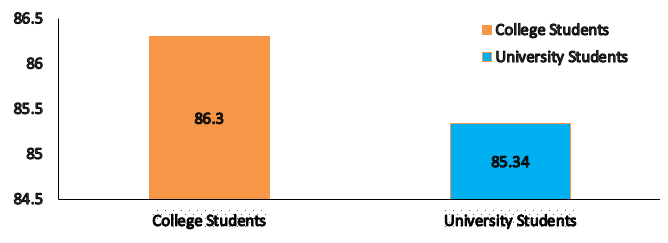
- Nomophobia.
- Figure 1 Showed the mean difference of college and university students.
- Variable
- N
- Mean
- SD
- SED df
- ‘t’ ratio
- P
- College students
- 50
- 86.3
- 23.9
- 4.33
- 98
- 0.2217
- P
- >0.05
- University students
- 50
- 85.34
- 19.14
Table 2: ‘t’ ratio relating to nomophobia among College and
Table No.2 represent the level of nomophobia among the college and university students, which shows that in each group 50 students were taken (N= 100) and means of both the groups are 86.3 and 85.34 respectively. Standard deviation for both College and University students is 23.9 and 19.14 respectively. The SED 4.33 and DF are 98 for both of these groups were calculated ‘t’-ratio for this group is 0.22.
Hypothesis Testing: The table no.2 is found that the calculated t-ratio is 0.22 which was less than the table value of 2.00 at 0.05 level of significances. Here that is not significant. Therefore, it can be interpreted that the null hypothesis is accepted. So, it can be concluded that there was no significance difference exist between the Nomophobia level of college and university students.
Discussion
The findings of this study highlighting the significant differences in nomophobic behavior between college and university students. The results indicate that while both groups exhibit moderate to high levels of nomophobia, college students tend to report higher emotional dependence on smartphones, particularly for social interaction, entertainment, and emotional support. This aligns with previous research by Bhatt and Shukla [11], who found that younger students in the early stages of higher education often demonstrate increased reliance on their mobile phones for social validation and peer connectivity.
On the other hand, university students, although still affected by nomophobia, tend to use mobile phones more for academic and professional communication, such as accessing learning materials, participating in online classes, and coordinating with peers and faculty. However, this functional use does not necessarily protect them from experiencing stress or anxiety when disconnected, reinforcing the idea that nomophobia is not only linked to entertainment or social media use but also to the fear of being digitally inaccessible [12].
Gender differences were also observed, with female students generally reporting higher levels of nomophobia across both educational groups, consistent with studies by Samaha and Hawi [13]. Living arrangements, such as residing away from home, were also associated with increased phone dependency, suggesting that environmental and emotional factors may influence nomophobic tendencies. The comparative aspect of this study emphasizes that while the type of educational institution plays a role, the level of nomophobia is also shaped by age, developmental stage, academic pressures, and digital habits. Thus, interventions should be tailored not just by educational level but also by the specific behavioral patterns and psychological needs of students. The detail analysis of the result of Table-2 suggests that there is no statistically significant difference in the level of nomophobia between college and university students. Although a minor difference in the mean scores exists, it is not large enough to be considered meaningful from a statistical perspective. This finding implies that both college and university students experience nomophobia at similar levels, regardless of their academic standing or institutional environment.
These results are consistent with the idea that nomophobia is a widespread phenomenon among youth in higher education and may be influenced more by age, lifestyle, and digital culture than by the type of institution attended. Even though college students are generally younger and possibly more emotionally attached to their devices, and university students often use phones for academic or professional tasks, the overall dependency and anxiety when separated from smartphones remain common to both groups. This finding supports earlier research by Sharma, et al. [2] and King, et al. [9], which indicated that nomophobia is prevalent across different demographics of students and may not always be determined by education level alone [14, 15, 16, 17, 18, 19].
Conclusion
In conclusion, this comparative study reveals that both college and university students experience significant levels of nomophobia, though the nature and intensity of this dependency vary. College students exhibit more emotional attachment and recreational use, while university students show a more functional but still dependency-prone pattern of usage. These differences underscore the importance of developing targeted awareness programs, digital literacy training, and psychological support systems to help students manage mobile phone use more responsibly. The study concludes that nomophobia is a common issue among students in higher education, with no significant difference in its intensity between college and university students. The results of the t-test (t = 0.22, df = 98, p > 0.05) confirm that academic level does not have a statistically significant impact on nomophobia levels.
This finding carries important implications for mental health support services and educational policy. Both college and university institutions should take equal initiative in addressing nomophobia among their students. Preventive and intervention strategies, such as digital literacy programs, screen-time management workshops, and access to psychological counseling, should be made universally available. Besides these, while the digital age has enabled students to remain constantly connected, it has also given rise to psychological dependencies such as nomophobia.
Addressing this issue holistically, rather than segmenting by academic level, will better support the mental well-being and academic success of students in today’s technology-driven world.
The study also suggests a need for educational institutions to promote healthy digital habits, including scheduled digital detox sessions, mental health counseling, and incorporation of mobile phone usage policies within campus environments. Future research should include larger sample sizes, consider cultural and socioeconomic variables, and explore longitudinal data to track changes in nomophobia over time. By identifying the unique challenges faced by both college and university students, health advisor can implement more effective strategies to reduce nomophobia and promote healthier relationships with technology in academic settings.
Scope for Further Research
Despite some emerging insights, there remains a lack of comprehensive, large-scale, comparative research that clearly defines and differentiates nomophobic behavior between college and university students. Future studies should adopt standardized instruments (e.g., the NMP-Q) and cross- sectional or longitudinal designs to better understand how educational level, developmental stage, and psychosocial factors interact to influence nomophobia. Further research on nomophobia among college and university students could involve observing students over time to track changes, comparing students from different cultures to understand cultural influences, testing the effectiveness of programs or counselling to reduce nomophobia, studying coping mechanisms used by students, exploring the impact of smartphone and social media use on nomophobia, examining the relationship between nomophobia and mental health issues like anxiety, and investigating the effects of COVID-19 and online learning on nomophobia levels. By exploring these avenues, researchers can gain a better understanding of nomophobia and develop strategies to address it effectively.
Acknowledgments
The authors extend their warm regards to the anonymous experts for sparing their precious time and giving useful comments and suggestions that helped in improving the quality of the study.
Funding
The authors received no direct funding for this research.
Competing Interests
I have no competing interests to declare.
Data Availability
The data that support the findings of this study are available with the author and corresponding author, which can be accessed upon reasonable request.
References
-
Dixit S, Shukla H, Bhagwat AK, Bindal A, Goyal A, et al. (2010) A study to evaluate mobile phone dependence among students at a medical college and associated hospital of central India. Indian Journal of Community Medicine 35(2): 339-341.
-
Sharma N, Sharma P, Sharma N, Wavare RR (2015) Rising concern of nomophobia amongst Indian medical students. International Journal of Research in Medical Sciences 3(3): 705-707.
-
Yildirim C, Correia AP (2015) Exploring the dimensions of nomophobia: Development and validation of a self- reported questionnaire. Computers in Human Behavior 49: 130-137.
-
Tavolacci MP, Meyrignac G, Richard L, Dechelotte P, Ladner J (2015) Prevalence and association of screen time with self-perceived health, depression and obesity among university students in France. BMC Public Health 15(1): 1-7.
-
Gezgin DM, Hamutoğlu NB, Sezen-Gültekin G, Ayas T (2018) The relationship between nomophobia and loneliness among Turkish adolescents. International Journal of Research in Education and Science 4(2): 358- 374.
-
Bhattacharya S, Bashar MA, Srivastava A, Singh A (2019) Nomophobia: NO Mobile Phone Phobia. J Family Med Prim Care 8(4): 1297-1300.
-
Pavithra MB, Madhukumar S, Murthy MTS (2015) A study on nomophobia – Mobile phone dependence, among students at a medical college in Bangalore. National Journal of Community Medicine 6(3): 340-344.
-
Gezgin DM, Cakir O, Yildirim S (2018) The Relationship between Levels of Nomophobia Prevalence and Internet Addiction among High School Students: The Factors Influencing Nomophobia. IJRES 4(1): 215-225.
-
King ALS, Valença AM, Silva ACO, Baczynski T, Carvalho MR, et al. (2013) Nomophobia: Dependency on virtual environments or social phobia? Computers in Human Behavior 29(1): 140-144.
-
Gezgin DM (2018) Understanding patterns for smartphone addiction: Age, sleep duration, social network use and fear of missing out. Cypriot Journal of Educational Sciences 13(2): 166-177.
-
Bhatt R, Shukla S (2020) Nomophobia: A comparative study among college and university students. International Journal of Indian Psychology 8(2): 457- 463.
-
Gezgin DM, Adnan M (2016) A Modern Phobia: Prevalence of Nomophobia among College Students. Ankara Universities Egitim Bilimleri Fakutesi Dergisi 49(1): 141-158.
-
Samaha M, Hawi NS (2016) Relationships among smartphone addiction, stress, academic performance, and satisfaction with life. Computers in Human Behavior 57: 321-325.
-
Manoj KG, Sunil KR, Amit B, Abhilash S (2019) Nomophobia: A rising concern among Indian students. Journal of Family Medicine and Primary Care 9(2): 4627- 4632.
-
Bragazzi NL, Del Puente G (2014) A proposal for including nomophobia in the new DSM-V. Psychol Res Behav Manag 7: 155-160.
-
Farooqui IA, Pore P, Gothankar J (2018) Nomophobia: an emerging issue in medical institutions? J Ment Health 27(5): 438-441.
-
Gezgin DM, Adnan M (2016) A Modern Phobia: Prevalence of Nomophobia among College Students. Ankara Universities Egitim Bilimleri Fakutesi Dergisi 49(1): 141-158.
-
Kendra Cherry M (2026) Nomophobia: The Fear of Being Without Your Phone. Verywellmind.
-
Murphy N (2025) What is Nomophobia? CPD Online College. Peru.
- Occupational Stress and Mental Health Outcomes Among Police Officers: A Mini Review
- The Experience of Counterproductive Leadership on Mental Health and Impact on Retention in U.S. Marines: A Phenomenological Study
- Emotional Regulation in Children with Autism and Learning Disabilities
- Antisemitism on American College Campuses and Its Impact on Jewish Students
- Exploring the Role of Empathy in the Associations of Family Functioning and Purpose in Life with Attitude towards Abortion among Undergraduates: A Moderation Analysis
- Attributions of Body Weight Among Persons with Obesity