
Molecular Mechanism Underling the Chemopreventive Effect of Turmeric and Banana Peel Extracts On 7, 12-Dimethylbenzeneanthracene (DMBA) - Induced Mammary Carcinogenesis in Female Mice
Evaluate the anticarcinogenic effect of turmeric and banana peel extracts versus vitamins supplementation on 7, 12-dimethylbenzeneanthracene (DMBA)-induced breast cancer in female mice. Phytochemical composition of turmeric and banana peel extracts was estimated colorimetrically. Plasma vitamins C, E and β-carotene were determined by high-performance liquid chromatography (HPLC),.Agarose gel electrophoresis was used to analyze DNA from the tissues . Prostate specific antigen (PSA) determinded by ELISA was used as a tumor marker. Crude extract of banana peel and turmeric extract were evaluated versus vitamin C, E and A supplementation in reversing DMBA induced carcinogensis. DMBA-induced changes were reversed by turmeric extract and to a lesser extent by banana peel extract or vitamins supplementation as evidenced by improved oxidants- antioxidants imbalance, apoptotic DNA fragmentation and decreased PSA.
Introduction
Breast cancer represents the most common malignancy in females associated with high mortality [1]. Turmeric extract is a natural non-toxic antioxidant, Banana peel contains bioactive compounds such as polyphenols, carotenoids and possess antioxidant capacity against hydrogen peroxide-induced damages [2, 3]. Vitamin C, E and A are potent free radical scavengers that can reduce DNA damage and cell membrane peroxidation [4]. Prostatic specific antigen (PSA) a protein produced almost exclusively by prostate, used for the diagnosis and follow up of prostatic cancer and recently in breast and ovarian cancer [5, 6].
Aim of the Work
• To study Phytochemical composition of turmeric and banana peel extracts.
• To determine antioxidant levels (vitamins C, E and β- carotene) in plasma following administration of turmeric or banana peel extracts and vitamin supplementation.
• To evaluate the chemopreventive effect of turmeric and banana peel extracts.
Materials and Methods
For six weeks, in a randomized complete block design(RCBD), thirty adult female albino mice (12 weeks of age, weighing between 21 and 28 g ,housed in clean cages at 25°C from animal house in faculty of medicine, Assiut university, Egypt) were divided into 5 groups, each group had 6 mice (after approval of the Assiut university ethics committee): Group I: Mice treated with distilled water only.
Group II: Mice treated with 20 mg/ml/week DMBA only to induce breast cancer (the dose as described by Minari and Okeke (2014) [7, 8].
Group III: Mice treated with 20 mg/ml/week DMBA +100 mg/ml/day of turmeric extract (DMBA and extract were given intragastrically).
Group IV: Mice treated with 20 mg/ml/week DMBA + 100 mg/ml/day of dried and powdered banana peel extract.
Group V: Mice treated with 20 mg/ml/week of DMBA + Vitamin C (purity: 99%) + vitamin E (purity: 95%, 200 mg/kg/day in 1 ml of normal saline administered orally as previously described) + β-carotene (purity: 97%) (20 mg/kg/day in 1 ml of normal saline administered orally as reported) were obtained from Sigma Chemical Co. (St. Louis, MO, USA). Each mouse had 12 mammary glands checked by inspection; plasma samples and breast tissues were obtained for agarose gel electrophoresis [9, 10, 11].
Determination of Vitamins in Plasma by HPLC
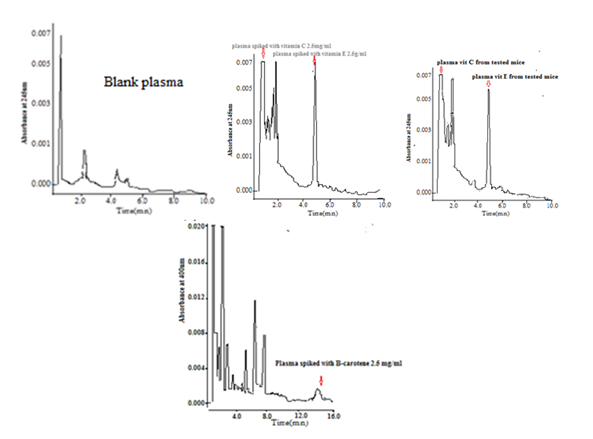
Vitamin C: plasma proteins were precipitated (100μl plasma + 400μl of 60% methanol/EDTA, incubated for 10min at 4ºC then centrifuged at 12,000 rpm for 8min), the clear phase was evaporated to dryness and dissolved in 100μl of methanol. -Vitamin E and β-carotene: 100μl of plasma was deproteinized with 100μl of ethanol, extracted with 600μl chloroform then shaken for 5min and centrifuged. The organic layer was extracted and evaporated to dryness and dissolved in 100µl of methanol [12].
Tannin Determination
0.2 powdered sample in 10 ml actone (70%) shaken for 2hrs and centrifuged then 0.2ml supernatant+0.8ml DW are mixed, 1 ml standard tannin in 0.5 ml DW . 0.5 ml Folin Ciocalteu reagent and 2.5 ml Na2CO3(20%) were added to both, incubated for 40 min ,absorbance read at 725nm against blank [13].
Alkaloid Determination
5 gm sample +200ml of 10% acetic acid+50 ml ethanol filtered and concentrated in water bath till 1/4 volume , ammonium hydroxide was added drop wise till precipitation and filtered and weighed [14].
Total Flavonoid Determination
10 gm powdered sample in 100ml of 80% aqueous methanol filtered, evaporated in water bath to dryness and weighed [15].
Determination of Phenol
sample was boiled with 50ml of ether for 15 min.5 ml extract +10 ml DW+2ml ammonium hydroxide+5 ml amyl alcohol left to react for 30 minutes for color development; the absorbance was measured at 550nm [16].
Lipid Peroxidation
1 ml of trichloroacetic acid 10% + 1 ml of thiobarbituric acid 0.67% in a boiling water bath for 30 min, absorbance at 535 nm [17].
Estimation of Reduced Glutathione
Reduction of Ellman's reagent (5,5` dithiobis, 2nitrobenzoic acid) with GSH to produce a yellow compound ,absorbance were measured at 405 nm [18].
Reducing Power Assay
1ml extract + 2.5 ml of 0.2 M phosphate buffer (pH 6.6) and 2.5 ml potassium ferricyanide (1%) were incubated for 20 minutes and 2.5 ml of trichloroacetic acid was added. The absorbance was read at 700 nm [19].
PSA Analysis
Sandwich ELISA was used for PSA quantitation (GenWay Biotech, Inc. Catalog No. 40-101-325050).
Copyright© Hana RS.
Results
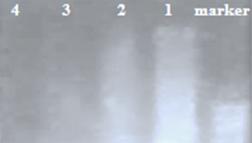
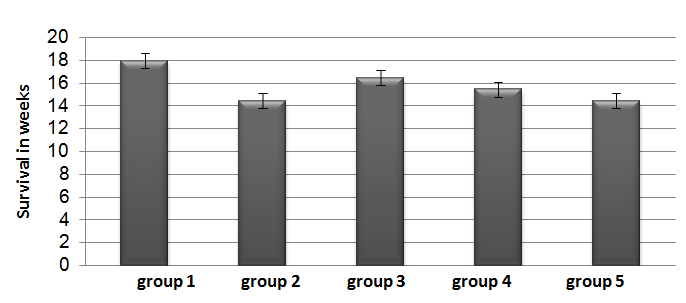
Phytochemical studies revealed the presence of flavonoids, tannin, phenol and alkaloid in turmeric and banana peel extracts (Phenol was the highest in both extracts; all were higher in turmeric extract as compared to banana peel extract). DNA smears suggested possible DMBA-induced damage that was reversed to variable extent in various treatment modalities. As shown by DNA fragmentation (ladder formation on ethidium bromide- stained gel and UV illumination). DNA Fragments were marked in turmeric extract supplementation followed by banana peel extracts and lastly vitamins supplementation as compared to untreated DMBA-induced cancer samples (Figure 1) indicating induction of apoptosis and attempt healing that was confirmed by improved oxidants- antioxidants imbalance and decrease in PSA level and improved overall survival (Figure 2).
Copyright© Hana RS.
Statistical Analysis
The data were analyzed by using SPSS 11.0 for Windows. Group results are expressed as means ± SDs. Group means were compared by (ANOVA). Correlations of statistical significance between groups were done using Spearman Rank Correlation. A P-value < 0.05 was considered to be significant.
The Phytochemical composition of turmeric extract and banana peel extract are shown in table 1. Both are rich in plant phenolics and flavonoids (higher in turmeric extract) that are highly effective free radical scavengers and antioxidants which explain their ability to react with reactive oxygen species (ROS) and reactive nitrogen species (RNS) [20, 21].
Discussion
| Phytochemical Analysis | Turmeric Extracts | Banana Peel Extract |
| tnetnoc cilonehP latoT(g/gm) | 93.30±0.03* | 82.52±0.013 |
| Total flavonoid content(mg/g) | 43.6±0.3* | 33.43±0.06 |
| Reducing Power(μg/ml) | 25±1.7* | 21±5.5 |
| Alkaloid(mg/100g) | 0.76±0.01* | 13.60+0.51 |
| Tannin(mg/100g) | 91.08±0.72 | 77.40+0.36 |
Table 1: Phytochemical analysis of turmeric extracts and banana leaves extract.
| Parameter | Group I (Control) | Group II (DMBA only) | Group III (turmeric extract) | Group IV (banana peel extract) | Group V (Vitamins intake) |
| Vitamin C(mg/ml) | 0.35±0.02 | 0.16±0.08 | 0.76±0.04 | 1.60+0.03 | 1.9±0.5 |
| Vitamin E(μg/ml) | 1.03±0.08 | 0.13±0.01 | 2.03±0.08* | 3.40+0.05* | 6.3±3.6* |
| B-carotene(μg/ml) | 0.25±0.02 | 0.15±0.01 | 0.45±0.03 | 0.90+0.04 | 1.3±0.6* |
| GSH mmol | 0.73±0.25 | 0.23±0.02 | 1.73±0.25* | 1.56±0.33* | 0.48±0.02 |
| MDA(nmol) | 18.5±2.6 | 29.8±4.5** | 17.33±3.5** | 22.37±1.53* | 27.5±4.63* |
| PSA(ng/ml) | 12.1±0.2 | 22.3±1.3*** | 10.5±0.6** | 15.3±0.35* | 17.6±2.3* |
Table 2: Blood concentration of the studied parameters after intake of different treatments.
*P values ˂ 0.05, ** P values ˂ 0.01 Table 2: Blood concentration of the studied parameters after intake of different treatments. MDA as a marker for oxidative stress was significantly reduced associated with significant increase in reduced glutathione in plasma of all treated groups (marked in turmeric extract ,less in banana peel extract and least in vitamins supplementation group) as compared to the untreated cancer group. It can be suggested that the observed marked anticancer effect of turmeric and banana peel extract in the present study is due to the presence of phenolics compounds and flavonoids in addition to the vitamins content rather than the vitamins content only as observed in the group that received vitamin supplementation alone. Cancer therapy destroy cells through apoptosis evident as DNA fragmentation [22]. In the present study, DNA gel electrophoresis showed that DNA fragmentations was marked in turmeric extract supplementation followed by banana leaves extracts and lastly vitamins supplementation compared to untreated DMBA-induced cancer tissues Also, PSA is a useful marker for monitoring breast cancer [23]. In the current study, it showed significant decline in all treated groups associated with improved survival that was marked in turmeric extract, less in banana peel extract and least in vitamins supplementation group as compared to the untreated cancer group. The antioxidant activity of turmeric extract is due to their chemical structure that exist in a stable enol form acting as a chain-breaking antioxidant [24]. It suppresses the activation of NF ƙB, an inducible transcription factor that regulates expression of anti- apoptotic genes and induces metastasis thus increases apoptosis as observed in the current study [25]. Banana flower extract exhibited cytotoxic effects on cervical cancer cell line due to their phenol content that induced apoptosis as evident by increased caspase 9 Copyright© Hana RS.
activity [26]. The current results showed that banana peel extract produced a similar effect. Vitamin E, β-carotene, and vitamin C are antioxidants that protect cells from oxidative damage involved in carcinogenesis. Kirsh, et al. did not provide a strong support for population-wide supplementation of these antioxidants for the prevention of cancer. However, vitamin E and β-carotene supplementation were associated with reduced risk of cancer similar to the current study [27]. In conclusion, turmeric extract and less banana peel extract are beneficial anticarcinogenic agents possibly more effective than vitamins supplementation through induction of apoptosis.
Conflict of Interest
The author has no conflict of interest or financial, personal or other relationships with other people or organizations that could inappropriately influence this work.
References
-
Barros AC, Muranaka EN, Mori LJ, Pelizon CH, Iriya K, et al. (2004) Induction of experimental mammary carcinogenesis in rats with 7,12- dimethylbenz(a)anthracene. Rev Hosp Clin Fac Med Sao Paulo 59(5): 257-261.
-
Kohli K, Ali J, Ansari MJ, Raheman Z (2005) Curcumin: A natural anti-inflammatory agent. Ind J Phamacol 37(3): 141-147.
-
Sundaram S, Anjum S, Dwivedi P, Rai GK (2011) Antioxidant activity and protective effect of banana peel against oxidative hemolysis of human erythrocyte at different stages of ripening. Appl Biochem Biotechnol 164(7): 1192-1206.
-
Gutteridge JM (1995) Lipid peroxidation and antioxidants as biomarkers of tissue damage. Clin Chem 41(12 Pt 2): 1819-1828.
-
Eleftherios P. Diamandis (2000) Elevated Serum Prostate-Specific Antigen Levels in a Woman with Metastatic Breast Cancer. N Engl J Med 343(12): 890- 891.
-
Black MH, Giai M, Ponzone R, Sismondi P, Yu H, et al. (2000) Serum Total and Free Prostate-specific Antigen for Breast Cancer Diagnosis in Women. Clin Cancer Res 6(2): 46-55.
-
Negi AK, Kansal S, Bhatnagar A, Agnihotri N (2013) Alteration in apoptosis and cell cycle by celecoxib and/or fish oil in 7,12-dimethyl benzene (α) anthracene-induced mammary carcinogenesis. Tumour Biol 34(6): 3753-3764.
-
Minari JB, Okeke U (2014) Chemopreventive effect of Annona muricata on DMBA-induced cell proliferation in the breast tissues of female albino mice. Egyptian Journal of Medical Human Genetics 15(4): 327-334.
-
Paiva GS, Taft CA, Carvalho MC, de Souza IA, da Silva ECB, et al. (2013) A Comparative Study of the effects of Vitamins C and E in the Development of Sarcoma 180 in Mice. J Cancer 4(9): 724-726.
-
Pradeepa CR, Kuttan G (2013) Effect of β-Carotene on the inhibition of lung metastasis in mice. J Cancer 4(9): 724-726.
-
Nishiguchi MK, Doukakis P, Egan M, Kizirian D, Phillips A, et al. (2002) DNA isolation procedure. In: De Salle R, editor. Methods and tools in biosciences and medicine: techniques in molecular systematics and evolution. Pp: 249-287.
-
Zhao B, Tham SY, Lu J, Lai MH, Lee LK, et al. (2004) Simultaneous determination of vitamins C, E and β- carotene in human plasma by high-performance liquid chromatography with photodiode-array detection. J Pharm Pharm Sci 7(2): 200-204.
-
Markkar AOS, Goodchild AV (1996) Quantification of tannins. A laboratory manual International Centre for Agriculture Research in the dry areas pp: 25-30.
-
Harbone JB (1973) Phytochemistry Methods: A guide to modern Techniques of plants Analysis. Chapman and Hall London pp: 267-270.
-
Bohm BA, Koupai-Abyazani MR (1994) Flavonoids and condensed tannins from leaves of Hawaiian Vaccinium reticulatum and V. calycinum (Ericaceae). Pac Sci 48(4): 458-463.
-
Adewole E, Adewumi DF, Jonathan J, Fadaka (2014) Phytochemical Constituents and Proximate Analysis of Orange Peel (citrus Fruit). J of Advanced Botany and Zoology 1(3): 1-2. Copyright© Hana RS.
-
Ohkawa H, Ohishi N, Yagi K (1979) Assay for lipid peroxides in animal tissues by thiobarbituric acid reaction. Anal Biochem 95(2): 351-358.
-
Ellman GL (1959) Tissue sulfhydryl groups. Arch Biochem Biophys 82(1): 70-77.
-
Oyaizu M (1986) Studies on products of browning reaction antioxidative activity of products of browning reaction prepared from glucosamine. Japanese Journal of Nutrition 44: 307-315.
-
Toklu HZ, Sehirli O, Ozyurt H, Eksioglu-Demiralp E, Cetinel S, et al. (2009) Punica granatum peel extract protects against ionizing radiation-induced enteritis and leukocyte apoptosis in rats. J Radiat Res 41: 305- 310.
-
Cohly HH, Taylor A, Angel MF, Salahudeen AK (1998) Effect of turmeric, turmerin and curcumin on H2O2- induced renal epithelial (LLC-PKI) cell injury. Free Radical Biology and Medicine 24(1): 49-54.
-
Matassov D, Kagan T, Leblanc J, Sikorska M, Zakeri Z (2004) Measurement of apoptosis by DNA fragmentation. Methods Mol Biol 282: 1-17.
-
Mashkoor FC, Al-Asadi JN, Al-Naama LM (2013) Serum level of prostate-specific antigen (PSA) in women with breast cancer. Cancer Epidemiol 37(5): 613-618.
-
Wilken R, Veena MS, Wang MB, Srivatsan ES (2011) Curcumin: A review of anti-cancer properties and therapeutic activity in head and neck squamous cell carcinoma. Molecular Cancer 10: 12.
-
Garg A, Aggarwal BB (2002) Nuclear transcription factor-κB as a target for cancer drug development. Leukemia 16(6): 1053-1068.
-
Timsina B, Nadumane VK (2014) Anti-cancer potential of banana flower extract: An in vitro study. Bangladesh J Pharmacol 9(4): 628-635.
-
Kirsh VA, Hayes RB, Mayne ST, Chatterjee N, Subar AF, et al. (2006) Supplemental and Dietary Vitamin E, β-Carotene, and Vitamin C Intakes and Prostate Cancer Risk. J Natl Cancer Inst 98(4): 245-254. Copyright© Hana RS.
- hMPV: Is It Another Covid-19 Like Situation?
- Streptomyces: Sources of Novel Discoveries in Antibiotic Research to Combat Antimicrobial Resistance
- A Review of Mosquitoes (Diptera: Culicidae) and Their Biodiversity, Medical and Veterinary Importance
- Past and Current Immunotherapy in Cancer
- Hematological Cancer and Viral Infection
- The Growing Threat of Antimicrobial Resistance in India: Challenges and Solutions