
Perception, Attitude and Practice of Personal Protective Measures by Nigerians during the COVID-19 Outbreak: An Online Cross-Sectional Study
Objective: People’s compliance to control measures is dependent on their perception, attitudes and practices towards COVID-19. This survey evaluated the perception, attitude and practice of personal protective measures by Nigerians during the COVID-19. Methods: This was a cross-sectional study using an internet-based urvey/questionnaire and mathematical modeling. A total of 731 Nigerians (male and female: age >14 years) were selected between April 15 and 26, 2020 to complete an online survey. Results: Majority (> 50 %) of the participants in all the geopolitical zones would always wash their hands with soap and/ use hand sanitizers. Many of the participants (>40%) across all the zones self-reported that they always wash their hands with soap and use hand sanitizer after a hand shake. More than 70 % of the participants had at least Bachelors degree. Majorities are civil servants and mostly obtain their COVID-19 information from WhatsApp (71.4%), Television (65.3%) and National Centre for Disease Control (NCDC) (62.5%). Conclusion: The attitude and practice of personal protective measures self-reported by Nigerians is fair. Therefore, to flatten the curve, more uniform concerted efforts are still needed across the three tiers of government while underscoring the critical roles of non-governmental organizations, traditional and religious leaders in educating the general populace about personal hygiene and social distances.
and BC Ugwu10
Conclusion: The attitude and practice of personal protective measures self-reported by Nigerians is fair. Therefore, to flatten the curve, more uniform concerted efforts are still needed across the three tiers of government while underscoring the critical roles of non-governmental organizations, traditional and religious leaders in educating the general populace about personal hygiene and social distances.
Keywords: COVID-19 outbreak; prevention; protective measures; Nigeria epidemiology; public health
Introduction
Coronaviruses is a member of the family of Coronaviridae, of the order Nidovirales. Many members of the coronavirus cause mild respiratory disease in humans. However, the novel coronavirus otherwise known as Severe Acute Respiratory Syndrome Coronavirus 2 (SARS-CoV-2) and the Middle East respiratory syndrome coronavirus (MERS-CoV) could cause fatal severe respiratory diseases [1]. In December 2019, an outbreak of the novel coronavirus disease 2019 (COVID-19) was first reported in Wuhan, China. Earlier in 2020, the number of reported cases increased exponentially in Wuhan and other cities in China. The COVID-19 cases were also diagnosed and reported in other parts of the world [2]. Thus by January 30, 2020, the World Health Organization (WHO) declared that COVID-19 constituted a Public Health Emergency of International Concern. As at March 2020, the global number of reported cases of COVID-19 rose to 330,000 cases, with 14,510 deaths, the WHO declared it a pandemic [2, 3, 4]. COVID-19 is highly infectious, and it is characterized by high fever, difficulty in breathing, dry cough, atypical pneumonia, loss of taste/smell sensation and fatigue with abnormal chest CT scan [5, 6]. The virus’s gene sequence was identified, published on January 12, 2020 and a testing method was developed within few weeks and is usually confirmed by positive RNA test [7, 8].
The common transmission routes of novel coronavirus include direct transmission (eg: cough, sneezing) and contact transmission via contact with nasal, oral and eye mucous secretions. The viruses can be transmitted from person to person through direct or indirect contacts [1, 9]. The WHO recommends five key personal protective measures (PPMs) to be implemented by the public as measures to mitigate the epidemic of respiratory viruses such as COVID-19. The WHO PPMs are i) ensure hand hygiene, washing hands frequently with soap and water, and/ use of alcohol-based hand sanitizer ii) maintain social distancing iii) avoid touching the eyes, nose and mouth iv) practice respiratory hygiene and v) stayhome if you feel unwell (self-isolation) [10, 11].
Nigeria recorded her index case on the 27th February 2020, and that was a 44–year old foreigner. As of 14th April 2020 (16th epidemiological week), a total of 1,848,439 confirmed cases, with case fatality ratio 6.3% (117,217deaths) had been reported globally. A cumulative total of 10,759 confirmed COVID-19 cases with 520 deaths had been reported across the 45 affected countries in the WHO African Region [12]. As of 11th July 2020, all the 36 states of Nigeria and federal capital territory, Abuja have been affected with a cumulative number of 31,987 confirmed cases with 13,103 discharged cases and 724 confirmed fatalities. Demographics of male – 21,036 (66%) and Female – 10,951 (34%) Provenance: Travel History – 481 (2%) Contacts – 8,074 (25%) and those with no Epidemiologic Link – 23,432 (73%) https://ncdc.gov. ng/).With daily increase in confirmed cases and the absence of a COVID-19 vaccine, how well the public implements the WHO PPMs is of important public health concern. Thus, this survey was designed to assess Perception, Attitude and Practice of Personal Protective Measures by Nigerians during the COVID-19 outbreak.
Methods
Study Design, Sample and Data Collection
This study was a cross-sectional one conducted through an internet-based survey. (https://docs.google.com/forms/ d/e/1FAIpQLSejaVFWnhFRhllKPNYnzj8ZvnmVzToNzm0D oKQ3gWeLNgv_7A/viewform?vc=0&c=0&w=1&usp=mail_ form_link). The survey was conducted between 15th and 26thApril, 2020.
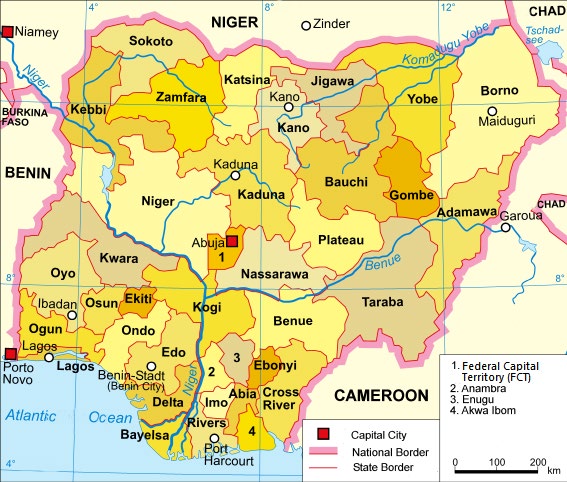
The study participants were recruited from the 36 states of Nigeria, including Abuja, the Federal capital territory (Figure 1). The link of the questionnaire was sent through emails, WhatsApp and other social media handles to the contacts of researchers.
Measurements
Assessment of attitude and practice of personal protective measures by nigerians duringthe covid-19 outbreak: The study participants self-reported their attitude and practices of the five PPMs (hand hygiene, social distancing measures, avoiding touching the eyes, nose and mouth, respiratory etiquette, and self-isolation) as recommended by the WHO. They were asked about the frequency of PPMs implementation using a 4-point-Likert scale of (1. “Always,” 2. “Sometimes,” 3. “Rarely,” or 4. “Never”). However, for social distancing and self-isolation measures, the participants were asked how often they avoided crowded places and if they could take time off from work if they present with fever or cold. The responses/ options were: 1 “I’m not working,” 2. “Definitely can,” 3. “Probably can,” 4. “Definitely can’t” 5. “Probably can’t” or 6.” Not applicable”. Assessment of perception of the respondent on COVID 19: The participants self-reported their perception on whether they believed COVID-19 is real using a 3-point- Likert scale of 1 “Yes”, 2 “No” and 3 “maybe”. Assessment of COVID 19 information sources: Participants were asked whether they obtained COVID-19 information from the following sources: Facebook, Twitter, WhatsApp, Other internet Sources, Radio / news program, Ministry of Health, WHO, state government, Religious Houses (Mosque/ Church), National Centre for Disease Control (NCDC) and Television (local and Foreign news). Assessment of sociodemographic features: Participants reported their sex, age, educational qualification and occupation.
Data Analysis
Data were presented as number and percentages, where appropriate, statistical significance of the results was determined with analysis of variance (ANOVA) using InStat® 3.0 (GraphPad, San Diego, CA, USA). P <0.0001 was considered significant.
Results
Enrollment and Descriptive Statistics
A total of 731 respondents (male and female; age> 14 years) participated in the online national survey. Figures 2 & 3 showed the percentage of participants (on the basis of geopolitical zones) for each frequency of the recommended personal protective measures against COVID-19.
Figure 2a represents the responses (%) on “how often the participants wash their hands with soap/ use of sanitizers”. The majority (> 50 %) of the participants in all the geopolitical zones would “always” wash their hands with soap and / use of alcohol-based hand sanitizers. There was a significant difference (p<0.0001) between those that “always /sometimes” wash their hands and those that “rarely and never” wash their hands. Similarly, many of the participants across all the zones self-reported that they “always” wash their hands with soap or use hand sanitizers after a handshake. Statistically, always /sometimes respondents were significant (p<0.0001) when compared to others (rarely, never). Figure 2c shows how often the participants touched their nose, mouth and or eyes. Majority sometimes (p<0.0001) touch their nose, mouth and eyes. Figure 2d shows the prevalence of the practice of respiratory hygiene. Majority of the participants always and sometimes use their elbows when coughing or sneezing. There was no significant difference (p>0.0001) between those that ‘always’ and ‘sometimes’ use their elbow when coughing or sneezing. However, there were significant differences (p<0.0001) between those that “always/sometimes” use their elbow when coughing or sneezing compared to “rarely or never” respondents. The perception value of Nigerians on COVID 19 is good (Figure 3a-e) as > 88 % all the Geopolitical zones had agreed that COVID 19 is real.
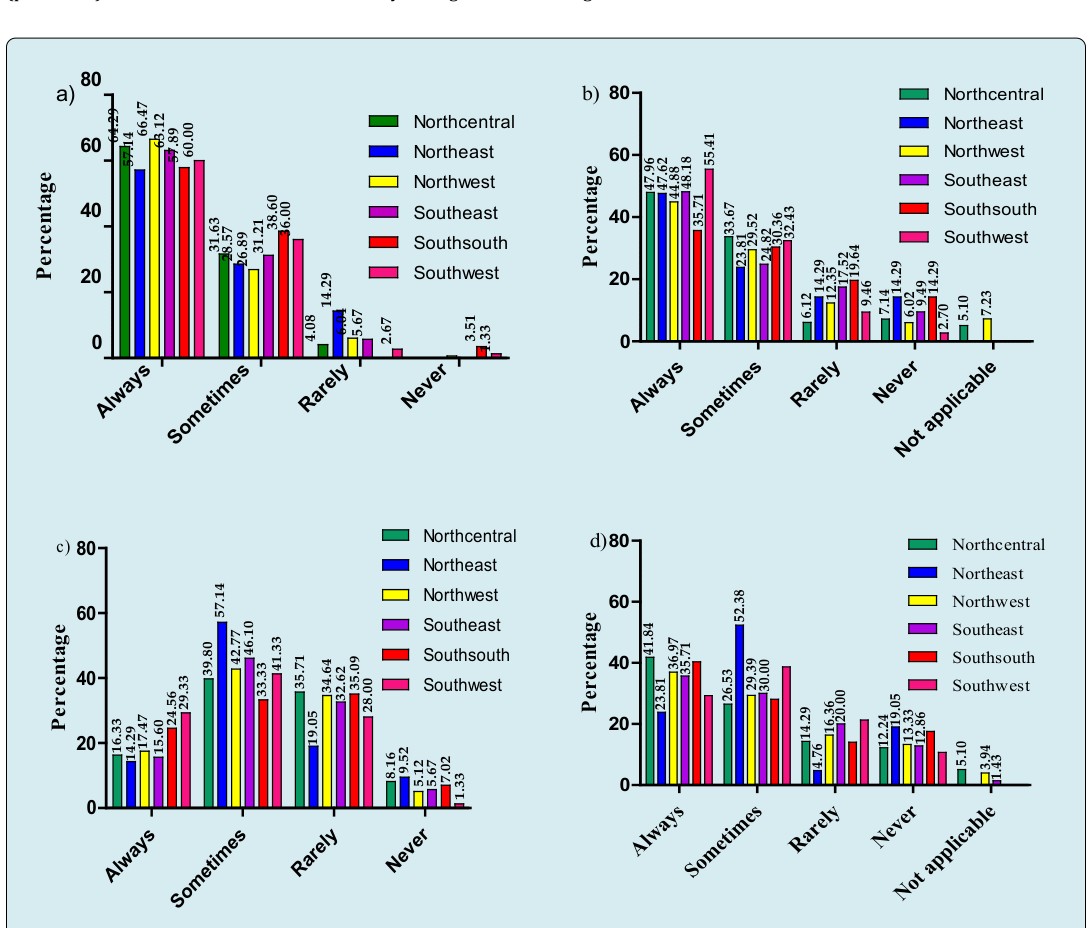
Figure 2(a-d): Descriptive analysis of responses from the survey conducted on the perception, attitude and practice of personal protective measures by Nigerians during COVID-19 pandemic.
| 3 | |||||
|---|---|---|---|---|---|
| 95.83 | 90.48 | 92.47 | 87.50 | 88.00 | 100.00 |
|---|---|---|---|---|---|
Figure 3(a-e): Descriptive analysis of responses from the survey conducted on the perception, attitude and practice of personal protective measures by Nigerians during COVID-19 pandemic.
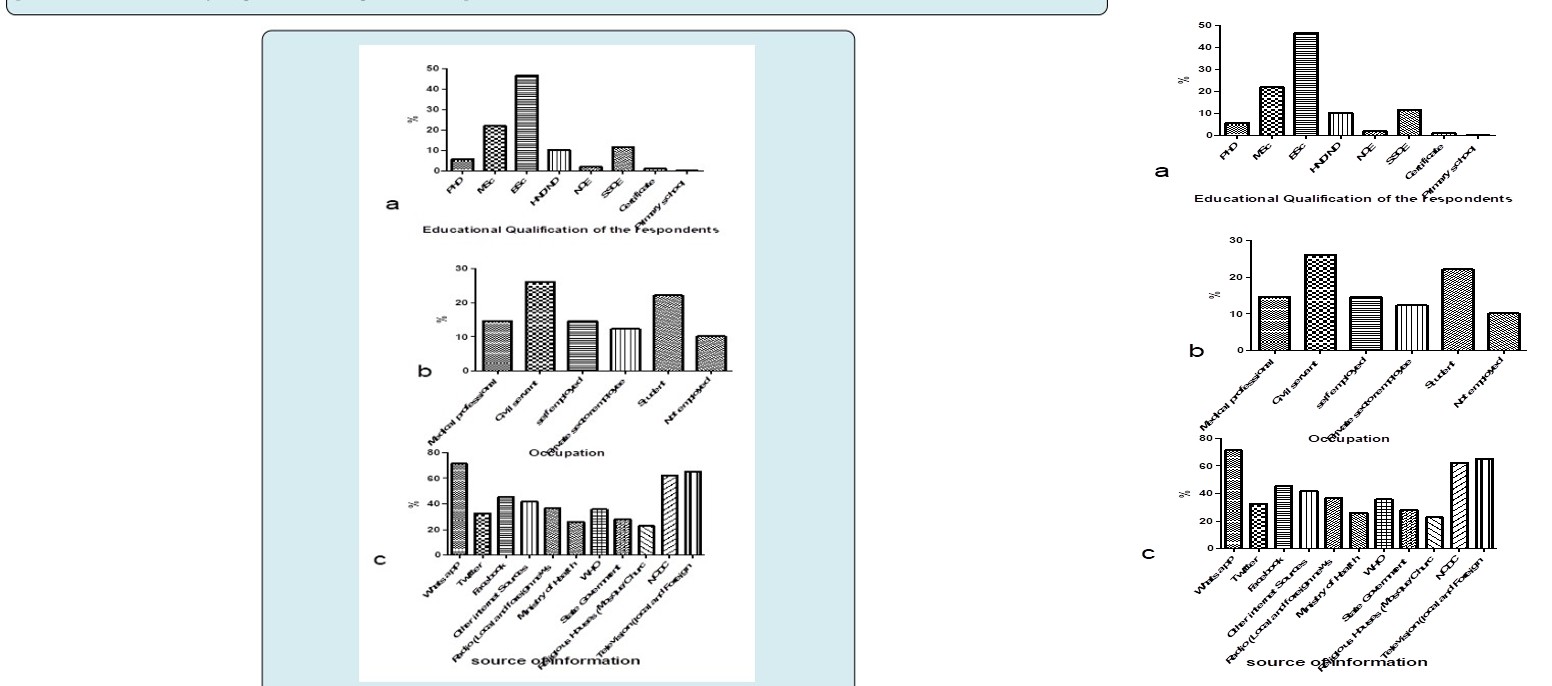
Figure 4 shows the participants’ characteristics and sources of information. More than 70% of the participants had at least a Bachelors degree. The majorities are civil servants and mostly obtains their COVID-19 information from WhatsApp (71.4%), Television (65.3%) and NCDC website (62.5%). There is a positive association between knowledge, and educational background and age.
Discussion
Many countries are combating COVID-19 and striving to prevent its further spread and reduce its morbidity and mortality [5]. Since there is no definitive cure and/ vaccine for COVID-19, all public health measures are geared towards preventing the spread of the virus. People’s perception, attitudes and practices towards COVID-19 affect their compliance to control measures. This survey was designed to assess perception, attitude and practice of Personal Protective Measures (PPMs) by Nigerians during the COVID-19 outbreak. As at the time of compiling this report 11th July 2020, all the 36 states of Nigeria and federal capital territory, Abuja have been affected with a cumulative number of 31,987 confirmed cases with 13,103 discharged cases and 724 confirmed fatalities (Table 1).
| States | Confirmed Cases | Discharged Cases | Deaths | Total Active Cases |
|---|---|---|---|---|
| Lagos | 12,275 | 1,786 | 160 | 10,329 |
| FCT | 2,538 | 747 | 36 | 1,755 |
| Oyo | 1,706 | 992 | 19 | 695 |
| Edo | 1,678 | 929 | 57 | 692 |
| Delta | 1,359 | 583 | 31 | 745 |
| Rivers | 1,357 | 851 | 46 | 460 |
| Kano | 1,303 | 1,030 | 52 | 221 |
| Ogun | 1,080 | 705 | 22 | 353 |
| Kaduna | 978 | 636 | 12 | 330 |
| Ondo | 670 | 124 | 21 | 525 |
| Katsina | 655 | 441 | 23 | 191 |
| Borno | 586 | 455 | 35 | 96 |
| Gombe | 530 | 407 | 21 | 102 |
| Bauchi | 519 | 498 | 13 | 8 |
| Plateau | 516 | 242 | 16 | 258 |
| Ebonyi | 508 | 497 | 6 | 5 |
| Enugu | 476 | 263 | 14 | 199 |
| Abia | 405 | 295 | 3 | 107 |
| Imo | 386 | 69 | 8 | 309 |
| Jigawa | 321 | 308 | 11 | 2 |
| Kwara | 311 | 168 | 12 | 131 |
| Bayelsa | 299 | 153 | 18 | 128 |
| Nasarawa | 244 | 113 | 8 | 123 |
| Osun | 231 | 84 | 7 | 140 |
| Sokoto | 153 | 135 | 16 | 2 |
| Niger | 135 | 108 | 7 | 20 |
| Akwa Ibom | 134 | 71 | 3 | 60 |
| Benue | 121 | 35 | 6 | 80 |
| Adamawa | 110 | 71 | 7 | 32 |
| Anambra | 93 | 65 | 9 | 19 |
| Kebbi | 86 | 63 | 7 | 16 |
| Zamfara | 76 | 71 | 5 | 0 |
| Yobe | 62 | 51 | 8 | 3 |
| Ekiti | 49 | 40 | 2 | 7 |
| Taraba | 27 | 11 | 0 | 16 |
| Cross River | 5 | 3 | 1 | 1 |
| Kogi | 5 | 3 | 2 | 0 |
| Total | 31,987 | 13,103 | 724 | 18,160 |
Table 8: States with reported laboratory-confirmed COVID-19 cases, recoveries, deaths as at 11th July, 2020.
We observed a disconnect between preventive measures identified by respondents and those they report to have adopted and practiced. Of all the five PPMs recommended by the WHO, the prevalence/practice of “always” washing hands with soap or use of hand sanitizer was the most practiced (p<0.0001) by our study participants. Surprisingly, the majority of the participants across all the geopolitical zones never wore face masks when visiting places (Figure 3b). This therefore suggests that public health messaging should be able to emphasize the importance of adopting certain practices and clearly communicate the rationale behind these preventive measures to these populations. The reason for the non-compliance could not be ascertained but might not be unconnected with the demand for face masks which went upseveral times higher than normal, and prices were up to 10 times higher [11]. It might also be due to the inconveniences experienced by the face mask users. WHO had reported that face mask prices hike was triggered by soaring demand; panic buying, hoarding and misuse of face masks [13]. The novel coronavirus (SARS-CoV-2) can be released when an infected person is coughing, talking and sneezing. Droplets containing the virus can infect others if they do not maintain a safe distance [5, 14, 15]. It has been established that SARS-CoV-2 can persist for 3 hours in aerosols and up to 96 hours on surfaces thus Fomites may be a good source of transmission of SARS-CoV- 2 [16, 17]. To reduce the risk of airborne contamination/transmission, early detection of asymptomatic carriers for quarantine and /or treatment, avoiding crowded places and use of face masks when in public are highly recommended [14].
Viral infections have been reported to be highly contagious among people in close proximity [18]. Thus the poor practice of wearing masks and our traditional communal lifestyle may be responsible for the increasing cases in Nigeria, as shown in figs 5 &6. Ideally, Personal protective measures should be combined with other approaches, as individual measures may not be so effective when implemented alone [19].
We found that our study participants had good perception (>87.5%) on COVID-19 reality (Figure 3e). This is in agreement with other studies that have shown satisfactory levels of knowledge. Our finding is similar to the knowledge rate of 90%, and 80.7% found among Chinese and Ugandan residents in a quick online survey on COVID-19 [20]. The perception rate among our respondents is similar to a finding in a recently published study in Philippine where 85.5% are aware of the COVID -19 viruses [21] and 81.64% among public in Saudi Arabia [22]. A greater percentage (>60%) of respondents of people obtain COVID-19 information from What’sApp, NCDC and Television. Considering the flood of information surrounding the virus, getting COVID -19 information through NCDC website and Television is good as exaggerated or understated pandemic estimates can fuel panic or a false sense of security among the public [ 21,23]. Contrarily to our findings, only a lower percentage (11.0%) in Philippine and 20.7% of the people reported consulting internet or social media sources respectively, for COVID-19 information [21]. We also found that a smaller percentage of our respondents (<30 %) get their COVID-19 information from the ministry of health and state government. This reinforces the importance of targeted health education in Nigeria. Therefore, it is important that the government (through health workers, orientation agencies) conduct further educational campaigns targeting ordinary citizens, especially the elderly and those that do not have access to the internet. It has been stated that during health crises and emergencies, these populations can be overlooked and de- prioritized, thus understanding their Knowledge attitude and practices during the earlier stages of an evolving pandemic such as COVID -19 can help government, NGOs and religious bodies direct public health response and communication strategies appropriately [24]. Increased awareness campaign can slow down the spread of the disease and lower the final incidence.
A study during the Ebola outbreak reported an association between inadequate knowledge and negative attitude towards the outbreak with infection prevalence among Nigerian secondary school students [25].
The survey was limited to participants who had access to Internet connectivity, social media handles and had a good understanding of the English language. Thus, it cannot be generalized to the whole population. The perception, attitudes and practices among uneducated citizens might be different from the findings of our survey. Another limitation of our study was the limited sample representativeness of the survey.
Conclusion
The Attitude and Practice of Personal Protective Measures by Nigerians is fair. The prevalence of use of face mask is low, and only very few respondents agreed to self-isolate when they feel unwell. Enhanced educational / sensitization campaigns on the implementation of personal protective measures of WHO and the government are needed especially to those that do not have access to internet. Awareness and early proactive measures, experience from the previous Ebola event may have given Nigeria headstart against the COVID-19 pandemic. Our findings may be useful to policymakers and healthcare professionals, on further public health interventions, awareness-campaigns, policies, and health education programs.
Funding: None.
Conflict of Interest: The authors declared no conflicts of interest.
Ethical Approval: Not required.
Author’s Contribution
Conception and design of the study: MC Ugwu, TS Shinkafi and IB Abubakar Data collection: All authors Data analysis: SU Dandare, IB Abubakar, TK Bello and MC Ugwu Manuscript writing and approval: All authors
References
-
Peng X, Xu X, Li Y, Cheng L, Zhou X, et al. (2020) Transmission routes of 2019-nCoV and controls in dental practice. International Journal of Oral Science 12: 9.
-
Carvalho LF, Pianowski G, Gonçalvez AP (2020) Personality differences and COVID-19: are extroversion and conscientiousness personality traits associated with engagement with containment measures?. Trends Psychiatry Psychother 42(2).
-
Wang C, Horby PW, Hayden FG, Gao GF (2020) A novel coronavirus outbreak of global health concern. Lancet 395: 470-473.
-
WHO (2020) Coronavirus disease (COVID-2019) 294 situation. World Health Organization.
-
Fathizadeh H, Maroufi P, Momen Heravi M, Dao S, Köse S, et al. (2020) Protection and disinfection policies against SARS-CoV-2 (COVID-19) Le Infezioni in Medicina 28(2): 185-191.
-
Zhong B, Luo W, Li H, Zhang Q, Liu X, et al. (2020) Knowledge, attitudes, and practices towards COVID-19 among Chinese residents during the rapid rise period of the COVID-19 outbreak: a quick online cross-sectional survey. Int J Biol Sci 16(10): 1745-1752.
-
Zhu N, Zhang D, Wang W, Li X, Yang B, et al. (2020) A novel coronavirus from patients with pneumonia in China, 2019. N Engl J Med 382(8): 727-733.
-
Caob JM (2020) Airborne transmission of SARS-CoV-2: The world should face the reality. Environment 139: 105730.
-
Lu CW, Liu XF, Jia ZF (2020) 2019-nCoV transmission through the ocular surface mustnot be ignored. The Lancet 395: 39.
-
WHO (2020) Basic protective measures against the new coronavirus. World Health Organization.
-
Machida M, Nakamura I, Saito R, Nakaya T, Hanibuchi T, et al. (2020) Adoption of personal protective measures by ordinary citizens during the COVID-19 outbreak in Japan. International Journal of Infectious Diseases 94: 139-144.
-
(2020) World Health Organization (WHO) external situation report 7.
-
(2020) World Health Organization (WHO) Shortage of personal protective equipment endangering health workers worldwide health.
-
Liu Y, Ning Z, Chen Y, Liu Y, Gali NK, et al. (2020) Aerodynamic Characteristics and RNA Concentration of SARS-CoV-2 Aerosol in Wuhan Hospitals during COVID-19 Outbreak. Bio Rxiv bioRxiv preprint.
-
Harapan H, Itoh N, Yufika A, Winardi W, Keam S, et al. (2020) Coronavirus disease 2019 (COVID-19): A literature review. Journal of Infection and Public Health 13(5): 667-673.
-
vanDoremalen N, Bushmaker T, Morris DH, Holbrook MG, Gamble A, et al. (2020) Aerosol and surface stability of SARS-CoV-2 as compared with SARS-CoV-1. New Eng J Med 382(16): 1-4.
-
Kampf G, Todt D, Pfaender S, Steinmann E (2020) Persistence of coronaviruses oninanimate surfaces and its inactivation with biocidal agents. J Hosp Infect 104(3): 246-251.
-
CDC (2020) Centers for Disease Control and Prevention: Coronavirus (COVID-19).
-
(2020) European Centre for Disease Prevention and Control (ECDC), Guidelines for the use of non- pharmaceutical measures to delay and mitigate the impact of 2019-nCoV.
-
Ssebuufu R, Sikakulya FK, Binezero SM, Wasingya L, Nganza SK, et al. (2020) Awareness, knowledge, attitude and practice towards measures for prevention of the spread of COVID-19 in the Ugandans: A nationwide online cross-sectional Survey. Med Rxiv preprint.
-
Lau LL, Hung N, Go DJ, Ferma J, Choi M, et al. (2020) Knowledge, attitudes and practices of COVID-19 among income-poor households in the Philippines: A cross- sectional study. Journal of Global Health 10(1): 1-11.
-
Al Hanawi MK, Angawi K, Alshareef N, Qattan AMN, Helmy HZ, et al. (2020) Knowledge, Attitude and Practice Toward COVID-19 Among the Public in the Kingdom of Saudi Arabia: A Cross-Sectional Study. Front Public Health 8: 217.
-
Ioannidis JPA (2020) Coronavirus disease 2019: The harms of exaggerated information and non-evidence- based measures. Eur J Clin Invest 50(4): e13222.
-
Smith JA, Judd J (2020) COVID-19: Vulnerability and the power of privilege in a pandemic. Health Promot J Austr 31(2): 158-160.
-
Ilesanmi O, Alele FO (2014) Knowledge, Attitude and Perception of Ebola Virus Disease among Secondary School Students in Ondo State, Nigeria, October 2014. PLoS Curr pp: 1-10.
- hMPV: Is It Another Covid-19 Like Situation?
- Streptomyces: Sources of Novel Discoveries in Antibiotic Research to Combat Antimicrobial Resistance
- A Review of Mosquitoes (Diptera: Culicidae) and Their Biodiversity, Medical and Veterinary Importance
- Past and Current Immunotherapy in Cancer
- Hematological Cancer and Viral Infection
- The Growing Threat of Antimicrobial Resistance in India: Challenges and Solutions