
Effects of COVID-19 Outbreaks on Livestock Sector
A like others, livestock industries are badly affected during lockdown periods due to COVID-19 pandemic. The COVID-19 disease outbreak was originated in Wuhan city of Hubei province of China during the month of December 2019. On the basis of whole virus genome sequence analysis and other phylogenetic characteristics, International Committee on Taxonomy of Viruses (ICTV) group classified that COVID-19 is a caused by Severe Acute Respiratory Syndrome coronavirus-2 (SARS Cov- 2). Its genome sequence homology analysis also revealed that the nucleotides sequence of human corona virus (SARS Cov-2 virus) is 87.5% - 96.3% similar to corona viruses of bat’s origin. During lockdowns, it is relatively easy to close down the factories, IT parks, hotels, Shopping malls and multiplexes but it is not so easy with agriculture and animal husbandry; these sectors will continue to produce.
Introduction
The Centers for Disease Control & Prevention made observation that common human coronaviruses usually cause mild to moderate upper-respiratory tract illnesses, like the common cold. Most people get infected with one or more of these viruses at some point in their lives. It indicates that human corona virus may be transmitted from animals. That’s why COVID-19 is considered as a Zoonotic disease. It is highly infectious disease, spread very fast from human to human/ surface to human through air droplets/fomites. From an infected person virus can spread from 6 ft to 27 ft. Its persistence on different surfaces (Paper, wood, glass, metals, plastic wares etc.) can varies from 2 hours up to 9 days. But till date there is no any evidence that COVID-19 have spread from meat, eggs, milk, hide etc. Still due to rumours the meat, milk and eggs industries were badly affected. Especially the price of chicken goes beyond the input cost. Poultry farmers were obliged to sell their poultry product at very low cost. During COVID-19 outbreak, there was complete lockdown. In that situation movement of every person were restricted. All the production units were closed. Limited shops of essential items such as milk, vegetables and medicine and food grains were opened for a limited period of time. Hence, the supply chains of input raw materials (animal feed, fodder) were disrupted. The selling of milk and meat were goes down. Poultry farmers are in very distressed situation. Amid COVID-19 outbreak, sporadic reports of birds’ flu cases in Kerala, Uttarakhand and Bihar during January to March 2020 has given a blow to rumours to avoid chicken.
Importance of Livestock Sector
The India produces around 52 crore litres of milk daily. Domestic animals make critical and valued contributions to society and human existence throughout the world, and play a key role in agriculture. Livestock products account for an estimated 30 percent of the total global value of food and agriculture, and approximately 19 percent of the value of global food production [1]. Products from food animals provide over 33 percent of protein consumed in human diets globally and about 16 percent of food energy [2]. Non-foods such as wool, hides, bones and dung for fuel are also valuable commodities. Animal manures make a very important contribution to soil fertility, particularly to productivity in the developing world. Animals also provide important power for cultivations and transport in some societies and globally represent considerable value, equity and insurance.
Protein is an essential key ingredient of animal feeds. It is absolutely necessary for animal growth, body maintenance, the production of young and the output of such products as milk, eggs and wool. Approximately 11 percent of the global land mass is cultivated and about 26 percent is permanent pastureland, with 31 percent in forest. In traditional low output farming systems the protein supply can be met from plants and crops grown locally. Higher output animal production is now increasingly important for commercial livestock and mixed farm viability, and nutrition (particularly protein) requirements have become much more demanding. High performing animals need higher quality feed and, except for extensive sheep and beef systems, imports of quality protein and energy are now the norm in the form of compound or straight feeds. Some 800 million tonnes of compounded animal feeds are now produced annually worldwide [3].
According to IMPACT food model predictions of the International Food Policy Research Institute (IFPRI) the demand for meat could increase by 58 percent between 1995 and 2020. Poultry meat demand might increase by 85 percent; beef by 50 percent and pig meat by 45 percent over this time period. IFPRI also predict that 97.5 percent of the population increase up to 2020 will be in the developing world, representing at this time 84 percent of global society. Income growth; urbanization; changes in lifestyles and food preferences in addition to continuing population growth could double the demand for meat in the developing world up to 2020. But during COVID-19 pandemic this prediction may not be achieved. Other drivers for change in the agri- food sector include advances in technology; regulatory requirements and institutional pressures; environmental considerations; globalization influences; competition and political intervention. All of these factors, to a greater or lesser extent, will impact on the so-called ‘livestock revolution’.
The IMF’s Asia and Pacific Department predicted that Asia’s economic growth during 2020 will grind to a halt for the first time in 60 years, as the corona virus crisis takes an unprecedented toll on the region’s service sector and major export destinations. Policymakers must offer targeted support to households and firms hardest-hit by travel bans, social distancing policies and other measures aimed at containing the pandemic. These are highly uncertain and challenging times for the global economy. The Asia-Pacific region is no exception. The impact of the corona virus on the region will be severe, across the board, and unprecedented. This is not a time for business as usual. Asian countries need to use all policy instruments in their toolkits [4].
Effect on Dairy Sector
India is one of the fastest-growing global leaders of livestock product producers over the last decade and is currently the fourth largest in volume terms. The animal husbandry, dairy and fisheries ministry of Govt. of India has been kept for regular vigil on the stock of situation. Ministry is concerned over the low consumption of milk and meat due to the lockdown, even though they come under essential services. Ever since the lockdown, both the items have witnessed a decline in consumption largely due to supply and demand issues. Initially, many people didn’t buy meat because of rumors that Covid-19 might spread through it. However, the ministry has been regularly clarifying that there is no harm in having non-veg. As per the ministry directive chicken, egg and meat are in the list of essential commodities to be exempted from the lockdown. Union Minister of Animal Husbandry, Dairying and Fisheries Giriraj Singh have also admitted the effect on livestock industry. The government says that it is difficult to collect data of estimated loss in milk, poultry and fisheries [5].
Another big concern of the government is the low milk consumption. There is an increase of 7-8% milk consumption, but that milk is coming from co-operatives. However, the milk coming from small farmers were earlier consumed by sweet shops mostly. Since shops are closed, they are finding it a problem to deal with the extra milk. The dairy industry in India has faced approximately 25-30% reduction in the overall demand of dairy products in first 1 month after the lockdown, that is, since March 25, 2020 [6]. In many rural areas milk cooperatives are not established yet. It has led to distressed sale of milk by villagers and hence reduction in milk price was reported up to 50% level [7]. Apart from this, animal feed is also important for animals as farmers need to source fodder regularly.
Effect on Livestock Production
Livestock production mainly piggery sector, horses, ponnies, camels, goat, sheep and meat export sector was seriously affected by the lockdown. Limited access to market, lack of marketing and disruption in marketing channel caused huge economic loss to animal keepers. Due to restricted movements in lockdown, the export of buffalo meat was shut down which has greatly affected country’s economy also. The estimated annual income from export of buffalo meat is Rs. 25,000 crores [7]. The disruption of the logistical channel and drop in demand has reduced sales and lowered prices. For example, American pig prices dropped by roughly 27 percent in just over a week. As a result of limited access to markets and slaughterhouses/processing plants, farmers have to keep their stock longer or dump milk, leaving them with higher production costs or important losses. Longer rearing period has caused overgrowth in animals and hence their decreased demand and income [8].
Effect on Poultry Sector
The poultry industry in different parts of the country has been hit hard amid rumours that the novel corona virus can transmitted to human through consumption of chicken, as a result the prices of which have fallen considerably. The poultry men were getting just Rs 20 per bird in the market where as the cost of production was Rs. 80. He said the jobs of about two crore people employed in the poultry industry across the country have been badly affected. People were avoiding consumption of meat, fish, chicken, and egg etc., due to the fall in demand, wholesale price of chicken had dropped by as much as 70 per cent. As a result, chicken was now available at Rs 100-150 per kg in retail while before Covid-19 epidemic it was with Rs. 180-200 per kg [9] (Figure 1).
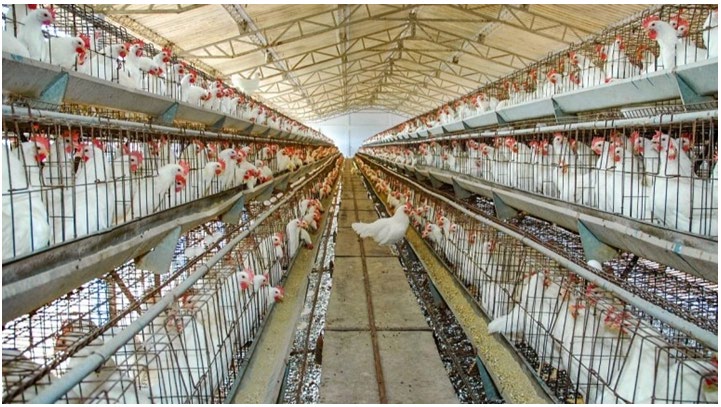
Poultry industries that provide equipment, feeding systems, manual feeders, water systems, drinker heating systems and ventilators, lost their business severely in the past few weeks. There are also 80 crore-odd live poultry, both broilers and layers, at any given time, supplying meat and eggs to consumers. These birds and animals, in turn, support the livelihoods of poultry and dairy farmers, as well as those producing maize, soybean, mustard, groundnut, cotton and other coarse grains that are ingredients for livestock feed [10].
Top poultry companies in the country recorded sales of chicken and eggs have halved over the last few weeks, driven down largely by rumours that linked them to the Corona virus infection. The rumors have led to a 50% drop in consumption to 35-40 million birds a week, while prices have dropped by 70%. Overall, chicken business has fallen by 10-11% during the period. A loss to the tune of 30-40% drop in sales in branded chicken business has been observed. In the last four-five weeks, 10-11% loss on earning in un-organized chicken business has occurred. It’s not only companies, but farmers too who are making losses for the past several weeks due to the corona virus scare which has led to a drop in consumption of chicken in the country [11].
The restrictions on movement of vehicles due to lockdown have disrupting the supply-chain at various levels as hatcheries, feed mills, poultry farms and retail outlets. Moreover, the chicken consumption in India is around 1.5 lakh tonnes per week of the value terms, Rs 1,100 crore and about one crore per day old chicks are placed per week at the national. In terms of employment, about 4 crore labors are dependent on the poultry industry India. Though the poultry industry recovered a bit following the clarification issued by them that eating chickens were safe, issues relating to the inter-state movement of eggs and chickens at various parts of the country hurt the sector, he claimed. According to the Association, the industry employs more than 10 lakh poultry farmers and contributes Rs 1.3 lakh crore to the country’s GDP directly. The sector provides a direct benefit to more than one crore maize and soya agriculture farmers. Poultry farming offers direct and indirect employment to over five crore Indian citizens engaged in poultry production, trading, feed manufacturing, agriculture crops, logistics, exports and others. The total loss to the poultry industry in two-and-half-months beginning February this year was pegged at Rs 22,500 crores [12].
Post COVID-19, Livestock Production in China
Prior to COVID-19 outbreak, China’s pork industries were facing problems due to African Swine Fever infection, which has basically ravaged its hog population and sent pork prices rocketing in the past year. Following its pork crisis, China’s poultry farmers are now in dire straits because of the corona virus outbreak. Millions of chickens may soon perish in coming days as much-needed feed is not getting to them in time. The shutdowns in China’s provinces have hit supply chains, with transport restrictions preventing much needed animal feed such as soybean meal from getting delivered to poultry farms, according to analysts and Chinese state media.
This is going to create massive problems in the livestock sector. Even if a local plant has resumed operations, it will still be longer than normal for delivery due to logistics problems as lack of labor, road closures and road checks etc. Already, farmers in Hubei, the epicenter of the virus outbreak are in a “very distressed” situation. There are around 348 million chickens in Hubei, which is the sixth largest poultry producing province in China. Hubei, also a key egg producer, slaughters about 500 million birds each year. The outlook for China’s poultry might be further affected, considering an outbreak of H5N1 bird flu also in Hunan. Over 17,000 poultry had to be culled following the outbreak [13].
Conclusion
During lockdowns, it is relatively easy to close down the factories, IT parks, hotels, Shopping malls and multiplexes but it is not so easy with agriculture and animal husbandry; these sectors will continue to produce. You cannot sudden stop the dairy and poultry units within one or two days. It is the government’s responsibility to ensure that farmers are able to keep their animals alive and market the crop that has been, or will be, harvested during the lockdown period. We need an effective and immediate action plan to manage our agriculture and livestock sectors in the interest of both producers and consumers. The first thing is to ensure free movement of farm produce, livestock feed and veterinary medicines. Many essential services, for instance, were kept out of the purview of the lockdown. Food, feed and agricultural inputs have been specifically notified as essential services.
References
-
Heap RB (1998) Animals and the human food chain. In Waterlow JC, et al. (Eds.), Chapter 17 Feeding a world population of more than eight billion people. Oxford Uni- versity Press, UK.
-
Martin AM (2001) The future of the world food system. Outlook on Agriculture 30(1): 11-19.
-
IFIF (2002) Roger Gilbert personal communication.
-
Corona virus pandemic to bring Asia’s 2020 growth to halt for 1st time in 60 years.
-
Kumar A (2020) Lockdown effect: Low consump- tion of milk, poultry worries ministry. Economic Times (ET) Bureau.
-
Shashidhar A (2020) Coronavirus Impact: Dairy Indus- try Faces 30% Dip in Demand. Business Today.
-
Biswal J, Vijayalakshmy K, Rahman H (2020) Impact of COVID-19 and associated lockdown on livestock and poultry sectors in India. Veterinary World 13(9): 1928.
-
FAO (2020) Mitigating the impacts of COVID-19 on the livestock sector.
-
(2020) Corona virus: Chicken prices fall, poultry indus- try affected. IANS.
-
Sardana V (2020) Amid lockdown, we need action plan to manage our agriculture, livestock sectors. The Indian Express.
-
Kumar PK, Sally M (2020) Corona virus ru- mours hit sales of egg, chicken. Economic Times Bureau.
-
(2020) Covid19: With projected loss- es of Rs 22,500 crore, Indian poultry sector seeks Cen- tre’s intervention. Press Trust of India. Hyderabad.
-
Weizhen T (2020) Hundreds of millions of chickens at risk of being wiped out with much of China locked down due to virus. Livestock.
- hMPV: Is It Another Covid-19 Like Situation?
- Streptomyces: Sources of Novel Discoveries in Antibiotic Research to Combat Antimicrobial Resistance
- A Review of Mosquitoes (Diptera: Culicidae) and Their Biodiversity, Medical and Veterinary Importance
- Past and Current Immunotherapy in Cancer
- Hematological Cancer and Viral Infection
- The Growing Threat of Antimicrobial Resistance in India: Challenges and Solutions