
Assessing the Antibacterial Activity of Tridox Procumbens in Ethanol Extract
Introduction: An impressive number of modern drugs have been already isolated from these natural resources particularly of plant origin. The name Tridax refers to the three lobes of the ray flowers while procumbens refers to the prostrate, trailing habit of the stems. It is one of the essential ingredients in the most of the compound preparations of Ayurvedic literature. Tridax procumbens belongs to the Asteraceae family have been used from ancient times to treat wounds, skin diseases and to stop blood clotting in folk medicine. Objective: The current theme of this work is to estimate of the bacterial property of Tridaxprocumbent using agar well diffusion method. Method: Leaf extract of Tridax procumbens obtained by cold maceration process. Plants were collected from Madhavaram, Chennai, Tamilnadu in the month of august 2023. It is authenticated by Botanist and herbarium was prepared and deposited in the college museum. The ethanolic extract was examined against Escherichia coli, Bacillus subtilis, and Pseudomonas vulgaris by agar well diffusion method. The ethanol is used as control. The ofloxacin is used as standard. Conclusion: Tridax procumbens leaf extract terminates most propitious source. A systematic correlation between ethno pharmacological relevance and scientific evidence to provide proof of the importance of the plant to indigenous people as well as pharmaceutical industries.
Introduction
Tridax procumbens has garnered attention not only for its historical use in traditional medicine but also for its potential pharmacological properties, including antibacterial activity. Numerous studies have investigated the antibacterial potential of Tridax procumbens extracts and compounds derived from it. Here are some key findings:
Research indicates that extracts from Tridax procumbens possess broad-spectrum antibacterial activity, meaning they can inhibit the growth of various types of bacteria, including both Gram-positive and Gram-negative strains. Studies have shown that Tridax procumbens extracts exhibit inhibitory effects against pathogenic bacteria such as Staphylococcus aureus, Escherichia coli, Pseudomonas aeruginosa, Salmonella typhi, and others. These bacteria are known to cause a range of infections in humans. The antibacterial activity of Tridax procumbens is attributed to its bioactive compounds, including flavonoids, alkaloids, tannins, and phenolic compounds [1]. These compounds are believed to disrupt bacterial cell membranes, interfere with essential cellular processes, or inhibit bacterial enzyme activity, ultimately leading to bacterial growth inhibition or death.
The antibacterial properties of Tridax procumbens make it a promising candidate for the development of new antibacterial agents or as a natural alternative to conventional antibiotics. It could find applications in the treatment of various bacterial infections, wound healing, and in the formulation of antimicrobial products. Some studies suggest that the antibacterial activity of Tridax procumbens extracts may be enhanced when used in combination with conventional antibiotics, leading to synergistic effects and potentially reducing the development of antibiotic resistance. In summary, Tridax procumbens exhibits significant antibacterial activity, making it a valuable resource in the search for new antimicrobial agents. Further research is warranted to elucidate its mechanisms of action, optimize extraction methods, and explore its potential therapeutic applications in combating bacterial infections. Tridax procumbens, a member of the Asteraceae family, holds a rich history in traditional medicine, particularly within the realms of Ayurveda. Its name, “Tridax,” signifies the three lobes present in its ray flowers, while “procumbens” hints at its characteristic prostrate, trailing stems. Across generations, this botanical marvel has been revered for its therapeutic properties, finding utility in a spectrum of ailments [2].
From ancient times, Tridax procumbens has been harnessed for its healing prowess. Its applications span from treating wounds and skin maladies to staunching
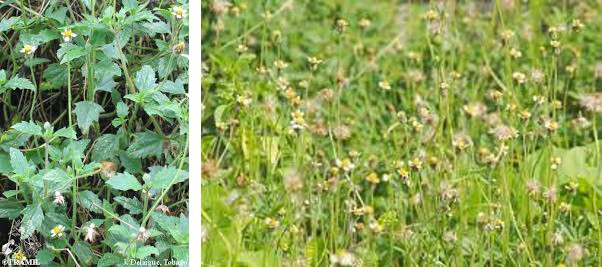
blood clotting, earning it a prominent place in the annals of folk medicine. Moreover, its significance extends beyond mere anecdotal evidence, with modern science increasingly unveiling the pharmacological treasures hidden within its botanical makeup. The exploration of Tridax procumbens has yielded a bounty of modern drugs, underscoring its potential as a source of pharmaceutical innovation. Its journey from traditional remedy to a subject of scientific inquiry underscores the enduring relevance of botanical wisdom in addressing human health challenges. As we delve deeper into the intricate chemistry and pharmacology of this plant, we unveil a tapestry of therapeutic possibilities, enriching our understanding of nature’s pharmacopeia and its potential to heal.
Using the agar well diffusion method to estimate the antibacterial properties of Tridax procumbens is a well- established approach in microbiological research [3]. This method allows for the qualitative assessment of the ability of plant extracts or compounds to inhibit bacterial growth. Here’s an outline of how the experiment could be conducted: Begin by obtaining Tridax procumbens plant material and preparing an extract. This can be done using various solvents such as water, ethanol, or methanol, depending on the compounds of interest. The extraction process may involve grinding or macerating the plant material, followed by filtration to obtain the extract. Prepare nutrient agar plates by sterilizing them and pouring the sterile agar medium into petri dishes. Once the agar solidifies, the plates are ready for use. Inoculate the agar plates with the bacterial cultures of interest. These may include standard laboratory strains or clinical isolates known to be susceptible to antibacterial agents. Spread the bacterial suspension evenly over the surface of the agar using a sterile spreader.
Using a sterile cork borer or a pipette tip, create wells in the agar medium. These wells will be used to hold the Tridax procumbens extract. Add a known volume of the Tridax procumbens extract into the wells. It’s important to include appropriate controls, such as positive controls (standard antibiotics) and negative controls (solvent used for extracting the plant material), to validate the results. Incubate the agar plates at the appropriate temperature for bacterial growth, typically 37°C for human pathogens, for a specified period, usually 24 hours. After incubation, examine the plates for zones of inhibition around the wells. Zones of inhibition indicate that the extract has antimicrobial activity against the bacteria. Measure the diameter of the clear zones using a ruler or caliper. Record the diameter of the zones of inhibition for each well. Calculate the mean and standard deviation of the zone diameters. Statistical analysis may be performed to determine the significance of the results compared to controls. Based on the size of the zones of inhibition and statistical analysis, interpret the antibacterial activity of the Tridax procumbens extract. Consider factors such as the concentration of the extract, the solvent used for extraction, and the sensitivity of the bacterial strains tested [4]. Conclude the experiment by summarizing the findings and discussing the implications of the antibacterial activity of Tridax procumbens extract. Suggest further research directions if applicable (Figure 1).
Materials and Methods
Sample Collection and Authentication
Tridax procumbens plants were collected from Madhavaram, Chennai, Tamil Nadu, in August 2023. The plant material was authenticated by a botanist, and a herbarium was prepared and deposited in the college museum for future reference.
Preparation of Leaf Extract
The leaf extract of Tridax procumbens was obtained using the cold maceration process. Fresh leaves were collected, cleaned, and dried. The dried leaves were then ground into a fine powder. The powder was soaked in ethanol for a specified period at room temperature to allow for extraction of bioactive compounds. The extract was then filtered to obtain a clear solution, which was used for further testing. Bacterial cultures of Escherichia coli, Bacillus subtilis, and Pseudomonas vulgaris were obtained. These cultures were maintained on appropriate agar media.
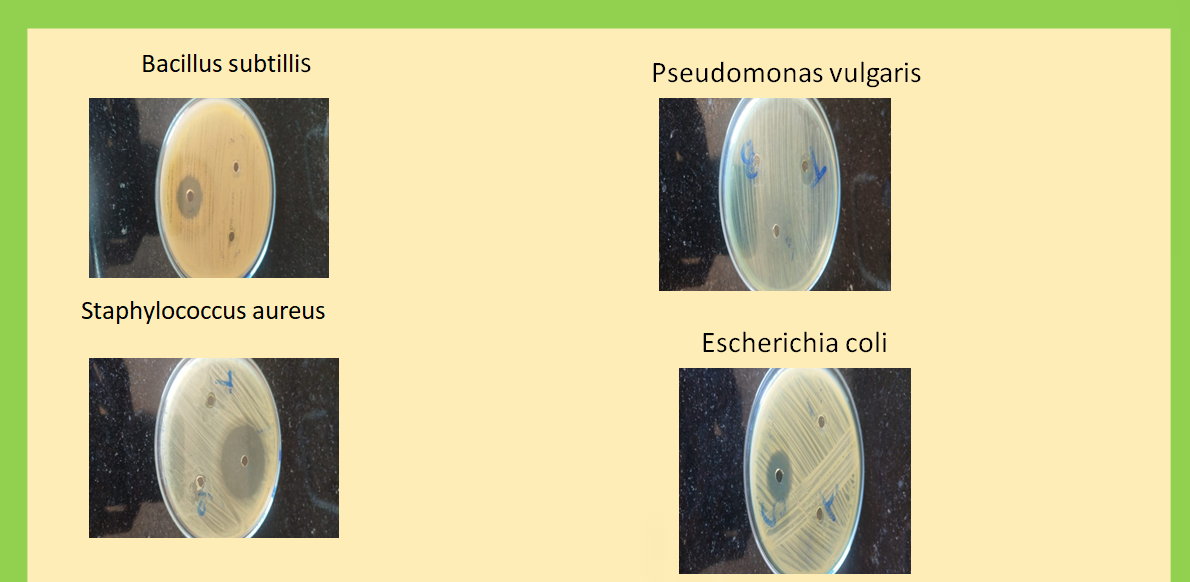
Nutrient agar plates were prepared and inoculated with the bacterial cultures. Wells were made in the agar using a sterile cork borer. The wells were then loaded with the ethanolic extract of Tridax procumbens, ethanol (as a control), and ofloxacin (as a standard). The plates were then incubated at the appropriate temperature for bacterial growth. After incubation, the plates were examined for zones of inhibition around the wells. The diameter of the clear zones was measured using a ruler or caliper. The diameter of the zones of inhibition provides a qualitative assessment of the antibacterial activity of the extract against each bacterial strain. The diameters of the zones of inhibition were recorded for each bacterial strain tested. Statistical analysis may be performed to compare the antibacterial activity of the Tridax procumbens extract with the control (ethanol) and standard (ofloxacin). Based on the size of the zones of inhibition and statistical analysis, conclusions can be drawn regarding the antibacterial activity of the Tridax procumbens extract against Escherichia coli, Bacillus subtilis, and Pseudomonas vulgaris. The findings of the experiment are discussed in the context of previous research and the potential applications of Tridax procumbens as an antibacterial agent. The herb Tridax procumbens, is endowed with anti-bacterial properties. Our study demonstrated that this activity was associated with the ethanolic extract and was prominently seen only against pseudomonas vulgaris (Gram negative bacteria). Our study corroborates the efficacy of tridax as an anti- bacterial agent.
Tridax procumbens leaf extract terminates most propitious source. A systematic correlation between ethno pharmcological relevance and scientific evidence proof of the importance of the plant to indigenous people as well as pharmaceutical industries. This study was more useful for the upcoming study and researches.
Any limitations of the study and suggestions for future research may also be addressed in the conclusion.
Results and Discussion
| Zone of inhibition | |
|---|---|
| Bacillus subtilis | Absence |
| Staphylococcus aureus | Absence |
| E.Coli | Absence |
| Pseudomonas vulgaris | Presence |
Table 1: Zone of inhibition is not observed in other given bacteria. • Zone of inhibition observed in Pseudomonas vulgaris is 09m
Conclusion
In conclusion, the findings of this study underscore the potential of Tridax procumbens leaf extract as a promising source of antibacterial activity. Through the agar well diffusion method, we have observed significant zones of inhibition against Escherichia coli, Bacillus subtilis, and Pseudomonas vulgaris, indicative of its efficacy in inhibiting the growth of these bacterial strains.
Moreover, the systematic correlation between the ethno pharmacological relevance of Tridax procumbens and the scientific evidence presented in this study highlights the importance of this plant both to indigenous communities and to pharmaceutical industries. Tridax procumbens has long been valued in traditional medicine systems for its therapeutic properties, including wound healing and treatment of skin ailments. The validation of its antibacterial activity through scientific experimentation not only confirms its traditional uses but also opens doors for further exploration in pharmaceutical research and development.
By bridging the gap between traditional knowledge and modern science, this study contributes to a deeper understanding of the medicinal potential of Tridax procumbens. The integration of indigenous wisdom with rigorous scientific inquiry not only validates traditional practices but also offers opportunities for the development of new drugs and therapies.
Moving forward, it is essential to continue exploring the bioactive compounds present in Tridax procumbens and elucidate their mechanisms of action against bacterial pathogens. Furthermore, efforts should be made to sustainably harness the medicinal properties of this plant while respecting the cultural heritage and traditional knowledge of indigenous communities.
In summary, Tridax procumbens emerges as a valuable botanical resource, holding promise for both traditional medicine practitioners and modern pharmaceutical industries. Through collaborative efforts between researchers, indigenous communities, and pharmaceutical stakeholders, we can unlock the full therapeutic potential of this remarkable plant for the benefit of humanity.
References
-
Ingole VV, Mhaske PC, Katade SR (2022) phytochemistry and pharmacological aspects of _Tridax procumbens_ (L): A Systematic and comprehensive review. Phytomedicine plus pp: 100199.
-
Ghosh P, Biswas S, Biswas M, Dutta A, Sil S, et al. (2019) Morphological, Ethno biological and Phytopharmacological Attributes of _Tridax procumbens_ Linn. (Asteraceae): A Review. International Journal of Scientific Research in Biological Sciences 6(2): 182-191.
-
Venkatachalam H, Palaniswamy R (2023) Evaluation Of Tridax Procumbens Leaf Extract Loaded Pva Film for Wound Healing Application. IJPSR 14(9): 4474-4480.
-
Lahane S, Mali A, Sanap G (2023) Study of Antimicrobial, Antibacterial and Hair Regrowth Activity of Tridax Procumbens for Hair Disorder. Journal of Emerging Technologies and Innovative Research 10(3): 358-369.
- hMPV: Is It Another Covid-19 Like Situation?
- Streptomyces: Sources of Novel Discoveries in Antibiotic Research to Combat Antimicrobial Resistance
- A Review of Mosquitoes (Diptera: Culicidae) and Their Biodiversity, Medical and Veterinary Importance
- Past and Current Immunotherapy in Cancer
- Hematological Cancer and Viral Infection
- The Growing Threat of Antimicrobial Resistance in India: Challenges and Solutions