
School Students’ Perceptions on Snakes, their Uses and Snakebite in Nepal: Implications for Snake Conservation and Snakebite Prevention
Snakes are globally threatened. Ethnoherpetological activities and perceptions of key components in communities on snakes and snakebites should be assessed for the sustainable use of herpetofauna, conservation plans, and educational interventions intending primary and secondary prevention of snakebites. Herein, we aim to evaluate the magnitude of snake use, the propensity of Nepalese school students for primary and secondary prevention of snakebite. We provided self-administered questionnaires to 72 randomly selected students from seven randomly selected schools from five cities in the lowlands of Nepal. We displayed them images of native snakes to know whether they recognized venomous, mildly venomous or nonvenomous snakes. We documented their perceptions on snakes and treatment seeking behavior following snakebites. Based on their inclination towards killing snakes, we estimated risk-values for each snake species. We found the use of snakes for eight categories. The modern/ayurvedic and traditional medicines were the most mentioned use of snakes. Overall, 14 snakes were likely to be killed by each of informants (p = 0.052, 95% CI = 13.99-21.50). Collective risk-value of all snakes was 0.151 (p = 0.004, 95% CI = 0.0045-Inf). Among all species, Lycodon aulicus was at the highest risk and Amphiesma stolatum and Boiga siamensis were at the least risk of being killed by humans. We found that >46% of respondents (p = 0.030) were aware of snakes and snakebite care. They scored >53% (p = 0.035) responding to 32 awareness test questions. They recognized >12 (60%), >4.5 (30%), and >3 (13%) snakes correctly as venomous, mildly venomous, and non-venomous snakes, respectively. Misconceptions on snakes and secondary prevention of snakebites are prevalent and snakes are at the potential risks for human-caused mortality in the lowlands of Nepal. The risk-value assessments involving species of Nepal’s lowlands provide little insight into which snake species are most likely to be killed by locals and the impact such killing have on the snake population. Therefore, there is a need of engaging school children and teachers as key individuals to disseminate quality information on native venomous snakes, ecological roles of snakes, and medical significance of some species to targeted communities.
Background
Herpetofaunas including snakes are globally threatened mainly due to unsustainable use, killing of reptiles, especially snakes, by humans and at roads by vehicles, bushfires, habitat fragmentation, alteration, loss or degradation, environmental pollution, disease and parasitism, and global climate change [1, 2, 3, 4]. Herpetofauna are exploited for food (as a source of protein), medicine, etc. by several people inhabiting mainly in the tropics and the sub-tropics [5]. Therefore, an update on the ethnozoological knowledge [6] is essential for the sustainable use of fauna keeping biodiversity intact for the sake of mankind.
People collect snakes for traditional folk medicines, foods, pets, goods (e.g., snakeskin belts, purses, bags, and other ornamental items), and recreations (e.g., keeping snakes at zoos and for display by charmers) globally [3, 7, 8, 9]. Snakes are also commercialized widely in registered and non-registered shops, stores, or supermarkets [9]. This exploitation is higher in Asia particularly in India [10]. Despite widespread commercialization, there is a lack of data about snake use in Nepal.
In addition to massive exploitation of snakes for bushmeat or leather, pets, medicine, etc., prejudice against snakes and their killing are major threats to snake conservation globally [3, 4, 11] although snakes have played important roles in numerous human cultures since ancient time worldwide. Including the traditional uses of snakes, beliefs of people on snakes and human interactions with snakes i.e., ethnoophidiology [6] have not been studied comprehensively in Nepal yet.
Since snakes are economically important for protein rich foods, commercial use of skin of large snakes for belts, purses, etc., ethnomedicine or antivenoms, etc. [12], documentation of their uses in Nepal can support to improve its economy by using snakes judiciously and minimize potential threats of commercial use of snakes to the existence of snakes in this country. Some studies have been carried out in the middle hills [13, 14] and southcentral lowlands of Nepal [3], but there are no comprehensive studies carried to understand the patterns of using snakes in Nepal.
There are several sources of mortality of snakes in human activity areas. Predatory animals such as mongoose, feral cats, etc. kill snakes. However, actual data on deaths of snakes due to predators is rare worldwide. Both in towns or agricultural areas, people intend to kill snakes in particular [3, 15]. Road vehicles are next source of snake mortality [15]. Because of poor knowledge on prevention and prehospital care of snakebite, ecological services of snakes, and fear factor [3, 16, 17], the human interactions with snakes almost develop into ruthless killing of snakes. The fear of snake is more intense when there is no or poor knowledge about native venomous snakes [3] because they cause thousands of fatalities in the tropics and the subtropics [18, 19]. Therefore, in addition to their being collected to manufacture belts, purses, key chains, etc. [7], unnecessarily killing of snakes is likely to continue because people considered snakes to be harmful [3, 4]. In Nepal, of the total of 90 snake species reported, two species of cobras (Naja), six species of kraits (Bungarus species), Russell’s Viper (Daboia russelii), at least six species of pitvipers, and a colubrid snake species (Rhabdophis subminiatus) are venomous which may be responsible for the majority of snakebite envenomations and deaths [4, 20, 21, 22, 23]. These snakes and other similar looking non-venomous snakes [23, 24] are being killed by people on sight due to fear factor in Nepal [3, 4]. However, compared with other wild animals, less attention has been given by conservationists and concerned authorities to understand how many snakes and which species are being killed ruthlessly or for certain use and which occupation groups mainly involve in killing or collecting snakes in context of Nepal. Answering these concerns is, therefore, essential to understand the impact of human-caused snake mortality on agro-ecosystems (i.e., human occupied areas) and on local snake populations [4, 11, 25].
Herein, we aim to update knowledge on ethno- ophidiology (use of snakes in Nepal) that can be important for planning herpetofaunal conservation and to understand the perceptions and knowledge of Nepalese school students on snakes and practices for the pre-hospital care of snakebites that can contribute to develop strategies for primary and secondary prevention of snakebites [26].
Methods
Study area
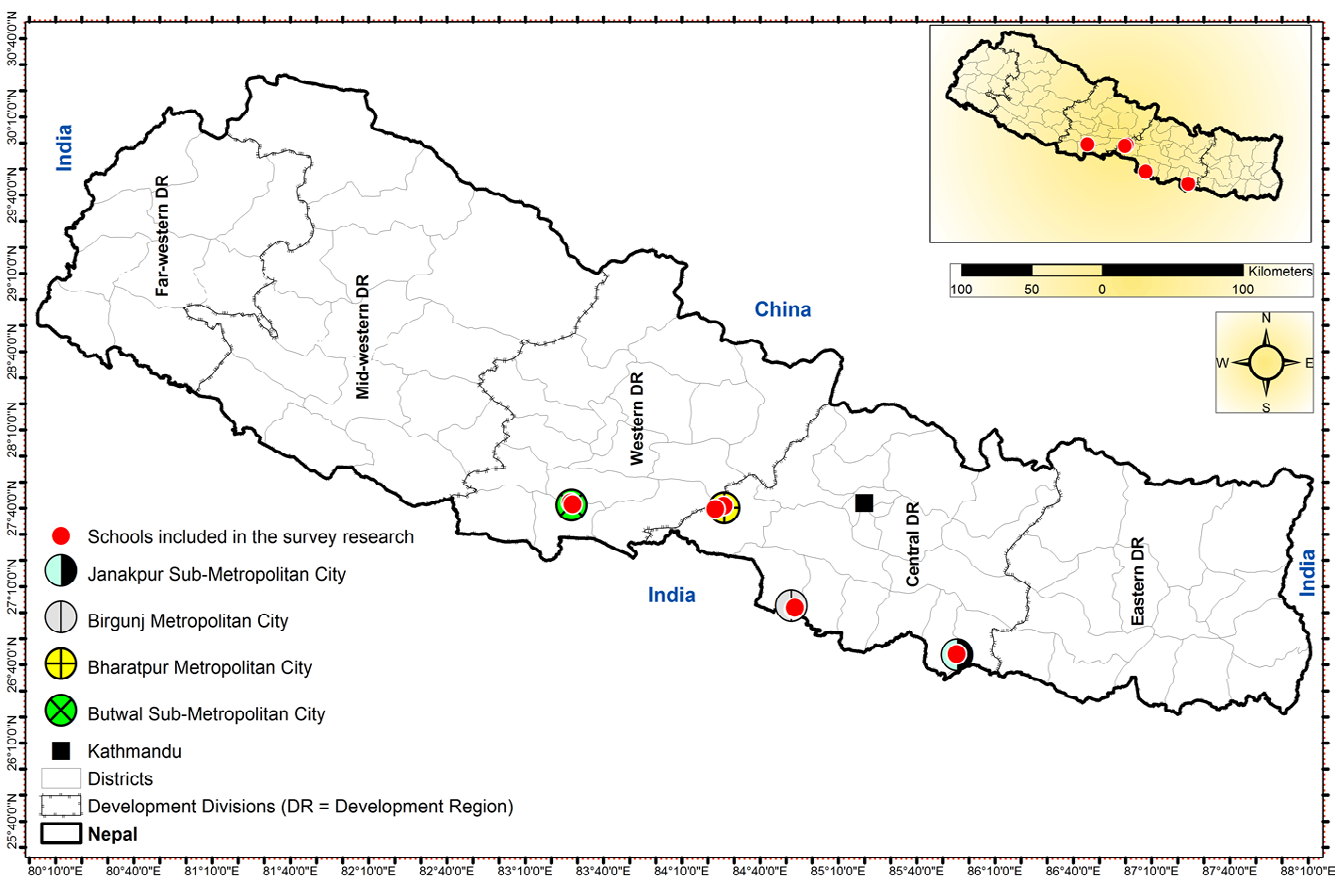
This study was carried out in seven randomly selected public and private secondary schools from four purposively selected cities from the lowlands of Nepal (Figure 1, Table 1), which are mostly occupied by tropical forests and fertile agricultural lands interspersed with forests and Koshi and Gandaki river systems. Here more than 50% of Nepalese inhabit. Because of its tropical climate (with temperature ranging from 10°C to 40°C and average annual rainfall 1500mm), ample habitats for diverse snakes, and greatly dense human population, people inhabiting the southern Nepal is highly prone to snakebites where humans and snakes encounter often resulting in snakebite envenomations and ruthless killing of snakes.
| Types of schools | Name of school and municipality-ward number, District | Sampling units (classes) | Sampling unit population | Sample size (i.e., number of respondents) | Sample size‡ (%) | |
|---|---|---|---|---|---|---|
| Janakpur Sub-Metropolitan City | Government run (Public) | Janaki Secondary School, Janakpurdham-09, Dhanusha District | Class 8 | 67 | 6 | 9 |
| Janakpur Sub-Metropolitan City | Government run (Public) | Janaki Secondary School, Janakpurdham-09, Dhanusha District | Class 9 | 78 | 5 | 6 |
| Janakpur Sub-Metropolitan City | Private (Institutional) | Janakpur Academy, Janakpurdham-09, Dhanusha District | Class 8 | 17 | 6 | 35 |
| Janakpur Sub-Metropolitan City | Private (Institutional) | Janakpur Academy, Janakpurdham-09, Dhanusha District | Class 9 | 14 | 0 | 0 |
| Birgunj Metr. City | Private (Institutional) | St. Xevier Secondary School, Birgunj-11, Sripur, Parsa District | Class 8 | 46 | 6 | 13 |
| Birgunj Metr. City | Private (Institutional) | St. Xevier Secondary School, Birgunj-11, Sripur, Parsa District | Class 9 | 41 | 5 | 12 |
| Bharatpur Metropolitan City | Government run (Public) | Narayeni Model Secondary School, Bharatpur-10, Chitwan District | Class 8 | 240 | 6 | 3 |
| Bharatpur Metropolitan City | Government run (Public) | Narayeni Model Secondary School, Bharatpur-10, Chitwan District | Class 9 | 250 | 5 | 2 |
| Bharatpur Metropolitan City | Private (Institutional) | Small Heaven School, Bharapur-05, Chitwan District | Class 8 | 116 | 6 | 5 |
| Bharatpur Metropolitan City | Private (Institutional) | Small Heaven School, Bharapur-05, Chitwan District | Class 9 | 119 | 5 | 4 |
| Butwal Sub-Metropolitan City | Government run (Public) | Ujir Singha Secondary School, Butwal-04, Ujir Singha Path, Rupandehi District | Class 8 | 94 | 6 | 6 |
| Butwal Sub-Metropolitan City | Government run (Public) | Ujir Singha Secondary School, Butwal-04, Ujir Singha Path, Rupandehi District | Class 9 | 88 | 5 | 6 |
| Butwal Sub-Metropolitan City | Private (Institutional) | Deep Boarding High School, Butwal-08, Sukhanagar, Rupandehi District | Class 8 | 154 | 6 | 4 |
| Butwal Sub-Metropolitan City | Private (Institutional) | Deep Boarding High School, Butwal-08, Sukhanagar, Rupandehi District | Class 9 | 125 | 5 | 4 |
| Total | 1449 | 72 | 5 |
Table 1: Study sites and study samples (sampling units, sampling unit population and sample size).
Symbols: % percent, ‡ sample size/ sample population x 100. Table 1: Study sites and study samples (sampling units, sampling unit population and sample size).
Data collection
We conducted cross-sectional surveys in those schools during Aug-Sep 2019 and collected information using self-administered structured and semi-structured questionnaires provided to 72 eight- and ninth-grader students selected using systematic random sampling from the daily attendance-registers of the respective schools (Table 1, Figure 1). Research assistants including authors facilitated respondents defining specific terms used in questionnaires, displayed visual stimuli [3, 27] (i.e., A4-sized color photographs of adult snakes including photographs of neonatez and juvenile snakes for species with ontogenetic variation in color patterns and known to be distributed in the lowlands of Nepal [3, 23, 28] to measure the ability of school students for differentiating venomous, mildly venomous or non-venomous snakes (Figure 2, Table 2). To avoid duplicating responses for the same questions by respondents, PI and research assistants heeded to respondents in a class room setting (Figure 2). To avoid any bias due to mention of respondent´s name and address in questionnaires, we assigned alphanumeric code provided for signed informed consents.
After permission from the respective school principals, we clearly explained the objectives of our research and asked those students (respondents) if they would participate in the survey research. Then, we obtained written informed consent from the participants for publication of the provided information and any associated images. We did not obligate any respondents to participate in this study. This study was approved by the Directorate of Research and Extension, Agriculture and Forestry University, Rampur, Chitwan, Nepal.
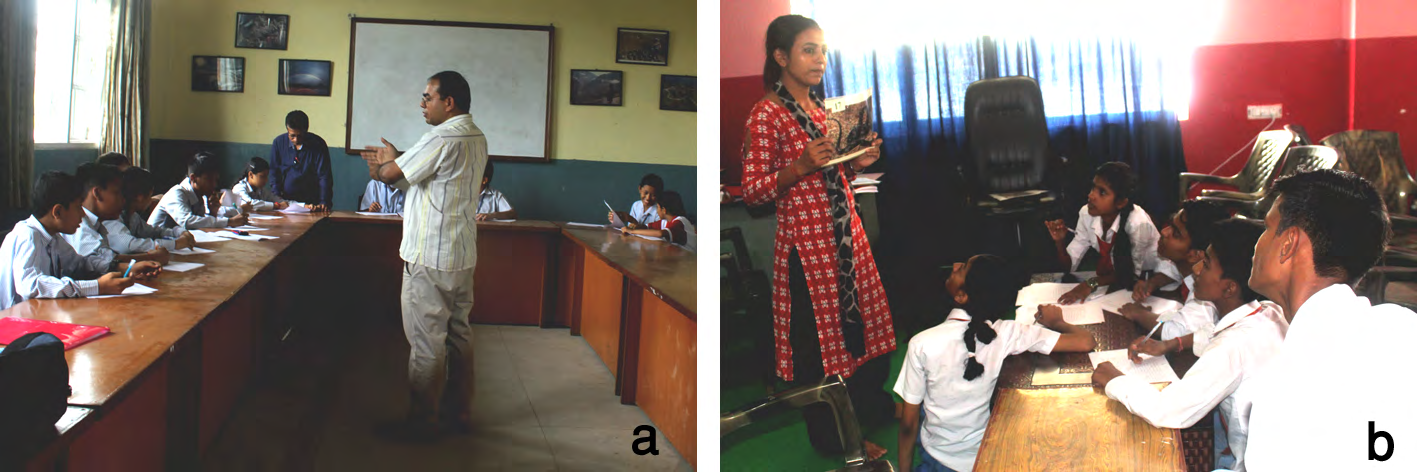
Figure 2: Illustration of typical setting for data collection: showing facilitation of respondents from Small Heaven School, Bharapur-05, Chitwan District for defining specific terms used in the questions by the authors (photo a) and displaying native snake photos (photo stimuli) to the respondents from St. Xevier Secondary School, Birgunj-11, Sripur, Parsa District by research assistant (photo b) while they were filling in the questionnaires.
| SN | Displayed photo number (PN) | Number of photos (n = 58) | Scientific name | Common name | Fam | Tox | Venom apparatus | Risk- value |
|---|---|---|---|---|---|---|---|---|
| 1 | 13,14 | 2 | Lycodon aulicus | Common Wolf Snake | C | Nv | NA | 0.011 |
| 2 | 29 | 1 | Oligodon kheriensis | Coral Red Kukri Snake/ Coral Kukri Snake | C | Nv | NA | 0.005 |
| 3 | 53 | 1 | Psammodynastes pulverulentus | Mock Viper | C | Mv | Bf | 0.005 |
| 4 | 16 | 1 | Enhydris sieboldii | Siebold’s Smooth-scale Water Snake | C | Mv | Bf | 0.005 |
| 5 | 40,41 | 2 | Ahaetulla nasuta | Common Vine Snake/ Common Green Whip Snake/ Green Vine Snake | C | Mv | Bf | 0.005 |
| 6 | 25 | 1 | Coelognathus radiatus | Copper-headed Trinket Snake/ Copperhead Racer | C | Mv | Vs | 0.005 |
| 7 | 15 | 1 | Lycodon striatus | Barred/Shaw´s Wolf Snake | C | Nv | NA | 0.005 |
| 8 | 46 | 1 | Naja kaothia | Monocled Cobra/Monocellate Cobra | E | V | Ff | 0.005 |
| 9 | 18,19 | 2 | Ophiophagus hannah | King Cobra | E | V | Ff | 0.005 |
| 10 | 36,37 | 2 | Ramphotyphlops braminus | Brahminy Worm Snake/ Common Blind Snake/ Brahminy Blind Snake | T | Nv | NA | 0.005 |
| 11 | 38,39 | 2 | Bungarus lividus | Lesser Black Krait | E | V | Ff | 0.005 |
| 12 | 4,5 | 3 | Daboia russelii | Russell´s Viper | Vip | V | Ff | 0.005 |
| 13 | 42,43,44 | 3 | Cryptelytrops albolabris | White-lipped Green Pit-viper/ White- lipped Bamboo Viper | Vip | V | Ff | 0.005 |
| 14 | 57 | 1 | Chrysopelea ornata | Gold and Black Tree Snake | C | Mv | Bf | 0.005 |
| 15 | 49 | 1 | Naja naja | Spectacled/ Common Cobra | E | V | Ff | 0.005 |
| 16 | 33,34 | 2 | Oligodon arnensis | Common/Banded Kukri Snake/ Russet Kukri Snake | C | Nv | NA | 0.005 |
| 17 | 52 | 1 | Rhabdophis subminiatus | Red-necked Keelback | C | V | Bf | 0.005 |
| 18 | 31,32 | 2 | Dendrelaphis tritis | Common Bronzeback Tree Snake | C | Nv | NA | 0.005 |
| 19 | 50,51 | 2 | Eryx johnii | Red Sand Boa/ Brown Earth Boa/ John´s Sand Boa | B | Nv | NA | 0.005 |
| 20 | 30 | 1 | Sinumicrurus m. univirgatus | MaClelland’s Coral Snake | E | V | Ff | 0.004 |
| 21 | 17 | 3 | Bungarus caeruleus | Common Krait, Common Indian Krait | E | V | Ff | 0.004 |
| 22 | 54,55 | 2 | Xenochrophis piscator | Checkered Keelback | C | Mv | Vs | 0.004 |
| 23 | 23 | 1 | Coelognathus helena | Common Trinket Snake | C | Mv | Vs | 0.004 |
| 24 | 21,22 | 2 | Boiga trigonata | Common/Indian Cat Snake, Indian Gamma Snake | C | Mv | Bf | 0.004 |
| 25 | 35 | 1 | Bungarus fasciatus | Banded Krait | E | V | Ff | 0.004 |
| 26 | 10,11 | 2 | Echis carinatus | Saw-scaled Viper | Vip | V | Ff | 0.004 |
| 27 | 1,2,3 | 6 | Python bivittatus | Burmese Python | B | Nv | NA | 0.004 |
| 28 | 56 | 1 | Lycodon jara | Yellow-speckled Wolf Snake/ Twin- spotted Wolf Snake | C | Nv | NA | 0.004 |
| 29 | 6,7 | 1 | Python molurus | Indian Rock Python | B | Nv | NA | 0.004 |
| 30 | 45 | 3 | Ptyas mucosa | Asiatic Rat Snake/ Indian Rat Snake/ Indian Wolf Snake | C | Nv | NA | 0.004 |
| 31 | 26,27,28 | 3 | Amphiesma stolatum | Striped Keelback/ Buff-striped Keelback | C | Mv | Bf | 0.003 |
| 32 | 58 | 1 | Boiga siamensis | Eyed Cat Snake | C | Mv | Bf | 0.003 |
Table 2: Checklist of snake photos displayed while questionnaire survey of school students to assess their knowledge on snakes
Abbreviations: PN = Number of photos displayed (Snakes represented by PN 10 and 11 are presumed to be distributed in the lowlands of Nepal. So, we included this species despite it was not reported from Nepal yet; Nv = Non-venomous; Mv = Mildly venomous; Bf = Back-fanged; Ff = Front-fanged; Vs = Venomous secretion in saliva; NA = Absence of fang; V = Venomous; T = Typhlopidae; B = Boidae; C = Colubridae; E = Elapidae; Vip = Viperidae; Fam = Family; Tox = Toxicity. Note: This checklist was adopted from available published sources [4, 22, 23, 28, 29, 30]. Although Coelognathus radiatus possesses postsynaptic neurotoxin in its Duvernoy´s gland [31], Harris, et al. [32] reported four C. radiatus bites on the feet causing pain and bleeding at the bite site. Therefore, we considered both snakes as mildly venomous while analysing knowledge of students on native snakes. Table 2: Checklist of snake photos displayed while questionnaire survey of school students to assess their knowledge on snakes distributed in the lowlands of Nepal.
Use, hunting or killing of snakes: To understand patterns of using snakes in Nepal, we asked respondents whether or not students or their neighbor killed snakes for food, ethno- medicine, etc. during the recent last one year. We asked them whether they had seen human, road, and predator killed snakes while commuting from school to house or visiting their relatives, etc. since last one year.
Risks of snake being killed by humans and vehicles: We asked four types of questions to understand attitudes of students towards snakes and snake conservation. To scrutinize and measure attitudes, we asked informants pretested questions [3] related to intention of killing snakes, responses to snakes encountered in defined places (i.e., crop fields, roads, premises of house, and indoor), worship of snakes, realizing the need of snake conservation, and snakes as a farmers’ friend.
We phrased the first type of question as, Do you kill this snake (by displaying 58 photographs of 32 snake species distributed in the lowlands of Nepal)?; we coded responses as “yes” for negative attitude and “no” for positive attitudes. We phrased the second type of question as, What do you do when …?; we coded responses as I ignore it, I kill it, I call others to kill it, I kill it only if I know it is a venomous snake, and I just keep it out using sticks (snake hooks, tong, etc.). We phrased the third type of question as, Which of the following do you consider to be…?; we coded “yes/no” responses for All snakes around us should be killed, Only venomous snakes around us should be killed, and All snakes around us should be conserved. The fourth type of questions included whether respondents worshiped snakes and realized the need of snake conservation, and snake as a friend of farmers.
Awareness: To scrutinize the snake and snakebite awareness level among eight- and ninth-grader school students, we asked 32 pre-tested “yes/no” questions [3], which included useful, useless, deleterious, and fictitious information associated to snakes and snakebite management [23, 30]. Of the 32 questions, 26 were considered to test belief of students in popular and deep-rooted traditional beliefs or misconceptions regarding snakes (n = 13) and pre-hospital care of snakebites (n = 13). Two questions tested their belief in doubtful benefits of pre-hospital care in the context of Nepal [16], and four questions were related to first aid measures (e.g., pressure immobilization bandaging (PIB) and local compression pad immobilization (LCPI)) recommended by the World Health Organization and the Government of Nepal [23, 33, 34, 35, 36].
Knowledge: We tested the students’ knowledge on identifying the 58 displayed snakes that are potential to have been collected or killed by locals in the lowlands of Nepal as venomous, mildly venomous or non-venomous and their understanding of the need for snake conservation. Although Coelognathus radiatus is an archetypal nonvenomous snake, it contains postsynaptic colubritoxin [31]. Considering mild effects of its venom, we have grouped C. radiatus and C. helena into mildly venomous snake.
We presented the first type of question as, which one of the following snakes do you think were venomous, mildly venomous or non-venomous? During data entry, we scored their correct responses for the corresponding snake photos 1 through 58 by crosschecking their replies with the aid of list of snakes displayed (Table 2). To measure knowledge of students on the ecological roles of snakes, we phrased questions such as, Do you know ecological roles of snakes? and If you do think so, why? We asked respondents to give five reasons. To quantify knowledge of the need for snake conservation, we phrased questions such as, Do you think snakes need to be conserved? and If you do/don’t think so, why? We asked informants to give five reasons.
Data analysis
Risk-values of snake species: We developed informant indexing technique [adapted from Phillips, et al. [37]] to obtain the risk-value for snake species (i.e., richness of snake species likely to be killed or collected by humans) distributed in the study area and analyzed risk-values for those species using table, descriptive statistics, and non-parametric test. We entered a value of 1 in a spreadsheet (containing respondents in rows and snake species in columns) for “I kill it” response to each of displayed snake species (Table 2) and 0 for those that were not likely to be killed. Then, we obtained an average score for displayed snakes that were likely to be killed by informants. For each species, we calculated the risk-value involving informant indexing technique which is a quantitative method that demonstrates the relative risk of locally distributed snake species.
Our estimate of the risk-value of displayed snake species “s” for being likely to be killed by each of informants “i” is defined as RVis = ∑ Ris/nis, where Ris equals the number of intentions of killing of given species “s” by informants “i” and nis equals the number of events for species “s” with informants “i”. Our estimate of the total risk-value for each species “s” is calculated using the formula: RVs = ∑i Ris/ns, where RVs = risk-value of the snake species displayed; Ris = number of “I kill it” responses by each informant “i” per displayed snake species “s”; ns = number of informants interviewed for species “s”. The calculation of the risk-values of any snake species was based objectively on the responses by the informants themselves, and was not dependent on the opinion of the researcher.
Score analysis: We analysed scores for awareness and knowledge of students using the nonparametric Wilcoxon test with median scores as the dependent measure [38]. We used the one-sample Wilcoxon signed rank test to understand median scores for each of demographic groups (i.e., male and female students, public and private schools) for awareness and knowledge of students about snakes and prehospital care of snakebites, the two-tailed unpaired Wilcoxon rank sum tests to compare differences of scores among demographic groups, and the one-tailed unpaired Wilcoxon rank sum test to compare maximum scores among these groups. We did not conduct analyses for sample sizes lower than six to avoid problems associated with measurement error.
We analysed awareness based on the percentage of median scores of respondents after conducting the Wilcoxon test. We classified students as “highly aware” (HA) in snake and snakebite issues if ≥75 % students rejected believing or accepting traditional beliefs of snakes and snakebite care, refusing to seek doubtful medical care for snakebites, and acceptance of WHO recommended measures of pre-hospital care. Similarly, we considered respondents “aware” (A), “mildly aware” (MA), and “unaware” (UA) if 50-74 %, 25- 49 %, and 0-24 % respondents responded to the awareness test questions, respectively. We considered all tests to be significant at α=0.05. We rounded p-values (p) to three digits after decimal (values less than three significant digits were represented as p = < 0.001). We performed all analyses using the R statistical package (R Version 3.5.2, © 2018 The R Foundation for Statistical Computing Platform).
Results
Use or killing of snakes
Only 26% (n = 19) of the respondents reported knowing the use of snakes for eight categories. These included supply of snake venom to modern/ayurvedic medicine producers (14%, n = 10), blood and other body parts of snakes for the traditional medicine (11%, n = 8), getting snake skin for leather items (e.g., belt, wallet, etc.) (11%, n = 8), food (4%, n = 3), display by snake charmers (3%, n = 2), worshipping in religious function such as “Nagpanchami” (i.e., a serpent festival) (1%, n = 1), keeping them in museum (1%, n = 1), study in biology laboratory (1%, n = 1) in study sites and other areas in Nepal since last one year. Snakes used were either live or dead specimens. The rest of the respondents (74%, n = 53) did not know any uses of snakes. Only 1% (n = 1) of the respondents saw selling of snake by snake charmers in their locality and 94% (n = 68) did not see selling any snakes or snake products in their localities in open markets (e.g. Haat Bazaar) or registered market (e.g., meat suppliers) or in religious article stores. Item non responses for whether informants had seen selling snakes or snake products were three.
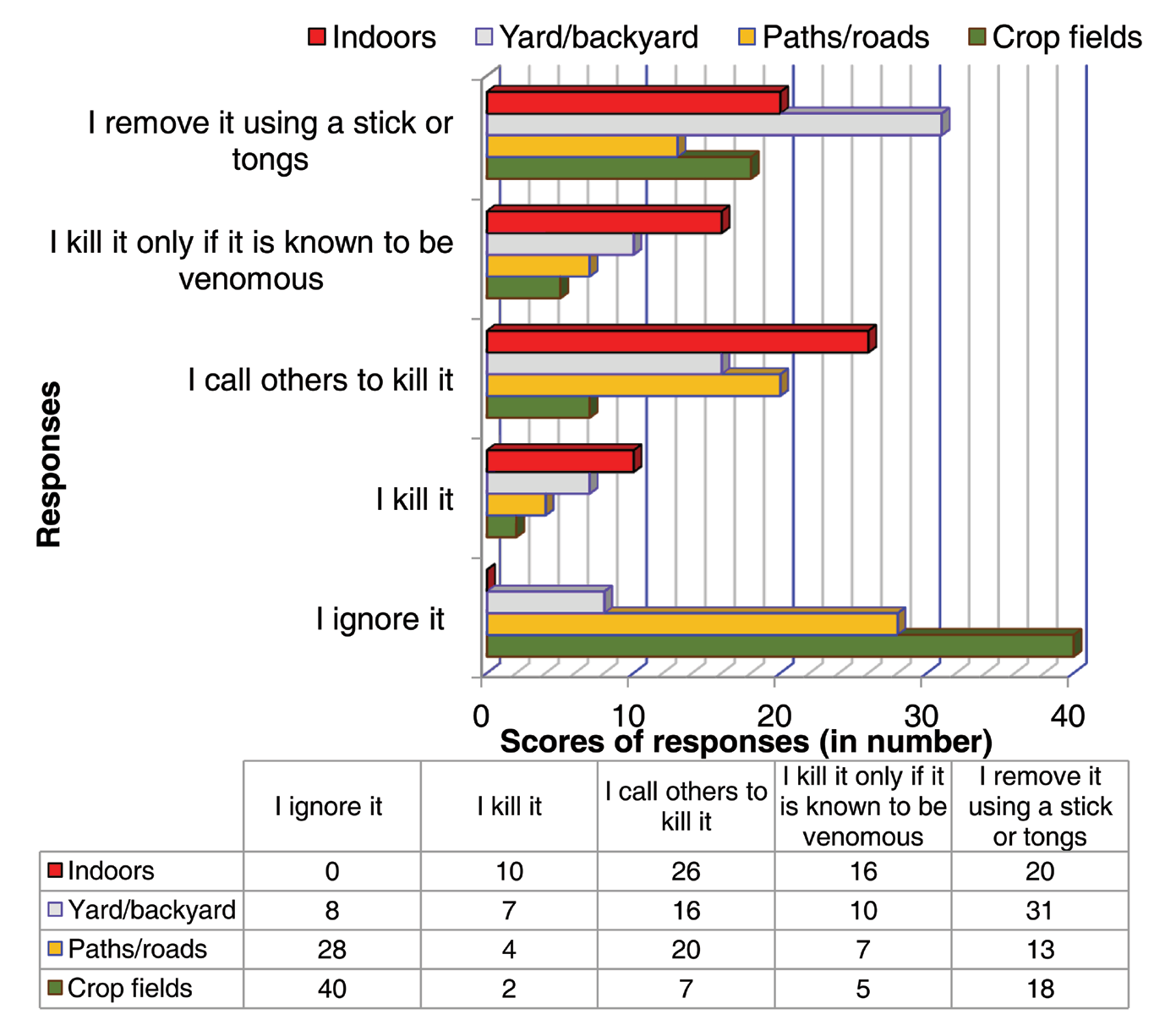
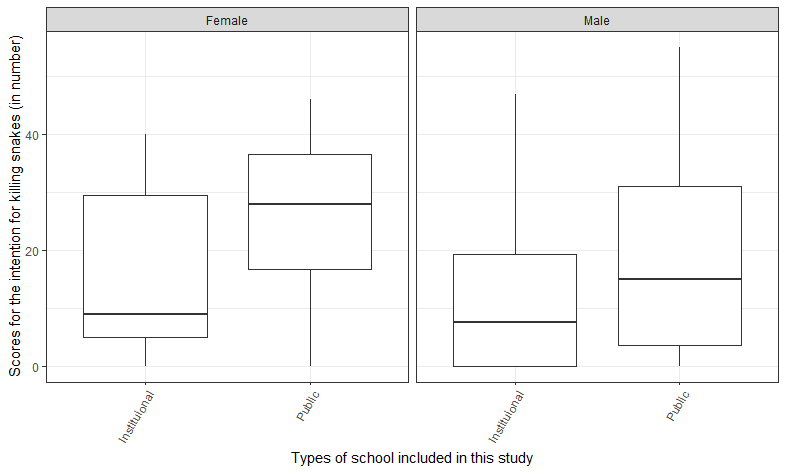
Figure 4: Box and whisker plots showing scores of Nepalese students for the intention of killing snakes (displayed during survey, see Table 2) with respect to their gender and type of school where they were studying (overall scores for intended killing of displayed snakes: mean± standard error of mean (SEM) = 18±1.9, range = 0-55, standard deviation (SD) = 16, median = 14, Wilcoxon signed rank test value (W) = 1659.5, p = 0.052, 95% confidence interval (CI) = 13.99-21.50, item non-responses = 3, invalid responses = 0).
Only 6% (n = 4) respondents killed a total of 10 snakes since last one year. But, respondents observed/came to know killing of snakes by locals considering them either as a harmful animal (44%, n = 32) or showing stunt (29%, n = 21), by vehicles at road (42%, n = 30), and by predators (38%, n = 27) while commuting from school to house or visiting their relatives and those shared by their parents since last one year. Predators they observed killing snakes were eagle (n = 11 mentions), mongoose (n = 10), cat (n = 4), peacock (n = 2), dog (n = 2), and hen (n = 1).
While analyzing risks of human-caused mortality of snakes, we found a high degree of snake killing attitudes of school students while they encountered snakes indoors or in areas with high human activity, such as yard or backyard, roads, etc. in the snakebite prone lowlands of Nepal (Figure 3). These attitudes varied by localities (Figure 3), school types, and sex (Figure 4). Only 3% (n = 2) informants considered that all snakes around us should be killed (item non-response = 1), 50% (n = 36) considered only venomous snakes around us should be killed, and 82% (n = 59) all snakes around us should be conserved (item non-response = 1). Overall, the median number of snakes likely to be killed by each of informants was 14 (mean±standard error of mean (SEM) = 18±1.9, p = 0.052, 95% confidence interval (CI) = 13.99-21.50). Overall risk-value of displayed snakes was 0.151 (median = 0.0045, Wilcoxon signed rank test value (W) = 401, p = 0.004, 95% CI = 0.0045-Inf, range = 0.003-0.011, standard deviation (SD) = 0.001, SEM = 0.0002). Among all species, Lycodon aulicus was found to be at the highest risks and Amphiesma stolatum and Boiga siamensis were at the least risks of being killed by humans in the study sites (Table 2).
Awareness of students about snakes and snakebites
Altogether 1-67% respondents believed traditional beliefs or misconceptions on snakes, which were potential to cause snakebites (Table 3a). In snakebite event, 50-93% respondents would believe to follow up non-recommended interventions for pre-hospital care of snakebite (i.e., sucking wound, squeezing the wound, ingesting herbal medicine, applying herbal medicine topically, applying (tight) tourniquet) (Table 3b). 15-92% students were aware of recommended pre-hospital care of snakebite (Table 3c,d).
| SN | Responses of all respondents | Level of awareness | |||||
|---|---|---|---|---|---|---|---|
| I believe/ seek (N) | I believe/ seek (%) | I don´t believe/ seek (N) | I don´t believe/seek (%) | Item non- responses (N) | |||
| a. Traditional beliefs on snakes (beliefs potential to cause snakebites are italicized) | |||||||
| 8 | All snakes surrounding us are venomous | 1 | 1 | 71 | 99 | 0 | HA |
| 3 | After bites, snakes go to tree- top to view victim´s funeral | 2 | 3 | 70 | 97 | 0 | HA |
| 6 | Snakes can hypnotize | 20 | 28 | 51 | 71 | 1 | A |
| 11 | There are two-mouthed snakes | 21 | 29 | 51 | 71 | 0 | A |
| 13 | Snakes can suckle milk from cows, goats, or sheep | 25 | 35 | 47 | 65 | 0 | A |
| 7 | View of snake on the way/ journey bode good future | 29 | 40 | 43 | 60 | 0 | A |
| 1 | Snakes possess invaluable stone ‘Mani’ | 33 | 46 | 39 | 54 | 0 | A |
| 5 | Snakes can have rebirth | 32 | 44 | 39 | 54 | 1 | A |
| 4 | Some snakes guard the property of people | 36 | 50 | 36 | 50 | 0 | A |
| 9 | Snakes eyes can photograph to take revenge | 38 | 53 | 34 | 47 | 0 | MA |
| 2 | Vine snakes bite only on eye or forehead | 45 | 63 | 27 | 38 | 0 | MA |
| 10 | Kill partner of snake to avoid revenge of survived ones | 48 | 67 | 24 | 33 | 0 | MA |
| 12 | Snakes (e.g., cobras) can dance in tune of music | 56 | 78 | 16 | 22 | 0 | UA |
| b. Traditional beliefs on pre-hospital care | |||||||
| 12 | Ingesting chillies | 2 | 3 | 70 | 97 | 0 | HA |
| 1 | Visiting traditional healers | 6 | 8 | 66 | 92 | 0 | HA |
| 5 | Using snake stone | 7 | 10 | 65 | 90 | 0 | HA |
| 6 | Applying the cloaca of chickens | 8 | 11 | 64 | 89 | 0 | HA |
| 11 | Ingesting other traditional concoction | 18 | 25 | 54 | 75 | 0 | HA |
| 9 | Applying other traditional concoction topically | 20 | 28 | 52 | 72 | 0 | A |
| 7 | Applying honey on the site of bite | 26 | 36 | 44 | 61 | 2 | A |
| 2 | Incising bite site | 28 | 39 | 44 | 61 | 0 | A |
| 3 | Sucking wound | 36 | 50 | 36 | 50 | 0 | A |
| 4 | Squeezing the wound | 41 | 57 | 31 | 43 | 0 | MA |
| 10 | Ingesting herbal medicine | 54 | 75 | 18 | 25 | 0 | MA |
| 8 | Applying herbal medicine topically | 62 | 86 | 10 | 14 | 0 | UA |
| 13 | Applying (tight) tourniquet | 67 | 93 | 5 | 7 | 0 | UA |
c. Seeking medical help of doubtful use
1 Visiting medical person 69 96 3 4 0
2 Visiting any hospital or healthcare center 70 97 2 3 0
d. Recommended measures of pre-hospital care I know (N) I know (%) I don´t know (N) I don´t know (%) Item non- responses (N)
1 Visiting healthcare facilities supplied with antivenom 66 92 5 7 1 HA
3 Pressure immobilization bandaging (PIB) 52 72 20 28 0 A
4 Local compression pad immobilization (LCPI) 35 49 36 50 1 MA
2 Availability of nearby snakebite treatment center 11 15 60 83 1 UA
- Awareness level (determined following methods adopted in Pandey, et al. [3]): UA = unaware (0-24%); MA = slightly aware (25-
- 49%); A = aware (50-74%); HA = highly aware (75-100%).
Table 4: Responses of students to awareness test questions.
General responses Median, range W p- value Median* Median* (%) LA†
Awareness (rejecting traditional beliefs on snakes and prehospital care of snakebite and medical help of doubtful use and accepting modern measures of pre-hospital care); H0(A): M = M0(33), Ha (A): M>M0(33) a. Respondents (n = 72, Table 3) Awareness (rejecting traditional beliefs on snakes and prehospital care of snakebite and medical help of doubtful use and accepting modern measures of pre-hospital care); H0: M = M0(17), Ha: M > M0(17) b. Scores (responses to 32 test questions, Table 3)
41,2-71 365 0.03 33 46 MA
Unawareness (accepting traditional beliefs and medical help of doubtful use and rejecting modern measures of pre- hospital care); H0(UA): M = M0(24), Ha (UA): M>M0(24) 31,1-70 358 0.04 24 33 Item nonresponses (Not answered to questions), H0(IN): M = M0(0), Ha (IN): M>M0(0) 0,0-2 NA NA NA NA
18,9-26 1387 0.035 17 53 A
Unawareness (accepting traditional beliefs and medical help of doubtful use and rejecting modern measures of pre- hospital care); H0: M = M0(13), Ha: M > M0(13) 14,6-23 1472 0.002 13 41 Item nonresponses (Not answered to questions), H0(IN): M = M0(0), Ha (IN): M>M0(0) 0,0-2 NA NA NA NA
- Symbols and Abbreviations: *= Median significantly greater than (after hypothesis test); % = Percent; †Level of awareness; W
- = One-Tailed One-Sampled Wilcoxon Value for respondents who responded particular belief on snakes and/or care of snakebites;
- H0 = Null hypothesis; Ha = Alternative hypothesis; M = Population median; M0 = Hypothesized median; UA = Unaware (0-24%);
- MA = Slightly aware (25-49%); A = Aware (50-74%); HA = Highly aware (75-100%); IN = Item nonresponse; NA = Not applicable
Table 5: Students responding to misbeliefs on snakes, traditional and modern care of snakebites.
a. Scores for awareness (rejecting traditional beliefs and medical help of doubtful use and accepting modern measures of pre-hospital care, n = 32) Demographics All respondents 18,9-26 1387 0.035 17 17-Inf 14,6-23 1471.5 0.002 13 13.5-Inf Male (one- tailed) 18,14-19 460.5 0.008 16.5 17-Inf 14,6-18 350 0.008 13 13-Inf Gender Female (one- tailed) 18,9-24 469.5 0.038 16.5 16.5-Inf 14,8-23 405 0.033 13 13-Inf Male and female (two- tailed) - 654.5 0.941 - minus 2-2 - 636 0.901 - minus 2-2 Government run (Public) (one-tailed) 18,14-26 377 0.042 17 17-Inf 14,6-18 386 0.030 12.5 12.5-Inf School type Private (Institutional) (one-tailed) 17,9-23 493 0.006 16 16.5-Inf 14,9-23 490.5 0.002 13 14-Inf Government and private schools (two- tailed) b. Scores for unawareness (accepting traditional beliefs and medical help of doubtful use and rejecting modern measures of pre-hospital care, n = 32) Median, range W (Aware) p- value Median* 95% CI Median, range W (Unaware) p- value Median* 95% CI - 717.5 0.403 - minus2-2 - 579.5 0.471 - minus2-1
- Symbols and Abbreviations: * = Median significantly greater than (after hypothesis test); n = Total number of awareness test questions; W = Value of One-Tailed One-sample Wilcoxon Signed Rank Test; for One-Tailed Test: Null hypothesis (H0): Population median scores (M) = Hypothesized median scores, Alternative hypothesis (Ha): M > M0; for Two-Tailed Test: Null hypothesis
- (H0): Population median scores (M) = Hypothesized median scores; Alternative hypothesis (Ha): M ≠ M0
Table 6: Awareness of students in the lowlands of Nepal concerning beliefs on snakes and snakebite care.
In general, respondents demonstrated adequate awareness about procedures in case of snakebite. 92 % (n = 66) reported seeking medical attention visiting a healthcare facility supplied with antivenom in case of snakebite (Table 3d). However, only 15% (n = 11) knew where the nearest snakebite treatment centre to their residential areas. Similarly, 99 % of respondents rejected the belief that all snakes surrounding us are venomous and 92 % refused to seek treatment from traditional healers (Table 3 a,b). 49- 72% of respondents accepted widely recommended first aid measures for venomous snakebites (PIB and LCPI) (Table 3d). We found that more than 46% of the respondents (median = 33, p = 0.030, Table 4.a) were aware of snake and snakebite care based on rejecting traditional beliefs on snakes and snakebite care and medical care of doubtful use, and accepting modern measures of pre-hospital care of snakebite victim. These respondents scored more than 53% (median = 17, p = 0.035, Table 4b). In contrast, more than 33% of respondents (median = 24, p = 0.040, Table 4.a) were unaware of recommended pre-hospital care of snakebite as indicated by accepting traditional beliefs and medical help of doubtful use, and rejecting modern measures of pre- hospital care who scored more than 41% (median = 13, p = 0.002, Table 4b). The level of awareness was not significantly different among male and female students and respondents between public and private schools (Table 5).
Knowledge on identifying snakes and their ecological roles
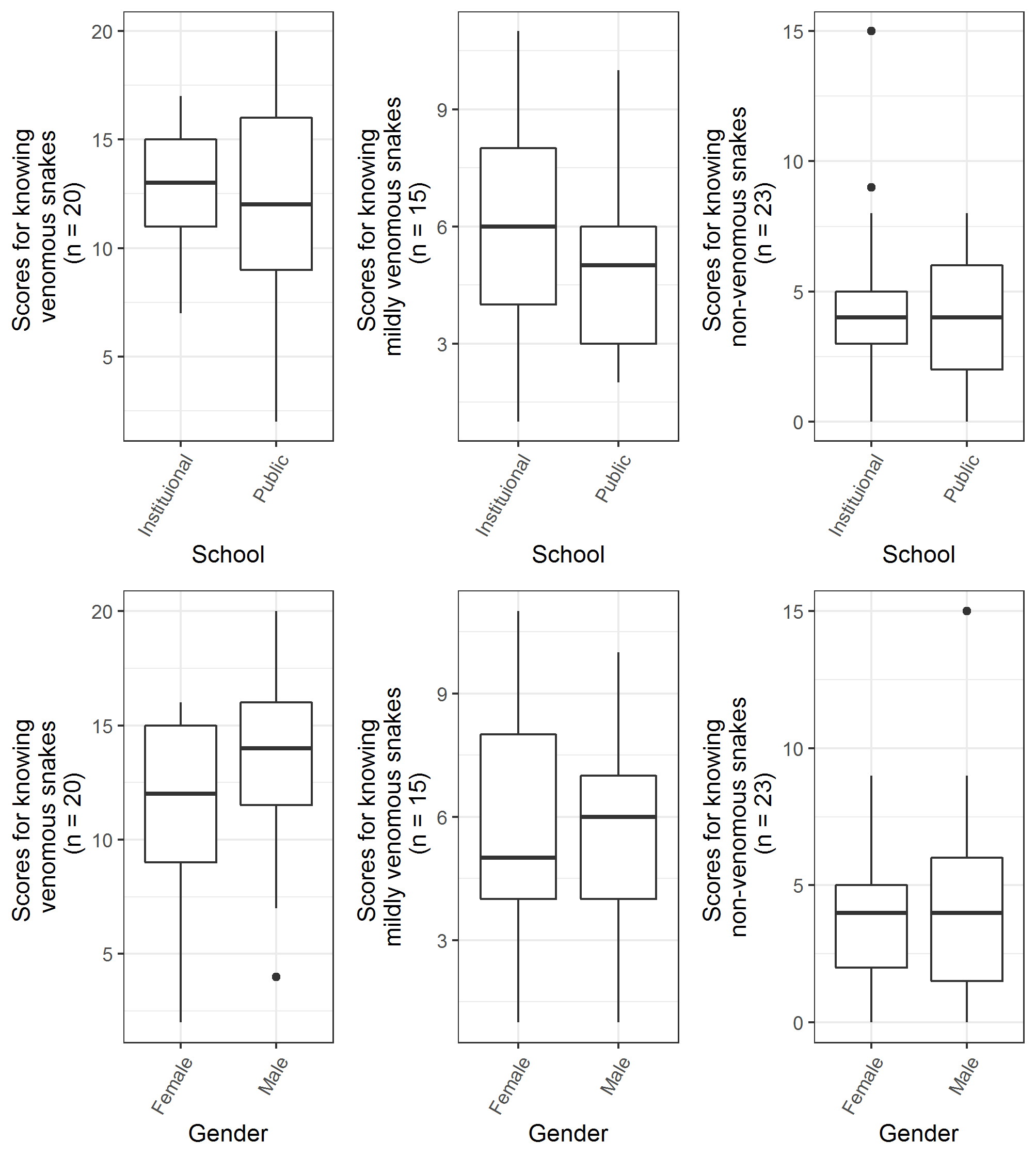
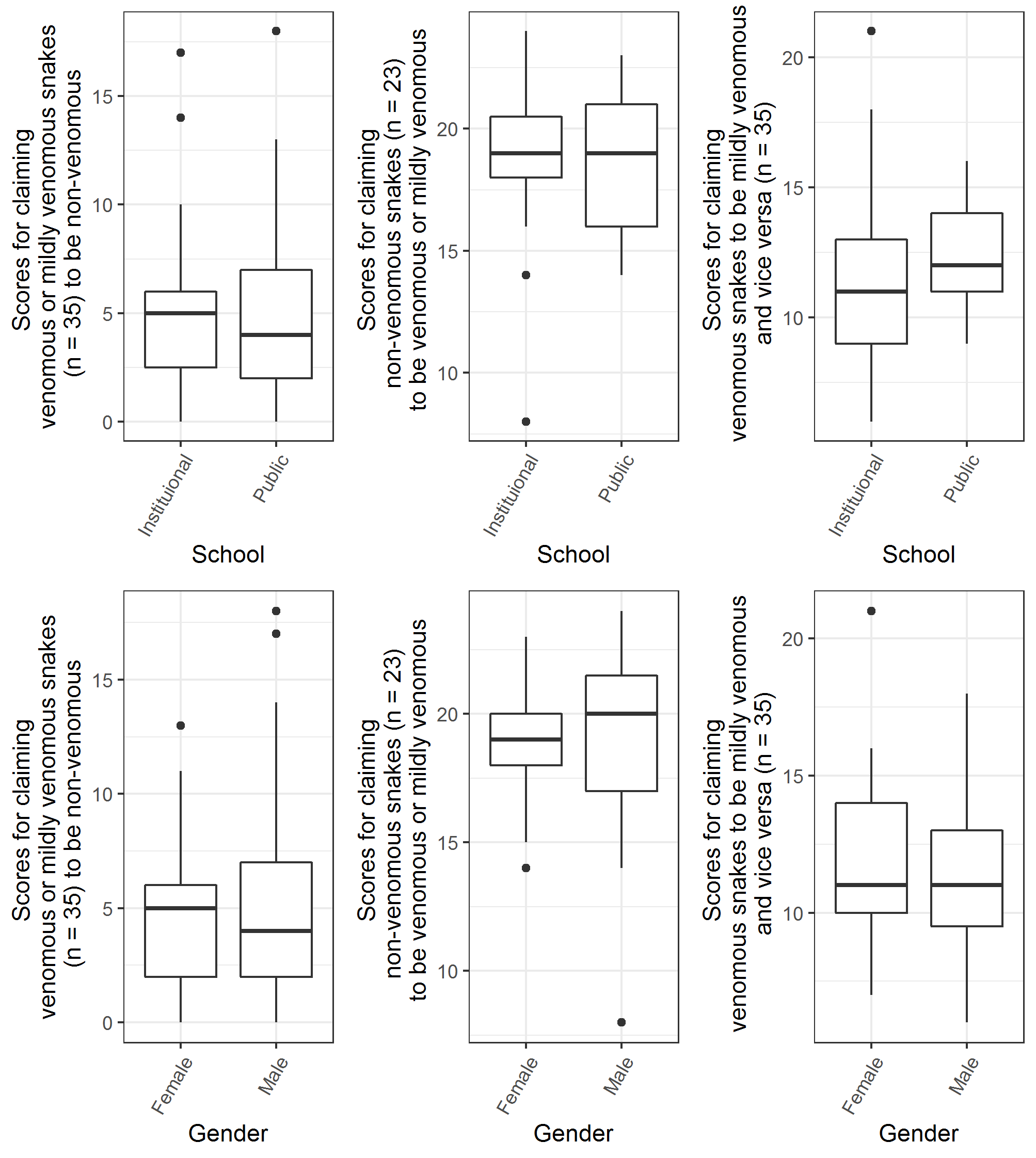
Students received a median score of >12 (60%), >5 (30%), and >3 (13%) for identifying 58 displayed snake photos (Table 2) correctly as venomous, mildly venomous, and nonvenomous snakes, respectively. Similarly, they received a median score of >3.5 (10%), >18 (78%), and >11 (31%) for their claim of venomous or mildly venomous snakes to be non-venomous, non-venomous snakes to be venomous or mildly venomous, and venomous snakes to be mildly venomous and vice versa, respectively (Table 6).
| Hypothesis testing for median scores received by all respondents together | Scores (All respondents) | |||||
|---|---|---|---|---|---|---|
| Median, range | W | p-value | Median* | Median* (%) | 95% CI | |
| For knowing venomous snakes (n = 20); null hypothesis (H0): population median scores (M) = hypothesized median scores (M0 = 12); alternative hypothesis (Ha): M > M0) | 13,2-20 | 1190 | 0.021 | 12 | 60 | 12-Inf |
| For knowing mildly venomous snakes (n = 15); null hypothesis (H0): population median scores (M) = hypothesized median scores (M0 = 4.5); alternative hypothesis (Ha): M > M0) | 5,1-11 | 1823.5 | 0.002 | 4.5 | 30 | 4.9-Inf |
| For knowing non-venomous snakes (n = 23); null hypothesis (H0): median scores (M) = hypothesized median scores (M0 = 3), alternative hypothesis (Ha): M > M0 | 4,0-15 | 1226 | 0.002 | 3 | 13 | 3.5-Inf |
| For claiming venomous or mildly venomous snakes to be non-venomous (n = 35); null hypothesis (H0): population median scores (M) = hypothesized median scores (M0 = 3.5); alternative hypothesis (Ha): M > M0 | 4.5,0-18 | 1770.5 | 0.005 | 3.5 | 10 | 3.9-Inf |
| For claiming non-venomous snakes (n = 23) to be venomous or mildly venomous; null hypothesis (H0): population median scores (M) = hypothesized median scores (M0 = 18), alternative hypothesis (Ha): M > M0) | 19,8-23 | 1492.5 | 0.001 | 18 | 78 | 18.9-Inf |
| For claiming venomous snakes to be mildly venomous and vice versa (n = 35); null hypothesis (H0): population median scores (M) = hypothesized median scores (M0 = 11); alternative hypothesis (Ha): M > M0 | 11,6-21 | 1131 | 0.031 | 11 | 31 | 11-Inf |
| Invalid responses (mean = 0.01) | 0,0-2 | NA | NA | NA | NA | NA |
| Item nonresponses (mean = 0.11) | 0,0-1 | NA | NA | NA | NA | NA |
Table 7: Familiarity of students with native venomous, mildly venomous, and non-venomous snakes.
Symbols and Abbreviation: * = Median Significantly Greater than (After Hypothesis Test); % = Percent; N = Number of Snake Photos Displayed; W = Value of One-Tailed One-Sample Wilcoxon Signed Rank Test. Table 6: Familiarity of students with native venomous, mildly venomous, and non-venomous snakes.
Male and institutional (private) school students had greater score than that of female and Nepal Government run (public) school students for identifying venomous and mildly venomous snakes, respectively. The median scores for identifying non-venomous snakes were similar among males, females, and private and public (institutional) school students (Figure 5). But, median scores for the incorrect responses to displayed snakes were greater among female and institutional school students (Figure 6).
A total of 29% (n = 21) informants replied knowing the need for snake conservation, but only 10% (n = 7) knew the ecological roles of snakes in some extent. A total of 79% (n = 57) informants replied worshipping of snakes during Naagpanchami (a snake worship day in Hindu culture worldwide). But, only 11% (n = 8) considered snakes as a friend of farmers.
Demographics of the Respondents
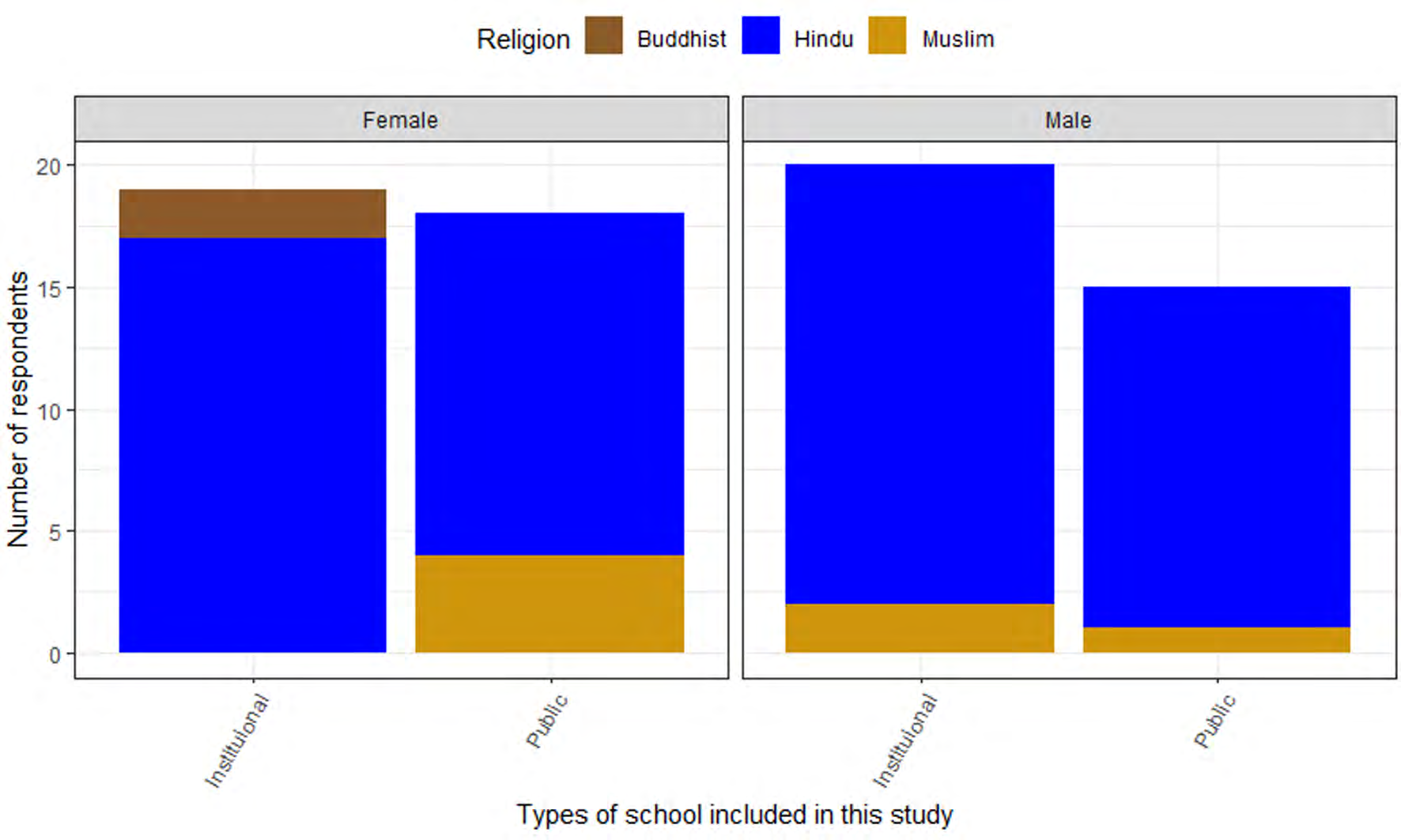
We surveyed 72 randomly selected students attaining eight (58 %, n = 42 students) and nine (42 %, n = 30) grade in public (n = 33 students, 46%) and private schools (n = 39 students, 54%) with a mean age of 14 years (range = 12-18, median = 14, SD = 1.1, SEM = 0.13). Among all informants, 49% were males (n = 35, males and females ratio = 0.95) and 88% (n = 63) were Hindus, 10% (n = 7) were Muslims, and 3% (n = 2) Buddhists (Figure 7, Table 1).
Discussion
Extraction of snakes from its natural population for medicine and food is rare in Nepal although Shah [13] reported the use of amphibians and reptiles as food and medicine in Nepalese communities in 1990s. Snake products are used for ethnomedicines in some extent only. After the fifth amendment of the National Park and Wildlife Conservation rules recently (https://thehimalayantimes. com/kathmandu/new-rules-allow-commercial-farming- reproduction-of-wild-animals/; accessed in 17 Feb 2020), some people are planning for the commercial farming of snakes. However, there is no proof of commercial use of snakes yet. Overall, uses of snakes in the Nepalese community do not pose any threats. However, the intention of killing snakes can be a potential threat for snake conservation in this country.
Use or killing of snakes in Nepal
Categories of using snakes in the lowlands of Nepal known during this study were similar to usage mentioned in a similar study carried in Mexico [39].
Snake as medicine: In Nepal, snakes are used for ethnomedicine only to a minor extent. We found the use of a cobra’s fat to supposedly cure a wound by a single ‘Yadav’ family in Rajdevi Municipality in Rautahat District, southcentral lowlands of Nepal. Pandey, et al. [3] reported use of fats and gall bladder of pythons and fats and intestine of cobras for ethnomedine in the vicinity of Chitwan National Park, southcentral Nepal. Similar ethnomedicinal use of snake product is practiced widely. In India, fat from Pythons is used to cure ailments in joints and muscular pain [40, 41] and flesh from cobras is used in various folk medicine [42]. In Latin America, fat from boa (Boa constrictor) is used in traditional folk medicine [43]. In China, snake gallbladder is used to treat damp and fire, relieve a cough, reduce phlegm, and improve eyesight. It is essential to document any snake products being used for the modern or ethnomedicinal use in Nepal more comprehensively including higher lands.
Snake as food: Snake is not favored bushmeat in Nepal although snakes have served as an important source of protein for human populations in certain parts of the world [5]. Only three percent of the informants had been eyewitness of snake meat being consumed in the lowlands of Nepal. In support of our findings, Pandey, et al. [3] reported fractional use of snakes as bushmeat particularly by ethnic people such as ‘Tharu’, ‘Mushahar’, ‘Kusunda’, and ‘Newar’ in the vicinity of Chitwan National Park, southcentral Nepal. Shah [13] also reported rat snakes being used for food by some ethnic people of Nepal. In Camboida, large number of Enhydris enhydris are exploitated for bushmeat [44]. It is likely that youths who experienced eating snake meat while they worked abroad can relish the bushmeat. This depicted potential use of snakes for high protein rich food as well as medicine in Nepal. However, the magnitude of the exploitation and consumption of snakes as bushmeat varies from country to country depending on cultural ban, influence by governmental policies on wildlife hunting, and socio-economic status of community people. In Nepal, mostly ethnic people and those from lower socio- economic background depend on snake-meat for the supply of animal protein infrequently.
Commercial use of snakes: Despite widespread commercialization of snakes [10, 12, 45], there is a general lack of information about the snake use in Nepal, which makes it difficult to evaluate magnitude and impact of use of snakes on their populations. The Nepalese Government has allowed commercial use of snakes recently (https:// thehimalayantimes.com/kathmandu/new-rules-allow- commercial-farming-reproduction-of-wild-animals/; accessed in 17 Feb 2020). The impact of snake farming policy should be evaluated periodically.
Use of snakes by charmers: Display of snakes by charmers in Nepal is occasional. Snake charming activities are also decreasing in India due to political ecology of snakes [46]. In Nepal, Natuwa tribals mainly adhere to snake charming (cited in: https://www.youtube.com/watch?v=5rwr7y3CvkY, “Sajha Sawal”, BBC Nepali Service, accessed in 13 Oct 2019). Nepal Government authorities are planning to shift their occupation without proper studies. It is evident that some of the snake charmers illegally involved in supplying live venomous snakes and/or their venom to neighboring countries of Nepal.
Use of live snakes for worshipping: Like worshipping live snakes as a symbol of god in “Nagpanchami” (the serpent festival) in Nepal, they are worshipped in India as well [10].
Use of snakes for public display in museums: Although dead snakes are deposited in different parts of Nepal, only 1% (n = 1) of the respondents reported using snakes to display in museum. This reflected no exposures of school students to museums in Nepal where snake collections are maintained.
Use of snakes in biological study in laboratory: From this study, it is evident that snakes are rarely used in biological laboratories in Nepal.
Use of snake as pet: Although snakes are kept as pets (e.g., Asian Ratsnake Coelognathus radiatus) and traded widely [31, 47, 48], we found only an instance of keeping a python as a pet in the midwestern hills of Nepal during our study.
The tendency of killing snakes in Nepal and other regions worldwide is markedly similar although we found a smaller number of direct killings of snakes within the recent last year. We found 44% students who observed/came to know killing of snakes by locals considering them as a harmful animal. More than 50% of the respondents from Mexico mentioned killing snakes because they considered them to be venomous and aggressive animals [39]. 49% students from northeastern Brazil showed negativity towards snakes due to potential risks and myths associated with snakes [49]. 43% of locals from Araponga region of southeastern Brazil [50] responded to kill snakes. 49% respondents in Azerbaijan killed a snake or had seen someone killing it [51].
Although our students showed sympathy towards snake conservation (29%), we found witness of killing snakes by locals showing stunt and responses of large number of informants for killing displayed snakes and those encountered at different defined localities (i.e., crop fields, roads, premises of house, and indoor) (Figure 3,4). Such dual public attitudes towards snakes are common in southcentral Nepal [3] and elsewhere [52]. The snake killing attitude was also common among medical students from the middle hills of Nepal [53]. Overall, we suggest that snakes are at the risks of human-caused mortality in Nepal. This risk might have been intensified by vehicular accidents (42%, n = 30).
Greater knowledge and awareness of people about snakes and their ecological and utilitarian roles decreases the fear of and negative attitudes to snakes. Frequent exposure of people with scientific and environmental educational activities seems to have been influential for the higher tolerance to snakes [27, 50]. Therefore, increasing public knowledge on native venomous snakes, the ecological roles of snakes in general, and primary and secondary prevention of snakebite [26] reduces fear of and negativity towards snakes. This diminishes their attitudes of killing snakes, which in turn, contributes to snake conservation.
Risk-values of native snake species
The risk-values of native snake species (Table 2) can be used to assign priority for the conservation efforts and educational interventions targeted to species at the potential risks of human-caused mortality. The number of interviews per informants per snake species and the number of informants giving information on each species are denominators in the calculations. For the more reliable/ improved estimation of risk-value for each species, one can further adopt re-sampling methods such as bootstrapping. Commercial and subsistence values of each of the displayed snake species (which we could not document due to time and financial constraints) will increase the risk-values for these snake species (Table 2).
Awareness of students about snakes and snakebites
Lower level of awareness of school students on snakes and snakebites (Table 3-5) in this study was comparable to medical students from a medical college in the hills of Nepal [53]. Unlike the satisfactory awareness about seeking medical attention in case of snakebite by 78% respondents and use of traditional treatment of snakebite by approximately 21% of respondents in southeastern Brazil [50], our respondents reported to seek both recommended and non-recommended pre-hospital care practices (Table 3). Such confusion was common among military personnel in southeastern China, too [54].
Although our respondents were more knowledgeable on recommended first aid measures (Table 3) compared with high school students in West Bengal of India [48%, [55]] and snakebite patients referred to Ahvaz Razi Hospital in Iran [56], 93% believed to use a tourniquet in case of snakebite. This confusion with regard to our students could be due to the influence of improper texts about snake and snakebite mentioned in their books [16]. This is supported by the report of similar unawareness among medical students in Nepal [53]. This demonstrates an educational opportunity in Nepal. Since improper practices of pre-hospital care for snakebites increase duration of hospitalization, costs for the treatment, risks of infections, etc. [57], there is a need to improve conditions for people inhabiting regions of Nepal where they are at risk of snakebite.
Knowledge on identifying snakes and their ecological roles
As in southeastern Brazil [57% [50]] and Karnataka, the southern India [59-87%, [58]], students in the lowlands of Nepal were unfamiliar to native snakes. More than 78% (median 18, p = 0.001, Table 6) of displayed non-venomous snakes were claimed to be venomous or mildly venomous by these students, more than 10% (median 3.5, p = 0.005, Table 6) venomous or mildly venomous snakes were claimed to be non-venomous, and more than 31% (median 11, p = 0.31, Table 6) venomous snakes were claimed to be mildly venomous and mildly venomous as venomous snakes by these students. Correct identification of more than 12 (60%, p = 0.021, Table 6) venomous snakes by our students might have been influenced by periodic displays of venomous snakes in national and international television channels and social media, limited information on venomous snakes in school textbooks [16], and transfer of parental knowledge on venomous snakes to their children. The cognizance of venomous snakes by these students was similar to recognizing displayed images by locals in Mexico [39].
Greater scores of males and institutional school students for identifying venomous and mildly venomous snakes (Figure 5), respectively, correspond to the more frequent exposure of students to the extra activities in those schools and exposure of male students to media and extra activities in communities. Like the male students recognizing more snake species than female students did in northeastern Brazil [49], male students scored higher for knowing nonvenomous snakes in this study (p = <0.001). In contrast, we found that female students scored higher for identifying venomous snakes (p = <0.001).
Illogical claim of knowing snakes is prevalent in the southcentral Nepal [3, 59]. Wrong identifications by our students of venomous or mildly venomous snakes to be non- venomous, non-venomous snakes to be venomous or mildly venomous, and venomous snakes to be mildly venomous and vice versa (Table 6, Figure 6) may keep them at the risk of envenomations. They demonstrated a greater intention to kill snakes (median = 14, p = 0.052, 95% CI = 13.99-21.50). A total of 29% (n = 21) informants replied knowing the need for snake conservation, but only 10% (n = 7) knew the ecological roles of snakes to some extent. This gives an educational opportunity in the lowlands of Nepal.
Because of the elusive nature of snakes and their random encounters with humans at night, evening, morning, and day hours, direct observation of snakes involved in bite or snakes killed for different purposes are difficult. According to our informants, it is hard to differentiate kraits from similar looking wolf snakes and banded kukri snakes, cobras from Dhamin, and so on for several locals in other parts of Nepal [3, 23]. Correct identification will prevent needless killing of snakes and this in turn will lessen incidence of snakebites and will contribute to biodiversity conservation.
Our findings of L. aulicus at the greater risks of being killed corresponds to the report of this species being mistaken as krait species at snakebite treatment centers in the lowlands of Nepal by Pandey, et al. [60] and extreme fear of snakes and noticeable ignorance of identifying venomous snakes among students, teachers, and locals in southcentral Nepal by Pandey, et al. [3]. Since there is evidence of treating two proven L. aulicus bite cases in Nepal [60], both medical and non-medical students, teachers, and locals should be made well aware in identifying native medically important snakes in snakebite prone zones elsewhere. A total of 38% (n = 27) informants noticed predators (e.g., eagle, mongoose, cat, peacock, dog, and hen) feeding on a snake while commuting from school to house. Therefore, educating people on the ecological roles of snakes and their natural control by predators through educational interventions can help preventing snakebites.
Conclusion
Our results show there is a need to provide school children with the information on primary and secondary prevention of snakebite, native venomous snakes, and to teach them that snakes have an ecological role to play and that some species are of medical significance. Improving textbooks and providing teachers and students with relevant material will further help to reduce incidences of snakebite and needless killing of snakes. The risk-value assessments involving species of Nepal’s lowlands provide little insight into which snake species are most likely to be killed by locals and the impact such killing have on the snake population. Therefore, conservation strategies should engage students and teachers as key individuals to disseminate quality information to targeted communities. Longitudinal multidisciplinary and sociological research and monitoring of the ethnozoological activities should also be undertaken to eradicate the wrong ideas many people hold of snakes and of the usually ineffective pre-hospital care administered to snakebites by lay people.
Ethical Approval and Consent to Participate
Mentioned in data collection section of the manuscript.
Consent for Publication
Mentioned in data collection section of the manuscript.
Availability of Data and Materials
All data generated or analyzed during this study are included in this article.
Competing Interests
We declare that we have no competing interests.
Funding
This study was funded by the Living with Wildlife, Christies Beach SA 5165, Adelaide, Australia.
Authors’ Contributions
DPP conceived of the study, conducted surveys, analyzed data, and drafted the manuscript, GSP prepared and pre- tested questionnaires and contributed to crosscheck for data entry errors, BC and RCP contributed in data collection and reviews of the manuscript, and NRD critically reviewed the manuscript. All authors read and approved the final manuscript.
Acknowledgements
We are in debt to the teachers and principals of the schools involved as well as to the pupils who so willingly answered our questions. We also thank to Sabita Pandey for assisting in this research and Geoff Coombe from Living with Wildlife, Christies Beach, Adelaide, Australia for the mini-research grant. We appreciate the insightful comments received from anonymous reviewers of its earlier versions.
References
-
Musah Y, Attuquayefio DK, Ofori BY, Owusu EH (2015) Herpetofauna under threat: A study of Kogyae Strict Nature Reserve, Ghana. International Journal of Biodiversity and Conservation 7(11): 420-428.
-
Gibbons JW, Scott DE, Ryan TJ, Buhlmann KA, Tuberville TD, et al. (2000) The global decline of reptiles, déjà vu amphibians. BioScience 50(8): 653-666.
-
Pandey DP, Subedi Pandey G, Devkota K, Goode M (2016) Public perceptions of snakes and snakebite management: Implications for conservation and human health in southern Nepal. Journal of Ethnobiology and Ethnomedicine 12(1): 1-25.
-
Pandey DP, Jelic D, Sapkota S, Lama HM, Lama B, et al. (2018) New records of snakes from Chitwan National Park and vicinity, Central Nepal. Herpetology Notes 11: 679-696.
-
Klemens MW, Thorbjarnarson JB (1995) Reptiles as a food resource. Biodiversity and Conservation 4(3): 281- 298.
-
Alves RRN, Souto WMS (2015) Ethnozoology: A brief introduction. Ethnobiology and Conservation 4: 1-13.
-
Mendonca LET, Vieira WLS, Alves RRN (2014) Caatinga ethnoherpetology: Relationships between herpetofauna and people in a semiarid region of northeastern Brazil. Amphibian and Reptile Conservation 8(1): 24-32.
-
Alves RRN, Vieira WLS, Santana GG (2008) Reptiles used in traditional folk medicine: Conservation implications. Biodiversity and Conservation 17: 2037-2049.
-
Alves RRN, Filho GAP (2007) Commercialization and use of snakes in North and Northeastern Brazil: Implications for conservation and management. Biodiversity and Conservation 16: 969-985.
-
Miller H (1970) The cobra, India´s “good snake”. National Geographic 138(3): 393-409.
-
Dodd CK (1987) Status, conservation, and management. In: Seigel RA, et al. [Eds.], Snakes: Ecology and evolutionary biology. New York: Macmillan Publishing Company, pp. 478-513.
-
Somaweera R, Somaweera N (2010) Serpents in jars: The snake wine industry in Vietnam. Journal of Threatened Taxa 2(11): 1251-1260.
-
Shah KB (1997) Amphibians and reptiles used as food and medicine in Nepal. A project report submitted to T. U. by the Natural History Museum, Swayambhu, Kathmandu, Nepal. Kathmandu: Natural History Museum, pp: 31.
-
Shah KB (2001) Herpetofauna and ethnoherpetology of the southern Annapurna region, Kaski District, Nepal. Journal of Natural History Museum 20: 105-128.
-
Whitaker PB, Shine R (2000) Sources of mortality of large elapid snakes in an agricultural landscape. Journal of Herpetology 34(1): 121-128.
-
Pandey DP, Khanal BP (2013) Inclusion of incorrect information on snakebite first aid in school and university teaching materials in Nepal. Journal of Toxicology and Environmental Health Sciences 5(3): 43-51.
-
da Silva AM, Colombini M, Moura-da-Silva AM, de Souza RM, Monteiro WM, et al. (2019) Ethno-knowledge and attitudes regarding snakebites in the Alto Juruá region, Western Brazilian Amazonia. Toxicon 171: 66-77.
-
Kasturiratne A, Wickremasinghe AR, de Silva N, Gunawardena NK, Pathmeswaran A, et al. (2008) The global burden of snakebite: A literature analysis and modelling based on regional estimates of envenoming and deaths. PLoS Medicine 5(11): 1591-1604.
-
Westly E (2013) One million deaths. Nature 504: 22-23.
-
Pandey DP (2015) Venomous snakes of medical relevance in Nepal: study on species, epidemiology of snake bite and assessment of risk factors of envenoming and death. Frankfurt JW, Goethe University, pp: 231.
-
Sharma SK, Pandey DP, Shah KB, Tillack F, Chappuis F, et al. (2013) Venomous snakes of Nepal: a photographic guide. Lalitpur, Nepal: B. P. Koirala Institute of Health Sciences, Dharan, Nepal, pp: 78.
-
Shrestha TK (2001) Herpetology of Nepal: A field guide to amphibians and reptiles of trans-Himalayan region of Asia. Kathmandu, Nepal: Mrs. Bimala Shrestha, pp: i-viii+280.
-
Pandey DP, Thapamagar C (2019) Medically Important Snakes and Snakebite Management in Nepal. 1st [Edn.], Bharatpur, Nepal: Bishnu Kumari Pandey, pp: xviii+264.
-
Pough FH (1988) Mimicry and related phenomena. Biology of the Reptilia 16: 153-234.
-
Bonnet X, Guy N, Shine R (1999) The dangers of leaving home: dispersal and mortality in snakes. Biological Conservation 89(1): 39-50.
-
World Health Organization Regional Office for the Eastern Mediterranean (2019) Health promotion and disease prevention through population-based interventions, including action to address social determinants and health inequity.
-
Gramza A, Temple S (2010) Effect of education programs on the knowledge & attitudes about snakes in San Isidro de Upala, Costa Rica. Journal of Kansas Herpetology 33: 12-18.
-
Schleich HH, Kastle W, editors (2002) Amphibians and reptiles of Nepal: biology, systematics, field guide. Ruggell, Germany: A.R.G. Gantner Verlag Kommanditgesellschaft, pp: i-x+1201.
-
Pandey DP, Ghimire A, Shrestha BR (2019) Retrospective documentation of a confirmed White-Lipped Green Pit Viper (_Trimeresurus albolabris_ Gray, 1842) bite in the south-central hills of Nepal. Wilderness and Environmental Medicine 30(1): 79-85.
-
Pandey DP (2012) Snakes in the vicinity of Chitwan National Park, Nepal. Herpetological Conservation and Biology 7(1): 46-57.
-
Fry BG, Lumsden NG, Wüster W, Wickramaratna JC, Hodgson WC, et al. (2003) Isolation of a neurotoxin (α-colubritoxin) from a nonvenomous colubrid: evidence for early origin of venom in snakes. Journal of Molecular Evolution 57: 446-452.
-
Harris JB, Faiz MA, Rahman MR, Jalil MMA, Ahsan MF, et al. (2010) Snakebite in Chittagong Division, Bangladesh: a study of bitten patients who developed no signs of systemic envenoming. Transactions of the Royal Society of Tropical Medicine and Hygiene 104(5): 320-327.
-
Regional Office for South-East Asia World Health Organization (2016) Guidelines for the management of snakebites. 2nd Edn., New Delhi: World Health Organization, Regional Office for South-East Asia.
-
Shah KB, Sherstha JM, Thapa CL (2003) Snakebite management guideline. Kathmandu, Nepal: Epidemiology and Disease Control Division, Department of Health Services, Zoonoses Control Sub-section, Government of Nepal, pp: i-vi+57.
-
Sutherland SK, Coulter AR, Harris RD (1979) Rationalisation of first aid measures for elapid snakebite. Lancet 313(8109): 183-186.
-
Tun-Pe, Aye-Aye-Myint, Khin-Ei-Han, Thi-Ha, Tin- Nu-Swe (1995) Local compression pads as a first aid measure for victims of bites by Russell’s Viper (_Daboia_ _russelii siamensis_) in Myanmar. Transactions of the Royal Society of Tropical Medicine and Hygiene 89(3): 293- 295.
-
Phillips O, Gentry AH, Reynel C, Wilkin P, Galvez‐Durand B C (1994) Quantitative ethnobotany and Amazonian conservation. Conservation Biology 8(1): 225-248.
-
Wilcoxon F (1945) Individual comparisons by ranking methods. Biometrics Bulletin 1(6): 80-83.
-
Garcia-Lopez R, Villegas A, Pacheco-Coronel N, Gomez- Álvarez G (2017) Traditional use and perception of snakes by the Nahuas from Cuetzalan del Progreso, Puebla, Mexico. Journal of Ethnobiology and Ethnomedicine 13(6): 1-10.
-
Jugli S, Chakravorty J, Meyer-Rochow VB (2019) Zootherapeutic uses of animals and their parts: An important element of the traditional knowledge of the Tangsa and Wancho of eastern Arunachal Pradesh, North-East India. Environment, Development and Sustainability, pp: 1-36.
-
Chakravorty J, Meyer-Rochow VB, Ghosh S (2011) Vertebrates used for medicinal purposes by members of the Nyishi and Galo tribes in Arunachal Pradesh (North- East India). Journal of Ethnobiology and Ethnomedicine 7(13): 1-14
-
Alves RRN (2012) Relationships between fauna and people and the role of ethnozoology in animal conservation. Ethnobiology and Conservation 1(2): 1-69.
-
Sun HL, Li CQ (2004) The pharmacological action and application of snake’s gallbladder. Northwest Pharmaceutical Journal 19: 285-287.
-
Brooks SE, Reynolds JD, Allison EA, Touch B, Murphy J (2007) The exploitation of homalopsid water snakes at Tonle Sap Lake, Cambodia. Homalopsid Snakes: Evolution in the Mud J C Murphy (ed) Krieger Publishing Company, Malabar, Florida, pp: 31-37.
-
Bin DM, Zhou JT, Zhong FS, Liu J (2006) Study on the formula design and technology of Yongzhou different snake wine. Food and Machinery 22: 130-132.
-
Halder S (2018) Political ecology of snake charming: Evidence from West Bengal, India. South Asian Survey 24(1): 54-87.
-
Stringham OC, Lockwood JL (2018) Pet problems: Biological and economic factors that influence the release of alien reptiles and amphibians by pet owners. Journal of Applied Ecology 55(6): 2632-2640.
-
Alves RRN, de Araujo BMC, da Silva Policarpo I, Pereira HM, Borges AKM, et al. (2019) Keeping reptiles as pets in Brazil: Ethnozoological and conservation aspects. Journal for Nature Conservation 49: 9-21.
-
Alves RRN, Silva VN, Trovao DMBM, Oliveira JV, Mourao JS, et al. (2014) Students’ attitudes toward and knowledge about snakes in the semiarid region of northeastern Brazil. Journal of Ethnobiology and Ethnomedicine 10(30): 1-8.
-
de Moura MR, Costa HC, Sao-Pedro VdA, Fernandes VD, Feio RN (2010) The relationship between people and snakes in eastern Minas Gerais, southeastern Brazil. Biota Neotropica 10(4): 133–141.
-
Landova E, Bakhshaliyeva N, Janovcová M, Peleskova S, Suleymanova M, et al. (2018) Association between fear and beauty evaluation of snakes: Cross-cultural findings. Frontiers in Psychology 9(333): 1-15.
-
Liordos V, Kontsiotis VJ, Kokoris S, Pimenidou M (2018) The two faces of Janus, or the dual mode of public attitudes towards snakes. Science of the Total Environment 621: 670-678.
-
Subedi N, Paudel IS, Khadka A, Shrestha U, Mallik VB, et al. (2018) Knowledge of first aid methods and attitude about snake bite among medical students: A cross sectional observational study. Journal of Occupational Medicine and Toxicology 13(26): 1-7.
-
Chen C, Gui L, Kan T, Li S, Qiu C (2017) A survey of snakebite knowledge among field forces in China. International Journal of Environmental Research and Public Health 14(15): 1-10.
-
Dasgupta A, Bandyopadhyay L, Das M (2014) Effectiveness of health education in terms of knowledge acquisition on first-aid measures among school students of a rural area of West Bengal. Medico Research Chronicles 1(2): 84-91.
-
Ansari S, Dehkorde LG, Sayadi N (2019) Knowledge of snake bite patients referred to Ahvaz Razi Hospital about pre-hospital care. Journal of Advanced Pharmacy Education & Research 9(S2): 140-142.
-
Michael GC, Thacher TD, Shehu MIL (2011) The effect of pre-hospital care for venomous snakebite on outcome in Nigeria. Transactions of the Royal Society of Tropical Medicine and Hygiene 105(2): 95-101.
-
Ali K, Pathak I (2017) Knowledge, attitude and practice regarding snakes and snakebite among interns. Indian Journal of Forensic and Community Medicine 4(4): 229- 231.
-
Pandey DP (2007) Epidemiology of snakebites based on field survey in Chitwan and Nawalparasi Districts, Nepal. Journal of Medical Toxicology 3(4): 164-168.
-
Pandey DP, Sharma SK, Alirol E, Sharma CM, Thapa- Magar C, et al. (2018) Medically relevant venomous snakes and their distribution in Nepal: A hospital based study. Toxicon 150: 331.
- Evaluation of Skin Aging Preventive Effects of Cherry Blossom Petal Extracts Through Antioxidant and Anti-Glycation Activities
- Is Cell Death Responsible for False Positive Results of In Vivo Comet Assay?
- Pattern of Gonadal Hormones in Oral Testosterone-Supplimented Male Wistar Rats with Diabetes-Induced Hypogonadism
- Re-Evaluation of the Genotoxicity of Currently Used Food Dyes in Mouse Multiple Organs Via Continuous Administration by Drinking Using the Comet Assay
- Pharmacogenetics of Type 2 Diabetes Mellitus: Linking Genetic Variability to Drug Efficacy and its Cardiovascular Outcomes
- Exploratory Proteomic Profiling of SARS-CoV-2 Infected THP-1 Macrophages Reveals Alterations in Inflammatory Response and Cellular Metabolism