
Trichoscopy in Diagnisis of Pili Anulati
Pili annulati is an autosomal dominant hair shaft disorder characterized by alternating light and dark bands in hairs of affected individuals. Trichoscopy remains a non-invasive tool to suspect this disorder, confirmed by the examination with polarized light.
Introduction
PILI annulati, or ringed hair, is a rare anomaly of keratin formation in which the hair shafts characteristically shows bright and dark bands when viewed by reflected light.
We present the case of a patient who presents the pili annulati decouvert in trichoscopy.
Case Report
We report the case of a 10-year-old girl, followed for a scalp psoriasis treated with dermocoticoid with good progress. In whom the dermatological examination had revealed shiny hair (Figure 1).
Hair trichoscopy showed an alternation of light and dark bands typical of pili annulati (Figure 2).
The capillary rod examined under polarized light showed an alternation of dark and light zones at regular intervals along their entire length in favor of pili annulati (Figure 3).
Biological examinations performed to detect an associated autoimmune pathology were normal.
The clinical and trichoscopic examination of the mother’s hair was normal.
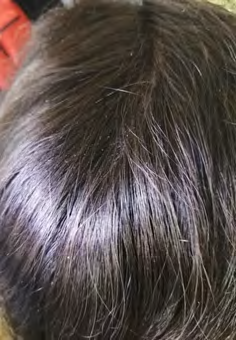
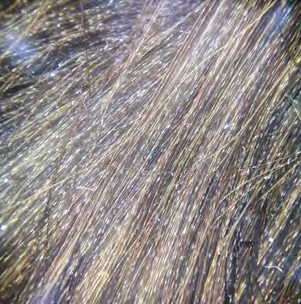
Figure 2: Trichoscopy of the shiny hair of the second girl showing alternation of light and dark bands.
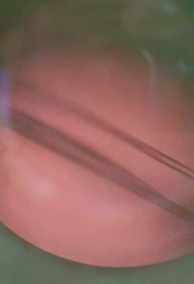
Figure 3: Polarized light showing an alternation of dark and light areas over their entire length.
Discussion
Pili annulati is an autosomal dominant hair shaft disorder characterized by alternating light and dark bands in hairs of affected individuals [1]. However, sporadic cases have also been described [2].
The abnormality is caused by the presence of air-filled cavities within the hair shaft [1].
Usually there is no clinical problem with hair growth, and there are no associated abnormalities of the skin or other organs [3].
In pili annulati trichoscopy shows hair shafts with alternating light and dark bands. Usually about 20-80% of hairs are affected. Trichoscopy remains a non-invasive tool to suspect this disorder, confirmed by the examination with polarized light.
There is no treatment for this disorder, but the prognosis is good and hair growth is usually normal [2].
References
-
Miteva M, Tosti A (2013) Dermatoscopy of hair shaft disorders. J Am Acad Dermatol 68(3): 473-481.
-
Teysseire S, Weiler L, Thomas L, Dalle S (2017) Pili anulati. Annales de Dermatologie et de Vénéréologie 144(5): 399-400.
-
Price VH, Thomas RS, Jones FT (1968) Pili annulati. Optical and electron microscopic studies. Arch Dermatol 98(6): 640-647.
- Epithelioid Granuloma; 3cases with Different Clinical Features
- Advancing Representation in Dermatology Clinical Trials: Ethical, Scientific, and Regulatory Imperatives for Inclusion Across all Fitzpatrick Skin Types
- A Case of Atopic Dermatitis with Concurrent Psoriasis Vulgaris: Successful Treatment with Upadacitinib
- Innovation Lifting Eyeshadow: A Synthesis of Makeup and Optical Illusion
- Distinguishing Superficial Actinic Porokeratosis from Actinic Keratosis with UVF Dermoscopy: A Case Report
- High Mobility Group Box 1 (HMGB1) in Cutaneous Inflammation: An Immune Modulator Bridging Cellular Stress, Ferroptosis and Danger Signaling