
Efficacy and Tolerability of a Novel Facial Serum
Background and objectives: Skin is negatively impacted by both age and environmental factors, leading to a wide range of structural and visible changes. This study assessed whether a single product can improve all visible aspects of aging skin versus simply addressing specific skincare concerns. Methods: A controlled clinical study was conducted on 36 subjects with ages ranging from 38 to 70 years (including men and women and all Fitzpatrick skin phototypes). All study participants applied the test product to the entire face twice per day (once in the morning and once in the evening) for 8 weeks, in addition to continuing their existing skincare routine. Efficacy and tolerability were assessed by thirteen clinically-graded anti-aging parameters and six tolerability parameters (three clinically graded and three self-assessed). Results: The test product was found to be well tolerated and demonstrated statistically significant improvement in all thirteen anti-aging parameters after 8 weeks of use. Conclusion: The test product is not only safe and effective in improving a broad range of anti-aging conditions but works in a manner that is additive to a consumers’ existing skincare routine.
Simon Craw J*, Falla T, Ong D and Butani S
Rodan & Fields, USA *Corresponding author: J Simon Craw, PhD; 60 Spear St, San Francisco, CA 94105, USA, Email: scraw@rodanandfields.com
Introduction
Facial skin aging is an inevitable and constant phenomenon the result of both intrinsic and extrinsic factors: Intrinsic factors affect everyone and include genetic, metabolic, and ethnicity aspects that lead to physiological changes in the skin over time. Extrinsic factors include external environmental effects (such as over-exposure to solar ultraviolet radiation and air pollution), repeated facial movements, and lifestyle conditions (poor dietary habits, smoking, alcohol consumption, stress, sleeping disorders, and health issues) [1].
The underlying mechanism of both the intrinsic and extrinsic aging processes is increased oxidative damage due to the over-production of reactive oxygen species (ROS) and reduced antioxidant activity with advanced age [2]. While the clinical manifestations of intrinsic aging are fine wrinkles, loss of underlying fat, dry, rough, itchy, transparent skin, and progressive skin atrophy (thinning), extrinsic skin aging may be characterized by periocular wrinkles, rough texture, irregular pigmentation or uneven textured skin, lack of extensibility and increased sagging [3, 4]. Advancing age also results in a reduction in cellular energy accompanied by modifications to components of the extracellular matrix (ECM) such as elastin, collagens, and proteoglycans which provide the skin with its elasticity, tensile strength, and hydration respectively [5].
In this paper we explore the ability of a single product, an anti-aging serum, to improve a broad range of anti- aging concerns in individuals with ages ranging from 40 – 70 years. The serum contains an array of novel and unique skincare technologies designed specifically to work together synergistically while at the same time able to be formulated into a single aesthetic form. The present study assesses the efficacy and tolerability of this facial serum when used over the period of 8 weeks by women and men with signs of aging including mild to moderate periocular (crow’s feet and under-eye area) wrinkles and moderate rough texture on the face, some of whom also have self-perceived sensitive skin.
The anti-aging facial serum is designed to address a broad range of anti-aging concerns in a single product, and contains a range of tried and tested anti-aging skincare ingredients as well as a number of novel and unique technologies designed specifically to work synergistically. A key development parameter was that all ingredients can be formulated into a single aesthetic form without loss of function or counter activity.
The serum contains exclusive patent-pending complexes featuring unique combinations of molecules and high purity botanicals chosen to revitalize and protect the skin. Firstly, a proprietary antioxidant complex comprising a carefully balanced blend of MCAP (INCI name methyl carboxymethylphenyl aminocarboxypropylphosphonate), rosmarinic acid (INCI name Rosmarinic Acid) and rutin (INCI name Rutin). This combination has been shown to fortify the skin and defend against a range of environmental aggressors including mitigating skin damage caused by ROS generation and the prevention of photo-induced (UV) aging, by scavenging intracellular free radicals [6, 7]. Rosmarinic acid has also been shown to provide benefit for individuals with sensitive skin, and can reduce the overall severity of symptoms including pruritus and trans-epidermal water loss (TEWL) [8]. Rutin-based skin creams have also been shown to increase skin elasticity and decrease the size and number of wrinkles by increased expression of collagen1 alpha1 (COL1A1) [9].
Second, a blend of ayurvedic-inspired high-purity botanicals including Indian kino extract (INCI name Pterocarpus Marsupium Bark Extract) and sandalwood (INCI name Xymenynic Acid), solubilized in omega-6 fatty acid glycerol esters (INCI name Glyceryl Linoleate (and) Glyceryl Linolenate) to enhance penetration. This combination has been shown to increase levels of skin barrier lipids and proteins such as ceramides, filaggrin and transglutaminase-1 ex vivo [10], biomarkers which correlate with enhancing the barrier function and the skin’s ability to retain moisture.
Thirdly, two proprietary short peptides (INCI names tetrapeptide-16 and oligopeptide-10) that target inflammatory processes, a major underlying cause of both intrinsic and extrinsic aging, that leads to a reduction in collagen synthesis and an increase in the biosynthesis of matrix metalloproteinases (MMPs), inflammatory cytokines, and chemokines. An overall process known as “inflammaging”. Additionally, inflammation can alter the rates of proliferation of skin cells in all layers of the skin, resulting epidermal thinning, flattening of the derma-epidermal junction, irregular/uneven pigmentation [11].
In addition to these three proprietary technologies above, a number of traditional ingredients are also present in the formulation, including: hydroxyapatite (INCI name hydroxyapatite), a calcium containing mineral that helps with visible firmness to make skin feel tighter and more resilient and also regulates keratinocyte differentiation and barrier formation [12, 13]; niacinamide (INCI name Niacinamide) and adenosine (INCI name Adenosine), which play important roles in cellular energy processes and metabolism and may help with skin tone and texture; lecithin (INCI name Lecithin), a phospholipid with strong emollient and humectant properties; and sodium acetylated hyaluronic acid (INCI name Sodium acetylated hyaluronate), so called “super hyaluronic acid” characterized by its affinity to skin and ability to bind water, Asiaticoside (INCI name Asiaticoside) and a urea derivative (INCI name Ethyl Cyclohexyl Urea).
Materials and Methods
This study is a single-center clinical trial, the design of which was reviewed and approved by IntegReview Institutional Review Board (IRB). Prior to the commencement, prospective participants were screened by telephone for suitability using an IRB-approved script. Suitable candidates, both men and women aged between 35 and 70 years, including those with self-perceived sensitive skin, were scheduled for eligibility screening at the clinic. At the clinic, prospective participants completed an eligibility and health questionnaire, were clinically assessed for skin smoothness (global face) and periocular wrinkles. Subjects determined to have moderate skin smoothness (i.e. those scoring between 4 and 6.5 on a modified Griffiths scale, where 0=none, best possible condition; 1-3=mild; 4-6=moderate; 7-9=severe, worst possible condition) and mild to moderate periocular wrinkles (scores between 3.0 and 6.5) were enrolled in the study. Each study participant signed an IRB-approved informed consent form which conforms to Title 21 Code of Federal Regulations (CFR) 50.25. As part of the informed consent process, prospective participants were given as much time as needed to read the informed consent form and given the opportunity to have any study-related questions answered to their satisfaction prior to signing.
Participants the study applied the facial serum to the entire face twice per day (once in the morning and once in the evening) over the course of 8 weeks according to the following instructions: after cleansing (and toning, if applicable) dispense 1-2 pumps of test serum and spread evenly over the entire face, including under the eyes (along the orbital bone) and on crow’s feet. Do not apply on eyelids and avoid getting into eyes. Subsequent to applying the test serum continue to follow regular morning/evening skincare routine as applicable.
Clinical evaluations of each participant is conducted at visit 1 (baseline), visit 2 (week 2), visit 3 (week 4), and visit 4 (week 8). Participants are acclimated to ambient temperature (68°- 75°F) and humidity conditions (35%-65%) for at least 15 minutes prior to clinical evaluation.
Efficacy is determined via clinical grading of fine lines wrinkles (periocular and global face), appearance of pores, skin smoothness (visual and tactile), , softness/suppleness (tactile), firmness (tactile), hyperpigmentation, skin tone evenness, translucence/clarity, radiance/ luminosity/ brightness, and overall appearance (healthy glow). In each case a modified Griffiths 10-point scale is used (as described above).
Local cutaneous tolerability was evaluated by assessing the signs and symptoms of the following parameters on the participant’s face (treatment area): Objective irritation (i.e. clinically graded): erythema, edema, and dryness. Subjective irritation (i.e. assessed by participants): burning, stinging, and itching. Scale used for evaluation is 0=none; 1=mild; 2=moderate; 3=severe.
Statistical Analysis All statistical analyses are performed using SAS software version 9.4 series. For applicable evaluation parameters, mean of the change from baseline (defined as the post- baseline value minus the baseline value) and standard deviation are calculated at each applicable post-baseline time point. The null hypothesis that the mean change from baseline is zero is tested using a Wilcoxon signed rank test for clinical grading of efficacy and tolerability parameters. P values of p<0.05 are considered significant.
Results
Table 1 details relevant basic demographics for study participants. The range of ages of the studies 36 participants was between 38 years and 70 years with a mean 60.4 years, and a greater proportion of females (88.9%) than the males (11.1%). All Fitzpatrick skin phototypes are represented.
No serious adverse events were reported by any study participant. The only possible mild non-serious adverse event related to the study was acne on forehead of a single individual which was completely resolved.
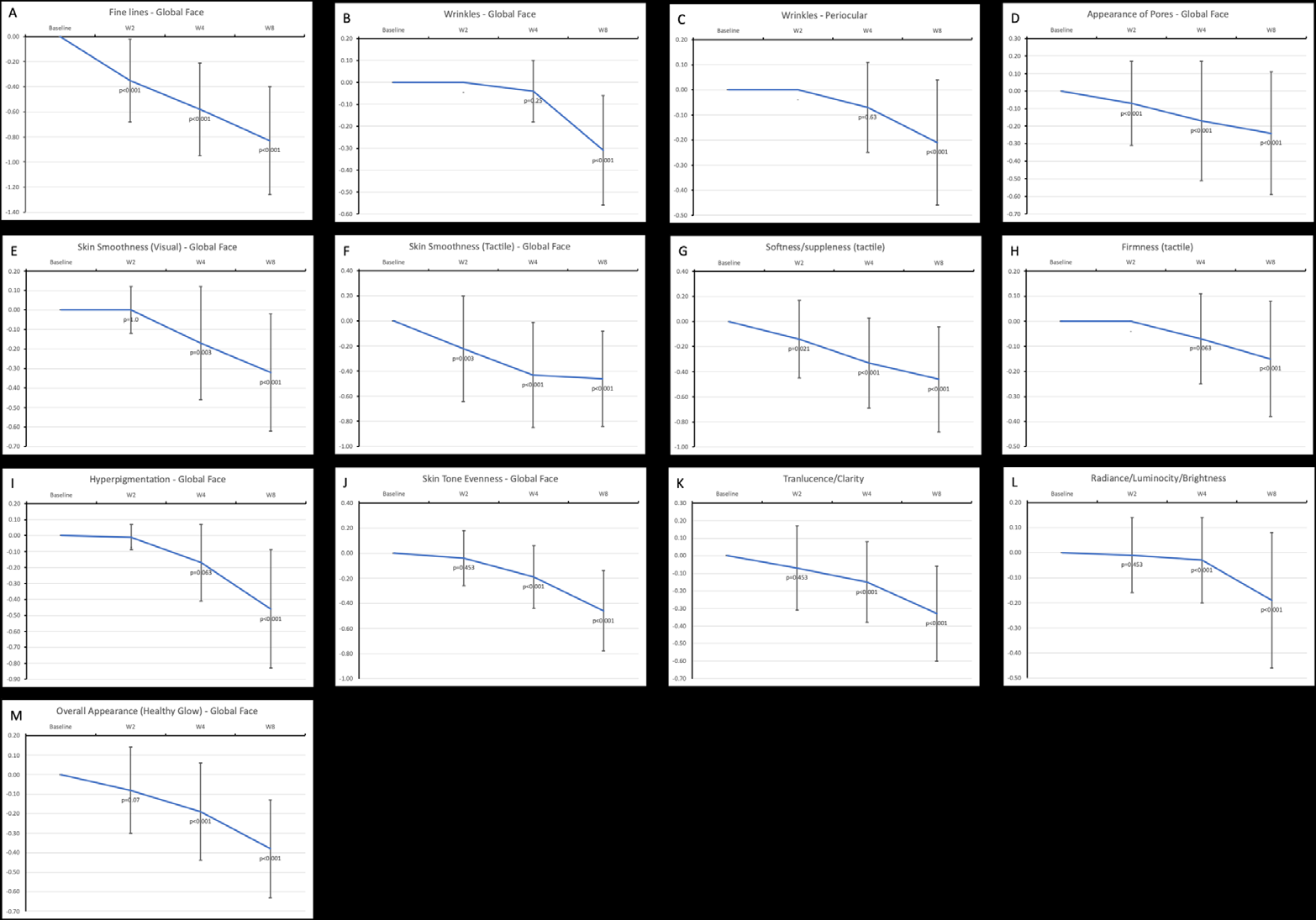
Figure 1: Clinical Grading of Efficacy Parameters, change from Baseline. A. Fine Lines - Global Face, B. Winkles - Global Face, C. Wrinkles - Periocular, D. Appearance of Pores – Global Face, E. Skin Smoothness (Visual) – Global Face, F. Skin smoothness (Tactile) – Global Face, G. Softness/suppleness (tactile), H. Firmness (tactile), I. Hyperpigmentation – Global Face, J. Skin Tone Evenness – Global Face, K. Translucence/Clarity, L. Radiance/Luminocity/Brightness, M. Overall Appearance (Healthy Glow) – Global Face. Error bars are one standard deviation. P values noted where calculated.
The clinical grading results (with all results compared to the baseline measurement) are detailed in Figure 1. A - M. All thirteen clinically graded parameters showed statistically significant improvements compared with baseline after 8 weeks. A number of parameters including fine lines (p<0.001), skin smoothness (tactile) (p=0.003), and softness/suppleness (tactile) (p=0.021) demonstrated statistically significant improvement as early as 2 weeks. A further six parameters: skin smoothness (visual) (p=0.003), hyperpigmentation (p<0.001), skin tone evenness (p<0.001), translucence/clarity (p<0.001), overall healthy glow (p<0.001) and appearance of pores (p<0.001) exhibited statistically significant improvements at week 4, with the remaining four parameter: wrinkles on the global face (p<0.001), periocular wrinkles (p<0.001), firmness (tactile) (p<0.001), and radiance/brightness (p<0.001) taking until week 8 to show improvement when compared with baseline.
Six tolerability parameters were evaluated (0-3 scale) with changes from baseline not detected in any participants in five of the six parameter: edema, dryness, burning, stinging and itching with the remaining parameter, erythema, showing a statistically significant improvement from baseline at week 8 (p=0.008).
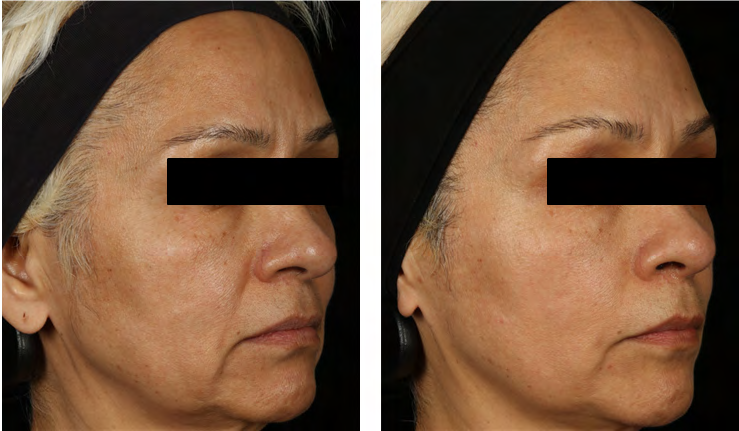
Figure 2 is an image of one subject from the study with representative results demonstrating the visible benefits of the product after 8 weeks.
| Age (Years) | |
|---|---|
| Mean | 60.4 |
| Standard deviation | 7.3 |
| Minimum | 38 |
| Maximum | 70 |
| Median | 62 |
| Demographic characteristics | No. of subjects |
| Sex | |
| Female | 32 (88.9%) |
| Male | 4 (11.1%) |
| Fitzpatrick skin phototype | |
| I | 2 (5.6%) |
| II | 9 (25.0%) |
| III | 11 (30.6%) |
| IV | 4 (11.1%) |
| V | 8 (22.2%) |
| VI | 2 (5.6%) |
| Sensitive skin | 13 (36.1%) |
Table 1: Summary of demographic information-PP population.
Discussion
All thirteen clinically-graded parameters demonstrated statistically significant improvements compared with baseline after 8 weeks of twice daily serum use, with and the majority (8) of those parameters showing improvement at 4 weeks and three as early as 2 weeks. The parameters which demonstrate the earliest onset of benefits: fine lines, smoothness (tactile) and softness are often associated with improved levels of hydration in the skin, something that can occur rapidly when using products with good moisturization properties, as in the case with lecithin and sodium acetylated hyaluronic acid. These hydration-related parameters continue to improve throughout the study period which may be a result of a continuous improvement of the skin’s barrier integrity over the 8 week period, a result which is observed ex vivo with the ayruvedic inspired ingredients: Indian kino extract, sandalwood dissolved in the glycerol esters of linoleic and linolenic acids [10].
The second group of clinical parameters, including pore appearance and hyperpigmentation begin to show statistical improvements at four weeks, likely as the benefits require some degree of cellular turnover and energy before becoming visible. Finally, the last parameter to show improvements include wrinkles (periocular and global face), firmness and radiance. This may be related to the fact that deep wrinkles and skin firmness are typically associated with the properties of the extracellular matrix proteins (for examples collagens and elastin) below the surface of the skin.
In addition, there appears to be minimal tolerability concerns with the twice daily use of the product, with five out of six tolerability parameters remaining unchanged through the 8 week duration of the study. Indeed, one parameter, erythema, showed statistically significant improvement compared to baseline by the end of the study.
A cursory evaluation of Figure 2, the side image of one of the study participants, demonstrates clearly the overall improvements across the range of anti-aging concerns, again correlating well with the clinical evaluation of overall healthy glow.
Conclusions
This study establishes that the test product is both safe and effective, with robust tolerability data and efficacy across a broad range of thirteen clinically-graded anti-aging concerns in both men and women of all Fitzpatrick skin phototypes, when used twice daily and in conjunction with an existing skincare routine over 8 weeks.
Importantly, as subjects were instructed to continue to use their existing skincare routine in addition to applying the test product twice a day, the results of the study also confirm our hypothesis that a well-designed add-on product, containing unique combinations of skincare ingredients which target a broad range of concerns, has the ability to improve the benefits of a consumers’ existing skincare routine.
References
-
Tigges J, Krutmann J, Fritsche E, Haendeler J, Schaal H, et al. (2014) The hallmarks of fibroblast ageing. Mech Ageing Dev 138: 26-44.
-
Poljšak B, Dahmane RG, Godić A (2012) Intrinsic skin aging: the role of oxidative stress. Acta Dermatovenerol Alp Pannonica Adriat 21(2): 33-36.
-
Krutmann J, Bouloc A, Sore G, Bernard BA, Passeron T (2017) The skin aging exposome. J Dermatol Sci 85: 152- 161.
-
Krutmann J, Schikowski T, Morita A, Berneburg M (2021) Environmentally-Induced (Extrinsic) Skin Aging: Exposomal Factors and Underlying Mechanisms. J Invest. Derm 141(4): 1096-1103.
-
Mora Huertas AC, Schmelzer CE, Hoehenwarter W, Heyroth F, Heinz A (2016) Molecular-level insights into aging processes of skin elastin. Biochimie 128-129: 163- 173.
-
Oswald T, Crane C, Hwang C, Craw J, Falla T, et al. (2021) Environmental Stress Protection and Inflammaging Prevention: a Novel Synergistic Antioxidant Blend. Society for Investigative Dermatology Annual Meeting, poster presentation.
-
Masaki H (2010) Role of antioxidants in the skin: anti- aging effects. J Dermatol Sci 58(2): 85-90.
-
Lee J, Jung E, Koh J, Kim YS, Park D (2009) Effect of rosmarinic acid on atopic dermatitis. J. Dermatol 35(12): 768-771.
-
Choi SJ, Lee S, Kim K, Joo DH, Shin S, et al. (2016) Biological effects of rutin on skin aging. Int J Mol Med 38(1): 357-363.
-
Majewski G, Craw J, Falla T (2021) Accelerated Barrier Repair in Human Skin Explants Induced with a Plant- Derived PPAR-α Activating Complex via Cooperative Interactions. Clin Cosmet Investig Dermatol 14: 1271- 1293.
-
Rodan K, Fields K, Falla T (2011) Down-regulation of cathelicidin activity for the management of rosacea- related symptoms and hyperirritable skin. 69th AAD General Meeting. New Orleans.
-
Lee SH, Elias PM, Proksch E, Menon GK, Mao-Quiang M, et al. (1992) Calcium and potassium are important regulators of barrier homeostasis in murine epidermis. J Clin Invest 89(2): 530-538.
-
Lee SE, Lee SH (2018) Skin Barrier and Calcium. Ann Dermatol 30(3): 265-275.
- Epithelioid Granuloma; 3cases with Different Clinical Features
- Advancing Representation in Dermatology Clinical Trials: Ethical, Scientific, and Regulatory Imperatives for Inclusion Across all Fitzpatrick Skin Types
- A Case of Atopic Dermatitis with Concurrent Psoriasis Vulgaris: Successful Treatment with Upadacitinib
- Innovation Lifting Eyeshadow: A Synthesis of Makeup and Optical Illusion
- Distinguishing Superficial Actinic Porokeratosis from Actinic Keratosis with UVF Dermoscopy: A Case Report
- High Mobility Group Box 1 (HMGB1) in Cutaneous Inflammation: An Immune Modulator Bridging Cellular Stress, Ferroptosis and Danger Signaling