
The Gorlin Goltz Syndrome: A Case Report
A 72-year-old patient comes to our attention for multiple basal cell carcinomas on the face, trunk, upper and lower limbs. The patient had been subjected in the past to the removal of multiple lesions histologically found basal cell carcinomas. The patient's clinical phenotype corresponds to Gorlin Goltz syndrome. The patient is nominated for treatment with Sonidegib, a molecule that binds to a protein that controls the Hedgehog signaling pathway thus reducing the proliferation of cancer cells. The clinical effectiveness of the treatment was considerable.
Introduction
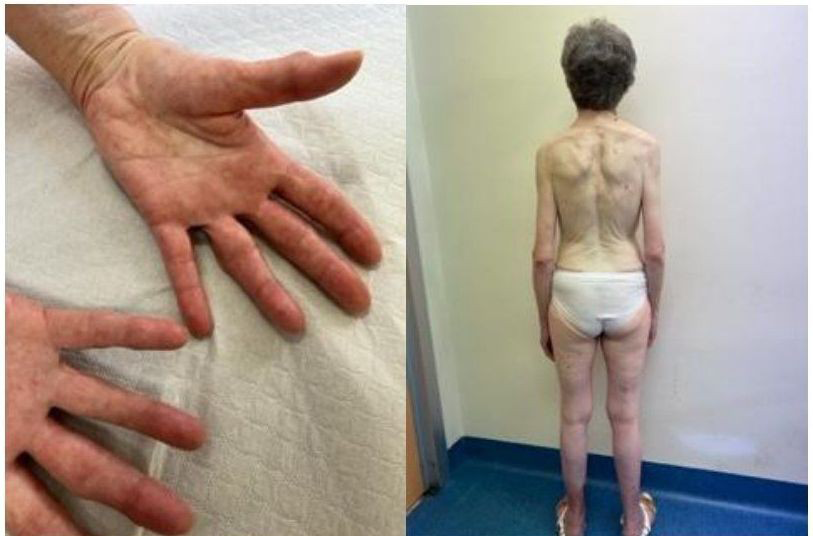
Basal cell nevoid carcinoma syndrome, NBCCS, also known as basal cell nevi syndrome Gorlin Goltz syndrome is a rare syndrome with an autosomal dominant mode of transmission high penetrance and variable expressivity [1]. The syndrome is caused by pathogenetic variants of the line germinal PTCH1 gene on chromosome 9 (9q22.3). The main clinical manifestations consist of a triad of major signs characterized by the presence of multiple basal cell carcinomas, dental keratocysts of the maxillary bones and palmo-plantar pits (Figure 1) [2].
Case Report
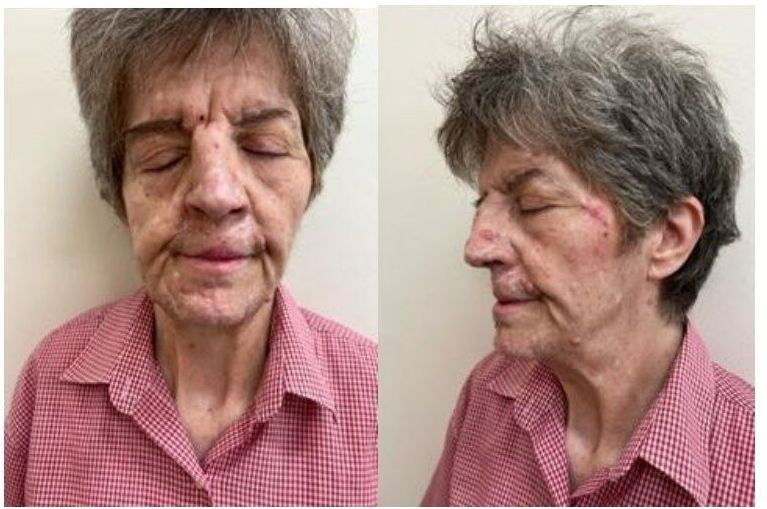
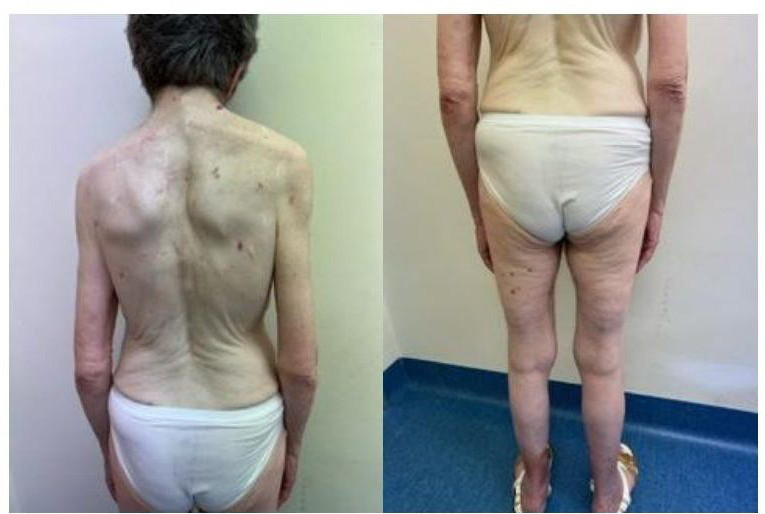
The patient of the clinical case under examination is 72 years old and arrives at U.O.C. of Dermatology of the Pugliese Ciaccio Hospital of Catanzaro for the removal of a basal cell carcinoma nodular and ulcerated about 10 mm in diameter in the region left front to temporal. The patient had already passed to the removal of multiple similar lesions, turned out to be histologically basaliomas. In addition to the major signs represented from the aforementioned clinical triad had some characteristics phenotypic symptoms attributable to minor signs of the syndrome including macrocephalus, hypertelorism, prominent frontal drafts, forehead broad and high, enlarged nose root (Figure 2), Sprengel anomaly or the high congenital scapula (Figure 3), vertebral abnormalities. In history the patient claimed to have been subjected to multiple enucleation interventions of odontogenic cysts of bones maxillary. Gene sequence analysis was performed PTCH1 on chromosome 9. The genetic material extracted from the line. The patient’s entire blood lymphblastoid was subjected amplified by PCR. Were found alterations in gene sequence in gene promoters examined [3]. The methodology used involves a polymerase chain reaction catalysed by the enzyme DNA polymerase and involves an amplification of a known gene sequence. In this case the mutations have been found in some sequences that are not coding but act as promoters. The patient after examination metabolic and infectious haematochemistry screening was candidate for therapy with Sonidegib (ODOMZO® Sun Pharma Italia S.r.l.) 200 mg cp, 1 cp/day per day alternate. Sonidegib binds to a specific target protein blocks the hedgehog pathway by decreasing growth and proliferation of cancer cells.
Discussion
Basal cell carcinoma is the most frequent cancer in humans and in many cases surgery is the treatment solution. In cases where surgery is not enough as in the present case the first line therapeutic opportunity is the systemic treatment with “target therapy” using Hedgehog inhibitors (HHI). Target therapy with SMO protein inhibitors have improved the clinical conditions of many patients. The mutation that activates the Hedgehog pathway is an inactivating mutation in the PTCH transmembrane protein, so the effect inhibitory on the transducer of the SMO signal fails [3]. The therapy is still ongoing and the clinical response trend is in increment. We look forward to quantifying the clinical effectiveness during the next patient follow-ups.
References
-
Kimonis VE, Goldstein AM, Pastakia B, Yang ML, Kase R, et al. (1997) Clinical manifestations in 105 persons with nevoid basal cell carcinoma syndrome. Am J Med Genet 69(3): 299.
-
Bartos V, Kullova M, Adamicova K, Paucinova I (2019) Gorlin-Goltz syndrome. Klin Onkol 32(2): 124-128.
-
Martinez MF, Romano MV, Martinez AP, González A, Muchnik C, et al. (2019) Nevoid Basal Cell Carcinoma Syndrome: PTCH1 Mutation Profile and Expression of Genes Involved in the Hedgehog Pathway in Argentinian Patients. Cells 8(2): 144.
- Epithelioid Granuloma; 3cases with Different Clinical Features
- Advancing Representation in Dermatology Clinical Trials: Ethical, Scientific, and Regulatory Imperatives for Inclusion Across all Fitzpatrick Skin Types
- A Case of Atopic Dermatitis with Concurrent Psoriasis Vulgaris: Successful Treatment with Upadacitinib
- Innovation Lifting Eyeshadow: A Synthesis of Makeup and Optical Illusion
- Distinguishing Superficial Actinic Porokeratosis from Actinic Keratosis with UVF Dermoscopy: A Case Report
- High Mobility Group Box 1 (HMGB1) in Cutaneous Inflammation: An Immune Modulator Bridging Cellular Stress, Ferroptosis and Danger Signaling