
Knee Bone Measurements for Forensic Anthropological Age and Sex Assessment: Uses in Identification and Medicolegal Cases
In forensic anthropology, physical anthropological methods and expertise are used to medical and legal matters of importance. In most situations, the major goals are to assist in the identification of mortal remains and ascertain the circumstances surrounding the remains, especially when there is suspicion of foul conduct. Age and sex identification are often the most important criteria in forensic anthropology when creating a biological profile of an individual. In forensic anthropology, the application of knee bone measurements for sex and age demarcation is a fascinating field since it can provide invaluable insight into the inherent characteristics of individuals. The total knowledge of the conditions around mortal remains can be enhanced by this information, which can be crucial in forensic examinations. Morphological traits can identify probable matches in cases of missing persons by revealing information about an individual's likely ancestry or community affiliation. When examining bones, forensic anthropologists look for fractures, gunshot wounds, trauma marks, or other indications of violence. This data aids in the reconstruction of the incidents that resulted in harm or death. The employment of sophisticated imaging techniques enhances the accuracy of the anthropometric data gathering procedure, and the delicacy of these measures is crucial for reliable results. The field of forensic anthropology depends on establishing the natural profile, particularly age and sex, while sex is determined in part by sexual dimorphism, age assessment heavily depends on bone ossification.
Abbreviations
AFIS: Automated Fingerprint Identification Systems; CPAK: Coronal Plane Alignment of the Knee.
Introduction
Forensic Anthropology
Here are key aspects of forensic anthropology: Forensic anthropologists analyse skeletal remains to establish the biological profile of unknown individuals. This includes determining age, sex, ancestry, stature, and unique characteristics, aiding in identification [1]. Assessment of skeletal features helps estimate the age at the time of death, crucial in determining whether an individual is a minor or an adult [2]. Skeletal characteristics provide insights into the likely ancestral background or population affiliation of an individual, aiding in narrowing down potential matches in missing persons cases. Forensic anthropologists examine bones for signs of trauma, fractures, gunshot wounds, or evidence of violence. This information helps reconstruct events leading to injury or death [3]. Understanding post- mortem processes affecting human remains helps interpret the condition of skeletal remains and provides insights into the time since death and environmental context. Forensic anthropologists play a critical role in mass disaster situations, helping to identify victims through the analysis of skeletal remains [4, 5].
Forensic anthropologist study ancient and historical human remains, contributing to understanding past populations, migration patterns, and cultural practices [6, 7]. Forensic anthropologists provide expert testimony in legal proceedings, presenting findings related to age, sex, trauma, and identification to assist judges and juries [8, 9]. Forensic anthropologists adhere to ethical standards in the handling of human remains, respecting the cultural sensitivities and wishes of communities during investigations.
Forensic Anthropology in Legal System
- Personal identification techniques such as DNA analysis, fingerprints, and eyewitness testimony help link suspects to crime scenes [10]. Matching DNA evidence, fingerprints, or descriptions from witnesses can connect individuals to specific locations or incidents [11].
- Accurate personal identification can either confirm or refute alibis. If an individual’s presence at a location is confirmed through evidence, it can support or challenge their claims of innocence or involvement in a crime.
- Identifying victims and witnesses is essential for legal cases [8]. Personal identification techniques help ensure the accuracy of victim and witness testimonies, contributing to the reliability of evidence presented in court.
- It can exclude innocent individuals from suspicion. If evidence, such as DNA or fingerprints, does not match a suspect, it helps eliminate wrongful accusations and prevents unjust convictions.
- It is crucial in court proceedings to ensure the correct individuals are involved in legal cases. This includes identifying defendants, witnesses, and victims.
- In cases involving humanitarian efforts or human rights violations, personal identification helps establish the identities of individuals affected by conflicts, disasters, or crimes against humanity. This information is crucial for seeking justice and providing closure to families.
- Accurate personal identification strengthens the evidence presented in court. Matching DNA, fingerprints, or other identifiers to suspects or victims reinforces the credibility of legal cases.
Personal Identification
In forensic science, identification is the process of determining a person’s identity by a variety of scientific techniques, usually in the context of criminal investigations.
This procedure seeks to establish a connection between a suspect and a specific crime, or to a person or item at the crime scene [12]. Determining one’s gender, age, race, and stature is the most crucial phase in the process of personal identity. Determining the sex is the first essential step for biological or skeletal identification and can help in both criminal and civil situations [13]. Information about stature and weight, depends on sex identification. Several methods are employed in forensic identification, and these can be broadly categorized into three main types:
Biological Identification
• DNA Analysis: DNA profiling is a powerful tool for individual identification. It involves the analysis of specific regions of an individual’s DNA to create a unique genetic profile [14]. DNA can be extracted from various biological samples, such as blood, saliva, hair, and skin cells.
• Fingerprint Analysis: Fingerprints are unique to each individual and remain unchanged throughout a person’s life. Automated fingerprint identification systems (AFIS) use patterns and minutiae points to match fingerprints found at crime scenes with those in databases [15, 16].
• Dental Records: Dental records, including dental X-rays and charts, can be used for the identification of individuals, especially when other methods are not feasible [11].
• Facial Recognition: This involves comparing facial features captured in images or videos to known databases of individuals. It’s used in conjunction with other methods and is gaining popularity with advancements in technology [12].
Chemical Identification
• Drug Analysis: Identifying and analysing substances found at crime scenes, such as drugs, through techniques like chromatography and spectroscopy [17].
• Trace Evidence Analysis: Examining microscopic particles, fibres, and other small pieces of evidence to link individuals or objects to a specific location or each other.
Physical Identification
• Anthropometry: The dimension of colourful body confines, similar as height and branch lengths, to produce a unique physical profile. While lower common moment, it was historically used before the arrival of further advanced styles. Anthropometry, stemming from the Greek words” anthropos” meaning man and” metron” meaning measure, basically translates to the dimension of man [18, 19]. • Biometric Identification: Biometric identification refers to the process of feting individualities grounded on their unique physiological or behavioural characteristics. Unlike traditional forms of identification similar as watchwords or ID cards, biometrics relies on distinctive features that are natural to an existent [11]. Biometric identification offers several advantages, including increased security and convenience. Since biometric traits are unique to each existent, it’s delicate for unauthorized individualities to impersonate someone differently.
Literature Review
• Identification of age and sex based on knee radiography Author name - Aly SM, et al. [20] Conducting a longitudinal study on epiphyseal union would undoubtedly yield the most accurate results. Data for this study were gathered from 479 subjects aged between 10 and 20 years (255 male/224 female). This study contributes valuable age and sex-specific data pertaining to the knee joint in the Chinese population. The intra- and inter-observer variability demonstrated excellent results. The findings robustly affirm the positive correlations between the three knees [20].
• Forensic age estimation of living persons from the knee: Comparison of MRI with radiographs Author name - Fana F, et al. [21] The study included 322 individuals whose conventional radiographs and MRI scans were collected from routine medical investigations. Bland-Altman plots were employed to assess the agreement between the grading of MRI and radiograph results. The findings revealed that the ossification process in the knee tends to occur earlier in females than in males, with a difference of approximately 1–2 years. Notably, the X-ray grading consistently yielded higher results compared to MRI. The chronological age demonstrated a robust correlation with both MRI and radiograph grading, with all p-values being less than 0.001 [21].
• Methods of skeletal age estimation used by forensic anthropologists in adults: a review Author name – Ekta Priya J [22] Among the various age indicators discussed in the literature, the hip joint stands out as a particularly reliable marker for age estimation in adults. In cases of advanced age, especially when the skeletal remains are fragmented, histological analysis of bone emerges as a viable alternative method for age estimation. Moreover, in the dynamic field of forensic anthropology, advancements such as radiographs, computed tomography, and magnetic resonance imaging are already being employed as complementary sources of data [22].
Common Methods
Forensic anthropologists use various methods to determine the age and sex of individuals based on skeletal remains. These analyses are crucial for creating a biological profile of unidentified individuals in forensic investigations. Here’s an overview of how age and sex determination are approached using bones: • Age Determination: The state of dental development, eruption, and tooth wear can provide an estimate of an individual’s age, especially in children and adolescents [23, 24]. The fusion of epiphyses (the ends of long bones) is a process that occurs as a person matures. The degree of fusion can help estimate age in individuals up to their early twenties [25]. The closure of cranial sutures can be used to estimate age in adults. As an individual ages, the sutures between the bones of the skull gradually close [26]. In juveniles, the length of long bones (femur, humerus, etc.) can be correlated with age. However, this method is more applicable to children and adolescents [27, 28]. Microscopic examination of bone tissue can provide information about the rate of bone remodelling, which varies with age [29].
• Sex Determination: The pelvic bones are often the most sexually dimorphic skeletal elements [30]. The shape of the pelvis, including the pelvic inlet, sciatic notch, and subpubic angle, can be indicative of the individual’s sex [31]. Male and female skulls exhibit differences in size and shape. For example, males tend to have more prominent brow ridges, more robust mandibles, and larger external occipital protuberances [32]. The mandible (lower jaw) can exhibit sex-related differences, such as the shape of the mandibular ramus and the chin [33]. Some long bones, such as the femur and humerus, may exhibit sexual dimorphism in terms of size and robustness [34]. The overall morphology of the skull, including the size and shape of certain features, can be used for sex determination [35].
Knee Joint and Patella
The patella, commonly known as the kneecap, is a small, flat, triangular bone located in the front of the knee joint. While the primary function of the patella is to protect the knee joint and enhance the leverage of the thigh muscles, it can also be of importance in the field of forensic science and personal identification [36] (Figures 1-3).
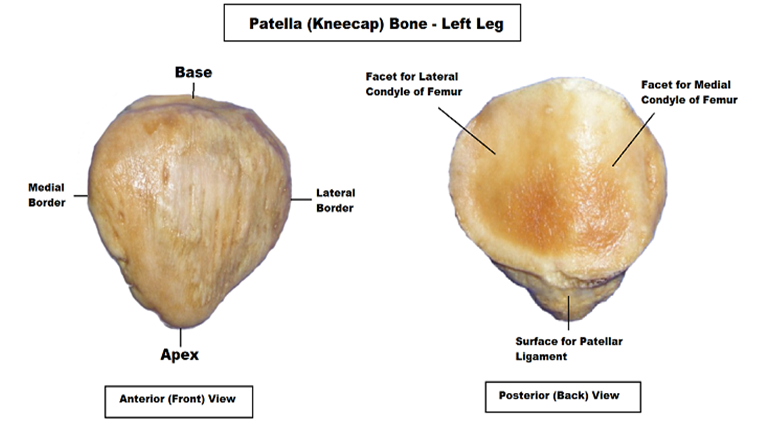
https://www.registerednursern.com/wp-content/uploads/2019/10/patella-site.png Figure 1: Patella (kneecap) bone of left leg both Anterior(front) and Posterior(back).
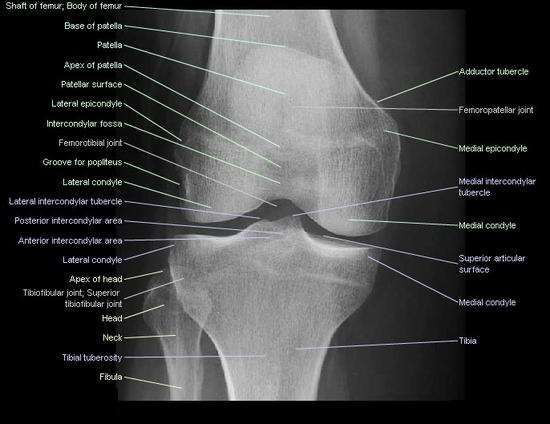
https://ce4rt.com/wp-content/uploads/Positions/knee-anteroposterior-radiograph_imagelarge.jpg
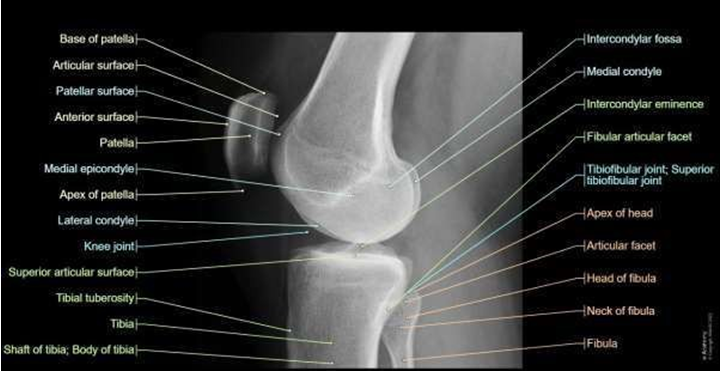
https://www.imaios.com/i/var/site/storage/images/0/1/5/4/484510-1-eng-GB/lowerlimb-radiographs-knee-joint.
jpg?caption=1&ixlib=php-3.3.1&q=75&w=1280 Figure 3: Lateral radiographic view of Right Knee.
Age and Sex Determination by Knee Morphology
While age and sex determination are often more accurately assessed through the examination of skeletal elements such as the pelvis or the skull [31], certain features of the knee joint can provide additional information in forensic anthropology. However, it’s important to note that these characteristics may not be as reliable or precise as those found in other skeletal elements.
Age Determination: Similar to long bones in other parts of the body, the knee joint’s epiphyses, particularly the distal femoral and proximal tibial epiphyses, undergo fusion as an individual ages [37]. The degree of fusion can be indicative of age, especially in younger individuals [38]. The articular surfaces of the knee joint, where the femur and tibia meet, may show changes related to age, such as wear patterns, osteophyte (bony outgrowths) formation, and degenerative changes [39].
Sex Determination: Some studies suggest that the shape of the tibial eminence, a bony prominence on the tibia within the knee joint, may exhibit sexual dimorphism [40]. However, this is not as widely utilized as other skeletal features for sex determination. The size and dimensions of the femoral condyles (the rounded prominences at the end of the femur) may show subtle differences between males and females [41].
It’s essential to approach knee morphology for age and sex determination cautiously, considering that these characteristics might have limited accuracy and can be influenced by factors such as individual variation and population differences. In forensic contexts, comprehensive analyses involving multiple skeletal elements are typically conducted to enhance the reliability of age and sex estimations. The pelvis, cranium, and long bones remain the primary focus for more accurate assessments in forensic anthropology.
Age Estimation Technique
• Radiographic Approaches: Several techniques, including morphologic, radiographic, histological, and biochemical procedures, have been developed to determine age based on dental tissue and tooth shape [42]. The majority of age estimation situations involve living individuals, morphological and radiographic techniques (Schour and Massler’s method, Demirjian’s method, and Kvaal’s method) are useful in the case of living individuals in their adolescent and adult years [43]. One feature of methods that incorporate morphology- based age estimation is the use of radiographs. The usage of dental staging techniques increased. With respect to the Nolla technique, it was utilized on the populations of Portugal and Montenegro. Given that Nolla’s method produced higher sensitivity values with age criteria of 14 and 21 years old and better specificity values with age thresholds of 16 and 18, it is evident that the Portuguese population was heavily skewed in both ways [44].
• Macroscopic Approaches: Various Changes in skeletal and dental traits are the foundation of macroscopic age assessment techniques, especially for adults. Due to the difficulties in determining degeneration and bone remodelling, these methods are less reliable for estimating an adult’s age throughout growth and development [45]. Age estimation techniques have been refined over time, with more recent methods attempting to solve problems such as under aging elderly people by include a wider range of age groups in the sample. With a good connection to the age of death and low observer error rates, recent research has refined ways that integrate numerous skeletal elements to boost accuracy. Examples of these strategies include focusing on the auricular surface and acetabulum or using the sacrum. The results have been promising.
• Molecular and Biochemical Approaches: In the domains of forensic anthropology and medicine, age estimate relies heavily on molecular and biochemical techniques. These techniques, which provide a promising way to increase age estimation accuracy, evaluate circulating blood biomarkers to calculate biological age [46]. Moreover, age determination by molecular genetic approaches has been investigated, demonstrating the potential of biochemical analysis for age estimation in both living and deceased individuals [47]. The development of biochemical age estimation approaches is a reflection of the field’s continuous progress and emphasizes the need of honing methods for more accurate estimations. Furthermore, particular uses such as age prediction based on dentition through biochemical methods show the variety of circumstances in which these methodologies can be applied.
Sex Estimation Technique
• Morphological differences: The obvious shape differences between males and females, especially in terms of unique bony structures, are the main focus of morphological sex determination procedures. These techniques are essential in many disciplines, including forensics, archaeology, and anthropology [48]. In physical anthropology, metric methods of measuring the cranium and post-cranium are thought to be the next most accurate skeletal element for sex determination, after the pelvic, particularly the pubic bone [49].
However, accuracy is impacted by the limitations of morphological approaches, particularly for non-people and adults without pelvic bones.
Determining the gender of a person can be facilitated by the morphological variations in knee structures, especially when examining the characteristics of the bones and cartilage. Research has indicated that when it comes to certain knee structures, men often have greater measurements than women. For example, whereas females may have narrower metrics with smaller intercondylar notch volumes, males frequently have higher metrics in the distal femur [50]. Comparatively speaking to males, females usually have smaller tibias with narrower and deeper medial tibial plateaus.
• Radiological Approaches: Particularly, research on the patella has revealed notable variations between the sexes, with men often exhibiting larger and more pronounced patellar morphology than females [51]. These variations are sufficiently different to be used in forensic investigations to reliably predict sex. Furthermore, it has been determined that the proximal tibia is sexually dimorphic in size and shape, which is important information for sex estimation from radiographs [52].
Gender-specific distributions of knee morphology have also been studied, and the results show that men and women have different knee alignments. Men are more likely to align varus, while women are more likely to align neutrally or valgus. There is gender-specific variances in the distribution of knee morphology based on classifications such as CPAK (Coronal Plane Alignment of the Knee) and functional phenotypic classification, which can affect treatment outcomes and surgical planning [53]. Furthermore, with excellent accuracy rates ranging from 90.9% to 93.6%, knee breadth dimensions have been successfully utilized to estimate sex in populations such as the Finns. When compared to epicondylar breadth measurements, articular surface breadth measurements have proven to be very useful for sex estimation [54]. This emphasizes how important morphological variations in knee anatomy are for determining a person’s sex in a variety of populations and has use in both forensic and medical settings.
Combination Technique: Integration of Morphology and Genetics: The accuracy of sex determination methods is improved by combining genetic methodologies with morphological assessments. Even though morphological techniques might not be as precise as genetic techniques, combining the two can yield more trustworthy outcomes, particularly when working with people whose sex is genetically unknown [48]. In summary, morphological evaluations, genetic studies, and cutting-edge technology like artificial intelligence are just a few of the techniques that must be combined in order to get more precise age and sex determination results in a variety of disciplines.
Validity and Reliability: Numerous research has examined the validity and reliability of utilizing knee morphology to determine age and sex, providing insight into the efficacy of these methods. The main conclusions from the search results are as follows: Age and Sex Determination: Knee radiography has been used to determine age and sex, with an emphasis on sexual dimorphism and bone ossification. Because the knee is a good place to measure epiphyseal unions, there is a good correlation between chronological age in both sexes and knee epiphyses [20]. According to the study [20, 25], females in the Chinese population experience epiphyseal union earlier than males, and this occurs at a younger age.
Patellar measurement: Studies that have examined the applicability of patellar measurements in sex estimation have found that the accuracy of classification ranges from 81.9% to 91.6% [55]. Even though patellar measurements can be useful in detecting sex, more research is advised to confirm these techniques’ accuracy in a variety of groups.
Gender-Specific Knee Morphology: Research has been done on the distribution of knee morphology by gender using categories such as functional phenotypic classification and CPAK (Coronal Plane Alignment of the Knee). Men are more likely to align varus, while women are more likely to align neutrally or valgus [53]. Comprehending these gender- specific variations in knee morphology is essential for future treatment results and surgical planning.
Reliability and Validity: Regarding validity and reliability, the incorporation of knee morphology analysis for determining age and sex has produced encouraging findings. Understanding the processes involved in determining age and sex can be gained through the use of radiographic staging systems, patellar measures, and gender-specific knee morphology evaluations [55]. To improve the precision and usefulness of these methods for a range of demographics, more investigation and validation study are advised.
To sum up, research indicates that using knee morphology to determine age and sex has the potential to yield accurate findings. However, it is crucial to take gender- specific variations in knee structures into account. By offering important insights into age and sex estimation through knee morphology research, these findings promote surgical planning, medical diagnostics, and forensic anthropology.
Ethical Consideration
Involving human sample requires proper ethical consideration, to approach any research ethical consideration is very crucial. So, without any ethical consideration none of the study can be pursued involving human subjects. Ethical personals can also deny for the permission due to the ethical & legal consideration. For any study or research satisfactory volume of samples should be intricate to upsurge the significance of the study. This can be achieved with proper ethical consideration and permission. As, smaller number of samples would have insufficient statistical analysis to answers the objectives of the study and inadequate sample size could also lead nonsignificant results. So, a smaller sample size could confine the revelation of the study and can also affects the study design and planning.
Conclusion
In conclusion, studies have shown that using knee morphology to determine age and sex has the potential to yield reliable results. These studies also emphasize the significance of taking gender-specific variations in knee structures into account. These results provide important new information on age and sex estimation by knee morphology analysis, which advances forensic anthropology, medical diagnostics, and surgical planning. Studying knee morphology is an helpful method for determining age and sex in morphology study, which also sheds light on sexual dimorphism and skeletal development. This also emphasizes multidisciplinary approach which can help us to advance the knowledge from two different field and how it can correlate with each other. The incorporation of radiographic evaluations, patellar measurements, and gender-specific evaluations of knee morphology assessments improve the validity and reliability of age and sex estimation procedures, which advances medical diagnostics, and forensic anthropology. While involving the knowledge from two different field will help us to find that how we can interrelate two or more fields for better outcomes. Researchers can learn important details about a person’s age and sex by examining their patella, which helps with identification. While sex differences in patellar measurements provide indications for sex determination, the patella’s morphological changes over time provide insights into age estimation.
Limitations
There are no obvious morphological characteristics that can be used to identify a person’s sex or identify any notable racial distinctions in the kneecap, which is a solid component of the human skeleton. Nonetheless, because it is a sesamoid bone that develops within the quadriceps muscle tendon, it is highly resistant to postmortem alterations and can be used for personal identification [51].
Less likely to experience taphonomy alterations, the patella is a tiny, compact bone that forms inside the quadriceps femoris muscle tendon. Consequently, it is frequently retrievable. fully undamaged and suitable for estimating sex [56]. The distal anterior end of the femur articulates with the patella, a roughly triangular bone. The size and shape of the patella as it develops within the quadriceps muscle rely on the size and strength of the muscular mass. Since men tend to have greater muscles than women, it stands to reason that this tiny bone would exhibit a notable level of sexual dimorphism.
References
-
(2023) Clemson News.
-
Haney HW (2022) Skeleton Keys: How Forensic Anthropologists Identify Victims and Solve Crimes.
-
Sullivan E (2022) If These Bones Could Speak: Identifying Skeletal Remains. UAB magazine.
-
Soren Blau CAB (2011) The role of forensic anthropology in Disaster Victim Identification (DVI). Forensic Science International 205(1-3): 2011.
-
Emery EB (2014) Forensic Anthropology and Archaeology in Disaster Response. Springer, New York, USA.
-
(2020) Natunal Musium of natural history.
-
(2020) Forensic anthropology.
-
Alison Galloway, Birkby WH, Kahana T, Fulginiti L (1990) Physical anthropology and the law: Legal responsibilities of forensic anthropologists. American Journal of Physical Anthropology 33(11): 39-57.
-
(2022) Forensic Anthropologist’s as an expert Witness.
-
Butler JM (2009) Fundamentals of Forensic DNA typing. National Institute of Standards and Technology.
-
(2023) Methods and Principles of Personal Identification and Reconstruction.
-
Broeders A (2007) Principles of Forensic Identification Science.
-
Nagare SP (2018) Sex determination in forensic identification, a review. J Forensic Dent Sc.
-
Bukyya JL (2021) DNA Profiling in Forensic Science: A Review. National library of medicine.
-
(2020) Forensic Identification.
-
(2021) AFIS Automated Fingerprint Identification System.
-
(2019) Principles of Forensic Drug Chemistry in forensic drug chemistry.
-
(2020) Historical and Epistemological Perspective.
-
Steckel RH (2019) Anthropometrics.
-
Aly SM (2016) Identification of age and sex based on knee radiography. Forensic Sci Int.
-
Fana F (2016) Forensic age estimation of living persons from the knee: Comparison of MRI with radiographs. Forensic Sci Int 268: 145-150.
-
Ekta Priya J (2017) Methods of Skeletal Age Estimation used by Forensic Anthropologists in Adults: A Review. Foresic Research & Criminology International Journal 4.
-
Manjunatha BS (2014) Estimation of age from development and eruption of teeth. J Forensic Dent Sci 6(2).
-
Lewis AJ (2021) Estimation of Age by Evaluating the Occlusal Tooth Wear in Molars: A Study on Dakshina Kannada Population. Clin Cosmet Investig Dent.
-
Cardoso RL (2010) Age estimation from stages of epiphyseal union in the presacral vertebrae. American Journal of Physical Anthropology 144(2): 238-247.
-
Ruengdit S (2020) Cranial suture closure as an age indicator: A review. Forensic Sci Int.
-
Cardoso HF (2014) Age estimation of immature human skeletal remains from the diaphyseal length of the long bones in the postnatal period. Int J Legal Med 128(5).
-
Elaine Danforth M (2009) Juvenile Age Estimation Using Diaphyseal Long Boni length among ancient maya population. Latin American Antiquity.
-
Boskey AL (2010) Aging and bone. J Dent Res 89(12).
-
Blake KAS (2018) Metric Assessment of the Pubic Bone Using Known and Novel Data Points for Sex Estimation. J Forensic Sci. 63(5): 1472-1478.
-
Med MJ (2006) Sexual dimorphism of the pelvic architecture: a struggling response to destructive and parsimonious forces by natural & mate selection. Mcgill J Med 9(1).
-
Toledo Avelar LE (2017) Aging and Sexual Differences of the Human Skull. Plast Reconstr Surg Glob Open 5(4).
-
Veenita Saini MM (2022) Sexual dimorphism and population variation in mandibular variables: a study on a contemporary Indian population. J stage 130(1).
-
Brzobohatá VJ (2016) Sexual Dimorphism of the Human Tibia through Time: Insights into Shape Variation Using a Surface-Based Approach. PLos one.
-
Dereli A (2018) Sex determination with morphological characteristics of the skull by using 3D modeling techniques in computerized tomography. Forensic Sci Med Pathol 14: 450-459.
-
(2020) Patella. Cleveland Clinic.
-
Crowder C (2005) Age ranges of epiphyseal fusion in the distal tibia and fibula of contemporary males and females. J Forensic Sci 50(5): 1001-1007.
-
Jour O (2016) Radiological assessment of age from epiphyseal fusion at the knee joint 10.
-
Keshav Soni A (2017) Determination of Age by Epiphyses Fusion at Knee Joint by Digital X-Ray Study in Age Group of 14 to 24 Years: A Bikaner Based Study. International Journal of Medical Research Professionals 3(4): 105-110.
-
Eiseman E (2019) Sexual Dimorphism and the Shape of the Proximal Tibia in a Radiographic Sample.
-
Terzidis I (2012) Gender and Side-to-Side Differences of Femoral Condyles Morphology: Osteometric Data from 360 Caucasian Dried Femori. Anat Res Int.
-
Limdiwala SJ (2013) Age estimation by using dental radiographs. J Forensic Dent Sci 5(2): 118-122.
-
Schmeling A (2008) Criteria for age estimation in living individuals. Int J Legal Med 122(6): 457-460.
-
Nandlal B (2014) Estimation Of Dental Age By Nolla’s Method Using Orthopantomographsamong Rural Free Residential School Children. International Journal of Medical Research & health sciences 3(2).
-
Pandey H (2019) Age estimation and comparison by dental and skeletal maturity in the age range of 9-18 years in the Mumbai region. J Forensic Dent Sci 11(3): 142-146.
-
Sara Zapico C (2019) Age estimation based on molecular biology approaches. Age Estimation pp: 213-223.
-
Tri Hartomo B (2019) Review of biomolecular methods for age estimation in application of forensic odontology.
-
Leskovar T (2023) Comparison of Morphological Sex Assessment and Genetic Sex Determination on Adult and Sub-Adult 17th-19th Century Skeletal Remains. Genes (Basel) 14(8): 1561.
-
Del Bove A (2023) Mapping sexual dimorphism signal in the human cranium.
-
Faber SC (2001) Gender differences in knee joint cartilage thickness, volume and articular surface areas: assessment with quantitative three-dimensional MR imaging. Skeletal Radiol 30(5): 144-150.
-
Introna F (1998) Sex determination by discriminant analysis of patella measurements. Forensic Sci Int.
-
Toon C (2014) Sexual dimorphism at the proximal tibia: a geometric morphometric analysis.
-
Huber S (2023) Gender-specific distribution of knee morphology according to CPAK and functional phenotype classification: analysis of 8739 osteoarthritic knees prior to total knee arthroplasty using artificial intelligence. pp: 5270-5271.
-
Maijanen H, Junno JA, Keisu A, Niinimäki J (2021) Sex estimation from knee breadth dimensions in a Finnish population. Legal Medicine 51.
-
Jakubik SG (2023) Esting the Validity of Patellar Measurements in Sex Estimation-A Computed Tomography Study in a Contemporary Polish Population. Journal of Education, Health and Sport pp: 156-168.
-
Mohamed Mahfouz J (2007) Patella sex determination by 3D statistical shape models and nonlinear classifiers. Forensic Science International 173.
- Genomic Landscape of Aggressive Penile Squamous Cell Carcinoma including TERT-p and NOTCH1 Mutations – An Institutional Experience
- Establishment of Baseline Haematological Values for Canine Population in North-Central Nigeria: A Cross-Sectional Study in the Federal Capital Territory
- Biochemical Assessment of Uroliths Extracted in Patients with Urolithiasis in a Tertiary Health Institution
- Update on Gastrointestinal Pecomas: Molecular Pathogenesis and Risk Stratification
- A Comparative Study of Serum C-reactive Protein Level Between Pre-eclampsia and Normal Pregnancy in Tertiary Level Hospital
- From Deformity to Alignment: Clinical Outcomes of the Schnepp Osteotomy in Hallux Valgus in 47 Feet