
Management of Prediabtes (An Increased Risk of Type 2 Diabetes) with Life Style Modifications
Prediabetes, characterized by elevated blood glucose levels that are below the diagnostic threshold for diabetes, poses a significant health challenge worldwide due to its association with an increased risk of developing type 2 diabetes mellitus. This abstract explores the crucial role of lifestyle modifications in the effective management of prediabetes, emphasizing a holistic approach to prevent or delay the progression to overt diabetes. The primary focus of this review is on lifestyle interventions, including dietary changes, regular physical activity, and weight management, as key strategies to address the underlying factors contributing to insulin resistance and impaired glucose metabolism. Evidence from clinical studies underscores the efficacy of these interventions in improving insulin sensitivity, promoting weight loss, and stabilizing blood glucose levels among individuals with prediabetes. Furthermore, the abstract highlights the importance of personalized and sustainable lifestyle modifications, considering individual preferences, cultural influences, and socioeconomic factors. Behavioral interventions, such as motivational coaching and support groups, are discussed as essential components to facilitate long-term adherence to healthy lifestyle practices. In conclusion, this article advocates for a comprehensive and patient-centered approach to managing prediabetes, with a strong emphasis on lifestyle modifications. By empowering individuals with prediabetes to make sustainable changes in their daily habits, there is a promising avenue to curb the progression to type 2 diabetes and improve overall health outcomes.
Introduction
Prediabetes in the condition where blood glucose levels are high but not enough to classify as diabetes. The elevation of blood sugar is a continuumand hence prediabetes cannot be considered an entirely benigncondition. Although most people with prediabetes have nosymptoms, one might notice extra thirst, frequent urination, having blurred vision or extreme fatigue in the prediabetes conditions [1]. Prediabetes is the stage which has the higher risk of developing the diabetes mellitus. As it is a reversible with many of the lifestyle modifications.
Life Styles Modifications
Managing prediabetes through a healthy diet is crucial for preventing the progression to type 2 diabetes and promoting overall well-being. Adopting a balanced and nutritious eating plan can help stabilize blood sugar levels, maintain a healthy weight, and improve insulin sensitivity [2].
- Eating healthy foods
- Being more active
- Losing excess weight
- Stopping smoking
- Getting enough sleep
- Getting regular checkups
- Limiting portion sizes of refined carbohydrate foods
- Incorporating fiber
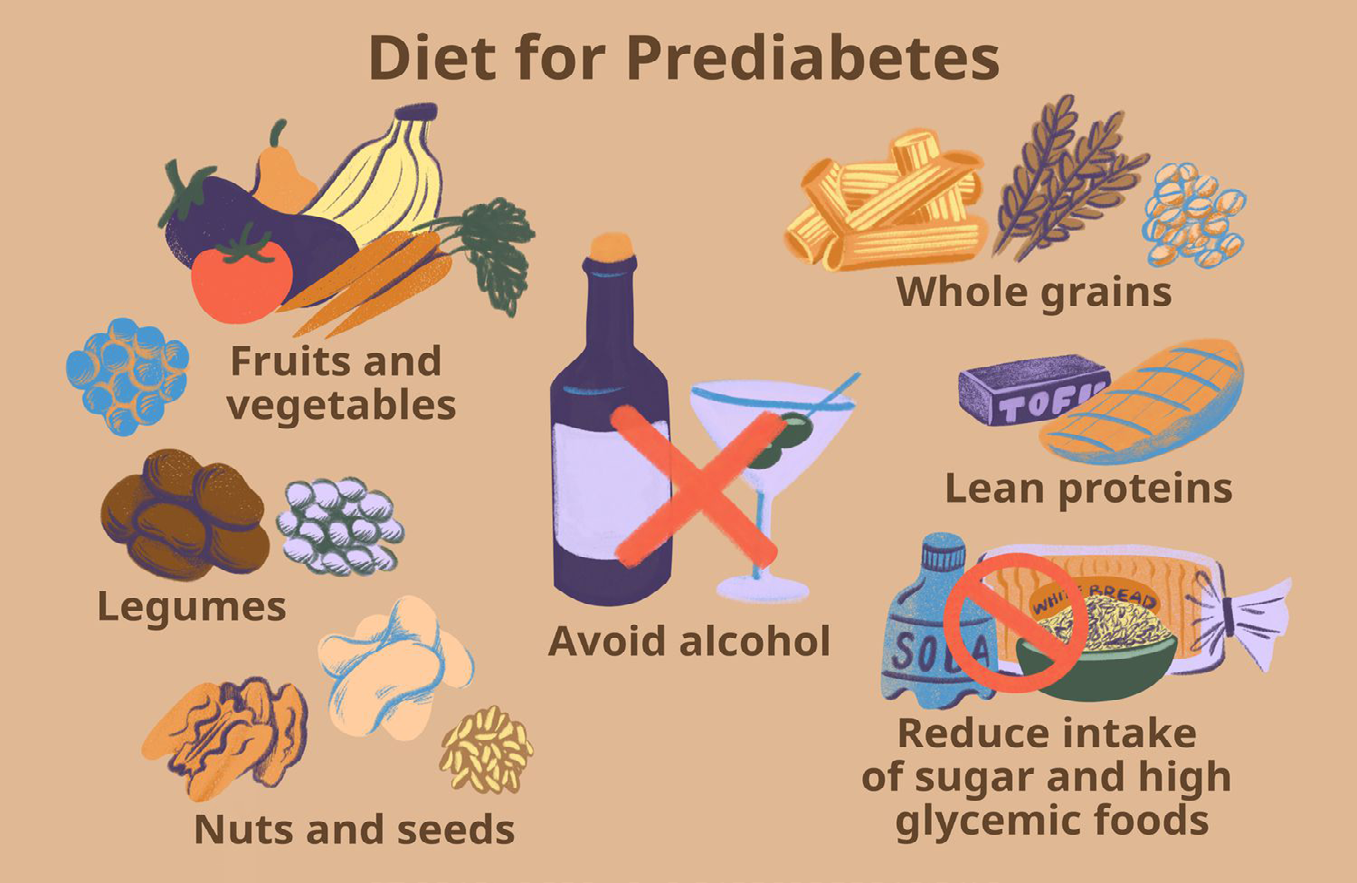
- Limiting saturated and trans fats Mainly incorporate a variety of colorful vegetables and fruits into your meals. These foods are rich in fiber, vitamins, and antioxidants, which can aid in blood sugar regulation. Choose whole grains such as brown rice, quinoa, oats, and whole wheat over refined grains [3]. Whole grains provide sustained energy and are high in fiber, which helps control blood sugar levels. Opt for lean protein sources like poultry, fish, tofu, legumes, and beans. Protein can help stabilize blood sugar and keep you feeling full [4].
Managing the Carbohydrates
1. Carb Distribution: Spread your carbohydrate intake throughout the day to prevent spikes in blood sugar. Focus on complex carbohydrates with a low glycemic index [5]. 2. Portion Control: Be mindful of portion sizes to avoid overeating. Use smaller plates and listen to your body’s hunger and fullness cues [6].
Limit Sugars and Processed Foods
Reduce Added Sugars: Minimize the consumption of sugary foods and beverages. Read labels to identify hidden sugars in processed foods. Carefully read nutrition labels to identify sources of added sugars. Ingredients like sucrose, high-fructose corn syrup, agave nectar, and various other syrups indicate the presence of added sugars [7]. Be aware that some foods marketed as “low-fat” or “diet” may contain higher amounts of added sugars to enhance flavor. Reduce the intake of sugary beverages such as sodas, energy drinks, and sweetened teas. These drinks can contribute significantly to added sugar intake without providing nutritional benefits. Choose water, herbal teas, or infused water with fresh fruits as healthier alternatives. Processed and packaged foods often contain unhealthy fats, excessive sodium, and refined sugars. Opt for whole, fresh foods whenever possible [8].
Healthy Fats
Include sources of healthy fats such as avocados, nuts, seeds, and olive oil. These fats can support heart health and may help improve insulin sensitivity. Reduce the intake of saturated and trans fats found in fried foods, processed snacks, and fatty cuts of meat. These fats can contribute to insulin resistance [9].
Managing prediabetes, incorporating healthy fats into your diet is important for overall health and can contribute to better blood sugar control. Here are some examples of healthy fats to include in your prediabetes-friendly eating plan:
1. Avocados: Rich in monounsaturated fats, avocados are a nutrient-dense option that can be added to salads, sandwiches, or enjoyed as a side dish. 2. Nuts and Seeds: Almonds, walnuts, chia seeds, flaxseeds, and pumpkin seeds provide healthy fats, fiber, and essential nutrients. They make for great snacks or can be added to yogurt, oatmeal, or salads [10]. 3. Olive Oil: Extra virgin olive oil is a source of monounsaturated fats and contains antioxidants. Use it as a dressing for salads, drizzle it over vegetables, or use it in cooking. 4. Fatty Fish: Salmon, mackerel, sardines, and other fatty fish are rich in omega-3 fatty acids. Aim to include fatty fish in your diet at least twice a week for heart health and inflammation reduction [11]. 5. Flaxseed Oil: Flaxseed oil is a plant-based source of omega-3 fatty acids. It can be added to smoothies, drizzled over salads, or used as a supplement. 6. Chia Seeds: Chia seeds are high in omega-3 fatty acids, fiber, and protein. They can be added to yogurt,oatmeal, or used to make chia seed puddings [12]. 7. Coconut Oil: While coconut oil is high in saturated fat, it consists of medium-chain triglycerides (MCTs), which some studies suggest may have metabolic benefits. Use it in moderation for cooking or baking. 8. Walnuts: Walnuts are a good source of polyunsaturated fats, including alpha-linolenic acid (ALA), a type of omega-3 fatty acid. Snack on a handful of walnuts or add them to salads. 9. Dark Chocolate: Dark chocolate with a high cocoa content (70% or more) contains antioxidants and can be a satisfying treat in moderation. Choose varieties with minimal added sugars. 10. Nut Butters: Natural nut butters, such as almond or peanut butter, provide healthy fats and protein. Use
them as a spread on whole-grain bread or as a dip for fruit slices. 11. Seaweed and Algae: Seaweed and algae-based products, such as seaweed snacks or algae oil supplements, can be sources of omega-3 fatty acids [12, 13]. 12. Eggs: Eggs, particularly the yolk, contain healthy fats and various essential nutrients. Include eggs in your diet as part of a balanced meal. 13. Edamame: Edamame, or young soybeans, are a plant- based source of polyunsaturated fats and protein. They can be enjoyed as a snack or added to salads. 14. Olives: Olives and olive tapenade provide monounsaturated fats and can be included in salads, sandwiches, or enjoyed as a flavorful topping [14].
| Super Foods | Role in managing the prediabetes |
| Avacados | With a glycemic index of 15, avocados are a fruit that diabetics may safely eat. The majority of the fat in avocados is made up of monounsaturated fats (MUFA), which decrease harmful cholesterol (VLDL). This fruit is quite calorie rich, so you need to be mindful of how much you eat of it [15]. |
| Chia seeds | Due to their low glycemic index, Chia seeds are a good food choice for diabetic patients [16]. Despite its high glucose content, Chia seeds have a GI of only 4, making them one of the “low-GI foods”. Low-GI carbohydrates are slowly digested and absorbed, allowing blood sugar levels to remain stable [17]. |
| Seaweed and Algae | Seaweed, kelp, raw is likely to have a low glycemic index, as estimated by the AI Glycemic Index Estimator. Check out low glycemic index foods page to view the foods with lab verified GI indices [18]. |
| Edamame | Edamame beans can play a very significant role in managing your sugar levels. It has the lowest Glycemic Index (GI) out of all the legumes (GI =14-20). They are rich in protein and fibre but low in carbohydrates. This may lead to low blood sugar [18]. |
| Flaxseed oil | Flaxseed has a glycemic index (GI) of 35, indicating that it is a low-GI food. As it has a low GI, flax seeds are known as a low-glycemic food owing to their high fibre content [19]. |
| Fish | Choose fish that is broiled, baked or grilled to avoid the carbohydrate and extra calories that would be in fish that is breaded and fried. The American Diabetes Association Standards of Medical Care in Diabetes recommends eating fish (mainly fatty fish) twice per week for people with diabetes [20]. |
| Walnuts & Nuts | The estimated glycemic index of walnuts is 15, making them a low-glycemic food and Glycemic load takes portion size into account when predicting a food’s impact on blood sugar. A glycemic load of 1 has very minimal impact on blood sugar [21]. |
Table 1: Role of Healthy Foods in Management of Prediabetes.
Regulation of Sleep in Managing the Prediabetes
Research indicates that sleep has a critical role in the control of hormones and the metabolism of glucose [22]. An increase in sympathetic nervous system activity brought on by sleep disruption suppresses insulin output and fosters insulin resistance. People who get little sleep are more likely to become obese because it alters the levels of hormones that control hunger and increases calorie intake without increasing energy expenditure [23].
Avoid Smoking to Prevent the Prediabetes
Smoking is the one of the etiological factor for the development of the diabetes. Evidence suggest that the nicotine changes the cells to responding to the insulin as insulinhelps blood sugar enter cells and that leads to the increase in the blood glucose levels [24].
Impact of Physical Activity in Managing the Prediabetes
Aerobic Exercises: People with prediabetes might benefit greatly by engaging in activities that raise their heart rate and respiration, such as running, cycling, swimming, or dancing. Try to get in at least 150 minutes a week of aerobic activity at a moderate level. Strength Training: Including resistance exercises in your workouts, such bodyweight exercises, resistance band workouts, or weightlifting, can help you gain muscle mass, enhance your insulin sensitivity, and get stronger all over. Aim for two or more workouts a week that focus on your main muscle groups [25]. Exercises that Promote Balance: Practices that improve flexibility, balance, and general well-being include yoga, Pilates, and tai chi. Because these exercises increase joint mobility and lower the risk of falls, they can be especially helpful for those with diabetes [26].
Conclusion
In conclusion, the management of prediabetes through lifestyle modifications stands as a pivotal and evidence-based strategy to mitigate the heightened risk of developing type 2 diabetes mellitus. The collective body of research presented underscores the efficacy of targeted lifestyle interventions, encompassing dietary adjustments, regular physical activity, and weight management, in improving insulin sensitivity and maintaining blood glucose levels within a healthy range.
This comprehensive approach acknowledges the multifaceted nature of prediabetes and recognizes the significance of personalized strategies that consider individual preferences, cultural nuances, and socioeconomic factors. The importance of early detection and intervention cannot be overstated, and lifestyle modifications provide a practical and accessible means to empower individuals with prediabetes. By fostering a proactive and patient-centered approach, healthcare professionals can guide individuals towards adopting healthier habits, thereby preventing or delaying the onset of type 2 diabetes. As the global burden of diabetes continues to rise, the significance of preventive measures becomes paramount, and lifestyle modifications emerge as a cornerstone in the larger framework of public health strategies.
References
-
Tabák AG, Herder C, Rathmann W, Brunner EJ, Kivimäki M (2012) Prediabetes: a high-risk state for diabetes development. The Lancet 379(9833): 2279-2290.
-
Echouffo-Tcheugui JB, Perreault L, Ji L, Dagogo-Jack S (2023) Diagnosis and management of prediabetes: a review. JAMA 329(14): 1206-1216.
-
Sheng Z, Cao JY, Pang YC, Xu HC, Chen JW, et al. (2019) Effects of lifestyle modification and anti-diabetic medicine on prediabetes progress: a systematic review and meta-analysis. Frontiers in endocrinology 10: 455.
-
Bansal N (2015) Prediabetes diagnosis and treatment: A review. World journal of diabetes 6(2): 296-303.
-
Gutierrez M, Akhavan M, Jovanovic L, Peterson CM (1998) Utility of a short-term 25% carbohydrate diet on improving glycemic control in type 2 diabetes mellitus. Journal of the American College of Nutrition 17(6): 595- 600.
-
Jenkins DJ, Jenkins AL (1995) Nutrition principles and diabetes: a role for “lente carbohydrate”?. Diabetes Care 18(11): 1491-1498.
-
Braaten JT, Scott FW, Wood PJ, Riedel KD, Wolynetz MS, et al. (1994)High β‐glucan oat bran and oat gum reduce postprandial blood glucose and insulin in subjects with and without type 2 diabetes. Diabetic medicine 11(3): 312-318.
-
Fuster VP, Pérez AP, Gómez JC, Pedragós AC, Gomez- Huelgas R, et al. (2021) Executive summary: Updates to the dietary treatment of prediabetes and type 2 diabetes mellitus. Endocrinología, Diabetes y Nutrición 68(4): 277-287.
-
Bell K, Shaw JE, Maple-Brown L, Ferris W, Gray S, et al. (2020) A position statement on screening and management of prediabetes in adults in primary care in Australia. Diabetes research and clinical practice 164: 108188.
-
ElSayed NA, Aleppo G, Aroda VR, Bannuru RR, Brown FM, et al. (2023) Obesity and weight management for the prevention and treatment of type 2 diabetes: standards of care in diabetes—2023. Diabetes care 46(Supplement_1): S128-S139.
-
Shetty SS, Suchetha KN, Shetty PK (2020) ω-6/ω-3 fatty acid ratio as an essential predictive biomarker in the management of type 2 diabetes mellitus. Nutrition 79: 110968.
-
Yau JW, Thor SM, Ramadas A (2020) Nutritional strategies in prediabetes: A scoping review of recent evidence. Nutrients 12(10): 2990.
-
Zuniga RE, DeBoer MD (2021) Prediabetes in adolescents: prevalence, management and diabetes prevention strategies. Diabetes, Metabolic Syndrome and Obesity 14: 4609-4619.
-
Anderson JW, Kendall CW, Jenkins DJ (2003) Importance of weight management in type 2 diabetes: review with meta-analysis of clinical studies. Journal of the American college of nutrition, 22(5): 331-339.
-
Ledesma LR, Munari ACF, Domínguez BCH, Montalvo SC, Luna MHH, et al. (1996) Monounsaturated fatty acid (avocado) rich diet for mild hypercholesterolemia. Archives of medical research 27(4): 519-523.
-
Vijan S, Hayward RA (2003) Treatment of hypertension in type 2 diabetes mellitus: blood pressure goals, choice of agents, and setting priorities in diabetes care. Annals of internal medicine 138(7): 593-602.
-
Dam RMV, Rimm EB, Willett WC, Stampfer MJ, Hu FB (2002) Dietary patterns and risk for type 2 diabetes mellitus in US men. Annals of internal medicine 136(3): 201-209.
-
Barre DE, Griscti O, Mizier-Barre KA, Hafez K (2005) Flaxseed oil and lipoprotein (a) significantly increase bleeding time in type 2 diabetes patients in Cape Breton, Nova Scotia, Canada. Journal of Oleo Science 54(6): 347- 354.
-
Stephenson TJ, Setchell KDR, Kendall CWC, Jenkins DJA, Anderson JW, et al. (2005) Effect of soy protein-rich diet on renal function in young adults with insulin-dependent diabetes mellitus. Clinical nephrology 64(1): 1-11.
-
Farmer A, Montori V, Dinneen S, Clar C (2001) Fish oil in people with type 2 diabetes mellitus. The Cochrane Database of Systematic Reviews (3): CD003205.
-
Tapsell LC, Gillen LJ, Patch CS (2005) Walnuts and dietary approaches to the prevention and management of abnormal lipid profiles in Type 2 diabetes mellitus. Future Cardiol 1(6): 809-814.
-
Spiegel K, Knutson K, Leproult R, Tasali E, Van Cauter E (2005). Sleep loss: a novel risk factor for insulin resistance and Type 2 diabetes. Journal of applied physiology. J Appl Physiol 99(5): 2008-2019.
-
Watkins KW, Connell CM, Fitzgerald JT, Klem LA, Hickey T, et al. (2000) Effect of adults’ self-regulation of diabetes on quality-of-life outcomes. Diabetes care 23(10): 1511- 1515.
-
Meslier N, Gagnadoux F, Giraud P, Person C, Ouksel H, et al. (2003) Impaired glucose-insulin metabolism in males with obstructive sleep apnoea syndrome. European Respiratory Journal 22: 156-160.
-
Di Loreto C, Fanelli C, Lucidi P, Murdolo G, De Cicco A, et al. (2005) Make your diabetic patients walk: long-term impact of different amounts of physical activity on type 2 diabetes. Diabetes care 28(6): 1295-1302.
-
Kavitha G, Shivani K, Divyateja K, Mounika S, Sushmitha V, et al. (2023) Mapping of health profile of diabetic patients in cherlapally village Nalgonda Telangana INDIA, International Journal Of Advanced Research In Medical & Pharmaceutical Sciences (IJARMPS-ISSN-2455-6998) 8(4): 1-5.
- Investigation of Polymorphisms in PPAR-Ɣ and TRHR Genes and their Impact on Turkish Diabetic and Obese Individuals
- The Impact of Aircraft Noise Exposure on the Efficacy of Empagliflozin Therapy in an Animal Model of Obesity
- Rooibos Mitigates Metabolic and Inflammatory Dysfunctions in Mice Fed a High-Carbohydrate Diet
- Synergistic Effect of Combined Leaf Extract of Vernonia amygdalina, Ocimum gratissimum, and Zingiber officinale Tuber on Phytochemical Profile, Antioxidant Activity, Serum Insulin, and Biochemical Parameters in Streptozotocin-Induced Diabetic Rats
- Investigation of Cardiovascular Responses to Aerobic Exercise in Obese University Students
- A Look at the Phase Angle Obtained by Electrical Bioimpedance