
Substance Abuse Patterns in Brick Industry Workers Detection and Evaluation
Background: Drug abuse became an alarming problem in the last years in Egypt and many other countries. Some studies had examined the prevalence of substance abuse among school and university students, but few have assessed workers in workplaces which can pose major risks to the health and productivity of workers. The aim of this work is to estimate the prevalence of substance abuse among a sample of workers, to explore various behavioral and psychological manifestations. Methods: This is a cross - sectional study performed in one of the brick industries in Giza governorate in Egypt. It included 481 workers from different sections in the industry. Data were coded and entered using the statistical package for the Social Sciences (SPSS) version 25. The mean age of the participants was 34.85 ± 13.50 with a minimum of 6 years and maximum 87 years old. Results: Results showed high prevalence of various psychosocial problems among workers which were highest between 21 and 40 years old. Symptoms included poor concentration, depression, stress, suicidal and guilty thoughts, mood swings, aggressive behavior, anxiety and disturbed social relationships. Concerning abuse pattern, 47.3 % of employees were abusing cannabinoids, 19.2 % were abusing tramadol and 8.3 % were abusing both. Workers performing physical work recorded the highest rate of abuse. In addition, 50.5 % of workers are smokers which was the highest independent variable related to substance abuse. Conclusions: It is important to develop substance abuse policy, raise awareness regarding their health effects and serious impacts on individual’s physical, psychosocial and behavioral integrity. Drug testing in workplace is a must to ensure community safety.
Mahmoud M Amr1, Nashwa Mohamed El-Mahdy2* and Huda Shehata Kharoub2
Introduction
Substance abuse (SA) is a destructive force across all levels of any society. It can ruin someone’s life with devastating effects on those around them [1]. The path from initiation to harmful use among young people are related to genetic susceptibility, poverty, peer influences, drug availability, socioeconomic and physical environment that make adolescents vulnerable to substance use [2]. Overall, it is the critical combination of the risk factors and absence of protective factors at a particular stage in a young person’s life that makes the difference in their susceptibility to drug use and addiction [1]. Addiction is a chronic brain disease that affects individual judgment and behavior by altering cognitive functions and action control. It is characterized by intense craving to substances even with realizing its negative health effects [3]. Addiction may also contribute to other adverse health consequences as heart disease and cancer as well as mental health problems [4].
In Egypt, drug abuse became an alarming problem in the last years that continue to cause national and societal concern [5]. In 2018, the Egyptian Ministry of Social Solidarity declared that substance abuse rates in Egypt surpassed 10% and doubled the global average and that tramadol was the commonest abused substance followed by cannabis and heroin [6].
Several Egyptian studies were performed to explore the extent of the problem among young age in schools and universities [7, 8, 9], but few were concerning industries. Substance abuse analysis in workplace is an important issue as workers’ psychology and behavior are affected by their occupation and workplace environment. Employees are regularly being required to work well during and beyond their contracted hours to achieve their targets [10]. So, employment conditions and job satisfaction could directly damage the physical and mental health of employees.
Substance use has great negative impacts on industry through lost productivity, increased absenteeism, workplace accidents and injuries, psychological upset and social problems in addition to several occupational illnesses. High rates of psychological impairment and reduced quality of life was observed among individuals with substance use disorders (SUDs) [11]. In 2004, WHO report stated that by the year 2020 mental and SUDs will surpass all physical diseases as a major cause of disability worldwide [12].
The brick industry is one of the most polluted workplaces causing various occupational health problems such as musculoskeletal disorders, respiratory, cardiovascular, skin diseases and psychological problems [13]. Brick workers perform several types of strenuous activities, such as carrying and cutting the mud, preparation and carrying clay, molding (workers who collect mud to mold bricks and lay them on the field for sun drying), stacking (loading and unloading bricks), carrying and then setting bricks in the oven [14]. In addition to office workers who organize and supervise different jobs and drivers who deliver the final product. Other auxiliary jobs are carpenters, lather workers and welders.
The consumption of psychoactive substances at work depends on multiple factors, some are related to individual characteristics and beliefs and others related to the type and duration of work, unhygienic environment, absence of any recreational activity, or as a way to cope with their difficult circumstances and stress [15, 16]. Also, due to some false beliefs regarding their effects in increasing concentration, reducing anxiety and tension and increasing muscular power.
Psychoactive substances are those that act mainly on the central nervous system affecting the brain function leading to transient changes in mood, perception, degree of alertness and behavioral changes and consequently a dysfunctional effect on work capability [17].
Tramadol is a centrally acting synthetic opioid analgesics used for management of mild to severe pain. The analgesic actions of tramadol arise from dual mechanism by agonist actions of the drug at the μ-opioid receptor causing analgesia and sedation and by inhibiting serotonin and norepinephrine reuptake so reducing pain perception [18, 19].
Owing to the long- term harmful effects of tramadol and widespread abuse among youth, the Egyptian Ministry of Health in 2012 had moved tramadol from schedule 3 to 1 as a highly addictive substance [20].
Cannabinoids are widely abused among teens and young adults. Cannabis is abused for its psychoactive effects (subjective euphoria followed by relaxation, elevated mood, distortion in space and time, changes in short-term memory, motor incoordination, behavioral disinhibition and in high doses paranoid psychosis). Its main active constituent is Δ9- tetrahydrocannabinol (Δ9 -THC) [21].
Aim of the work
This study was performed to estimate the prevalence of substance abuse among a group of workers in brick industry, to explore various behavioral and psychological manifestations.
Participants and Methods
This is a cross - sectional study performed in one of the most famous brick industries in Giza governorate in Egypt. The study included 481 workers from different sections in the industry. The study was conducted on a weekly based visits during 6 months period from January to June 2019. The workers were interviewed with detailed predesigned questionnaire which consisted of three main parts, sociodemographic data including age, gender, marital status, residence, smoking habits; part two included occupational data like type of work, years of employment and part three concerned with different behavioral and psychological manifestations.
Drug Testing
During the interviews, urine samples were collected from workers (after assuring their data confidentiality) without prior announcement of SA detection in order to avoid adulteration or replacement. Workers were given sterilized containers to bring their urine samples; they were clearly labeled, properly wrapped and then transported to the laboratory for drug testing.
Technique for Drug Testing
Urine specimens were screened for Cannabis (THC) and Tramadol (TRA) using the one step multi-drug test. The multi- drug rapid test is a rapid chromatographic immunoassay test for qualitative detection of multiple drugs and their metabolites in urine. It is a quick screening test that utilizes monoclonal antibodies to selectively detect elevated levels of specific drugs in urine based on the standard of competitive binding (kits was manufactured by Hangzhou AllTest Biotech Co.,Ltd ). During testing, a urine specimen migrates upward by capillary action. Reaction occur between the antibody and the drug protein conjugate. If the concentration of the drug is below its cut-off concentration in the urine specimen it will not saturate the binding sites of its specific antibody, then a noticeable colored line will be verified in the test line region on the drug strip. Saturation of all antibody binding sites occurs if the drug is present above the cut-off concentration. Consequently, the colored line will not form in the test line region. A drug-positive urine specimen will not produce a colored line in the test line region because of drug competition, while a drug-negative urine specimen will produce a line in the test line region because of the absence of drug competition. A colored line will always appear at the control line region to serve as a procedural control. This ensure that the proper volume of specimen has been added and membrane wicking has occurred [22].
Statistical Methods
Data were coded and entered using the statistical package for the Social Sciences (SPSS) version 25 (IBM Corp., Armonk, NY, USA). Data was summarized using mean, standard deviation, median, minimum and maximum in quantitative data and using frequency (number) and relative frequency (percentage) for categorical data. Comparisons between quantitative variables were done using the non-parametric Mann-Whitney test [23]. For comparing categorical data, Chi square (ꭓ2) test was performed. Exact test was used instead when the expected frequency is less than 5 [24]. P-values less than 0.05 were considered as statistically significant. Logistic regression was done to detect independent predictors of drug abuse.
Results
| Number | % | |||
|---|---|---|---|---|
| Sex | Male | 432 | 89.80% | |
| Sex | Female | 49 | 10.20% | |
| AgeMean= 34.85±13.50 | ≤20 | 77 | 16% | |
| AgeMean= 34.85±13.50 | 21-40 | 254 | 52.80% | |
| AgeMean= 34.85±13.50 | 41-60 | 135 | 28.10% | |
| AgeMean= 34.85±13.50 | ≥60 | 15 | 3.10% | |
| Duration of workMean=11.76±8.74 | ≤10 | 213 | 44.30% | |
| Duration of workMean=11.76±8.74 | 11-20 | 162 | 33.70% | |
| Duration of workMean=11.76±8.74 | 21-30 | 63 | 13.10% | |
| Duration of workMean=11.76±8.74 | 31-40 | 31 | 6.40% | |
| Duration of workMean=11.76±8.74 | ≥40 | 12 | 2.50% | |
| Type of work | loading and unloading bricks | 253 | 52.60% | |
| Type of work | mechanical work | 54 | 11.20% | |
| Type of work | office workers | 46 | 9.60% | |
| Type of work | setting bricks in the oven | 28 | 5.80% | |
| Type of work | drivers | 39 | 8.10% | |
| Type of work | Other jobs | 61 | 12.70% | |
| Type of work | Smoking | yes | 243 | 50.50% |
| no | Smoking | 212 | 44.10% | |
| quitted | Smoking | 26 | 5.40% | |
| Residence | urban | 85 | 17.70% | |
| Residence | rural | 396 | 82.30% | |
| Family status | single | 168 | 35% | |
| Family status | married | 298 | 62% | |
| Family status | divorced | 12 | 2.50% | |
| Family status | widowed | 3 | 0.60% | |
| Drug of abuse | confirm | 95 | 21.30% | |
| Drug of abuse | deny | 351 | 78.70% |
Table 1: Sociodemographic characteristics of workers.
Table 1 shows the sociodemographic characteristics of workers, there were 432 males representing 89.8% of the working force and 49 females representing 10.2%. The mean age of workers was 34.85 ± 13.50 with a minimum of 6 years and maximum 87 years old and the majority were between 21 and 40 years old representing 52.8 % of the working force. The mean duration of work was 11.76 years ± 8.74 with minimum of 3 months and maximum 60 years. Workers performed heavy manual tasks categorized as workers loading and unloading bricks (52.6 %), mechanical workers representing 11.2 % of the working force (those involved in cutting and carrying the mud, preparation and carrying the clay and molding), office workers (9.6 %), workers involved in setting bricks in the oven (5.8 %), drivers (8.1 %) and other auxiliary jobs (12.7 %). Regarding smoking habits 50.5 % of workers are smokers, while 44.1% are non- smokers and 5.4 % quitted smoking.
Most of workers were from rural areas representing 82.3 % and 17.7 % were from urban areas. Sixty- two (62 %) of workers were married and 35 % were single; 21.3 % of workers confirmed drug abuse while 78.7 % deny.
Table 2 shows the prevalence of various psychosocial symptoms among workers according to their age. Results revealed that workers between 21 and 40 years recorded the highest rate followed by those between 40 and 60 years old and then lastly come those under 20 and above 60 years old. Symptoms included poor concentration, depression, stress, suicidal and guilty thoughts, hallucination, paranoia, mood swings, aggressive behavior, sense of fear, frustration and worthlessness, anxiety, isolation, difficult sleeping, low work performance, feeling responsibilities towards their families and disturbed social relationships.
| Psychosocial symptoms | Age | |||||||
|---|---|---|---|---|---|---|---|---|
| ≤20 (n= 77) | 21-40 (n= 254) | 41-60 (n= 135) | ≥60 (n=15) | |||||
| No. | % | No. | % | No. | % | No. | % | |
| Poor concentration | 66 | 85.70% | 234 | 92.10% | 115 | 85.20% | 13 | 86.60% |
| Depression | 65 | 84.40% | 225 | 88.60% | 117 | 86.60% | 13 | 86.60% |
| Stress | 68 | 88.30% | 233 | 91.70% | 117 | 86.60% | 14 | 93.30% |
| Suicidal thoughts | 68 | 88.30% | 238 | 93.70% | 119 | 88.10% | 14 | 93.30% |
| Hallucination | 77 | 100.00% | 247 | 97.20% | 128 | 94.80% | 15 | 100.00% |
| Guilty thoughts | 77 | 100.00% | 250 | 98.40% | 127 | 94.10% | 15 | 100.00% |
| Paranoia | 77 | 100.00% | 248 | 97.60% | 127 | 94.10% | 15 | 100.00% |
| Mood swings | 69 | 89.60% | 233 | 91.70% | 119 | 88.10% | 14 | 93.30% |
| Aggressive behaviour | 77 | 100.00% | 251 | 98.80% | 125 | 92.60% | 15 | 100.00% |
| Sense of frustration | 55 | 71.40% | 183 | 72% | 97 | 71.90% | 10 | 66.60% |
| Sense of fear | 47 | 61% | 133 | 52.40% | 77 | 57% | 8 | 53.30% |
| Anxiety | 62 | 80.50% | 186 | 73.20% | 96 | 71.10% | 13 | 86.60% |
| Isolated | 55 | 71.40% | 159 | 62.60% | 84 | 62.20% | 8 | 53.30% |
| Difficult sleeping | 36 | 46.80% | 120 | 47.20% | 68 | 50.40% | 8 | 53.30% |
| Sense of worthlessness | 40 | 51.90% | 133 | 52.40% | 63 | 46.70% | 9 | 60% |
| Low work performance | 16 | 20.80% | 73 | 28.70% | 30 | 22.20% | 2 | 13.30% |
| Family care | 11 | 14.30% | 67 | 26.40% | 33 | 24.40% | 2 | 13.30% |
| Social relationships | 12 | 15.60% | 68 | 26.80% | 27 | 20% | 1 | 6.60% |
Table 2: Prevalence of various psychosocial symptoms among workers according to age.
Table 3 describes prevalence of substance abuse among workers. Results revealed that 47.3 % of workers were abusing cannabinoids, 19.2 % were abusing tramadol and 8.3 % were abusing both. Concerning relation to smoking, 53.6 % of smokers uses cannabinoids, 25.2% of them uses tramadol and 12.2 % uses both. For non- smokers, 40.6 % uses cannabinoids, 14.0% uses tramadol and 3.8 % uses both. Those who quitted smoking, 50.0 % uses cannabinoids, 11.5% uses tramadol and 7.7 % uses both.
| Drug Abuse | Smoking | ||||||||
|---|---|---|---|---|---|---|---|---|---|
| No. | % | Yes | No | Quitted | |||||
| No. | % | No. | % | No. | % | ||||
| Tramadol | Positive | 91 | 19.20% | 59 | 25.20% | 29 | 14.00% | 3 | 11.50% |
| Negative | 382 | 80.80% | 175 | 74.80% | 178 | 86.00% | 23 | 88.50% | |
| Cannabinoids | Positive | 223 | 47.30% | 126 | 53.60% | 84 | 40.60% | 13 | 50.00% |
| Negative | 248 | 52.70% | 109 | 46.40% | 123 | 59.40% | 13 | 50.00% | |
| Tramadol+ Cannabinoids | Yes | 39 | 8.30% | 29 | 12.20% | 8 | 3.80% | 2 | 7.70% |
| No | 429 | 91.70% | 208 | 87.80% | 204 | 96.20% | 24 | 92.30% |
Table 3: Prevalence of substance abuse among workers and in relation to smoking.
Regarding the relation between type of work and drug of abuse, table 4 shows that workers setting bricks in ovens recorded the highest rate of abuse, 69.2% for cannabinoids, 32.1% for tramadol and 19.4 % were abusing both substances. Whereas drivers come next, recording 56.4% for cannabinoids abuse, 20.5% for tramadol and were on the third level in abusing both substances (7.7 %). 51 % of workers involved in physical work (loading and unloading bricks) were abusing cannabinoids, 18.5% were abusing tramadol and 8.3 % were abusing both substances. Those involved in mechanical work 43.4% of them were abusing cannabinoids, 18.5% were abusing tramadol and 7.4% were abusing both substances.
| Drug Abuse | Type of work | |||||||||||||
|---|---|---|---|---|---|---|---|---|---|---|---|---|---|---|
| Mechanical work | Office workers | Setting bricks in the oven | Loading and unloading bricks | Driver | Other jobs | P value | ||||||||
| No. | % | No. | % | No. | % | No. | % | No. | % | No. | % | |||
| Tramadol | Positive | 10 | 18.50% | 8 | 17.40% | 9 | 32.10% | 46 | 18.50% | 8 | 20.50% | 10 | 17.20% | 0.504 |
| Negative | 44 | 81.50% | 38 | 82.60% | 19 | 67.90% | 202 | 81.50% | 31 | 79.50% | 48 | 82.80% | ||
| Cannabinoids | Positive | 23 | 43.40% | 14 | 30.40% | 18 | 69.20% | 127 | 51% | 22 | 56.40% | 19 | 32.80% | 0.002* |
| Negative | 30 | 56.60% | 32 | 69.60% | 8 | 30.80% | 122 | 49% | 17 | 43.60% | 39 | 67.20% | ||
| Tramadol + Cannabinoids | Yes | 4 | 7.40% | 4 | 8.70% | 6 | 19.40% | 21 | 8.30% | 3 | 7.70% | 1 | 1.60% | 0.057 |
| No | 50 | 92.60% | 42 | 91.30% | 25 | 80.60% | 232 | 91.70% | 36 | 92.30% | 60 | 98.40% |
Table 4: Relation between type of work and drug of abuse.
* P value is significant <0.05.
Table 5 shows the correlation between type of drug of abuse and different psychosocial symptomatology. More than 95 % of workers suffering poor concentration, depression, stress, suicidal thoughts and hallucination, mood swings and aggressive behavior are abusing tramadol, cannabinoids or both. Nearly all abusers (100 %) suffered guilty thoughts and paranoia. Between 50- 80 % of those suffering frustration, fear and worthlessness, nervousness, isolation and difficult sleeping were abusing one or more substance and the least are affected in their work performance, responsibilities towards their family and social relationships.
| Psychosocial symptoms | Tramadol (n= 473) | Cannabinoids (n= 471) | Tramadol + Cannabinoids | ||||||||||||
|---|---|---|---|---|---|---|---|---|---|---|---|---|---|---|---|
| Positive | Negative | P value | Positive | Negative | P value | Positive | Negative | P value | |||||||
| No. | % | No. | % | No. | % | No. | % | No. | % | No. | % | ||||
| Poor concentration | 82 | 98.80% | 342 | 95.00% | 0.224 | 199 | 95.70% | 224 | 95.70% | 0.978 | 36 | 97.30% | 396 | 95.70% | 1 |
| Depression | 80 | 95.20% | 336 | 93.30% | 0.518 | 195 | 93.30% | 220 | 94.00% | 0.757 | 36 | 94.70% | 388 | 93.70% | 1 |
| Stress | 83 | 98.80% | 345 | 95.80% | 0.327 | 204 | 97.60% | 223 | 95.30% | 0.194 | 37 | 97.40% | 399 | 96.40% | 1 |
| Suicidal thoughts | 83 | 98.80% | 352 | 97.80% | 1 | 205 | 98.10% | 229 | 97.90% | 1 | 37 | 97.40% | 406 | 98.10% | 0.55 |
| Hallucination | 89 | 98.90% | 374 | 98.90% | 1 | 219 | 99.10% | 242 | 98.80% | 1 | 39 | 100.00% | 432 | 98.90% | 1 |
| Guilty thoughts | 90 | 100.00% | 375 | 99.20% | 1 | 220 | 99.50% | 243 | 99.20% | 1 | 39 | 100.00% | 434 | 99.30% | 1 |
| Paranoia | 90 | 100.00% | 373 | 98.70% | 0.589 | 221 | 100.00% | 240 | 98.00% | 0.063 | 39 | 100.00% | 432 | 98.90% | 1 |
| Mood swings | 82 | 97.60% | 349 | 97.50% | 1 | 199 | 96.10% | 231 | 98.70% | 0.083 | 37 | 97.40% | 402 | 97.60% | 1 |
| Aggressive behaviour | 88 | 97.80% | 376 | 99.50% | 0.168 | 219 | 99.10% | 243 | 99.20% | 1 | 39 | 100.00% | 433 | 99.10% | 1 |
| Sense of frustration | 60 | 71.40% | 282 | 78.80% | 0.148 | 148 | 71.50% | 192 | 82.10% | 0.008* | 24 | 63.20% | 324 | 78.60% | 0.041* |
| Sense of fear | 46 | 54.80% | 217 | 60.40% | 0.34 | 120 | 57.70% | 142 | 60.70% | 0.523 | 21 | 55.30% | 247 | 59.80% | 0.585 |
| Anxiety | 67 | 79.80% | 287 | 79.70% | 0.994 | 167 | 79.90% | 186 | 79.50% | 0.913 | 30 | 78.90% | 330 | 79.70% | 0.911 |
| Isolated | 59 | 70.20% | 245 | 68.20% | 0.723 | 149 | 71.30% | 154 | 66.10% | 0.24 | 26 | 68.40% | 283 | 68.50% | 0.99 |
| Difficult sleep | 51 | 60.70% | 181 | 50.40% | 0.089 | 107 | 51.40% | 125 | 53.40% | 0.678 | 22 | 57.90% | 214 | 51.80% | 0.473 |
| Sense of worthlessness | 48 | 57.10% | 197 | 54.90% | 0.707 | 103 | 49.50% | 142 | 60.70% | 0.018* | 18 | 47.40% | 231 | 55.90% | 0.31 |
| Low work performance | 24 | 28.60% | 97 | 27.10% | 0.785 | 60 | 28.80% | 61 | 26.20% | 0.531 | 11 | 28.90% | 112 | 27.20% | 0.816 |
| Family care | 22 | 28.60% | 92 | 27.50% | 0.845 | 58 | 28.90% | 57 | 27.10% | 0.699 | 8 | 21.60% | 107 | 28.00% | 0.406 |
| Social relationships | 24 | 31.20% | 84 | 25.10% | 0.279 | 51 | 25.50% | 57 | 27.10% | 0.706 | 10 | 27.00% | 100 | 26.20% | 0.918 |
Table 5: Correlation between type of drug of abuse and different psychosocial symptomatology.
* P value is significant <0.05.
Table 6 shows the correlation between drug of abuse and different psychosocial symptomatology, there is statistically significant difference between workers regarding depression, aggressive behavior and sense of frustration, nervousness and low work performance.
| Psychosocial symptoms | Drugs abuse | ||||
|---|---|---|---|---|---|
| Yes | No | P value | |||
| No. | % | No. | % | ||
| Poor concentration | 86 | 95.60% | 319 | 95.80% | 1 |
| Depression | 79 | 87.80% | 318 | 95.20% | 0.01* |
| Stress | 87 | 96.70% | 321 | 96.10% | 1 |
| Suicidal thoughts | 90 | 100.00% | 325 | 97.30% | 0.215 |
| Hallucination | 92 | 96.80% | 348 | 99.40% | 0.068 |
| Guilty thoughts | 94 | 98.90% | 348 | 99.40% | 0.514 |
| Paranoia | 94 | 98.90% | 346 | 98.90% | 1 |
| Mood swings | 85 | 94.40% | 326 | 98.20% | 0.062 |
| Aggressive behaviour | 91 | 95.80% | 350 | 100.00% | 0.002* |
| Sense of frustration | 61 | 68.50% | 265 | 79.30% | 0.031* |
| Sense of fear | 48 | 53.90% | 200 | 59.90% | 0.311 |
| Anxiety | 64 | 71.10% | 271 | 81.10% | 0.038* |
| Isolated | 60 | 66.70% | 231 | 69.40% | 0.623 |
| Difficult sleep | 46 | 51.10% | 184 | 55.10% | 0.501 |
| Sense of worthlessness | 44 | 48.90% | 197 | 59.00% | 0.086 |
| Low work performance | 33 | 36.70% | 86 | 25.80% | 0.042* |
| Family care | 30 | 33.70% | 81 | 26.60% | 0.187 |
| Social relationships | 29 | 33.00% | 76 | 24.90% | 0.133 |
| P value | OR | 95% C.I. | |||
| Lower | Upper | ||||
| Smoking | <0.001** | 3.919 | 2.285 | 6.722 |
Table 6: Correlation between drug of abuse and different psychosocial symptomatology.
* P value is significant <0.05.
Table 7 demonstrate multivariate analysis for the sociodemographic risk factors for drug abuse Results show that the single independent variable affecting substance abuse is smoking with adjusted odds ratio of 3.919.
** P value is highly significant <0.001.
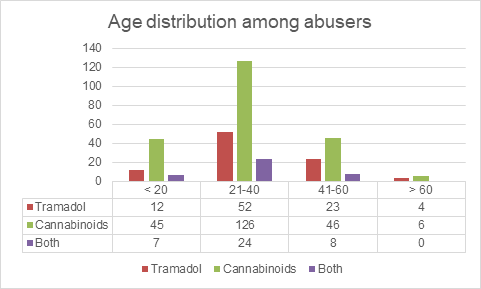
Age distribution among abusers is shown in Figure 1, results revealed that the common age group is between 21- 40 years in both substances followed by those between 41-
60 years of age, then workers below 20 years and the least are those above 60 years old.
Discussion
Substance abuse is a growing endemic in the Egyptian community. There was a noticeable alarming increase in usage in recent years especially among youth and middle aged workers. This problem is not only in Egypt, but also prevalent in neighboring countries as declared by Fawzi [25].
The aim of our study is to determine the prevalence of tramadol and cannabinoids abuse among a group of workers in brick industry. Workers in this industry need to do heavy physical work while living in dirty unhygienic environment. The stressful situation, working pattern, absence of any recreational activity and company of friends force them to plunge in substance abuse. Findings which was also reported in several studies [26, 27].
The results of our study were greatly astonishing showing that the prevalence of SA among workers was
66.5 % (table 3) meaning that nearly 70 % of the working force were abusing substances. The most represented age group as shown in figure 1 are those between 21- 40 years old who represent 52.8% of the working force (Table 1). They were 57.1 % tramadol abusers; 56.5 % cannabinoids abusers and 61.5 % for both substances. This result is a very bad indicator as those age groups are the most active and productive, that supposed to be involved in the work and development of any institution. This was consistent with the findings of Hamdi and colleagues in 2016 as they found that adult age groups showed the highest representation among drug abusers in Egypt [5]. Important finding to be put in consideration by employers, policy makers and community.
Among users, only 21.3 % were confirming abuse. The cause of denying may be that workers abusing drugs reject the idea of having problems or feeling guilty about it. Other causes might be related to their fear from being fired from work, may be also the shame and stigma to be labelled as addicts in front of coworkers and families. Cannabis is the commonest in all workers representing 47.3% then tramadol which is detected in 19.2% of workers and 8.3% are using both (Table 3). This may be explained by the easy availability of cannabis and perception of a low risk of harm in addition to the false believes about giving happiness and relaxation, increased sexual power and that it is permissible being derived from a natural plant, which makes it among the most common abused substance in adolescence [1]. Those abusing tramadol found it of cheap price, easily available being sold as a painkiller that helped to be widely introduced among Egyptians [9, 25].
Our results are coincident with several studies done to explore the magnitude of substance abuse among youth in Egypt. The study of Hamdi and colleagues in 2016 which was performed in 26 out of 27 Egyptian governorates, 106480 subjects above the age of 15 were included in the study. Researchers found that the commonly used substances by the Egyptian population was cannabis which was the commonest in all regions representing 52.4 % of the substance users and 15.91% of the sample examined [5]. Also, another study done by El-Hadidy and Helaly in 2015 [18] proved that cannabis was the first abused substance followed by tramadol.
In Zagazig, two different studies were performed. Negm and colleagues in 2014 who examined adolescent school students. Results showed that the prevalence of smoking and substance abuse among them was 8.3 % and 8.8% respectively and that the most common substances abused were tramadol, cannabis and alcohol (83.3 %, 27.8 % and 16.7%, respectively) [8]. Similarly, Abbas and colleagues in 2013 who examined the temporary hired cleaners in governmental hospitals, found that cannabis was the first most common substance abused followed by tramadol [28].
Another study was performed on university students in Sohag, results revealed high prevalence of smoking and drug abuse among students and that the most abused drugs were cannabinoids followed by tramadol [7]. Percentage differences between studies might be due to differences in age and number of the group studied, regions and socioeconomic standard and general concepts of the studied population. Our results show that 8.3 % of workers are abusing both substances. The individual’s vulnerability to multiple substance abuse could be related to several theories. The “liability theory” as described by Katz and colleagues in 2016 stating that genetic factors and peer pressure may put an individual at risk for using or abusing both legal and illegal substances, including tramadol and cannabis [29]. Or the “gateway theory” described by Kelly and coworkers in 2015 who stated that one substance might serve as a gateway to another one or more [30].
However, what raises the importance of findings in prevalence of SA in any study are the possible implications of this incident. The recently noticeable and very obvious increase in all forms of violence, rape, aggression and traffic accidents should draw attention to the possible expected reasons behind, one of them was closely related to drug abuse as proved by Fawzi [25]. The study of Yassa and Badea in 2019 found a correlation between violence and drug abuse, violence as a result and not a causative agent for addiction [31].
Various psychosocial problems are evident among brick workers as shown in Tables 2, 5 and 6. In Table 2 and according to the age incidence most of the symptoms were recorded between the age of 21 and 40 years old. It is obvious that most of these problems could lead to undesirable and risky behaviors as violence, rape, accidents, injuries and other more serious outcomes as most of workers suffered depression, stress, suicidal and guilty thoughts, mood swings with aggressive behavior, sense of fear, frustration and worthlessness, anxiety, isolation and disturbed social relationships.
In Table 5 and according to the type of drug of abuse. More than 95 % of workers suffered poor concentration, depression, stress, suicidal thoughts and hallucination, mood swings and aggressive behavior. Nearly all abusers (100 %) suffered guilty thoughts and paranoia. Between 50- 80 % experienced frustration, fear and worthlessness, nervousness and difficult sleeping in addition to low work performance, lack of sense of responsibility towards families. As a result of increased psychological suffering and behavioral difficulties, the social relationships of users has been affected including 33 % of workers. Also, social isolation is reported in 66.7% which increased psychological suffering and depression and in turn augmented the risk of drug use as psychiatrists stated that the most common clinical sequelae of chronic addiction were depression and anxiety [18].
Table 6 shows a statistically significant difference between abusers and non-abusers regarding depression, aggressive behaviors, sense of frustration, anxiety, signs that could be put within the scope of mental illnesses which were commonly associated with SUDs, it is often unclear which is the cause and which is the consequence or if a common underlying risk factors contributed to both disorders. Substance use and mental health disorders are overlapping and difficult to be managed and associated with poor outcomes as detected by increased rate of psychiatric hospitalizations and higher prevalence of suicide than those without comorbid mental disorders [32]. Researchers concluded that a complex relation existed between violence and drug abuse where many variables can contribute and are difficult to be enclosed [33].
Literatures had demonstrated the relationship between times of initiation of SA to the appearance of psychosocial problems. Individuals who had engaged in SA early were more susceptible to develop harmful patterns of use and suffer from severe psychological problems [34, 35]. This is an indication that starting drug abuse in young age would continue in adults and that early discovery and intervention would be useful in prevention of lot of associated problems.
Findings are coincident with the study of Claro and co- workers in 2015 who found that drug abuse was associated with psychiatric disorders such as anxiety, depression, behavioral and hyperactivity disorders [36]. This idea was supported by the experimental study done by Yassa and colleagues in 2010 who found that abuse of cannabis affects the brain cells through shrinkage and increase in fatty cells [37]. According to Ghoneim and coworkers in 2014, tramadol affects the brain cells in the form of apoptosis manifested by elevation of lipid peroxidation products with inhibition of antioxidant enzyme gene [38].
Bassiony and colleagues in 2016 who carried a study on 100 patients recruited from Zagazig University Hospital in Egypt had demonstrated that the prevalence of psychiatric disorders was significantly higher in those abusing tramadol in the form of anxiety, mood and psychotic disorders [39].
Taha and colleagues in 2019 held a study on patients who presented with psychotic episode and admitted to Mansoura Psychiatric Department, they found that 66.7% of the studied patients had between 1–5 years self-reported histories of substance abuse predating the first psychotic episode [6]. That’s to say, drug abuse may share a common genetic predisposition along with psychotic disorders, in which an increased probability for an individual to abuse substances and concomitantly or eventually tend to develop psychosis.
So, it is the responsibility of the employers and other related institutions to ensure worker’s safety and health so as to increase productivity by reducing absenteeism, workplace accidents and possible injuries and disabilities, as well as organizing campaigns for raising awareness of employees about toxic effects of psychoactive substances and their expected consequences on workers’ performance at work and behavior towards families, coworkers and community.
Regarding relation to smoking, 50.5 % of workers are current smokers, whereas 53.6% of them are cannabis abusers, 25.2% tramadol abusers and 12.2% of subjects abused both substances (Table 3). Smoking is strongly correlated with substance abuse as evidenced by the multivariate analysis (Table 7) (p value <0.001 and OR=3.919). A logic observation as the most common route of cannabis administration is through smoking and most of abusers started by cigarette smoking then by time shift to other practices. Previous study on substance abuse among Egyptians concluded similar results [5].
Concerning the relation between type of work and drug of abuse, table 4 shows that work activities needing muscular strength, power and alertness (physical work) shows the highest rates of abuse. Also, drivers who needed to drive for long distance while staying alert for long hours and being in a single posture without sufficient rest and sleep are the second group among abusers which is a serious issue as driving under influence of these elicited drugs may cause accidents and injuries not only to a drugged driver but also to other drivers, passengers, and pedestrians [40].
Conclusions and Recommendations
Psychoactive substance abuse is a major preventable cause of morbidity and mortality. The results of this study give a picture and ring an alarm about the status of the substance abuse problem in Egypt. Psychoactive substances abuse and their health and occupational consequences should drive employers and policy makers to take important actions towards controlling this incident. The preventive services should be directed towards all age groups especially youth and adolescents also poor less educated workers working in hard physical jobs. The importance of developing future prevention programs, implementing a substance abuse policy, raising awareness through organized campaigns targeting schools, universities, different industries regarding health effects of substance abuse and their related psychosocial comorbidities which would carry a lot of serious impacts on individual’s physical, psychosocial and behavioral integrity.
An important issue to be considered in future researches is the workplace substance use climate which is defined broadly as employees’ perceptions of the extent to which their work environment is supportive of drug use. Understanding could help in prevention and control and setting focused workplace policy.
Acknowledgement
We would like to thank the manager of the company who facilitated the work process, to my colleagues who helped in data collection and the employees who participated and performed all the steps needed to complete the work.
Ethical Approval
Preliminary permission was taken from the director of the industry through the department of Occupational and Environmental Medicine (who performed regular periodic medical examination in some industries) after explaining the purpose of the study.
Informed Consent
No written informed consent was obtained as no patient data has been included in the manuscript.
Human Rights Statement
The director of the industry informed the workers about the steps needed to perform the work and take their verbal approval.
References
-
World Drug Report (2018) Drugs and Age. Drugs and associated issues among young people and older people, United Nations.
-
Scheier LM (2010) Handbook of Drug Use Etiology: Theory, Methods, and Empirical Findings. American Psychological Association, Washington, DC, USA.
-
Volkow N, Baler R, Goldstein R (2011) Addiction: Pulling at the neural threads of social behaviors. Neuron 69(4): 599-602.
-
The National Center on Addiction and Substance Abuse at Columbia University (2012) Addiction Medicine: Closing the Gap between Science and Practice.
-
Hamdi E, Sabry N, Sedrak A, Khowailed A, Loza N (2016) Sociodemographic Indicators for Substance Use and Abuse in Egypt. J Addiction Prev 4(1): 8.
-
Taha M, Taalab YM, Abo-Elez WF, Eldakroory SA (2019) Cannabis and Tramadol are Prevalent among the First Episode Drug-Induced Psychosis in the Egyptian Population: Single Center Experience. Reports 2(2): 16.
-
Meray MS, Ahmed FH, Rania AR (2016) Study of Drug Abuse among University Students in Sohag, Egypt. Journal of Forensic, Toxicology and Medicolegal Analysis 1(2): 19-23.
-
Negm MG, Fouad AA (2014) Prevalence of substance abuse among adolescent school students in Zagazig. Egypt J Psychiatr 35(3): 161-166.
-
Bassiony M, Salah El-Deen G, Yousef U, Raya Y, Abdel- Ghani M, et al. (2015) Adolescent tramadol use and abuse in Egypt. Am J Drug Alcohol Abuse 41(3): 206-211.
-
Paoli P (1992) First European Survey on the Work Environment 1991–1992. European Foundation for the Improvement of Living and Working Conditions, Dublin.
-
Lamichane N, Thapa DK, Tamrakar BK (2013) Quality of life in substance dependence syndrome. African J Health Sci 1(1): 42-46.
-
WHO (2008) The global burden of disease: 2004 update. World Health Organization, Geneva.
-
Shaikh S, Nafees AA, Khetpal V, Jamali AA, Arain AM, et al. (2012) Respiratory Symptoms and Illnesses among Brick Kiln Workers: A Cross Sectional Study from Rural Districts of Pakistan. BMC Public Hlth 12: 999.
-
Banibrata DAS (2014) Assessment of occupational health problems and physiological stress among the brick field workers of West Bengal, India. Int J Occup Med Environ Hlth 27(3): 413-425.
-
Cook RF, Hersch RK, Back AS, McPherson TL (2004) The Prevention of Substance Abuse among Construction Workers: A Field Test of a Social-Cognitive Program. J Prim Prev 25(3): 337-357.
-
Ervasti J, Kivimäki M, Head J, Goldberg M, Airagnes G, et al. (2018) Sociodemographic differences between alcohol use and sickness absence: Pooled analysis of four cohort studies. Alcohol (Oxf. Oxfs.) 53(1): 95-103.
-
Dinis-Oliveira RJ, Magalhães T (2020) Abuse of Licit and Illicit Psychoactive Substances in the Workplace: Medical, Toxicological, and Forensic Aspects. J Clin Med 9(3): 770.
-
El-Hadidy MA, Helaly AM (2015) Medical and psychiatric effects of long-term dependence on high dose of tramadol. Subst Use Misuse 50(5): 582-589.
-
Grond S, Sablotzki A (2004) Clinical pharmacology of tramadol. Clin Pharmacok 43(13): 879-923.
-
Egyptian Ministry of Health (2012) Ministerial Decree 125/2012 for Tramadol. Available online: http://www. eda.mohealth.gov.eg/.
-
Substance Abuse and Mental Health Services Administration. Results from the 2012 (2013). National Survey on Drug Use and Health: Summary of National Findings. NSDUH Series H-46, HHS Publication No. (SMA) 13-4795. Rockville, MD.
-
Hawks RL, Chiang CN (1986) Urine Testing for Drugs of Abuse. National Institute for Drug Abuse (NIDA), Research Monograph series.
-
Chan YH (2003a) Biostatistics102. Quantitative Data- Parametric & Non-parametric Tests. Singapore Med J 44(8): 391-396.
-
Chan YH (2003b) Biostatistics 103. Qualitative Data- Tests of Independence. Singapore Med J 44(10): 498- 503.
-
Fawzi MM (2011) Some medicolegal aspects concerning tramadol abuse: The new Middle East youth plague 2010. An Egyptian overview. Egypt J Forensic Sci 1(2): 99-102.
-
Abd Elkader MR, Kabbash IA, El Sallamy RM, El Sawy H, Gad El S AH (2020) Tramadol abuse among workers in an industrial city in mid-Nile Delta region, Egypt. Environ Sc Pollut Res 27: 37549-37556.
-
El-Gendy SD, El-Gendy MF, Dawah AY, Eldesouky RS, El- Raof MS (2015) Risky road-use behavior among students at the University of Benha, Egypt. East Mediterr Health J 21(2): 120-128.
-
Abbas RA, Hammam RAM, El-Gohary SS, Sabik LME, Hunter MS (2013) Screening for common mental disorders and substance abuse among temporary hired cleaners in Egyptian Governmental Hospitals, Zagazig City, Sharqia Governorate. Int J Occup Environ Med 4(1): 13-26.
-
Katz G, Kunyvsky Y, Hornik-Lurie T, Raskin S, Abramowitz MZ (2016) Cannabis and Alcohol Abuse among First Psychotic Episode Inpatients. Israel J Psych Related Sci 53(3): 10-15.
-
Kelly AB, Evans-Whipp TJ, Smith R, Chan GC, Toumbourou JW, et al. (2015) A Longitudinal Study of the Association of Adolescent Polydrug Use, Alcohol Use and High School Non-Completion. Addiction 110(4): 627-635.
-
Yassa HA, Badea ST (2019) Patterns of drug abuse in Upper Egypt: cause or result of violence? Egypt J Forens Sc 9: 14.
-
Rao V, Ward EN (2019) Opioid use disorders and related emergencies. In Substance use and the acute psychiatric patient, pp: 3-25.
-
Boles S, Miotto K (2003) Substance abuse and violence: a review of the literature. Aggress Violent Behav 8(2): 155-174.
-
Brook DW, Brook JS, Zhang C, Cohen P, Whiteman M (2002) Drug use and the risk of major depressive disorder, alcohol dependence, and substance use disorders. Arch Gen Psych 59(11): 1039-1044.
-
Prescott CA, Kendler KS (1999) Age at first drink and risk for alcoholism: a non-causal association. Alcohol Clin Exp Res 23(1): 101-107.
-
Claro H, Oliveira M, Bourdreaux J, Fernandes I, Pinho P, et al. (2015) Drug use, mental health and problems related to crime and violence: Cross sectional study. Rev Latino Am Enfermagem 23(6): 1173-1180.
-
Yassa H, Dawood A, Shehata M, Abdel Hady R, Abdel Aal K (2010) Subchronic toxicity of cannabis leaves on male albino rats. Hum Exp Toxicol 29(1): 37-47.
-
Ghoneim F, Khalaf H, Elsamanoudy A, Helaly A (2014) Effect of chronic usage of tramadol on motor cerebral cortex and testicular tissues of adult male albino rats and the effect of its withdrawal: histological, immunohistochemical and biochemical study. Int J Clin Exp Pathol 7(11): 7323-7341.
-
Bassiony MM, Youssif UM, Hussein RA, Saeed M (2016) Psychiatric Comorbidity among Egyptian Patients with Opioid Use Disorders Attributed to Tramadol. J Addiction Med 10(4): 262-268.
-
Kaznga I, Tameni S, Piccinotti A, Floris I, Zanchetti G, et al. (2012) Prevalence of drug abuse among workers: strengths and pitfalls of the recent Italian workplace drug testing (WDT) legislation. Forensic Sci Int 215(1- 3): 46-50.
- The Expanding Landscape of Road Rage: A Systematic Review of Conflicts Involving Drivers, Pedestrians, and Micromobility
- Validating Cognitive Models of Royal Navy Performance on Control Systems
- Comparing Standard and State-of-the-art Firefighter Coats on Postural Balance and Gait in a Live Burn Environment
- Investigating the Integration of Telemedicine into Clinicians Workflow: A Review of Methods
- Risk Assessment of Ergonomic Factors in a Textile Firm by RULA, REBA and Fine Kinney Methods
- Impact of Self-Esteem Training on Individuals with Disabilities Aged 17-30