
The Use of Prostate Specific Antigen (PSA) for Detection of Seminal Stains before DNA Typing in Sexual Assault Cases: A Case Study
In forensic field, during investigation of sexual assault, there are many problems facing the criminal investigators to get success in obtaining significant evidence and performing DNA profile. Prostatic specific antigen detection is a good rapid test to detect seminal stains before DNA typing even in azospermic men. Aim of the Study: The aim of this work case was to highlight the importance of the prostate-specific antigen (PSA) by rapid test in the seminal stain examination before STR analysis to solve a rape case. Methods: Vaginal swabs, clothes, urine samples from a rape victim were examined by PSA strip test. DNA from all of blood samples of victim and suspects were extracted using QIAamp® DNA Mini Kit then qualification for all samples using Quantifier Duo DNA Quantification kit. PCR amplification (DNA Typing) of 15 autosomal STR markers along with amelogen was done using AmpFlSTR Identifiler™ kit. Results: Prostatic specific antigen was positive in clothes and vaginal swabs of the victim and negative in the urine samples. After getting complete DNA profiles from vaginal swabs, it completely matched with one of the two suspects. Conclusion: Prostatic specific antigen detection is rapid, easy, cheap and effective method in seminal stain identification.
Introduction
The incidence of sexual assault cases, especially rape, is increasing but there are many unsolved cases due to lack of evidence [1, 2]. The role of forensic doctor in revealing the rape cases is to prove any signs of sexual intercourse, by collecting evidence of penetration and ejaculation. The evidence of ejaculation can be proven by specific component from the seminal fluid, whether it is a cellular or plasma component. The cellular component that routinely examined is spermatozoa, whereas the plasma components are crystal choline and spermine, acid phosphatase, and zinc. Nowadays, these examinations are no longer being used since they are unspecific and impractical [3, 4]. Prostate specific antigen (PSA) is a serine protease produced by the mature male prostate gland and surrounding cells of the urethral epithelium. In addition, it is known by other names such as γ-seminoprotein, E1 protein, P30, and PA [5].
Graves (1985) has verified that the most specific
component in seminal fluid is Prostate-Specific Antigen (PSA). It is a protein secreted from prostate gland which is found only in males. Therefore, the presence of PSA in female genitalia, suggest strong evidence of sexual intercourse [6, 7]. PSA detection can avoid the effects caused by the presence or absence of sperm in semen samples and interference caused by vaginal fluid and saliva [8]. Thus, if PSA is found in vaginal fluid, it will ensure the sexual intercourse [7]. Although PSA was thought to be prostate-specific, reports of its identification in extra-prostatic tissue has been published. Several researchers showed that PSA is steroid-dependent, and it can be detected in various tissues and body fluids, including in females [9]. However it is present in other body fluids, it is still highly recommended for the semen diagnosis workflow at the forensic laboratory [10].
The examination of PSA in seminal fluid quantitatively is difficult and quite expensive, so it was never done in Indonesia. Fortunately, there is a rapid test for checking PSA, which is very practical, quick, easy to use, inexpensive, and quite sensitive and specific [11, 12]. However, PSA examination on sexual assault victims had never been done until Henky conducted an experiment on PSA rapid test which normally used for detecting PSA in blood qualitatively [13]. In this study, we report a rape case in which PSA rapid test was used to detect semen in vaginal swabs and clothes which is important before DNA typing to identify the perpetrator of the crime.
The Story of the Case
On the evening of wintery day, a girl was coming back home after the end her shift in a private company. She was surprised by two young men who stopped her and forcibly took her in a small car to a remote place and sexually assaulted and then they threw her. The police was informed about the location of the assault. The attackers were known after the victim gave their descriptions and the girl was sent to a hospital for treatment from some bruises on her body. The girl was then sent to Egyptian Forensic Medico legal Authority for forensic examination. After few days, the perpetrators of the assault were arrested by the police.
Examination
General examination of the victim revealed many bruises on her hands and in the inner sides of the upper thighs. There were also some facial abrasions around her mouth. Local vaginal examination showed full defloration injuries at the third and sixth clockwise. Superficial vaginal swabs were taken from the victim. The victim provided white tight trousers she was wearing at the time of the attack. Blood samples were taken from the victim and from the two suspects for DNA profiling.
Prostatic Specific Antigen
The first step is the detection of prostate-specific antigen (PSA) in vaginal swabs, clothes and urine samples using the PSA strip test. Cotton swabs and 1 cm2 pieces of the trouser’s stain was cut out and tested for prostate specific antigen by incubating in 250μl of sterile water for 2 h at room temperature then centrifuged at 13000 rpm for 3 min and then testing the supernatant. Two drops of supernatant are tested in the test device. Urine is tested directly by putting two drops from the urine samples in the test Device.
Microscopic Examination
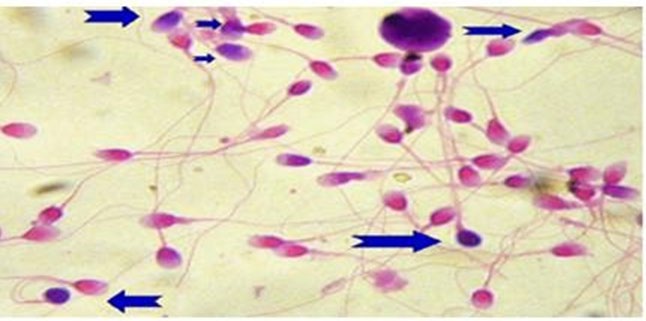
Microscopic examination of the seminal stains in vaginal swabs as well as the clothes of the victim was first done. The microscopic detection of the seminal stains is based in morphology of spermatozoa. Cloth pieces from different stains are taken in 0.5 ml of 0.01 N HCL in small test tubes placed in a beaker containing water. After sonication for 5 minutes the extracts and the cloth pieces are transferred to separate microscopic slides and cloth pieces delicately teased with a needle. Threads are removed and the residual liquid is gently evaporated to dryness. Residue obtained is stained with haematoxylin and eosin (Figure 1).
DNA Typing
DNA Extraction
DNA was extracted from the blood samples by using QIAamp® DNA Mini Kit, following the manufacturer protocol DNA extracted from seminal stains which are present at vaginal swabs and clothes of the victim by organic method described by Green and Sambrook [14].
DNA Quantitation
DNA extracted from the all samples was quantified by Real-Time PCR technique using ABI 7000 Sequence Detection System.
PCR Amplification
DNA Typing of 15 autosomal STR markers were typed along with amelogenin using the AmpFlSTR® Identifiler™ kit following the protocols described in the User’s Manual.
The samples were amplified using verity PCR System. Amplification products were diluted 1:15 in Hi-Di™ formamide and GS500-LIZ internal size standard and analyzed on the 4-capillary 3130 Genetic Analyzer POP™4 was separated on a 36 cm array. Data were analyzed by Gene Mapperv 3.2 software.
Results
Vaginal swabs revealed positive for PSA and for presence of sperms. Trouser’s stain was positive for PSA but negative for presence of sperms. Urine samples were negative for PSA.
Quantitation of DNA
After DNA extraction, DNA quantitation from blood samples was 46.8ng/µl, the first suspect was 3.93 ng/µl, the second suspect was 3.94ng/µl and from the trouser`s stain was 4.7 ng/µl.
DNA Profiles
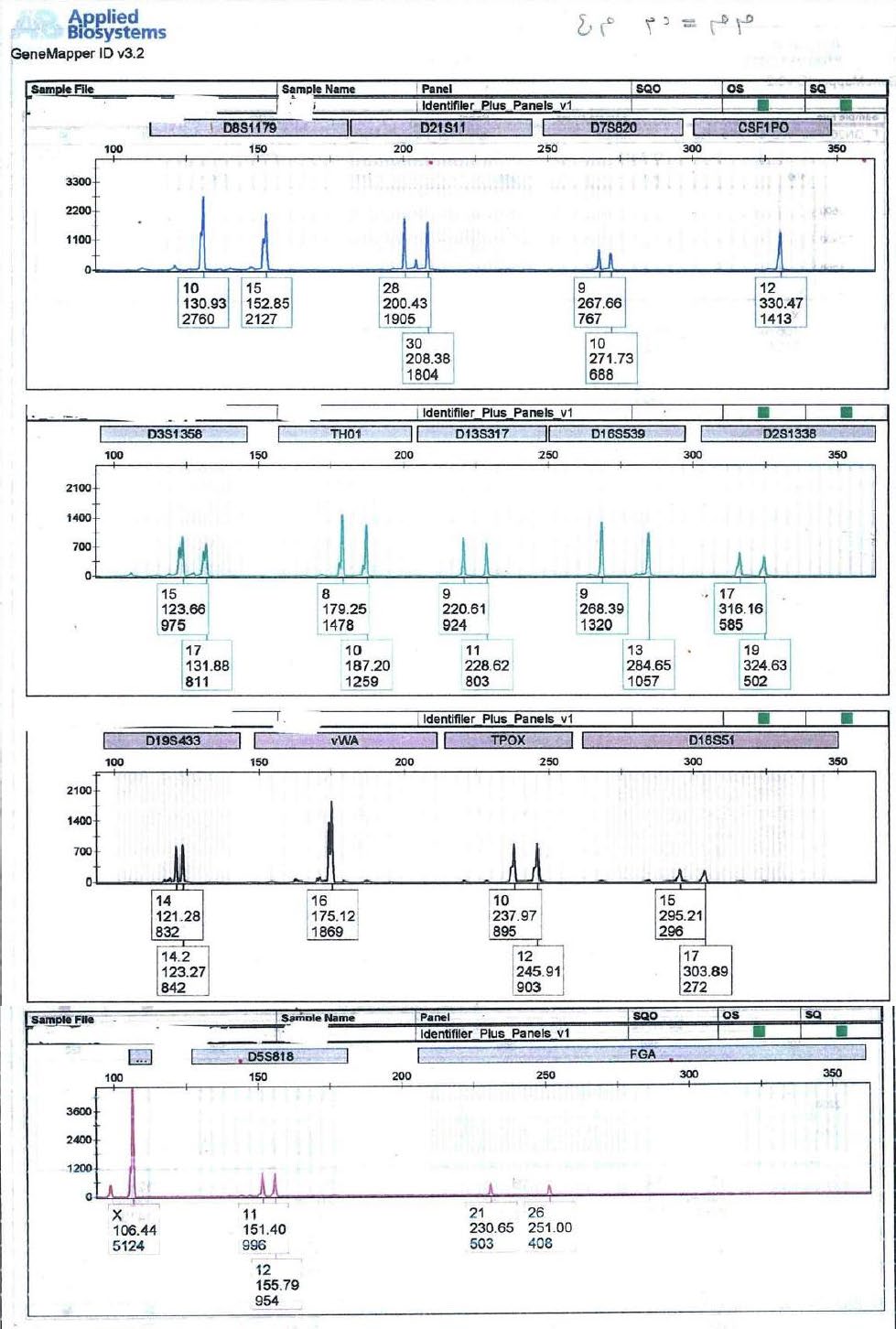
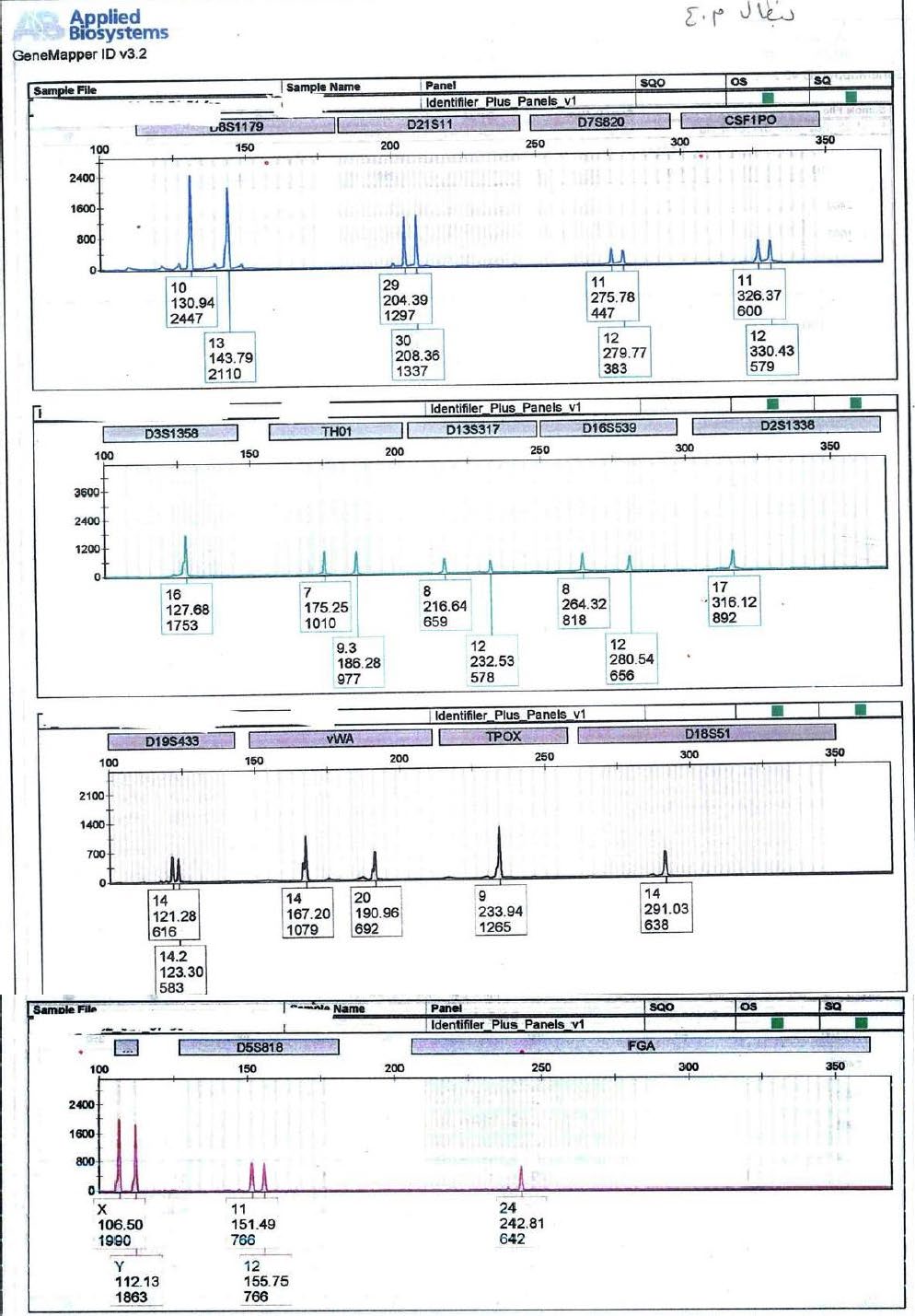
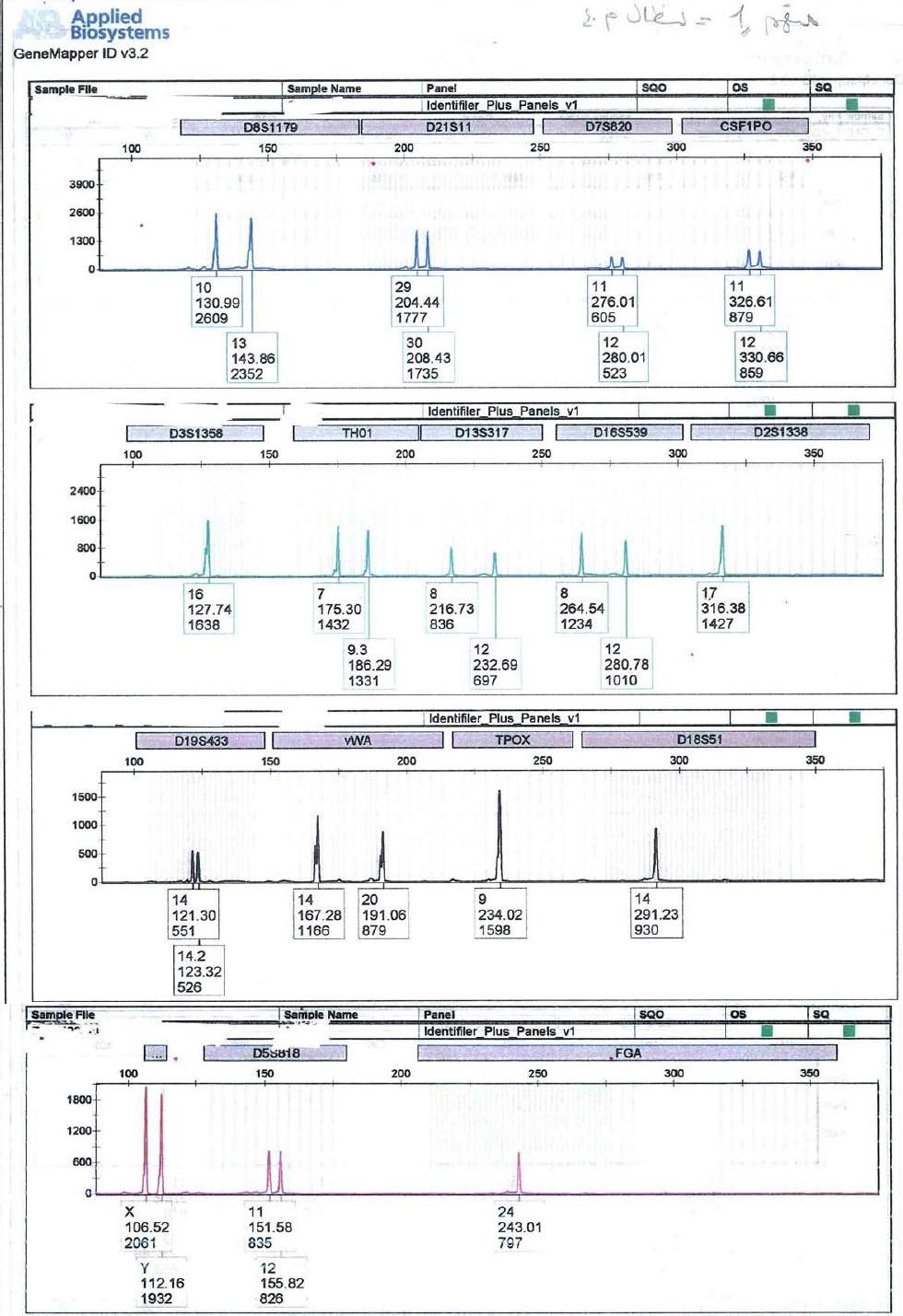
From the interpretation of all DNA profiles (Figures 2-5), the second suspect is excluded from the rape crime but the first one is Table 1.
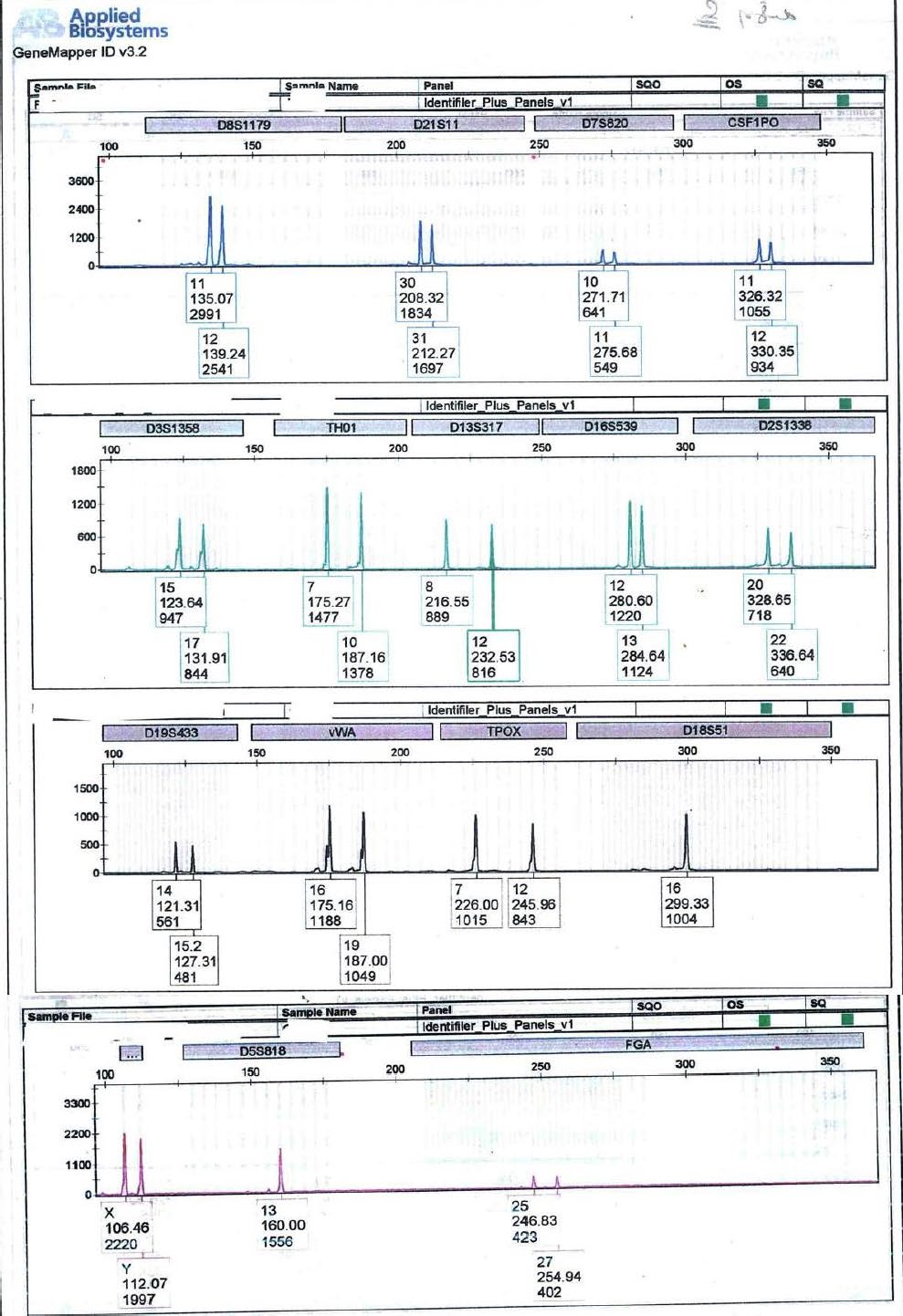
| Loci | Victim | 1susp | 2susp | trousers |
|---|---|---|---|---|
| D8S1179 | 10,15 | 10,13 | 11,12 | 10,13 |
| D21S11 | 28,30 | 29,30 | 30,31 | 28,29,30 |
| D7S820 | 9,10 | 11,12 | 10,11 | 11,12,9 |
| CSF1P0 | 12 | 11,12 | 11,12 | 11,12 |
| D3S1358 | 15,17 | 16 | 15,17 | 15,16 |
| TH01 | 8,10 | 7,9.3 | 7,10 | 7,9.3,10 |
| D13S317 | 9,11 | 8,12 | 8,12 | 8,9,11,12 |
| D16S539 | 9,13 | 8,12 | 12,13 | 8,9,12,13 |
| D2S1338 | 17,19 | 17 | 20,22 | 17 |
| D19S433 | 14,14.2 | 14,14.2 | 14,15.2 | 14,14.2 |
| vWA | 16 | 14,20 | 16,19 | 14,16,20 |
| TP0X | 10,12 | 9 | 7,12 | 9,10,12 |
| D18S51 | 15,17 | 14 | 16 | 14,15 |
| D5S818 | 11,12 | 11,12 | 13 | 11,12 |
| FGA | 21,26 | 24 | 25,27 | 21,24,26 |
| Amel | x,x | x,y | x,y | x,y |
Table 1: Identifier profiles for DNA of victim, the suspects and seminal stains in victim`s trousers.
Discussion
The presence of semen is generally accepted as evidence in sexual assault cases prosecution. Detection of sperm is confirmation of semen; however, sperm cannot always be detected. Prostate specific antigen (PSA) and semenogelin (Sg) are used as semen biomarkers [15]. In rape cases samples must be first tested for presence of semen otherwise it may be questioned by the defense lawyer if profile is not generated from semen or may be due to other body-fluid planted by the police [16]. The aim of this work case was to highlight the importance of the prostate- specific antigen (PSA) analysis in the seminal stain examination before STR analysis to solve a rape case. In this study, the vaginal swabs from the victim and stains on her clothes tested positive for prostatic specific antigen as PSA rapid test is designed to detect PSA in low concentrations. Henky et al. in his study reported Seven percent of the seminal fluid was azoospermia_,_ but all seminal fluid tested by PSA rapid test showed positive results. They proved that the PSA rapid test can detect PSA in low concentrations [17].
This results support the theory saying_; if spermatozoa was not found, we were still unable to conclude that the specimen was not seminal fluid because the seminal fluid consists of two component:_ spermatozoa and plasma (including PSA) [11]. PSA can be found in female body fluid. Breul states that PSA concentration in female urine is 3.72ng/ml. The formation of PSA protein is affected by steroid; therefore, it can be developed in various body tissues including female tissue [17]. In this study, all female urine sample showed negative because the PSA concentrations in female urine were very low, so it was not detected by PSA rapid test since it is below cut-off point of the device. Henky et al. results supported this theory, because all of the female urine samples showed negative in his study [13].
Conclusion
PSA detection is very specific and sensitive to detect human seminal stains even the male (suspect) did vasectomy or azoospermia. Therefore, this device is suggested for forensic use in sexual assault cases. Semen samples from males with azoospermia or those who have undergone vasectomy contain PSA but no sperm. Further studies needed to ensure the validity of the test with vaginal swabs and clothes and to test the effect of time factor on the results of the test
Compliance with Ethical Standards
Ethical approval: This article doesn’t contain any studies involving human participants or animals performed by the authors. Informed consent: Informed consent was obtained from the victim.
References
-
Linden JA, OConnor AL, Jackson MC (2007) Forensic examination of adult victims and perpetrators of sexual assault. Forensic Emergency Medicine.
-
Singh SR (2008) Forensic evidence in rape cases in Nepal (Dissertation). Kathmandu School of Law.
-
Sampurna B, Samsu Z, Kekerasan TP (2003) Peranan ilmu forensik dalam penegakan hukum: Sebuah pengantar. Jakarta [Indonesian].
-
Brown KP, Sommers MS (2009) Injury and forensic examination of the victim. In: Practical aspects of rape investigation, a multidisciplinary approach. CRC Press.
-
Rao AR, Motiwala HG, Karim OM (2008) The discovery of prostate‑specific antigen. BJU Int 101(1): 5-10.
-
Graves HCB, Sensabaugh GF, Blake ET (1985) Postcoital detection of a male- specific semen protein–Application to the investigation of rape. N Engl J of Med 312(6): 338- 342.
-
DiMaio VJ, DiMaio D (2001) Rape. 2nd (Edn.), In: Forensic pathology. CRC Press.
-
Liu Z, Yang Y, Pan Z, Zhu X, Feng S, et al. (2015) Potential Application of Quantitative Prostate-specific Antigen Analysis in Forensic Examination of Seminal Stains. J Forensic Sci Med 1(2): 159-162.
-
Laux DL, Custis SE (2004) Forensic detection of semen III. Detection of PSA using membrane based test: Sensitivity issues with regards to the presence of PSA in other body fluids.
-
Martinez P, Santiago B, Alcala B, Atienza I (2015) Semen searching when sperm is absent. Sci Justice 55(2): 118- 123.
-
Rao AR, Motiwala HG, Karim OMA (2007) The discovery of prostate-specific antigen. BJU International 101(1): 5-10.
-
Hochmeister MN, Budowle B, Rudin O, Gehrig C, Borer U, et al. (1999) Evaluation of Prostate-Specific Antigen (PSA) membrane test assays for the forensic identification of seminal fluid. J Forensic Sci 44(5): 1057-1060.
-
Henky, Budiningsih Y, Widiatmaka W (2011) The validity of rapid test to detect prostate -specific antigen (PSA) in seminal fluid. Med J Indones 20: 278-8.
-
Michael RG, Sambrook J (2017) Isolation of High Molecular- Weight DNA Using Organic Solvents.
-
Suttipasit P, Wongwittayapanich S (2018) Detection of prostate specific antigen and semenogelin in specimens from female rape victims Journal of Forensic and Legal Medicine 54: 102-108.
-
Kumar N, Maitray A, Gupta R, Sharma D, Shukla SK (2018) Importance of Y- STR profiling in sexual assault cases with mixed DNA profile. Int J Mol Biol 3(1): 42-45.
-
Breul J, Pickl U, Schaff J (1997) Extraprostatic production of prostate specific antigen is under hormonal control. J Urol 157(1): 212-213.
- Narcotics and Digital Forensics: Bridging Crimes in the Digital Age
- Ethics in Forensic Psychiatry: Principles, Dilemmas, and Human Rights
- Impact of Acute Stress on Attentional Orienting to Social Cues
- Head Injury and Intracranial Hemorrhage in Western Region of Libya
- A Forensic Study on Handedness: Examination of Handwriting Features in Right and Left Handed Writers
- Techniques for Latent Fingerprint Development Using Natural and Synthetic Powders: A Review