
A Unique Behavior of Methanol Addiction in Experimental Animals: Stereotyped Circling
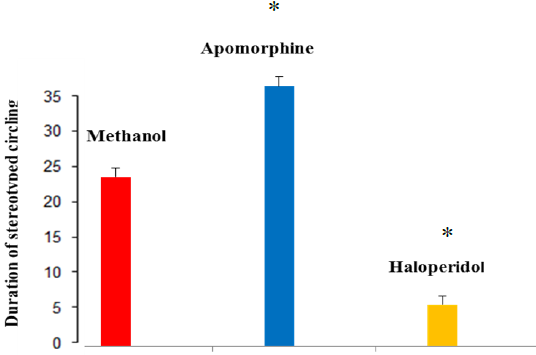
This work has encountered a previously unrecognized phenomenon that was very unique to methanol. Different drugs of addiction rather than methanol where tested in this work. Intraperitoneal (IP) injection of different doses of methanol were noted to precipitate rapid and vigorous unidirectional stereotyped circling in mice placed either in open or closed fields suggesting that methanol produced asymmetric striatal activation of dopaminergic functions. The onset of rotation was within 3 min and the duration was dose dependent which lasts for 15.7±1.4% and 27.3±2.7% for the lowest and highest doses respectively. It is significant that 30 min pretreatment with 0.025 mg/kg Apo morphine (dopamine agonist) or 0.025 mg/kg haloperidol (dopamine antagonist) respectively accentuate and attenuate stereotyped circling exhibited by methanol. The rapidity by which this stereotyped behavior took place (3min onset) is quite striking. This would suggest that either methanol per se rather than one of its metabolites is the responsible agent or the production of an active metabolite from the precursor pool must be extremely rapid. The exact mechanism is unknown, but there is one suggestion which is drugs can affect dopaminergic activity in the brain and hence stereotyped behavior such as Apo morphine and haloperidol were found to produce respective accentuation and attenuation in methanol-induced rotational behavior. Thus, it is not a remote possibility that methanol per se or one of its metabolites could either directly or indirectly affect the function of dopamine containing neurons in some areas of the brain (e.g. basal ganglia). To substantiate these possibilities further work is needed involving studies on the influence of methanol on dopamine turnover rate in discrete areas in the brain and to provide clues about the dopamine receptor subtypes (D1&D2) involved.
Introduction
Methanol is a toxic alcohol that may be ingested accidentally or consumed as an ethanol substitute [1, 2]. Methanol poisoning, whether sporadic or mass poisoning is an acute medical emergency can lead to considerable morbidity as well as mortality. The serum level of methanol does not correlate with toxicity [1, 2]. Prognosis of methanol toxicity is 2 correlated with the degree of metabolic acidosis [1, 3]. Methanol is oxidized by alcohol dehydrogenase to formaldehyde [4]. The oxidation of formaldehyde to formic acid is facilitated by formaldehyde dehydrogenase [4]. Formic acid is converted by 10-formyl tetrahydrofolate syntheses to carbon dioxide and water. In cases of methanol poisoning, formic acid accumulates and there is a direct correlation between the formic acid concentration and increased morbidity and mortality [4]. The acidosis observed in methanol poisoning appears to be caused directly or indirectly by formic acid production. Formic acid has also been shown to inhibit cytochrome oxidase and is the prime cause of ocular toxicity, though acidosis can increase toxicity further by enabling greater diffusion of formic acid into cells [4]. Central nervous system depression, ocular symptoms, and gastrointestinal complaints are commonly reported initial symptoms of methanol poisoning [4]. Lethal doses of methanol are thought to range from 30– 240 ml; the minimum lethal dose is believed to be 100 ml (1 g/kg) [1, 5, 6]. Specific therapeutic measures include correction of metabolic acidosis with sodium bicarbonate, administration of enteral or parenteral ethanol to competitively inhibit metabolic breakdown of methanol to formic acid and hemodialysis to remove the toxic alcohol and its toxic metabolites [1, 7, 8].
Animals
Male albino mice weighting 18-25g, the mice were housed in polypropylene cages bedded with saw dust maintained at a natural light-dark cycle and kept in the medical school affiliated animal house at an ambient temperature of (22- 24°C). All animals were allowed free access to standard pellet diet and fresh tap water and libitum. The animals were brought to the laboratory two hours prior the experiment at which time they were randomly divided into experimental groups (10 mice per group) and housed in smaller cages.
Evaluation of Methanol Induced Stereotyped Circling
Mice were exposed to methanol developed a temporary deficit which was characterized by vigorous repetitive unidirectional rotation. Animals were randomly divided into groups, one group were treated with saline (control), other group were treated with methanol and then some groups 3 placed in an open field and other groups were placed in closed field (returned back to the cage), and closely observed for the development of circling movements (characteristic of stereotyped behavior). Methanol provoked dose-dependent and vigorous circling movement identified as stereotyped behavior. Stereotypy was operationally defined as motor acts which occur with an abnormally high frequency disproportionate to normal behavior. Although some turning was noted when animals were kept in a secluded area (inside the cage), the circling was most prominent when animals were placed in an open field. Mice treated with different doses of methanol (0.5, 0.10, 0.15, 0.20 & 0.25 g/kg I.P) exhibited dose related stereotyped rotational movement. The onset of rotation was within 3 min and lasts for (15.7±1.4% and 27.3±2.7%) for the lowest and highest doses respectively. It is remarkable that 30 min pretreatment with 0.025 mg/kg Apo morphine (dopamine agonist) or 0.025 mg/kg haloperidol (dopamine antagonist) respectively accentuate (31.2±2.6%) and attenuate (5.01±2.1%) stereotyped circling exhibited by methanol; P≤ 0.05. It is also remarkable that none of the other types of alcohol and some drugs of addiction (tramadol, cannabis, heroin, LSD and clonazepam (revotril)) tested was capable of precipitating similar behavioral changes.
Statistical Evaluation
Effect of methanol is expressed as %MPAE upon stereotyped behavior, mean effects ± s.e.m. were computed and expressed graphically. The data subjected to one way analysis of variance (ANOVA) with repeated measurements. Significance was assumed at pretreatment (30 min) with Apo morphine 0.025 mg/kg or haloperidol 0.025 mg/kg respectively accentuate and attenuate stereotyped circling exhibited by methanol,
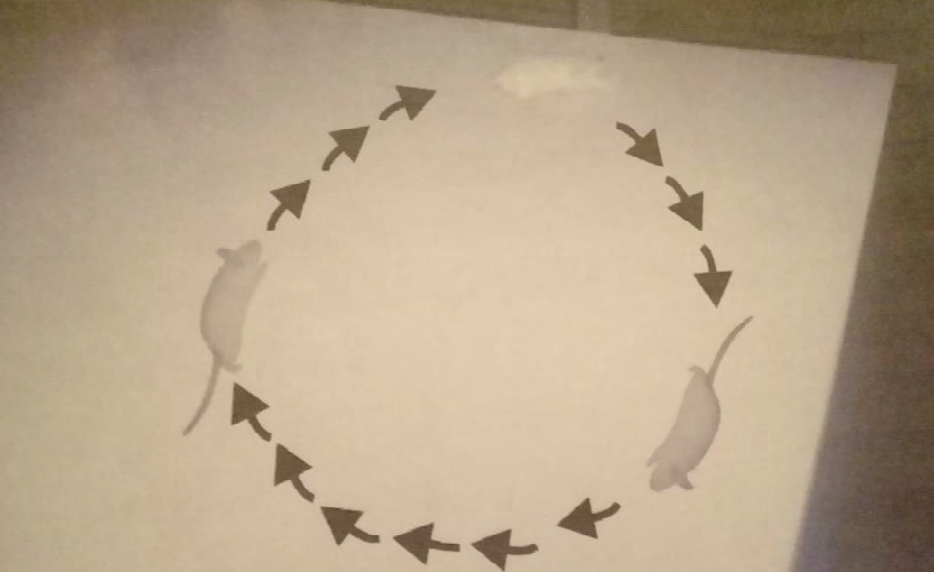
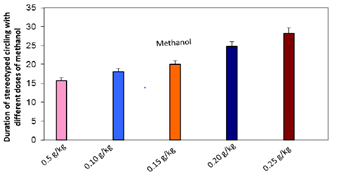
The duration was dose dependent which lasts for 15.7±1.4% and 27.3±2.7% for the lowest and highest doses respectively.
Discussion
In the course of analyzing the effects of different types of drugs of addiction on normal behavior in the mice, this work has encountered a previously unrecognized phenomenon that was very unique to methanol. Intraperitoneal injections of methanol were noted to precipitate rapid and vigorous unidirectional stereotyped circling in mice placed either in open or closed fields suggesting that methanol produced asymmetric striatal activation of dopaminergic functions. Similar behavioral changes were not detected in animals treated with normal saline, ethanol, tramadol, cannabis, heroin, LSD and clonazepam. Thus, the pharmacologic profile of methanol demonstrating stereotyped behavior distinguishes it from other drugs tested. The rapidity by which this stereotyped behavior took place is quite striking, approximately 3 min were required for methanol treated animals to commence repetitive circling behavior. This would suggest that either methanol per se rather than one of its metabolites is the responsible agent or the production of an active metabolite from the precursor pool must be extremely rapid. It is worthy to note at this 6 juncture that generation of formaldehyde from methanol is very rapid usually requiring few mines. However, the possibility that formaldehyde could be responsible for methanol-induced circling behavior was largely discounted on the bases that formaldehyde biological half-life is about 3 min [9].
Therefore, it seems highly improbable that the aldehyde attains effective concentration in the brain in a time approximating its half-life produce behavioral disruption that lasts for more than 20 min unless one accept the possibility that formaldehyde by analogy to acetaldehyde is swiftly condensed with cerebral catecholamine to yield a complex that activates mechanisms responsible for enhanced motor activity. In the shortage of data implicating methanol and any of cerebral catecholamine, the interpretation remains largely speculative. Nonetheless, this work was inspired by the observation and therefore locked further into the mechanisms sub-serving the unique behavior (stereotyped circling).
One mechanism however may be considered, drugs that are likely to affect dopaminergic activity in the brain and hence stereotyped behavior such as Apo morphine and haloperidol were found to produce respective accentuation and attenuation in methanol-induced rotational behavior. Thus, it is not a remote possibility that in some brain regions (e.g. basal ganglia) methanol per se or one of its metabolites could either directly or indirectly affect the function of dopamine containing neurons in a manner consistent with facilitation of dopaminergic neurotransmission. To confirm this possibility further work involving studies on the influence of methanol on dopamine turnover rate in discrete brain areas is needed. According to pervious study, circling behavior comprises two components namely: postural asymmetry that is likely to be the consequence of activation of dopaminergic projections originating within the substantial nigra and locomotion or rate of circling attributed to dopaminergic system arising from the ventral tegmental area [10]. The circling observed in the present work was unidirectional (anti-clockwise) probably reflecting strong postural asymmetry. Further work is needed to provide clues to the dopamine receptor subtype involved. Stereotyped movement could result from activation of either D2-dopamine receptor subtype [11, 12] or D1 dopamine receptor subtype [13] or possibly combination of both. Other stereotyped behavior’s such as rearing, groming, jumping or sniffing were occasionally seen following treatment with methanol but were for the most part sporadic, 7 non-reproducible and never assume statistical significant [1, 4].
Another explanation is that MRI studies of methanol toxicity showed that edema and necrotic damage to the basal ganglia of the brain, more specifically the putamen, and hemorrhages in the subcortical white matter due to failure of the Na–K ATPase pump caused by the inhibition of cytochrome oxidase by formic acid [4]. A number of mechanisms have been proposed to account for the specificity of the damage to the putamen. Putamen injury may be caused by both a high local concentration of formic acid potentiated by poor venous drainage in the lenticular nucleus from the veins of Rosenthal, or inadequate arterial flow. Specific metabolic vulnerability of the putamen may mean that it is more sensitive to the histotoxic hypoxia caused by formic acid accumulation [4]. However, one study showed that haloperidol has increased risk of ischaemia in psychotic patients and it should be used with caution [14]. So, administration of intraperitoneal haloperidol should worse the stereotyped behavior due to methanol toxicity rather than improving it, which support the explanation that stereotyped circling of methanol is due to implication of dopaminergic system than histotoxic hypoxia in the brain. Although, further work for full clarification of the present results is strongly indicated.
References
-
Unsal A, Basturk T, Sakac T, Ahbap E, Koc Y, et al. (2012) Epidemic Acute Methanol Intoxication as a Result of Illicit Alcohol Ingestion. Nephron Urol Mon 4(1): 366- 371.
-
Seyffart G (1997) Methyl alcohol In: Poison Index: The treatment of acute intoxication. lengerich: Pabst Science Publishers 457-464.
-
Kraut JA, Kurtz I (2008) Toxic alcohol ingestions: clinical features, diagnosis, and management. Clin J Am Soc Nephron 3(1): 208-225.
-
Barceloux DG, Bond GR, Krenzelok EP, Cooper H, Vale JA (2002) American Academy of Clinical Toxicology Practice Guidelines on the Treatment of Methanol Poisoning. American Academy of Clinical Toxicology, Harrisburg, Pennsylvania. Marcel Dekker Inc.
-
Abramson S, Singh AK (2000) Treatment of the alcohol intoxications: ethylene glycol, methanol and isopropanol. Curr Opin Nephron Hypertens 9(6): 695-701.
-
Meyer RJ, Beard ME, Ardagh MW, Henderson S (2000) Methanol poisoning. N Z Med J 113(1102): 11-13.
-
Brahmi N, Blel Y, Abidi N, Kouraichi N, Thabeth, et al. (2007) Methanol poisoning in Tunisia: report of 16 cases. Clin Toxicol (Phila) 45(6): 717-720.
-
Hantson P, haufroid V, Wallemacq P (2005) Formate kinetics in methanol poisoning. Hum Exp Toxicol 24(2): 55-59.
-
Heck H, Chin TY, Schmitz MC (1983) Distribution of formaldehyde in rats after inhalation exposure. Hemisphere publishing 26-37.
-
Fetsko LA, Xu R, Wang Y (2003) Alteration in D1/D2 synergism may account for enhanced climbing in mice lacking dopamine D2L receptor. Brain research 967(1- 2): 191-200.
-
Sokoloff P, Martress MP, Deiandre M, Redouane K, Schwartz JC (1984) H-DOMPERIDON BINDING SITEs differ in rat striatum and pituitary. Nauyn Schmied Arch. Pharmacol 327: 221.
-
Quintero GC, Spano D, LaHoste GJ, Harrison LM (2008) The Ras homolog Rhes affects dopamine D1 and D2 receptor-mediated behavior in mice. Neuroreport 19(16): 1563-1566.
-
Vasse M, Chagraoni A, Protais P (1988) Climbing and stereotyped behaviours require the stimulation of D1 dopamine receptors. Eur. J. Pharmacol 148(2): 221-229.
-
Shin JY, Choi NK, Lee J, Park BJ, Park MJ, et al. (2015) Risk of ischaemic stroke association with the use of antipsychotic drugs in elderly patients: A retrospective cohort study in korea. Public liberary of science 10(3): 0119931.
- Narcotics and Digital Forensics: Bridging Crimes in the Digital Age
- Ethics in Forensic Psychiatry: Principles, Dilemmas, and Human Rights
- Impact of Acute Stress on Attentional Orienting to Social Cues
- Head Injury and Intracranial Hemorrhage in Western Region of Libya
- A Forensic Study on Handedness: Examination of Handwriting Features in Right and Left Handed Writers
- Techniques for Latent Fingerprint Development Using Natural and Synthetic Powders: A Review